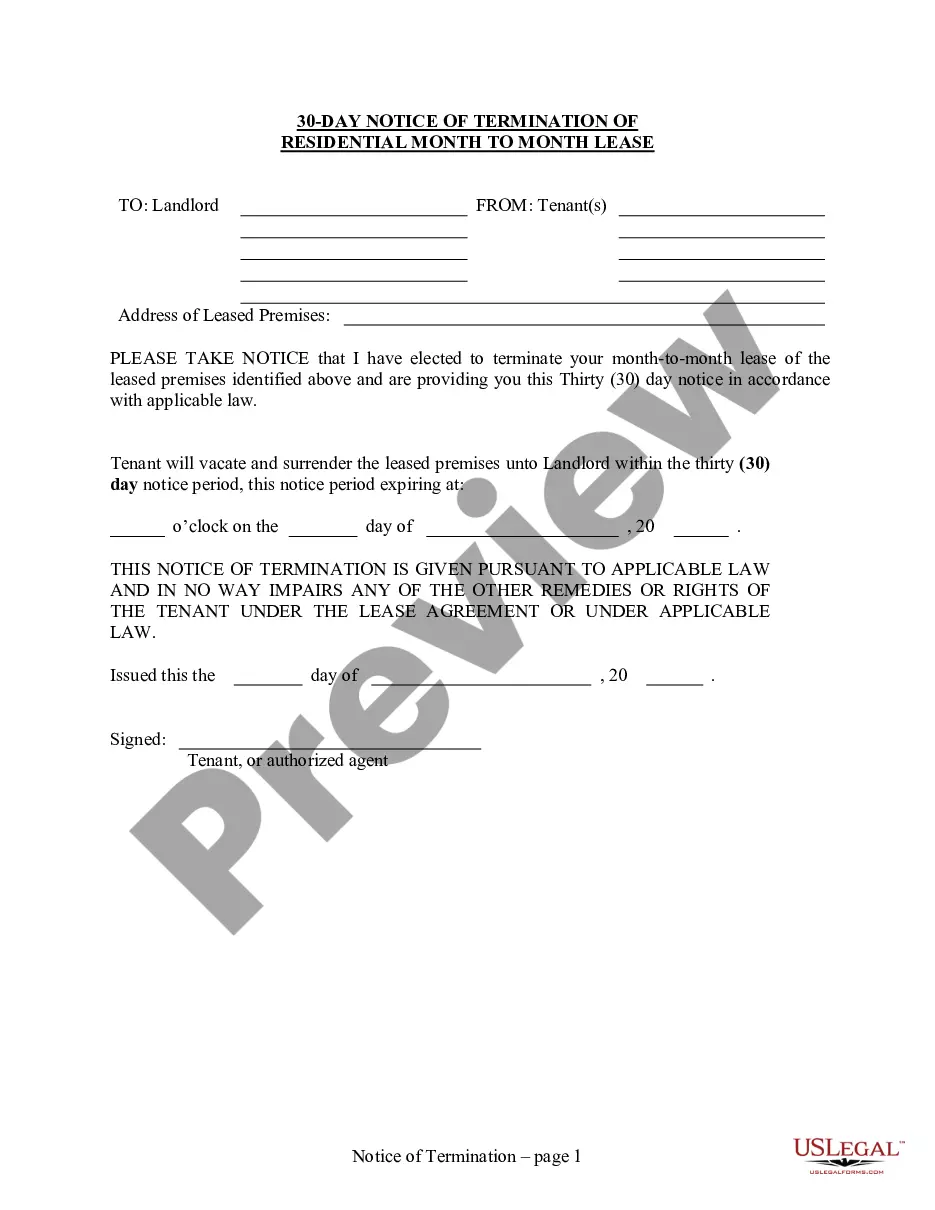
Dramatic or Musical Work or Play Tour License
Understanding this form
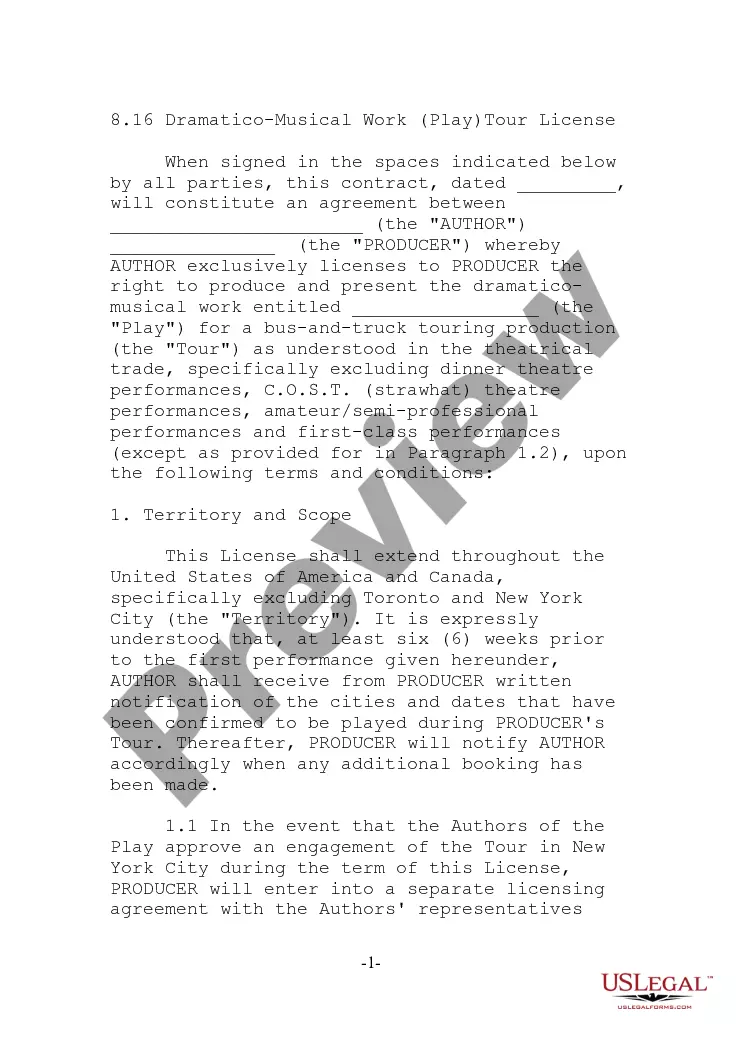
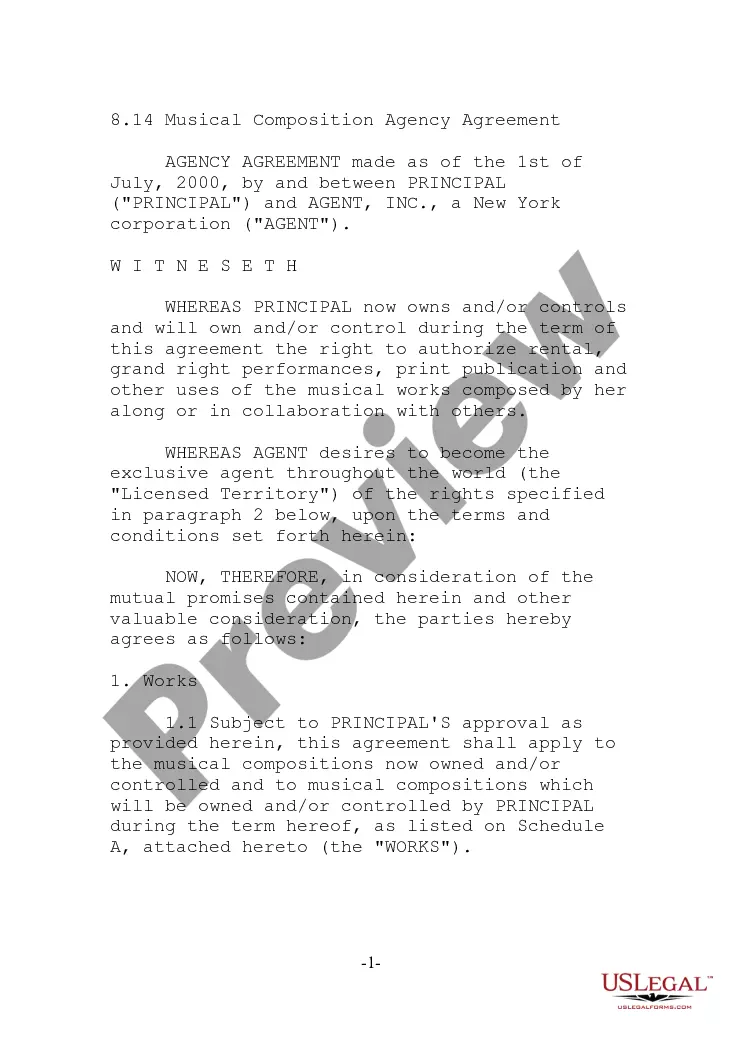
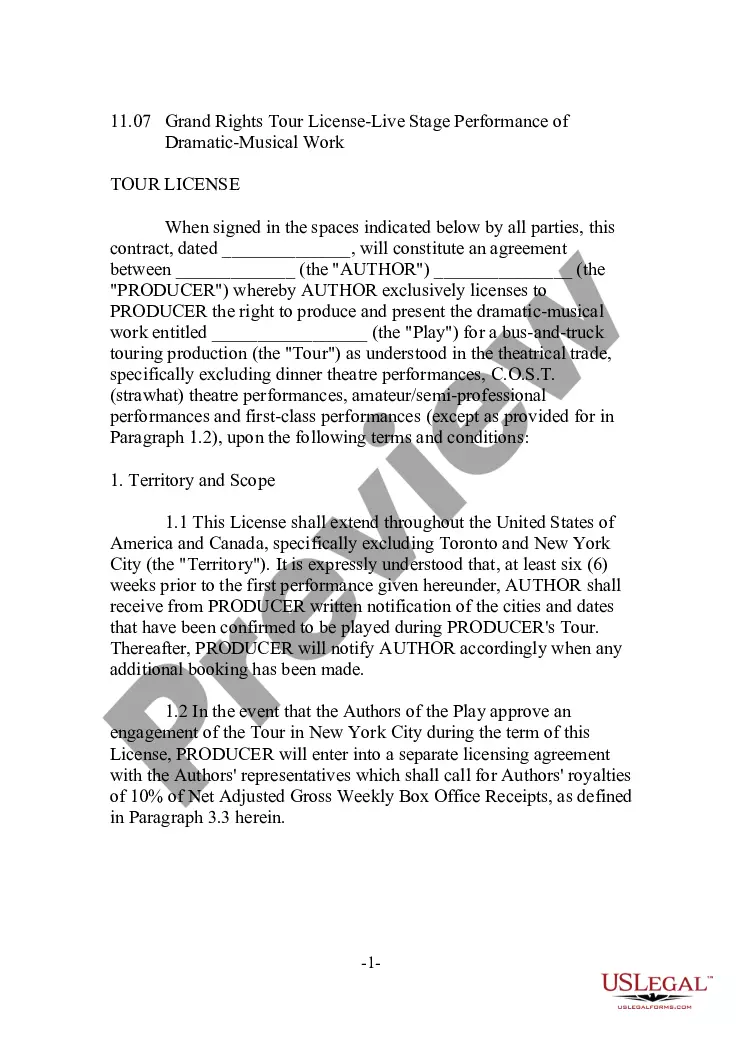
The Dramatic or Musical Work or Play Tour License is a legal document that grants exclusive rights to a producer to perform a specific dramatic or musical work over a specified tour within defined territories. This form is distinct from other entertainment contracts as it specifically focuses on touring productions, excluding other types of performances. It is tailored to ensure that both authors and producers understand their rights and obligations related to the production and presentation of the work.
What’s included in this form
- Identification of parties: The contract clearly identifies the AUTHOR and the PRODUCER.
- Scope and territory: Details the geographical area in which the touring production is permitted.
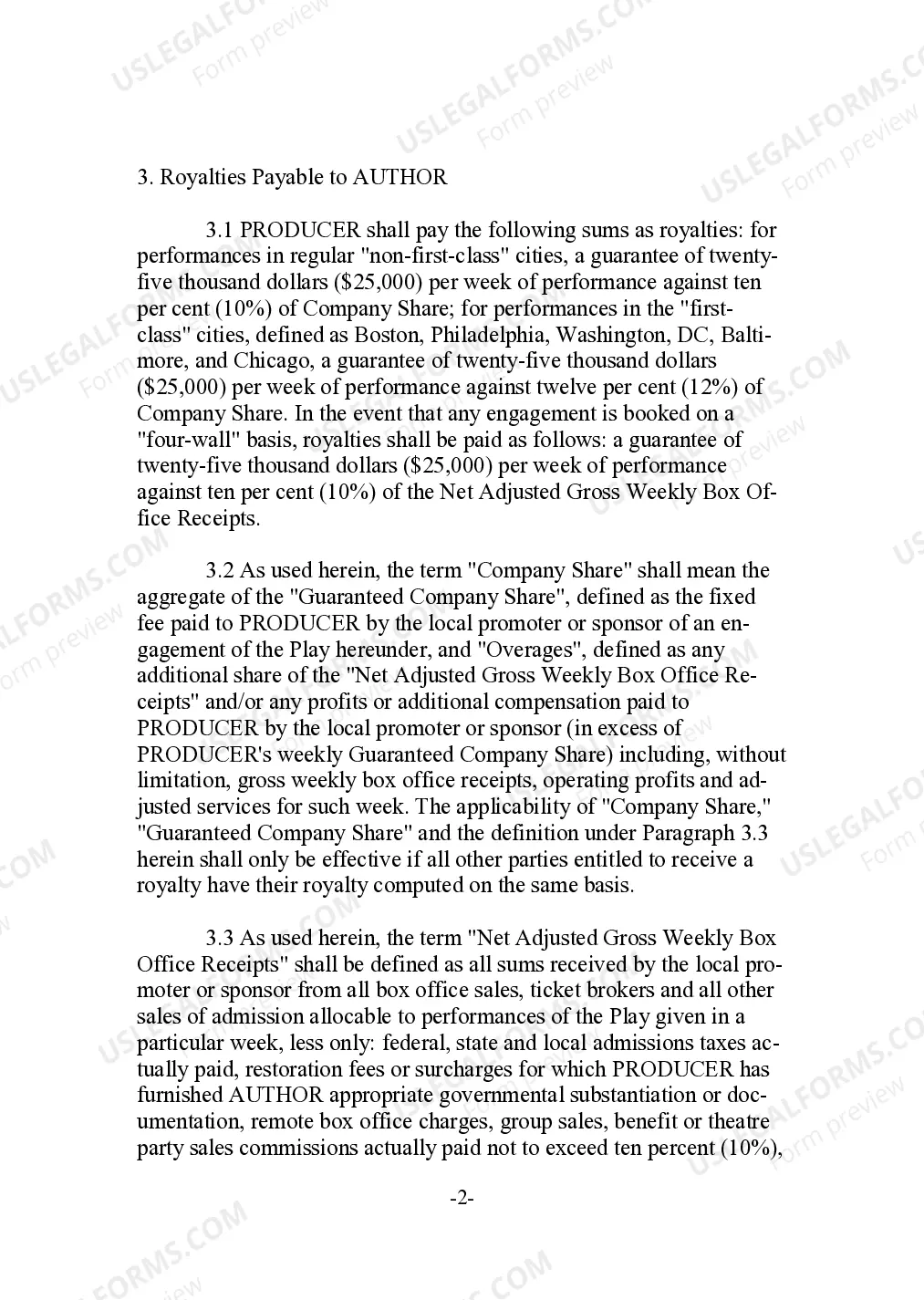
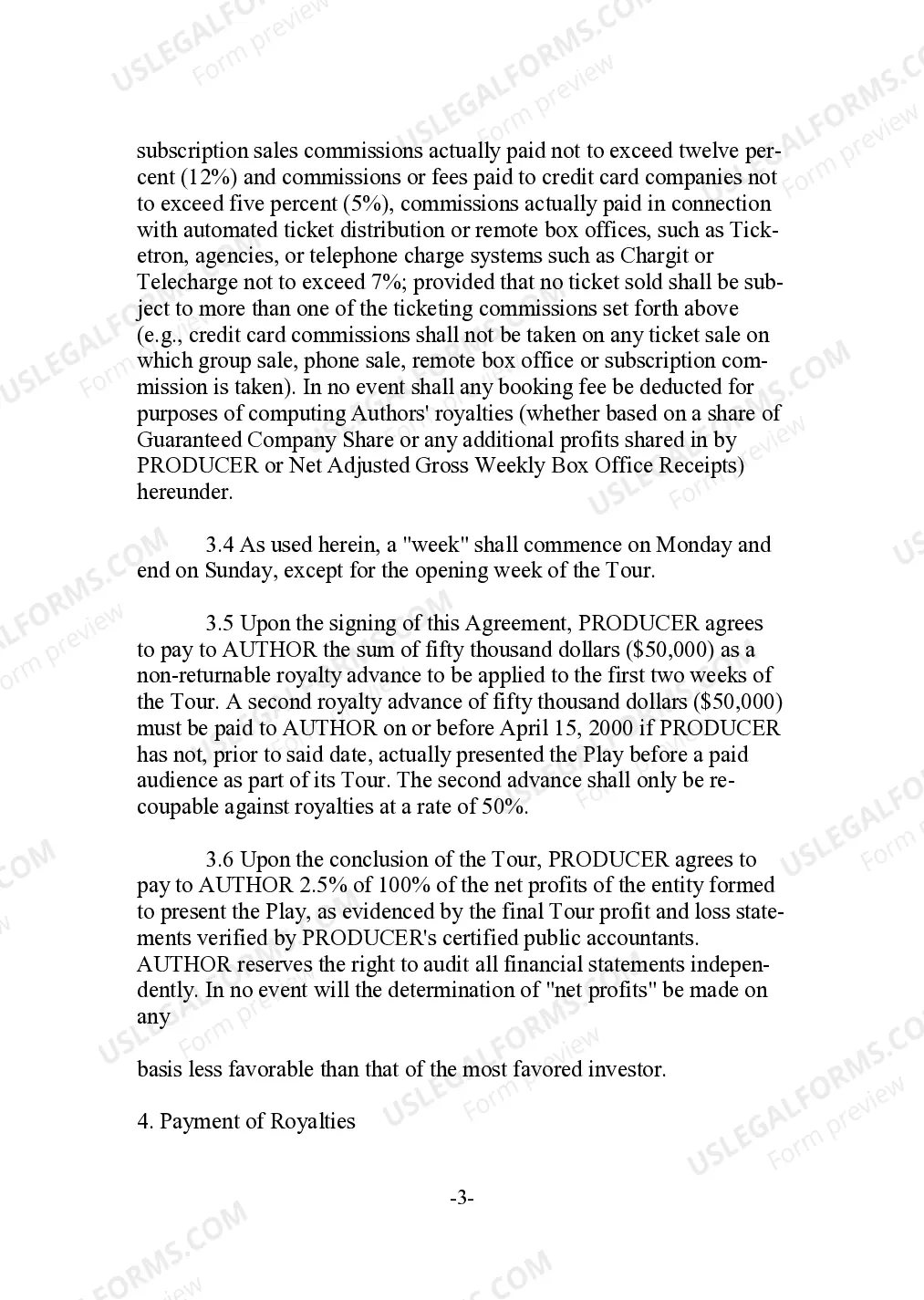
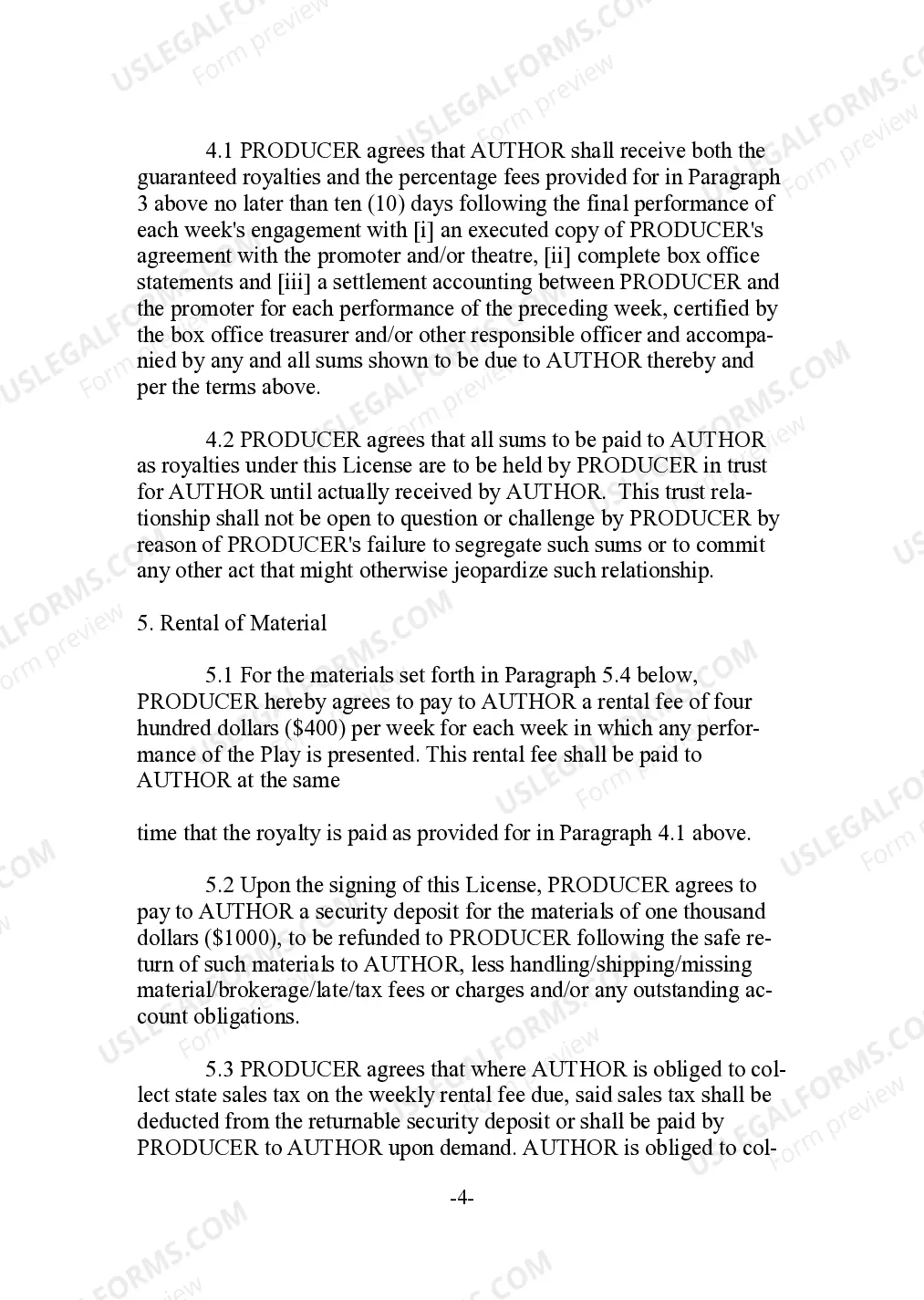
- Royalty structure: Outlines the payment terms for royalties and advances, including guarantees against percentage profits.
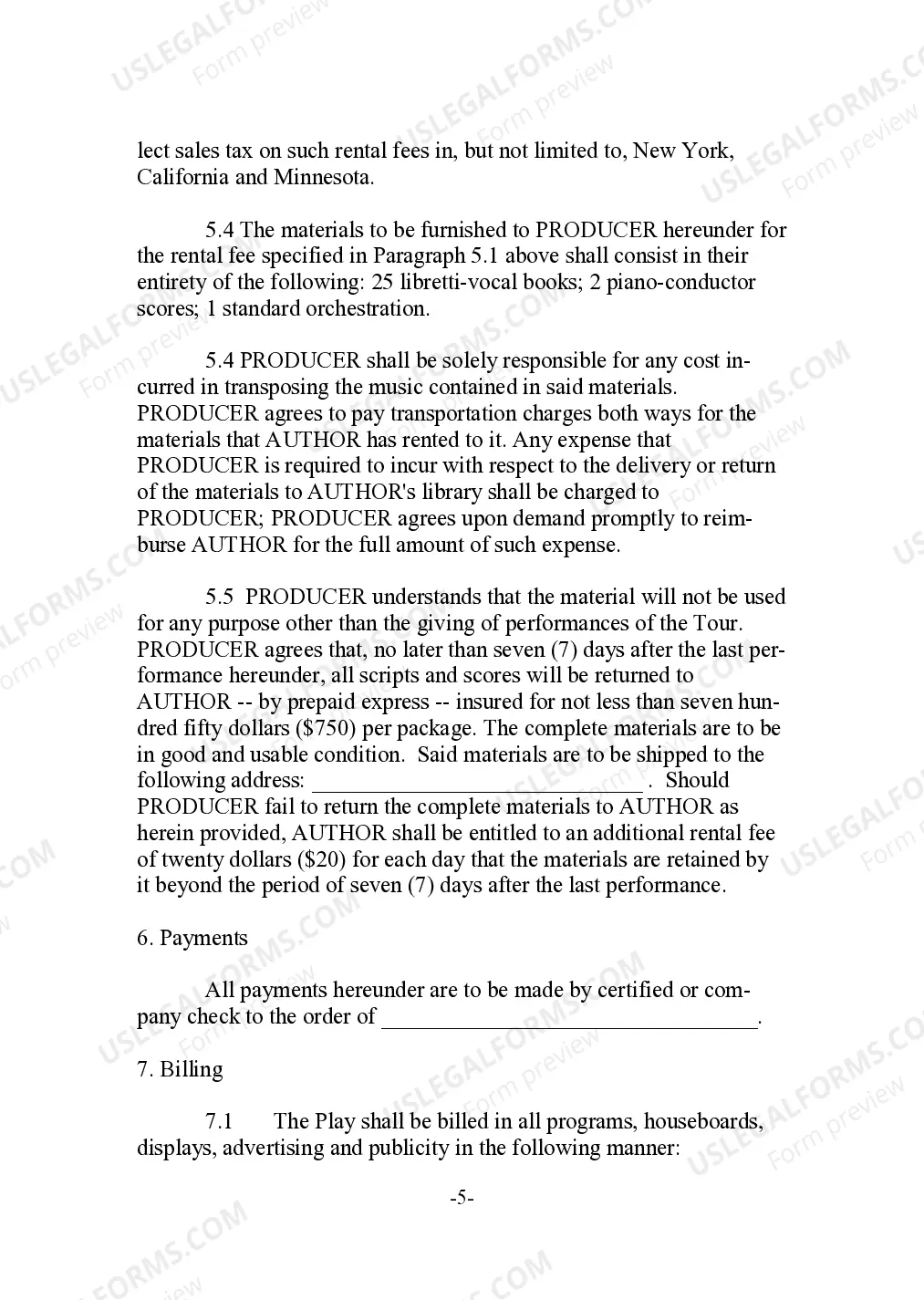
- Material rental terms: Specifies fees and requirements for the rental of production materials.
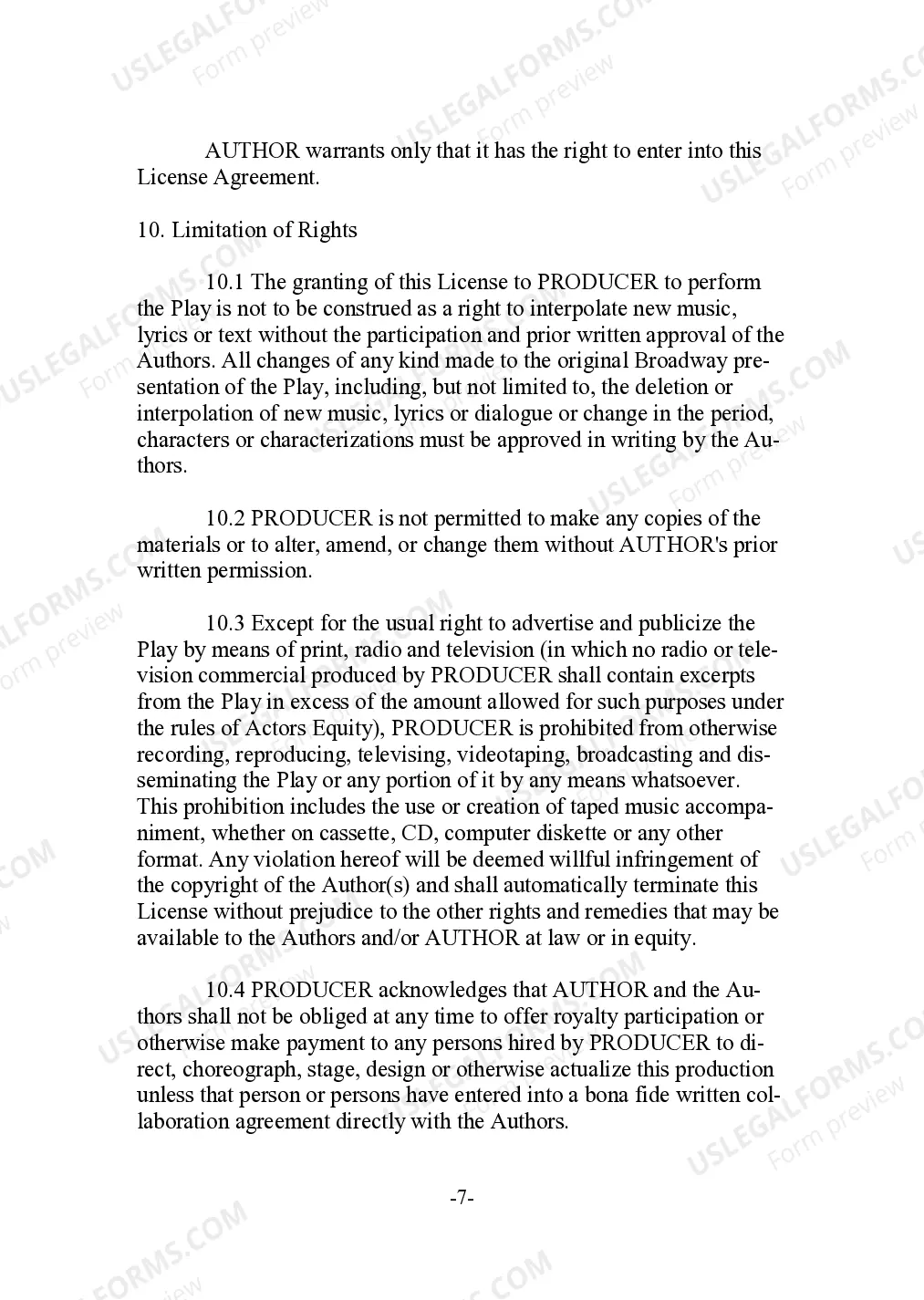
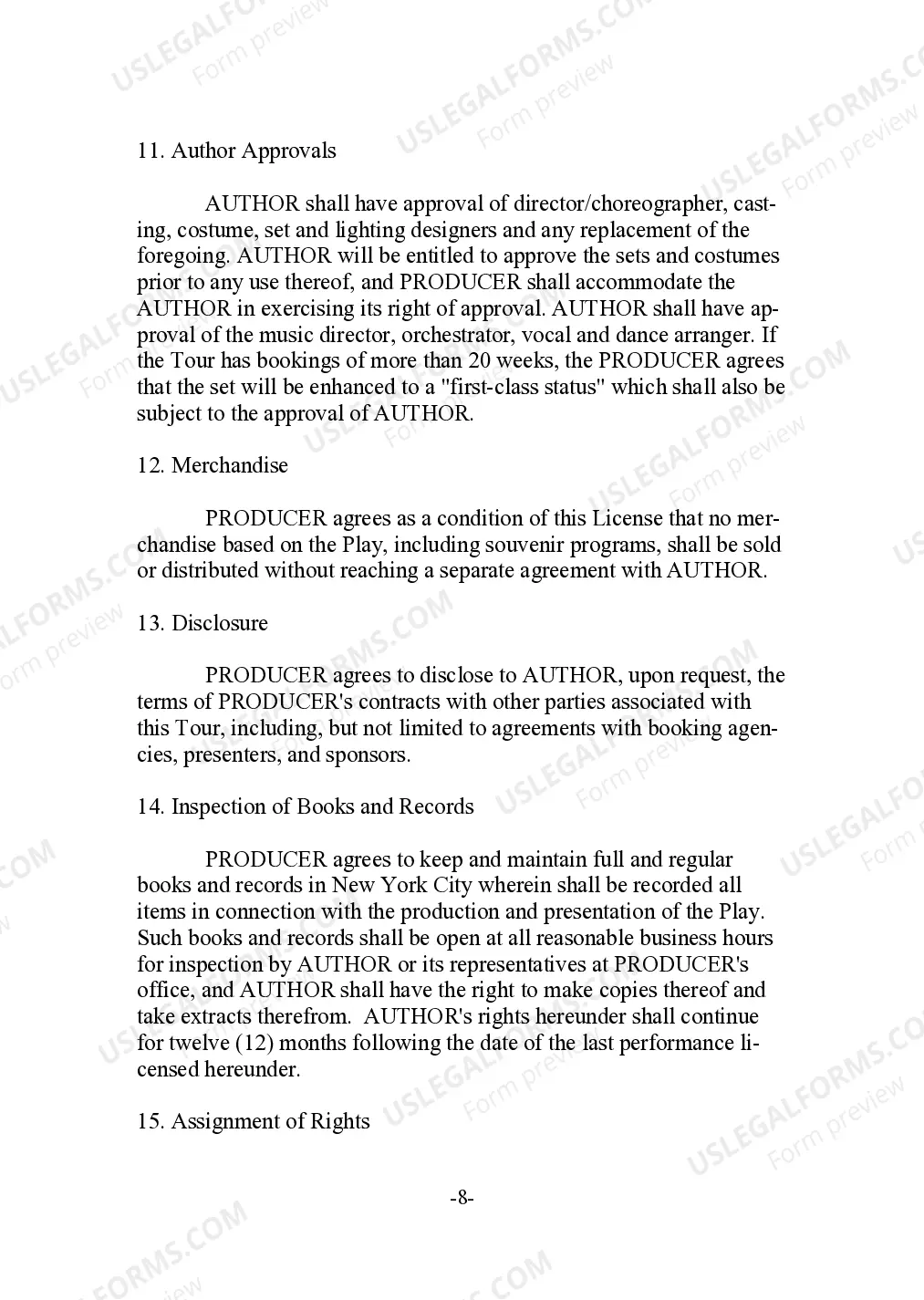
- Approval rights: Grants the AUTHOR control over significant creative decisions, such as casting and set design.
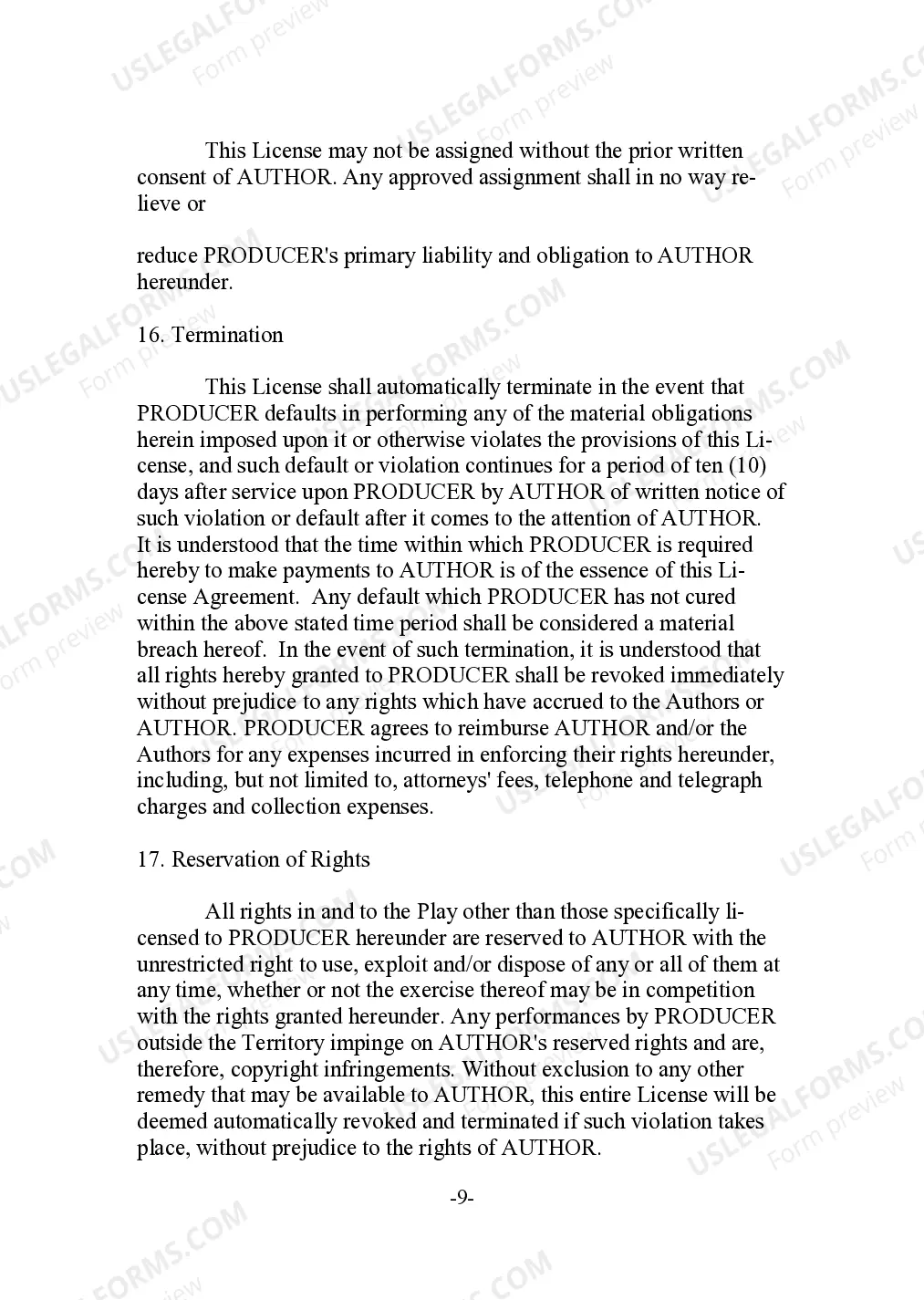
- Termination clauses: Defines conditions under which the license can be terminated.

When this form is needed
This license is necessary when a producer wishes to tour a dramatic or musical work. It is particularly important to use this form when defining the scope of the tour, such as performance locations, royalty agreements, and specific rights regarding the content and presentation of the work. Common scenarios include regional theatre productions, community events, or professional tours across cities in the US and Canada.
Who this form is for
- Playwrights or authors of dramatic or musical works seeking to license their creations.
- Theatre producers intending to arrange performances of the licensed works.
- Individuals or companies involved in the entertainment sector who are planning a tour.
- Educators or organizations producing plays for educational purposes.
How to prepare this document
- Identify the parties involved: Fill in the names of the AUTHOR and the PRODUCER.
- Specify the dramatic or musical work: Clearly state the title of the work being licensed.
- Define the territory: Indicate the geographical areas where the tour will take place.
- Outline the term: Fill in the commencement and termination dates of the license.
- Detail royalty payments: Specify the payment terms, including guarantees and percentages.
- Sign and date the document: Ensure all parties sign and date the agreement to make it legally binding.
Is notarization required?
This form does not typically require notarization unless specified by local law. However, it is recommended to check local regulations to ensure compliance with any jurisdiction-specific requirements regarding notarization.
Get your form ready online
Our built-in tools help you complete, sign, share, and store your documents in one place.
Make edits, fill in missing information, and update formatting in US Legal Forms—just like you would in MS Word.
Download a copy, print it, send it by email, or mail it via USPS—whatever works best for your next step.
Sign and collect signatures with our SignNow integration. Send to multiple recipients, set reminders, and more. Go Premium to unlock E-Sign.
If this form requires notarization, complete it online through a secure video call—no need to meet a notary in person or wait for an appointment.
We protect your documents and personal data by following strict security and privacy standards.

Make edits, fill in missing information, and update formatting in US Legal Forms—just like you would in MS Word.

Download a copy, print it, send it by email, or mail it via USPS—whatever works best for your next step.

Sign and collect signatures with our SignNow integration. Send to multiple recipients, set reminders, and more. Go Premium to unlock E-Sign.

If this form requires notarization, complete it online through a secure video call—no need to meet a notary in person or wait for an appointment.

We protect your documents and personal data by following strict security and privacy standards.
Avoid these common issues
- Failing to clearly define the scope of the territory, which can lead to disputes.
- Not specifying all required details for royalty calculations, resulting in future payment issues.
- Overlooking the approval rights of the author, leading to unauthorized changes.
- Neglecting to sign the document, which invalidates the agreement.
Why complete this form online
- Convenience: Download the form from anywhere, anytime, without needing a physical visit.
- Editability: Easily customize the form to meet specific needs and circumstances.
- Reliability: Access forms created by licensed attorneys, ensuring legal accuracy.
Looking for another form?
Form popularity
FAQ
When music is licensed before making it public, the chances of someone copying the same and obtaining a license on their name would be eliminated. This way the entire credit in making that music piece a success will go to the person who deserves it.
Patent Licensing. Patents cover science and innovation. Trademark Licensing. Trademarks are signifiers of commercial source, namely, brand names and logos or slogans. Copyright Licensing. Trade Secret Licensing. Exclusive. Non-exclusive. Sole. Perpetual.
Music licensing is the licensed use of copyrighted music. Music licensing is intended to ensure that the owners of copyrights on musical works are compensated for certain uses of their work. A purchaser has limited rights to use the work without a separate agreement.
In general, there are six types of licenses that someone can use for various purposes. They are: synchronization license, mechanical license, master license, public performance license, print rights license, and theatrical license.
Overview. Musical works refers to written musical scores in the form of sheet music, broadsheets or other notation. A recording of a musical work is protected separately as a sound recording. Lyrics or words to a song are considered literary works, and they have a separate copyright to the musical score.
Why you should License your own Music? The bottom line answer: yes. If you want to make compensation of any kind off your work, it will need to be licensed. We all know how the digital age has shifted the music industry with easier access and a higher rate of piracy.
The Music Standard License grants you, the purchaser, an ongoing, non- exclusive, commercial, worldwide license to make use of the musical work (Item) you have selected, on the following terms. The Licensing FAQs form part of this license.
Public Performing Right. The exclusive right of the copyright owner, granted by the U.S. Copyright Law, to authorize the performance or transmission of the work in public. Public Performance License. Reproduction Right. Mechanical License. Synchronization License. Digital Performance Right in Sound Recordings.
The composition which is the music and lyrics. The sound recording which is a particular recorded version of that music and lyrics.