Formula System for Distribution of Earnings to Partners
What this document covers
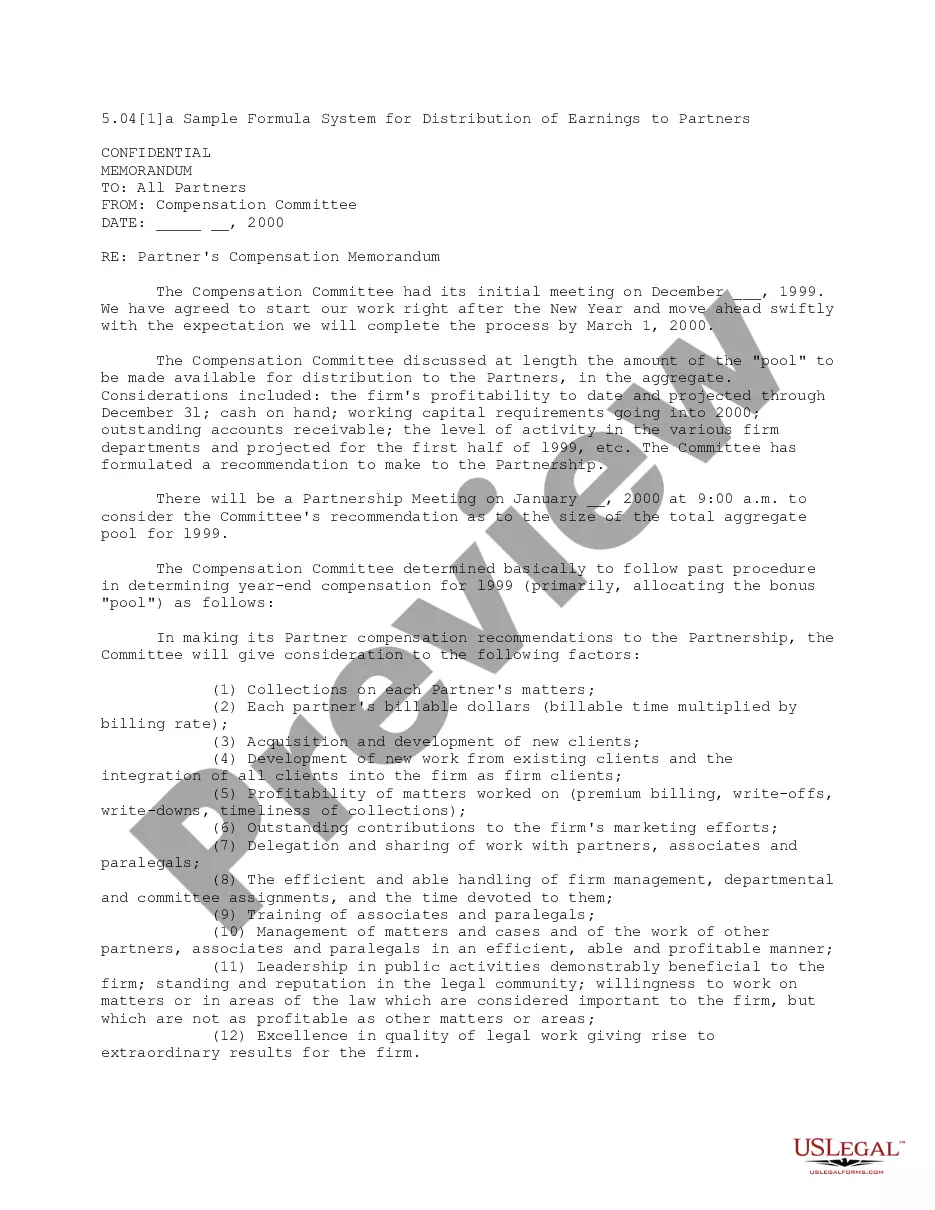
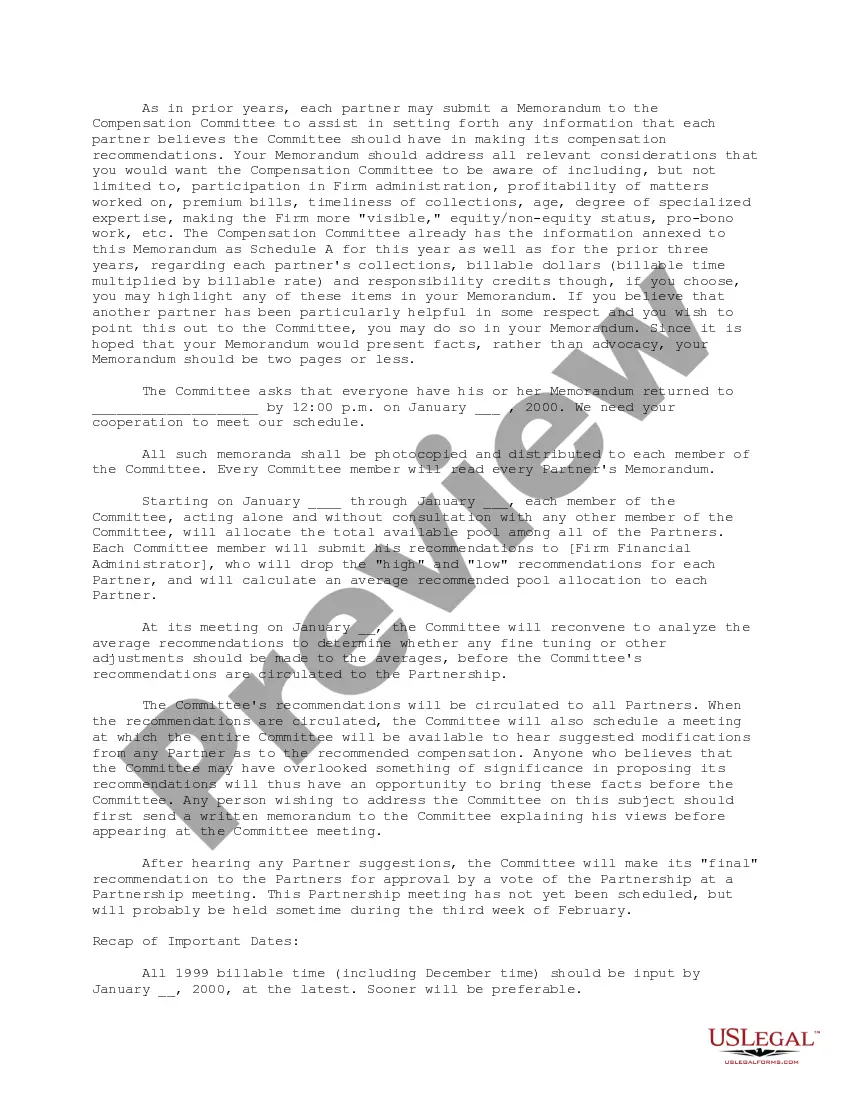
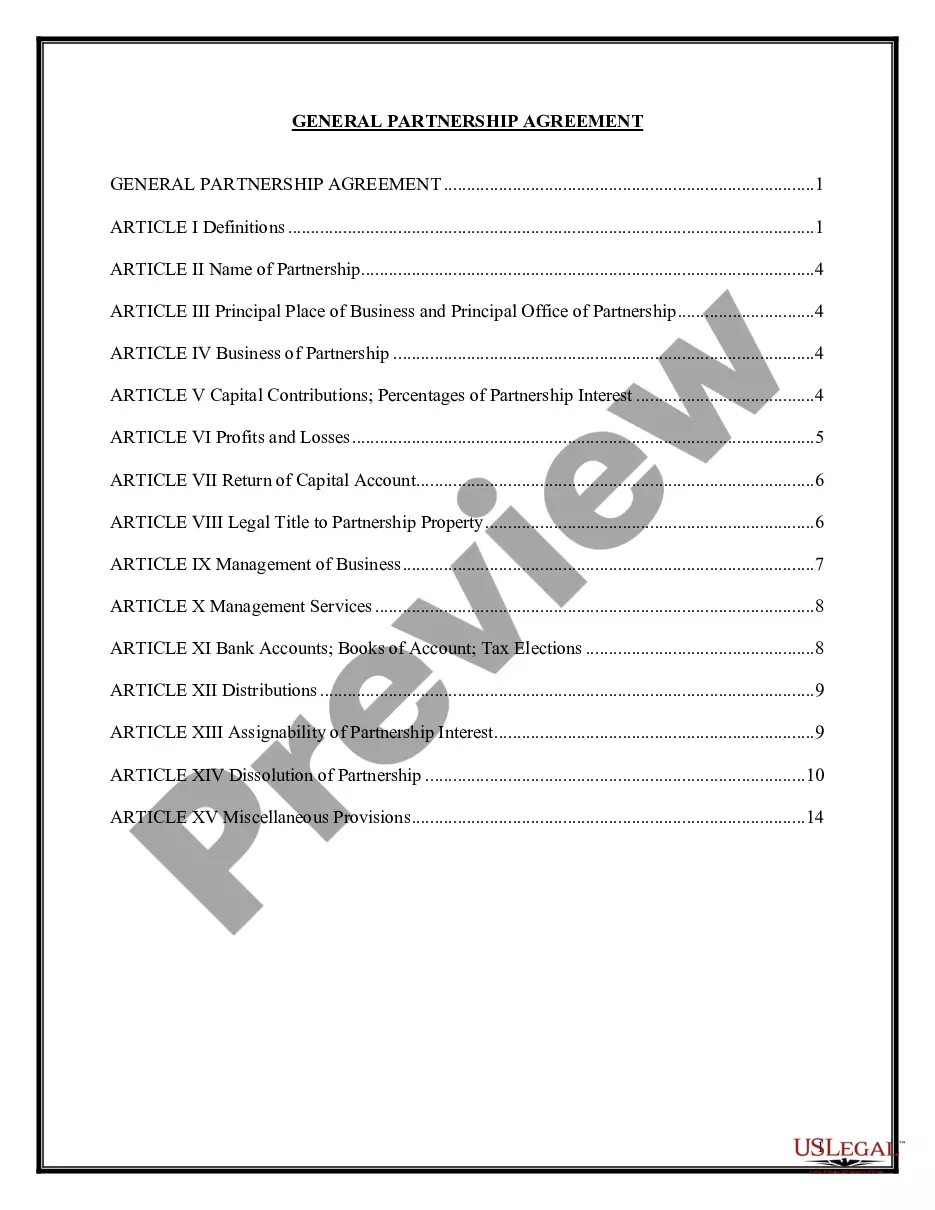
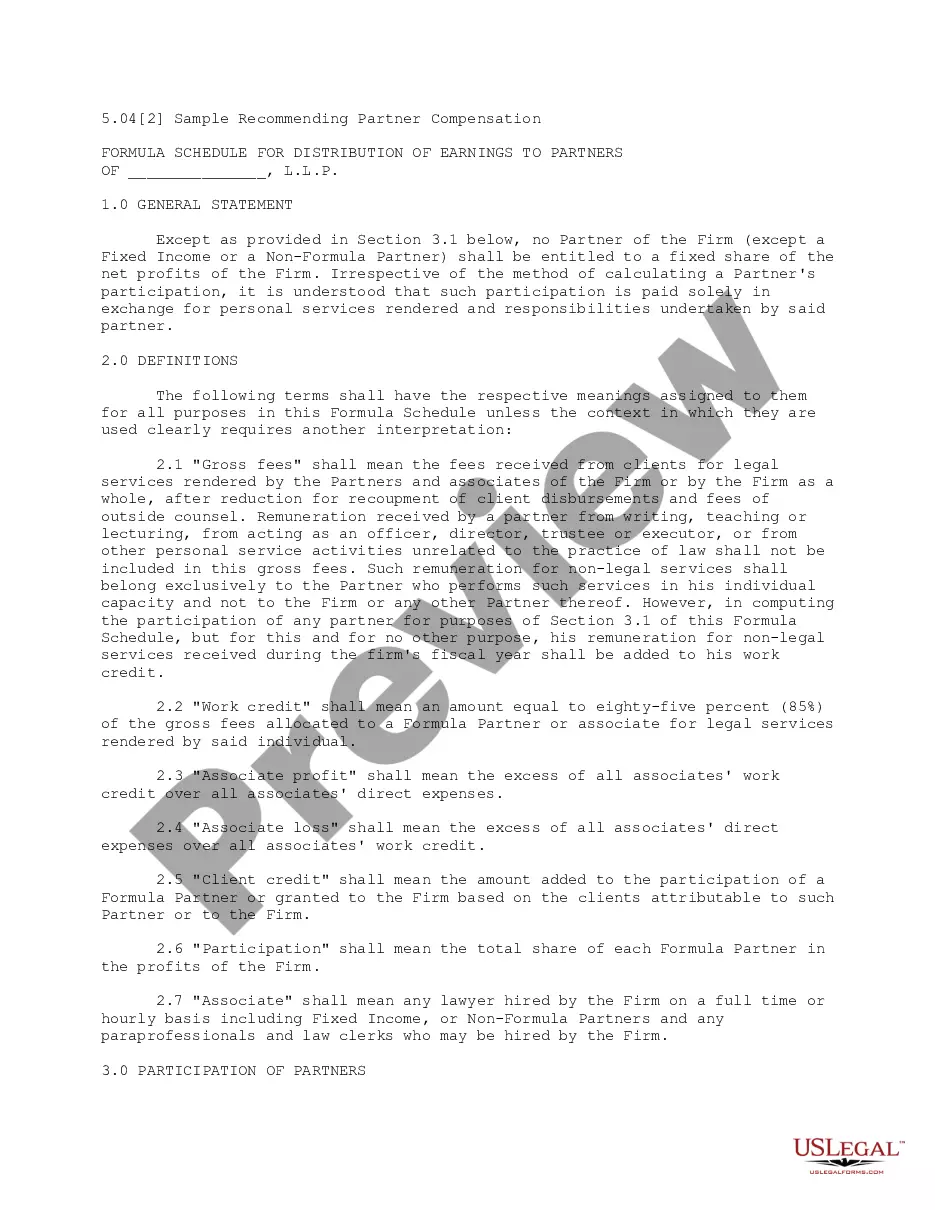
The Formula System for Distribution of Earnings to Partners is a structured document designed to facilitate equitable distribution of earnings among partners in a law firm. This form outlines key provisions and considerations that must be evaluated when making recommendations regarding partner compensation. It serves as a guide to ensure that distribution decisions are fair, transparent, and based on measurable contributions, setting it apart from more generic financial forms.
Form components explained
- Guidelines for partner compensation recommendations.
- Factors affecting earnings distribution, such as collections and profitability.
- Memorandum submission instructions for individual contributions.
- Schedule of important dates for submission and meetings.
- Criteria for evaluating partner performance and contributions.


Situations where this form applies
This form is used primarily at the end of a fiscal year or performance cycle to determine how earnings should be distributed among partners in a law firm. It is essential when evaluating individual performance and contributions to the firm, ensuring that each partner is fairly compensated based on predetermined criteria and firm profitability.
Who should use this form
- Law firm partners involved in financial decision-making.
- Compensation committees tasked with evaluating partner contributions.
- Firm administrators overseeing financial distributions.
- Partners who wish to present their contributions for consideration.
How to complete this form
- Gather relevant financial data and performance metrics for each partner.
- Draft a memorandum summarizing contributions and activities that warrant consideration for compensation.
- Submit the memorandum to the Compensation Committee by the specified deadline.
- Participate in the partnership meeting to discuss recommendations and considerations.
- Review the final compensation recommendations and provide feedback if necessary.
Notarization requirements for this form
In most cases, this form does not require notarization. However, some jurisdictions or signing circumstances might. US Legal Forms offers online notarization powered by Notarize, accessible 24/7 for a quick, remote process.
Get your form ready online
Our built-in tools help you complete, sign, share, and store your documents in one place.
Make edits, fill in missing information, and update formatting in US Legal Forms—just like you would in MS Word.
Download a copy, print it, send it by email, or mail it via USPS—whatever works best for your next step.
Sign and collect signatures with our SignNow integration. Send to multiple recipients, set reminders, and more. Go Premium to unlock E-Sign.
If this form requires notarization, complete it online through a secure video call—no need to meet a notary in person or wait for an appointment.
We protect your documents and personal data by following strict security and privacy standards.

Make edits, fill in missing information, and update formatting in US Legal Forms—just like you would in MS Word.

Download a copy, print it, send it by email, or mail it via USPS—whatever works best for your next step.

Sign and collect signatures with our SignNow integration. Send to multiple recipients, set reminders, and more. Go Premium to unlock E-Sign.

If this form requires notarization, complete it online through a secure video call—no need to meet a notary in person or wait for an appointment.

We protect your documents and personal data by following strict security and privacy standards.
Common mistakes to avoid
- Failing to gather sufficient data to support compensation requests.
- Ignoring the submission deadlines for memoranda.
- Submitting memoranda that do not clearly present relevant contributions.
- Overlooking the importance of collaborative efforts and marketing contributions.
Benefits of completing this form online
- Convenience of accessing and downloading the form from anywhere.
- Editability allows for customization to fit specific partnership needs.
- Reliability of having a legally recognized document prepared by licensed attorneys.
Legal use & context
- This form serves as a legally recognized approach to determining partner compensation in law firms.
- It lays down clear expectations for performance, fostering accountability among partners.
- Helps in preventing disputes regarding earnings distribution, as it relies on documented criteria.
Summary of main points
- The Formula System for Distribution of Earnings to Partners provides a framework for equitable distribution among partners.
- Clear guidelines and criteria ensure fairness in compensation decisions.
- This form is vital for preparing for annual compensation discussions and evaluations.
Looking for another form?








Form popularity
FAQ
Distribution of Profit. Members must receive allocations of LLC profits every year.LLCs are not required to periodically distribute profits to members. If profits are distributed, a member still has an equal claim for future distributions.
A distribution is a transfer of cash or property by a partnership to a partner with respect to the partner's interest in partnership capital or income.A partnership distribution may consist of cash, property, or both.
Unequal Distributions: The partnership agreement may stipulate that an unequal percentage of profits is to be distributed to a partner regardless of the amount of his capital contribution.
A partner position in a CPA firm is the pinnacle of an Accounting career. According to Payscale.com4, the average salary for a partner in an accounting firm is $159,305. However, there is potential for a CPA Partner salary to hover around $320,000 depending on the size of the firm and where it is located.
Partnerships and LLC agreements will sometimes allow investors to distribute assets to investors disproportionately, although many partnership agreements call for these disproportionate distributions to be cured at some later date (such as upon winding up of the business or the sale of the ownership interest).
Do partnership distributions have to be equal? Partner equity does not typically equate to equivalent investment contributions from all business partners. Instead, partners can make equal contributions to the company and possess equal ownership rights, but make contributions in a variety of different forms.
Partnership income (or a loss) is distributed to the partners based on their 'share' of the 'net income of the partnership' (income minus expenses). This share is generally determined by the partnership agreement.
Partnerships are business entities consisting of two or more individuals who co-own the business and share in its profits and losses.Instead, partners may make equal contributions to the business and have equal ownership rights, but the contributions themselves may take a number of different forms.
Abstract- Several different partnership compensation systems have been used by CPA firms.The most common compensation systems are the democratic systems. One of these is the equal distribution system, in which all partners receive equal compensation regardless of their levels of effort or contribution to the firm.