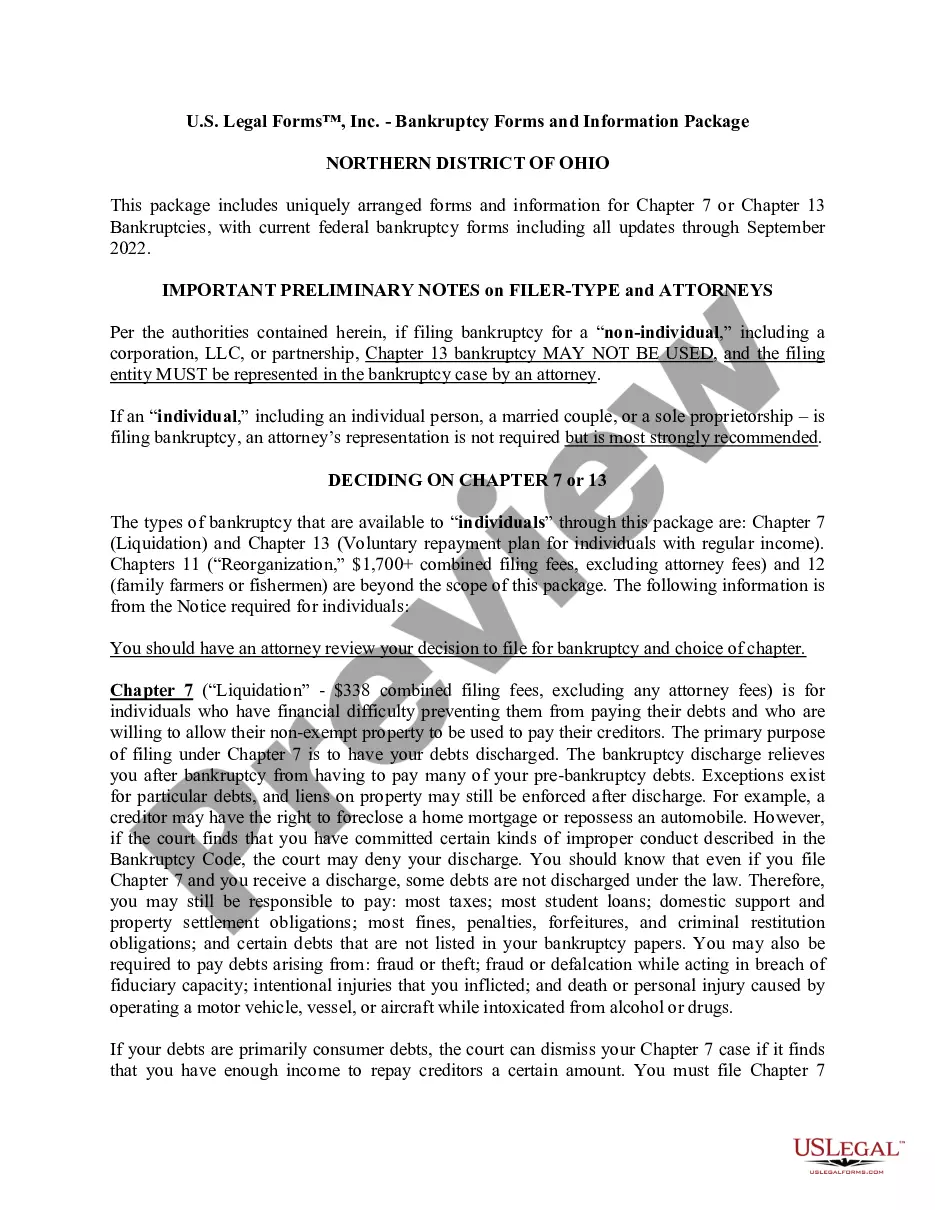
Nonexclusive Trademark License Agreement
Overview of this form
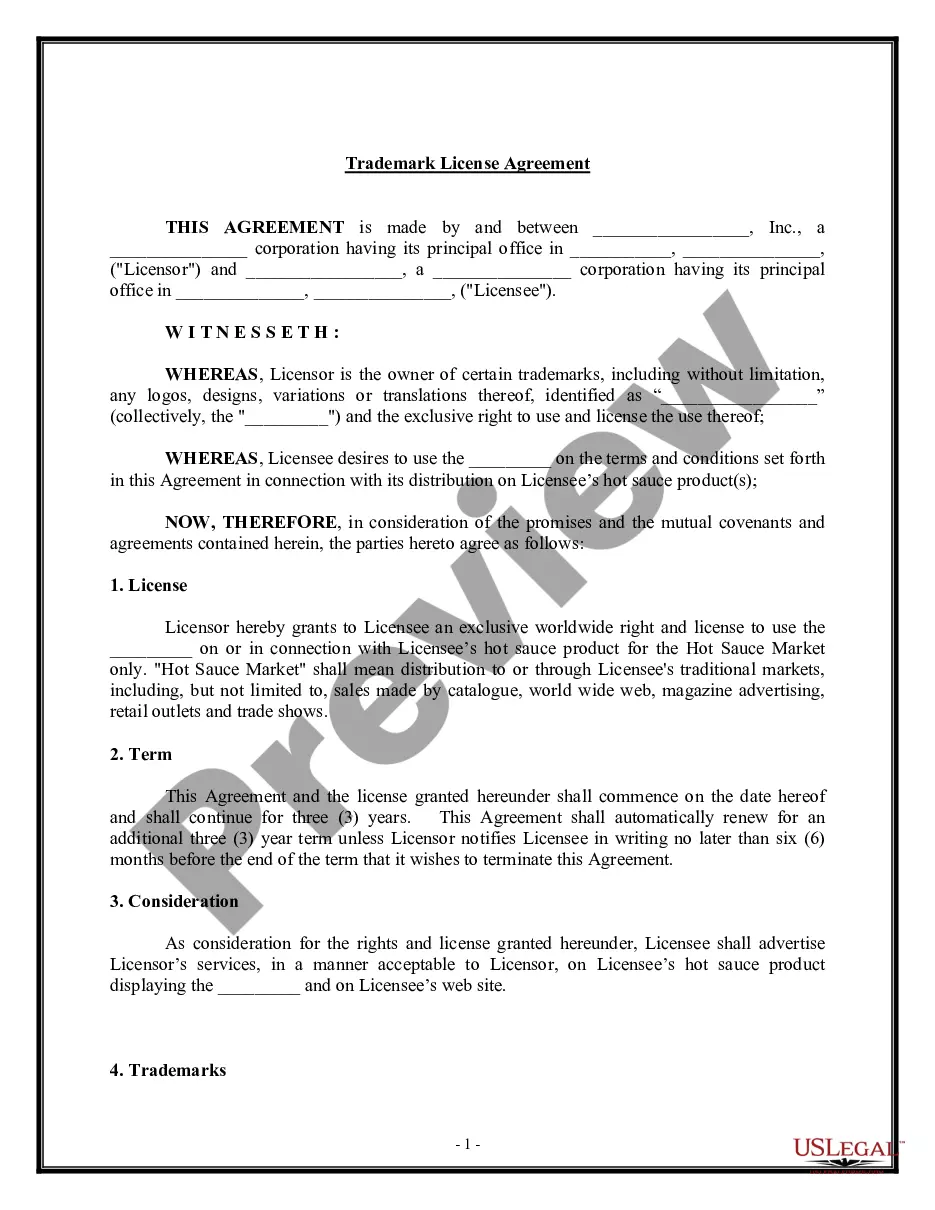
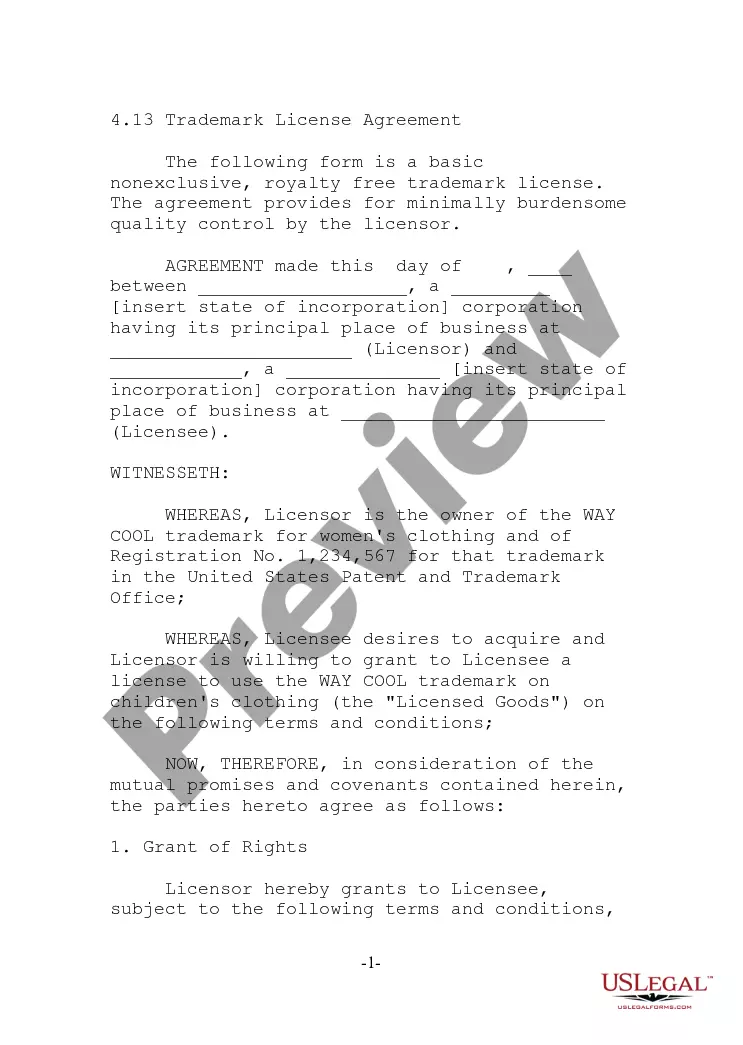
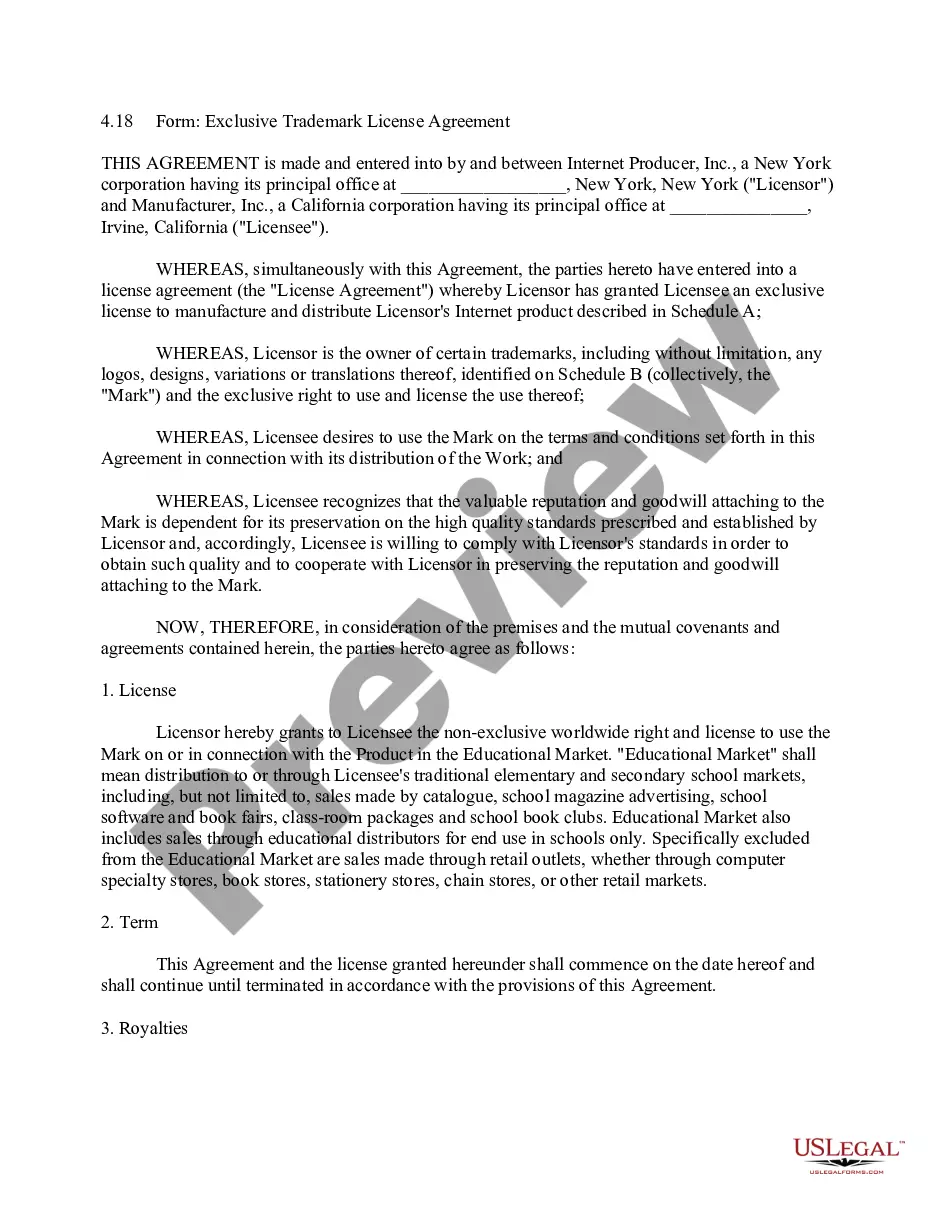
The Nonexclusive Trademark License Agreement is a legal document that allows one party (the Licensee) to use the trademarks of another party (the Licensor) for specified products or services. Unlike an exclusive license, this agreement permits the Licensee to use the trademarks alongside other licensees. This form is particularly useful in the context of entertainment, new products, and multimedia businesses, where branding is crucial for market success.
Key parts of this document
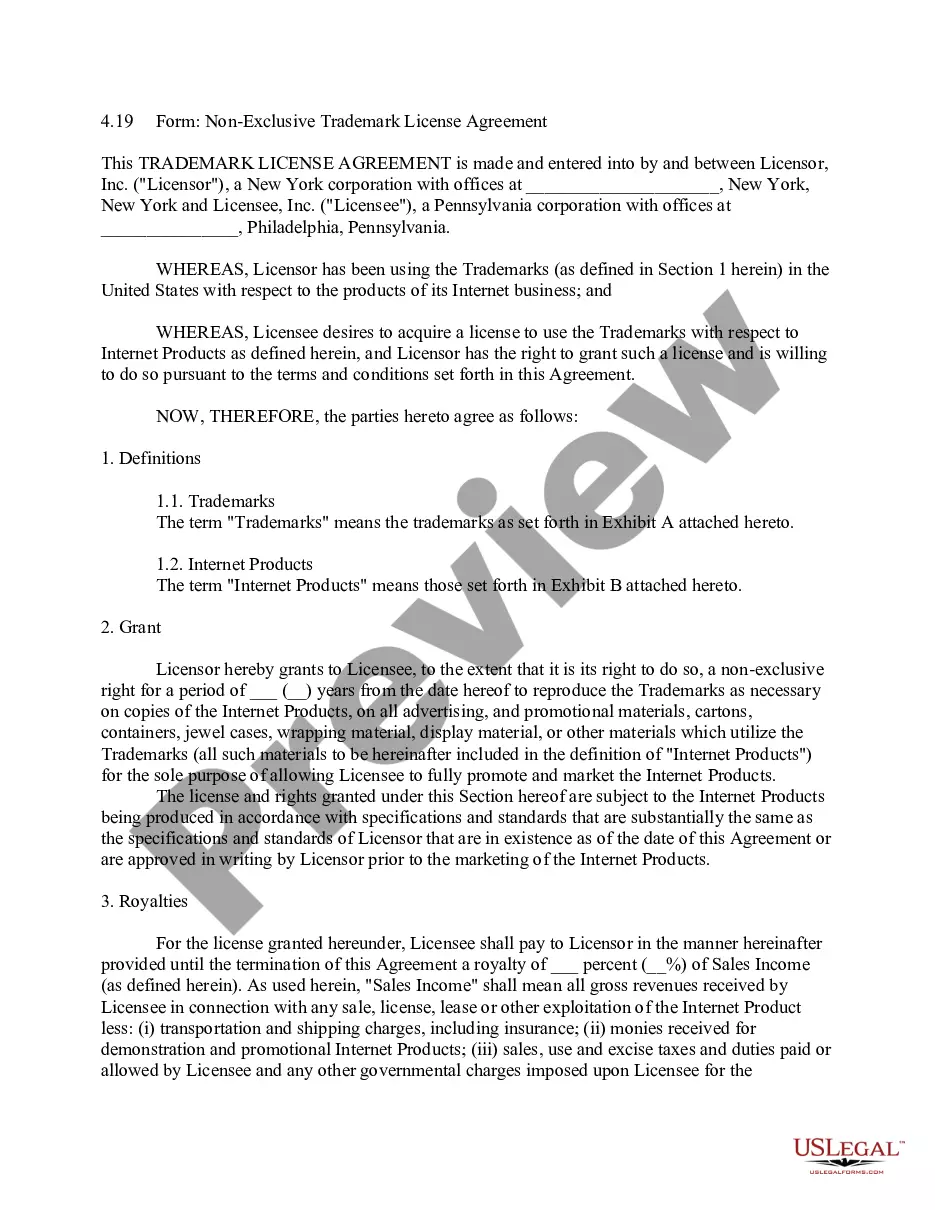
- Definitions: Clarifies key terms like "Trademarks" and "Internet Products."
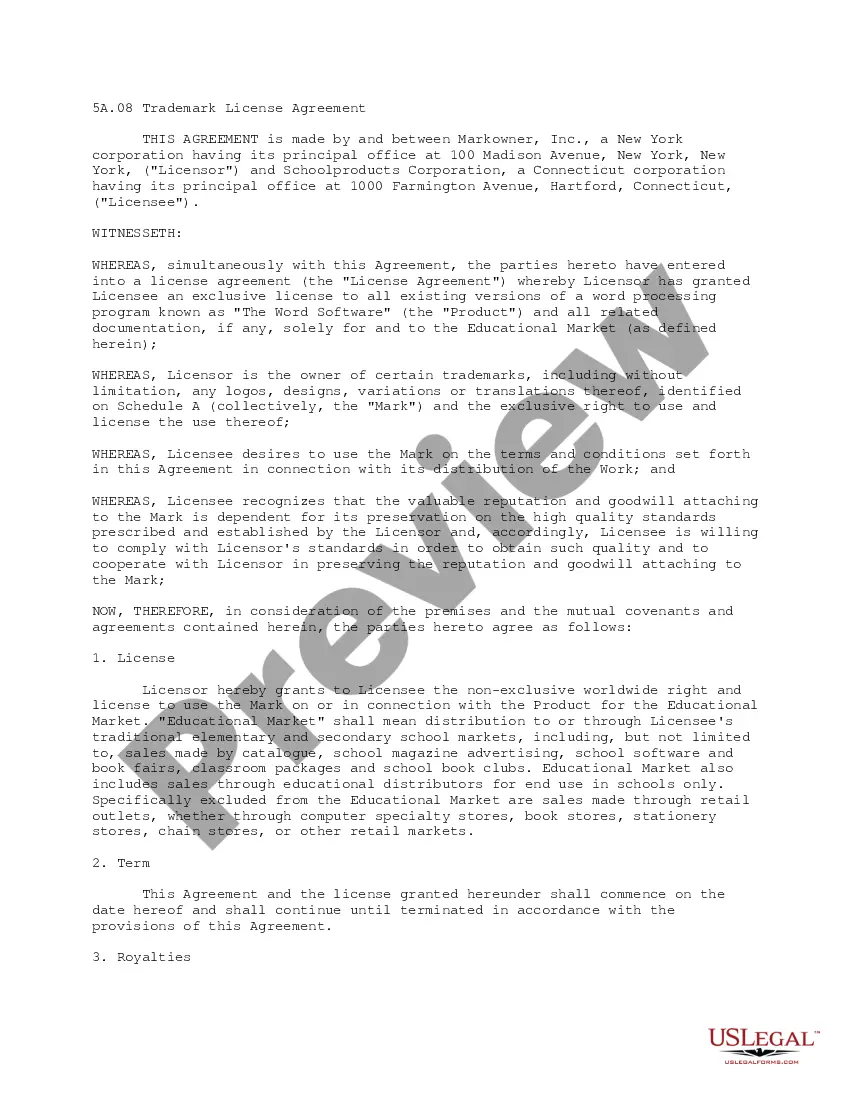
- Grant: Specifies the rights granted to the Licensee and the duration of the license.
- Royalties: Outlines the payment structure, including percentages and advances.
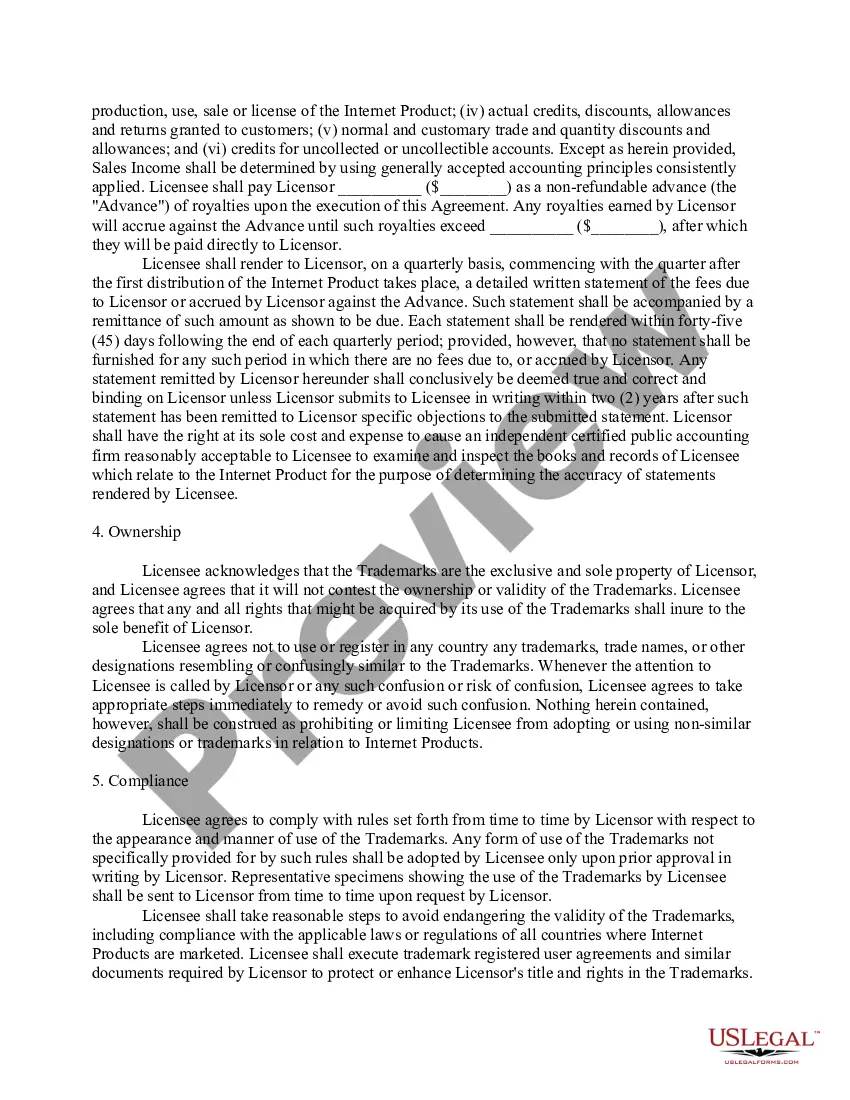
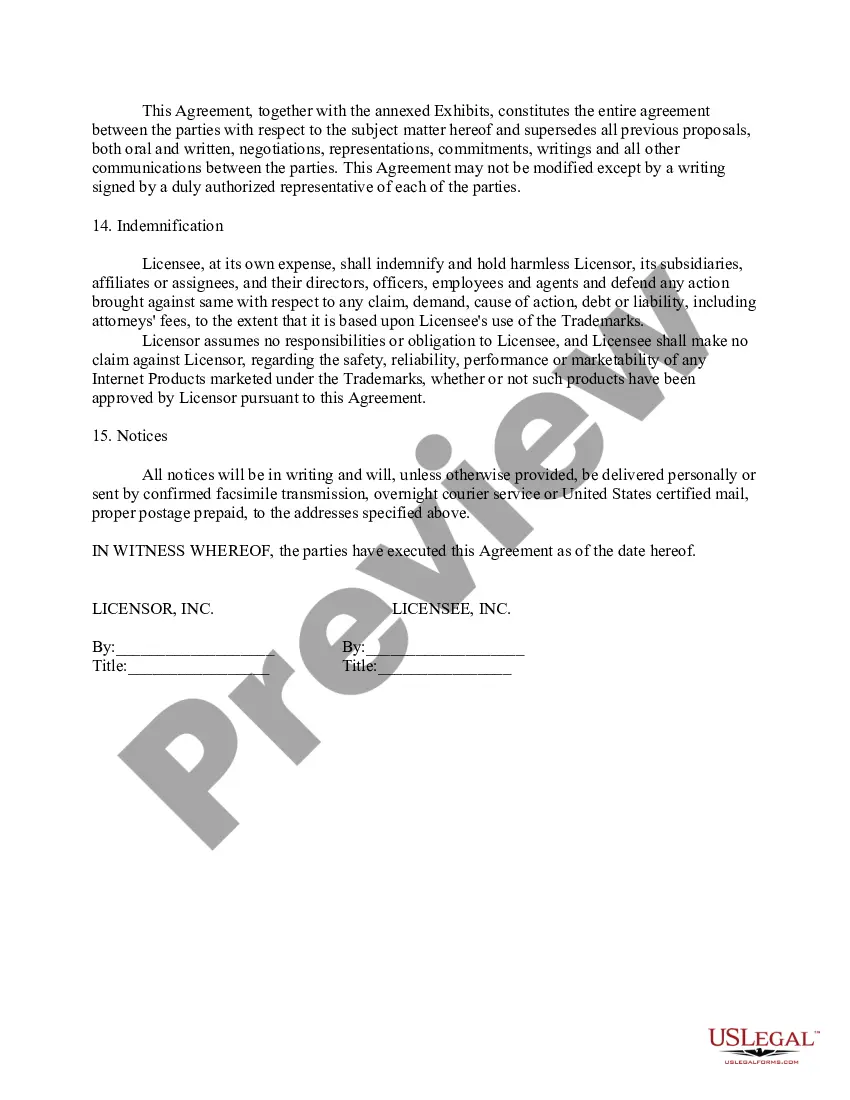
- Ownership: Affirms that the Licensor retains sole ownership of the trademarks.
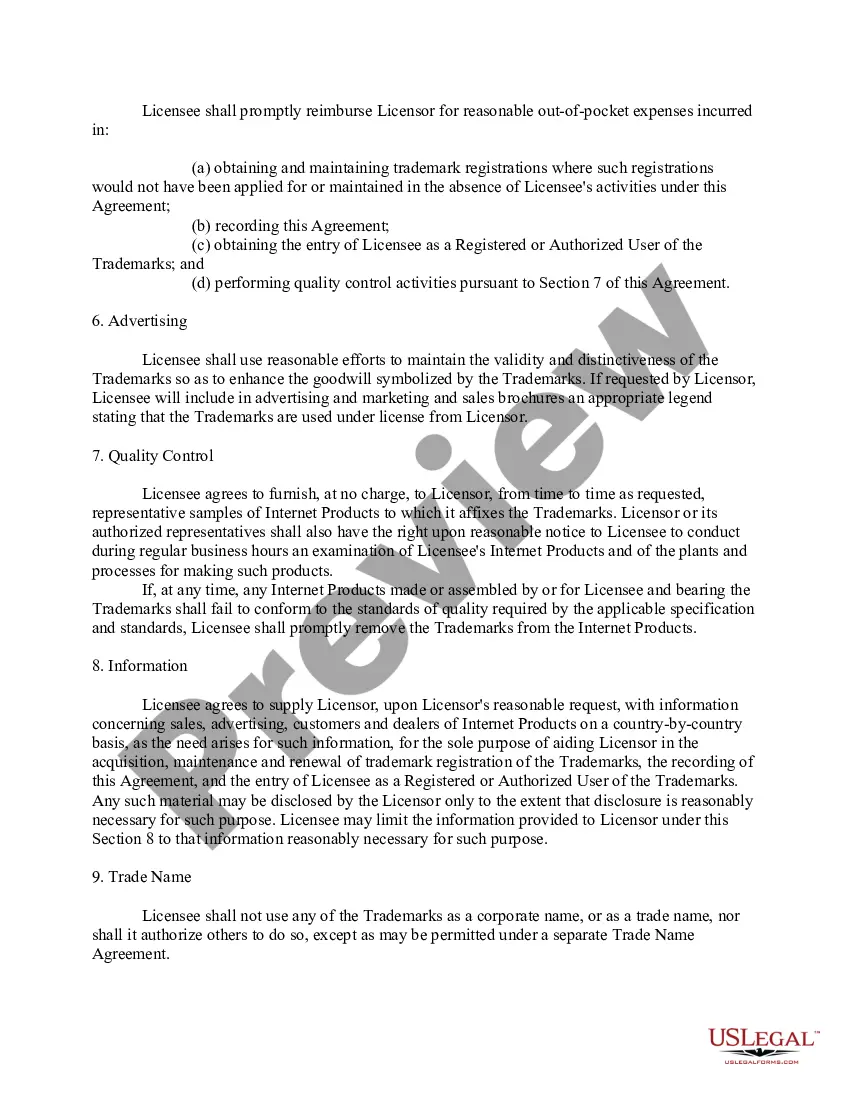
- Compliance: Sets out the responsibilities for maintaining trademark integrity.
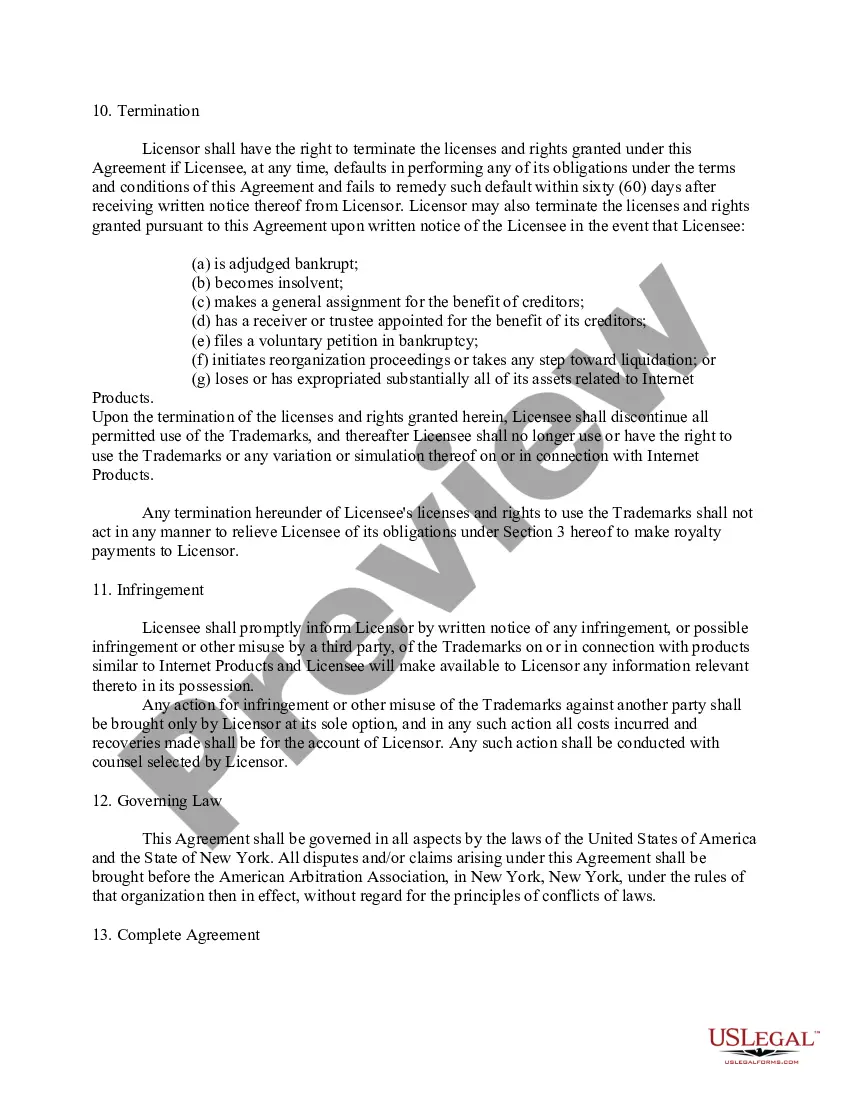
- Termination: Details the circumstances under which the agreement may be terminated.
Situations where this form applies
This agreement should be used when a business wants to license trademarks for use in marketing its products or services but does not require exclusive rights. It's ideal for companies looking to collaborate or expand their product offerings while maintaining brand recognition without relinquishing control over trademark ownership.
Who can use this document
- Businesses and entrepreneurs looking to use a trademark for their products.
- Companies involved in entertainment or multimedia seeking to license trademarks for branding.
- Legal professionals representing clients in trademark transactions.
- Startups wishing to secure branding rights without the exclusivity commitment.
Completing this form step by step
- Identify the parties involved: Fill in the Licensor and Licensee details, including legal names and addresses.
- Define the trademarks: List the specific trademarks being licensed in the appropriate section.
- Specify the duration: Indicate the length of time the license is valid.
- Outline payment terms: Clearly state the royalty percentage and any advance payments required.
- Review for compliance: Ensure all sections adhere to the guidelines set forth by the Licensor.
Does this document require notarization?
In most cases, this form does not require notarization. However, some jurisdictions or signing circumstances might. US Legal Forms offers online notarization powered by Notarize, accessible 24/7 for a quick, remote process.
Get your form ready online
Our built-in tools help you complete, sign, share, and store your documents in one place.
Make edits, fill in missing information, and update formatting in US Legal Forms—just like you would in MS Word.
Download a copy, print it, send it by email, or mail it via USPS—whatever works best for your next step.
Sign and collect signatures with our SignNow integration. Send to multiple recipients, set reminders, and more. Go Premium to unlock E-Sign.
If this form requires notarization, complete it online through a secure video call—no need to meet a notary in person or wait for an appointment.
We protect your documents and personal data by following strict security and privacy standards.

Make edits, fill in missing information, and update formatting in US Legal Forms—just like you would in MS Word.

Download a copy, print it, send it by email, or mail it via USPS—whatever works best for your next step.

Sign and collect signatures with our SignNow integration. Send to multiple recipients, set reminders, and more. Go Premium to unlock E-Sign.

If this form requires notarization, complete it online through a secure video call—no need to meet a notary in person or wait for an appointment.

We protect your documents and personal data by following strict security and privacy standards.
Common mistakes
- Failing to clearly define the trademarks being licensed.
- Not specifying the duration of the license, leading to potential misunderstandings.
- Omitting payment structure details, which can cause disputes later.
- Neglecting to review compliance terms, risking trademark validity.
Why use this form online
- Convenience of downloading and completing the form at your own pace.
- Editability allows for easy customization to fit your specific needs.
- Access to templates drafted by licensed attorneys ensures legal reliability.
- Immediate availability reduces waiting time compared to traditional legal services.
Legal use & context
- This agreement is enforceable in any jurisdiction where it complies with applicable laws.
- It serves to protect the interests of both the Licensor and Licensee regarding trademark use.
- Ensures that the Licensor retains control over the integrity and branding of their trademarks.
Key takeaways
- A Nonexclusive Trademark License Agreement allows licensing of trademark rights to multiple entities.
- Clearly defined terms, including royalty payments and quality control, are crucial for effectiveness.
- Businesses must ensure compliance with both the agreement and relevant state laws.
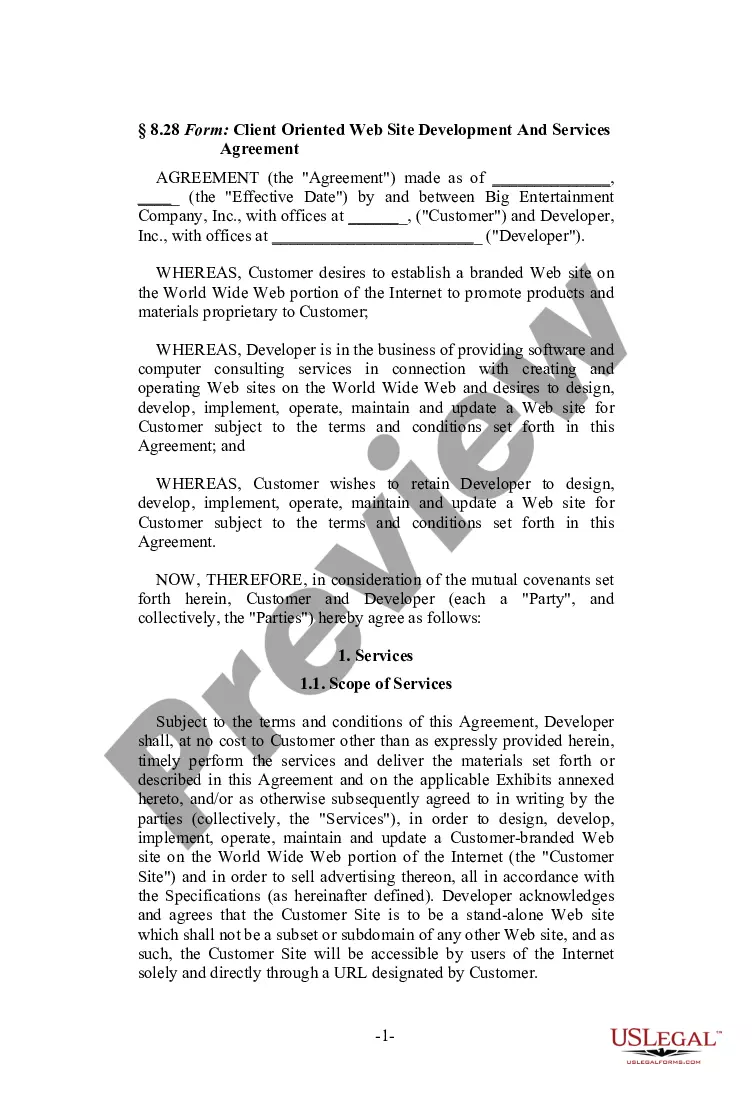
Looking for another form?
Form popularity
FAQ
A licensing agreement allows one party (the licensee) to use and/or earn revenue from the property of the owner (the licensor). Licensing agreements generate revenues, called royalties, earned by a company for allowing its copyrighted or patented material to be used by another company.
What is a Licensing Agreement? A licensing agreement is a contract between two parties (the licensor and licensee) in which the licensor grants the licensee the right to use the brand name, trademark, patented technology, or ability to produce and sell goods owned by the licensor.
Most trademark license agreements aren't assignable, transferable or perpetual, and when you add in exclusive you get an agreement that looks much more like a transfer of all rights rather than a license.
Get it in writing. Develop a detailed licensing agreement that is signed by both licensor and licensee. Work with an experienced trademark attorney, who has knowledge in both drafting agreements and enforcing proper use. Establish brand guidelines that clearly dictate how and where the trademark can be used.
A trademark license agreement allows the licensee to use (but not own) the licensor's trademark in connection with agreed-on products or services. Licensing can help a company expand into new markets effectively and easily while lending the licensee an established name and reputation.
A trademark licensing agreement is a legal contract between a trademark owner and another party that have agreed to use the trademark on preapproved terms decided between the contracting parties.
A licensing agreement is a legal contract between two parties, known as the licensor and the licensee. In a typical licensing agreement, the licensor grants the licensee the right to produce and sell goods, apply a brand name or trademark, or use patented technology owned by the licensor.
A Non-Exclusive Licence grants to the licensee the right to use the intellectual property, but means that the licensor remains free to exploit the same intellectual property and to allow any number of other licensees to also exploit the same intellectual property.
Trademark licensing is the process by which a registered trademark owner, called a licensor or proprietor, allows another party, called a licensee, to make and distribute specific products or services under the licensor's trademark agreement. Trademark licensing is a type of merchandise agreement.