Exclusive Trademark License Agreement
Understanding this form
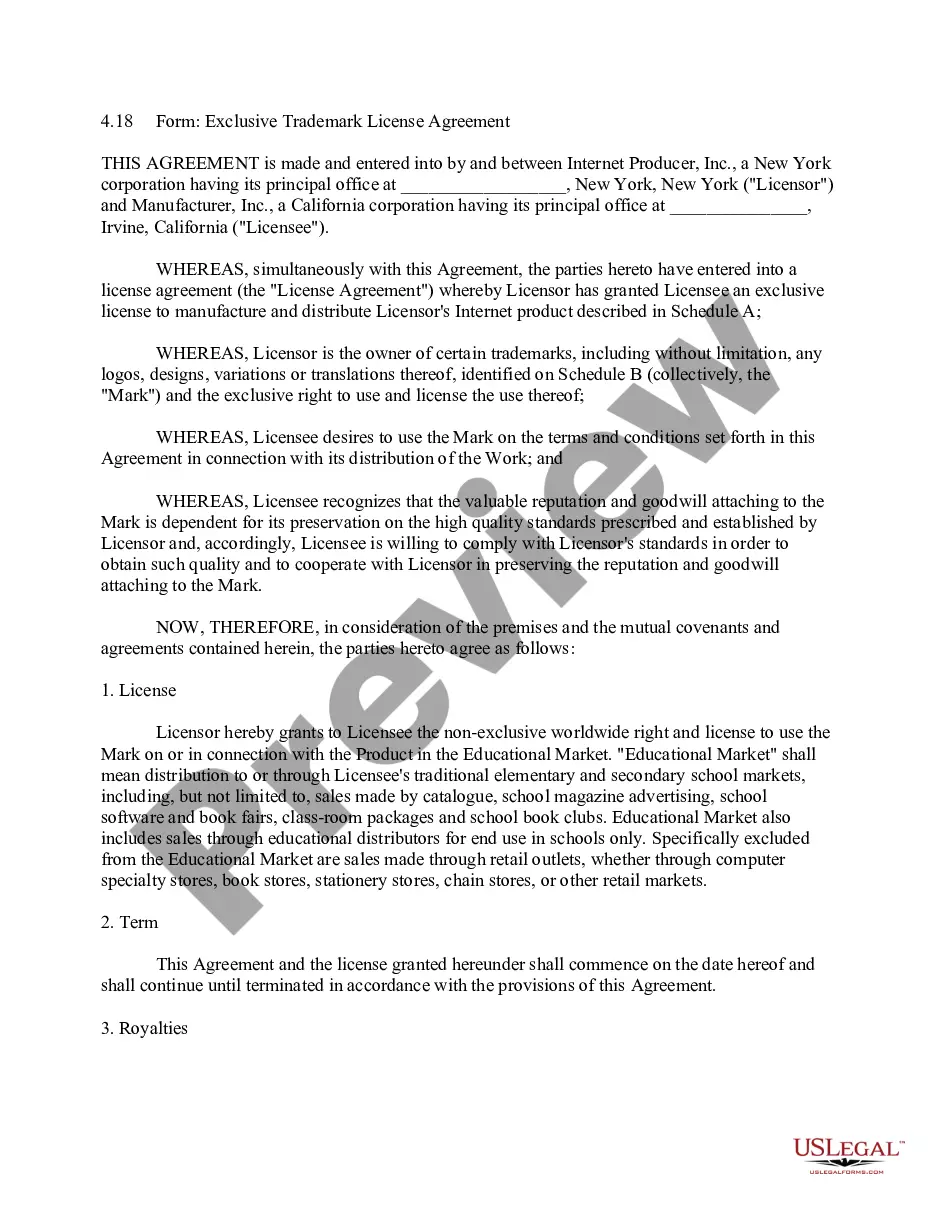
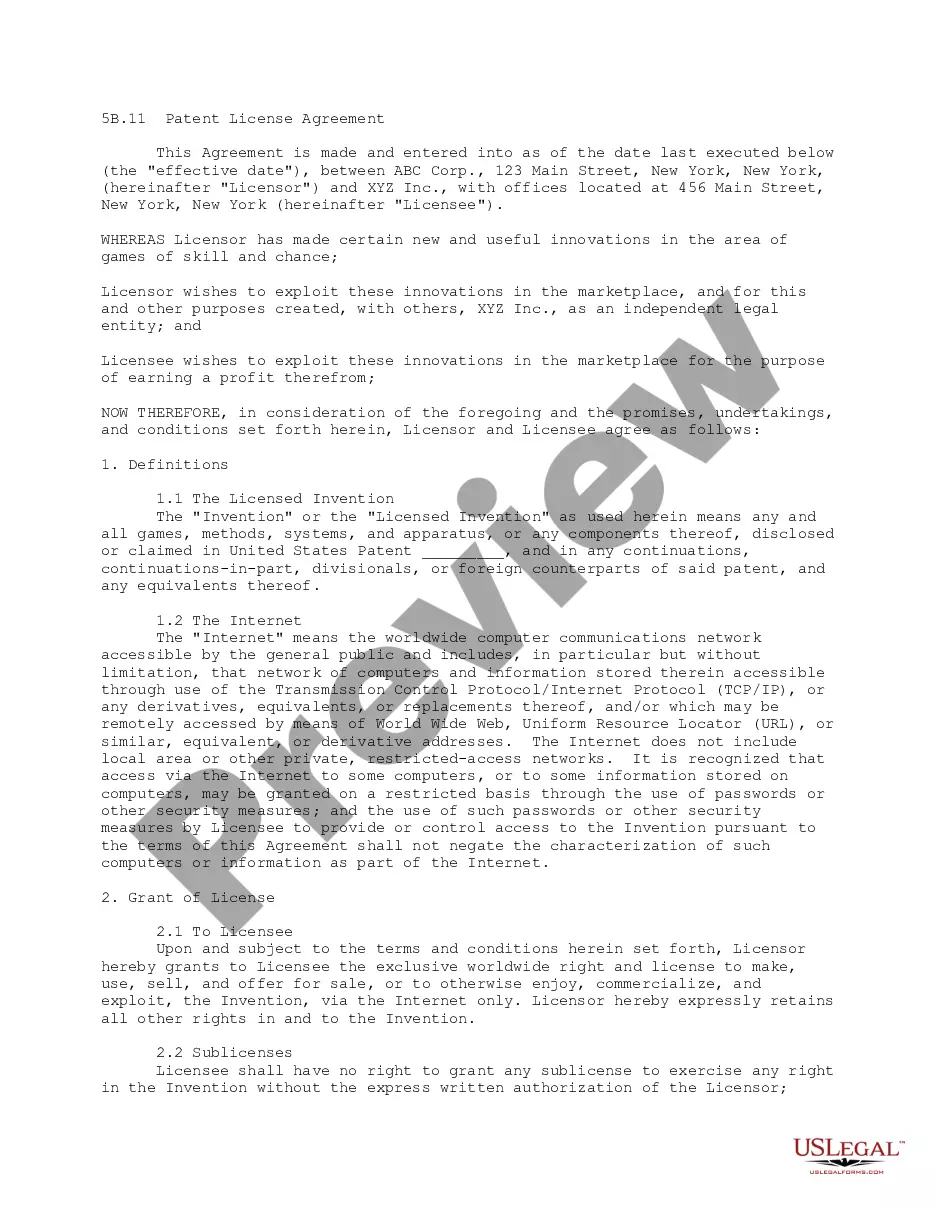
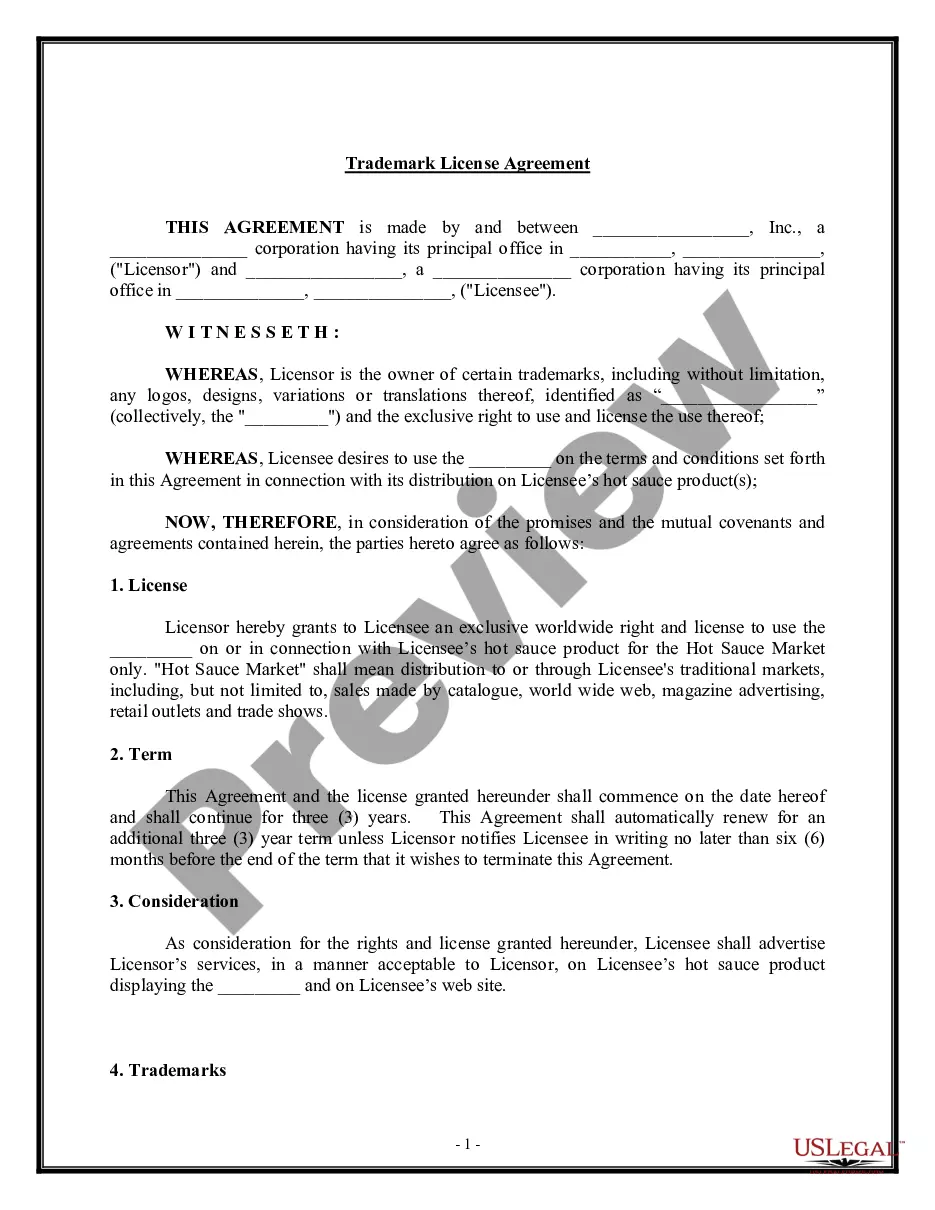
The Exclusive Trademark License Agreement is a legal document that establishes an exclusive arrangement between a Licensor and a Licensee regarding the use of a trademark. This agreement is particularly relevant for businesses in the entertainment, product development, and intellectual property sectors. Unlike general licensing agreements, an exclusive trademark license grants the Licensee sole rights to the trademark within specified parameters, allowing them to manufacture and distribute products under that trademark in a defined market.
Main sections of this form
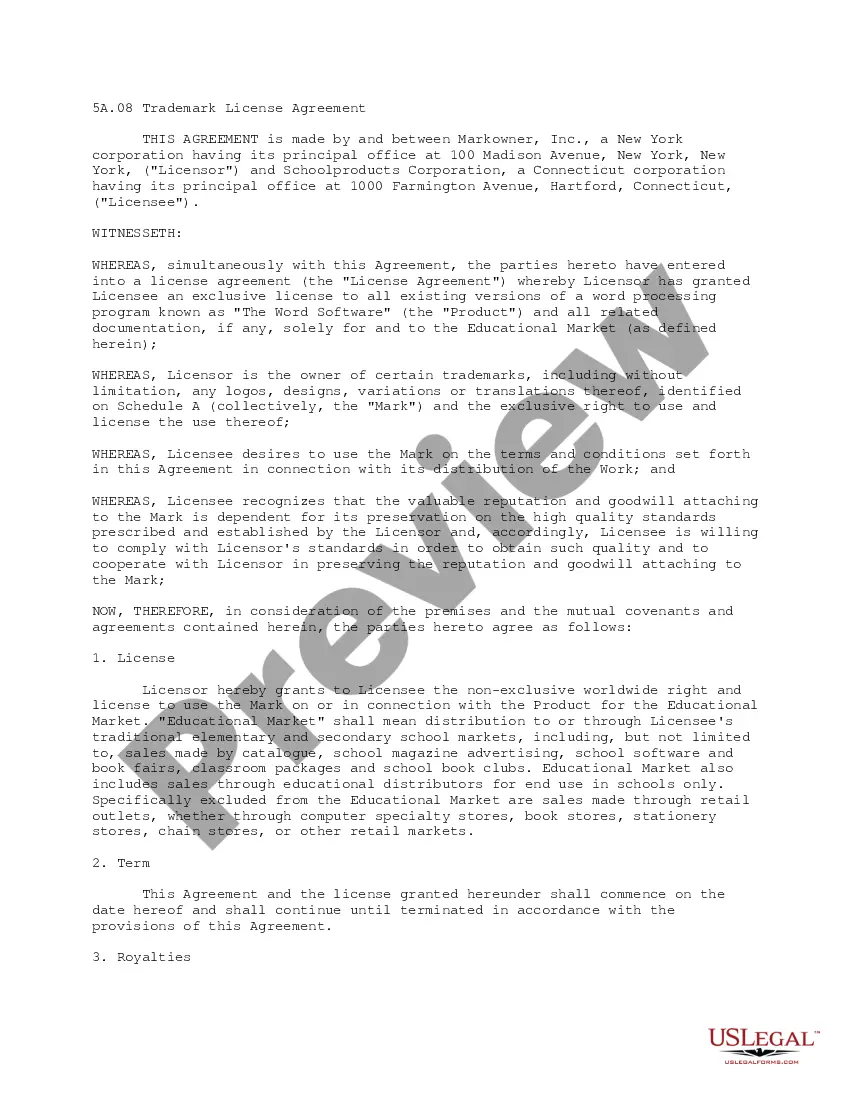
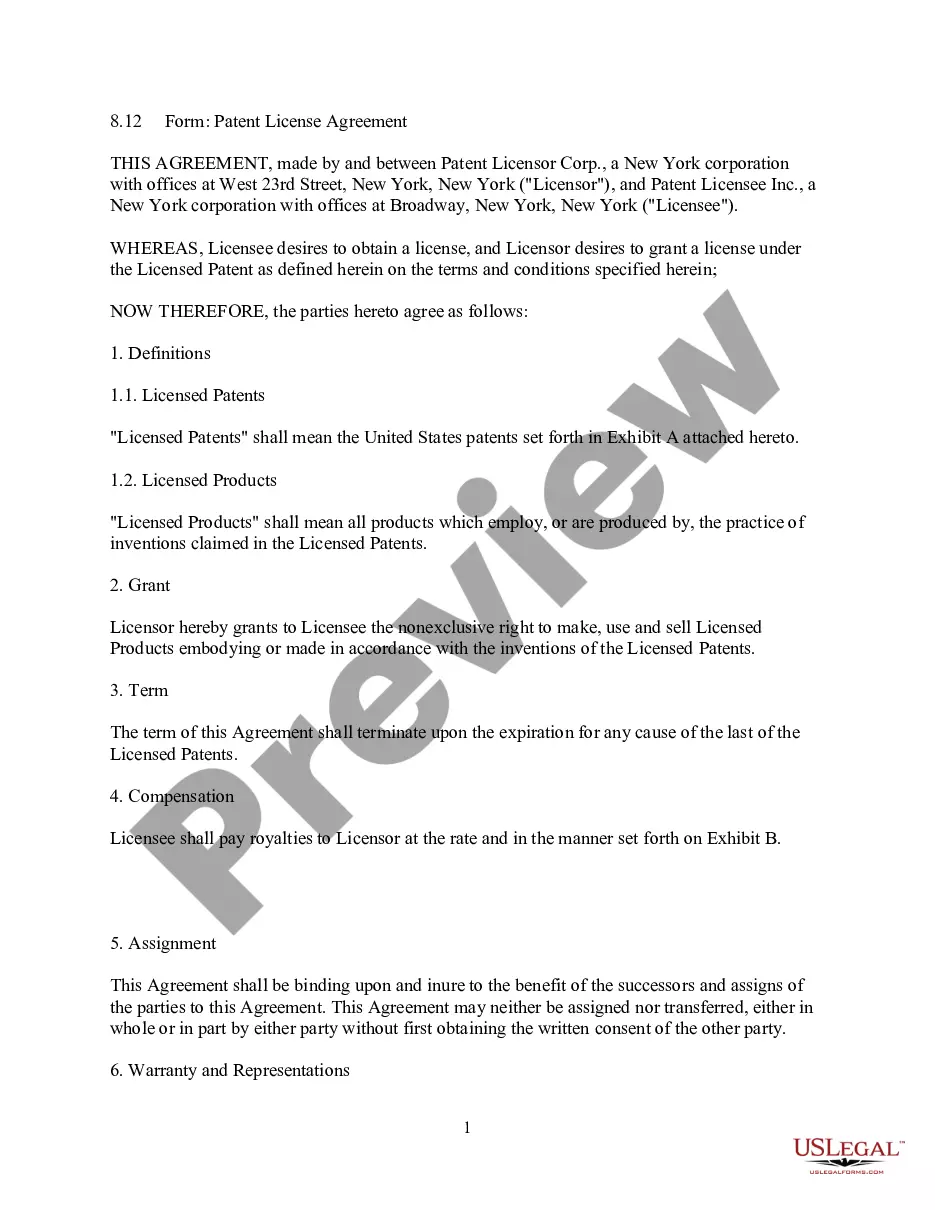
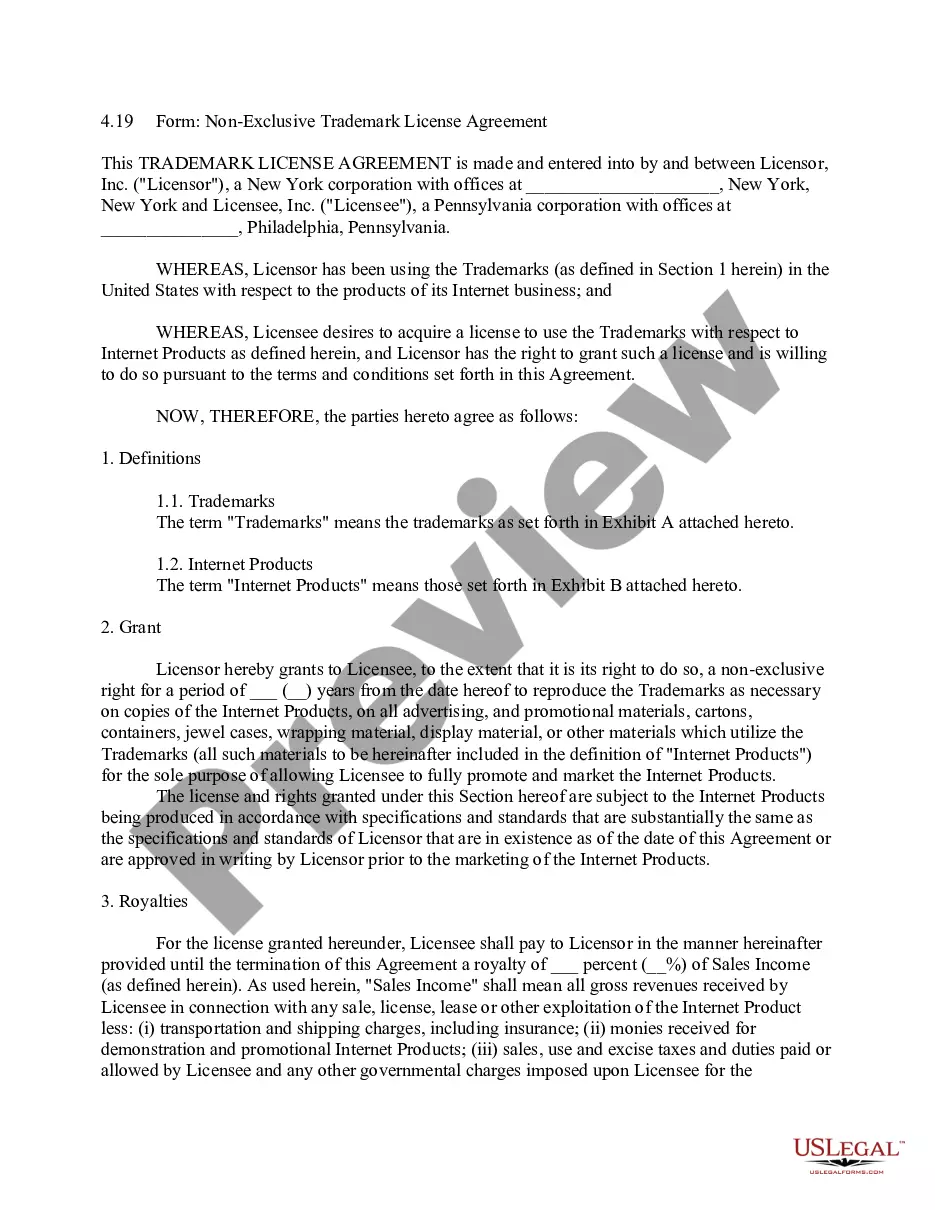
- License Grant: Defines the non-exclusive rights granted by the Licensor to the Licensee.
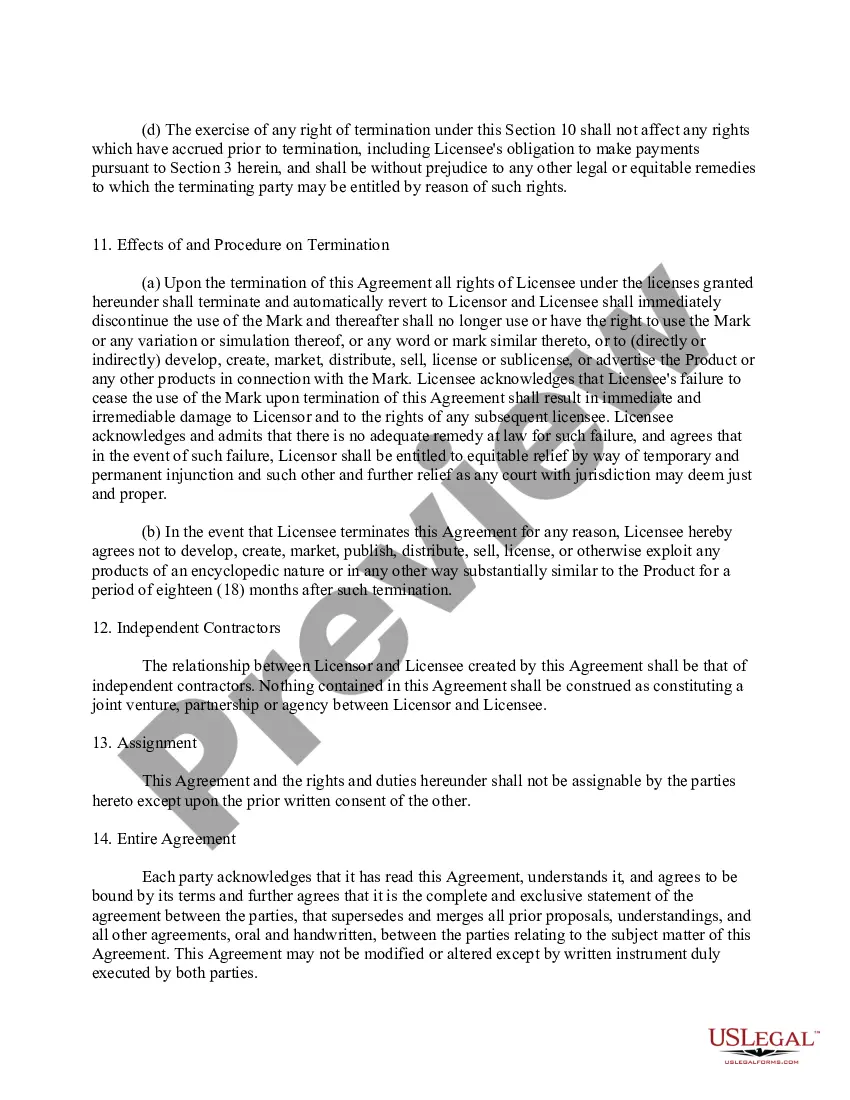
- Term: Specifies the duration of the agreement and conditions for termination.
- Royalties: Outlines the compensation structure for using the trademark.
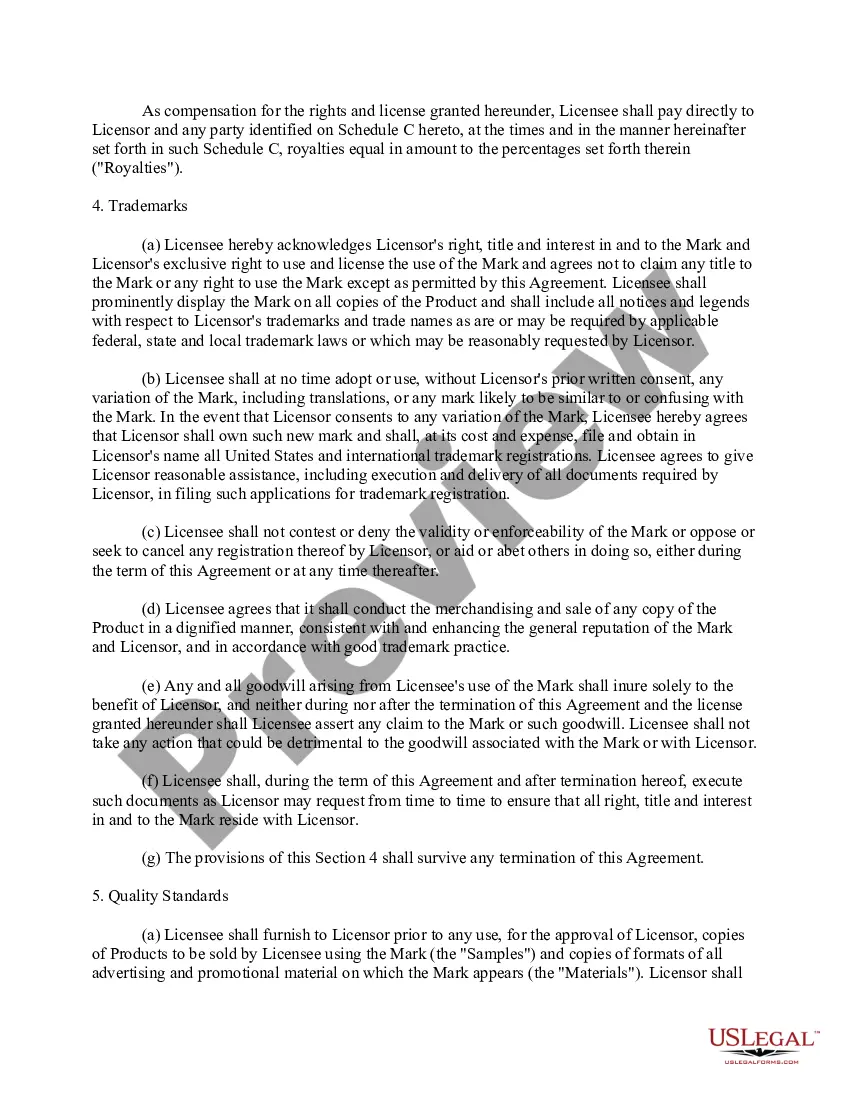
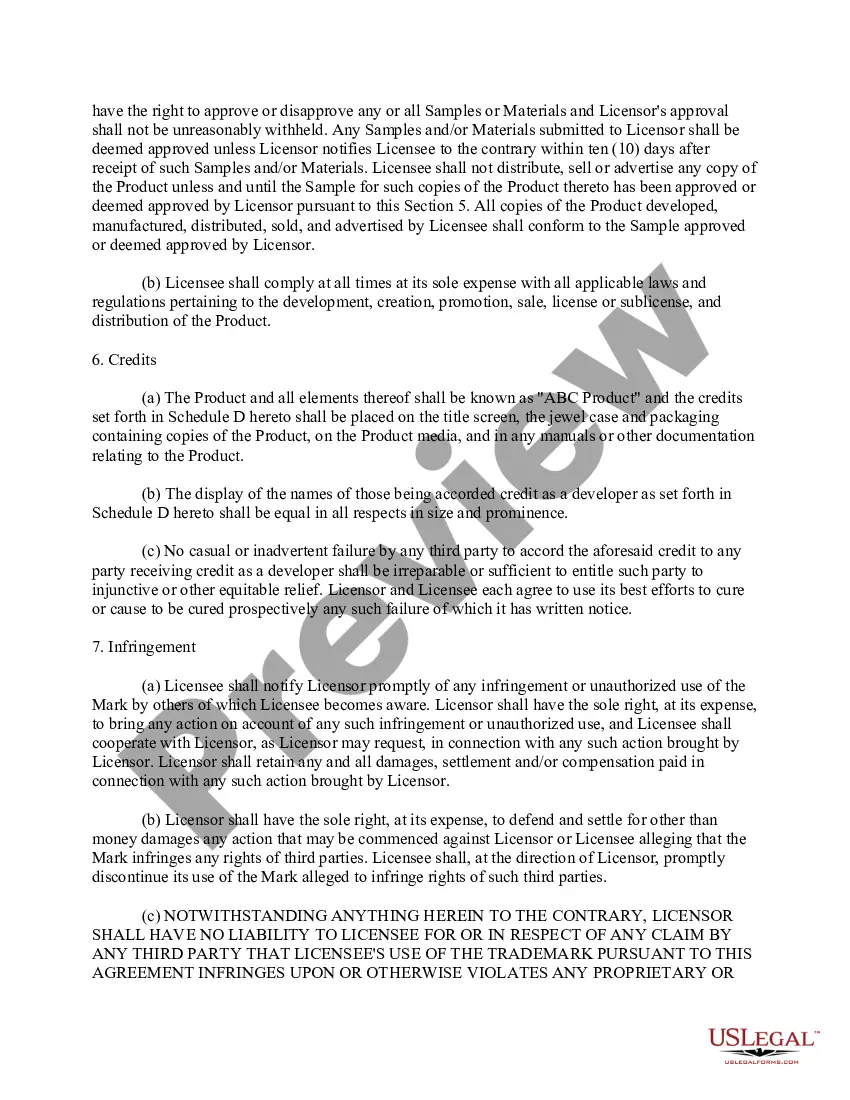
- Quality Standards: Sets expectations for product quality and compliance with Licensor's standards.
- Infringement: Details procedures for handling unauthorized use of the trademark.
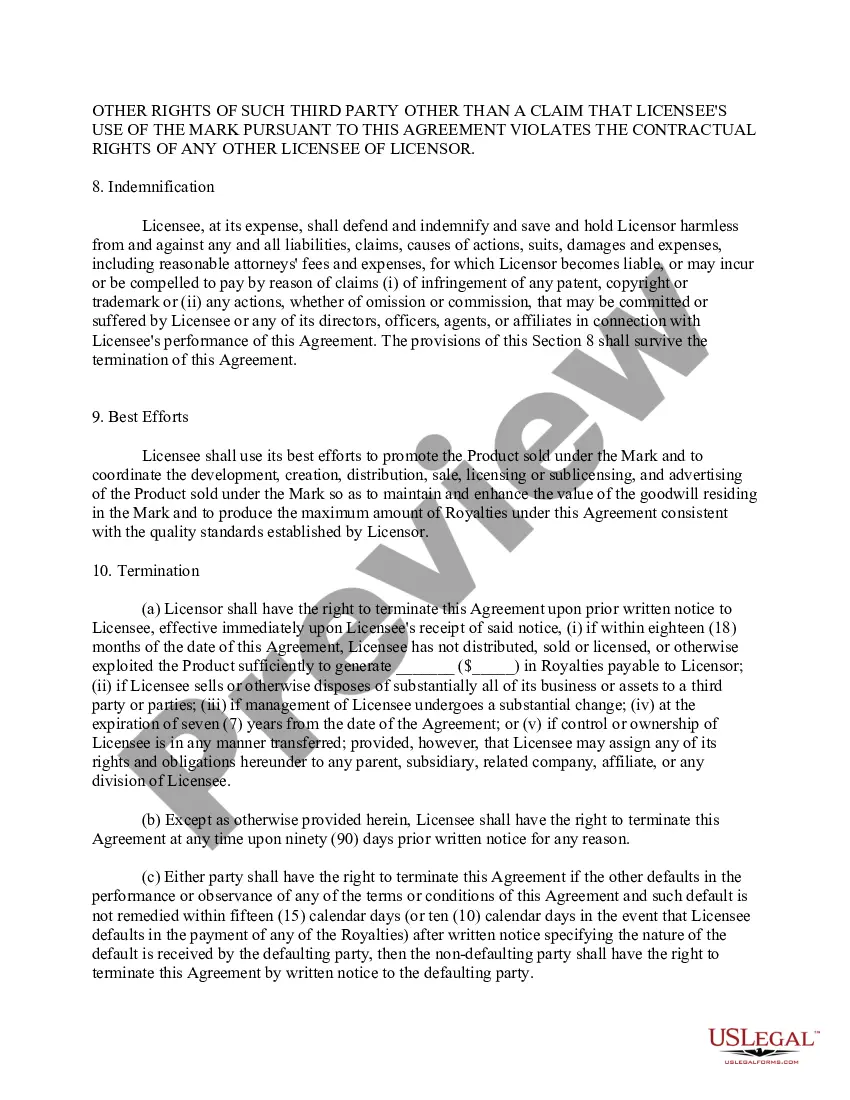
- Indemnification: States the responsibilities of Licensee to protect the Licensor from legal claims.
Situations where this form applies
This form should be used when a business (the Licensee) seeks to obtain exclusive rights to a trademark owned by another party (the Licensor). It is essential when the Licensee intends to manufacture and distribute products bearing that trademark and wishes to ensure compliance with quality standards while safeguarding their rights. This agreement is useful in various industries, particularly in educational markets, where specific sales channels are specified.
Who can use this document
- Businesses looking to obtain exclusive rights to use a trademark.
- Trademark owners granting rights to third parties for specific products or markets.
- Entities within the entertainment or educational sectors requiring trademark licensing.
- Manufacturers planning to use another company's trademark to market their products.
Steps to complete this form
- Identify the parties involved: Enter the names and addresses of the Licensor and Licensee.
- Specify the trademark: Clearly list the trademark and any variations in Schedule B.
- Detail the necessary schedules: Complete Schedules A, C, and D for product description, royalty percentages, and credit distribution.
- Set the duration: Include start and termination conditions for the agreement.
- Review quality standards: Ensure there are approval processes for samples and advertising materials.
Notarization requirements for this form
This form does not typically require notarization unless specified by local law. However, having it notarized may add an extra layer of authenticity.
Get your form ready online
Our built-in tools help you complete, sign, share, and store your documents in one place.
Make edits, fill in missing information, and update formatting in US Legal Forms—just like you would in MS Word.
Download a copy, print it, send it by email, or mail it via USPS—whatever works best for your next step.
Sign and collect signatures with our SignNow integration. Send to multiple recipients, set reminders, and more. Go Premium to unlock E-Sign.
If this form requires notarization, complete it online through a secure video call—no need to meet a notary in person or wait for an appointment.
We protect your documents and personal data by following strict security and privacy standards.

Make edits, fill in missing information, and update formatting in US Legal Forms—just like you would in MS Word.

Download a copy, print it, send it by email, or mail it via USPS—whatever works best for your next step.

Sign and collect signatures with our SignNow integration. Send to multiple recipients, set reminders, and more. Go Premium to unlock E-Sign.

If this form requires notarization, complete it online through a secure video call—no need to meet a notary in person or wait for an appointment.

We protect your documents and personal data by following strict security and privacy standards.
Typical mistakes to avoid
- Failing to specify royalty percentages clearly in Schedule C.
- Not including all necessary schedules for trademark use.
- Overlooking quality control guidelines leading to trademark infringement.
Why complete this form online
- Convenience of immediate access to a customizable legal document.
- Editability allows businesses to tailor the agreement to specific needs.
- Access to reliable resources ensures the form complies with legal standards.
Legal use & context
- Establishes enforceable rights to a trademark for the duration specified in the agreement.
- Protects both partiesâ interests through clearly defined roles and responsibilities.
- Provides a framework for resolving disputes related to trademark usage.
Looking for another form?
Form popularity
FAQ
An example of a licensing agreement is a contract between the copyright holders of software and another company, allowing the latter to use the computer software for their daily business operations.
Download a template for a licensing agreement. Choose your role as the licensor or licensee. Define the license(s) in the agreement. Decide whether the license is exclusive or not. Settle the matter of fees and payment schedule. Add a renewal date and rules.
An example of a licensing agreement is a contract between the copyright holders of software and another company, allowing the latter to use the computer software for their daily business operations.
The exclusivity gives the licensee the incentive to invest in developing the market potential of the technology.This is because the licensor could sell licenses to all of the company's competitors after the first licensee educates and cultivates the market for the product.
An exclusive license is a license that typically removes all restrictions from an instrumental track and gives the artist full control to do what they wish with the derivative song.
A trademark license agreement allows the licensee to use (but not own) the licensor's trademark in connection with agreed-on products or services.The marketing efforts made by the licensee will in turn benefit the licensor's goods and goodwill.
The difference between exclusive and non-exclusive agreement refers to how vendors and partners work with each other. Exclusive agreements exclude competitors for a set period of time, while non-exclusive agreements allow for competitors, often as motivating tools.
Exclusive Copyright License means any material agreement now or hereafter in existence granting to any Grantor an exclusive right to use, copy, reproduce, distribute, prepare derivative works, display or publish any materials on which a United States Copyright is in existence or may come into existence.
An exclusive license agreement covers a license that is limited to a specific field or subject, such as a market, territory, length of time, or context.The licensor can issue an unlimited number of licenses that have different rights within the same field, or licenses with the same rights in a different field.