Restricted Source Code License Agreement
What this document covers
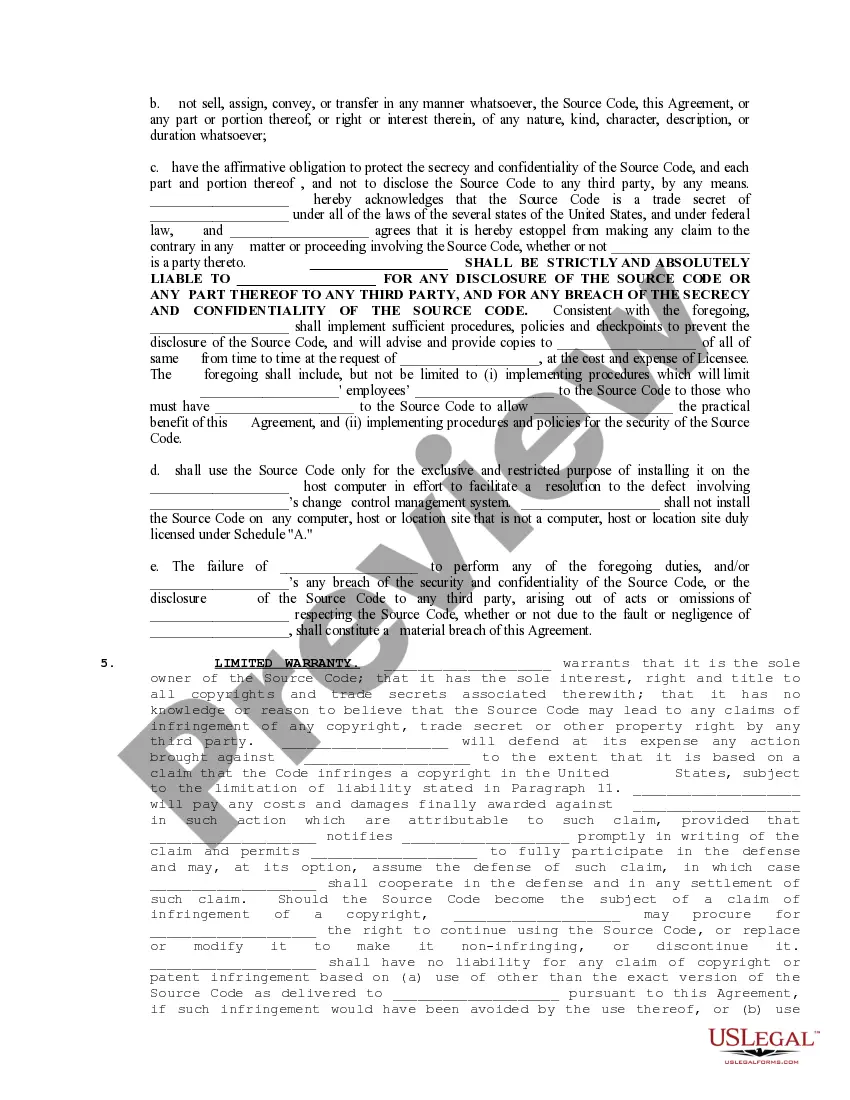
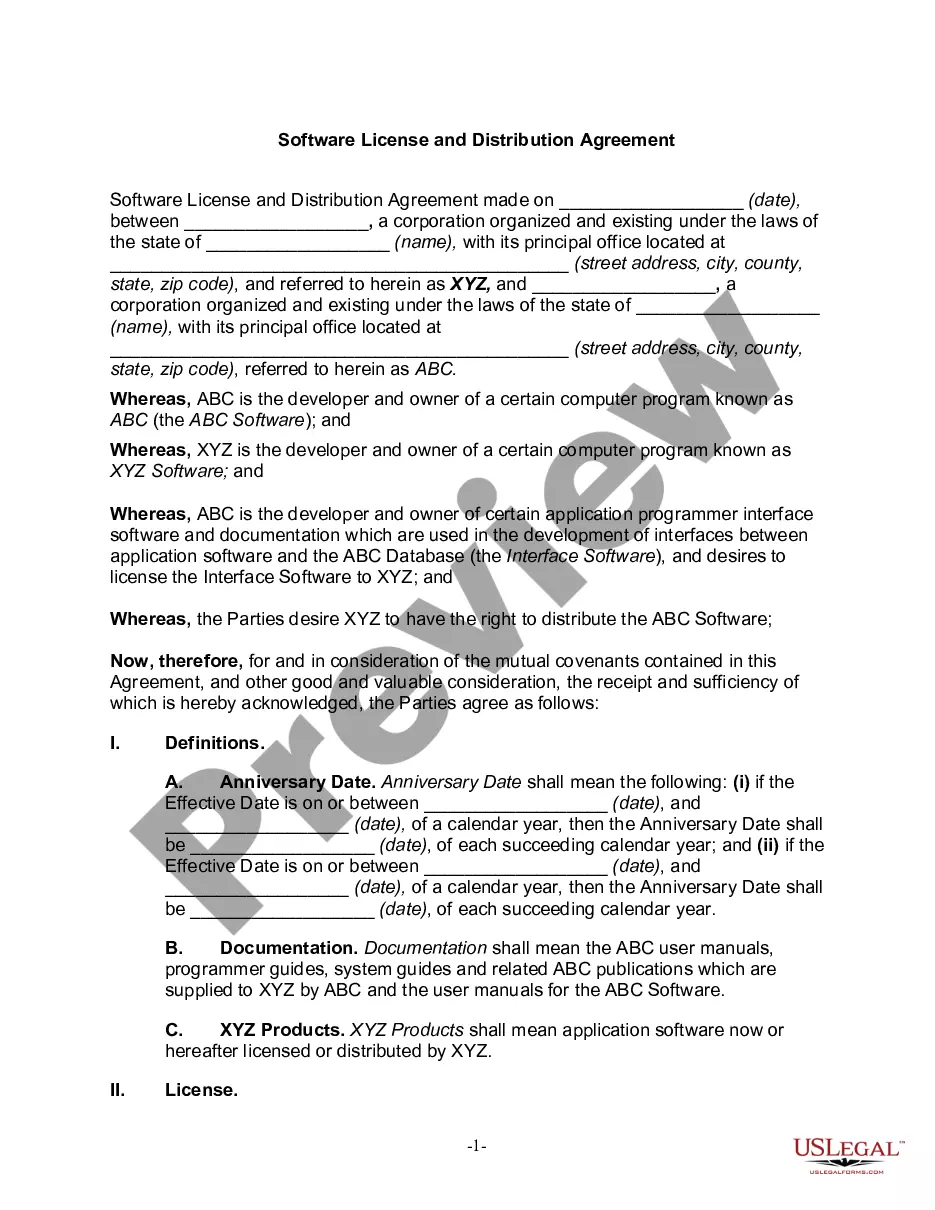
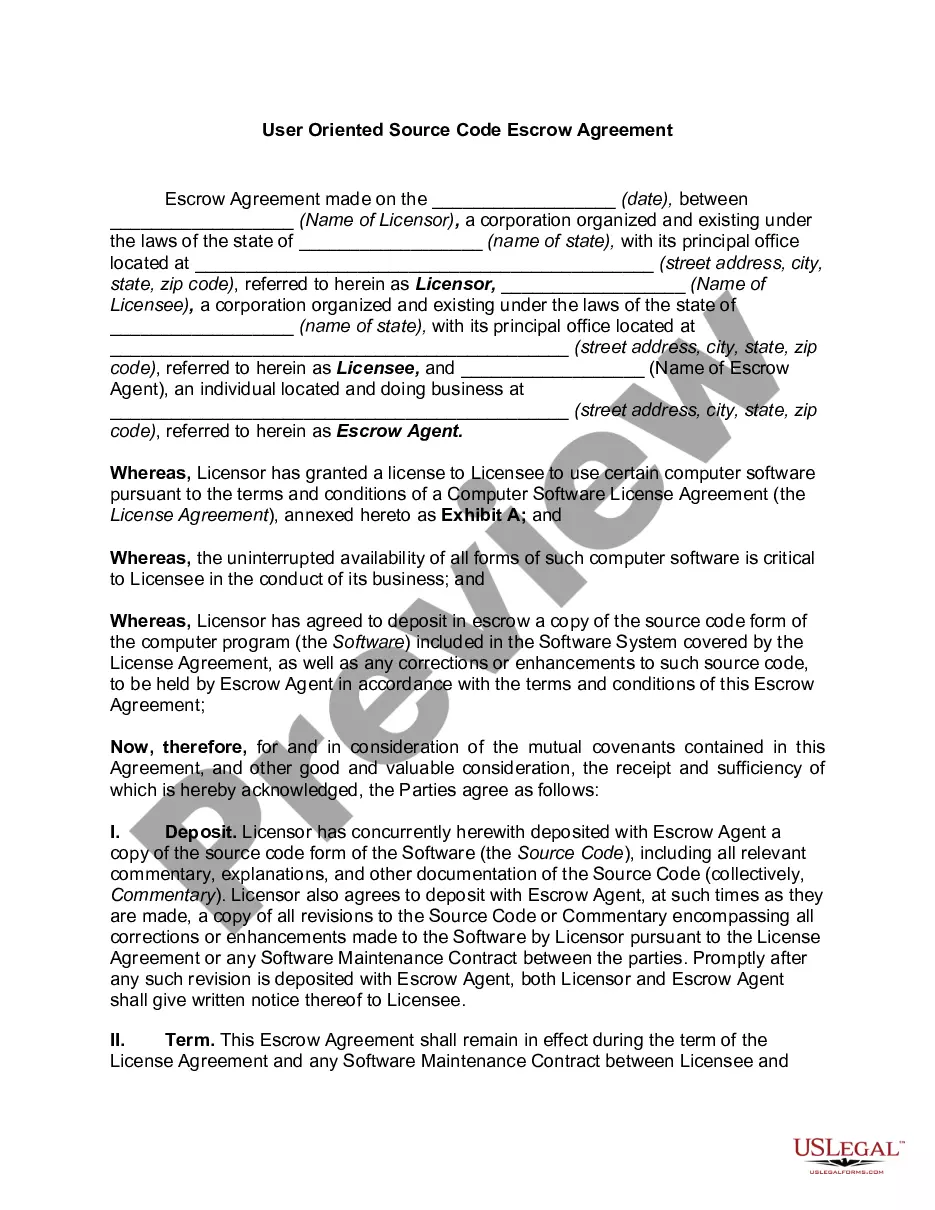
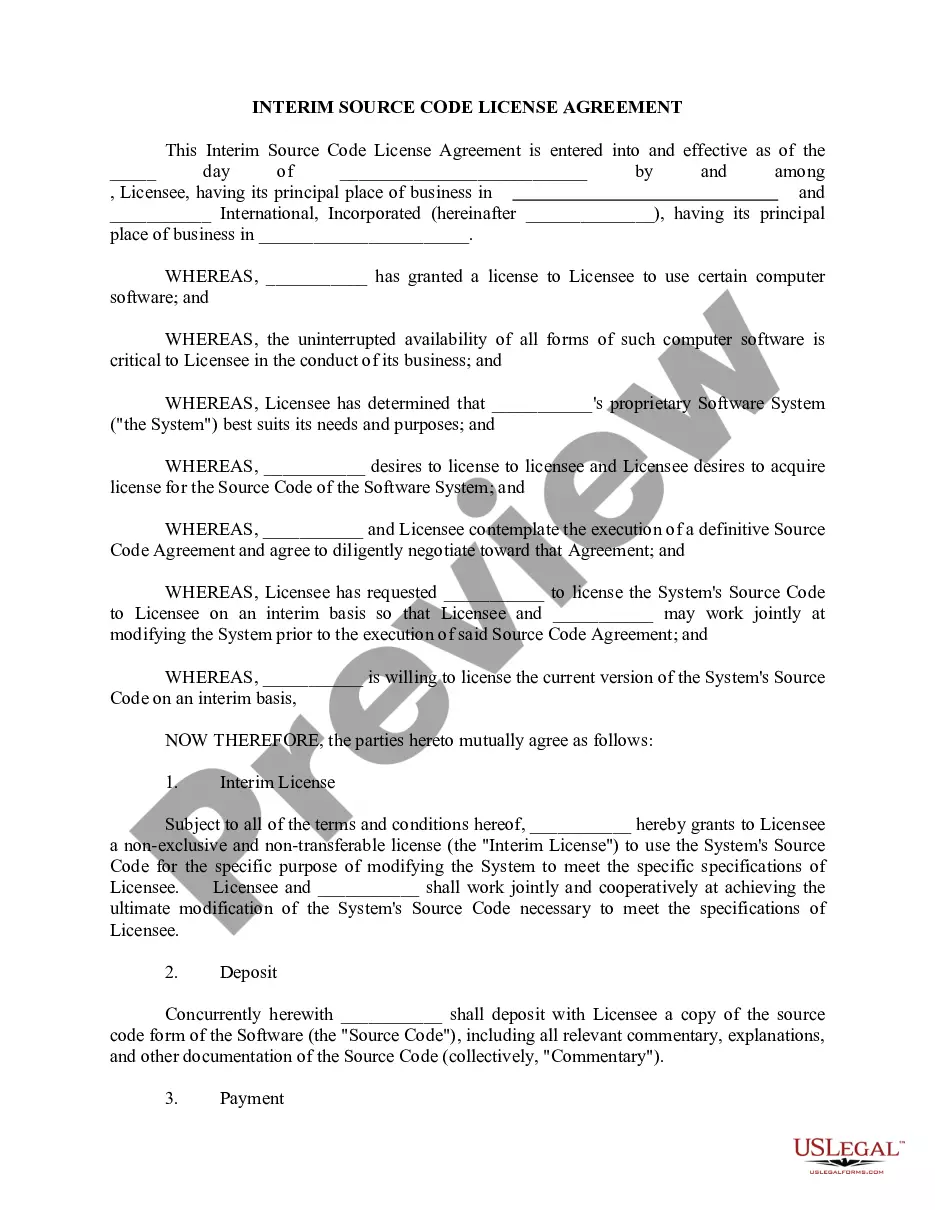
A Restricted Source Code License Agreement is a legal document that grants a party specific rights to access, install, and utilize the source code of a software program under strict conditions. This form emphasizes that the license is nontransferable and nonexclusive, ensuring that the rights granted cannot be reassigned without permission. It serves to protect the intellectual property of the software developer while allowing the licensee to address critical operational needs.
Form components explained
- Definition of the Restricted License: Outlines the scope of the license granted to use the source code.
- Deposit Requirement: Specifies that a copy of the source code must be deposited with an agreed party at the execution of the agreement.
- License Maintenance Fee: Details the financial obligations associated with the use of the source code, including initial and annual fees.
- Obligations of the Licensee: Lists specific duties regarding the confidentiality and security of the source code.
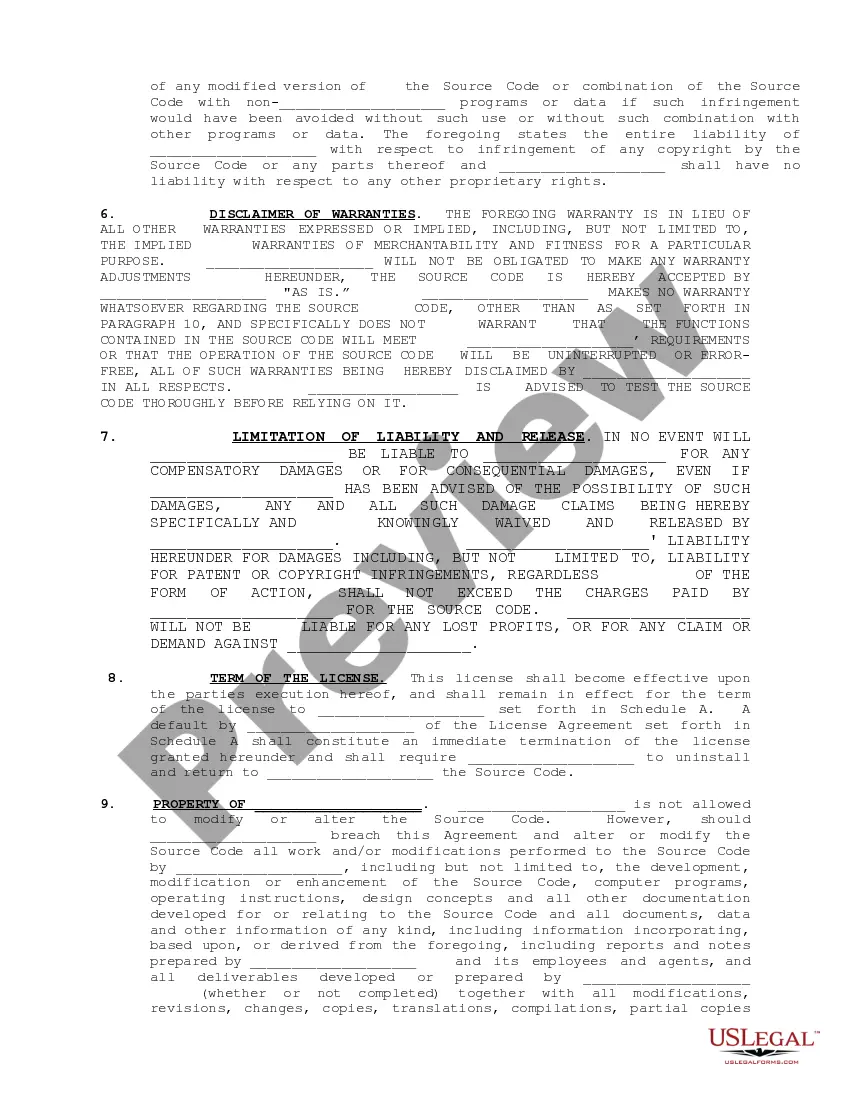
- Warranties and Liability: Describes the responsibilities of the parties in case of claims related to copyright or trade secret infringement.
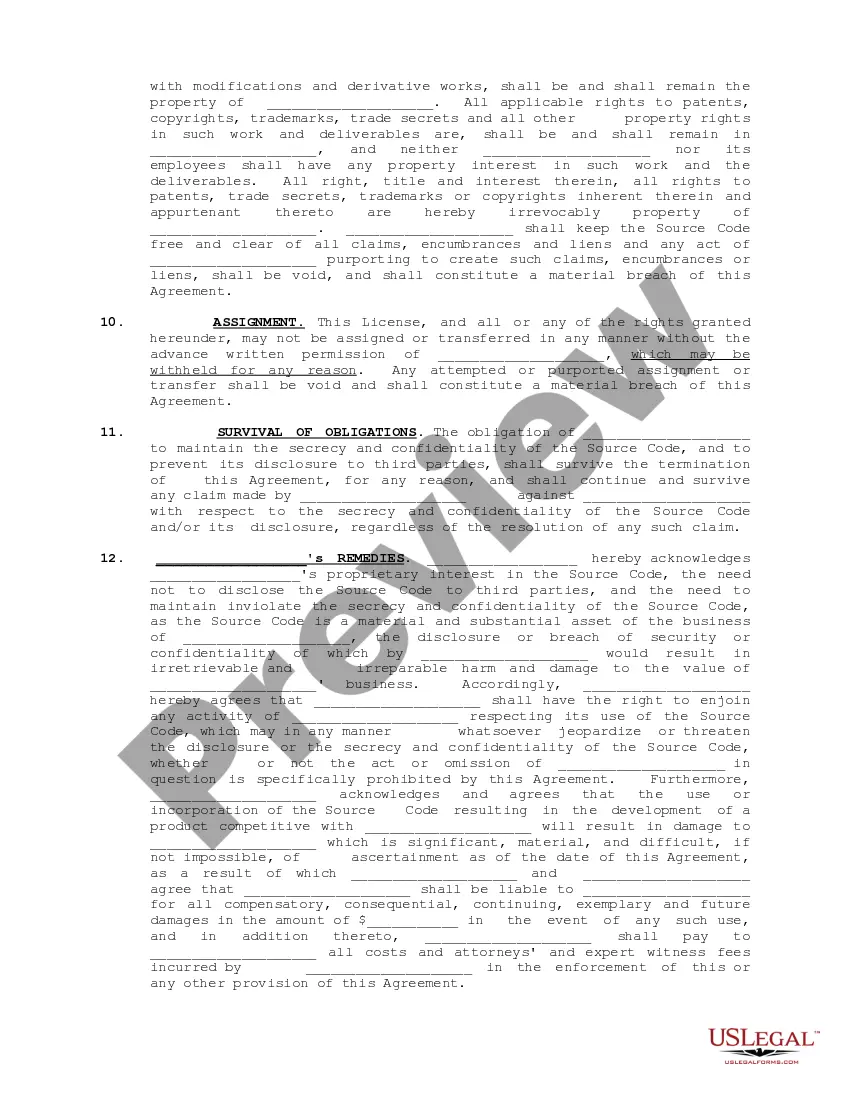
- Termination Conditions: Explains the criteria under which the license may be rescinded.


When to use this form
This form should be used when a corporation needs to grant access to its source code to another party for specific purposes, such as solving technical issues related to software operation. It's particularly relevant in situations where a robust change control management system is critical for business operations and when there is a need to maintain tight control over proprietary information.
Intended users of this form
This agreement is suitable for:
- Software developers looking to share source code under controlled conditions.
- Companies requiring access to source code to troubleshoot software issues.
- Corporations that must protect their intellectual property rights while allowing limited use of their software.
Completing this form step by step
To complete the Restricted Source Code License Agreement, follow these steps:
- Identify the parties involved by entering the full names and addresses of the licensing corporation and the licensee.
- Specify the software name and any relevant details about the source code.
- Clearly outline the license term, including the duration attached to the original software license.
- Enter the amount of the license maintenance fee and the payment schedule.
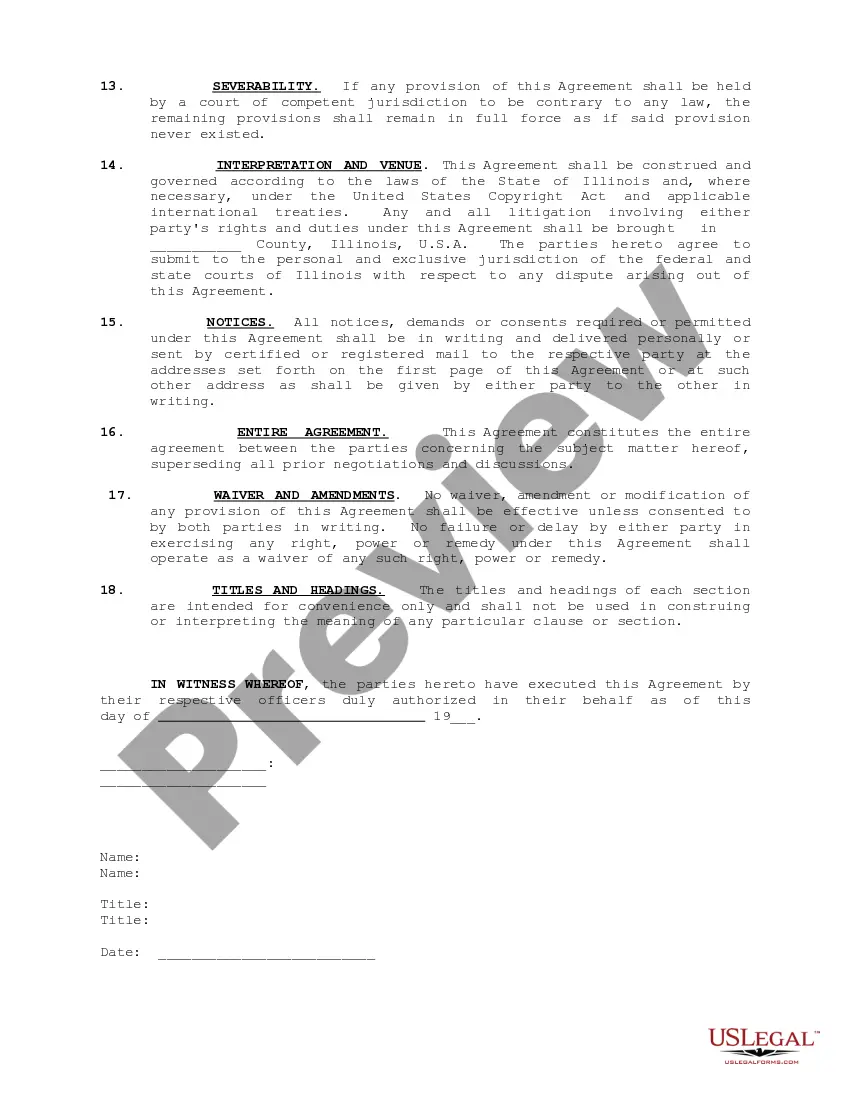
- Both parties must sign and date the agreement in the designated areas to validate it.
Notarization requirements for this form
This form does not typically require notarization unless specified by local law.
Get your form ready online
Our built-in tools help you complete, sign, share, and store your documents in one place.
Make edits, fill in missing information, and update formatting in US Legal Forms—just like you would in MS Word.
Download a copy, print it, send it by email, or mail it via USPS—whatever works best for your next step.
Sign and collect signatures with our SignNow integration. Send to multiple recipients, set reminders, and more. Go Premium to unlock E-Sign.
If this form requires notarization, complete it online through a secure video call—no need to meet a notary in person or wait for an appointment.
We protect your documents and personal data by following strict security and privacy standards.

Make edits, fill in missing information, and update formatting in US Legal Forms—just like you would in MS Word.

Download a copy, print it, send it by email, or mail it via USPS—whatever works best for your next step.

Sign and collect signatures with our SignNow integration. Send to multiple recipients, set reminders, and more. Go Premium to unlock E-Sign.

If this form requires notarization, complete it online through a secure video call—no need to meet a notary in person or wait for an appointment.

We protect your documents and personal data by following strict security and privacy standards.
Avoid these common issues
- Failing to specify the exact software or source code details in the agreement.
- Overlooking the obligation to protect the confidentiality of the source code.
- Neglecting to enter the correct payment amounts and schedules for maintenance fees.
- Forgetting to have the agreement signed by authorized representatives from both parties.
Advantages of online completion
- Convenient online access to the form allows for easy completion and customization.
- Downloadable templates make it easy to edit and fill out based on specific needs.
- Ensured reliability through being drafted by licensed attorneys, providing peace of mind regarding legal compliance.
Quick recap
- The Restricted Source Code License Agreement protects the licensorâs proprietary rights while allowing necessary access for the licensee.
- Carefully complete all fields to avoid misunderstandings or legal issues post-signing.
- Understand your obligations regarding confidentiality and restricted use of the source code.
Looking for another form?




Form popularity
FAQ
The simplest explanation is that open source licenses are legal and binding contracts between the author and the user of a software component, declaring that the software can be used in commercial applications under specified conditions. The license is what turns code into an open source component.
A license agreement is a business contract between two parties. The licensor (the seller of the license) owns the asset being licensed and the licensee (the buyer) pays for the right to use the license. The licensee pays royalties to the owner in exchange for the right to sell the product or use the technology.
An example of a licensing agreement is a contract between the copyright holders of software and another company, allowing the latter to use the computer software for their daily business operations.
Download a template for a licensing agreement. Choose your role as the licensor or licensee. Define the license(s) in the agreement. Decide whether the license is exclusive or not. Settle the matter of fees and payment schedule. Add a renewal date and rules.
Exclusive or non-exclusive. In an exclusive license, the intellectual property holder is licensing the work only to one person, for that particular use/territory. Territory. Use. Attribution. Derivative works. Confidentiality. Time frame. Termination.
The 3 P's of collegiate licensing are protection, promotion, and profit.
An example of a licensing agreement is a contract between the copyright holders of software and another company, allowing the latter to use the computer software for their daily business operations.
What is a Licensing Agreement? A licensing agreement is a contract between two parties (the licensor and licensee) in which the licensor grants the licensee the right to use the brand name, trademark, patented technology, or ability to produce and sell goods owned by the licensor.
User agreements like EULAs are legally binding contracts between the software author and the end-user. End User License Agreements are enforceable as long as it is clear that it is a contract and both parties can understand the terms.