Interim Source Code License Agreement
Overview of this form
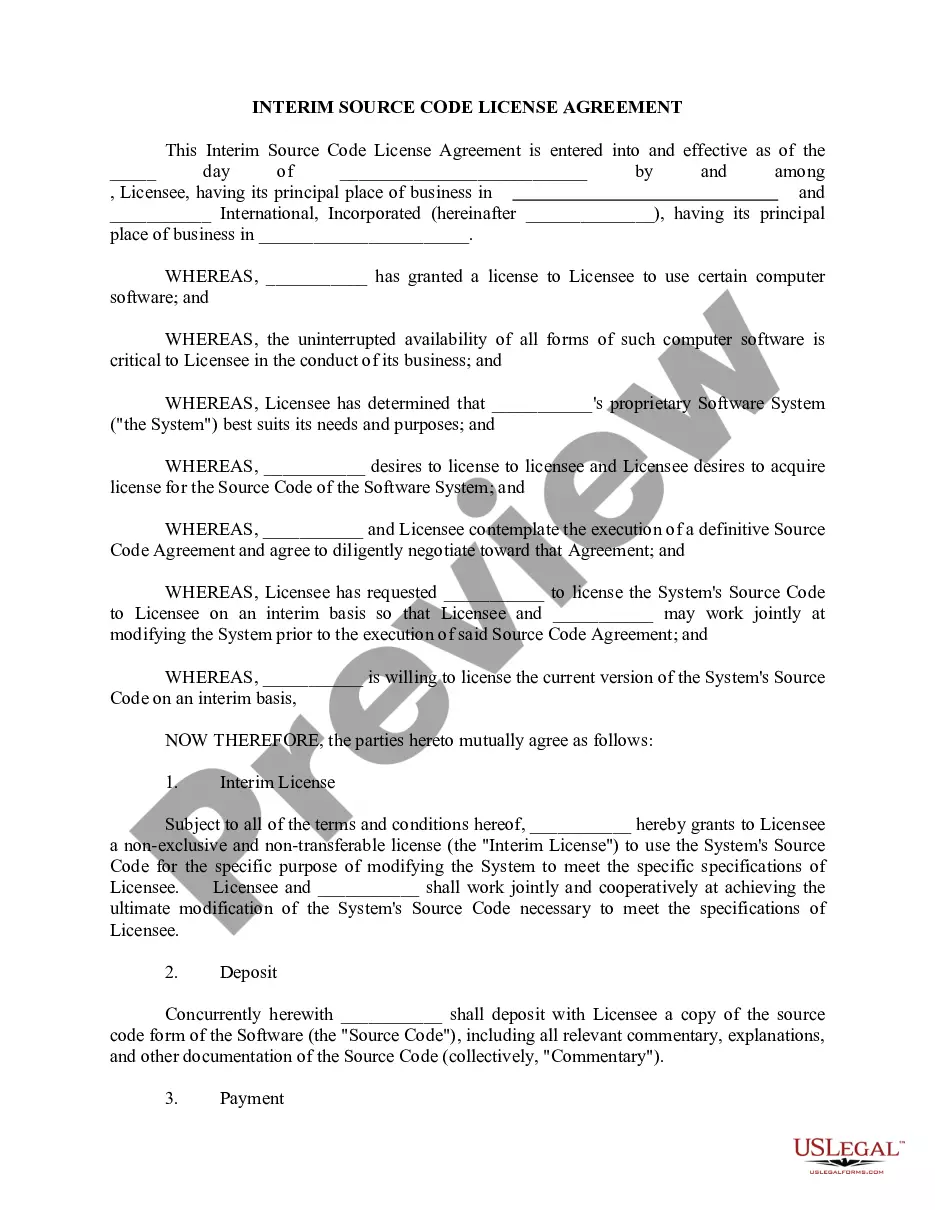
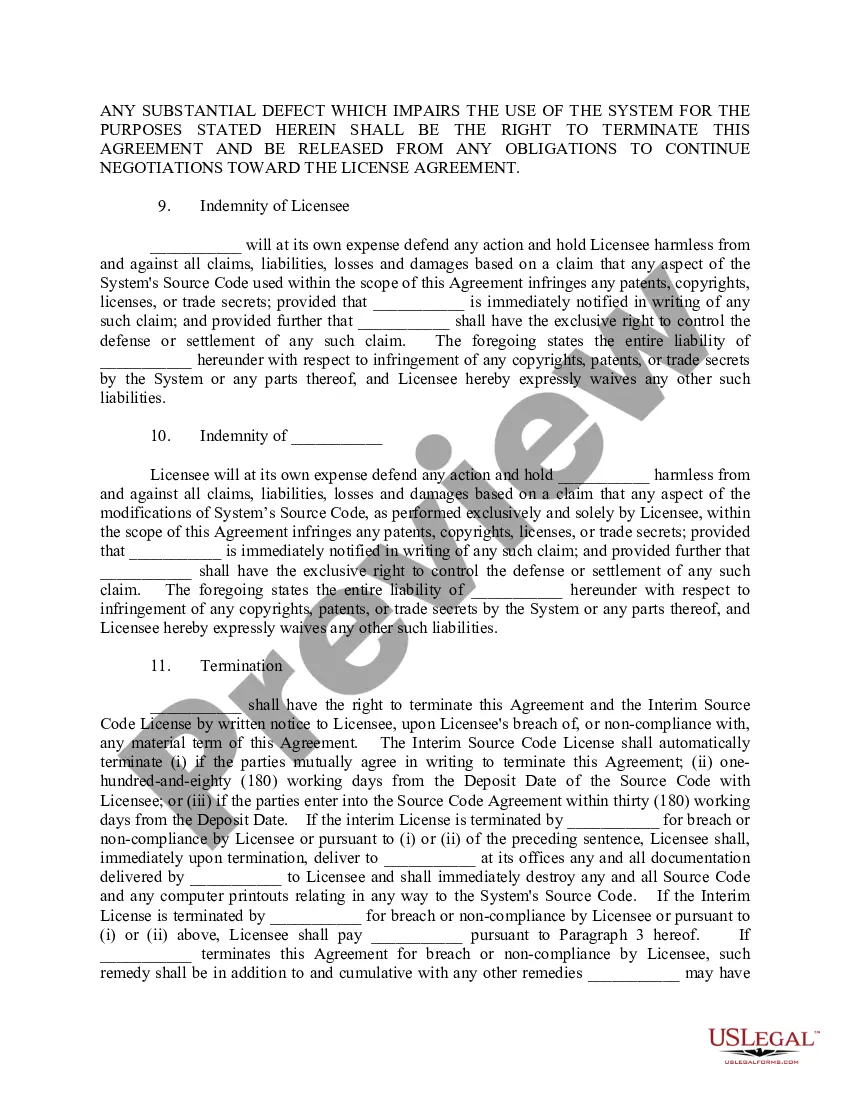
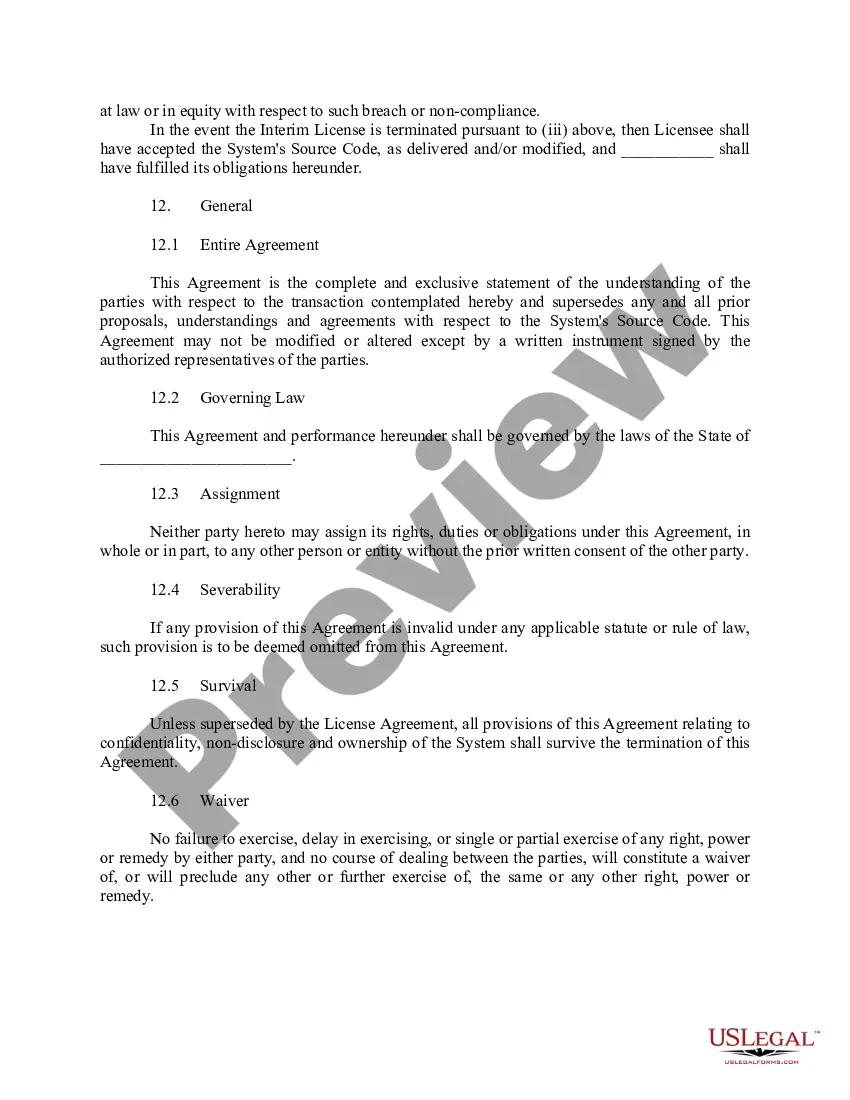
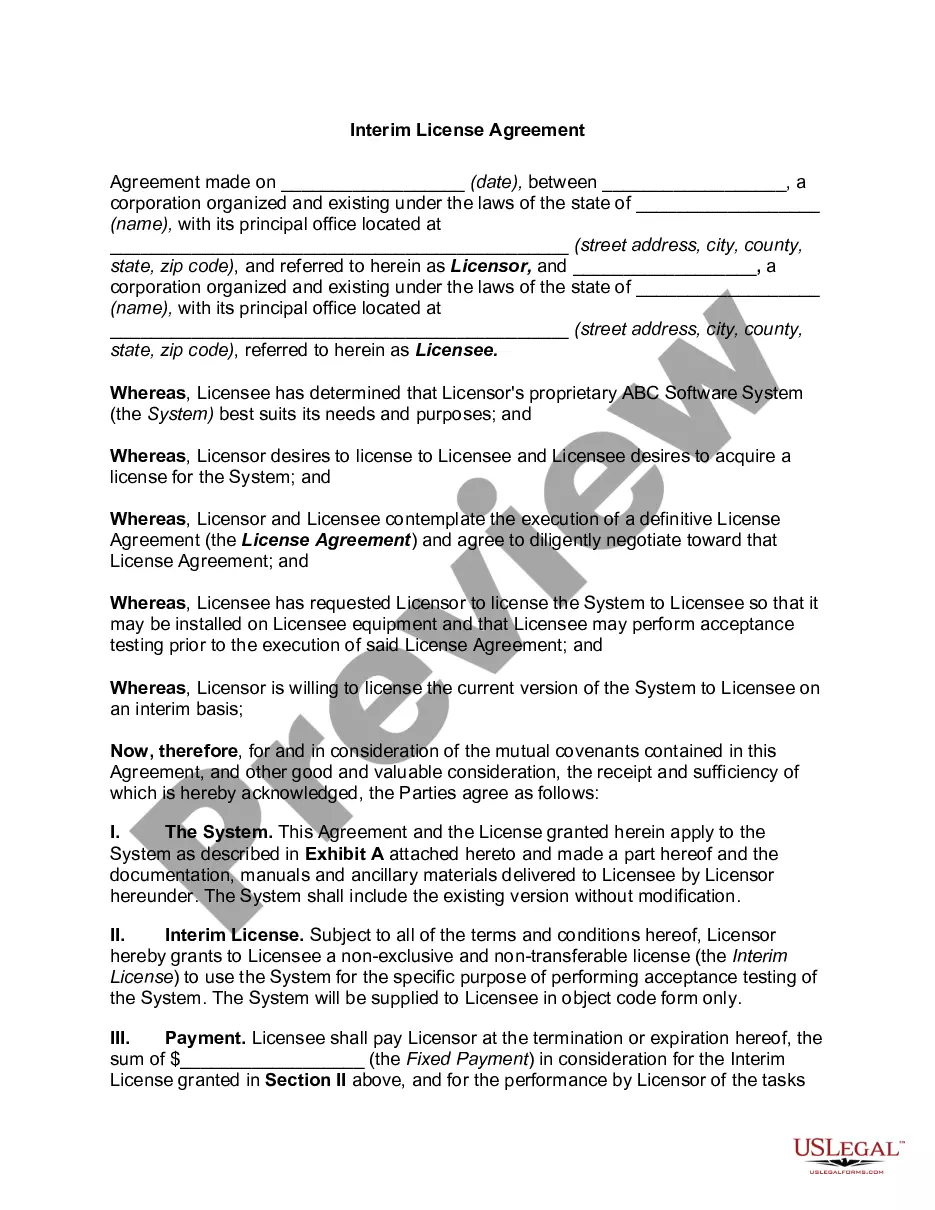
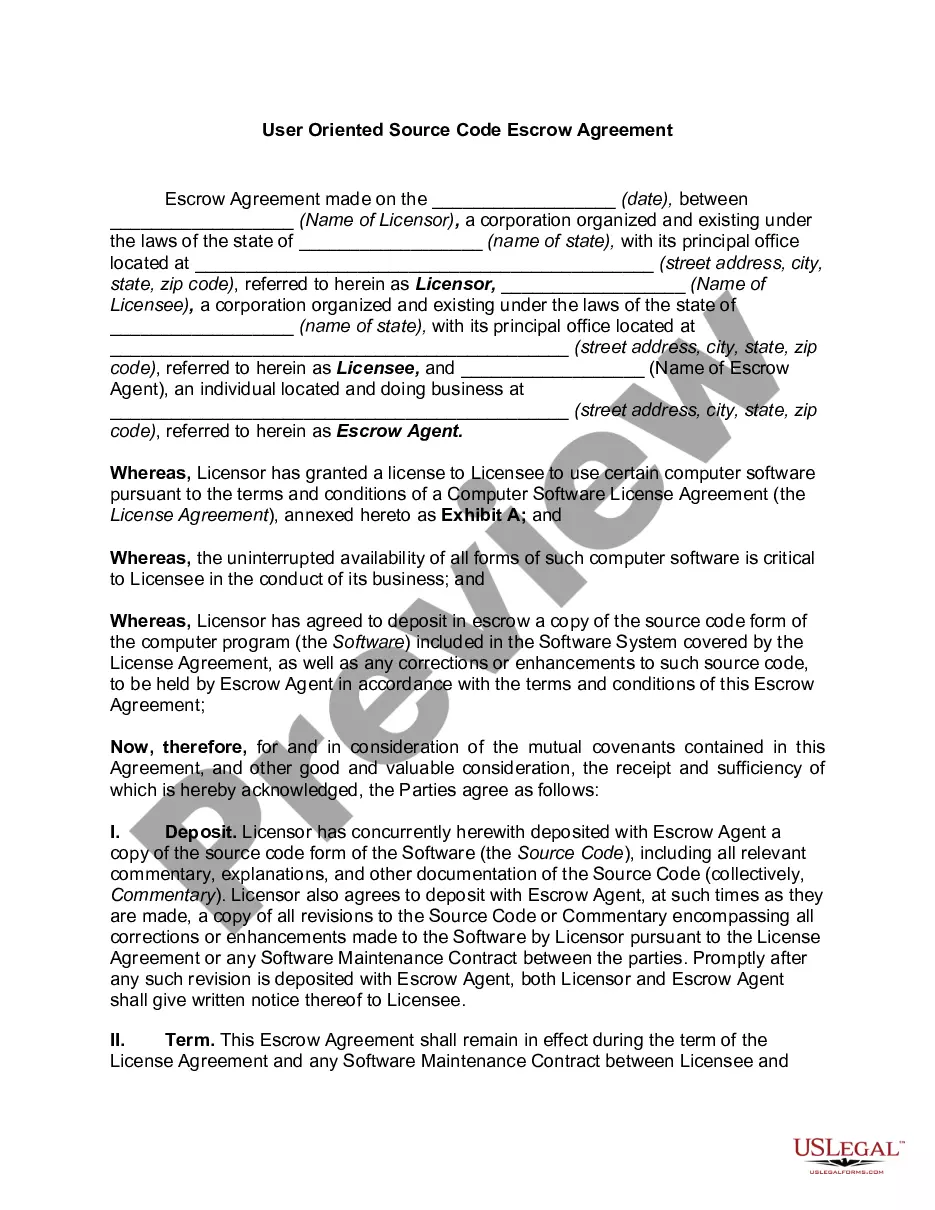
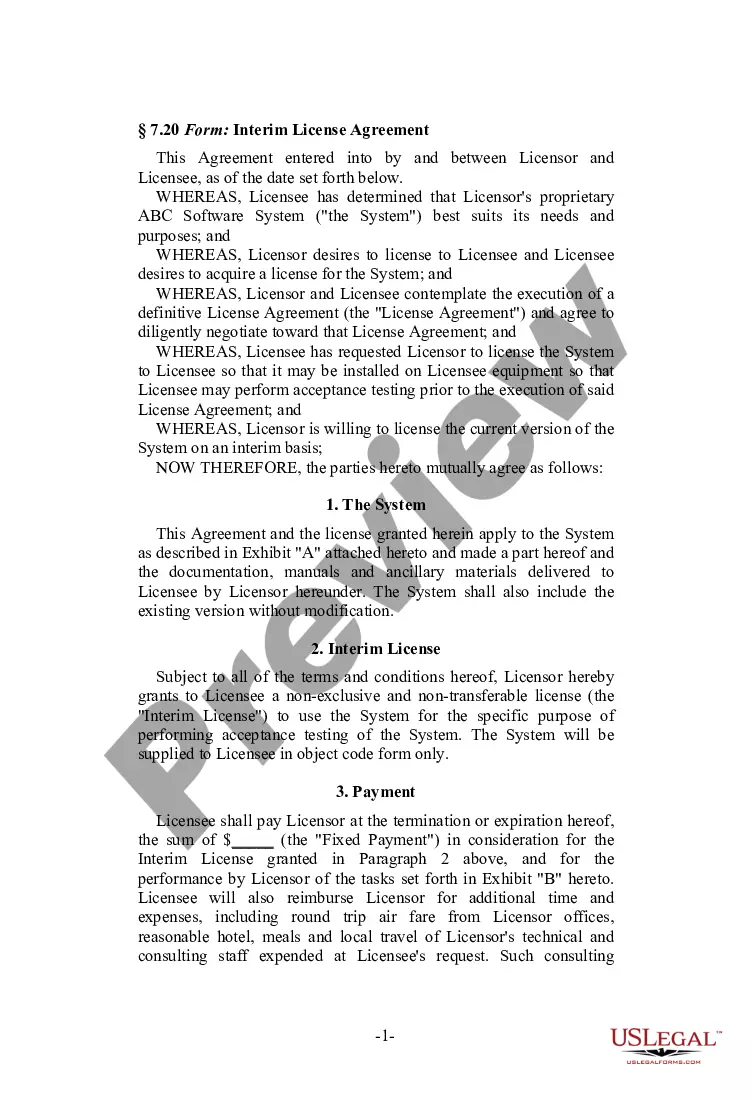
The Interim Source Code License Agreement is a legal document that grants the licensee a non-exclusive, non-transferable right to use a software system's source code on an interim basis. This agreement allows the parties to collaborate on modifications to the software while negotiating a final source code license agreement, ensuring the licensee can utilize the system effectively in their business operations.
What’s included in this form
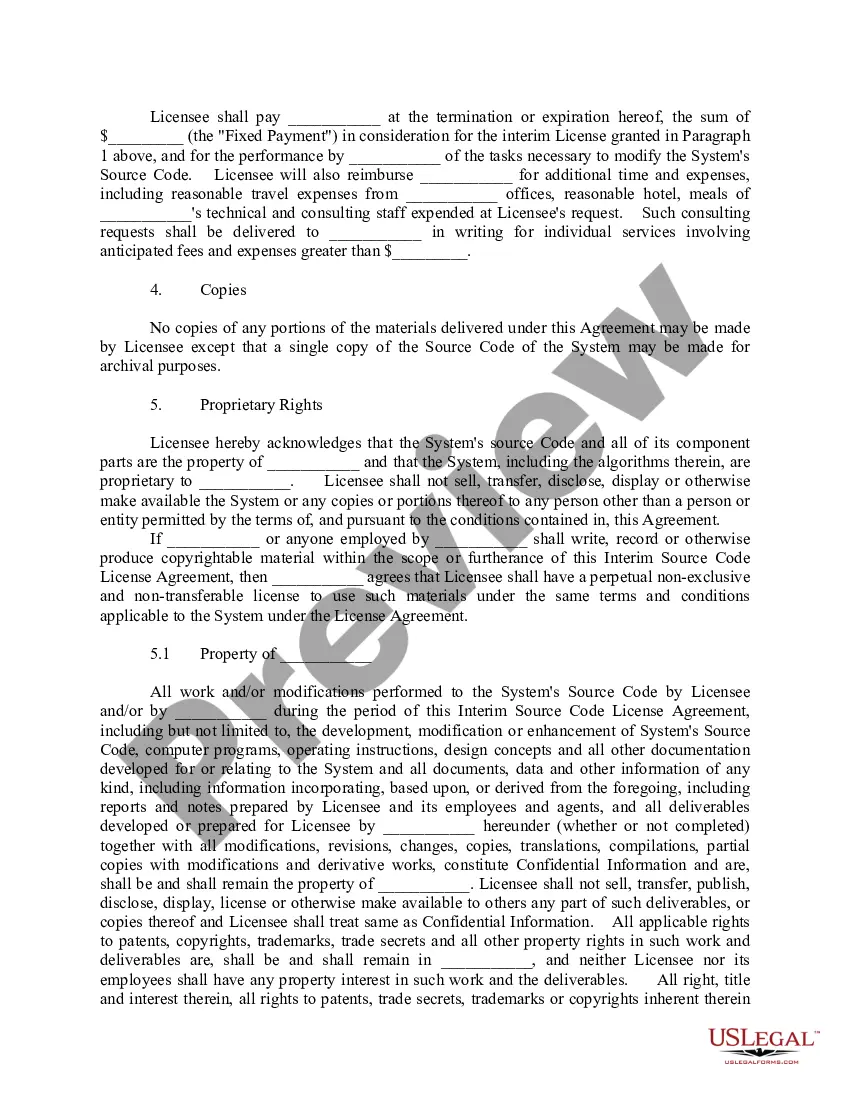
- Interim License: Grants the licensee temporary rights to modify the source code.
- Deposit: Details about the provision of the source code and accompanying documentation.
- Payment Terms: Outlines the financial obligations of the licensee for using the source code.
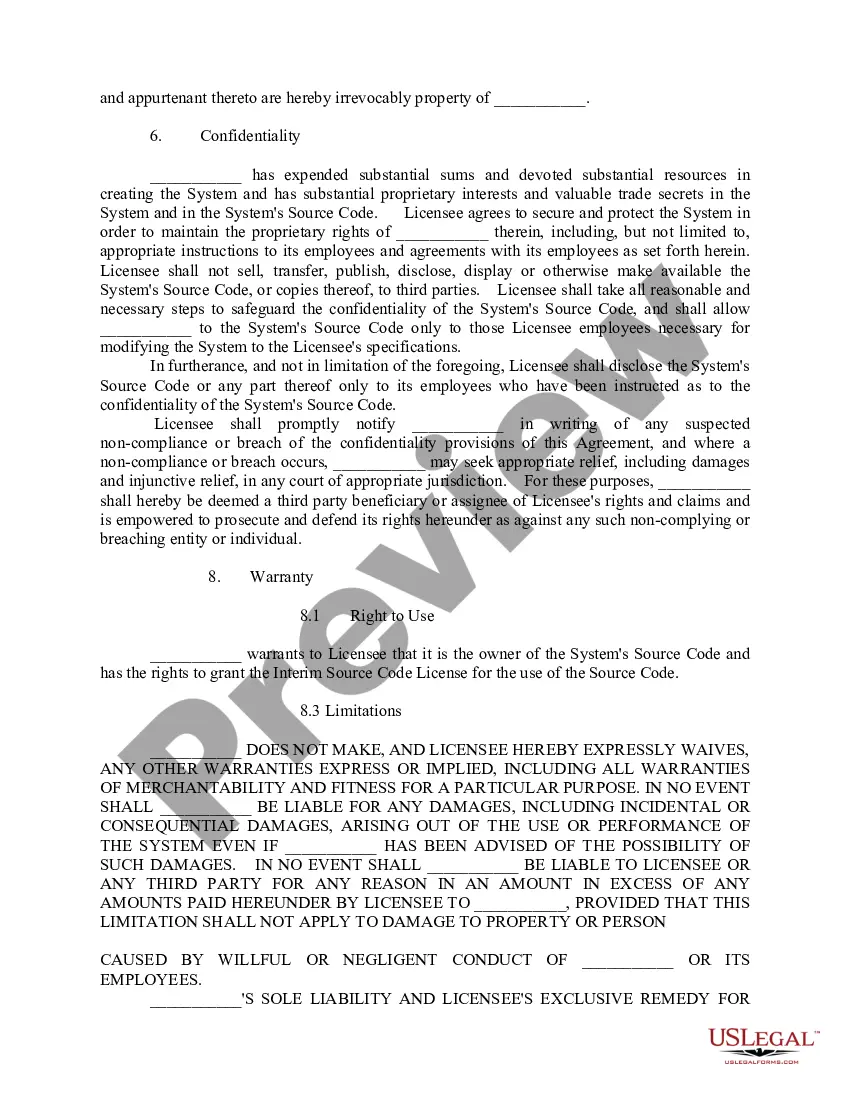
- Confidentiality: Establishes expectations for keeping the source code confidential.
- Termination: Specifies conditions under which the agreement can be terminated.
- Indemnity Provisions: Protects both parties from legal claims related to the use of the source code.


When to use this document
This agreement is typically used when a business needs to use and modify proprietary software on a temporary basis while negotiating a more comprehensive licensing agreement. It is essential when the uninterrupted availability of software is critical to ongoing operations, particularly in industries where custom software solutions are common.
Who needs this form
- Businesses that require immediate access to the source code of software for adaptation to their specific needs.
- Software developers who are collaborating with another company to improve or alter existing software.
- Companies negotiating a longer-term licensing agreement but needing interim access to software features.
Steps to complete this form
- Identify the parties involved, including their names and principal places of business.
- Fill in the date the agreement becomes effective.
- Specify the payment amount as outlined in the agreement.
- Detail the obligations regarding the confidentiality of the software and any modifications made.
- Ensure any additional provisions or custom clauses relevant to the use of the software are included.
Is notarization required?
Notarization is generally not required for this form. However, certain states or situations might demand it. You can complete notarization online through US Legal Forms, powered by Notarize, using a verified video call available anytime.
Get your form ready online
Our built-in tools help you complete, sign, share, and store your documents in one place.
Make edits, fill in missing information, and update formatting in US Legal Forms—just like you would in MS Word.
Download a copy, print it, send it by email, or mail it via USPS—whatever works best for your next step.
Sign and collect signatures with our SignNow integration. Send to multiple recipients, set reminders, and more. Go Premium to unlock E-Sign.
If this form requires notarization, complete it online through a secure video call—no need to meet a notary in person or wait for an appointment.
We protect your documents and personal data by following strict security and privacy standards.

Make edits, fill in missing information, and update formatting in US Legal Forms—just like you would in MS Word.

Download a copy, print it, send it by email, or mail it via USPS—whatever works best for your next step.

Sign and collect signatures with our SignNow integration. Send to multiple recipients, set reminders, and more. Go Premium to unlock E-Sign.

If this form requires notarization, complete it online through a secure video call—no need to meet a notary in person or wait for an appointment.

We protect your documents and personal data by following strict security and privacy standards.
Common mistakes
- Failing to specify the exact terms for source code usage and modification.
- Not including confidentiality obligations leading to potential information leaks.
- Leaving out detailed payment terms necessary for financial clarity.
- Neglecting to outline clear conditions for termination of the agreement.
Benefits of using this form online
- Instant access to a legally vetted template that saves time and legal fees.
- Editability allows you to customize the agreement to your specific needs easily.
- Reliability of having a professionally drafted form ensures compliance with legal standards.
Legal use & context
- This agreement serves as a temporary measure to protect both parties' interests while negotiating a long-term licensing arrangement.
- It is essential for the licensee to respect confidentiality terms to avoid legal liabilities.
- Understanding the scope of use under this interim license is crucial to avoid infringement issues.
Main things to remember
- The Interim Source Code License Agreement allows immediate access to the source code.
- Clear terms regarding payment and confidentiality are essential for protecting both parties.
- This agreement serves as a temporary measure while longer-term licensing negotiations occur.
Looking for another form?

Form popularity
FAQ
A license agreement is a business contract between two parties. The licensor (the seller of the license) owns the asset being licensed and the licensee (the buyer) pays for the right to use the license. The licensee pays royalties to the owner in exchange for the right to sell the product or use the technology.
Download a template for a licensing agreement. Choose your role as the licensor or licensee. Define the license(s) in the agreement. Decide whether the license is exclusive or not. Settle the matter of fees and payment schedule. Add a renewal date and rules.
An example of a licensing agreement is a contract between the copyright holders of software and another company, allowing the latter to use the computer software for their daily business operations.
What is a Licensing Agreement? A licensing agreement is a contract between two parties (the licensor and licensee) in which the licensor grants the licensee the right to use the brand name, trademark, patented technology, or ability to produce and sell goods owned by the licensor.
An example of a licensing agreement is a contract between the copyright holders of software and another company, allowing the latter to use the computer software for their daily business operations.
What is an IP licensing agreement? An IP licensing agreement occurs between an IP rights owner (licensor) and someone who is authorised to use the rights (licensee) in exchange for monetary value in the form of a fee or a royalty.
The simplest explanation is that open source licenses are legal and binding contracts between the author and the user of a software component, declaring that the software can be used in commercial applications under specified conditions. The license is what turns code into an open source component.
The OEM license agreement exists between the various parties to address issues of branding, confidentiality, payment, quality assurance, and timeframes. An original equipment manufacturer (OEM) is a company that makes parts that may then be marketed to another manufacturer.