Self-Employed Travel Agent Employment Contract
What this document covers
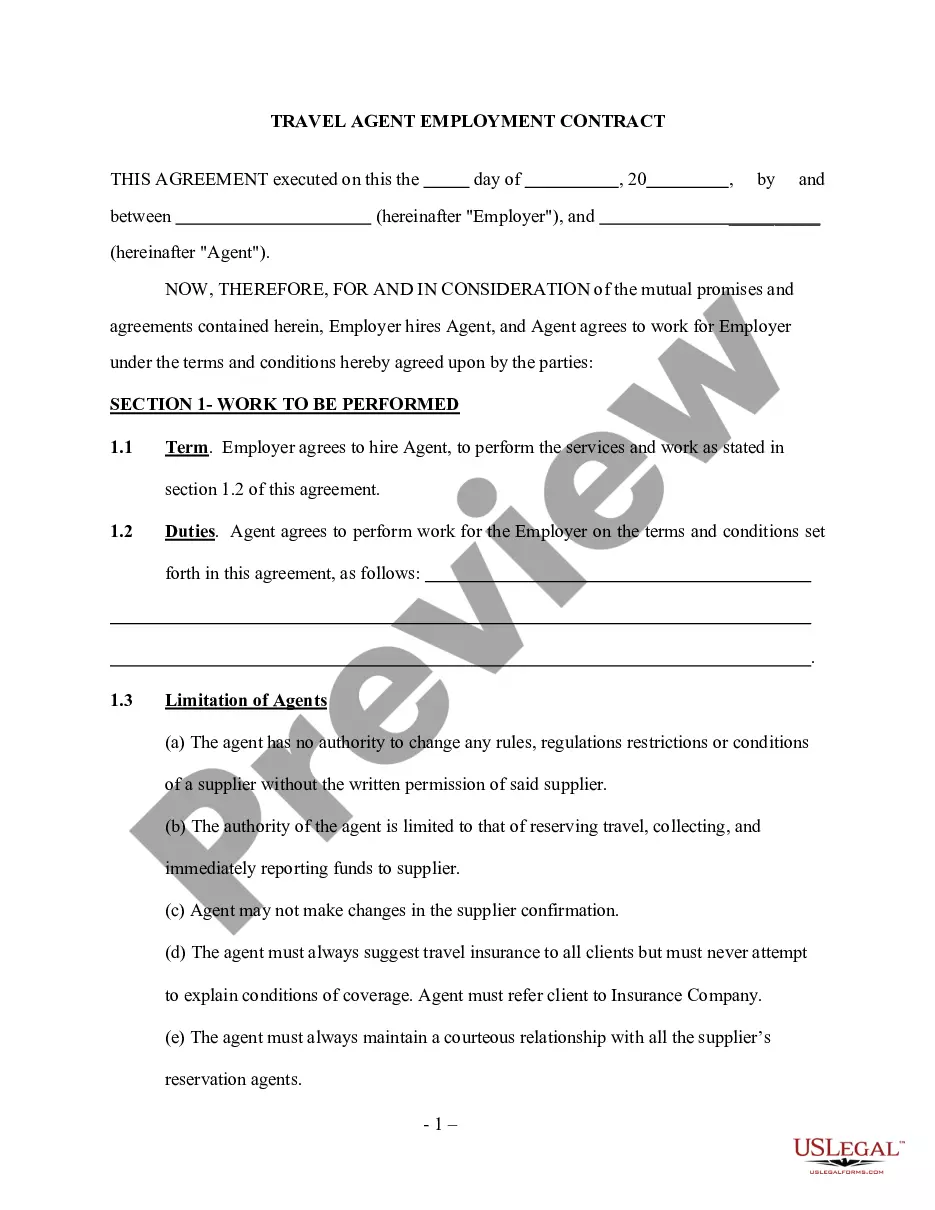
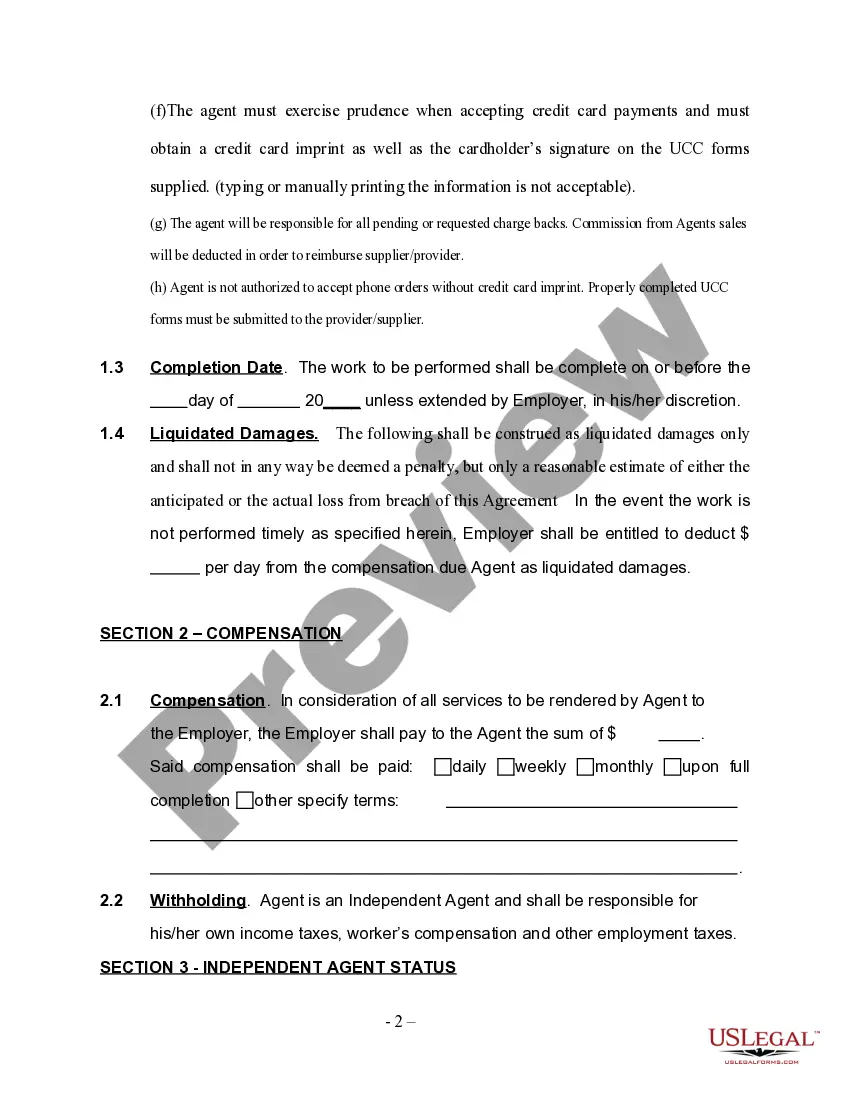
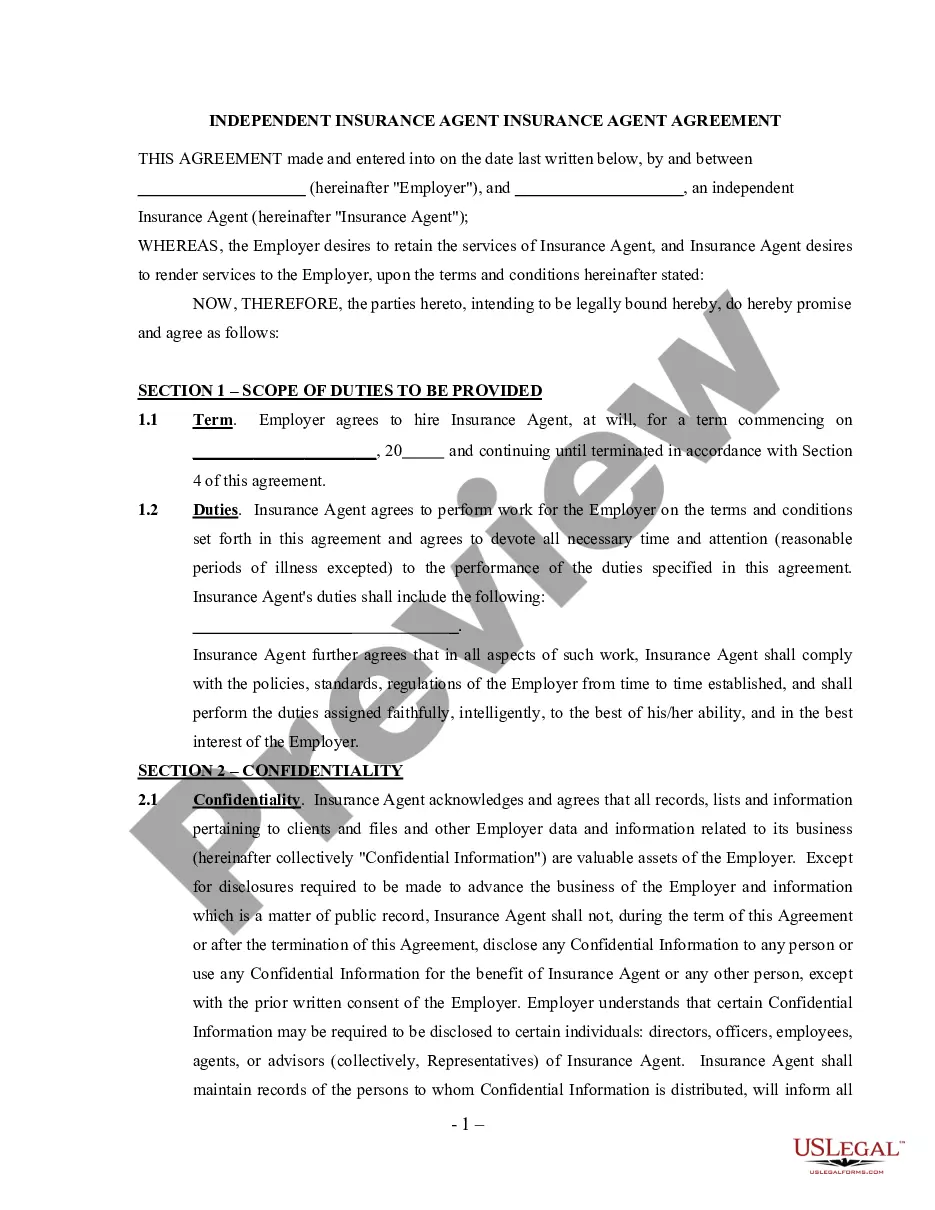
The Self-Employed Travel Agent Employment Contract is a legal document that outlines the terms of engagement between a travel agency and a travel agent working as an independent contractor. Unlike standard employment contracts, this form emphasizes the agentâs independent status, outlining their responsibilities and limitations that help protect the agency from liabilities outside the agreed scope of work.
Form components explained
- Section 1: Details the work to be performed by the independent contractor, including suggestions for travel insurance and duties regarding payment processing.
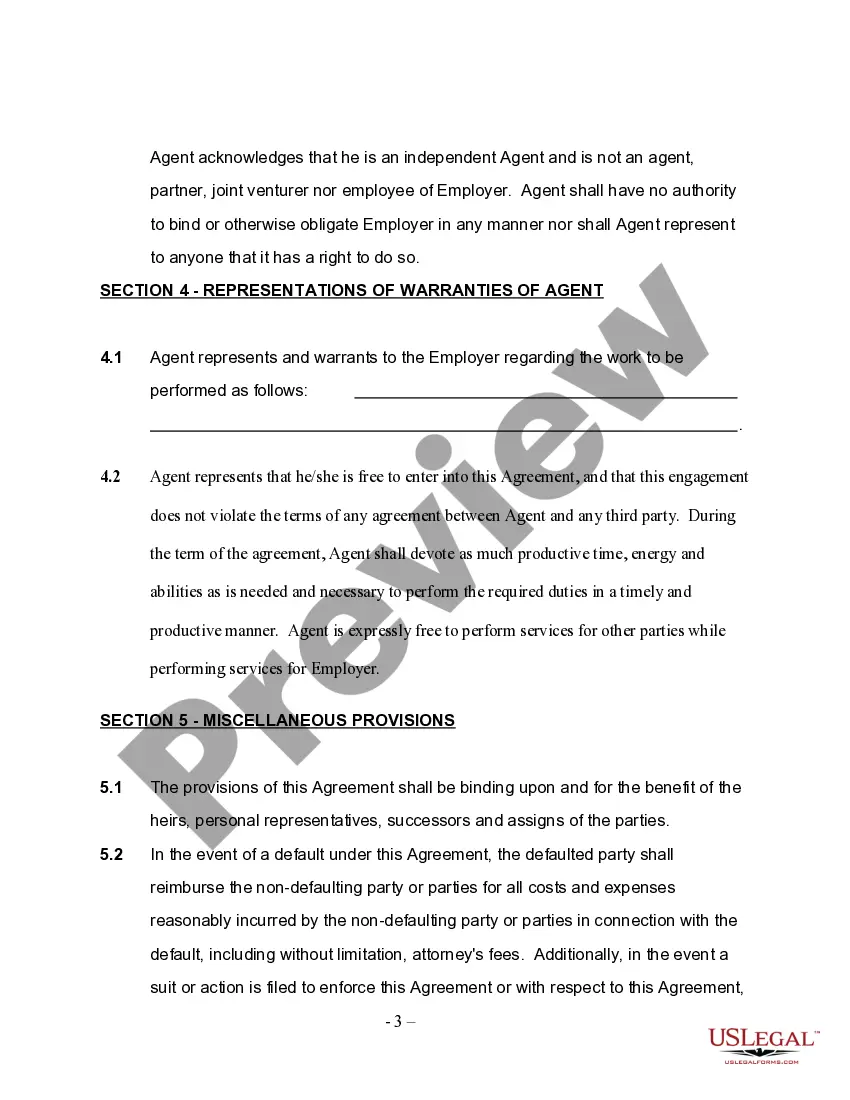
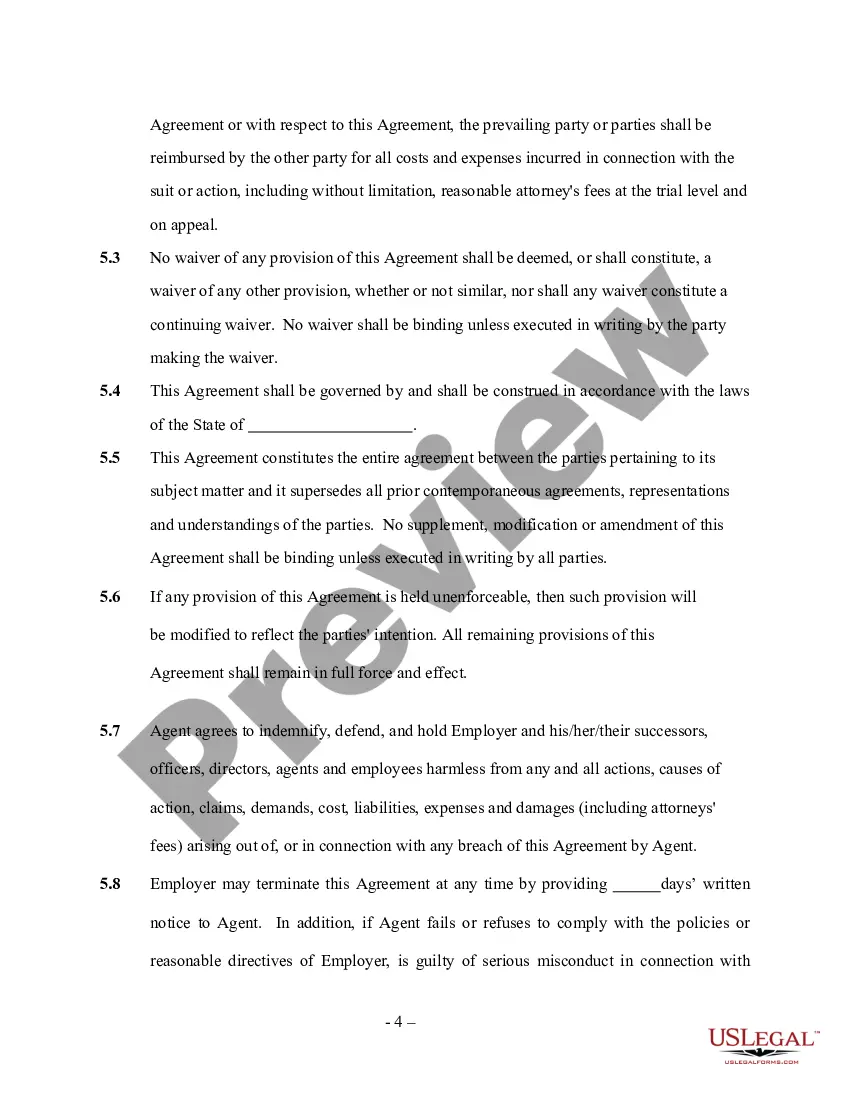
- Section 3: Clarifies the agent's independent status, specifying they cannot bind the agency legally.
- Section 4: Covers representations and warranties of the agent to ensure compliance and reliability.
- Section 5: Includes miscellaneous provisions on enforcing the contract and handling defaults.
Common use cases
This contract should be used when a travel agency hires a travel agent as an independent contractor. It is essential in situations where the agency wants to clearly define the contractor's responsibilities, including insurance suggestions and payment processing protocols, while protecting itself from liability in areas not covered by the contract.
Who this form is for
- Travel agencies looking to hire independent contractors for travel services.
- Travel agents seeking clear guidelines on their roles and responsibilities within a contractual relationship.
- Businesses wishing to establish a professional and legally binding relationship without creating employee obligations.
How to complete this form
- Identify the parties involved: Fill in the travel agency's and agentâs details accurately.
- Specify the term of the contract: Clearly define the duration of the agreement in Section 1.
- Outline services to be performed: Detail the specific travel-related services the agent will provide.
- Include payment processing protocols: Ensure compliance with credit card processing as outlined in the responsibilities.
- Review and sign: Both parties should review the document carefully and sign it, ensuring all sections are completed.
Is notarization required?
This form does not typically require notarization unless specified by local law. However, ensuring both parties sign the contract can add an extra layer of authenticity and enforceability.
Get your form ready online
Our built-in tools help you complete, sign, share, and store your documents in one place.
Make edits, fill in missing information, and update formatting in US Legal Forms—just like you would in MS Word.
Download a copy, print it, send it by email, or mail it via USPS—whatever works best for your next step.
Sign and collect signatures with our SignNow integration. Send to multiple recipients, set reminders, and more. Go Premium to unlock E-Sign.
If this form requires notarization, complete it online through a secure video call—no need to meet a notary in person or wait for an appointment.
We protect your documents and personal data by following strict security and privacy standards.

Make edits, fill in missing information, and update formatting in US Legal Forms—just like you would in MS Word.

Download a copy, print it, send it by email, or mail it via USPS—whatever works best for your next step.

Sign and collect signatures with our SignNow integration. Send to multiple recipients, set reminders, and more. Go Premium to unlock E-Sign.

If this form requires notarization, complete it online through a secure video call—no need to meet a notary in person or wait for an appointment.

We protect your documents and personal data by following strict security and privacy standards.
Avoid these common issues
- Failing to clearly define the scope of work in Section 1.
- Not including proper payment processing procedures and responsibilities.
- Assuming the agent has binding authority without specifying that they do not.
- Neglecting to have both parties sign the contract, which can jeopardize its enforceability.
Benefits of completing this form online
- Convenient access for immediate download and use.
- Editability allows customization to fit specific agent agreements.
- Reliability through professionally drafted templates that comply with legal standards.
Quick recap
- The Self-Employed Travel Agent Employment Contract clarifies the working relationship between the travel agency and the agent.
- It is important for both parties to define roles, responsibilities, and compensation structures to avoid disputes.
- This contract can be tailored to comply with specific state laws and regulations.
Looking for another form?

Form popularity
FAQ
As an independent contractor, report your income on Schedule C of Form 1040, Profit or Loss from Business. You must pay self-employment taxes on net earnings exceeding $400. For those taxes, you must submit Schedule SE, Form 1040, the self-employment tax.
The IRS requires contractors to fill out a Form W-9, request for Taxpayer Identification Number and Certification, which you should keep on file for at least four years after the hiring. This form is used to request the correct name and Taxpayer Identification Number, or TIN, of the worker or their entity.
Self-employed persons, including direct sellers, report their income on Schedule C (Form 1040), Profit or Loss from Business (Sole Proprietorship). Use Schedule SE (Form 1040), Self-Employment Tax if the net earnings from self-employment are $400 or more.
If you didn't get a Form 1099, you are still required to report all income. You may be thinking What about the $600 threshold? Unfortunately, that only applies to your employers and clients preparing form 1099-MISC. There is no threshold that applies for reporting income.
Maintain Accurate Accounting Records. Separate Your Business And Personal Accounts. Pay Yourself Using A W-2 And Pay Stubs. Generate Financial Reports Regularly. Keep Copies Of Your Tax Returns And Other Documents.
Even if you don't receive a 1099, that income still must be reported on your tax return.There is one tax you won't need to pay if your net earnings are less than $400: the self-employment tax. However, you still need to report the income on your tax return because your net earnings are still subject to income tax.
Schedule C or C-EZ. There are two forms to report self-employment income. You must file a Schedule C, Profit or Loss from Business, or Schedule C-EZ, Net Profit from Business, with your Form 1040. You may use Schedule C-EZ if you had expenses less than $5,000 and meet other conditions.
Terms. This is the first section of any agreement or contract and states the names and locations of the parties involved. Responsibilities & Deliverables. Payment-Related Details. Confidentiality Clause. Contract Termination. Choice of Law.
The earnings of a person who is working as an independent contractor are subject to Self-Employment Tax. If you are an independent contractor, you are self-employed.However, your earnings as an employee may be subject to FICA (Social Security tax and Medicare) and income tax withholding.