Minister Agreement - Self-Employed Independent Contractor
Understanding this form
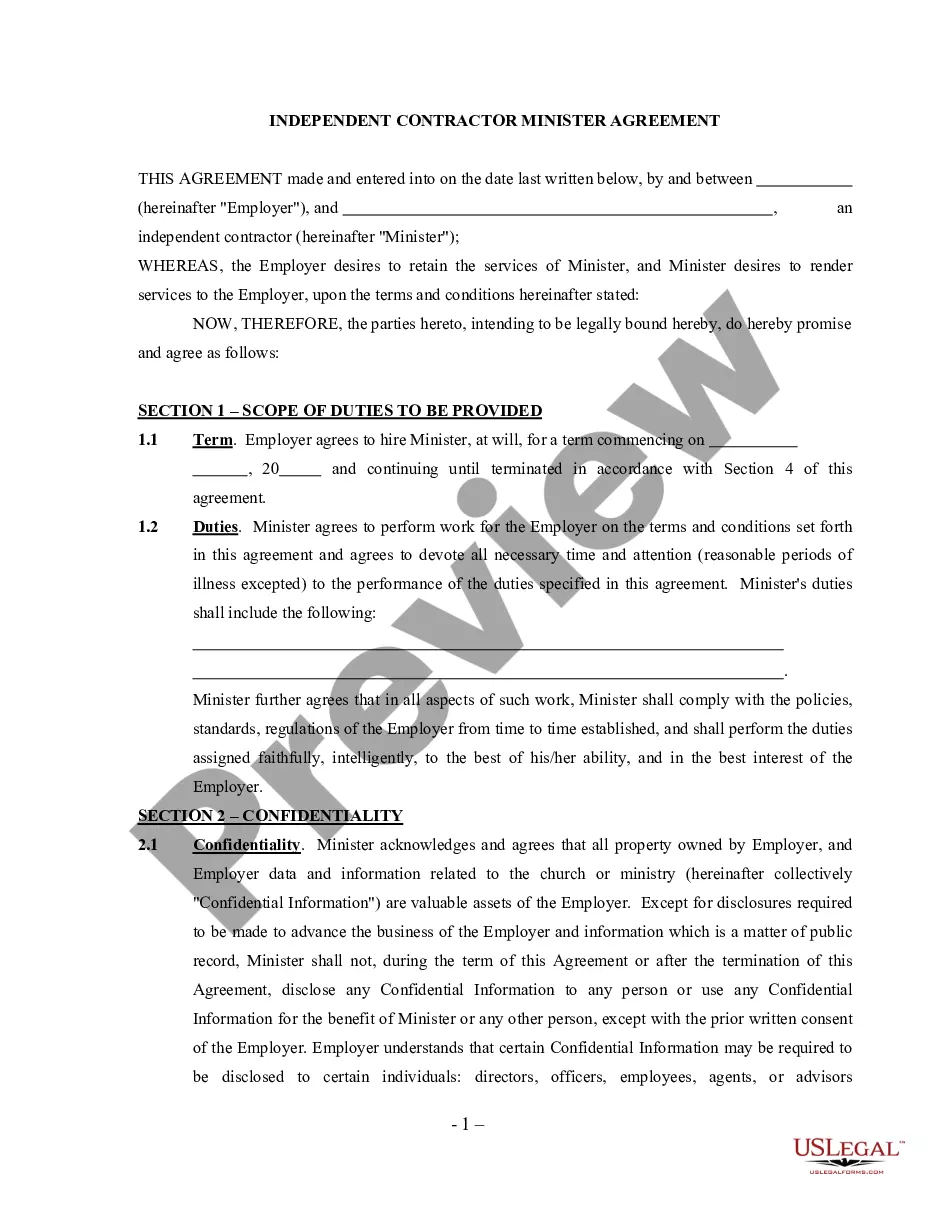
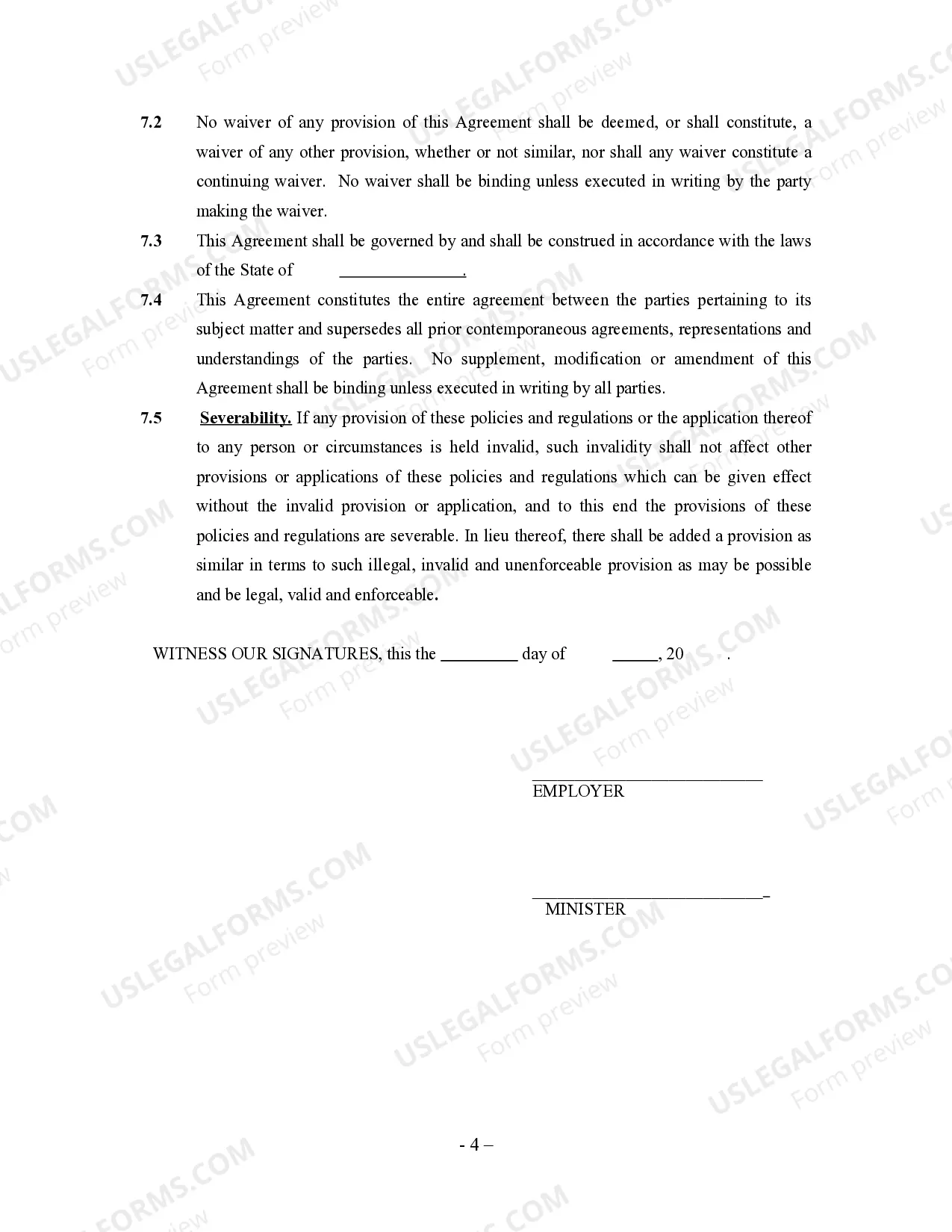
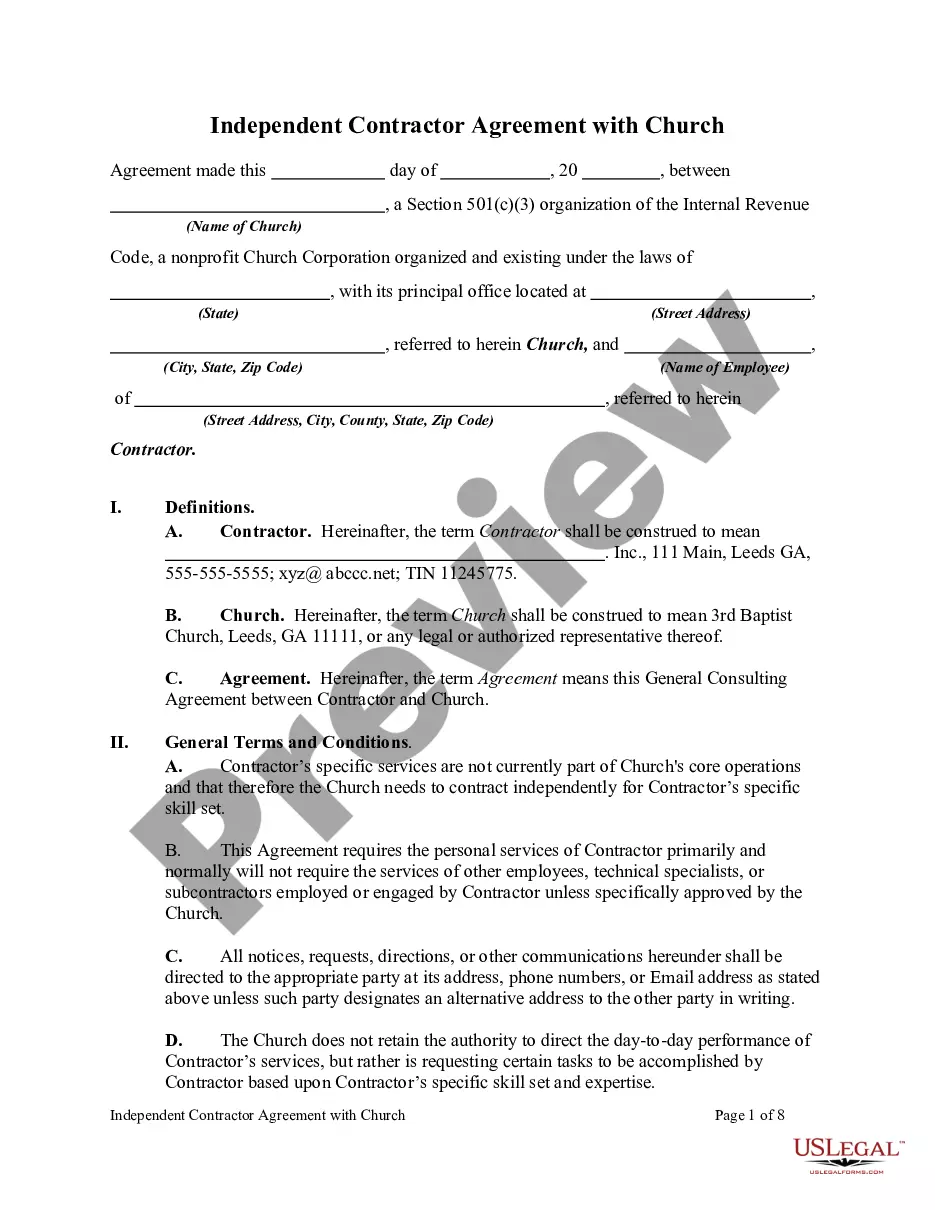
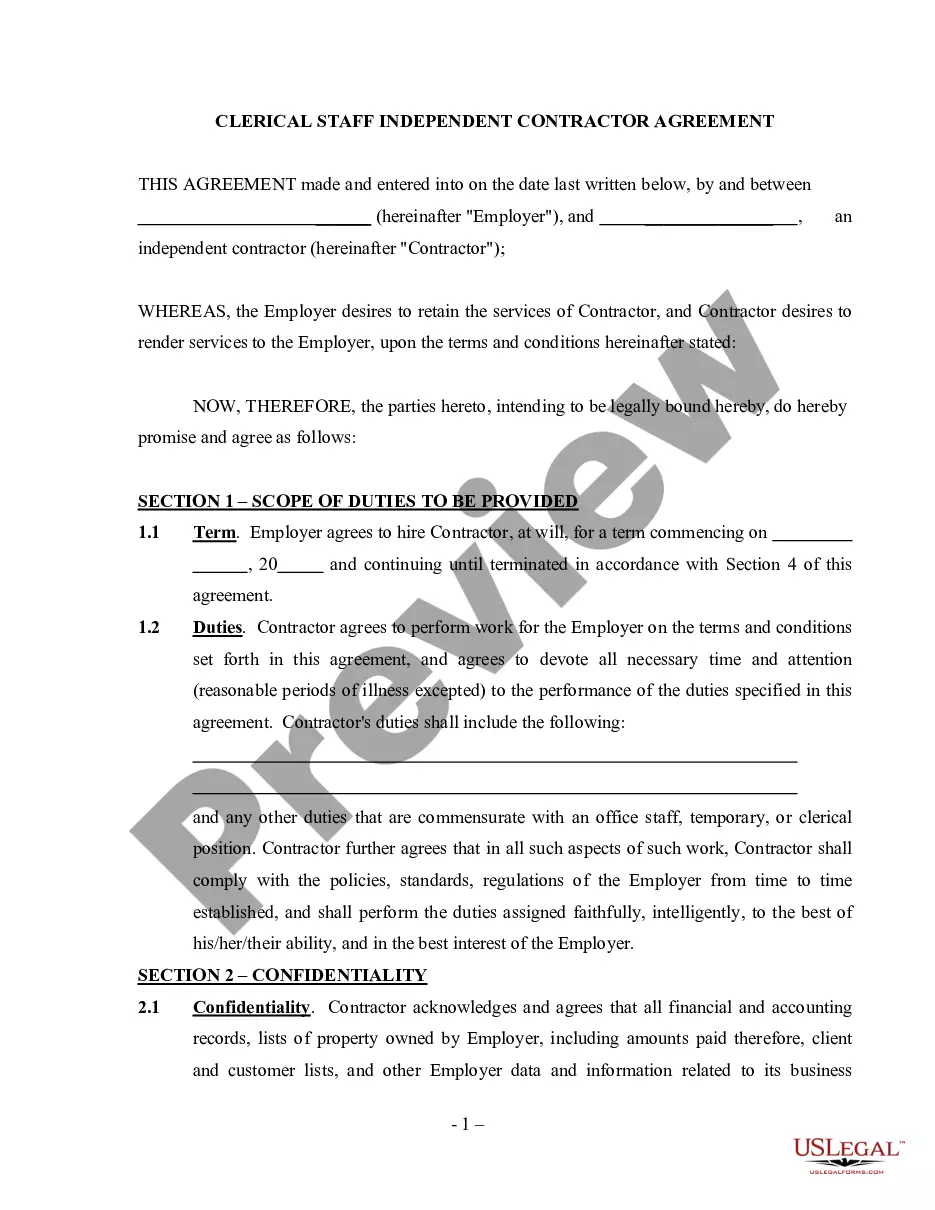
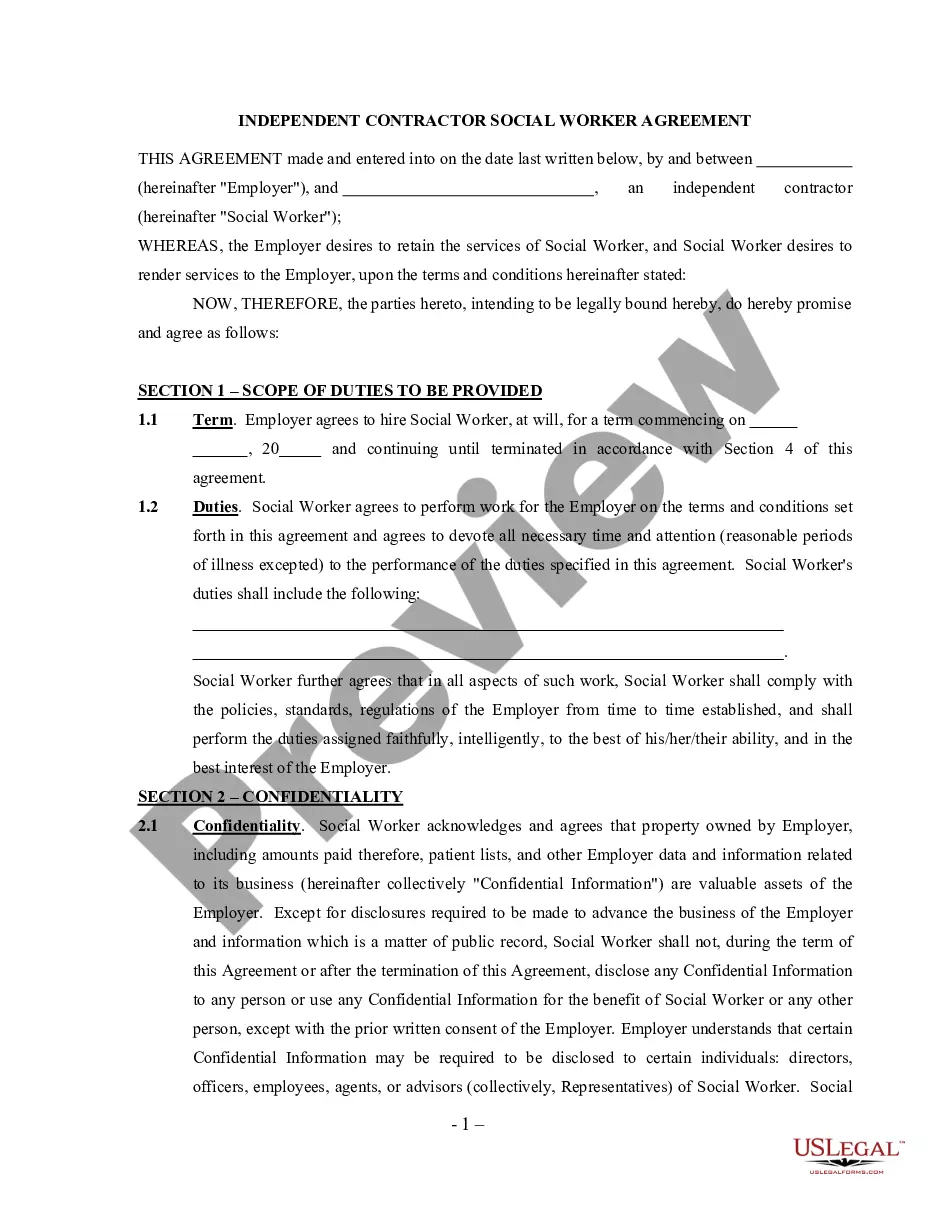
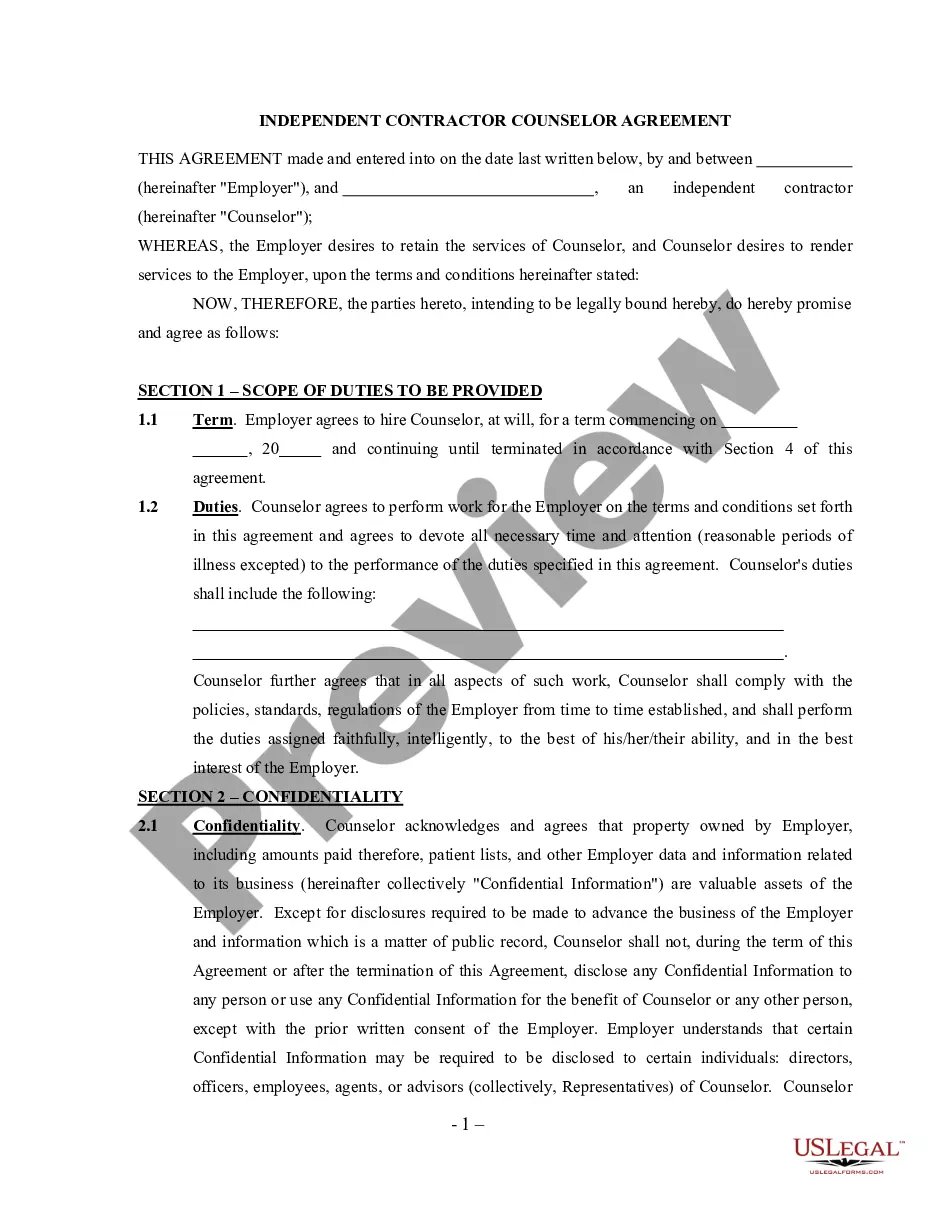
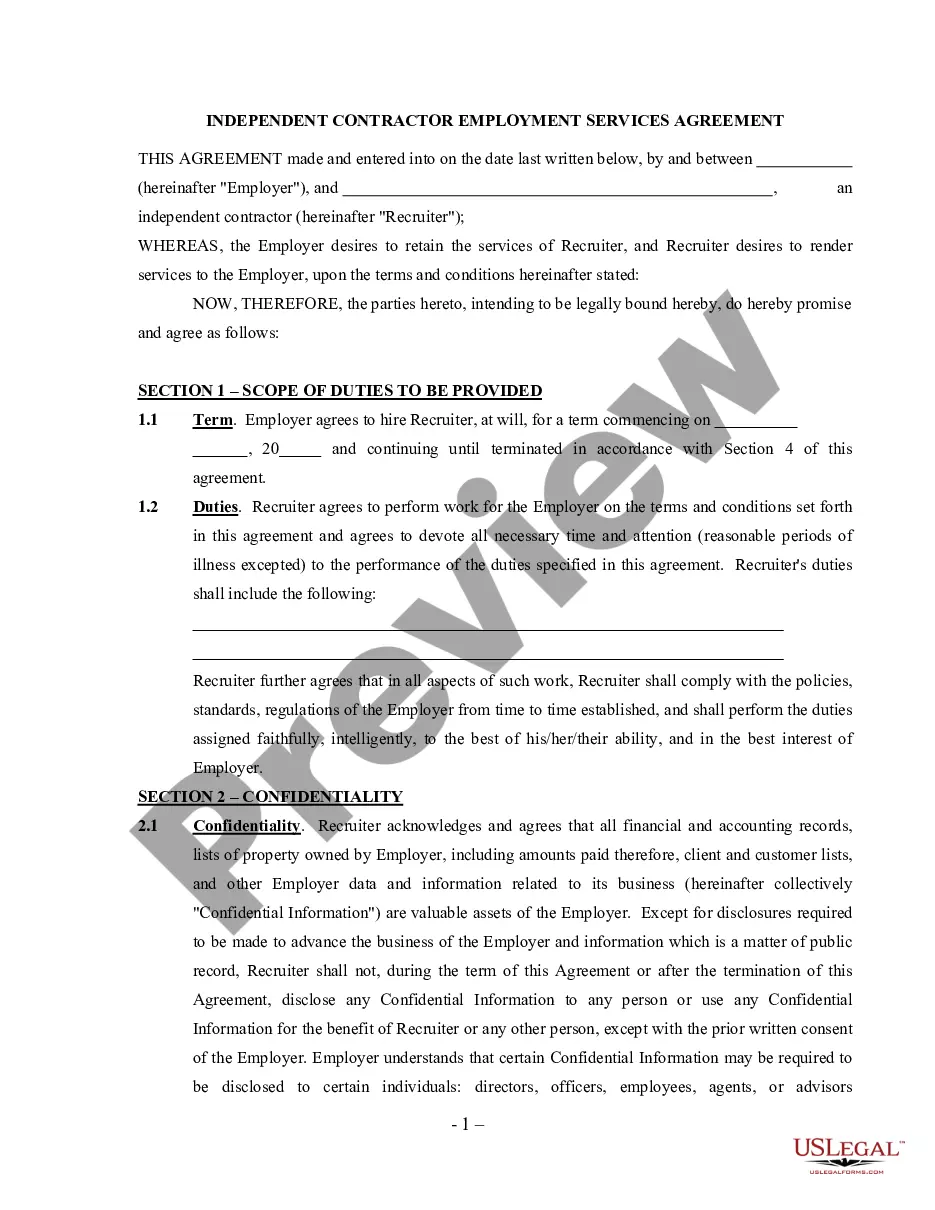
The Minister Agreement - Self-Employed Independent Contractor is a legal document used by churches or ministries to formalize the hiring of a minister as an independent contractor. This agreement establishes the terms of service that the minister will provide, outlining their duties, confidentiality obligations, and compensation. Unlike traditional employment contracts, this form recognizes the minister as an independent entity rather than an employee, which affects their rights and obligations under the law.
Key parts of this document
- Scope of Duties: Details the specific services the minister will provide.
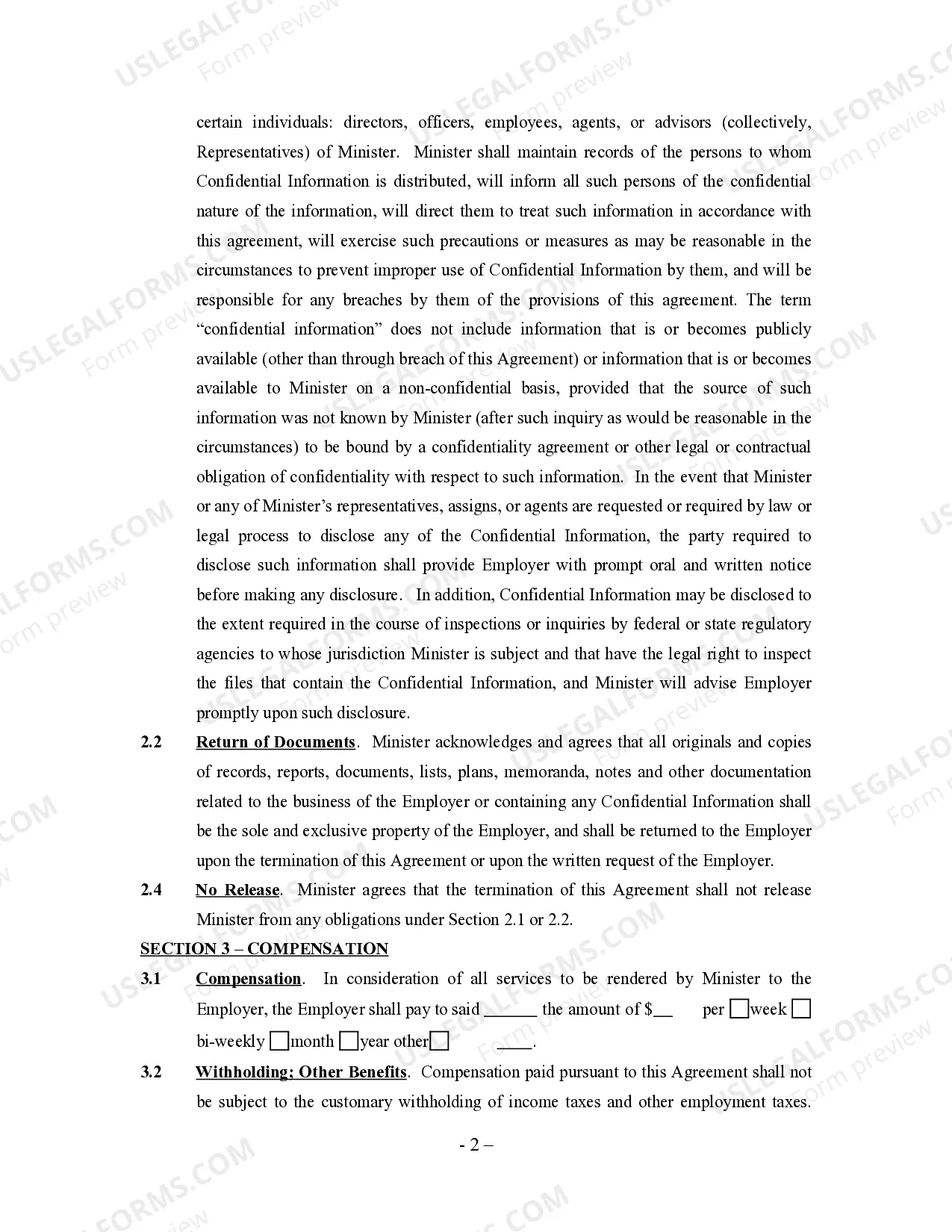
- Confidentiality: Outlines the obligation to protect the church or ministry's confidential information.
- Compensation: Specifies the payment terms for the minister's services.
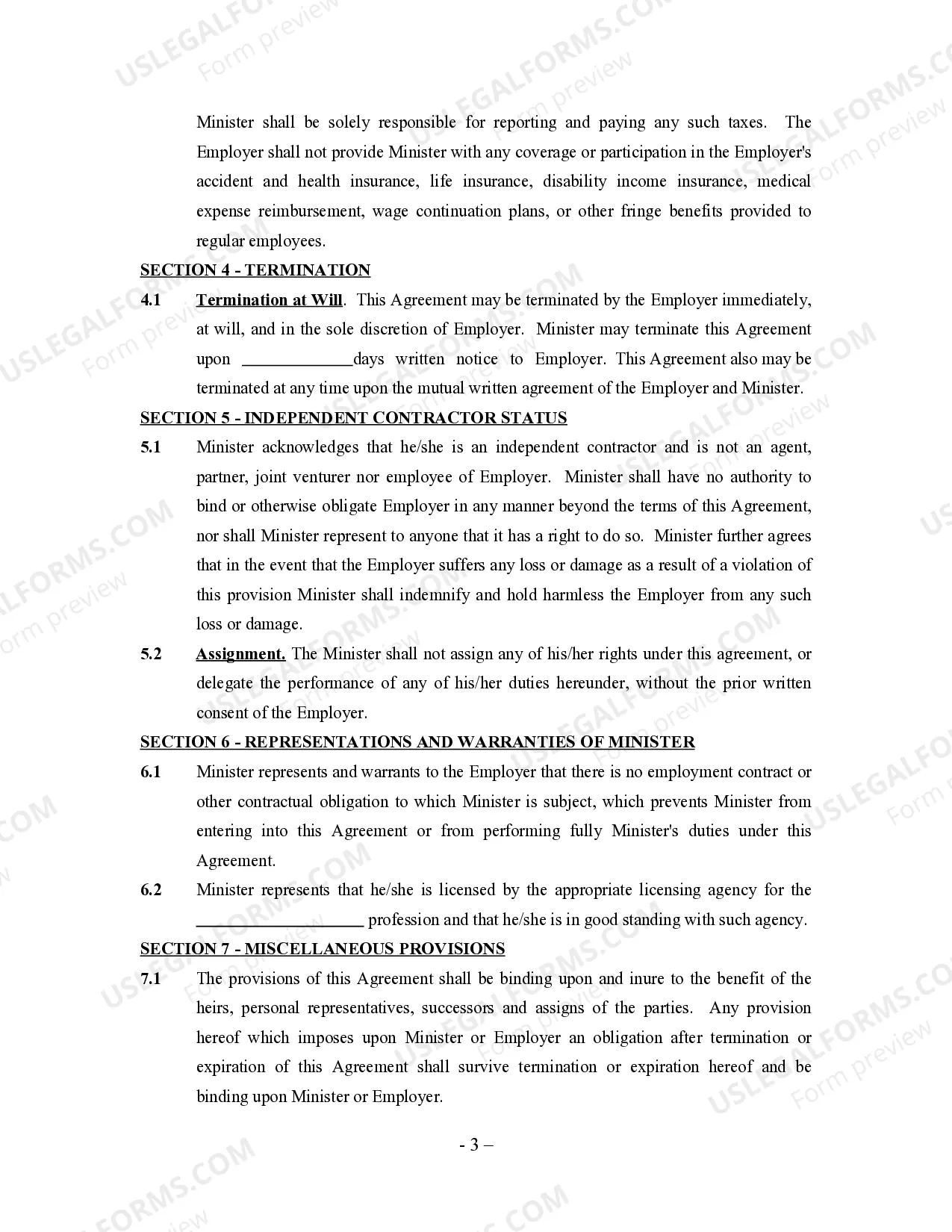
- Independent Contractor Status: Clarifies the nature of the relationship between the minister and the employer.
- Representations and Warranties: Indicates the minister's legal capacity to enter into the agreement.
Situations where this form applies
This form is necessary when a church or ministry wishes to hire a minister as an independent contractor instead of an employee. It is suitable for situations where the church requires specific services from a minister, such as preaching, conducting ceremonies, or providing spiritual guidance, and wants to outline the terms of these services accordingly. This agreement helps protect both parties by clarifying roles and responsibilities.
Who this form is for
- Churches or ministries seeking to hire a minister on a contract basis.
- Ministers looking for clear terms regarding their independent contractor status.
- Legal representatives of churches or ministries responsible for contract management.
Instructions for completing this form
- Identify the parties involved: Clearly state the name of the church or ministry and the minister.
- Outline the scope of duties: Detail the specific services the minister will perform.
- Specify compensation: Clearly define the payment terms, including amount and frequency of payments.
- Include confidentiality obligations: Ensure the minister understands their duties regarding confidential information.
- Sign and date: Both parties should sign and date the agreement to make it legally binding.
Notarization requirements for this form
This form does not typically require notarization unless specified by local law. However, it is advisable to check the specific regulations applicable in your state to ensure compliance.
Get your form ready online
Our built-in tools help you complete, sign, share, and store your documents in one place.
Make edits, fill in missing information, and update formatting in US Legal Forms—just like you would in MS Word.
Download a copy, print it, send it by email, or mail it via USPS—whatever works best for your next step.
Sign and collect signatures with our SignNow integration. Send to multiple recipients, set reminders, and more. Go Premium to unlock E-Sign.
If this form requires notarization, complete it online through a secure video call—no need to meet a notary in person or wait for an appointment.
We protect your documents and personal data by following strict security and privacy standards.

Make edits, fill in missing information, and update formatting in US Legal Forms—just like you would in MS Word.

Download a copy, print it, send it by email, or mail it via USPS—whatever works best for your next step.

Sign and collect signatures with our SignNow integration. Send to multiple recipients, set reminders, and more. Go Premium to unlock E-Sign.

If this form requires notarization, complete it online through a secure video call—no need to meet a notary in person or wait for an appointment.

We protect your documents and personal data by following strict security and privacy standards.
Mistakes to watch out for
- Failing to clearly outline the minister's duties, leading to misunderstandings.
- Not including a confidentiality clause, which can expose sensitive church information.
- Overlooking the independent contractor status, which may lead to compliance issues later.
- Neglecting to obtain signatures from both parties, rendering the agreement invalid.
Benefits of completing this form online
- Immediate access to a professionally drafted agreement tailored for legal use.
- Easy customization options to fit specific needs of the church or ministry.
- Secure downloading for offline use and retention.
- Time-efficient process without the need for in-person legal consultations.
Legal use & context
- This agreement generally provides legal protection for both the minister and the church, defining the terms of their relationship.
- It establishes clear expectations which can help prevent future disputes.
- It is important for the minister to not violate any existing contracts that may prevent them from working in this capacity.
What to keep in mind
- The Minister Agreement establishes a clear, legal relationship between a church and a minister as independent contractors.
- It is crucial to outline specific duties, compensation, and confidentiality obligations in the agreement.
- Ensure compliance with your stateâs regulations regarding independent contractor agreements.
Looking for another form?
Form popularity
FAQ
To set yourself up as a self-employed taxpayer with the IRS, you simply start paying estimated taxes (on Form 1040-ES, Estimated Tax for Individuals) and file Schedule C, Profit or Loss From Business, and Schedule SE, Self-Employment Tax, with your Form 1040 tax return each April.
According to IRS guidelines, a pastor is considered self-employed if a church does not have control over the pastor's employment status or activities. When a pastor is given a housing allowance or provided a parsonage, the IRS does not require this compensation to be reported as taxable income.
Regardless of whether you're a minister performing ministerial services as an employee or a self-employed person, all of your earnings, including wages, offerings, and fees you receive for performing marriages, baptisms, funerals, etc., are subject to income tax.
A minister can apply to be exempt from paying the self-employment tax. This exemption will only apply to their wages from the church, not other services performed. They must fill out Form 4361 and attach a statement stating they have taken a vow of poverty or oppose public insurance.
Clergy are still considered self-employed and file Schedule SE on their 1040 and pay both the Employee and Employer portion of Social Security and Medicare tax (a total of up to 15.3%) on earned income.
Compensation paid to a minister or clergy member typically is reported to them on Form W-2 (if the minister is an employee of the church), or Form 1099-MISC (if the minister performed services such as weddings and baptisms). Most ministers are treated as dual-status taxpayers.
Since they are considered self-employed, ministers are exempt from federal income tax withholding. However, ministers can request that their employers withhold taxes. This approach may be easier than making quarterly estimated payments.
Regardless of whether you're a minister performing ministerial services as an employee or a self-employed person, all of your earnings, including wages, offerings, and fees you receive for performing marriages, baptisms, funerals, etc., are subject to income tax.
Pastors Are Always Self-Employed For Social Security Taxes When it comes to Social Security and Medicare taxes, also known as payroll taxes, you are always considered self-employed. Pastors are always self-employed for Social Security taxes and pay under the SECA system.You're always considered self-employed.