Demolition And Disposal Contractor Agreement - Self-Employed
About this form
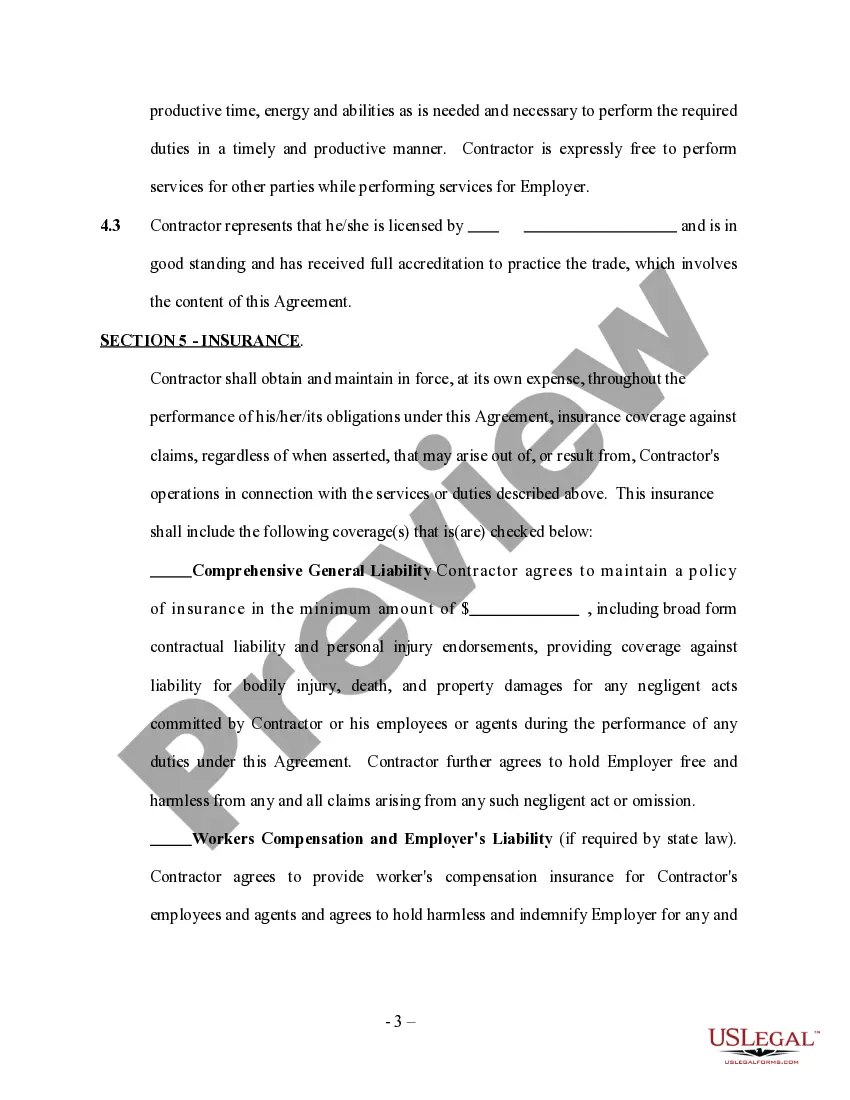
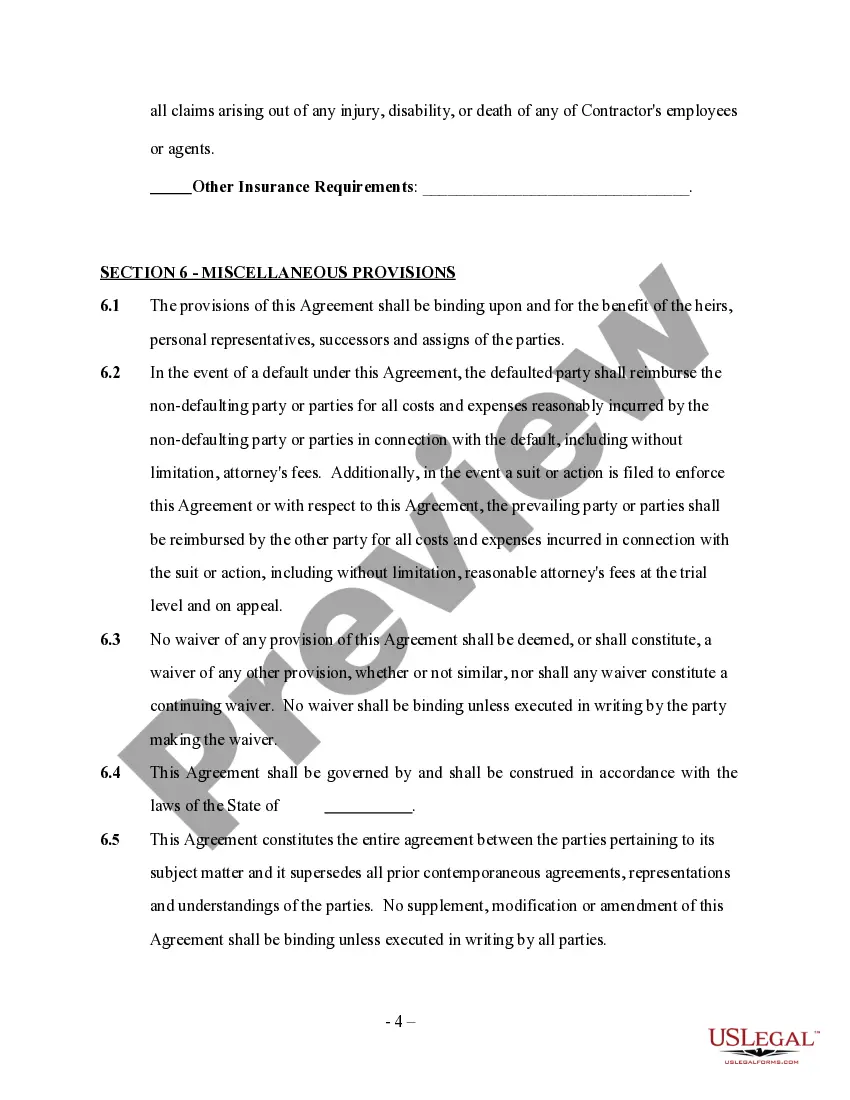
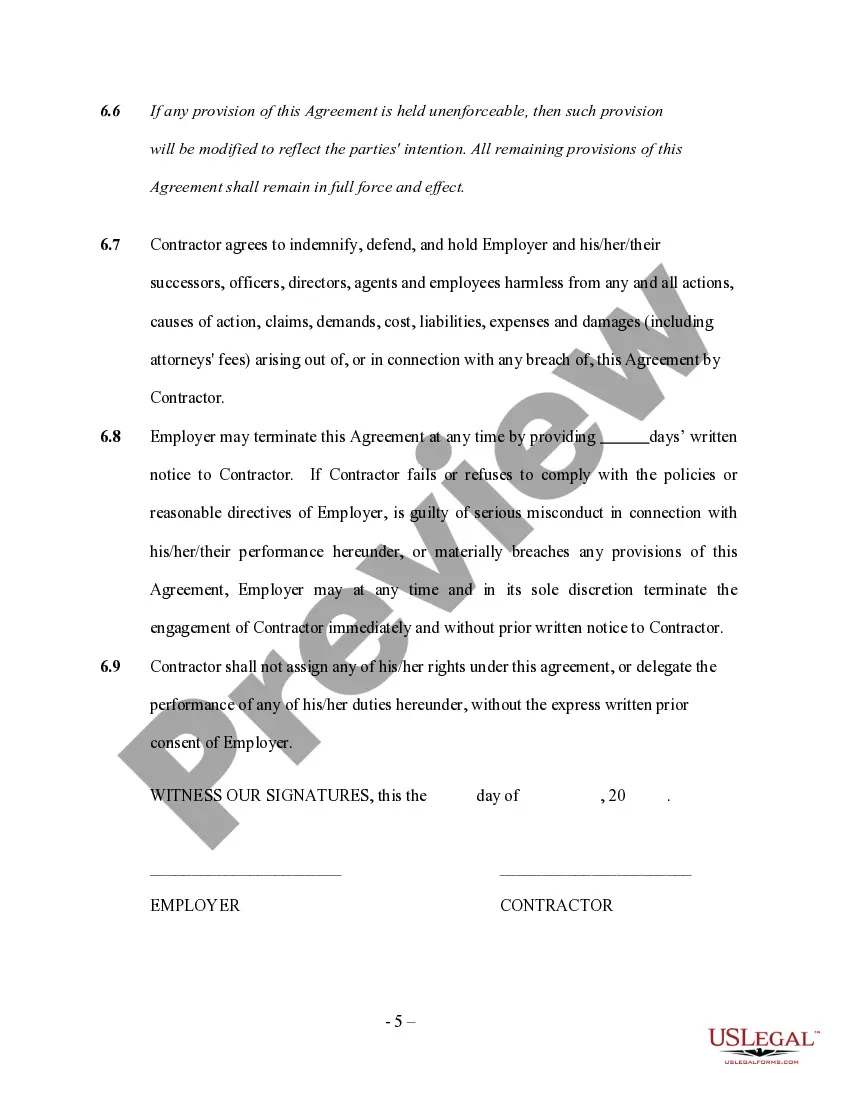
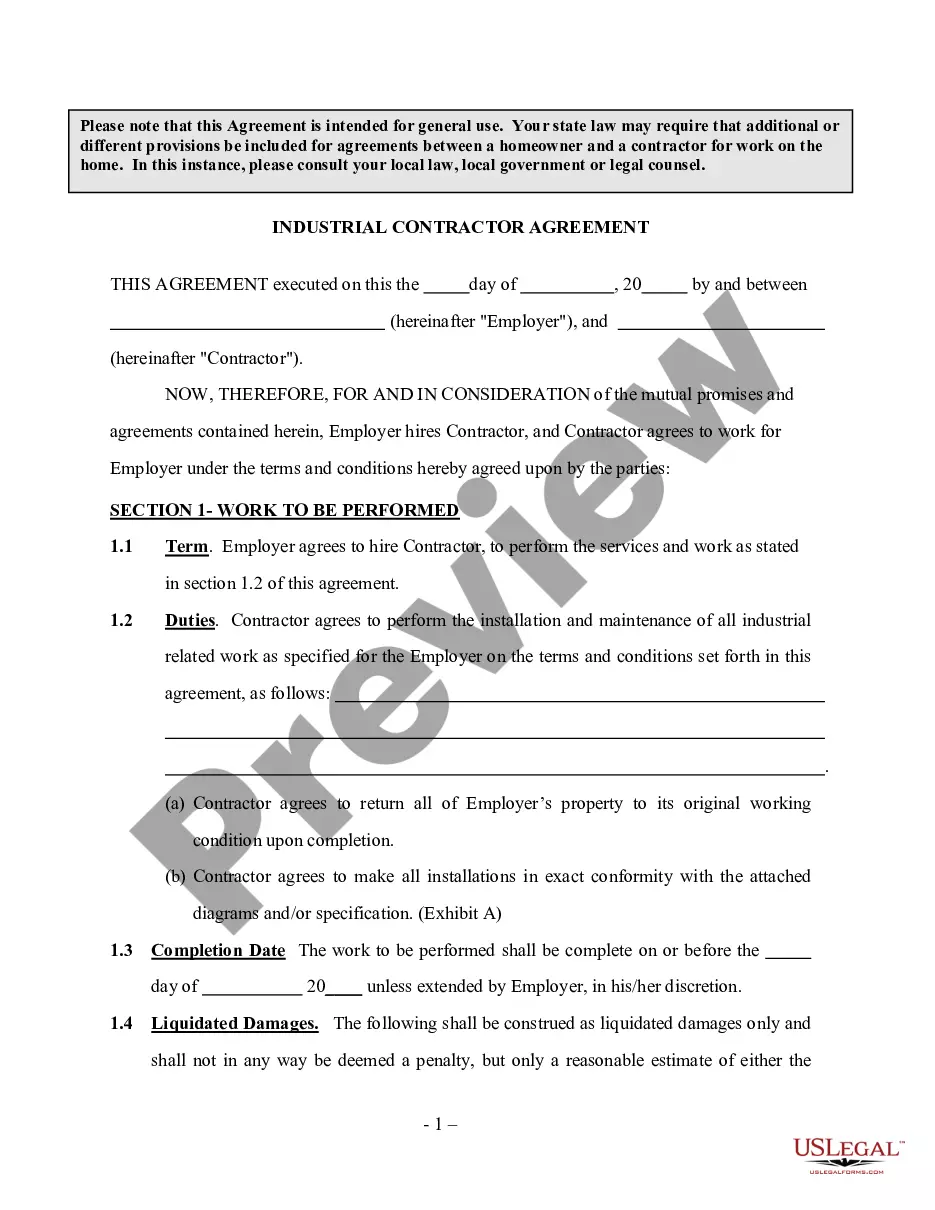
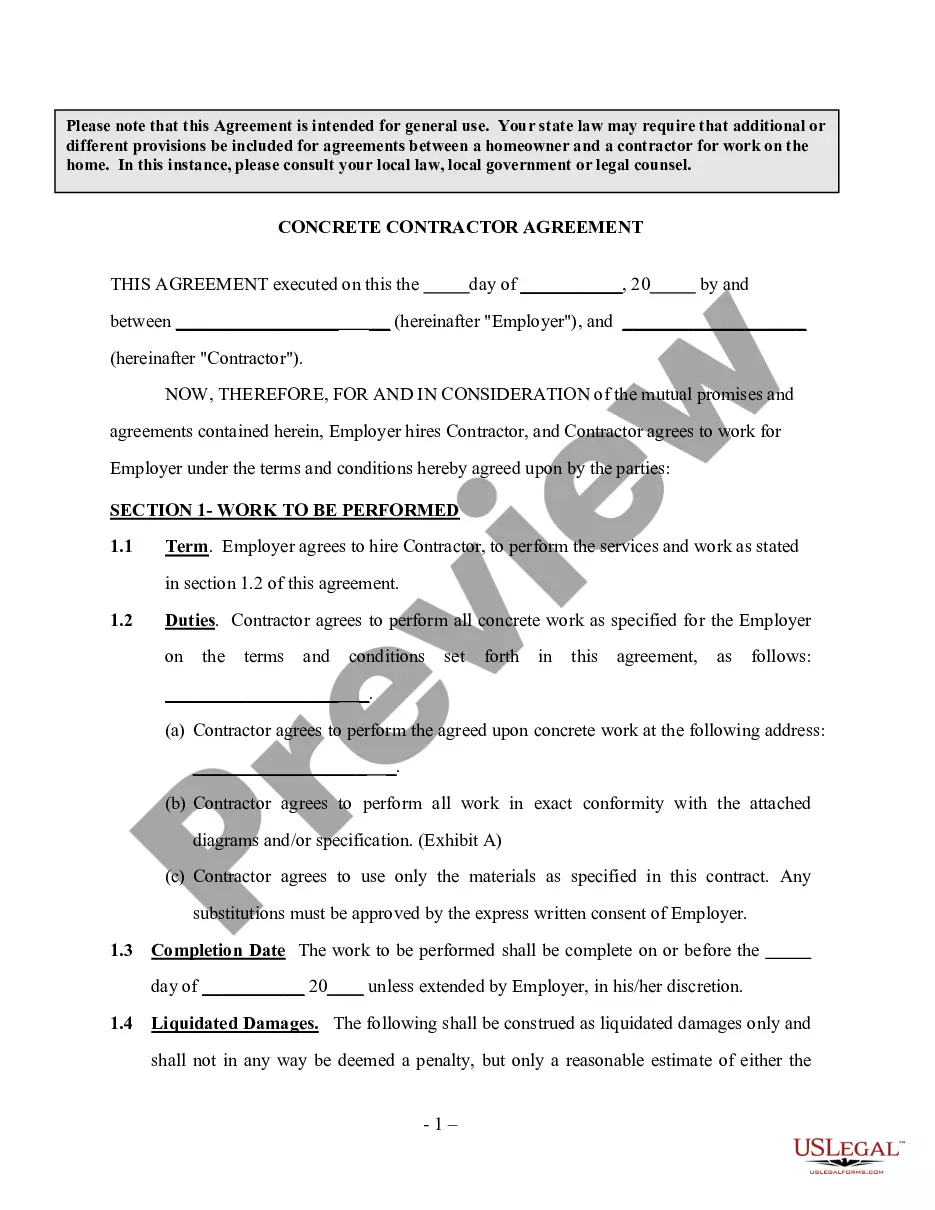
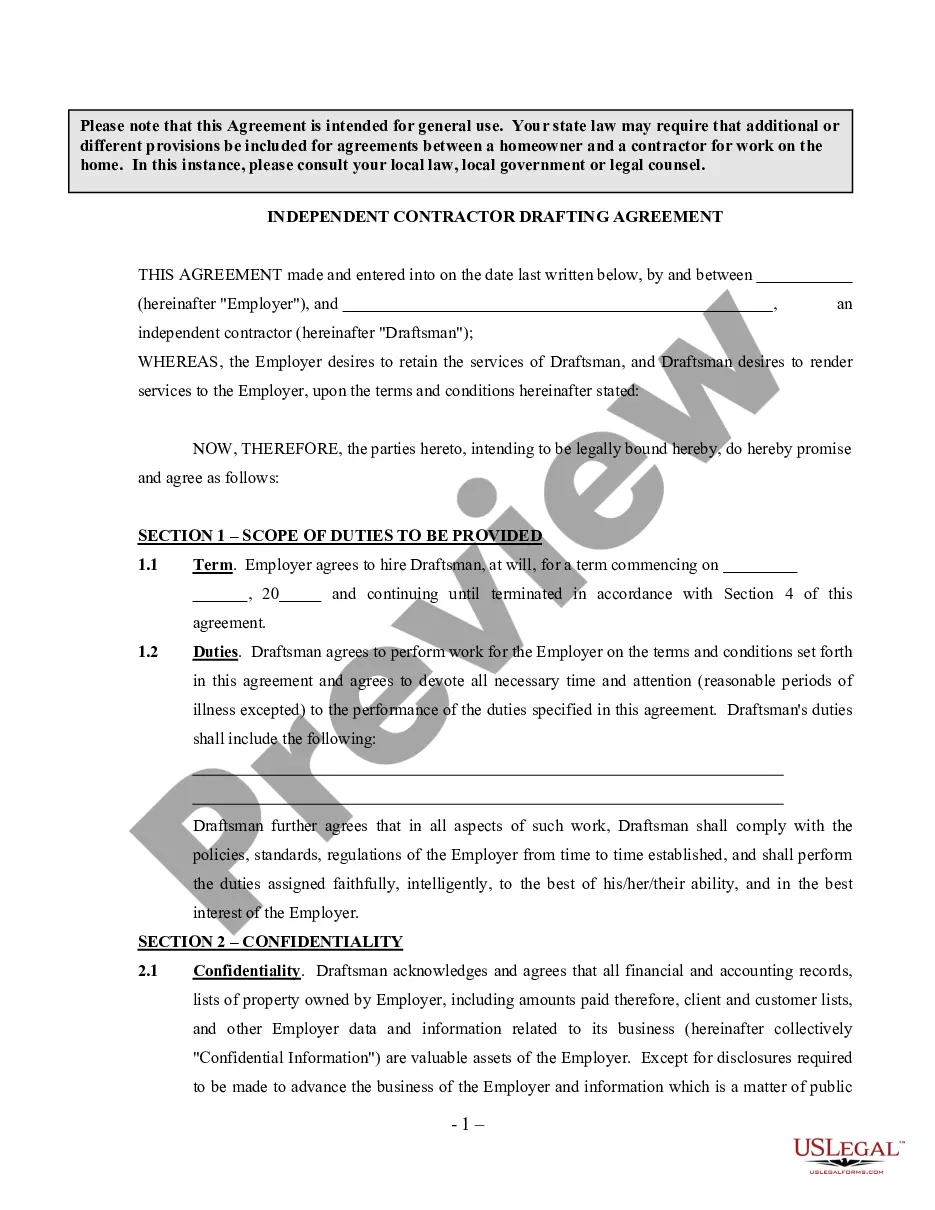
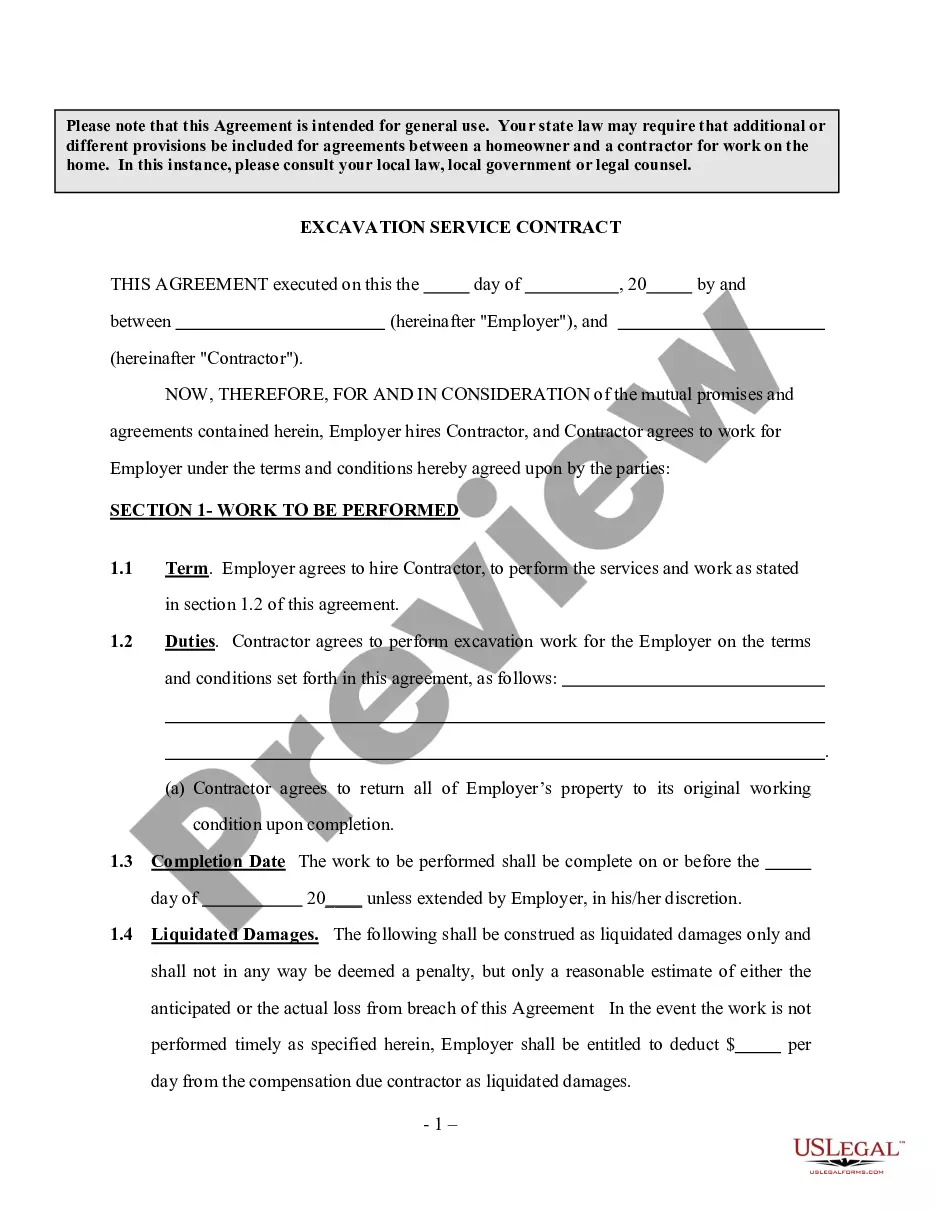
The Demolition and Disposal Contractor Agreement - Self-Employed is a legal document used when an employer hires a demolition expert as an independent contractor. This agreement outlines the scope of work, responsibilities, and the terms of the working relationship. It is distinct from employment contracts as it establishes the contractor's status, emphasizing that they operate independently and are not an employee of the employer.
What’s included in this form
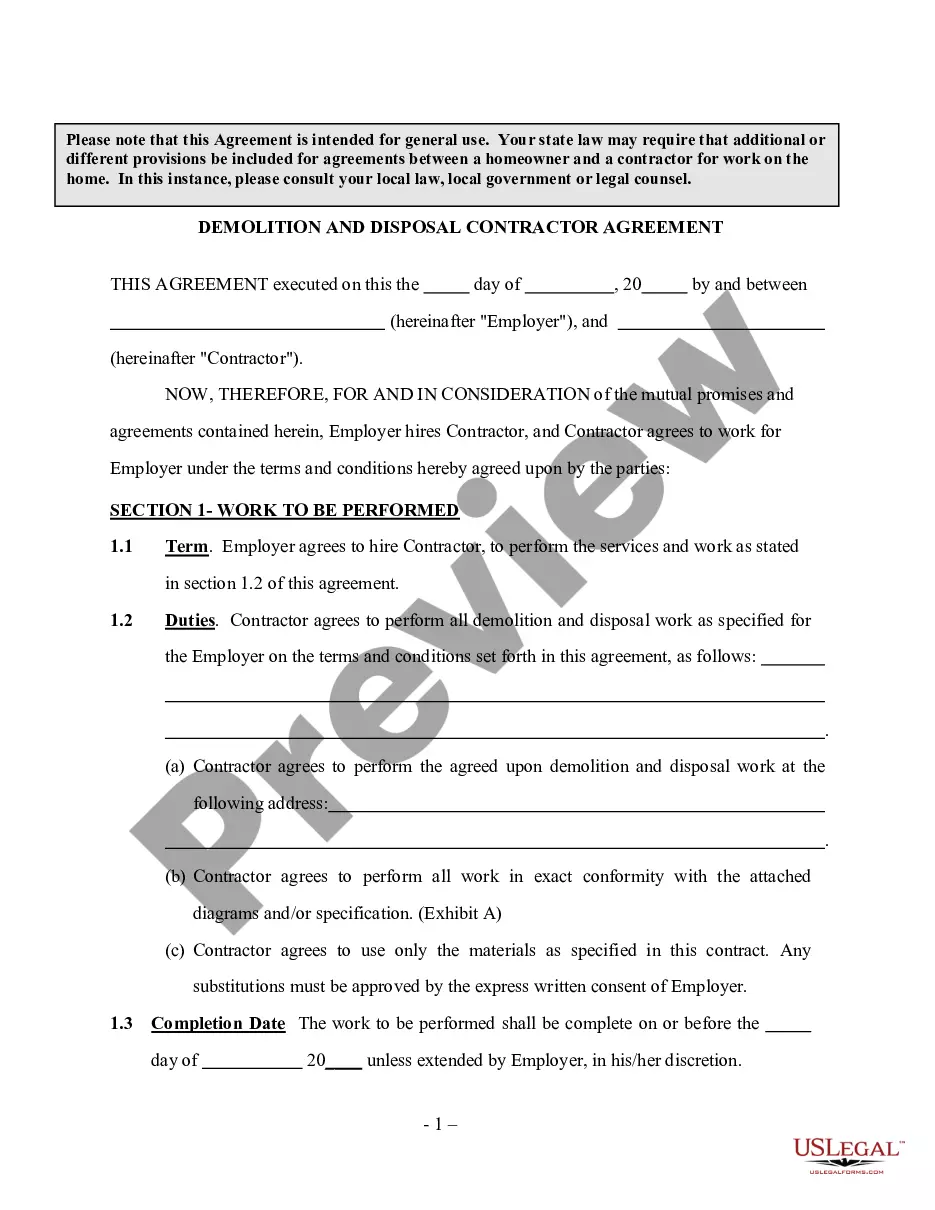
- Scope of work: Definition of the demolition services to be performed by the contractor.
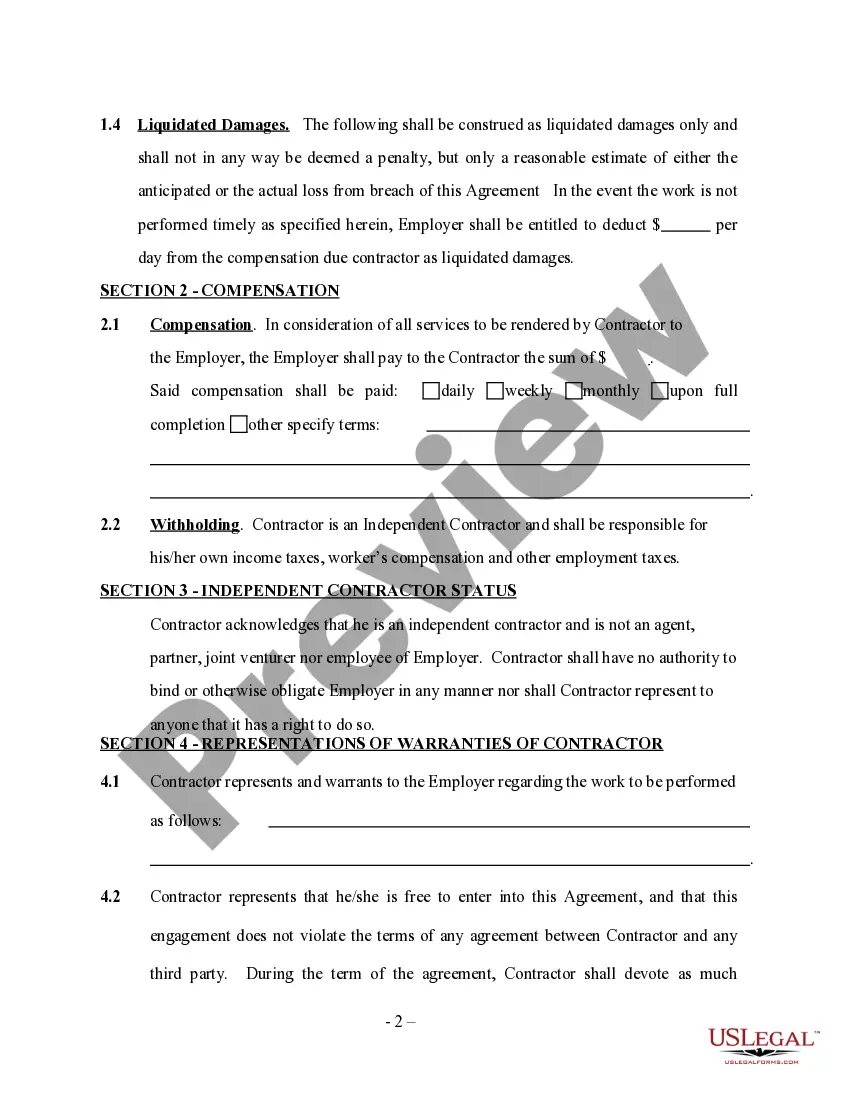
- Contractor status: Clarification that the contractor is not an employee and has no authority to bind the employer.
- Materials used: Specification that the contractor must use materials as stated in the contract, with a requirement for approval on any substitutions.
When to use this document
This form is useful in scenarios where a property owner or business needs to hire a demolition contractor for projects such as tearing down structures, clearing land, or disposing of construction debris. It provides a structured approach to outline the expectations and obligations of both parties involved in the demolition work.
Who can use this document
- Property owners looking to hire a demolition contractor.
- Businesses intending to outsource demolition services to independent contractors.
- Contractors who provide demolition services and require a formal agreement with their clients.
Instructions for completing this form
- Identify the parties involved: Include the names and contact information of the employer and the contractor.
- Specify the work: Clearly outline the demolition services to be performed in detail.
- Define the term of the contract: Indicate the length of time the contractor will perform the work.
- Include materials: State the materials to be used in the demolition and the process for handling any substitutions.
- Sign and date: Ensure both parties sign the agreement, acknowledging their understanding and acceptance of the terms.
Notarization guidance
This form does not typically require notarization unless specified by local law. Always check local requirements to ensure compliance.
Get your form ready online
Our built-in tools help you complete, sign, share, and store your documents in one place.
Make edits, fill in missing information, and update formatting in US Legal Forms—just like you would in MS Word.
Download a copy, print it, send it by email, or mail it via USPS—whatever works best for your next step.
Sign and collect signatures with our SignNow integration. Send to multiple recipients, set reminders, and more. Go Premium to unlock E-Sign.
If this form requires notarization, complete it online through a secure video call—no need to meet a notary in person or wait for an appointment.
We protect your documents and personal data by following strict security and privacy standards.

Make edits, fill in missing information, and update formatting in US Legal Forms—just like you would in MS Word.

Download a copy, print it, send it by email, or mail it via USPS—whatever works best for your next step.

Sign and collect signatures with our SignNow integration. Send to multiple recipients, set reminders, and more. Go Premium to unlock E-Sign.

If this form requires notarization, complete it online through a secure video call—no need to meet a notary in person or wait for an appointment.

We protect your documents and personal data by following strict security and privacy standards.
Common mistakes
- Failing to specify the exact scope of work, leading to misunderstandings.
- Not including clear terms regarding payment and deadlines for completion.
- Ignoring state-specific regulations that may necessitate additional clauses.
Benefits of completing this form online
- Convenience of downloading and printing the form immediately.
- Editability allows you to customize the agreement according to your specific needs.
- Reliability as the form is drafted by licensed attorneys to ensure legal compliance.
Looking for another form?
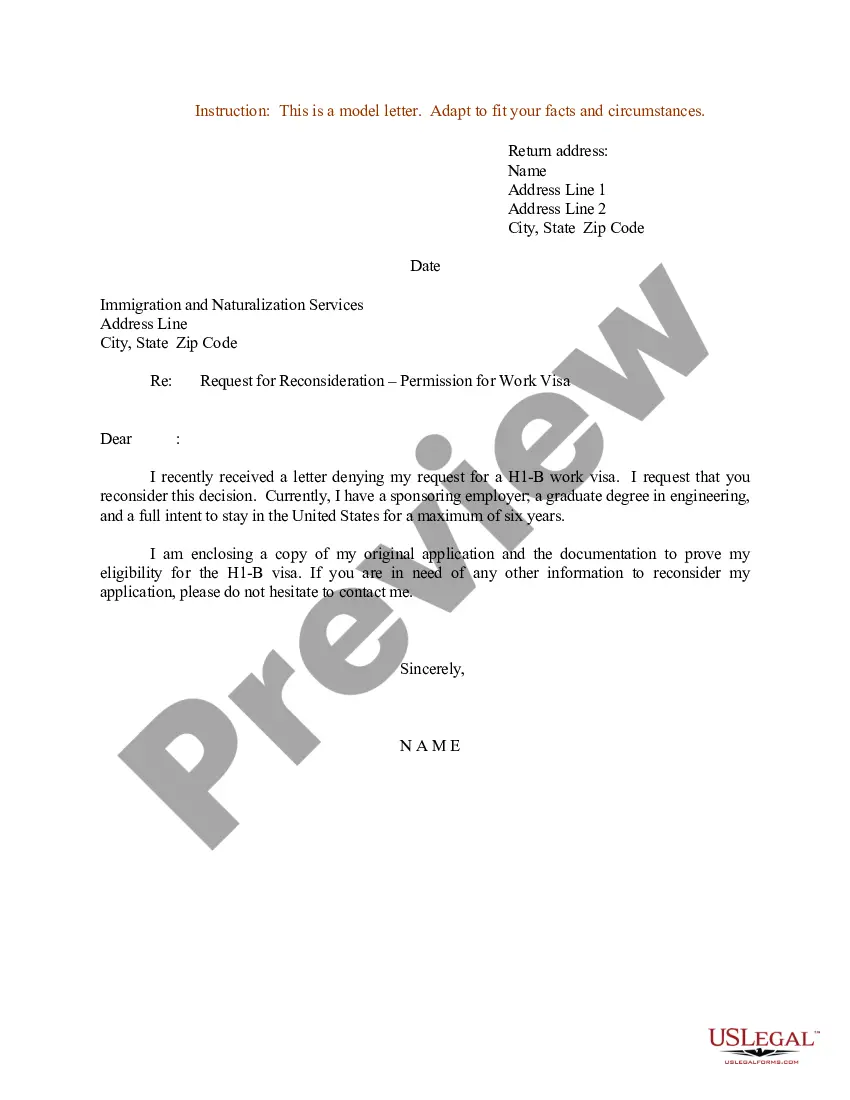
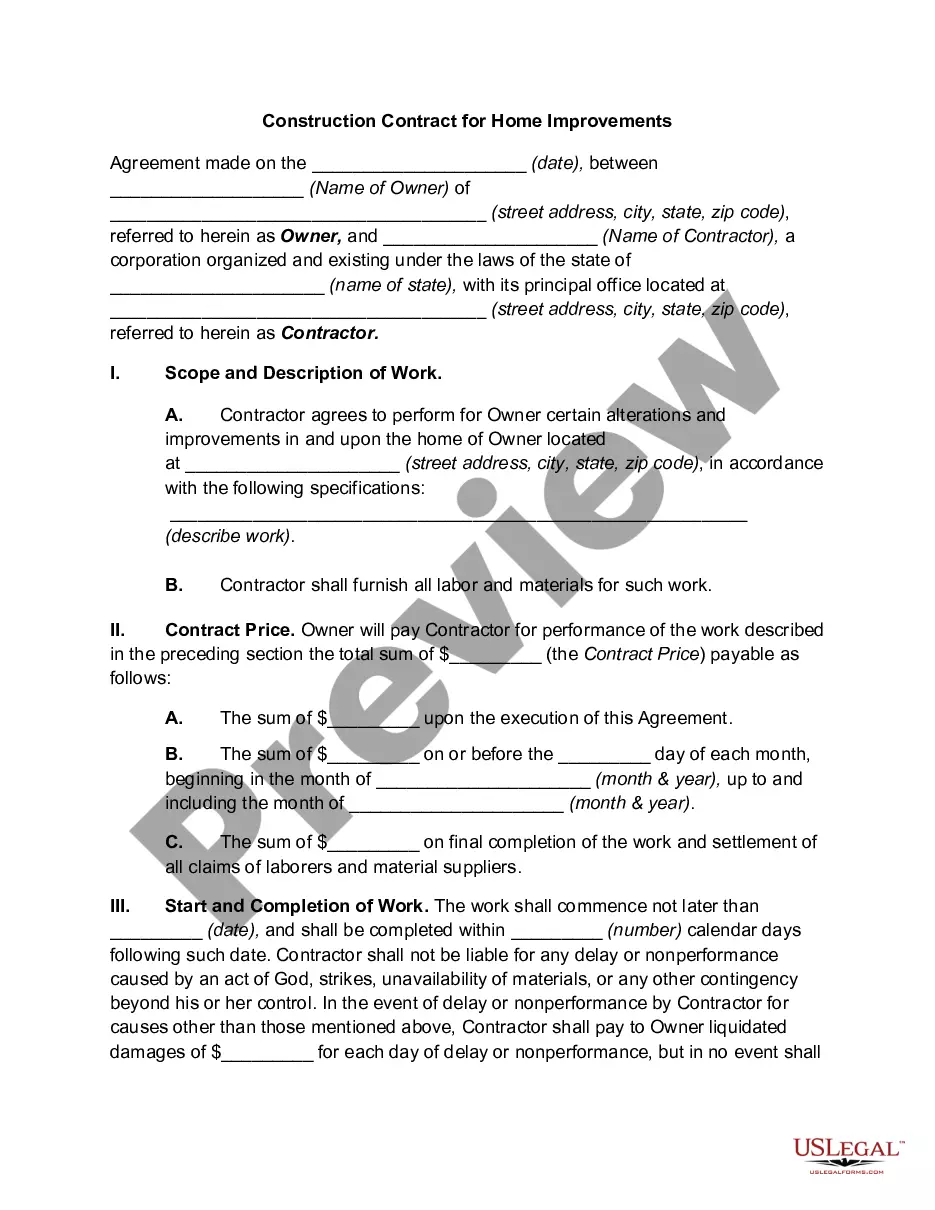
Form popularity
FAQ
Length of Contract. Each client contractor agreement should outline the length of the working relationship. Project Description. Payment Terms. Nondisclosure Terms. Rights and Responsibilities. Termination Clause. Disclaimers.
A contractor or subcontractor can abandon a contract upon breach by the owner or general contractor, but cannot terminate the contract.Termination for convenience allows the owner/general contractor to stop the work for just about any reason without having to pay for anticipated profit or unperformed work.
An Independent Contractor Agreement should contain all of these basic terms: Description of the services to be provided.Explanation of what the hiring party will provide or not provide, such as equipment, for the independent contractor to use. Ownership of work product if that is relevant to the work being performed.
In order to cancel the transaction, the consumer must send the notice of cancellation form, or some other written statement indicating the intent to cancel the contract, to the creditor at the address stated on the notice. This notice need only state the consumer's intention to cancel the transaction.
An independent contractor agreement, also known as a '1099 agreement', is a contract between a client willing to pay for the performance of services by a contractor.In most cases, the contractor is paid on a per-job basis and not by the hour, unless, the contractor is a lawyer, accountant, or equivalent.
If your independent contractor agreement contains a provision that allows the parties to terminate the relationship at any time, revise the agreement to include a notice provision with at least some kind of a notice period required for termination of the contract.
Name of contractor and contact information. Name of homeowner and contact information. Describe property in legal terms. List attachments to the contract. The cost. Failure of homeowner to obtain financing. Description of the work and the completion date. Right to stop the project.
Get it in writing. Keep it simple. Deal with the right person. Identify each party correctly. Spell out all of the details. Specify payment obligations. Agree on circumstances that terminate the contract. Agree on a way to resolve disputes.
Form W-9. The IRS requires contractors to fill out a Form W-9, request for Taxpayer Identification Number and Certification, which you should keep on file for at least four years after the hiring. This form is used to request the correct name and Taxpayer Identification Number, or TIN, of the worker or their entity.