Mortgage Loan Officer Agreement - Self-Employed Independent Contractor
About this form
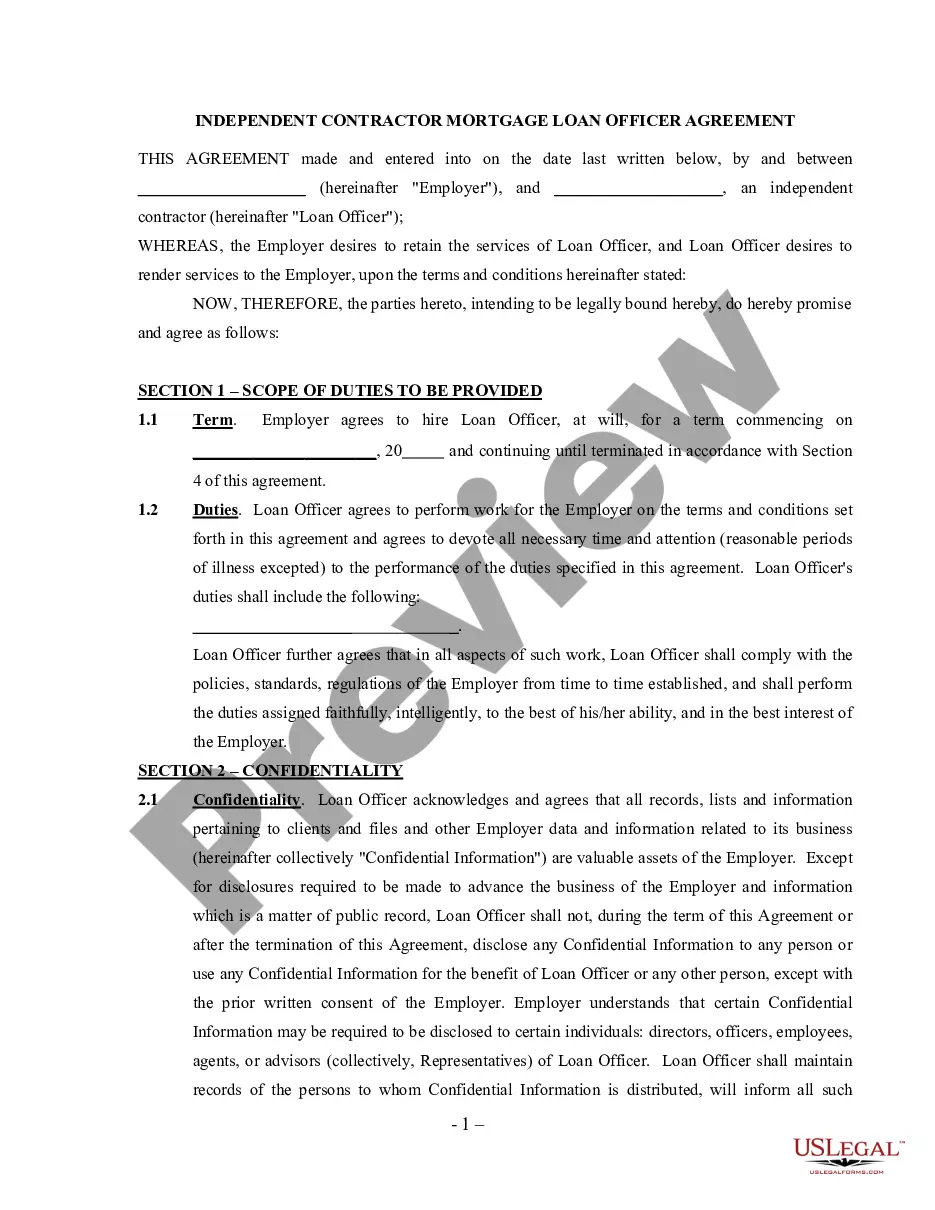
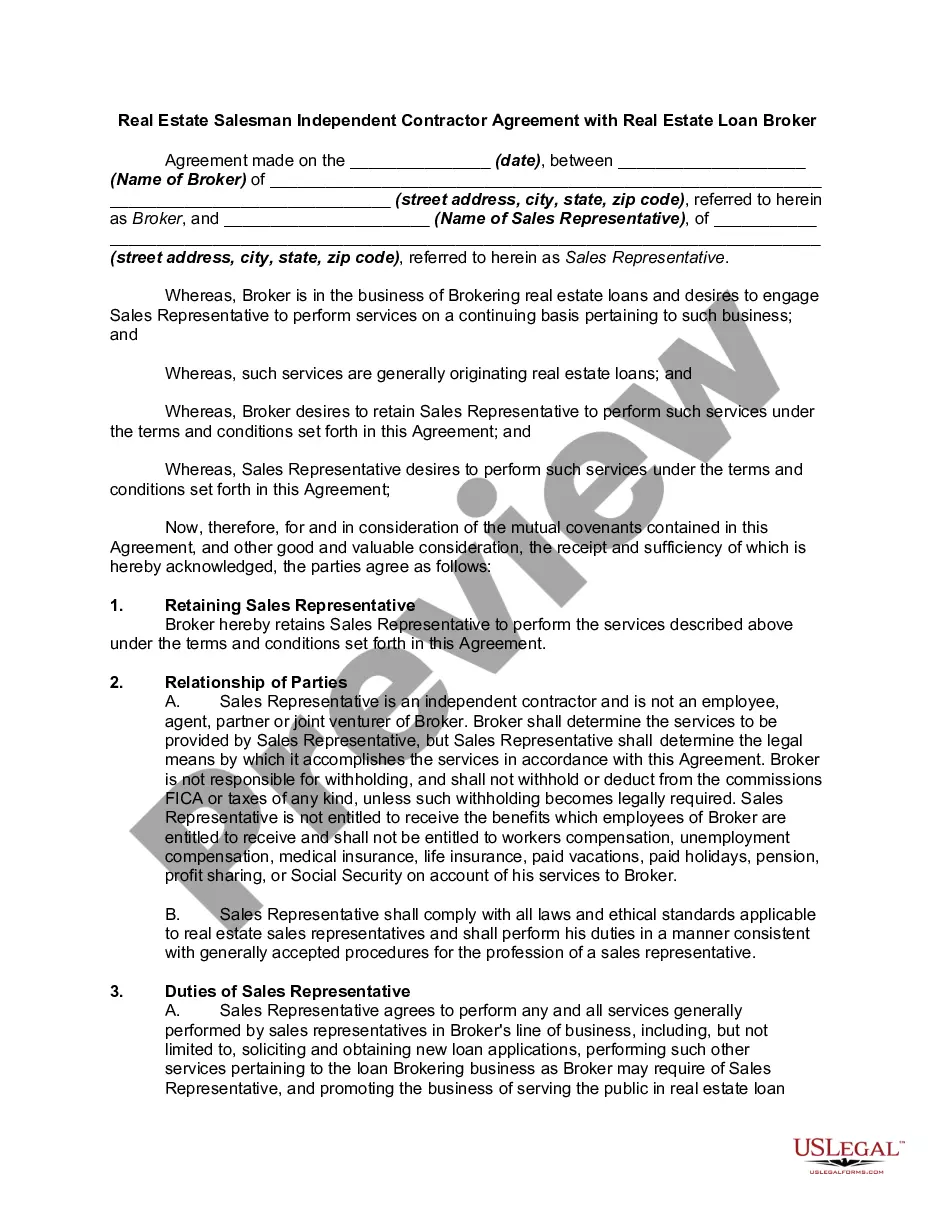
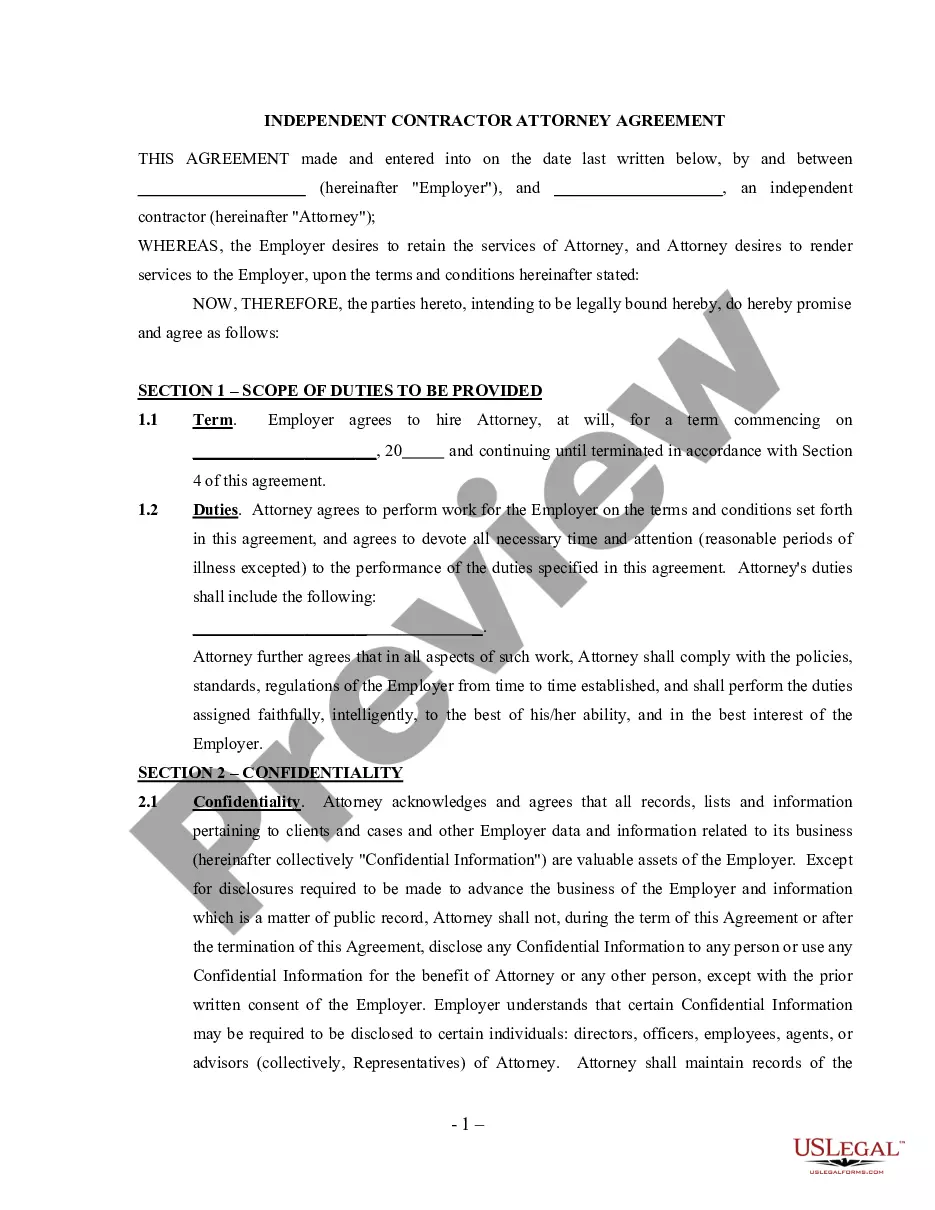
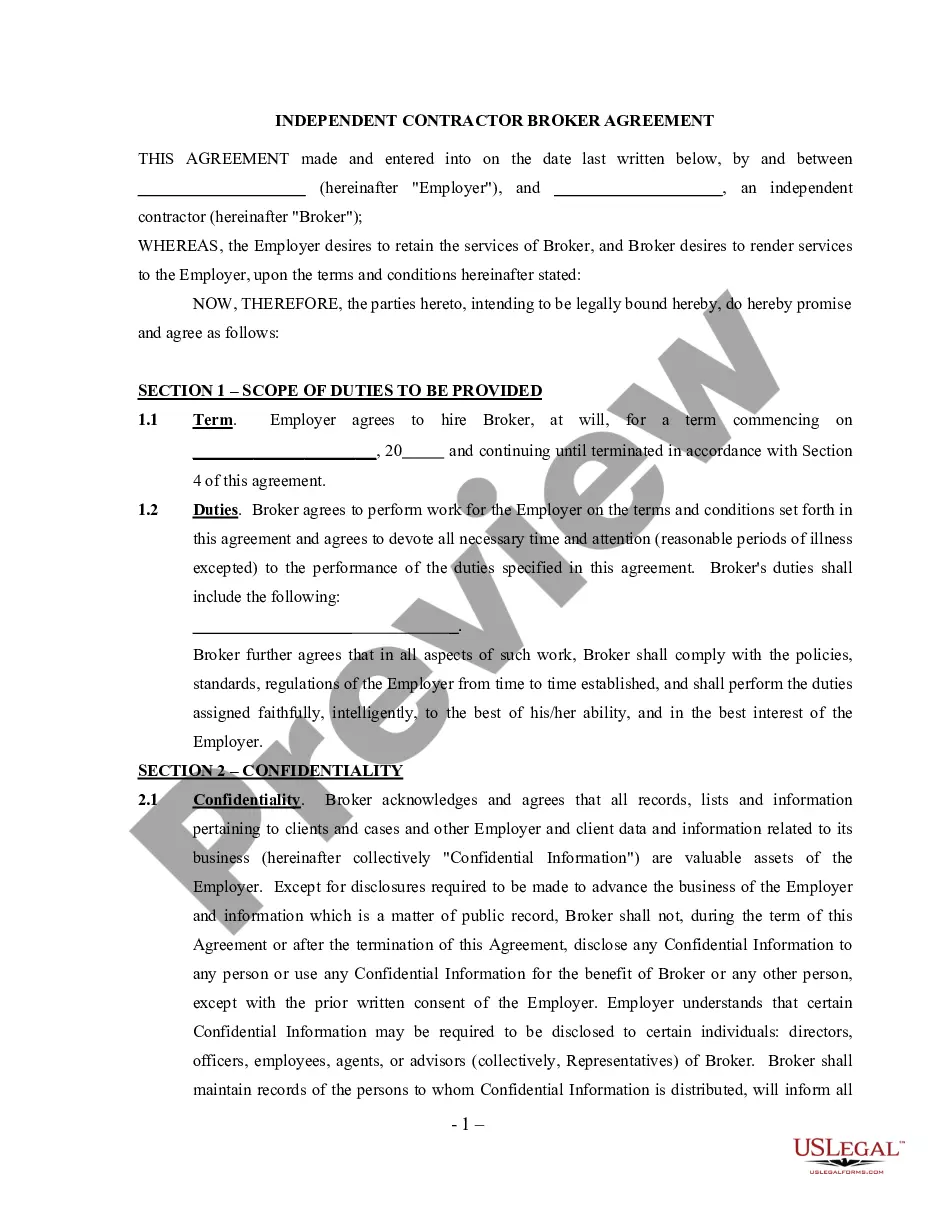
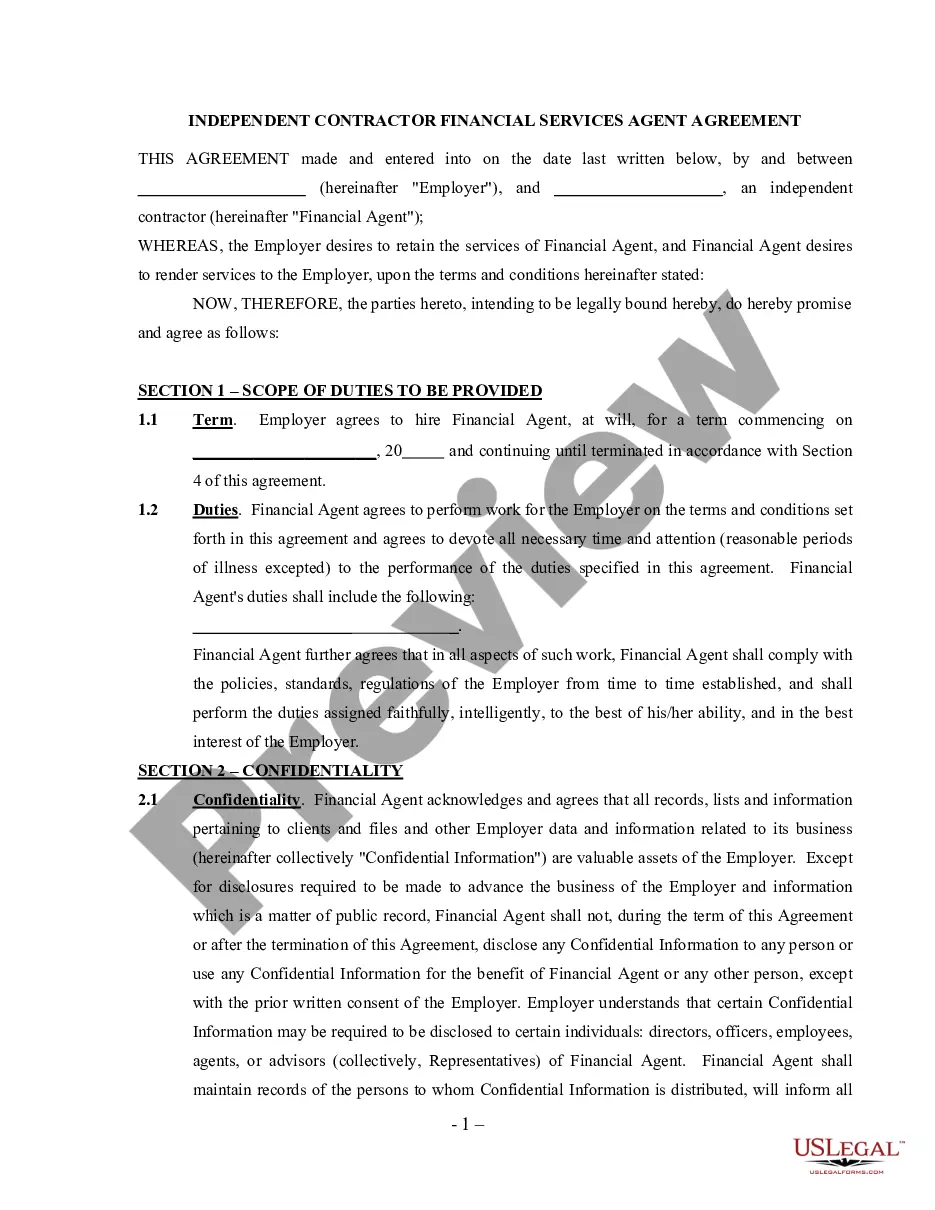
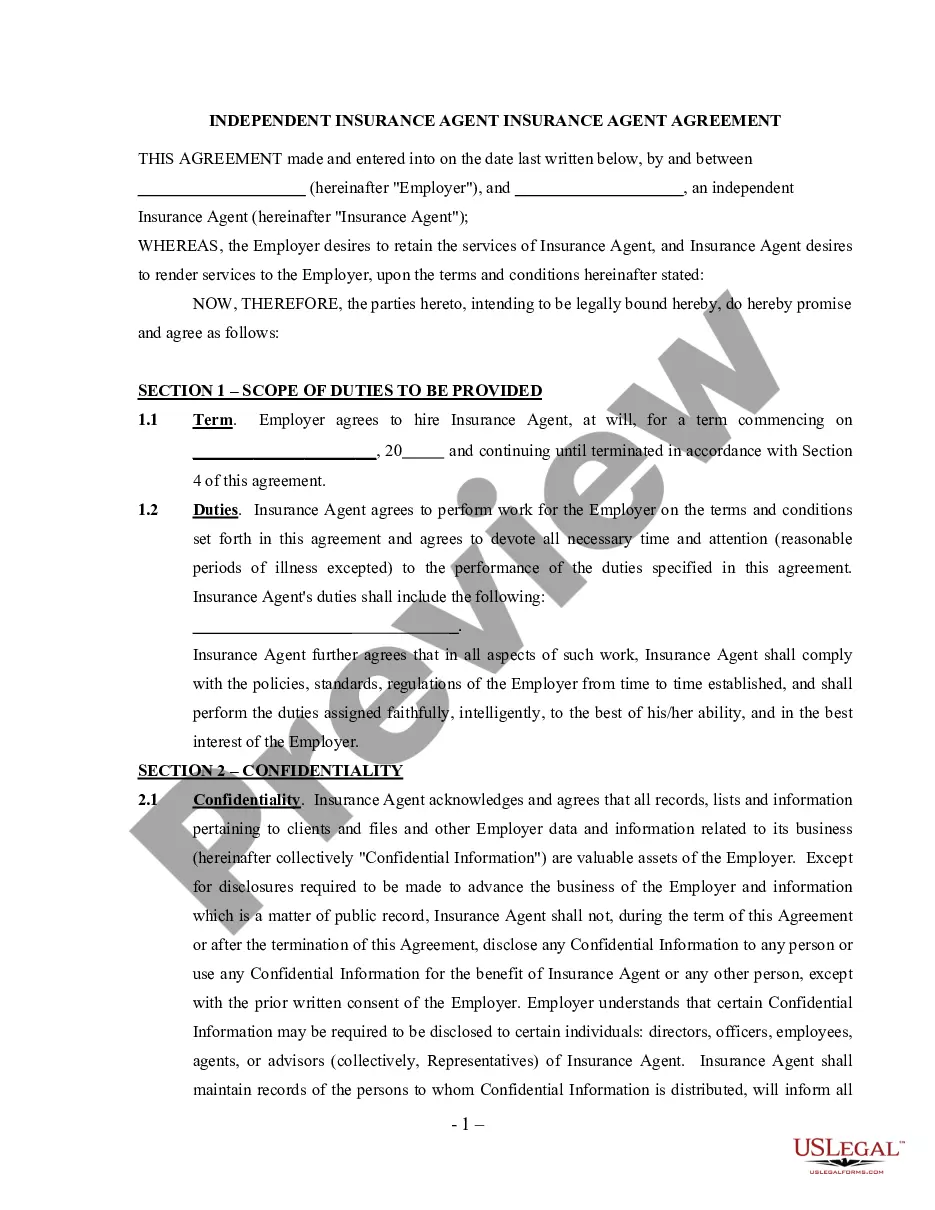
The Mortgage Loan Officer Agreement - Self-Employed Independent Contractor is a legal document that formalizes the relationship between an employer and a self-employed loan officer. This agreement outlines the terms under which the loan officer will provide services to the employer's clients, differentiating it from typical employment contracts by emphasizing the independent contractor status of the loan officer.
Main sections of this form
- Parties involved: Identifies the employer and the loan officer.
- Scope of work: Details the services the loan officer will provide.
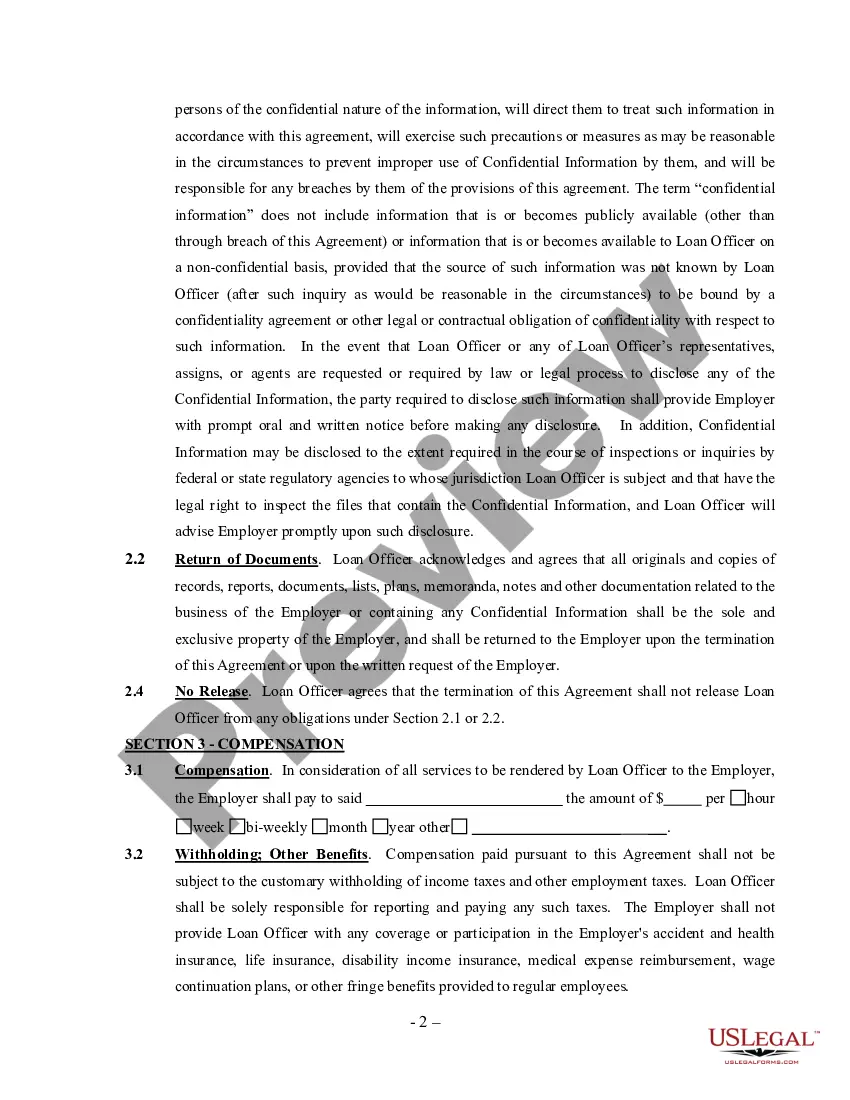
- Confidentiality clause: Protects the employerâs confidential information.
- Compensation terms: Outlines how the loan officer will be compensated.
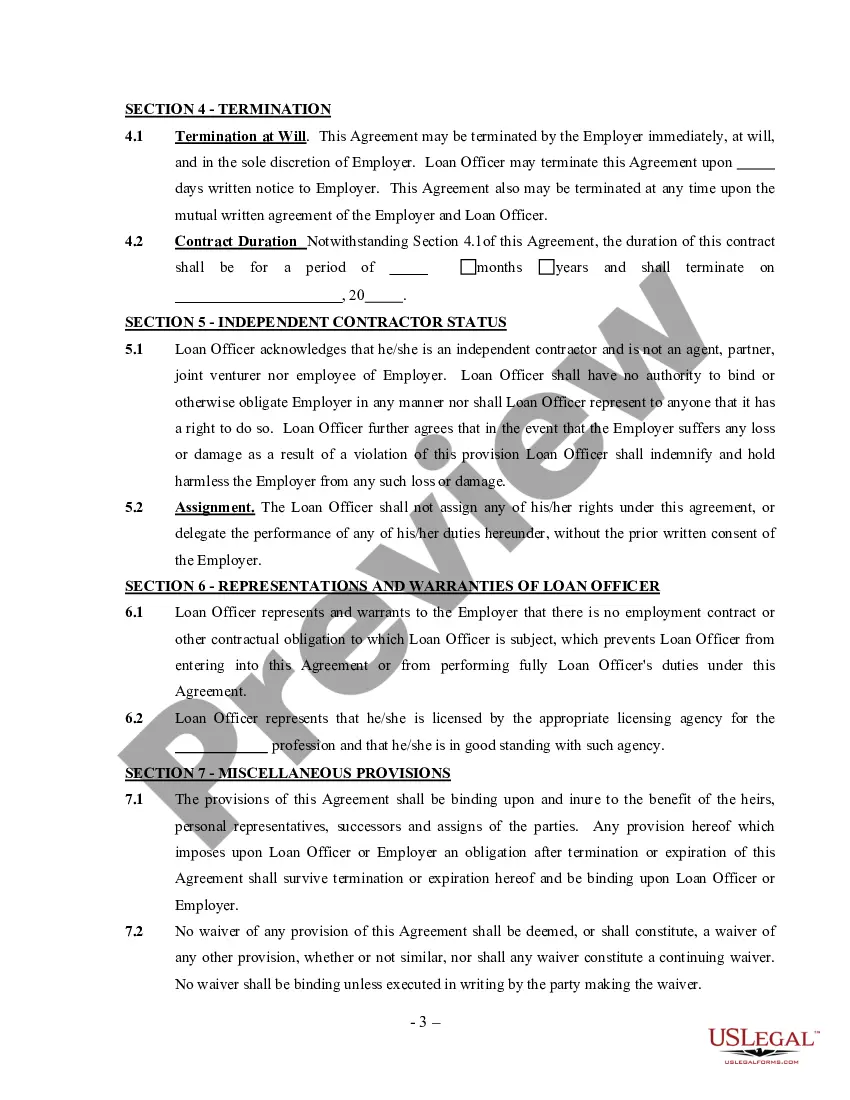
- Termination conditions: Specifies how the agreement can be ended by either party.
- Representations and warranties: Confirms the loan officer's licensing and eligibility to enter the agreement.
When to use this form
This form should be used when an employer wishes to hire a mortgage loan officer as an independent contractor. It is essential in situations where the employer requires the loan officer to follow specific guidelines and policies while maintaining their status as a self-employed professional. Examples include establishing a relationship for a particular project or ongoing services without creating an employer-employee relationship.
Who needs this form
- Employers in the mortgage industry looking to contract with self-employed loan officers.
- Mortgage loan officers who are self-employed and seeking agreements that clarify their duties and compensation.
- Real estate companies wanting to formalize relationships with independent contractors in the mortgage lending profession.
Steps to complete this form
- Identify the parties: Fill in the names of the employer and the loan officer at the beginning of the agreement.
- Outline services: Describe the specific services the loan officer will provide.
- Establish compensation: Indicate the payment terms agreed upon by both parties.
- Include confidentiality terms: Ensure the confidentiality clause is acknowledged and agreed to by the loan officer.
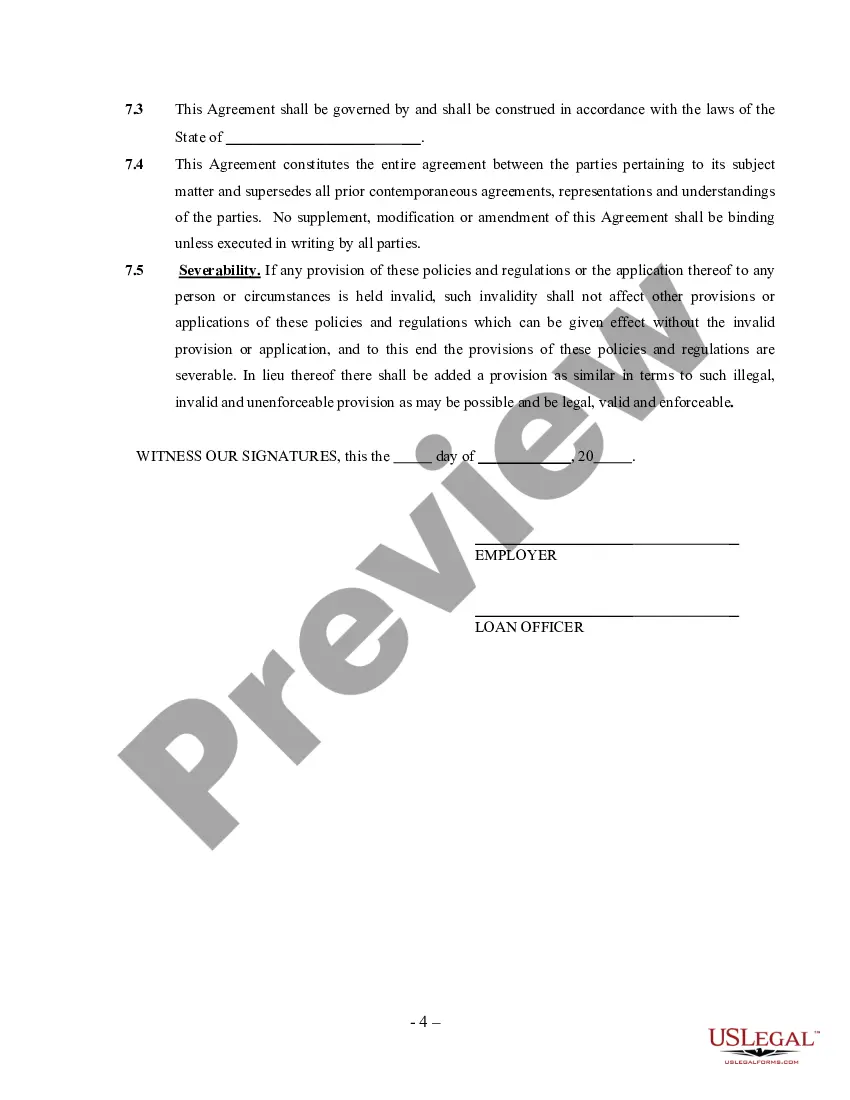
- Sign and date the agreement: Both parties should sign and date the document to make it legally binding.
Does this form need to be notarized?
This form does not typically require notarization unless specified by local law. However, it is advisable to check your stateâs regulations to confirm any notarization requirements.
Get your form ready online
Our built-in tools help you complete, sign, share, and store your documents in one place.
Make edits, fill in missing information, and update formatting in US Legal Forms—just like you would in MS Word.
Download a copy, print it, send it by email, or mail it via USPS—whatever works best for your next step.
Sign and collect signatures with our SignNow integration. Send to multiple recipients, set reminders, and more. Go Premium to unlock E-Sign.
If this form requires notarization, complete it online through a secure video call—no need to meet a notary in person or wait for an appointment.
We protect your documents and personal data by following strict security and privacy standards.

Make edits, fill in missing information, and update formatting in US Legal Forms—just like you would in MS Word.

Download a copy, print it, send it by email, or mail it via USPS—whatever works best for your next step.

Sign and collect signatures with our SignNow integration. Send to multiple recipients, set reminders, and more. Go Premium to unlock E-Sign.

If this form requires notarization, complete it online through a secure video call—no need to meet a notary in person or wait for an appointment.

We protect your documents and personal data by following strict security and privacy standards.
Mistakes to watch out for
- Failing to specify the scope of work clearly.
- Not including detailed compensation terms.
- Overlooking the confidentiality clause or failing to emphasize its importance.
- Neglecting to have both parties sign and date the agreement.
Advantages of online completion
- Convenience of downloading and completing the document at your own pace.
- Editability allows for customization to fit your specific needs.
- Reliability ensures the document is created by licensed attorneys, providing legal assurance.
Legal use & context
- The agreement serves as a binding contract outlining the obligations of both parties.
- It protects confidential information shared between the loan officer and employer.
- The loan officer's independent contractor status limits liability for the employer regarding employment-related issues.
Quick recap
- The agreement formalizes the relationship between an employer and a self-employed loan officer.
- It includes crucial sections that protect both the employer's interests and the loan officer's rights.
- Understanding when and how to use this form can lead to a successful working relationship.
Looking for another form?
Form popularity
FAQ
There is no blanket rule saying loan officers are, or are not, independent contractors; every situation is case by case, according to Garofalo. The gist of classification: If you supervise workers, they could be employees.
Self-employed mortgage borrowers can apply for all the same loans 'traditionally' employed borrowers can. There are no special requirements that make it harder for self-employed people to get a mortgage. You're held to the same standards for credit, debt, down payment, and income as other applicants.
Is it possible for a federally registered MLO to be employed by two different institutions at the same time? Yes, the system allows multiple employments to exist.
Most lenders will typically ask to see evidence of at least two years of self-employed income but, in some cases, they may ask for three years. If you have this proof, then you're likely to have access to a similar selection of mortgages to anyone else in your situation.
In California there is a new law defining independent contractors that applies to everyone in the state, including mortgage brokers (realtors have a special exemption).Alternatively, if the individual is self-employed, they must hold both MLO licensure and state mortgage lender/broker licensure.
Can the MLO use their federally registered MLO status to originate loans for their own non-federally regulated mortgage company? No! The SAFE Act exempts a federally registered MLO from state MLO licensing requirements only if the MLO is an employee of a federally regulated bank.
If you earn 1099 income as an independent contractor, freelance worker or a salesman, you can qualify for an FHA loan if you can document steady 1099 income for the past two years.
Federal law does not prohibit 1099 compensation to licensed loan originators.
If you earn 1099 income as an independent contractor, freelance worker or a salesman, you can qualify for an FHA loan if you can document steady 1099 income for the past two years.