Attorney Agreement - Self-Employed Independent Contractor
Overview of this form
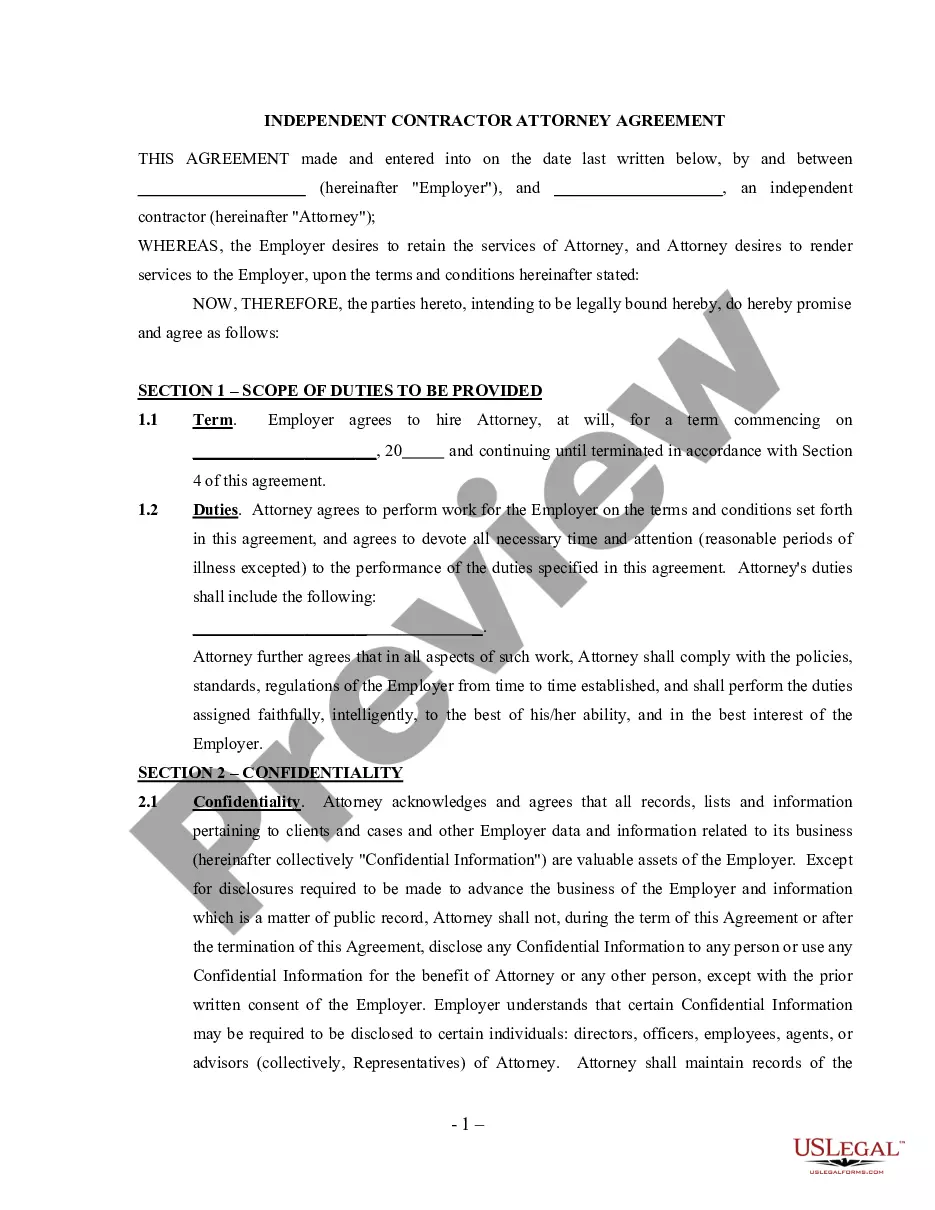
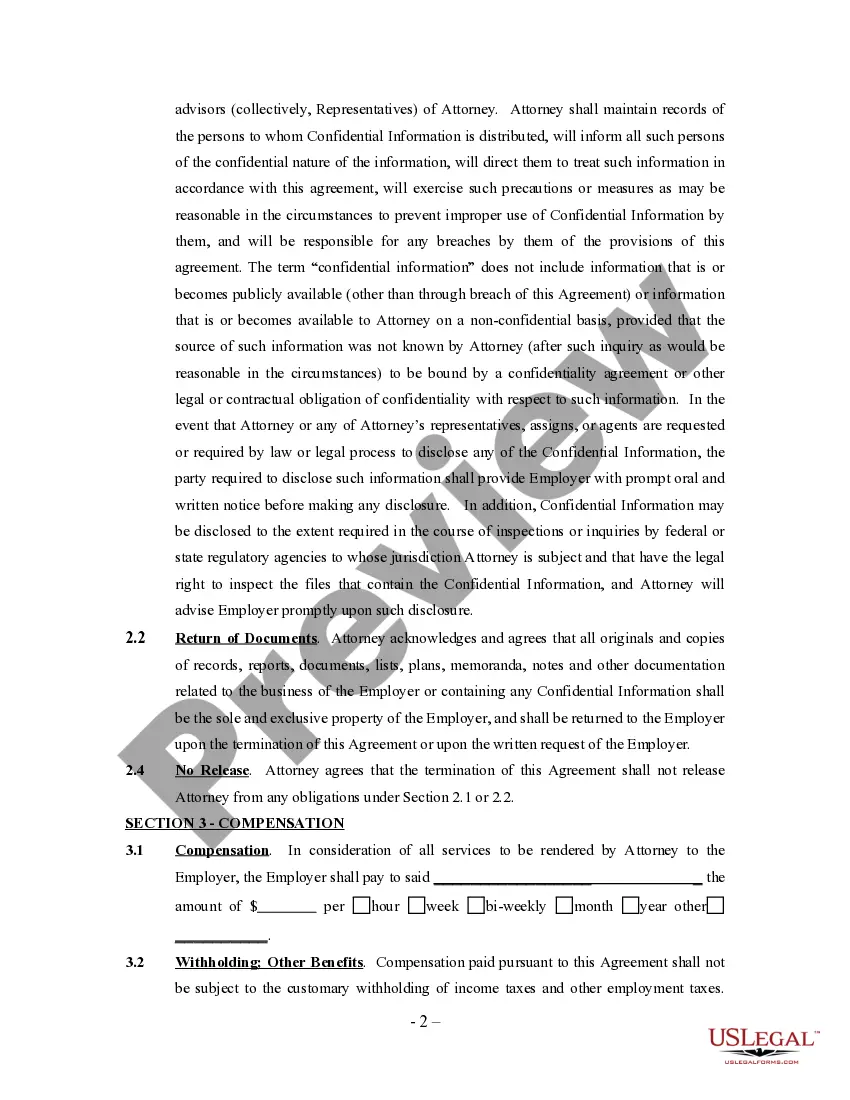
The Attorney Agreement - Self-Employed Independent Contractor is a legal document that formalizes the relationship between an employer and an independent attorney. This agreement outlines the scope of legal services to be provided, ensuring clarity and mutual understanding. It includes key provisions such as confidentiality, duties of the attorney, and compensation details, setting it apart from standard employment contracts.
Key components of this form
- Parties involved: Identification of the employer and the attorney.
- Duties: Specific obligations and responsibilities of the attorney.
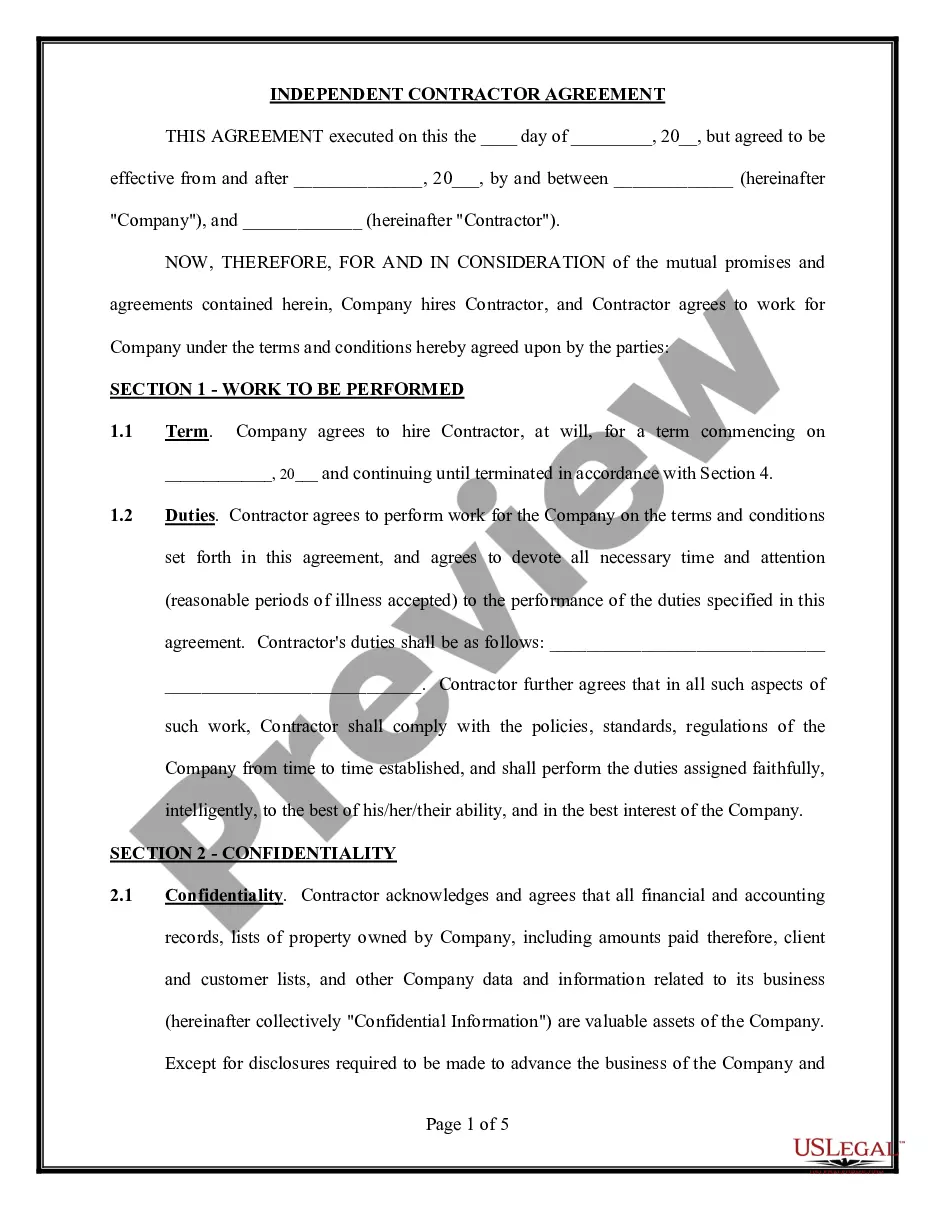
- Confidentiality: Provisions regarding the handling of confidential information.
- Compensation: Details on payment terms and conditions.
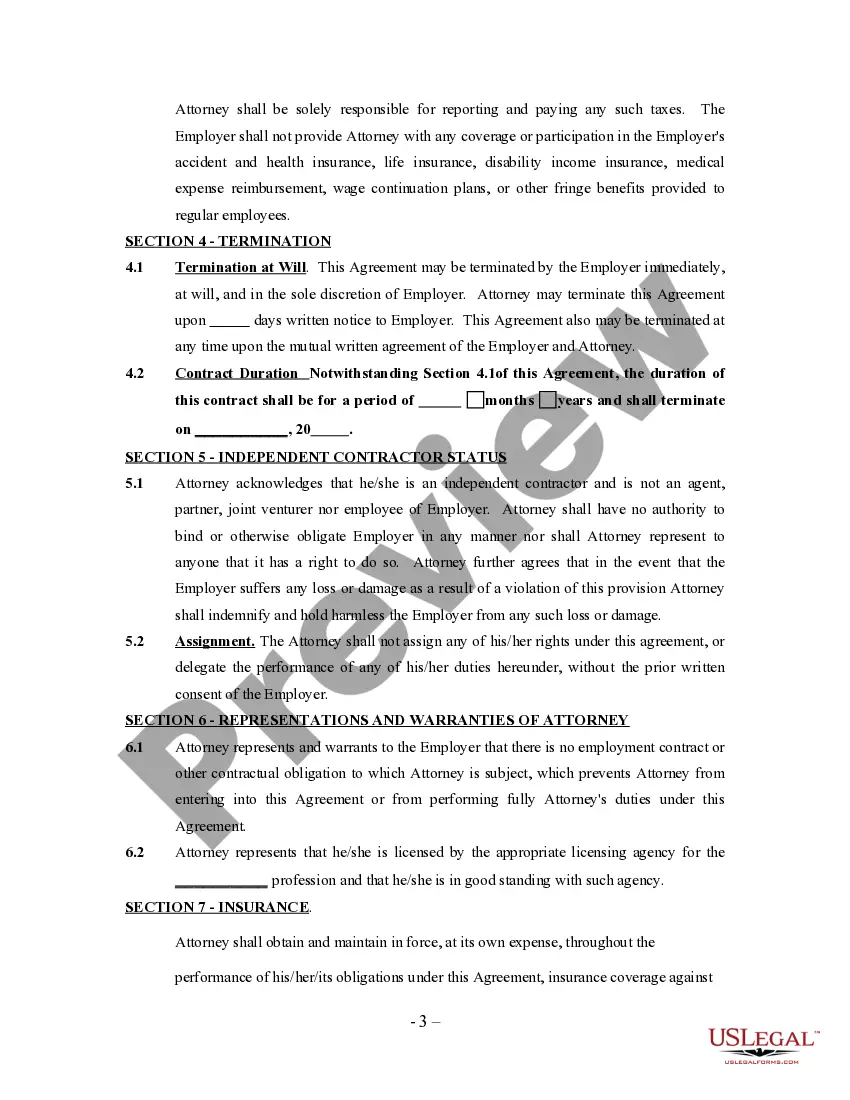
- Termination: Conditions under which the agreement may be ended by either party.

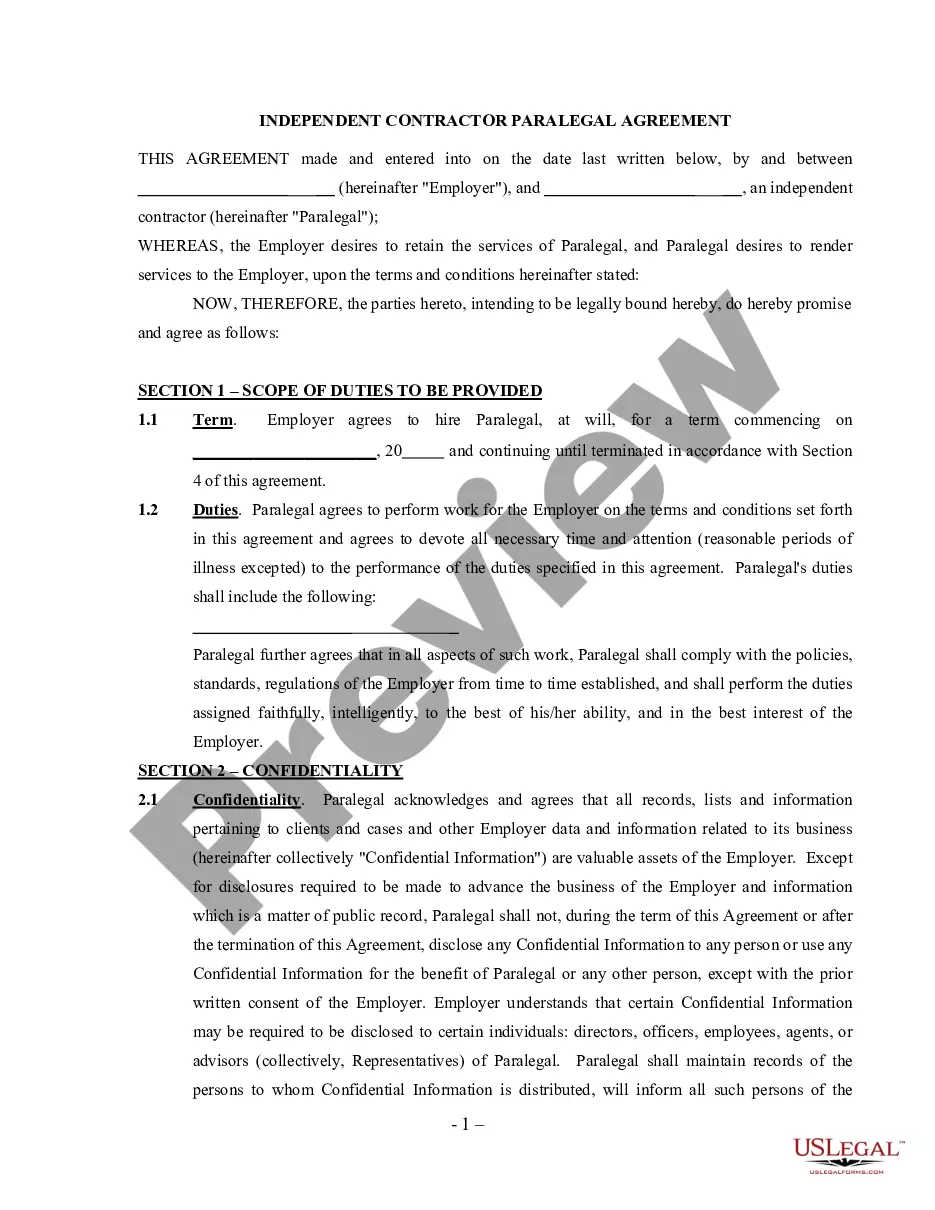
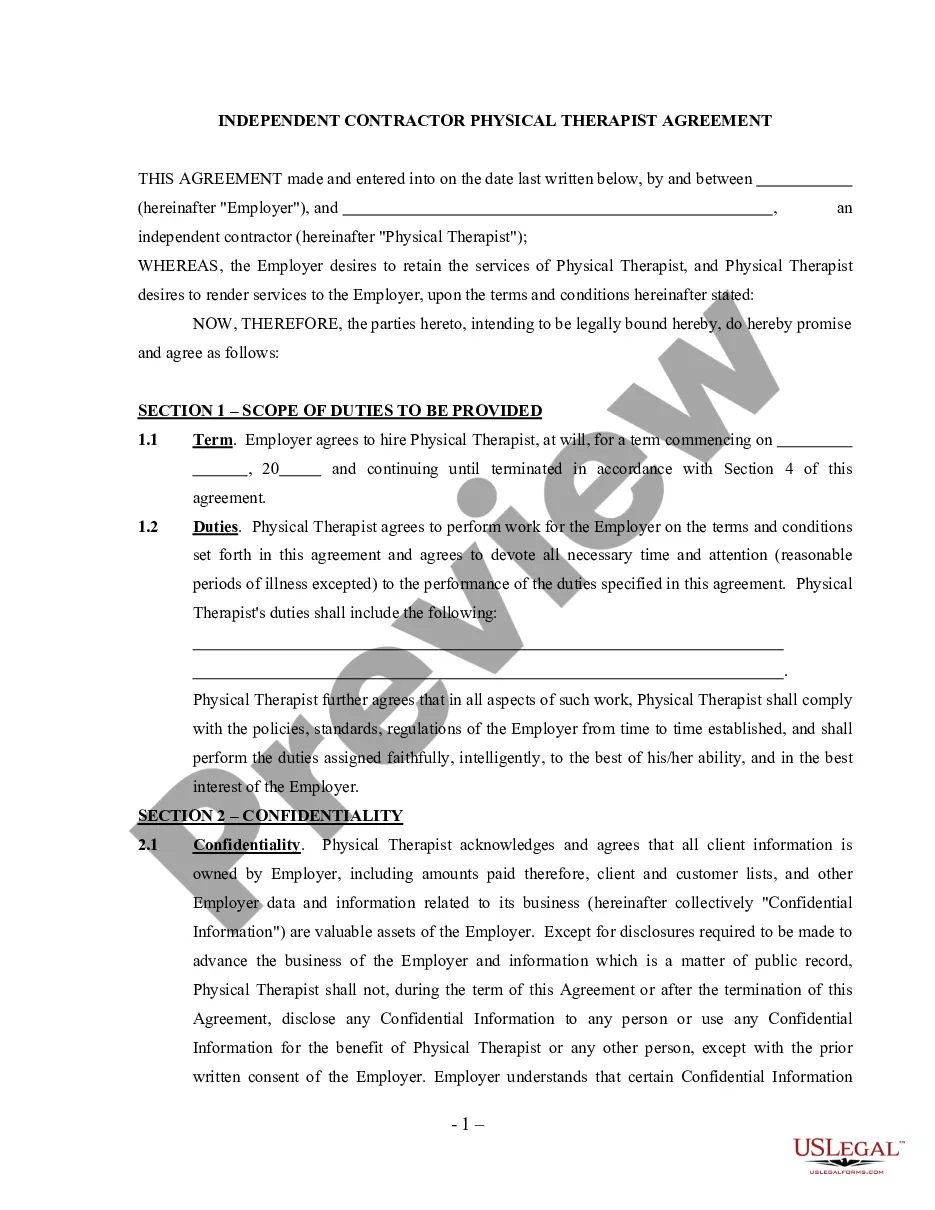
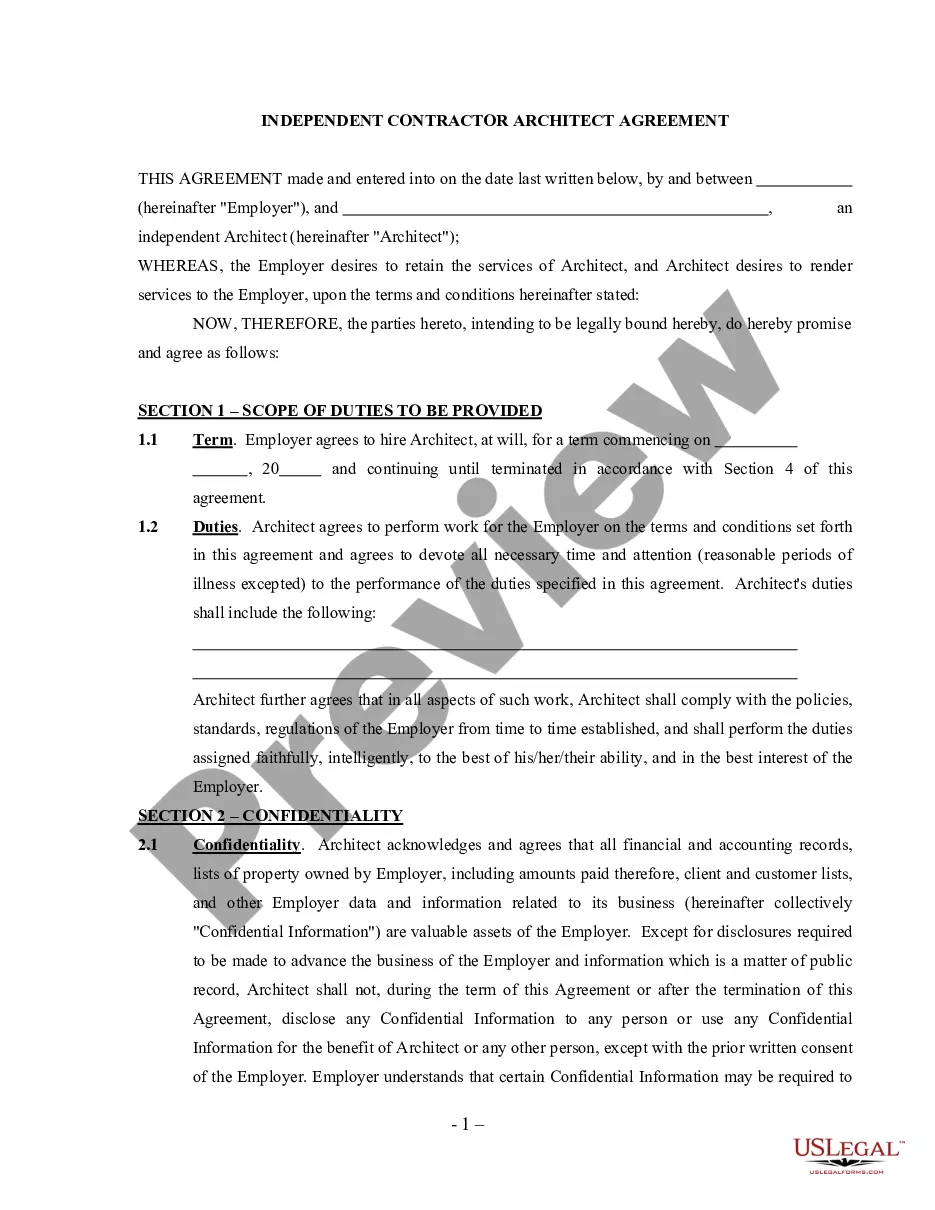
Situations where this form applies
This form is essential when an employer needs to hire an independent attorney for legal services without establishing an employer-employee relationship. You should use this agreement when you are seeking legal representation or advice and wish to define the terms of that engagement clearly. It is particularly useful for businesses that require specialized legal expertise temporarily or on a project basis.
Who needs this form
- Employers looking to engage an attorney as an independent contractor.
- Attorneys seeking formal agreements for providing legal services.
- Businesses requiring clarity on the nature of their legal relationship with contracted attorneys.
How to prepare this document
- Identify the parties: Fill in the names and details of the employer and attorney.
- Define duties: Clearly outline the legal services the attorney will provide.
- Outline compensation: Specify payment terms and any additional fees.
- Include confidentiality clauses: Ensure all necessary confidentiality provisions are addressed.
- Finalize by signing: Both parties must sign and date the agreement to make it legally binding.
Notarization requirements for this form
This form does not typically require notarization unless specified by local law. However, having a notarized signature can help in establishing authenticity and could be necessary in certain jurisdictions or under specific circumstances. Always check local requirements to ensure compliance.
Get your form ready online
Our built-in tools help you complete, sign, share, and store your documents in one place.
Make edits, fill in missing information, and update formatting in US Legal Forms—just like you would in MS Word.
Download a copy, print it, send it by email, or mail it via USPS—whatever works best for your next step.
Sign and collect signatures with our SignNow integration. Send to multiple recipients, set reminders, and more. Go Premium to unlock E-Sign.
If this form requires notarization, complete it online through a secure video call—no need to meet a notary in person or wait for an appointment.
We protect your documents and personal data by following strict security and privacy standards.

Make edits, fill in missing information, and update formatting in US Legal Forms—just like you would in MS Word.

Download a copy, print it, send it by email, or mail it via USPS—whatever works best for your next step.

Sign and collect signatures with our SignNow integration. Send to multiple recipients, set reminders, and more. Go Premium to unlock E-Sign.

If this form requires notarization, complete it online through a secure video call—no need to meet a notary in person or wait for an appointment.

We protect your documents and personal data by following strict security and privacy standards.
Mistakes to watch out for
- Failing to clearly define the attorney's duties and scope of work.
- Neglecting to specify compensation terms or payment schedules.
- Overlooking confidentiality obligations or not including specific terms.
- Not having both parties sign the agreement, leading to potential disputes.
Why use this form online
- Convenience: Download and complete the form from anywhere at any time.
- Editability: Easily modify the template to fit specific circumstances and requirements.
- Reliability: The forms are drafted by licensed attorneys, ensuring legal compliance and effectiveness.
Looking for another form?
Form popularity
FAQ
The Attorney Agreement - Self-Employed Independent Contractor is a legal document that formalizes an employer–independent attorney relationship. It defines the scope of legal services, confidentiality obligations, duties of the attorney, compensation terms, and termination conditions to prevent misunderstandings. It should be used when hiring an attorney as a self-employed contractor for specific projects or temporary engagements.
To fill out this form, identify the employer and the attorney, then define the scope of legal services. Include the confidentiality provision, specify the attorney’s duties, and lay out payment terms and conditions. Add termination terms and ensure the agreement reflects an independent contractor relationship, not an employee arrangement, for a temporary or project-based engagement.
Yes. This form is designed to engage an attorney as a self-employed independent contractor rather than as an employee. It sets the terms for service scope, confidentiality, compensation, and termination, clarifying the non-employee relationship. Using this structure supports proper classification in a multi-state context and helps define expectations for short-term or project-based legal work.
Use the Attorney Agreement - Self-Employed Independent Contractor. This form documents the employer and attorney, the scope of legal services, confidentiality, duties, and compensation, plus termination terms. It is designed for multi-state engagements where the professional is engaged as a self-employed contractor rather than a traditional employee.
The form components do not specify notarization. Notarization is not required by the Attorney Agreement - Self-Employed Independent Contractor, but parties may choose to have signatures witnessed or notarized depending on state requirements or internal policy. For enforceability and proper execution, consult a licensed attorney in your jurisdiction.
This form creates an independent contractor relationship for an attorney, not an employer-employee arrangement. It focuses on defining the scope of legal services, confidentiality, duties, compensation, and termination—without provisions for employee benefits or payroll withholdings. This distinction helps ensure correct classification for temporary or project-based legal work.