Government Contractor Agreement - Self-Employed
Overview of this form
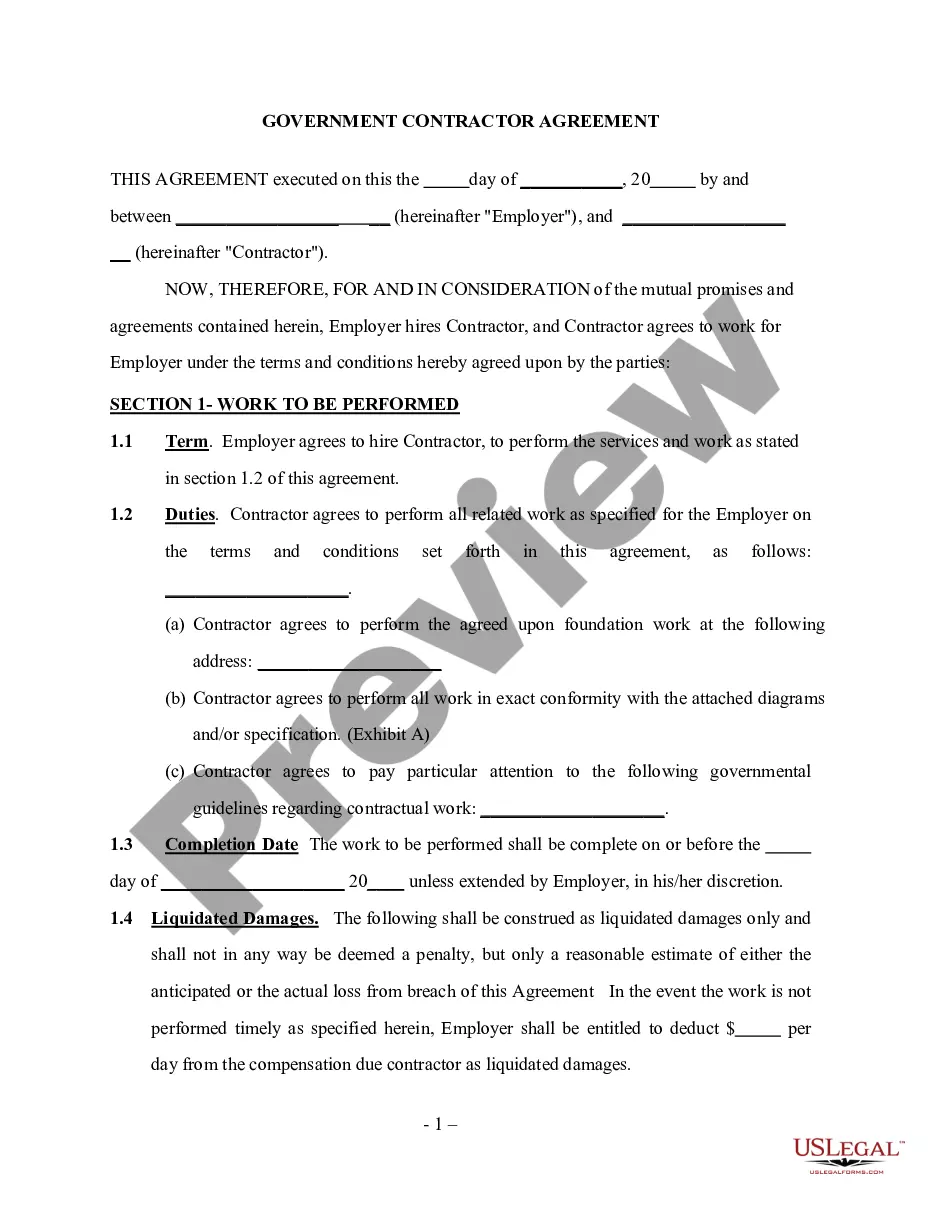
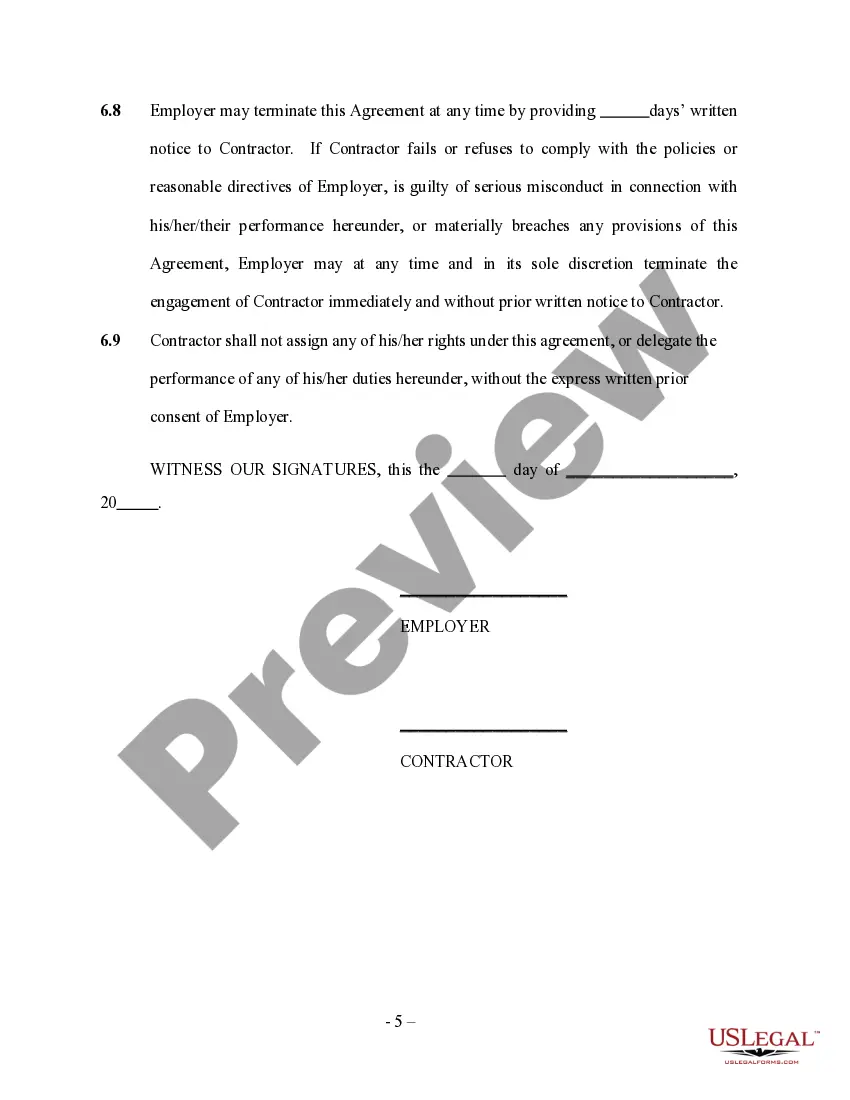
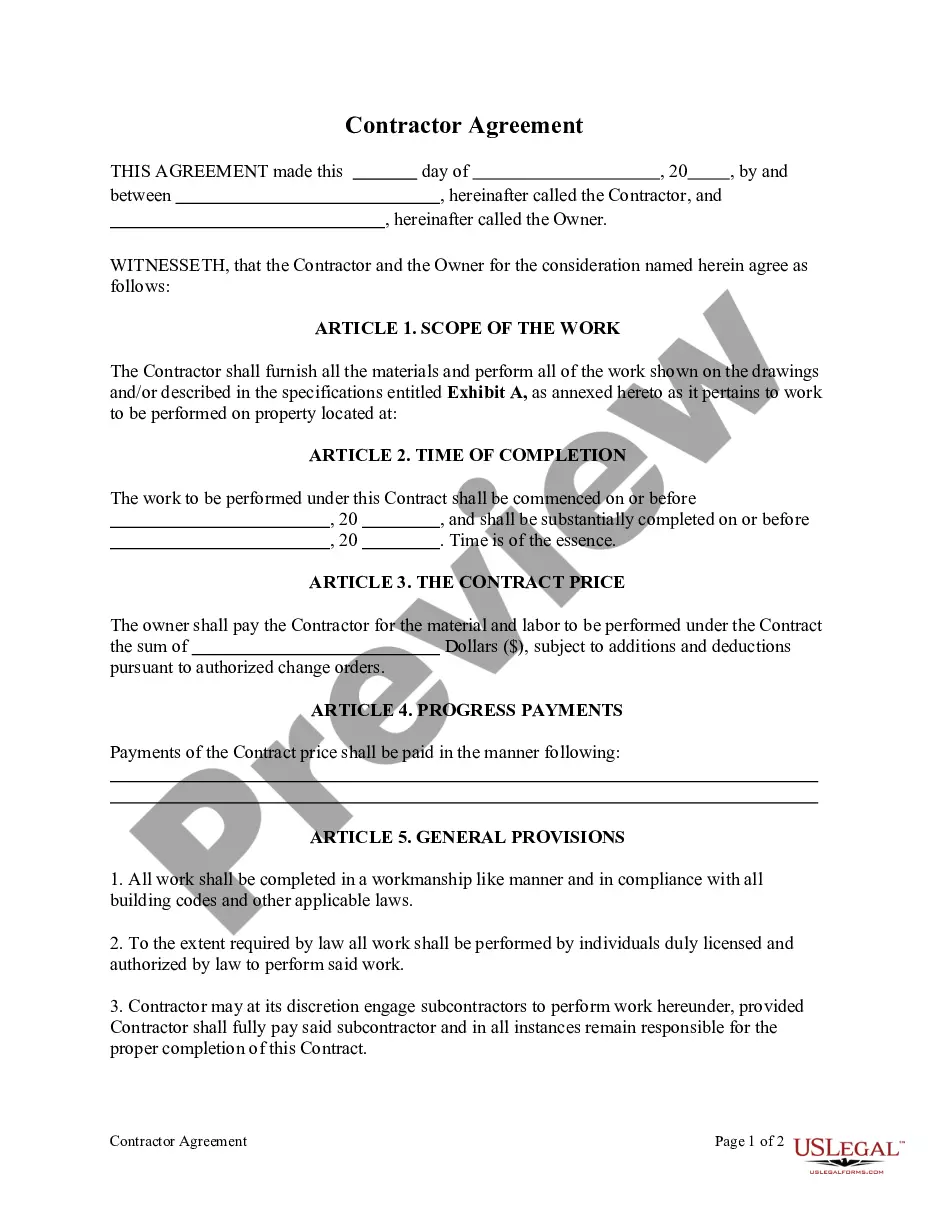
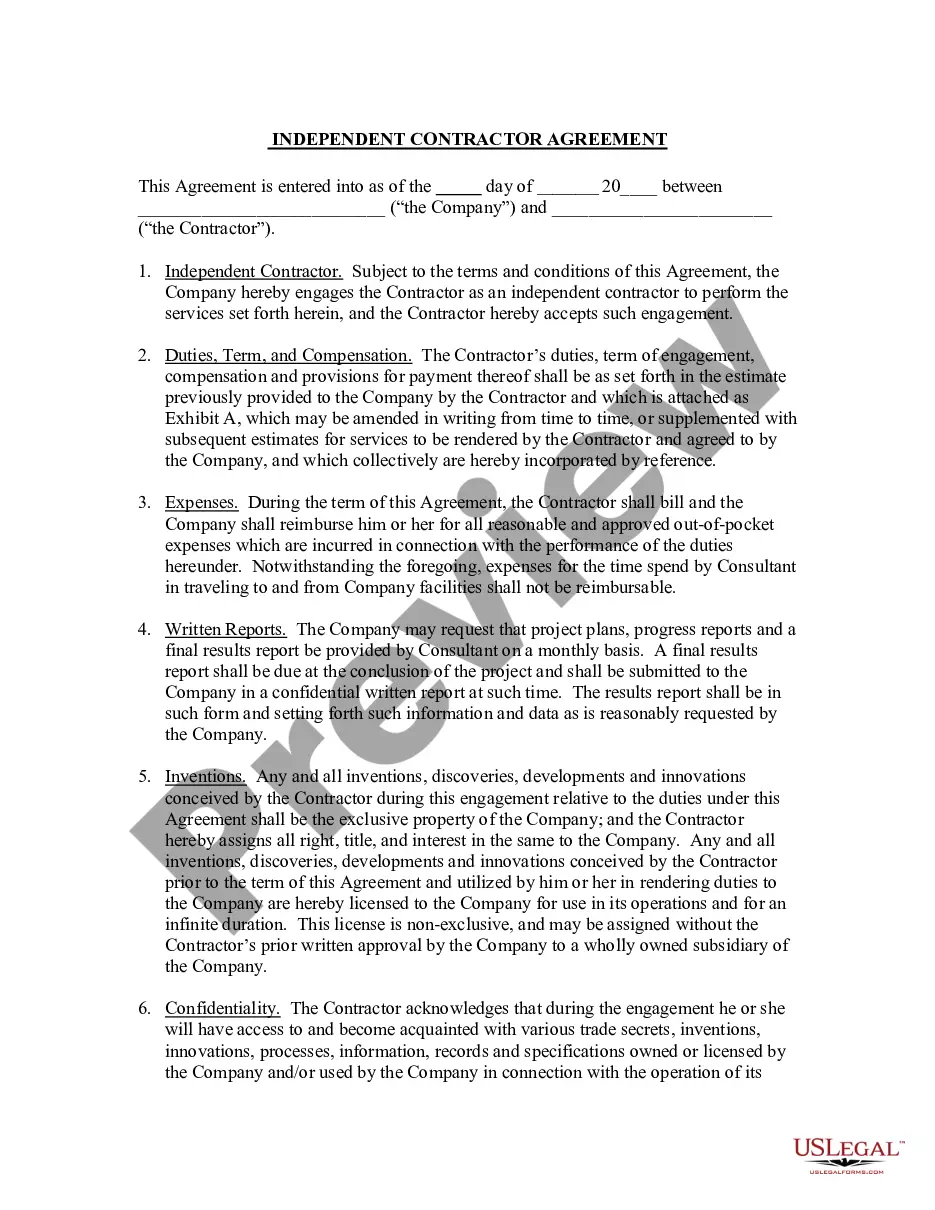
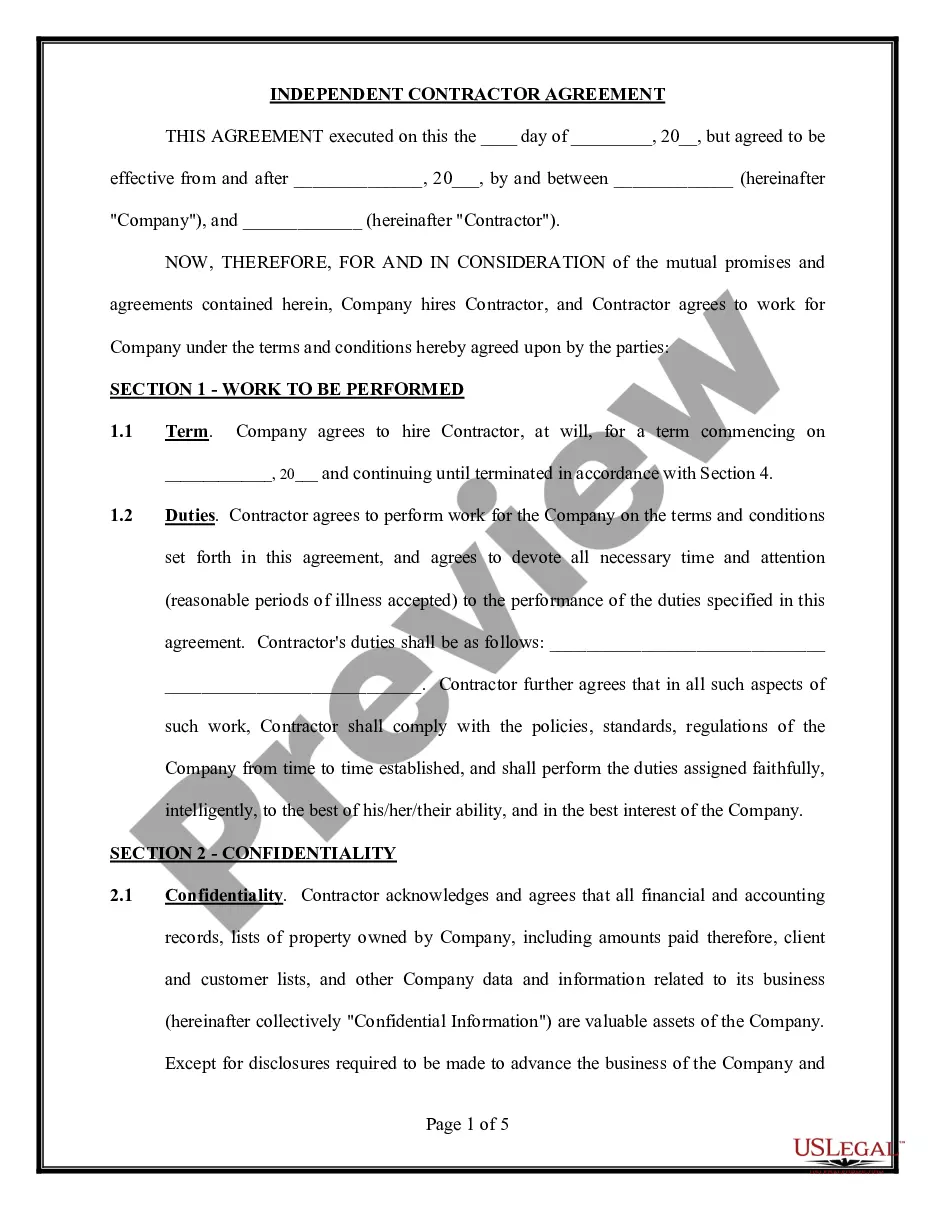
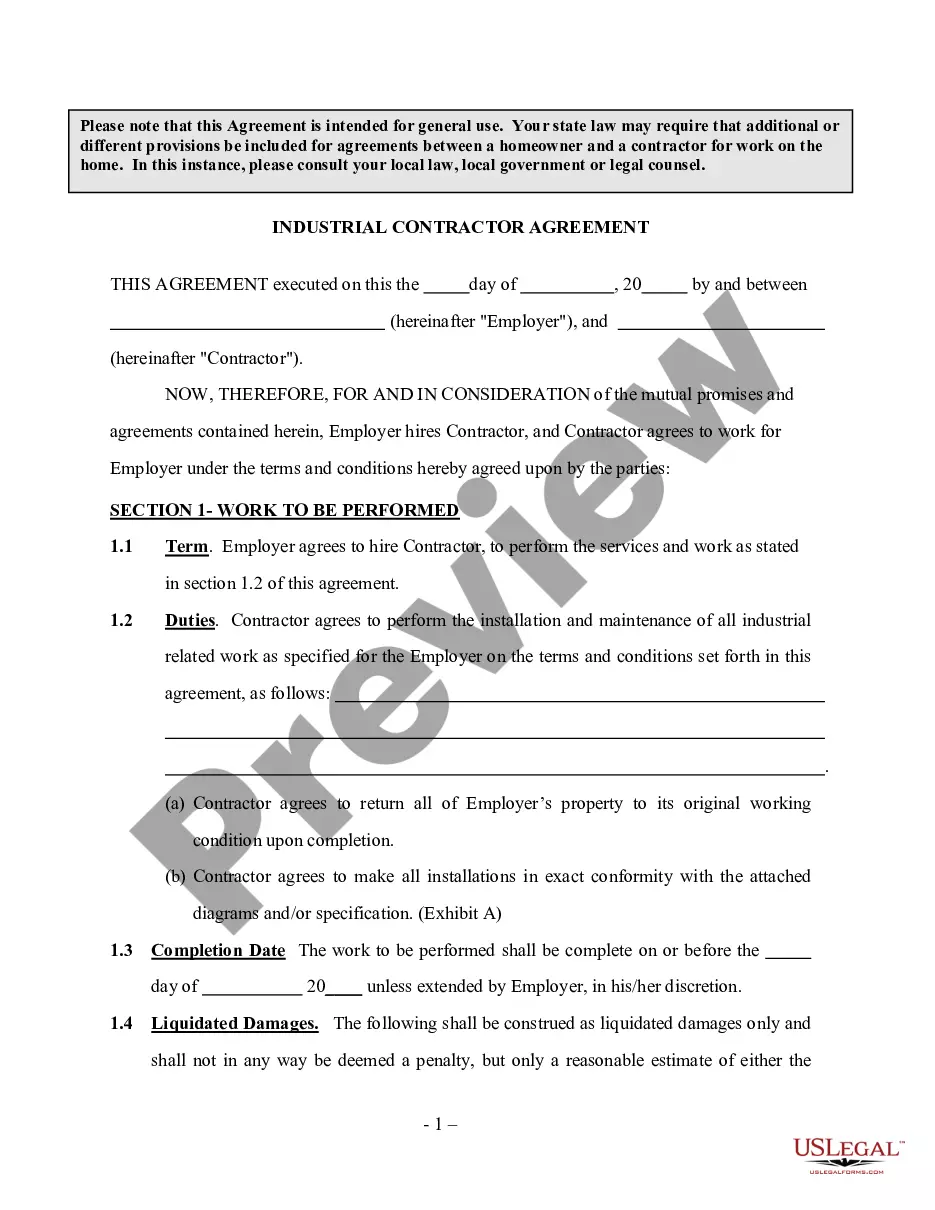
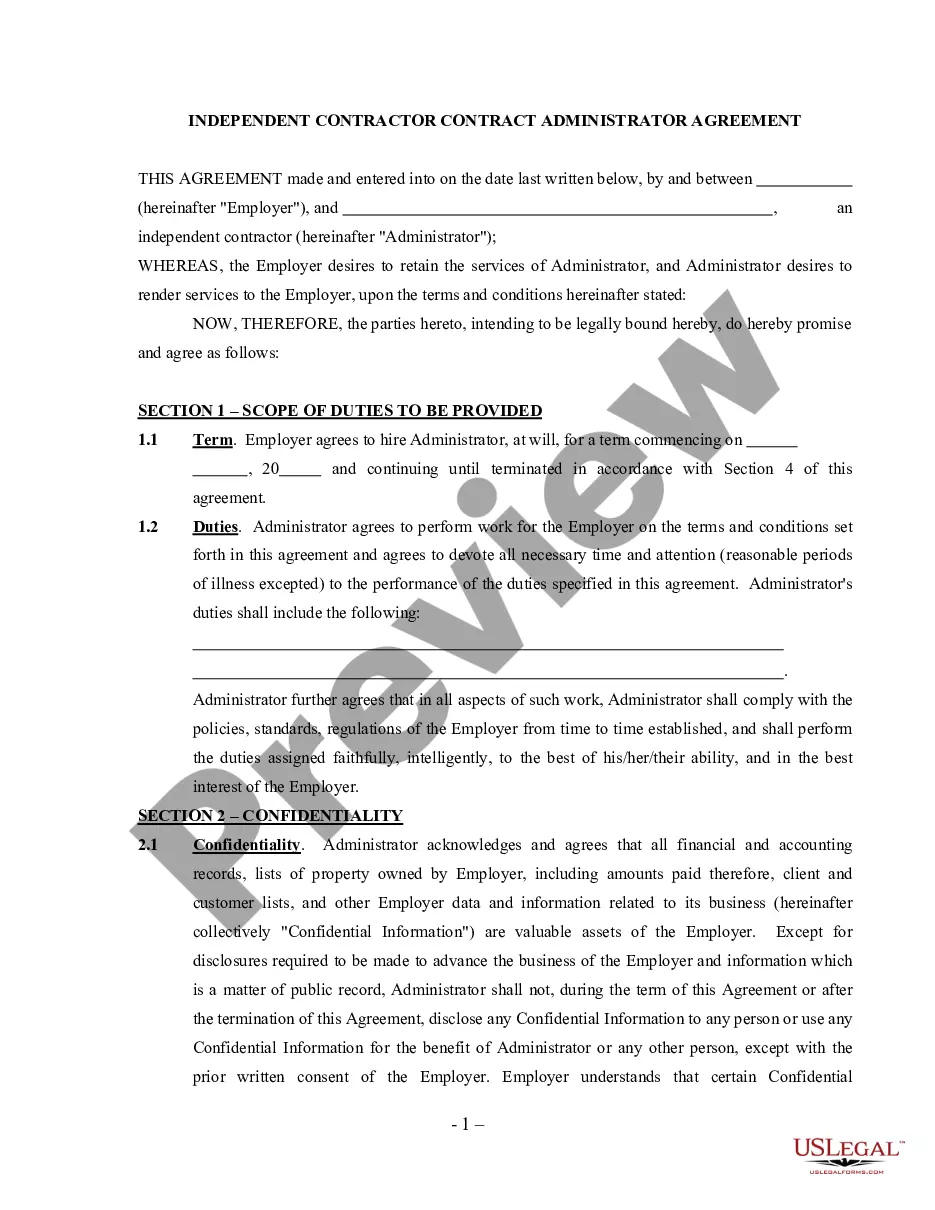
The Government Contractor Agreement - Self-Employed is a legal document that formalizes the relationship between an employer and an independent contractor working on government contracts. This agreement outlines the scope of work, establishes independent contractor status, and specifies the contractor's responsibilities. It is crucial for ensuring that both parties understand their rights and obligations within the contractual agreement.
Key parts of this document
- Work to be performed: Details the specific duties and services the contractor will provide.
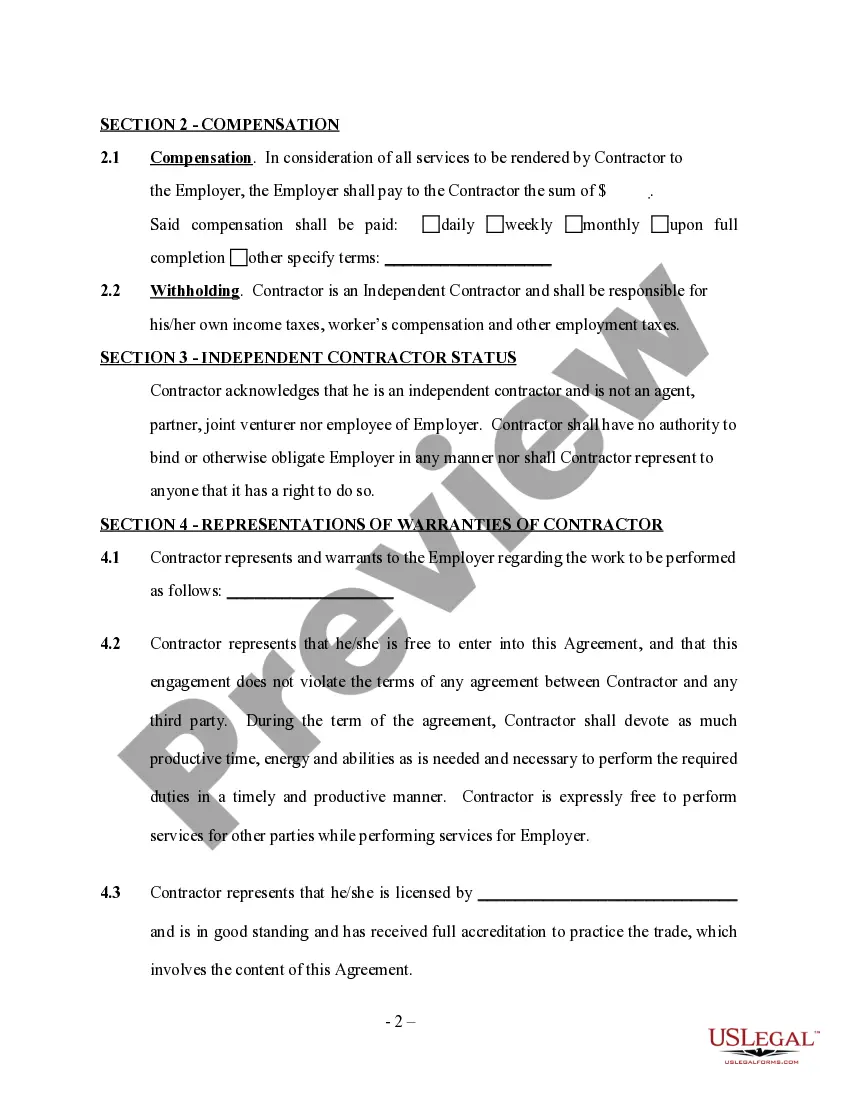
- Independent contractor status: Clarifies that the contractor is not an employee and outlines the lack of authority to bind the employer.
- Representations and warranties: The contractor confirms their ability to fulfill the contract and that they are licensed to perform the work.
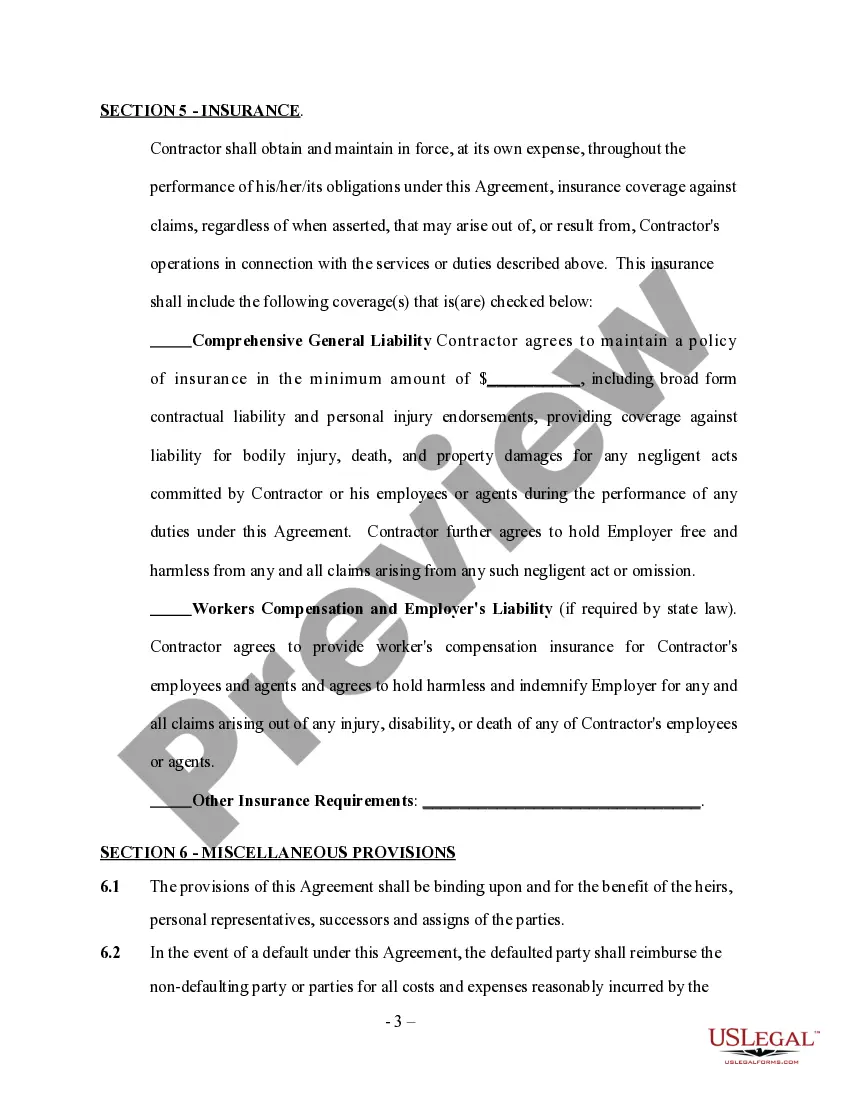
- Insurance requirements: Specifies the insurance coverage the contractor must maintain throughout the agreement.
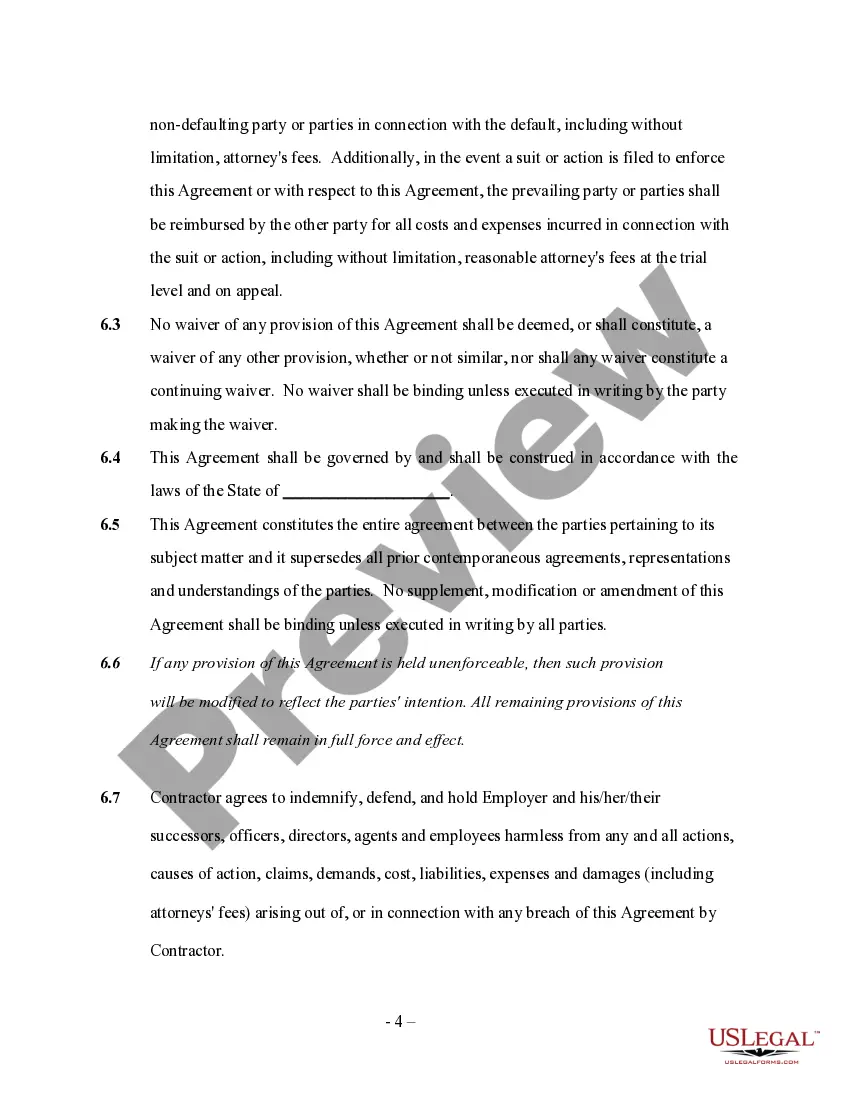
- Indemnification clause: Outlines the contractor's responsibility to protect the employer from any claims related to their work.
Situations where this form applies
This form is necessary when an employer wants to engage an independent contractor to complete specific tasks related to a government contract. It is ideal for situations where the contractor must adhere to certain governmental guidelines and wants to clearly outline the work expectations and legal responsibilities involved in the project.
Who should use this form
- Employers who need to hire independent contractors for government-related projects.
- Independent contractors seeking a clear legal agreement that establishes the terms of their work.
- Both parties looking for a mutual understanding of their rights and responsibilities in a contractual relationship.
How to prepare this document
- Identify the parties: Clearly write the names and contact information of the employer and contractor.
- Specify the work: Describe the services and duties the contractor is expected to perform.
- Enter the contract term: Define the length of time the agreement will be in effect.
- Detail insurance requirements: List any necessary insurance coverage the contractor must maintain.
- Sign and date: Ensure both parties sign the agreement to make it legally binding.
Notarization requirements for this form
Notarization is not commonly needed for this form. However, certain documents or local rules may make it necessary. Our notarization service, powered by Notarize, allows you to finalize it securely online anytime, day or night.
Get your form ready online
Our built-in tools help you complete, sign, share, and store your documents in one place.
Make edits, fill in missing information, and update formatting in US Legal Forms—just like you would in MS Word.
Download a copy, print it, send it by email, or mail it via USPS—whatever works best for your next step.
Sign and collect signatures with our SignNow integration. Send to multiple recipients, set reminders, and more. Go Premium to unlock E-Sign.
If this form requires notarization, complete it online through a secure video call—no need to meet a notary in person or wait for an appointment.
We protect your documents and personal data by following strict security and privacy standards.

Make edits, fill in missing information, and update formatting in US Legal Forms—just like you would in MS Word.

Download a copy, print it, send it by email, or mail it via USPS—whatever works best for your next step.

Sign and collect signatures with our SignNow integration. Send to multiple recipients, set reminders, and more. Go Premium to unlock E-Sign.

If this form requires notarization, complete it online through a secure video call—no need to meet a notary in person or wait for an appointment.

We protect your documents and personal data by following strict security and privacy standards.
Common mistakes
- Not clearly defining the scope of work can lead to misunderstandings.
- Failing to include essential insurance requirements may expose the employer to liability.
- Not specifying the duration of the agreement can lead to contract disputes later on.
Advantages of online completion
- Convenient and accessible: Download the form at any time from anywhere.
- Editability: Customize the agreement to fit specific needs without issues.
- Reliability: Forms are drafted by licensed attorneys to ensure legal validity.
Summary of main points
- The Government Contractor Agreement - Self-Employed establishes clear terms between an employer and a contractor.
- Defining duties and responsibilities in detail is crucial to prevent future conflicts.
- Insurance and indemnification clauses are necessary to protect all parties involved.
Looking for another form?

Form popularity
FAQ
For most types of projects you hire an independent contractor (IC) to do, the law does not require you to put anything in writing. You can meet with the IC, agree on the terms of your arrangement, and have an oral contract or agreement that is legally binding. Just because you can doesn't mean you should, however.
Workers who complete tasks or work on individual projects will fall under a 1099. An independent contractor is able to earn a living on his or her own rather than depending on an employer.
An independent contractor is a self-employed person or entity contracted to perform work foror provide services toanother entity as a nonemployee. As a result, independent contractors must pay their own Social Security and Medicare taxes.
Yes, if you have 1099 income you are considered to be self-employed, and you will need to pay self-employment taxes (Social Security and Medicare taxes) on this income.
Simply put, being an independent contractor is one way to be self-employed. Being self-employed means that you earn money but don't work as an employee for someone else. An independent contractor is someone who provides a service on a contractual basis.
1099 employees are self-employed independent contractors. They receive pay in accord with the terms of their contract and get a 1099 form to report income on their tax return.The employer withholds income taxes from the employee's paycheck and has a significant degree of control over the employee's work.
1. Not Having a Written Contract.The taxing, labor and employment, and insurance authorities expect a written contract that states that the worker is an independent contractor and will be paid as such with no tax withholding, no benefits, etc.
Contractors can also be self-employed, but they perform tasks on a contractual basis, rather than selling any products or rolling, bookable services. For example, a plumber would work for a client according to an agreed, one-off contract.
Independent contractors are self-employed workers who provide services for an organisation under a contract for services. Independent contractors are not employees and are typically highly skilled, providing their clients with specialist skills or additional capacity on an as needed basis.