Foundation Contractor Agreement - Self-Employed
Overview of this form
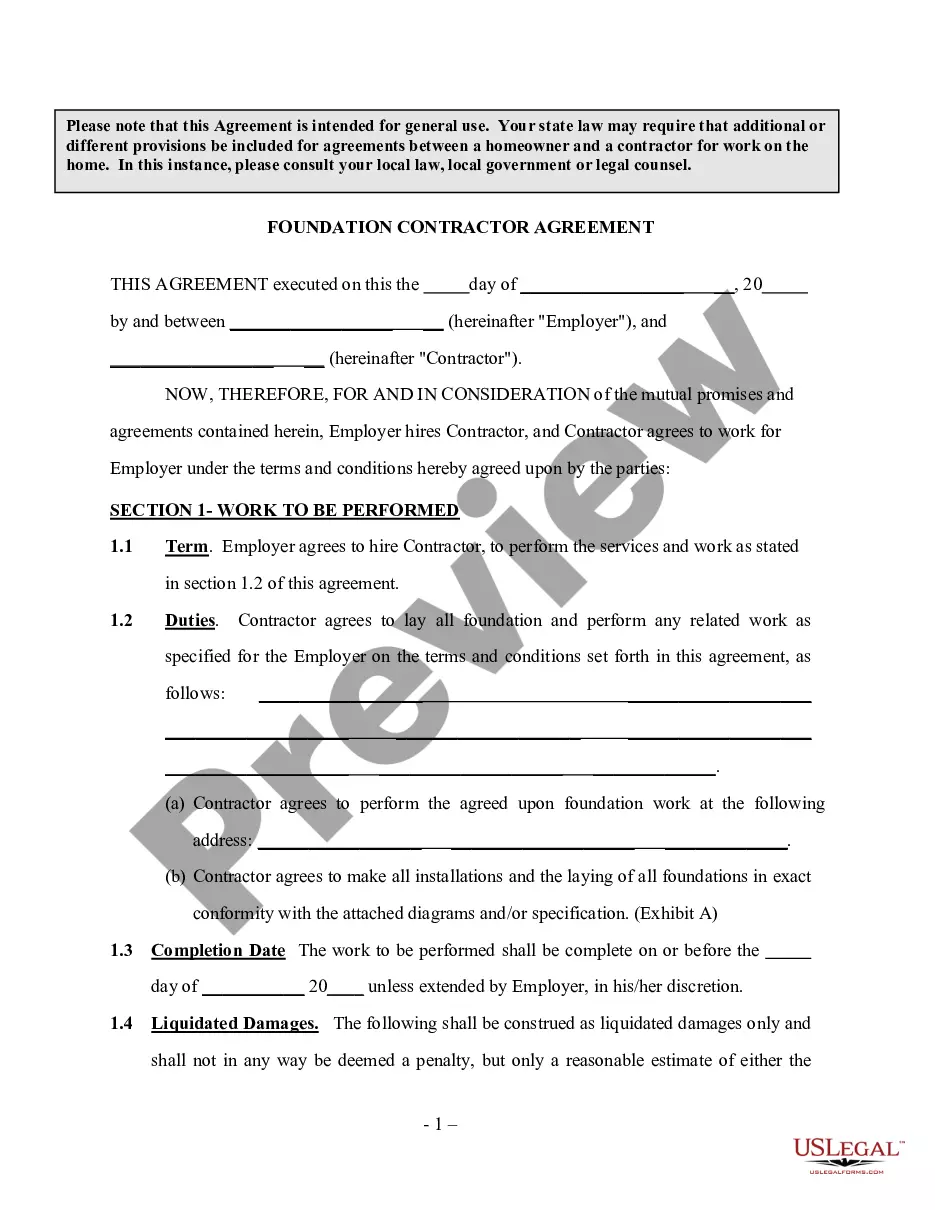
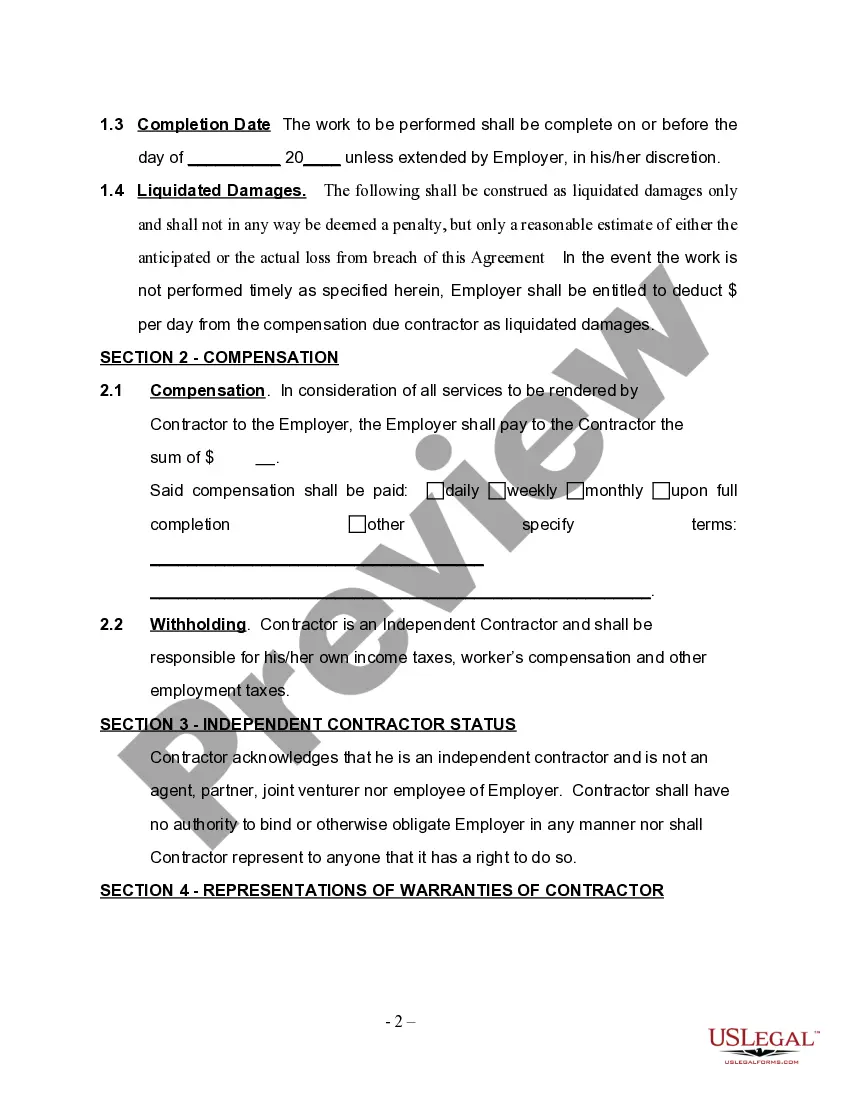
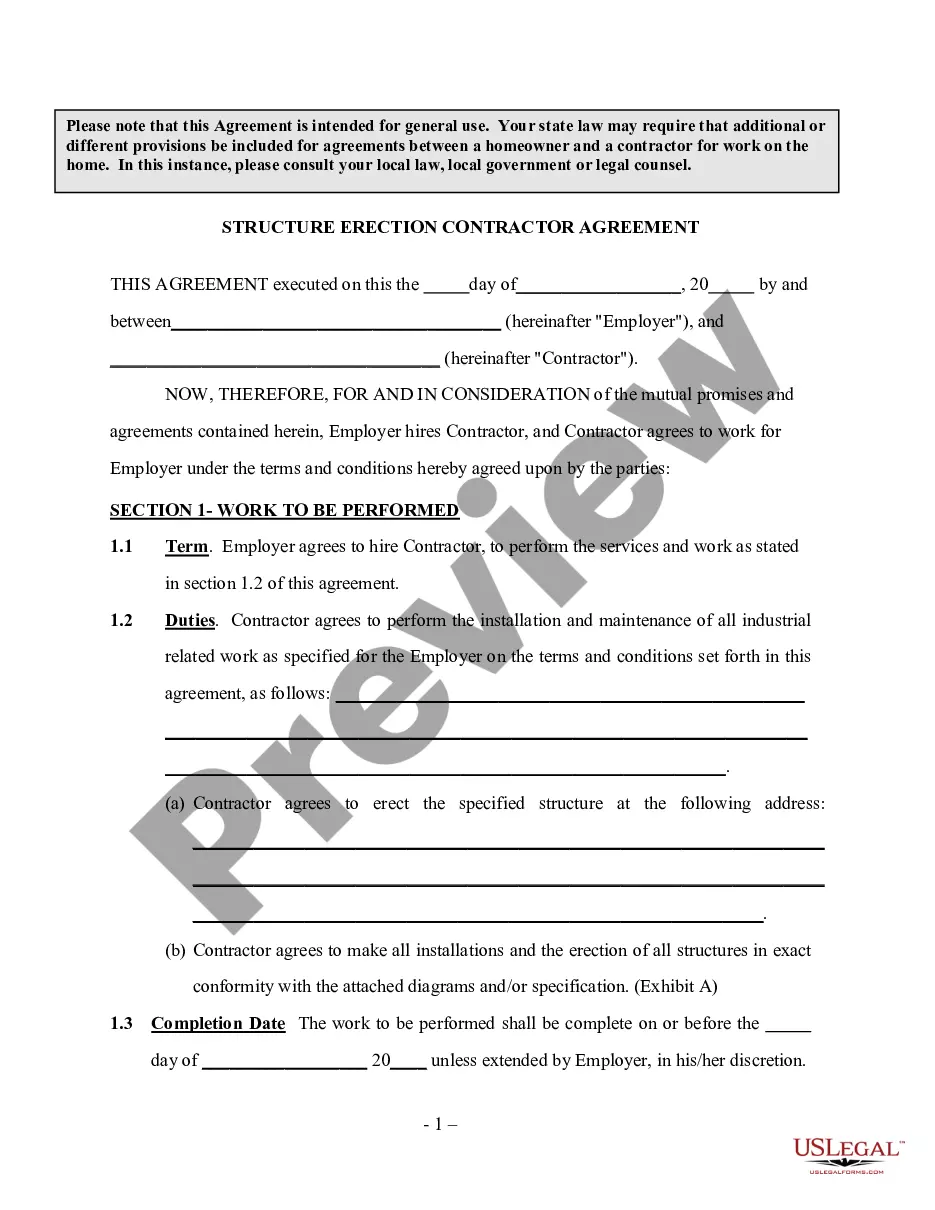
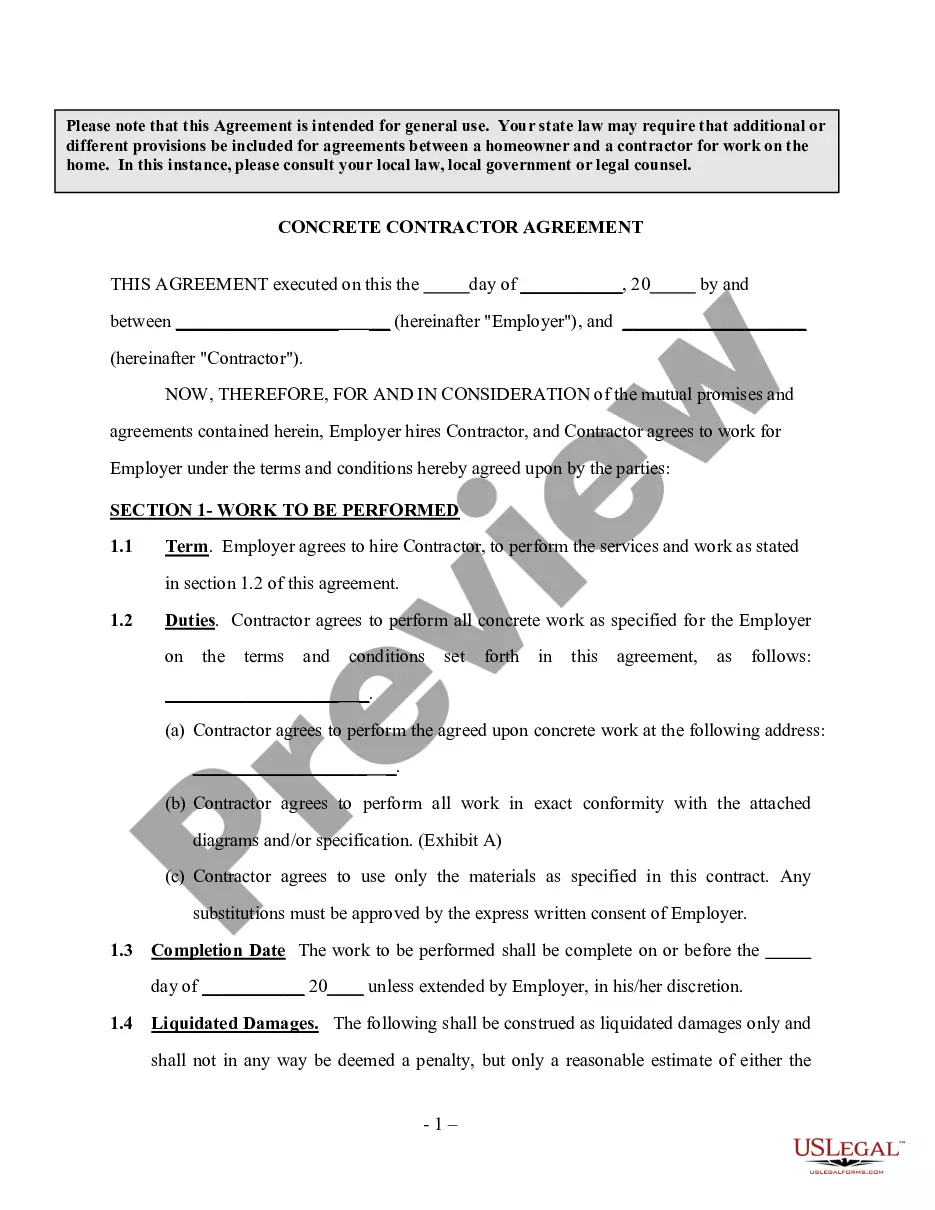
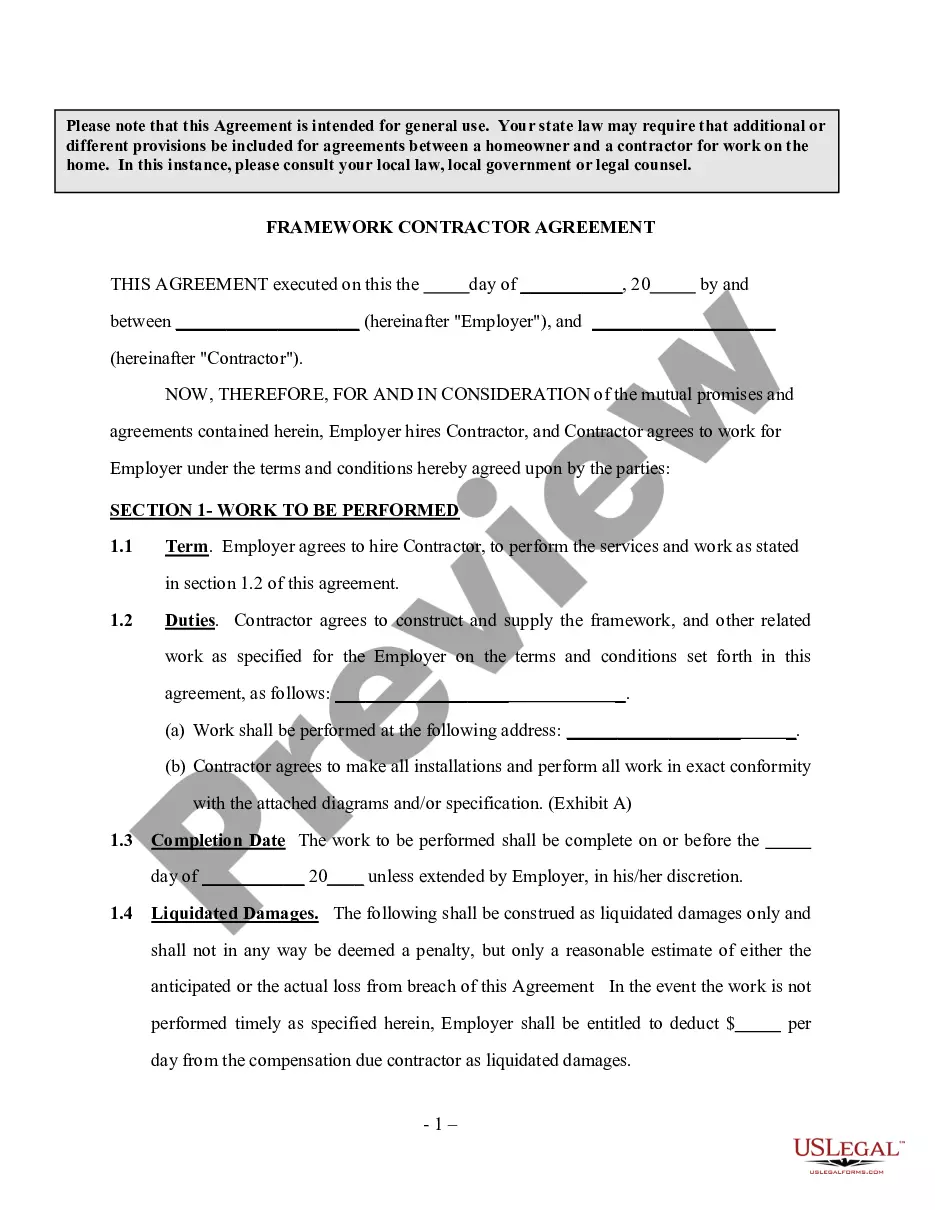
The Foundation Contractor Agreement - Self-Employed is a legal document that formalizes the arrangement between an employer and an independent contractor hired to lay foundations and perform related work. This agreement outlines the specific duties of the contractor, establishes their independent contractor status, and provides protections for both parties. Unlike general contracts, this form specifically addresses the construction of foundations and must comply with local regulations that may vary by state.
Main sections of this form
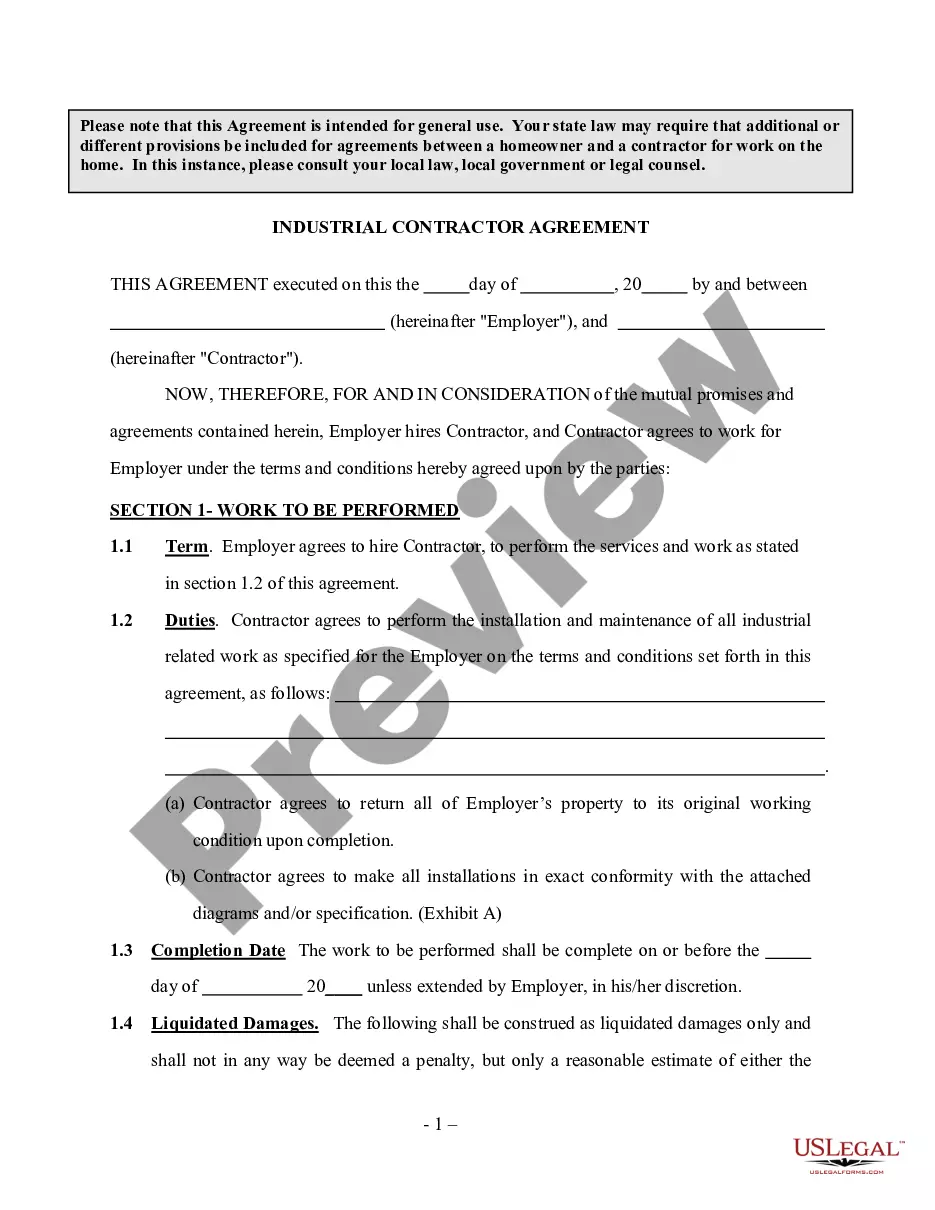
- Work to be performed: Detailed description of the foundation services to be provided.
- Independent contractor status: Clarification that the contractor is not an employee and is responsible for their own taxes.
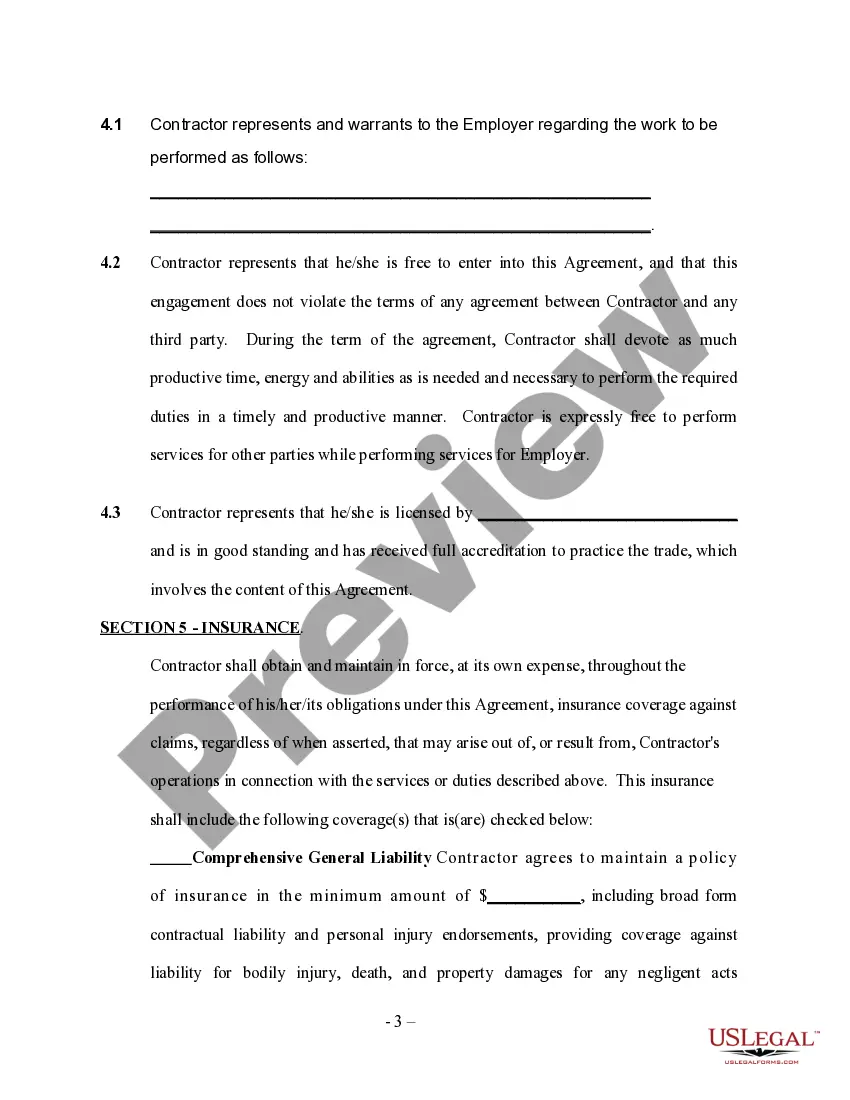
- Representations and warranties: Statements affirming the contractor's qualifications and legal capacity to enter the agreement.
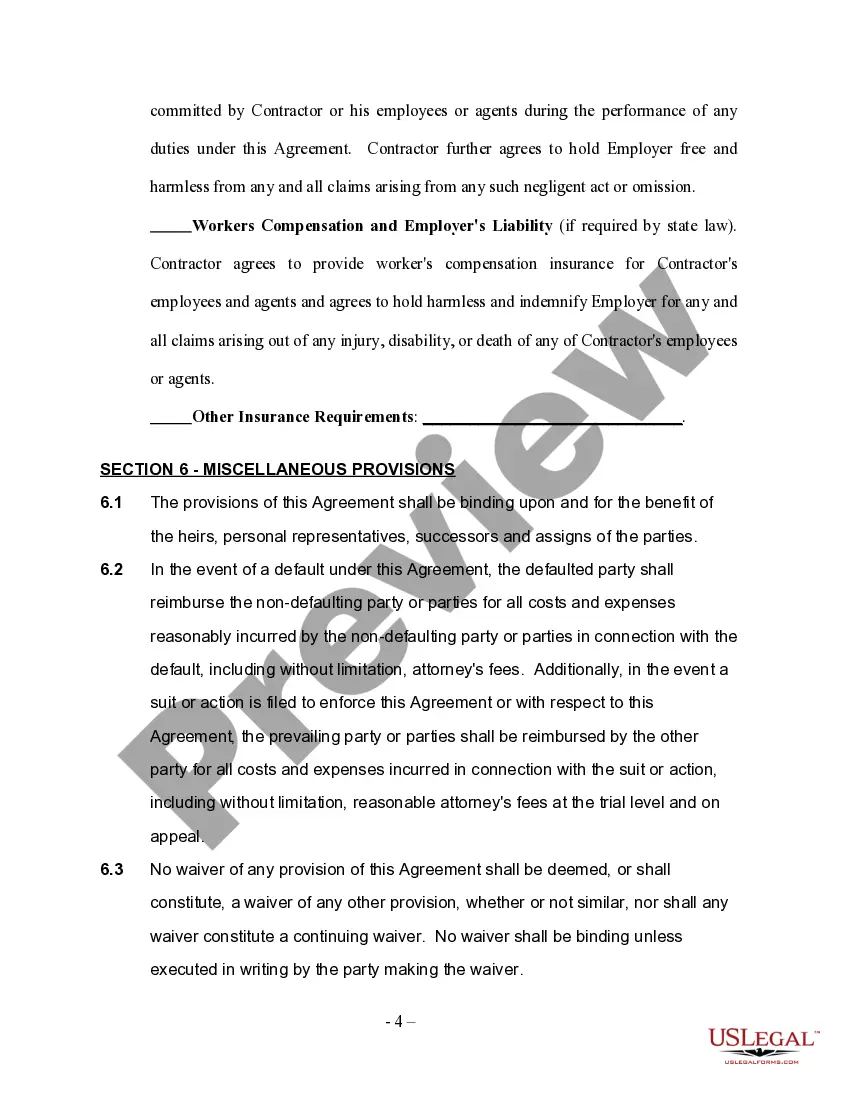
- Insurance requirements: Expectations for the contractor to maintain appropriate insurance coverage.
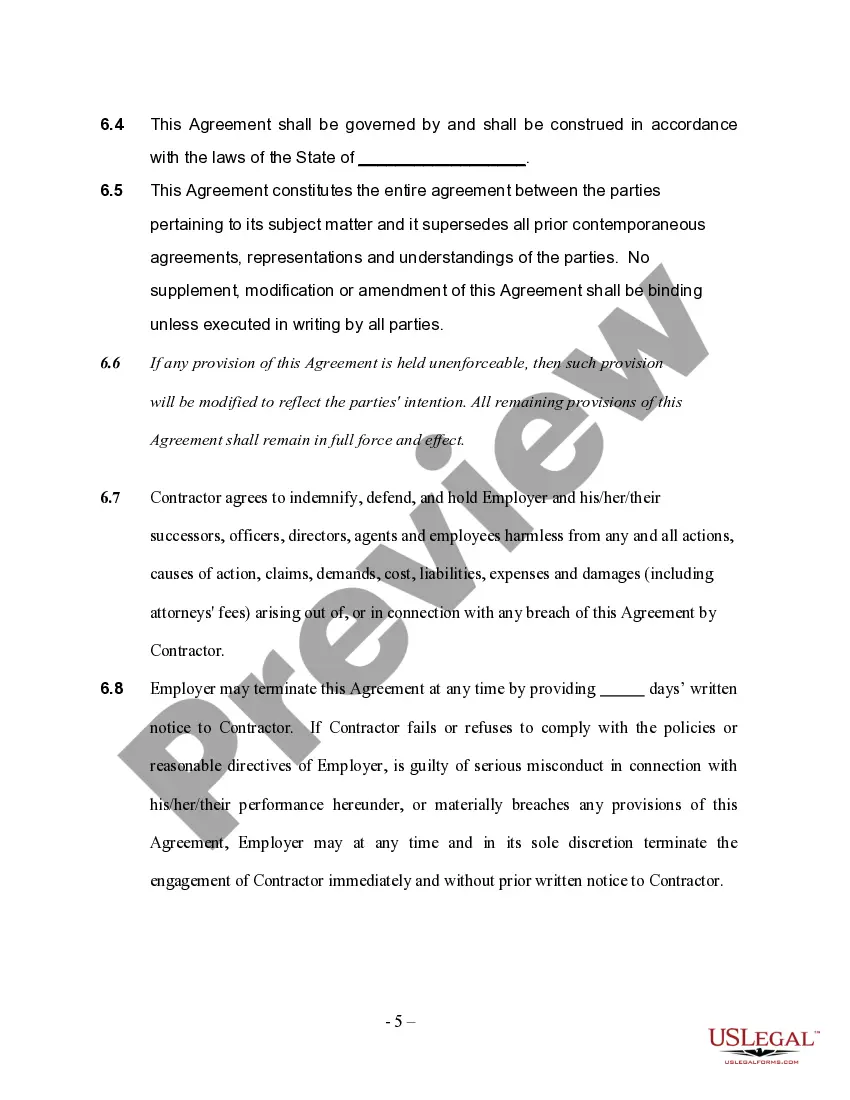
- Governing law: Specification of the legal jurisdiction that will govern any disputes related to the agreement.

When this form is needed
This form should be used when an employer hires a self-employed contractor to lay a foundation as part of a construction project. It is ideal for situations where the contractor needs clarity on the job scope, responsibilities, and payment terms. Additionally, homeowners can use this agreement to ensure that all necessary legal protections are in place before beginning foundation work.
Who needs this form
- Homeowners seeking to hire a self-employed contractor for foundation work.
- Independent contractors offering foundation laying services.
- Construction firms looking for clear agreements with independent contractors.
Completing this form step by step
- Identify the parties: Fill in the names and addresses of the employer and contractor.
- Specify the work: Clearly outline the foundation services to be performed.
- Include representations: The contractor should provide necessary certifications and qualifications.
- Check insurance requirements: Ensure that the contractor includes information about their insurance coverage.
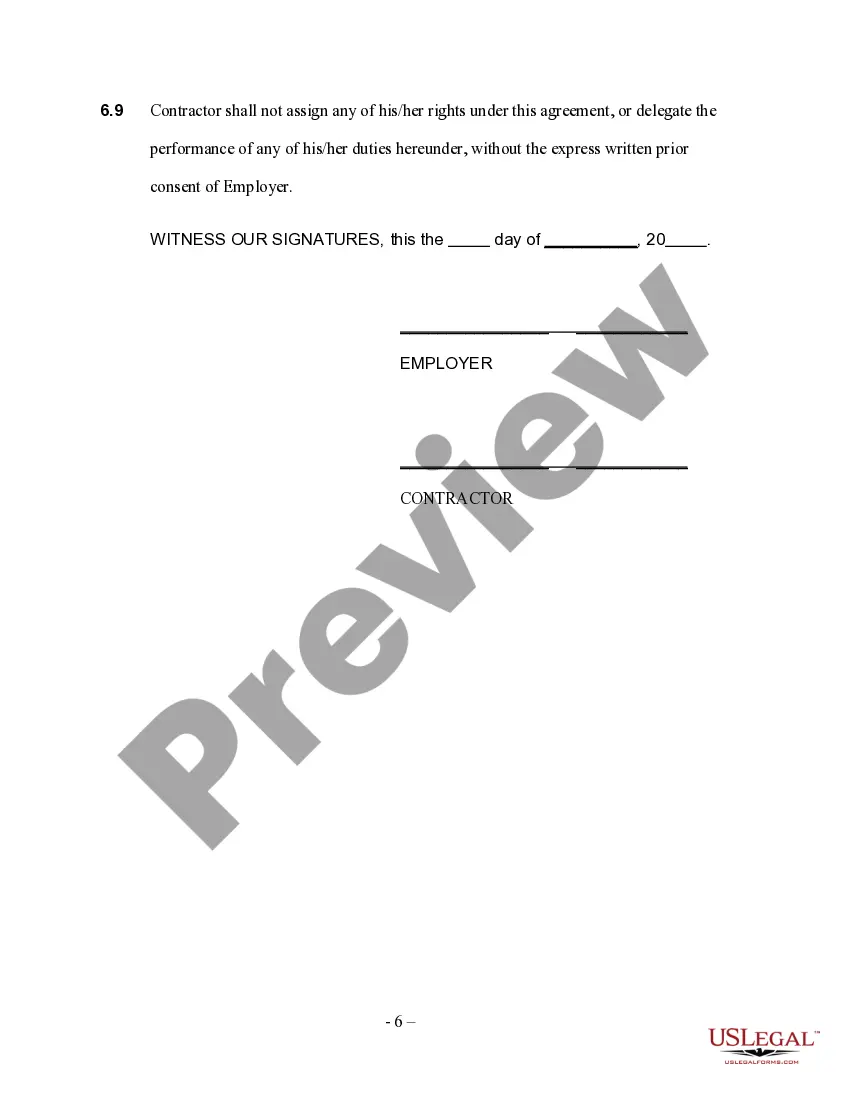
- Sign and date the agreement: Both parties should sign and date the agreement to make it legally binding.
Does this form need to be notarized?
This form usually doesn’t need to be notarized. However, local laws or specific transactions may require it. Our online notarization service, powered by Notarize, lets you complete it remotely through a secure video session, available 24/7.
Get your form ready online
Our built-in tools help you complete, sign, share, and store your documents in one place.
Make edits, fill in missing information, and update formatting in US Legal Forms—just like you would in MS Word.
Download a copy, print it, send it by email, or mail it via USPS—whatever works best for your next step.
Sign and collect signatures with our SignNow integration. Send to multiple recipients, set reminders, and more. Go Premium to unlock E-Sign.
If this form requires notarization, complete it online through a secure video call—no need to meet a notary in person or wait for an appointment.
We protect your documents and personal data by following strict security and privacy standards.

Make edits, fill in missing information, and update formatting in US Legal Forms—just like you would in MS Word.

Download a copy, print it, send it by email, or mail it via USPS—whatever works best for your next step.

Sign and collect signatures with our SignNow integration. Send to multiple recipients, set reminders, and more. Go Premium to unlock E-Sign.

If this form requires notarization, complete it online through a secure video call—no need to meet a notary in person or wait for an appointment.

We protect your documents and personal data by following strict security and privacy standards.
Avoid these common issues
- Failing to specify the scope of work, leading to misunderstandings.
- Not confirming the contractor's licensing and insurance status.
- Neglecting to review state-specific requirements which may invalidate the agreement.
- Overlooking signature lines, which can make the contract unenforceable.
Benefits of using this form online
- Convenience: Easily download and fill out the form from anywhere.
- Editability: Customize the agreement to suit specific project requirements.
- Reliability: Utilize legally vetted templates prepared by licensed attorneys.
Main things to remember
- A Foundation Contractor Agreement - Self-Employed helps clarify roles between homeowners and contractors.
- Ensure all relevant details, including tasks and payment terms, are addressed in the agreement.
- Consult local laws for any additional provisions that may be required.
Looking for another form?








Form popularity
FAQ
An Independent Contractor Agreement should contain all of these basic terms: Description of the services to be provided.Explanation of what the hiring party will provide or not provide, such as equipment, for the independent contractor to use. Ownership of work product if that is relevant to the work being performed.
Get it in writing. Keep it simple. Deal with the right person. Identify each party correctly. Spell out all of the details. Specify payment obligations. Agree on circumstances that terminate the contract. Agree on a way to resolve disputes.
1. Not Having a Written Contract.The taxing, labor and employment, and insurance authorities expect a written contract that states that the worker is an independent contractor and will be paid as such with no tax withholding, no benefits, etc.
For most types of projects you hire an independent contractor (IC) to do, the law does not require you to put anything in writing. You can meet with the IC, agree on the terms of your arrangement, and have an oral contract or agreement that is legally binding. Just because you can doesn't mean you should, however.
An independent contractor is a self-employed person or entity contracted to perform work foror provide services toanother entity as a nonemployee. As a result, independent contractors must pay their own Social Security and Medicare taxes.
Simply put, being an independent contractor is one way to be self-employed. Being self-employed means that you earn money but don't work as an employee for someone else. An independent contractor is someone who provides a service on a contractual basis.
If you received a 1099 form instead of a W-2 , then the payer of your income did not consider you an employee and did not withhold federal income tax or Social Security and Medicare tax. A 1099-MISC or NEC means that you are classified as an independent contractor and independent contractors are self-employed.
Here's a simple rule: If you work as an independent contractor, it's up to you to pay income and self-employment taxes (Social Security and Medicare taxes) on the payments you receive.You must also pay a 12.4% Social Security tax and 2.9% Medicare tax on such income.
If payment for services you provided is listed on Form 1099-NEC, Nonemployee Compensation, the payer is treating you as a self-employed worker, also referred to as an independent contractor. You don't necessarily have to have a business for payments for your services to be reported on Form 1099-NEC.