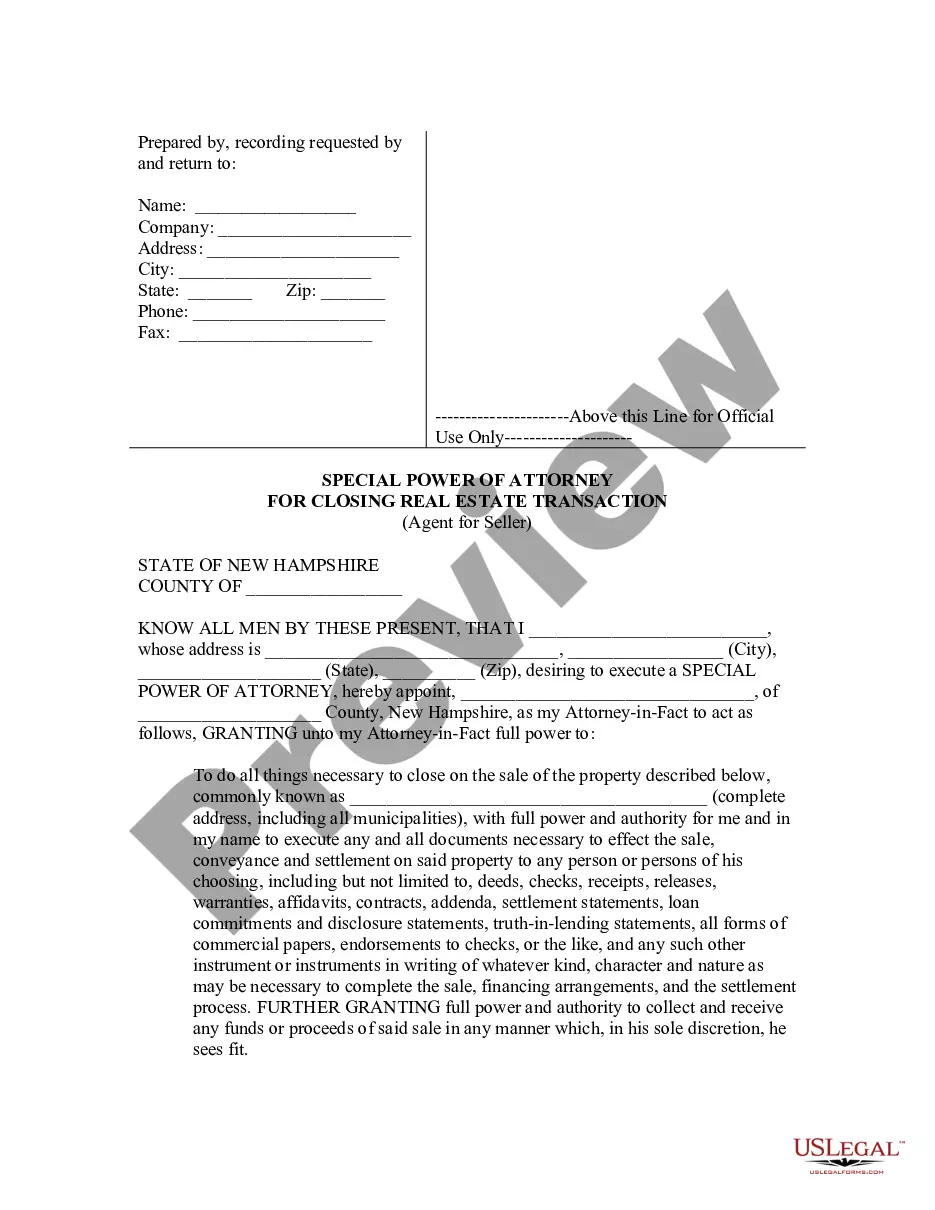
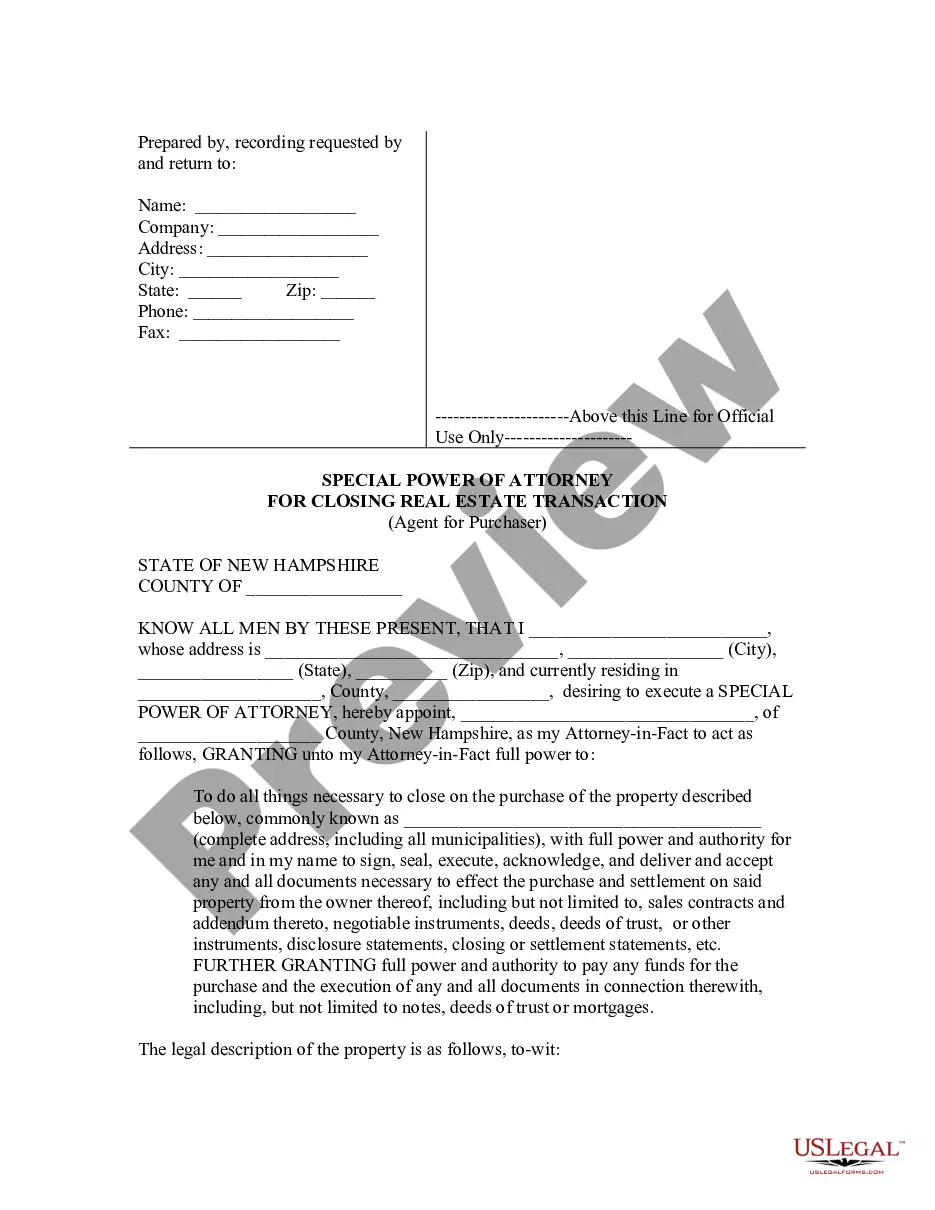
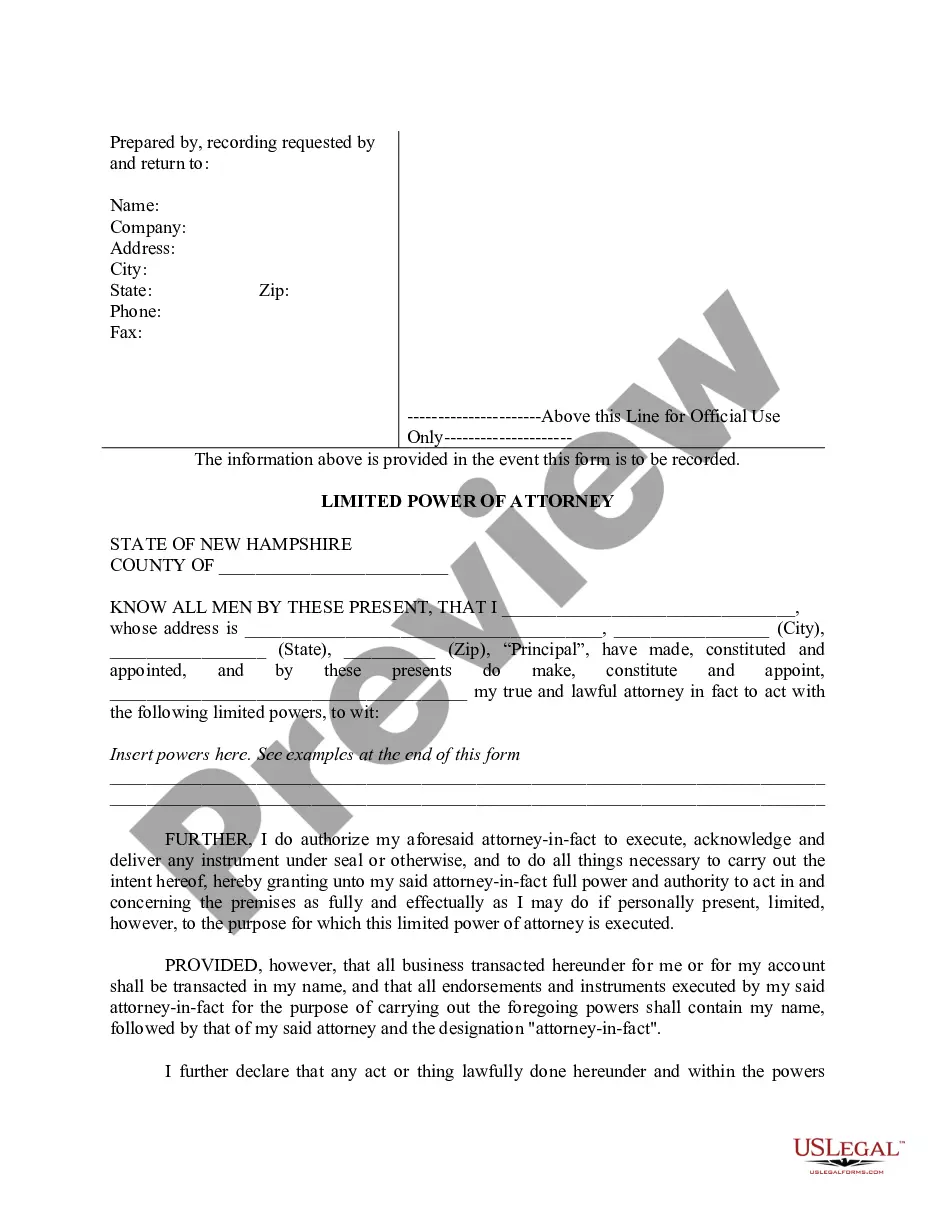
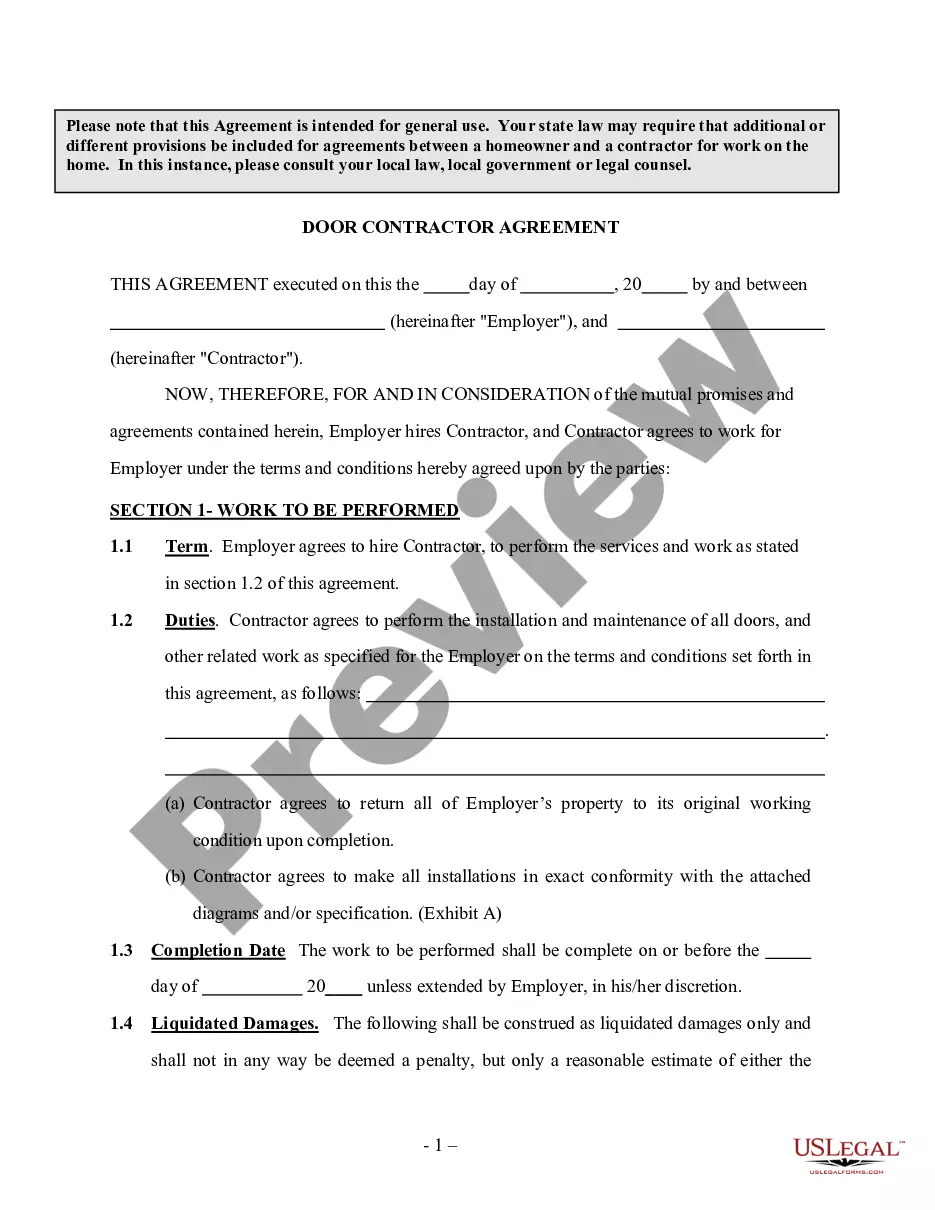
Door Contractor Agreement - Self-Employed
What is this form?
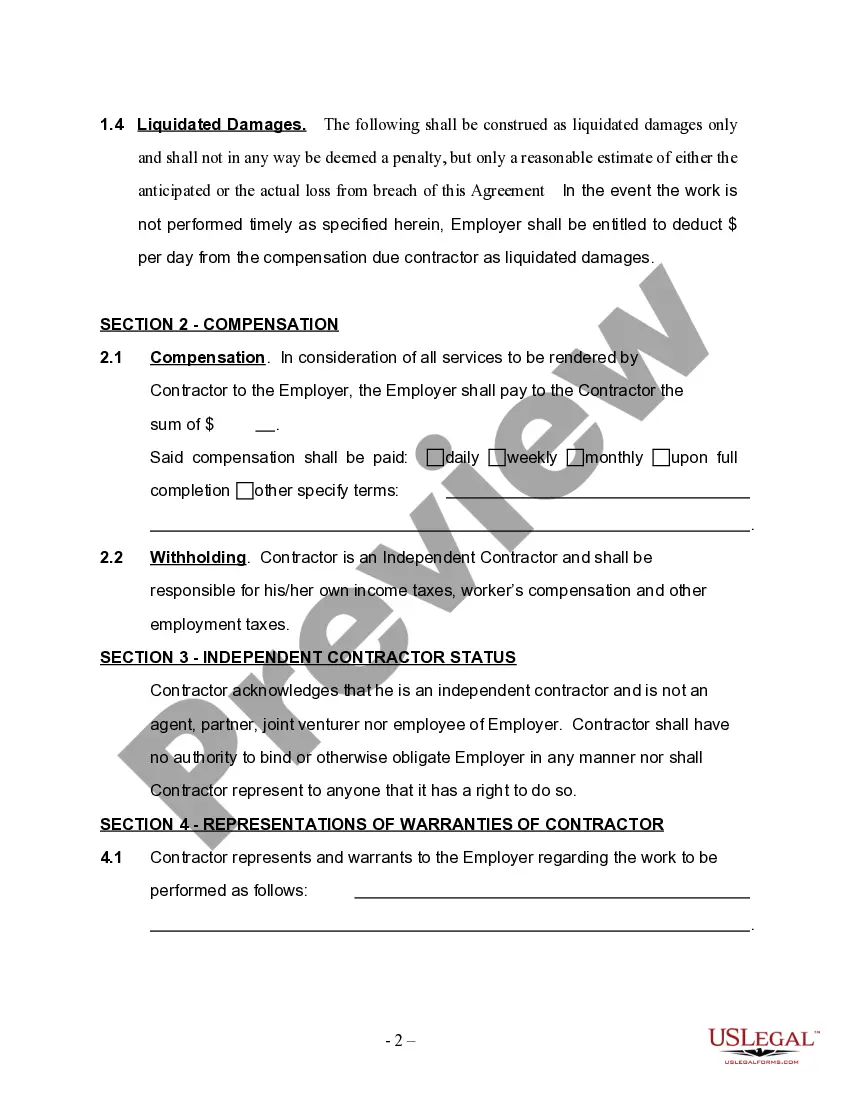
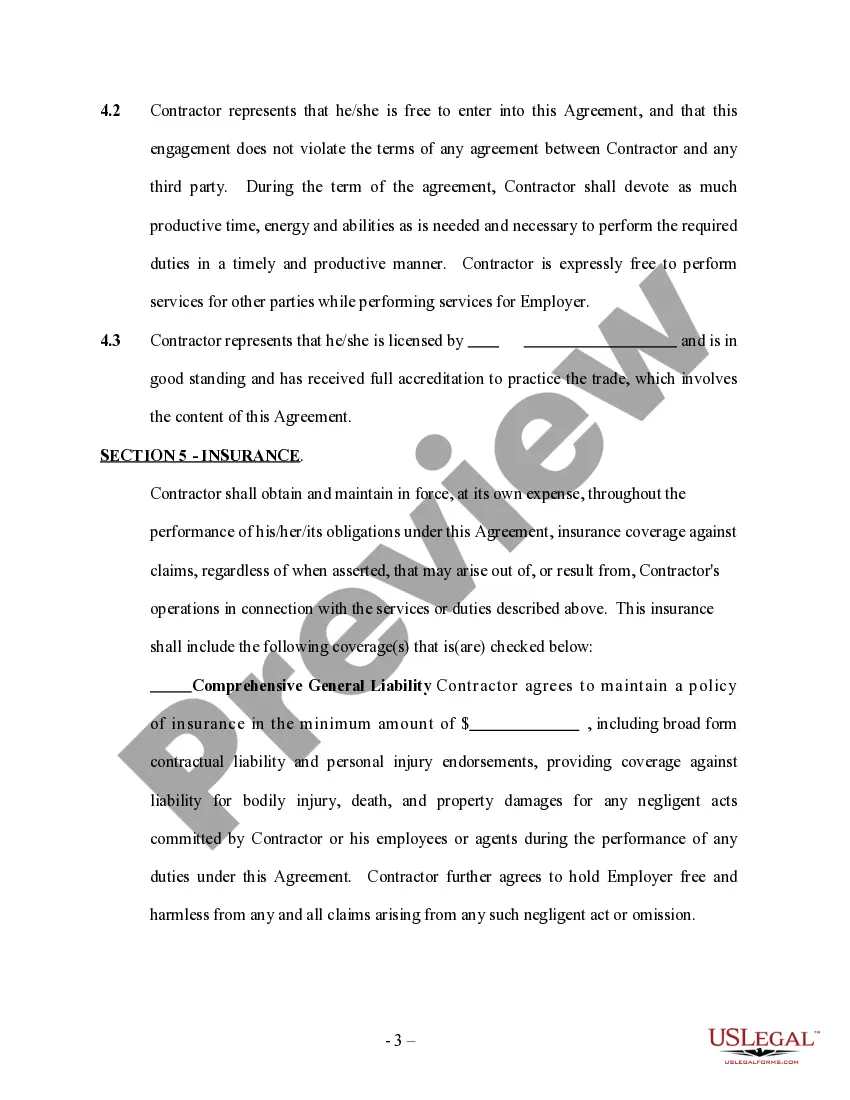
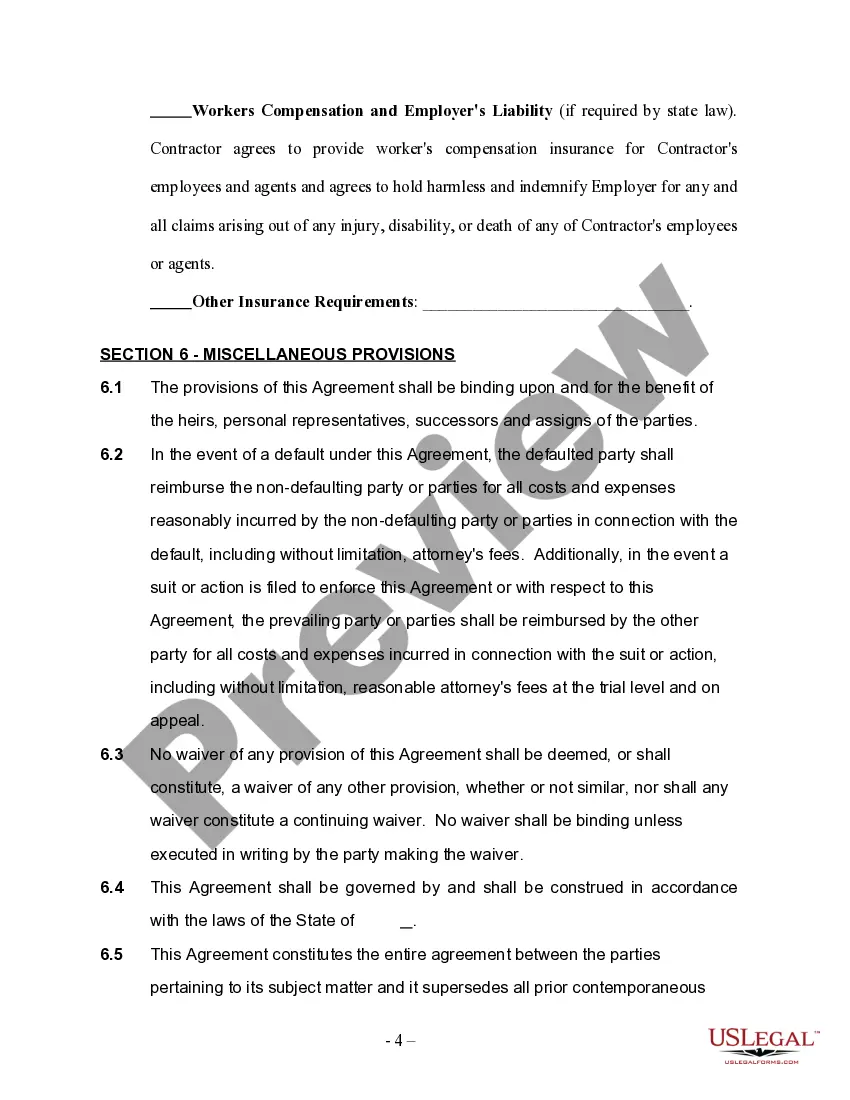
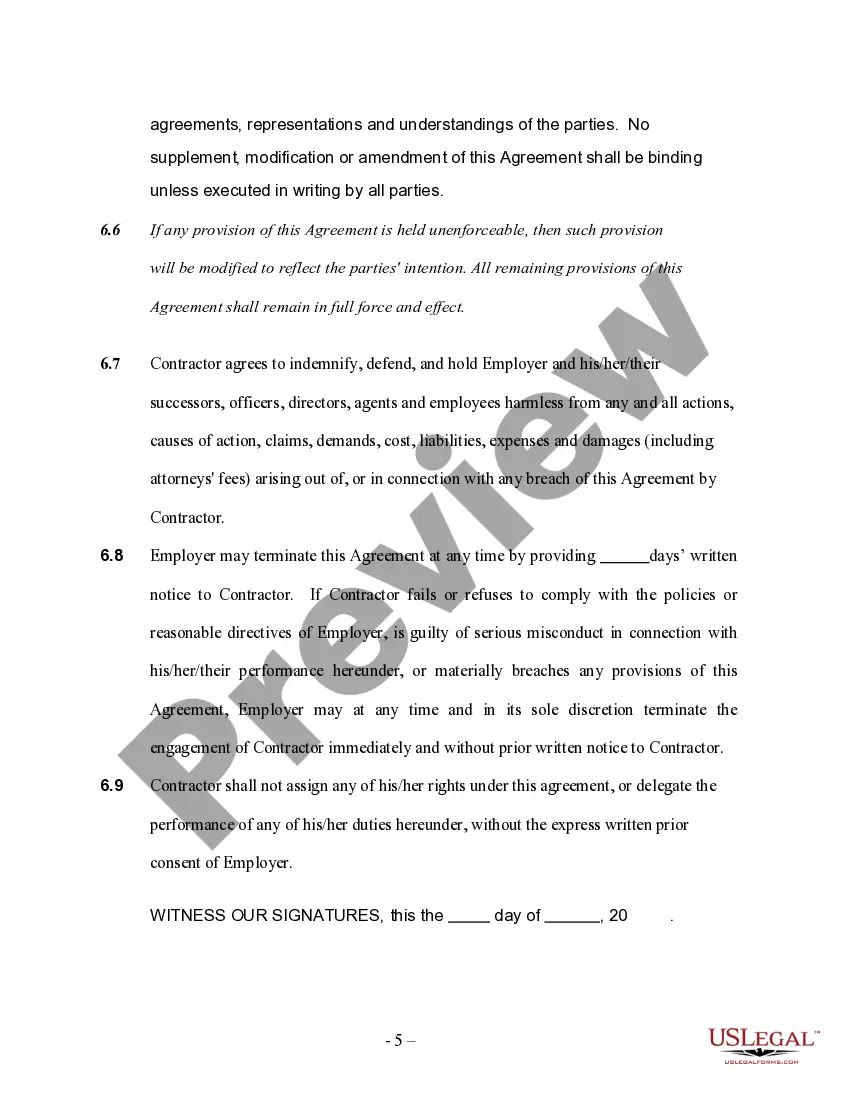
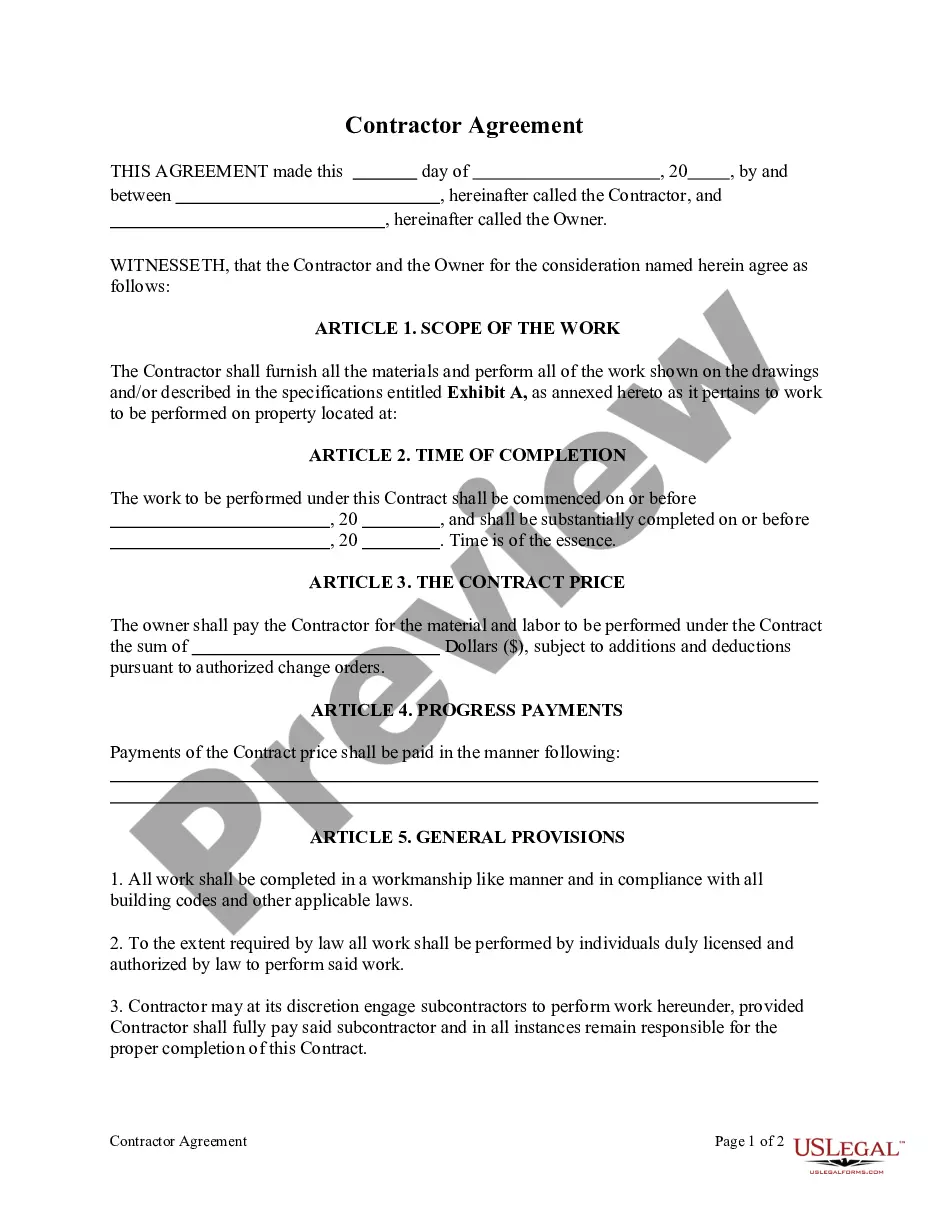
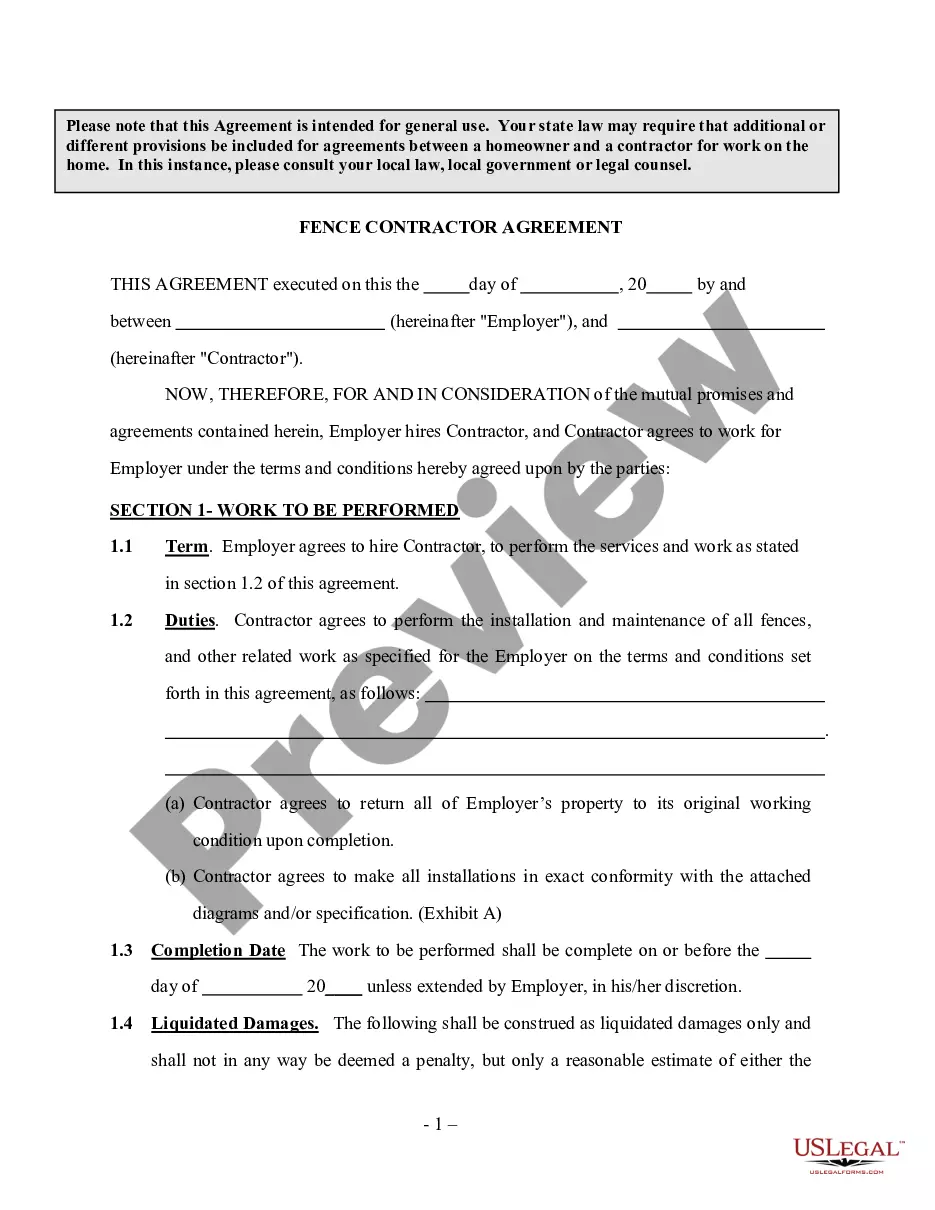
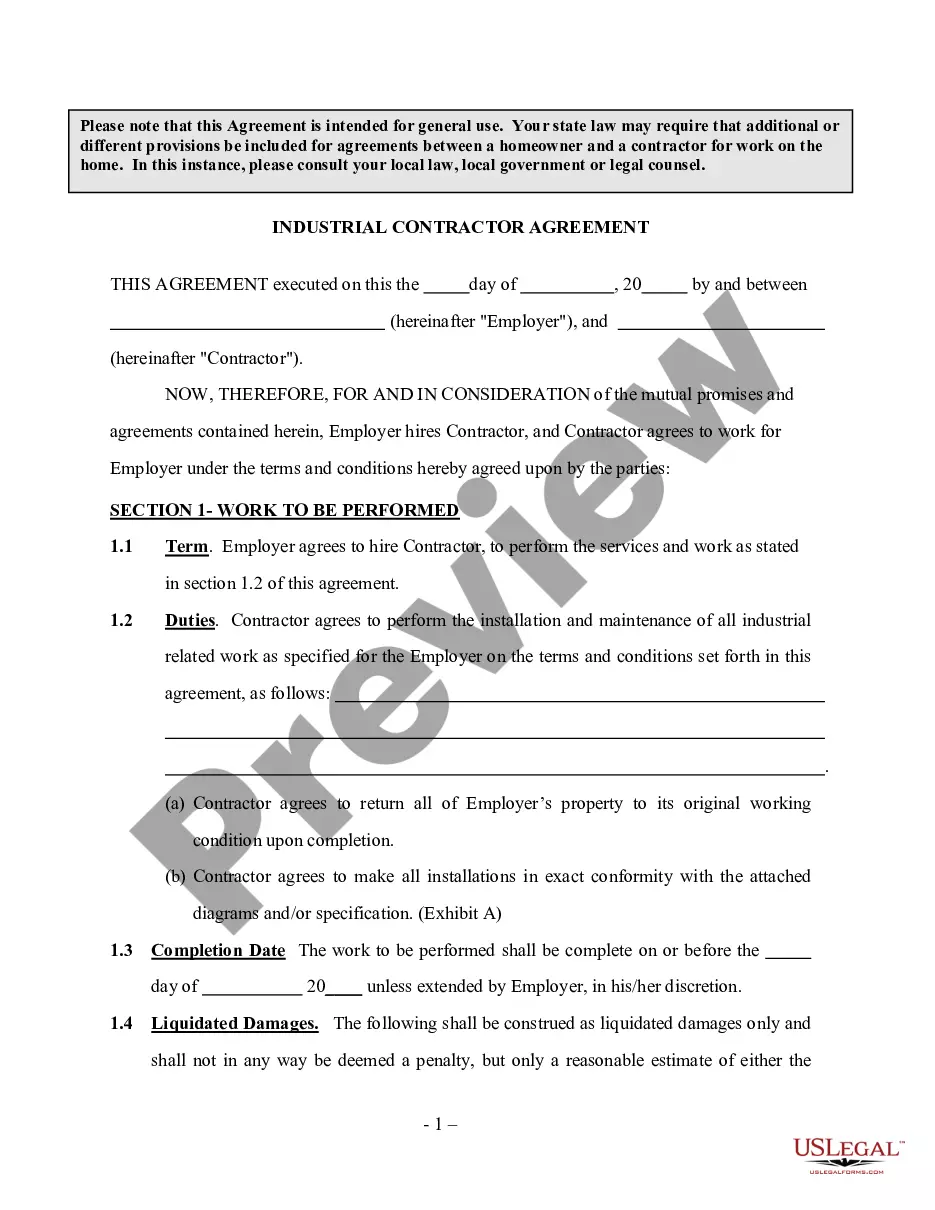
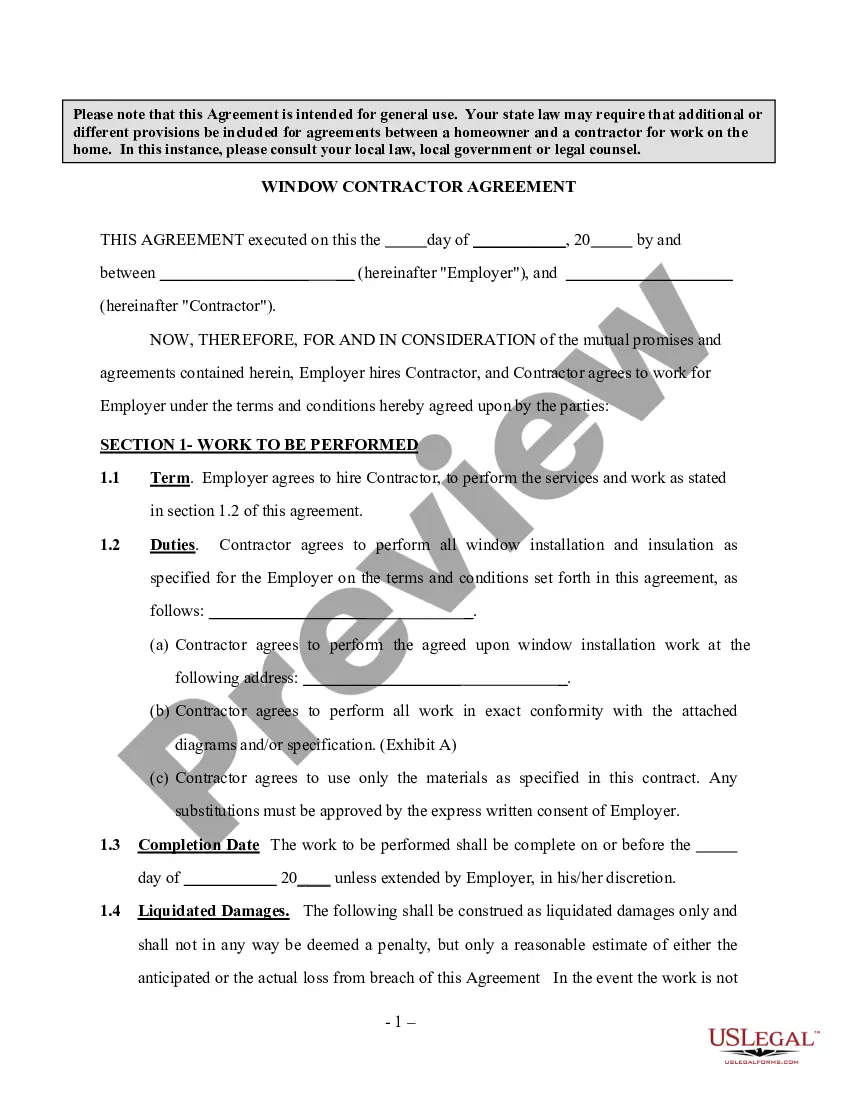
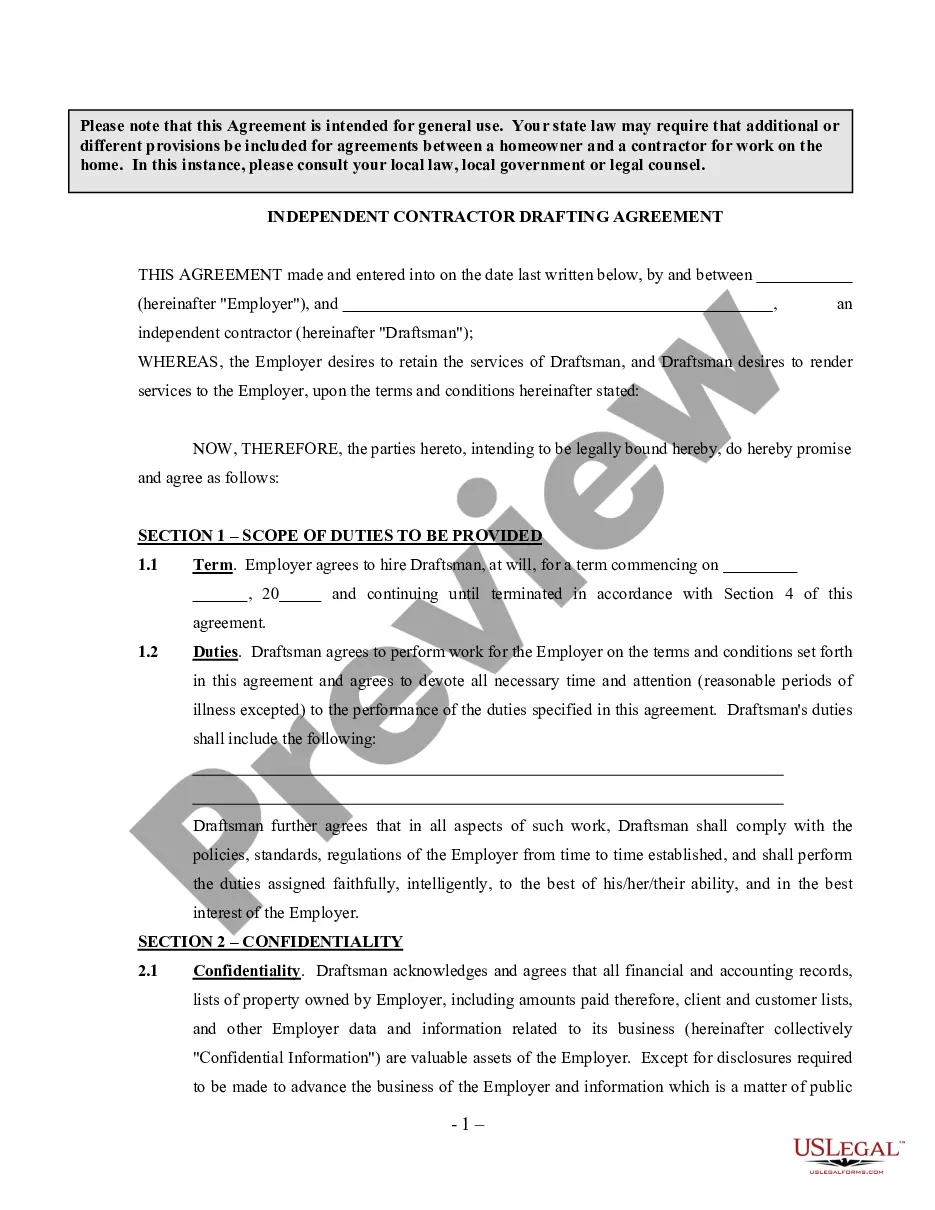
The Door Contractor Agreement - Self-Employed is a legal document used when a homeowner hires an independent contractor to provide, install, and service doors as specified in the contract. This agreement formalizes the working relationship and outlines the responsibilities of both parties. Unlike other contractor agreements, this form specifically caters to door-related services and emphasizes the independent status of the contractor, clarifying their lack of authority to bind the employer in any manner.
Main sections of this form
- Term of service: Defines the duration and scope of work to be performed by the contractor.
- Independent contractor status: Clarifies the contractor's role as an independent entity rather than an employee.
- Scope of work: Details the specific services the contractor will provide regarding door installation and servicing.

Common use cases
This agreement should be utilized when a homeowner needs to formally engage a self-employed contractor to handle door installation or maintenance. It is particularly useful when there are specific requirements or projects outlined, ensuring that both the contractor and homeowner have clear expectations and protect their rights under the agreement.
Who can use this document
- Homeowners looking to hire a self-employed contractor for door services.
- Independent contractors specializing in door installation and maintenance.
- Property managers who require formal agreements when contracting door services for properties.
Steps to complete this form
- Identify the parties involved: Clearly enter the names and addresses of both the homeowner (Employer) and the contractor.
- Specify the services: Detail the specific work the contractor will perform in the scope of work section.
- Set the term: Define the duration of the agreement, including start and end dates if applicable.
- Include payment terms: Outline the compensation structure, including payment schedule and amounts.
- Review and sign: Make sure both parties understand the agreement and sign to make it legally binding.
Does this form need to be notarized?
Notarization is not commonly needed for this form. However, certain documents or local rules may make it necessary. Our notarization service, powered by Notarize, allows you to finalize it securely online anytime, day or night.
Get your form ready online
Our built-in tools help you complete, sign, share, and store your documents in one place.
Make edits, fill in missing information, and update formatting in US Legal Forms—just like you would in MS Word.
Download a copy, print it, send it by email, or mail it via USPS—whatever works best for your next step.
Sign and collect signatures with our SignNow integration. Send to multiple recipients, set reminders, and more. Go Premium to unlock E-Sign.
If this form requires notarization, complete it online through a secure video call—no need to meet a notary in person or wait for an appointment.
We protect your documents and personal data by following strict security and privacy standards.

Make edits, fill in missing information, and update formatting in US Legal Forms—just like you would in MS Word.

Download a copy, print it, send it by email, or mail it via USPS—whatever works best for your next step.

Sign and collect signatures with our SignNow integration. Send to multiple recipients, set reminders, and more. Go Premium to unlock E-Sign.

If this form requires notarization, complete it online through a secure video call—no need to meet a notary in person or wait for an appointment.

We protect your documents and personal data by following strict security and privacy standards.
Common mistakes to avoid
- Failing to clearly define the scope of work, which can lead to misunderstandings.
- Not specifying payment terms, which can result in disputes over compensation.
- Neglecting to include a defined term for the agreement, leading to ambiguity about its duration.
Benefits of completing this form online
- Convenience: Easily download and complete the form at your own pace.
- Editability: Make changes to the agreement as necessary before finalizing.
- Reliability: Use a professionally drafted form to ensure it meets legal standards.
Legal use & context
- Enforceability of this contract is based on adherence to state laws governing contractor agreements.
- Agreements should include all necessary clauses to comply with local regulations for home improvement contracts.
What to keep in mind
- A Door Contractor Agreement - Self-Employed formalizes the relationship between homeowners and door service contractors.
- Understanding the distinct roles is crucial for legal protection and clarity.
- Potential state-specific requirements should be checked to ensure full compliance.
Looking for another form?

Form popularity
FAQ
People who work for themselves or who own their own company are sometimes alternately referred to as self-employed or independent contractors, though there is a difference between the two. In general, all independent contractors are self-employed, but not all self-employed people are independent contractors.
An Independent Contractor Agreement should contain all of these basic terms: Description of the services to be provided.Explanation of what the hiring party will provide or not provide, such as equipment, for the independent contractor to use. Ownership of work product if that is relevant to the work being performed.
Name of contractor and contact information. Name of homeowner and contact information. Describe property in legal terms. List attachments to the contract. The cost. Failure of homeowner to obtain financing. Description of the work and the completion date. Right to stop the project.
Make sure you really qualify as an independent contractor. Choose a business name (and register it, if necessary). Get a tax registration certificate (and a vocational license, if required for your profession). Pay estimated taxes (advance payments of your income and self-employment taxes).
A sole proprietorship can use independent contractors for the term of the contract without any further obligation. If the sole proprietor no longer needs the independent contractor, the sole proprietor is under no obligation to extend the contract. This also allows a sole proprietor to try out potential employees.
Simply put, being an independent contractor is one way to be self-employed. Being self-employed means that you earn money but don't work as an employee for someone else. An independent contractor is someone who provides a service on a contractual basis.
Independent contractors are self-employed workers who provide services for an organisation under a contract for services. Independent contractors are not employees and are typically highly skilled, providing their clients with specialist skills or additional capacity on an as needed basis.
The Senate and House have passed another stimulus package that extends unemployment assistance for independent contractors and other self-employed individuals for 11 weeks.Finally, the new stimulus bill provides independent contractors with paid sick and paid family leave benefits through March 14, 2021.
Length of Contract. Each client contractor agreement should outline the length of the working relationship. Project Description. Payment Terms. Nondisclosure Terms. Rights and Responsibilities. Termination Clause. Disclaimers.