USLegal Guide to Common Law Marriage
Overview of this form
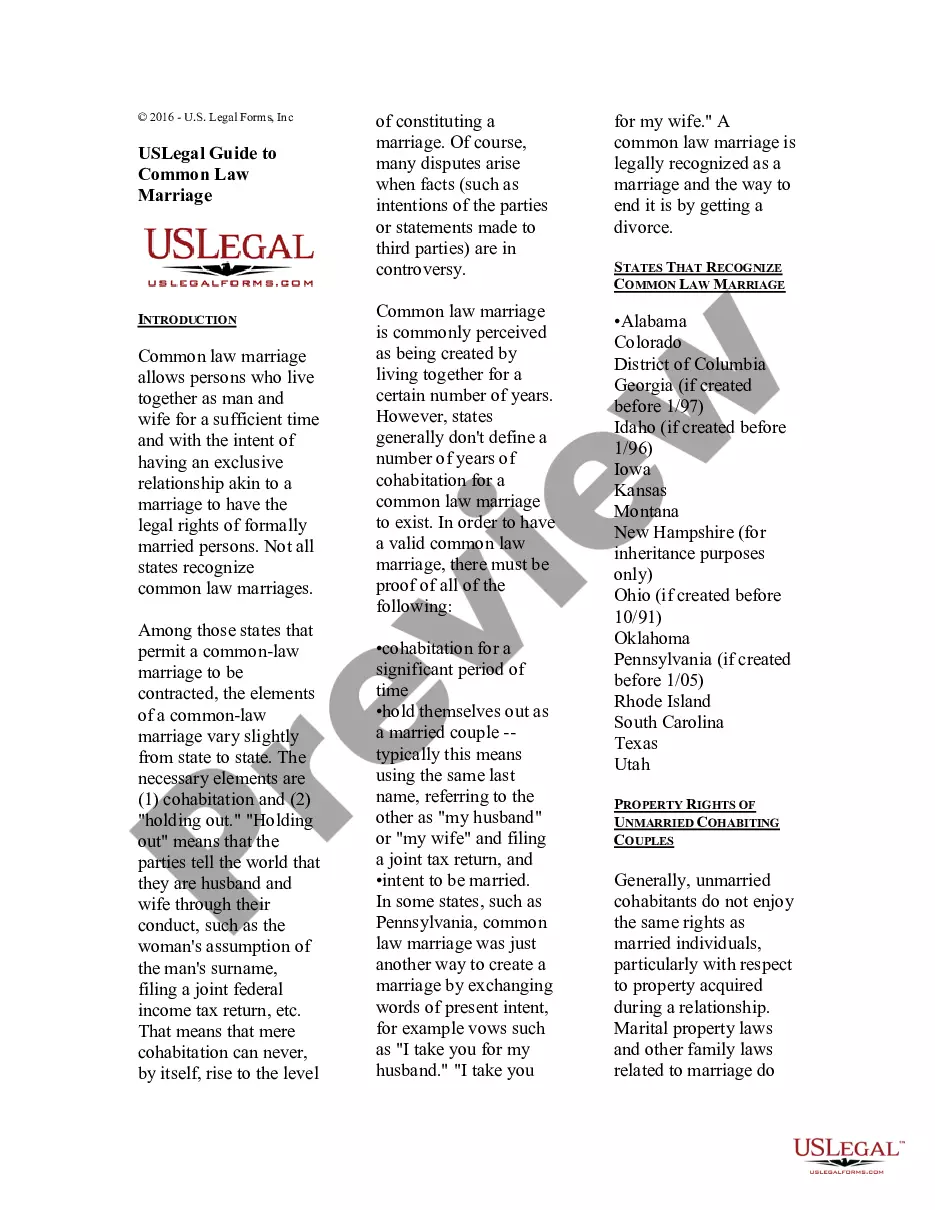
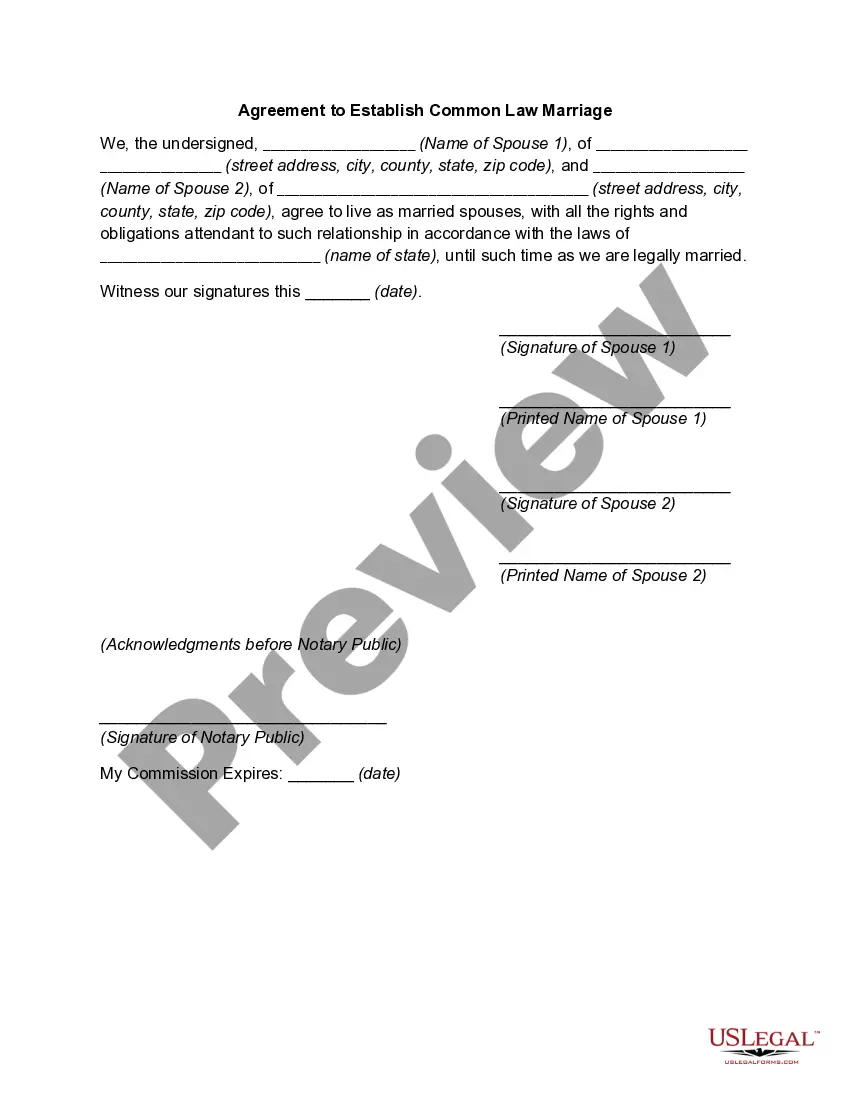
The USLegal Guide to Common Law Marriage provides a comprehensive overview of common law marriage, a legal recognition for couples who live together and present themselves as married without formally registering their union. This guide differs from traditional marriage forms as it outlines requirements, state recognition, and the legal rights of cohabiting couples.
Main sections of this form
- Definition of common law marriage and its distinguishing features.
- Requirements for establishing a common law marriage, including cohabitation and holding out.
- List of states that recognize common law marriage and any specific conditions.
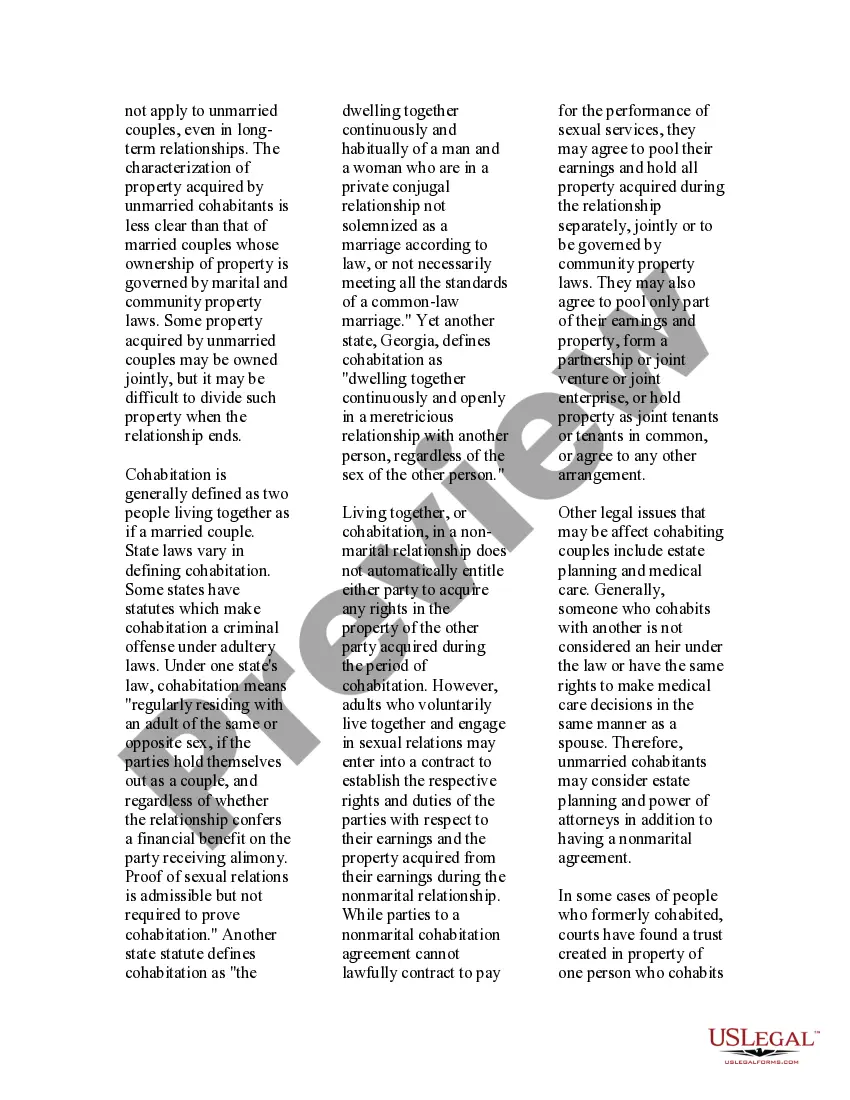
- Explanation of property rights for unmarried cohabitants and legal implications.
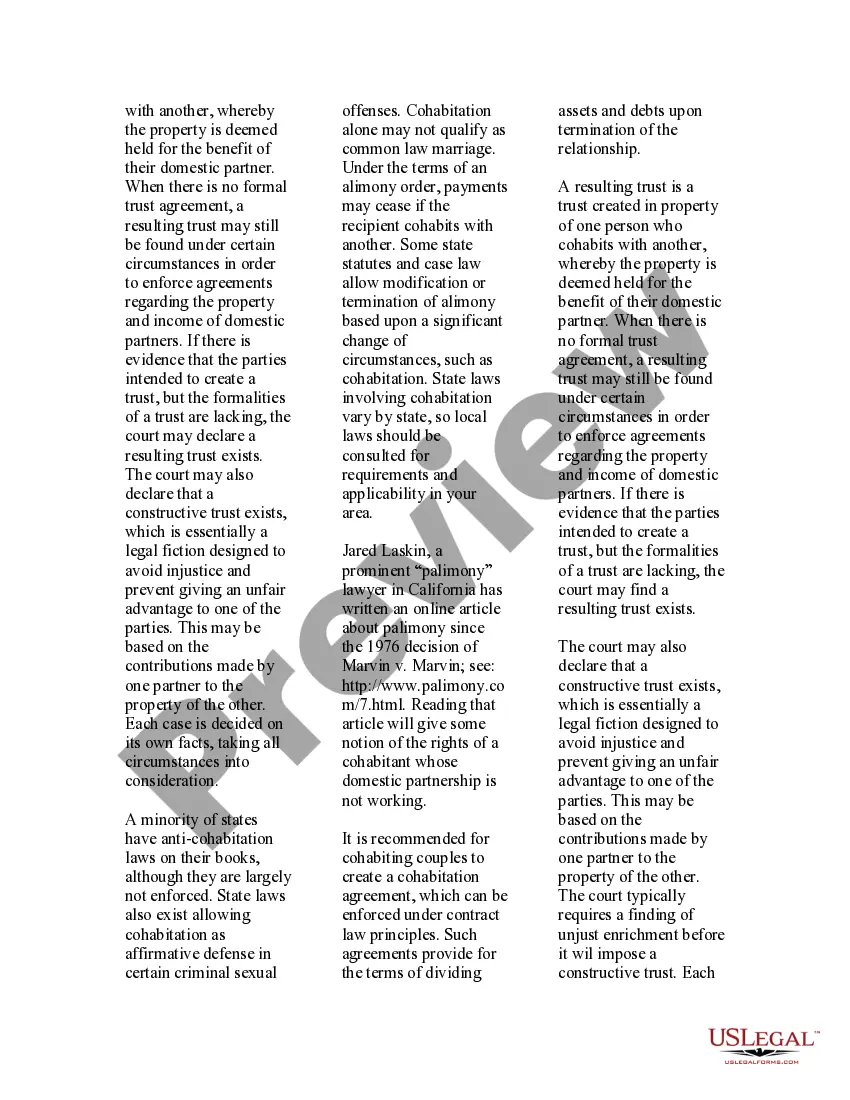
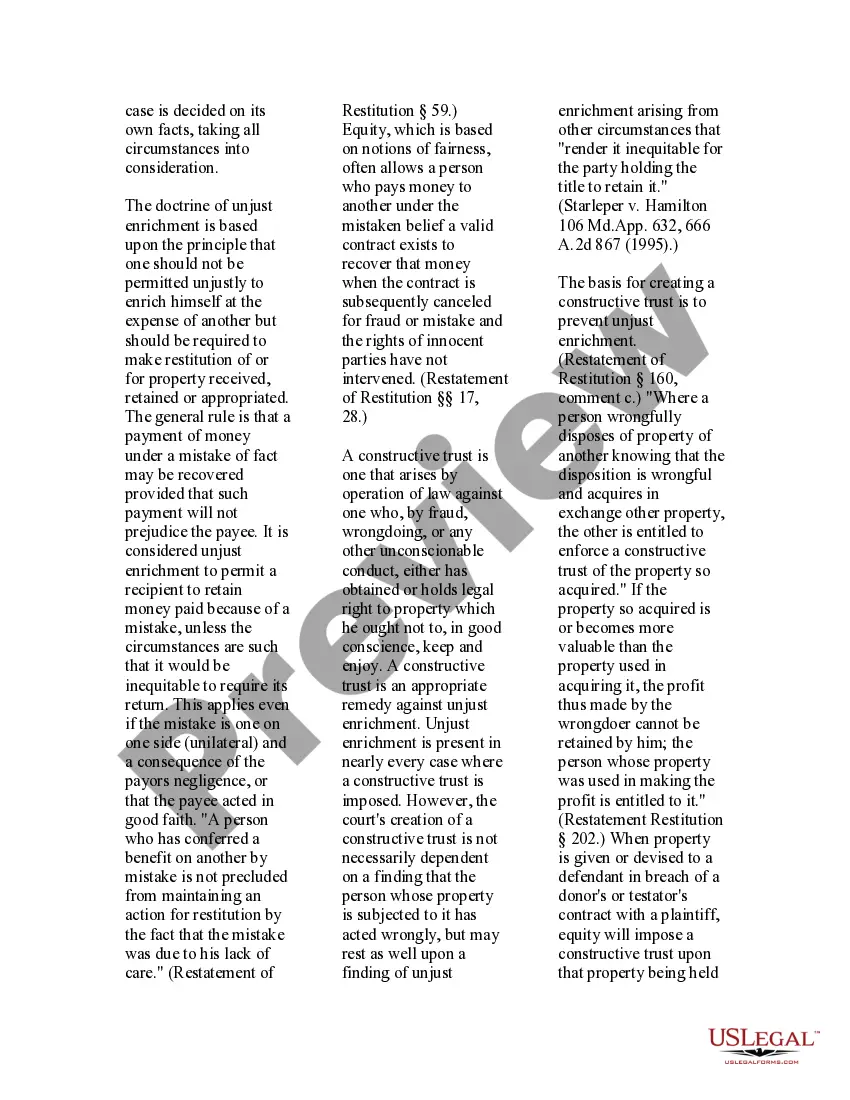
- Legal forms and agreements suggested for cohabiting couples for clarity on rights.

When to use this document
This guide should be used when individuals are considering entering into a common law marriage or when navigating the rights and responsibilities that come with cohabiting without formal marriage. It is particularly useful for those in relationships where legal recognition may be necessary for property rights, estate planning, or medical decisions.
Who this form is for
This guide is suitable for:
- Couples living together who wish to understand their legal status.
- Individuals seeking to protect their legal rights in a non-marital relationship.
- Legal professionals advising clients on cohabitation matters.
- Anyone interested in the laws surrounding common law marriage in specific states.
Instructions for completing this form
Follow these steps to understand how to effectively navigate your common law marriage:
- Determine if you meet the qualifications for a common law marriage in your state.
- Document your shared life, including cohabitation evidence and joint financial accounts.
- Communicate openly with your partner about your intent to consider yourselves married.
- File joint tax returns and use the same last name, if applicable, to demonstrate holding out.
- Consult with legal professionals if disputes about rights or property arise.
Does this document require notarization?
This form does not typically require notarization unless specified by local law. It is always recommended to check the specifics of your jurisdiction to ensure compliance with all legal requirements.
Get your form ready online
Our built-in tools help you complete, sign, share, and store your documents in one place.
Make edits, fill in missing information, and update formatting in US Legal Forms—just like you would in MS Word.
Download a copy, print it, send it by email, or mail it via USPS—whatever works best for your next step.
Sign and collect signatures with our SignNow integration. Send to multiple recipients, set reminders, and more. Go Premium to unlock E-Sign.
If this form requires notarization, complete it online through a secure video call—no need to meet a notary in person or wait for an appointment.
We protect your documents and personal data by following strict security and privacy standards.

Make edits, fill in missing information, and update formatting in US Legal Forms—just like you would in MS Word.

Download a copy, print it, send it by email, or mail it via USPS—whatever works best for your next step.

Sign and collect signatures with our SignNow integration. Send to multiple recipients, set reminders, and more. Go Premium to unlock E-Sign.

If this form requires notarization, complete it online through a secure video call—no need to meet a notary in person or wait for an appointment.

We protect your documents and personal data by following strict security and privacy standards.
Common mistakes
- Assuming all states recognize common law marriage equally.
- Believing that cohabitation alone constitutes a marriage without additional evidence.
- Neglecting to document joint financial responsibilities or shared assets.
- Failing to communicate intentions of marriage with a partner, which is crucial in legal recognition.
Why complete this form online
- Convenient access to legal information and guidelines without the need for extensive research.
- Editable downloadable forms that can be customized to suit individual needs.
- Reliable templates drafted by licensed attorneys for peace of mind.
- Immediate availability of materials that can be used in various legal contexts.
- Understanding that common law marriage is recognized in only a limited number of states.
- Knowing that property rights for unmarried couples may differ significantly from those of married couples.
- Realizing the importance of cohabitation agreements for establishing clear rights and responsibilities.
Main things to remember
- Common law marriage provides couples with legal recognition without formal marriage.
- The requirements and protections under common law marriage differ by state.
- Documentation and communication are crucial for establishing and proving a common law marriage.
- Consider the benefits of creating cohabitation agreements to protect your interests.
- Cohabitation: Living together and presenting oneself as a married couple without formally registering the marriage.
- Holding Out: The act of publicly presenting yourselves as a married couple.
- Property Rights: Legal rights regarding ownership and division of property acquired during the relationship.
Looking for another form?
Form popularity
FAQ
The two elements necessary to prove a common law marriage exists are: (1) mutual consent or agreement of the parties and (2) mutual and open assumption of a marital relationship. You prove these elements by introducing evidence at a hearing such as witness testimony and documents.
The couple had to agree to be husband and wife. The couple has a permanent relationship. The couple has an exclusive relationship. The couple lives together as husband and wife. The couple publicly considers themselves to be husband and wife.
Shared ownership of residential property. joint leases or rental agreements. bills for shared utility accounts, such as: gas. electricity. important documents for both of you showing the same address, such as: driver's licenses. identification documents.
Shared ownership of residential property. joint leases or rental agreements. bills for shared utility accounts, such as: gas. electricity. important documents for both of you showing the same address, such as: driver's licenses. identification documents.
The parties must be able to contract; There must be an actual contract; and. There must be consummation according to law; and. The marriage must be established prior to January 1, 1997.
Forgive. Forgiveness is one of the main ingredients of a successful marriage. Apologize. One of the most important rules for a happy marriage is to apologize to each other. Don't be afraid to argue. Listen. Appreciate. Embrace change. Be a team. Respect each other.
Where is common-law marriage allowed? Here are the places that recognize common-law marriage: Colorado, Iowa, Kansas, Montana, New Hampshire (for inheritance purposes only), Oklahoma, Rhode Island, South Carolina, Texas, Utah and the District of Columbia.
In California, you need to get a marriage license and exchange vows in a ceremony - either civil or religious in order to be legally married. Although common law marriage isn't legal in California, unmarried partners may assert some of the same rights as divorcing spouses when they break up.
A common law marriage is a legally recognized marriage between two people who have not purchased a marriage license or had their marriage solemnized by a ceremony. Not all states have statutes addressing common law marriage.