Notice To Users Of Consumer Reports - Obligations Of Users Under The FCRA
What this document covers
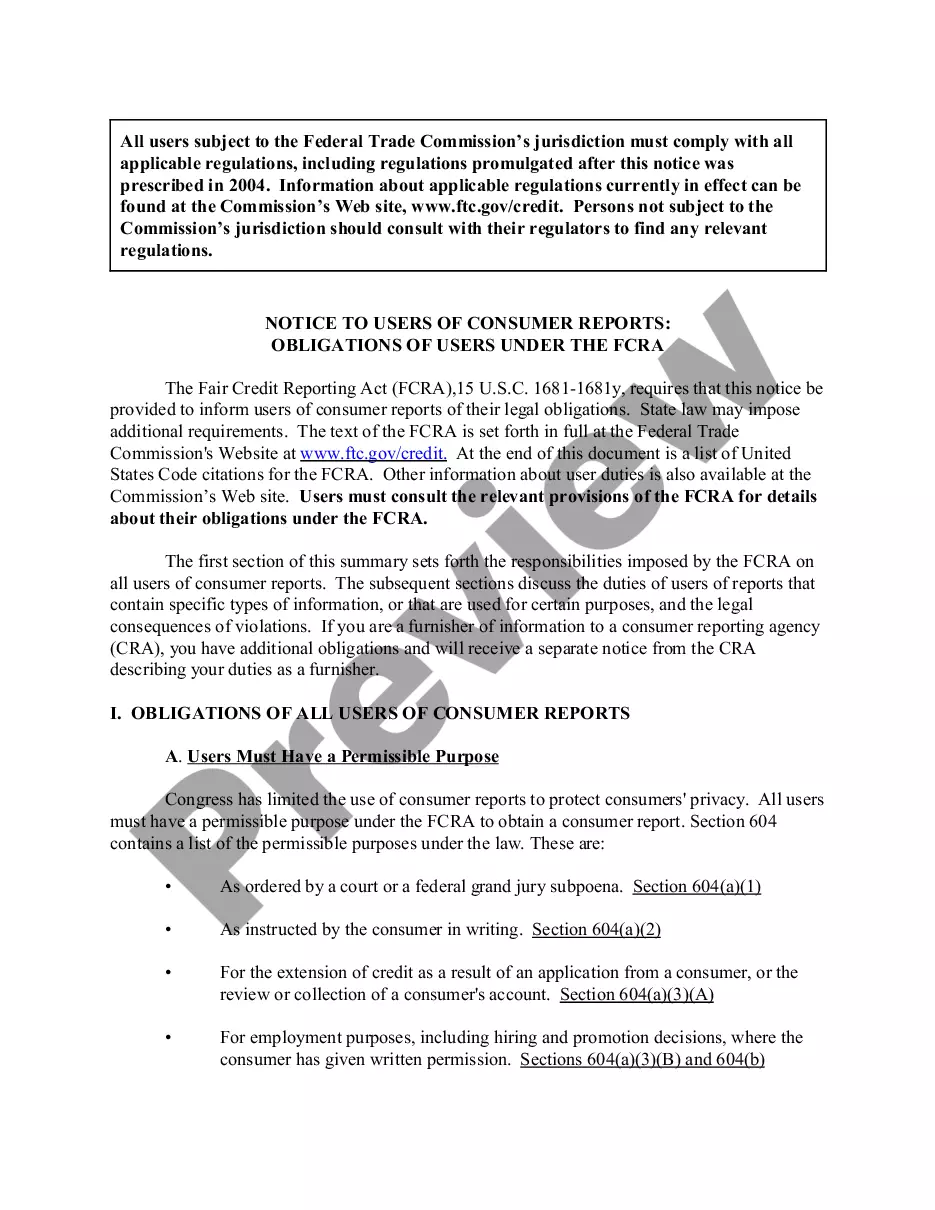
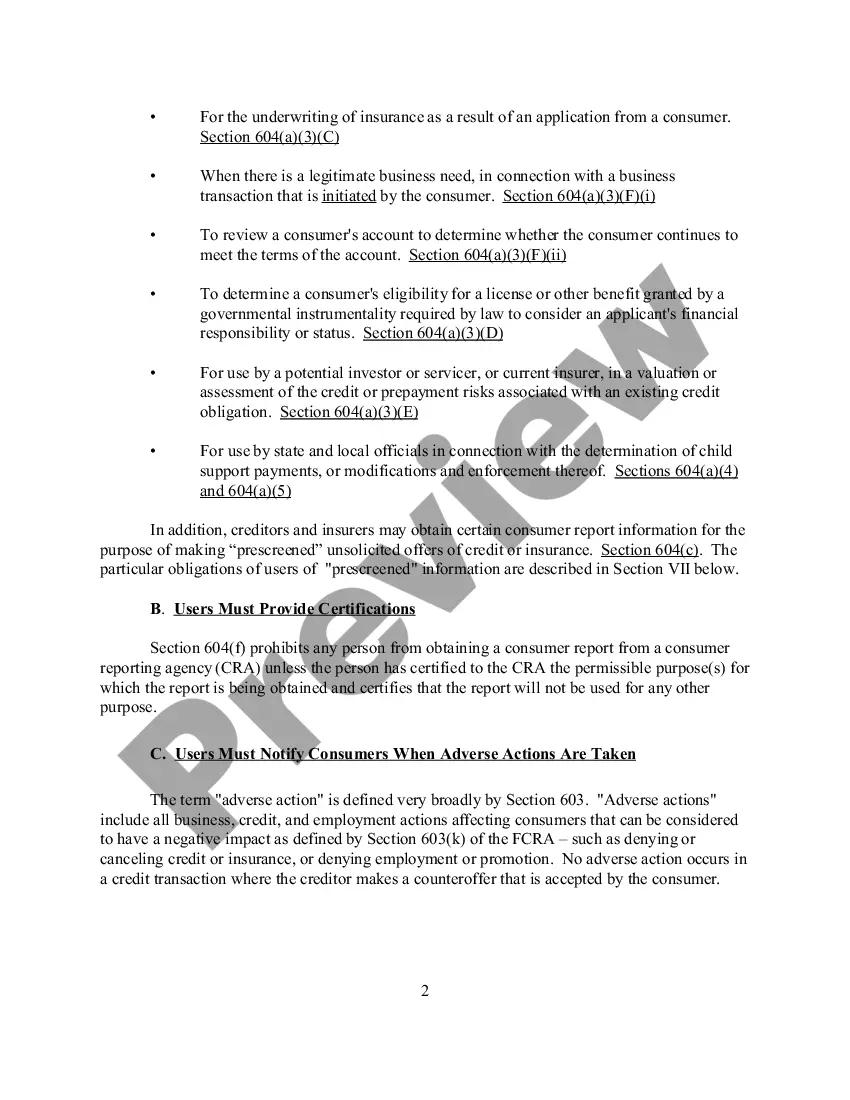
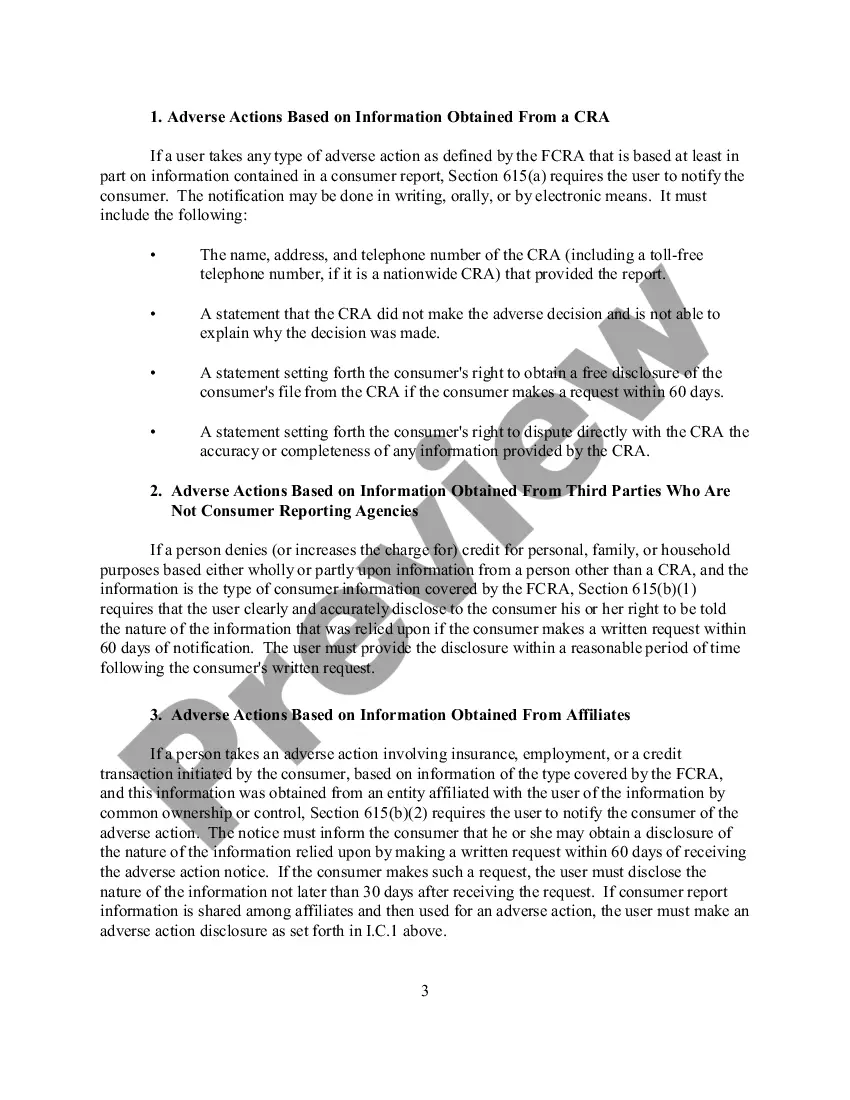
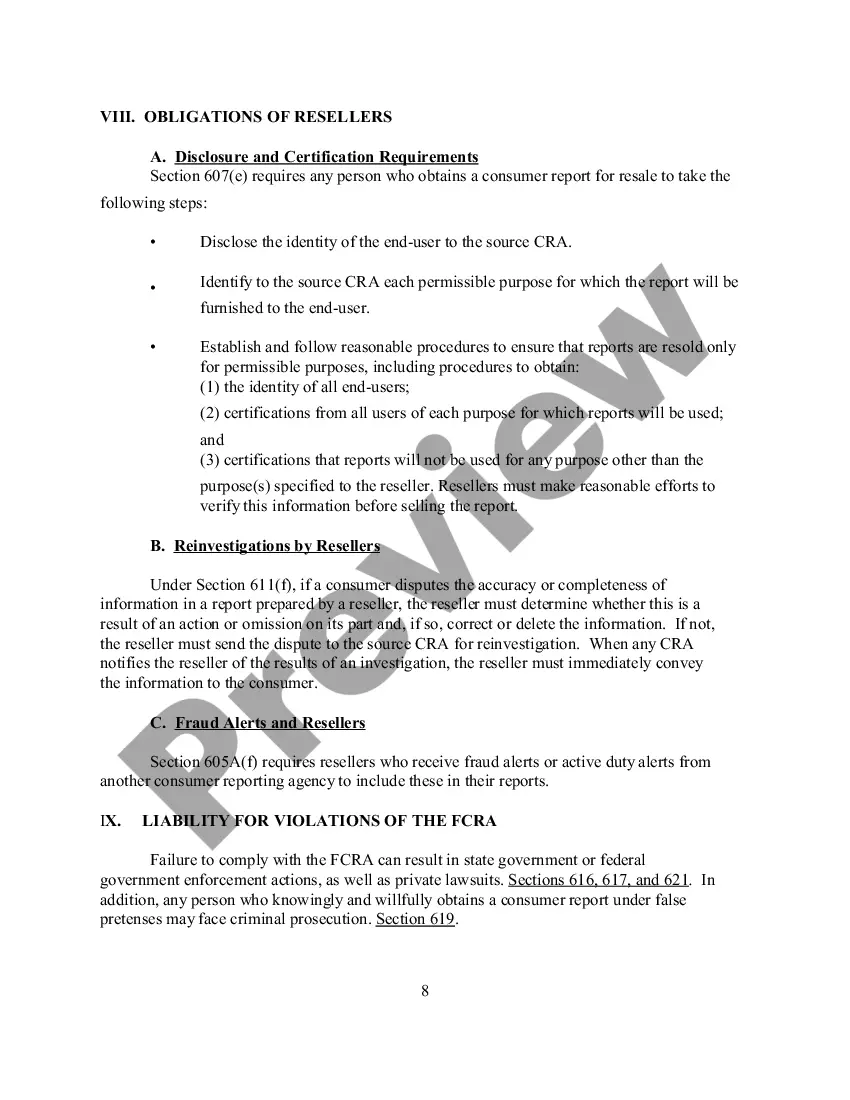
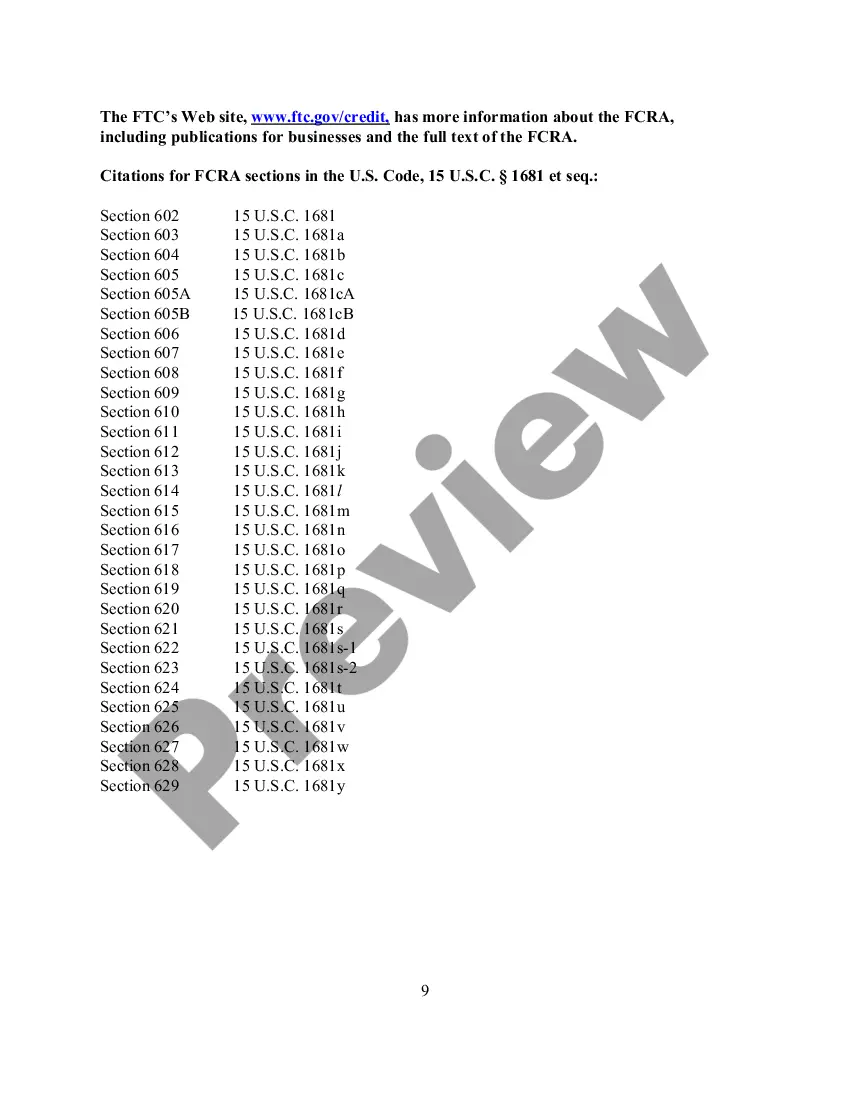
The Notice to Users of Consumer Reports - Obligations of Users Under the FCRA is a legal document that informs users of consumer reports about their responsibilities under the Fair Credit Reporting Act (FCRA). This form outlines specific obligations for individuals and entities that utilize consumer reports, ensuring that they comply with federal regulations designed to protect consumer privacy and rights. By understanding their duties, users can avoid legal pitfalls and ensure fair practices when handling consumer information.
What’s included in this form
- Permissible purposes for obtaining consumer reports.
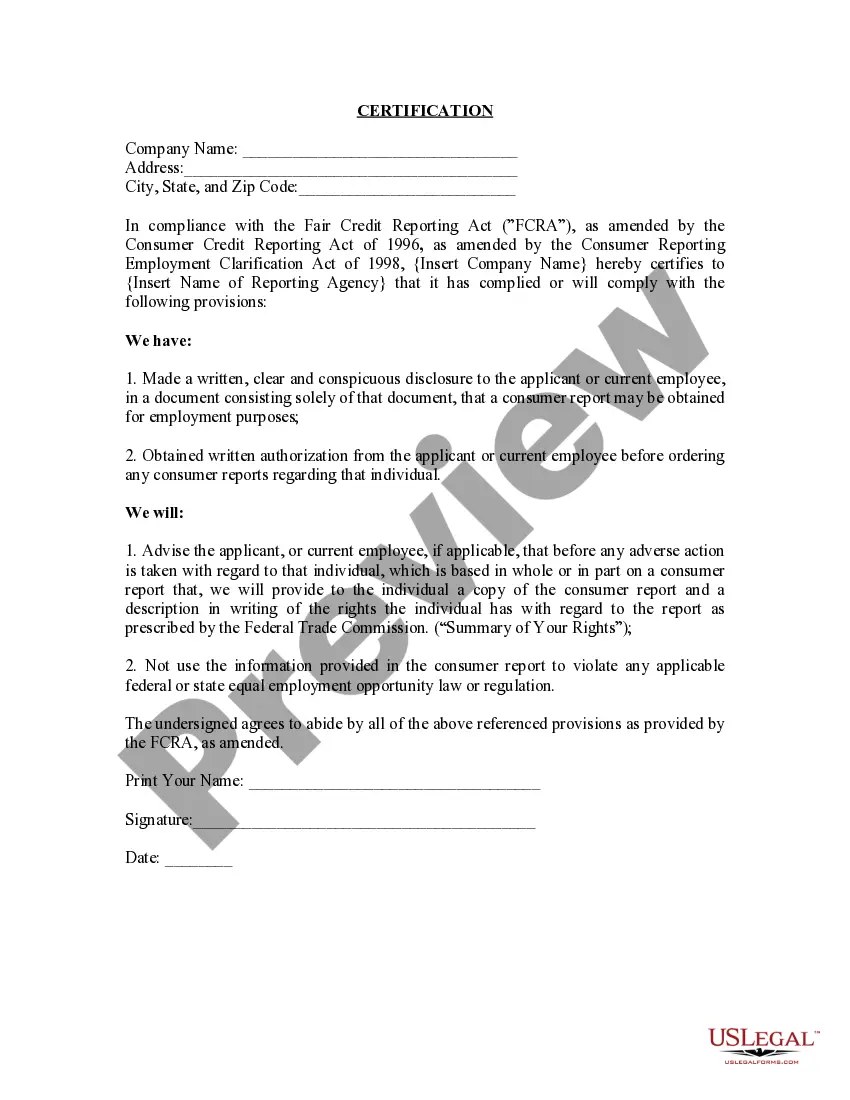
- Certification requirements for users of consumer reports.
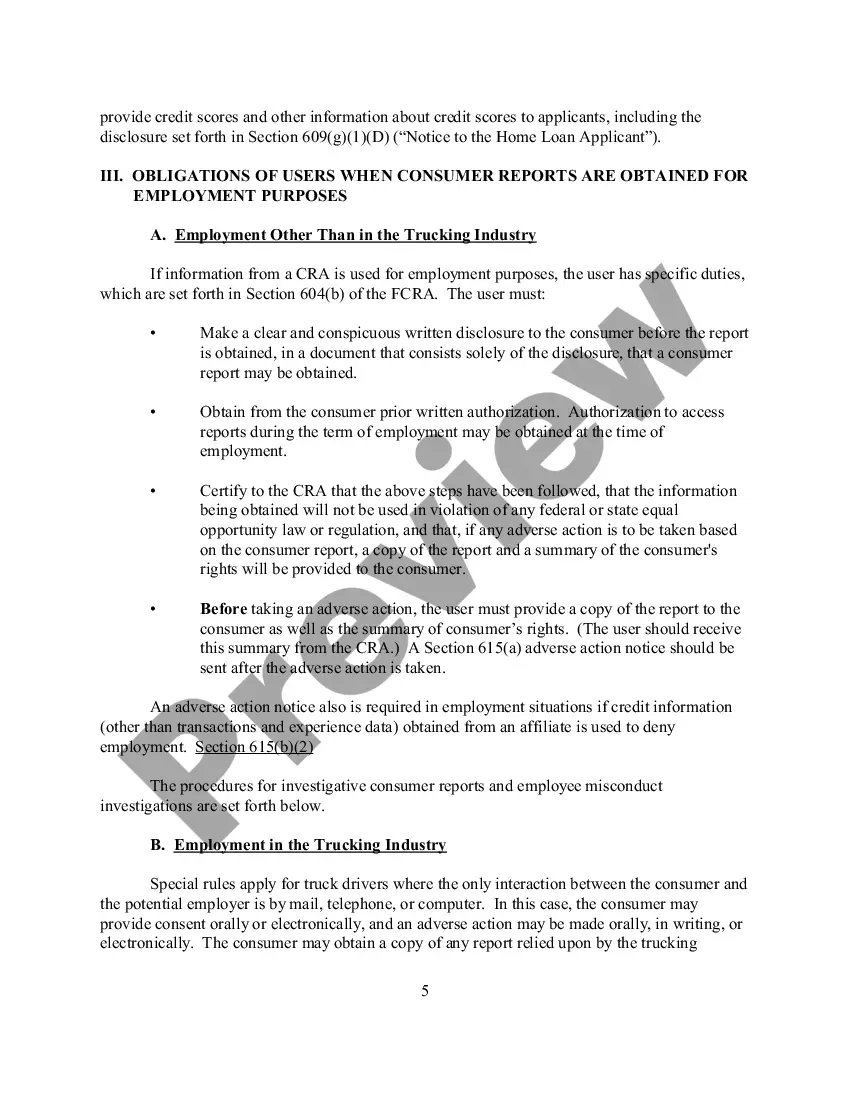
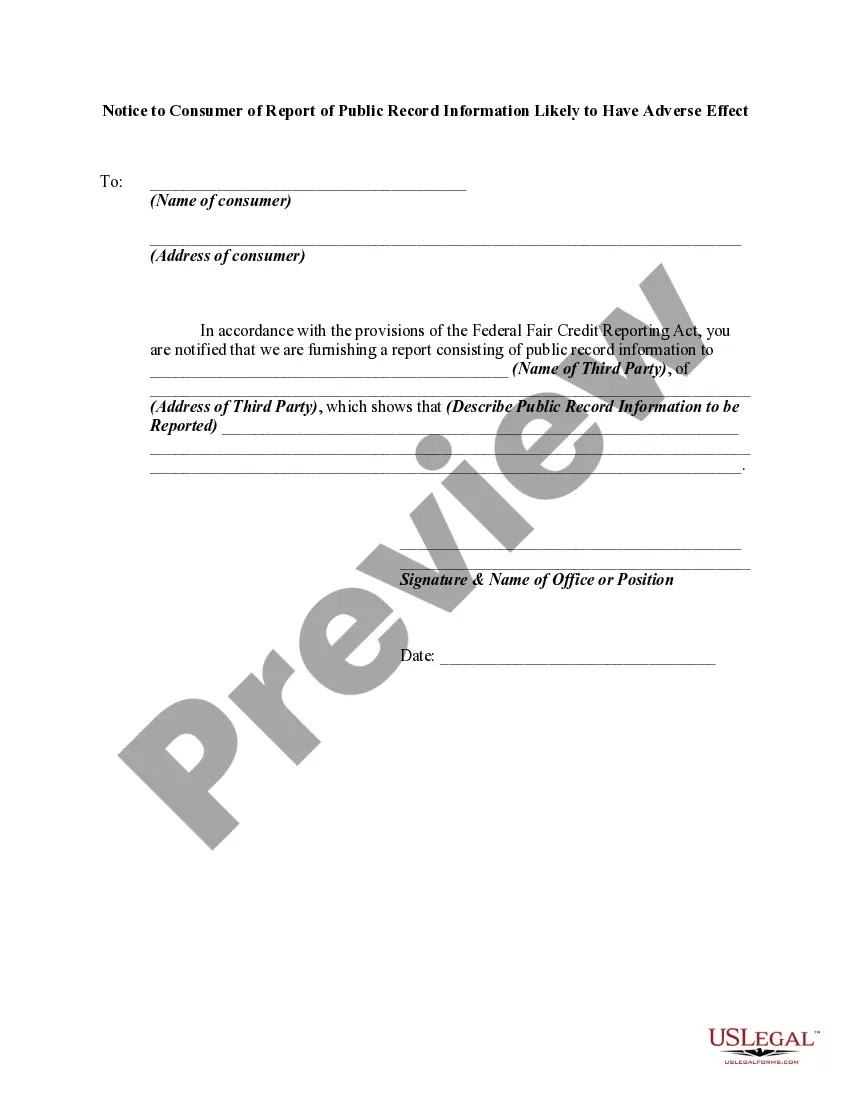
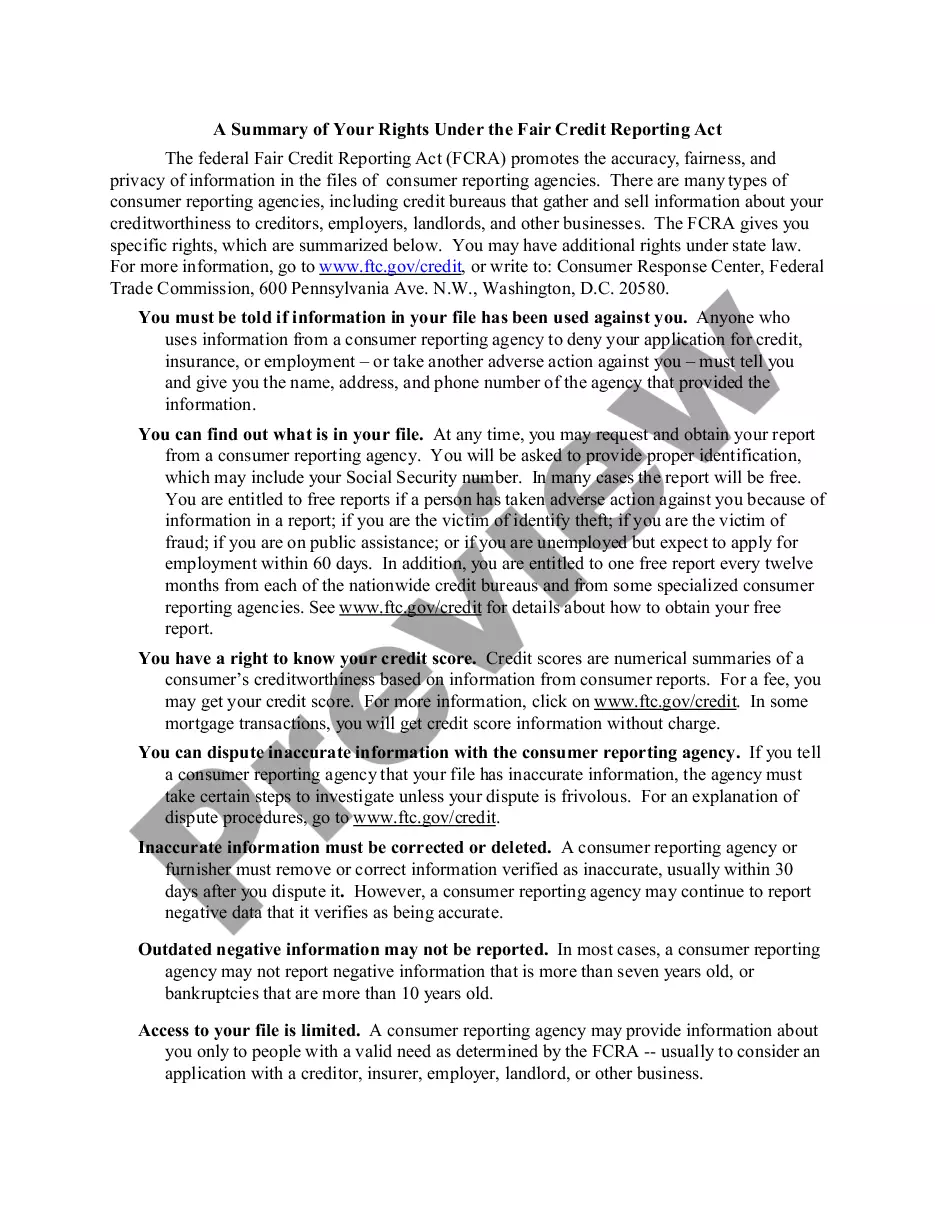
- Notification obligations when adverse actions are taken against consumers.
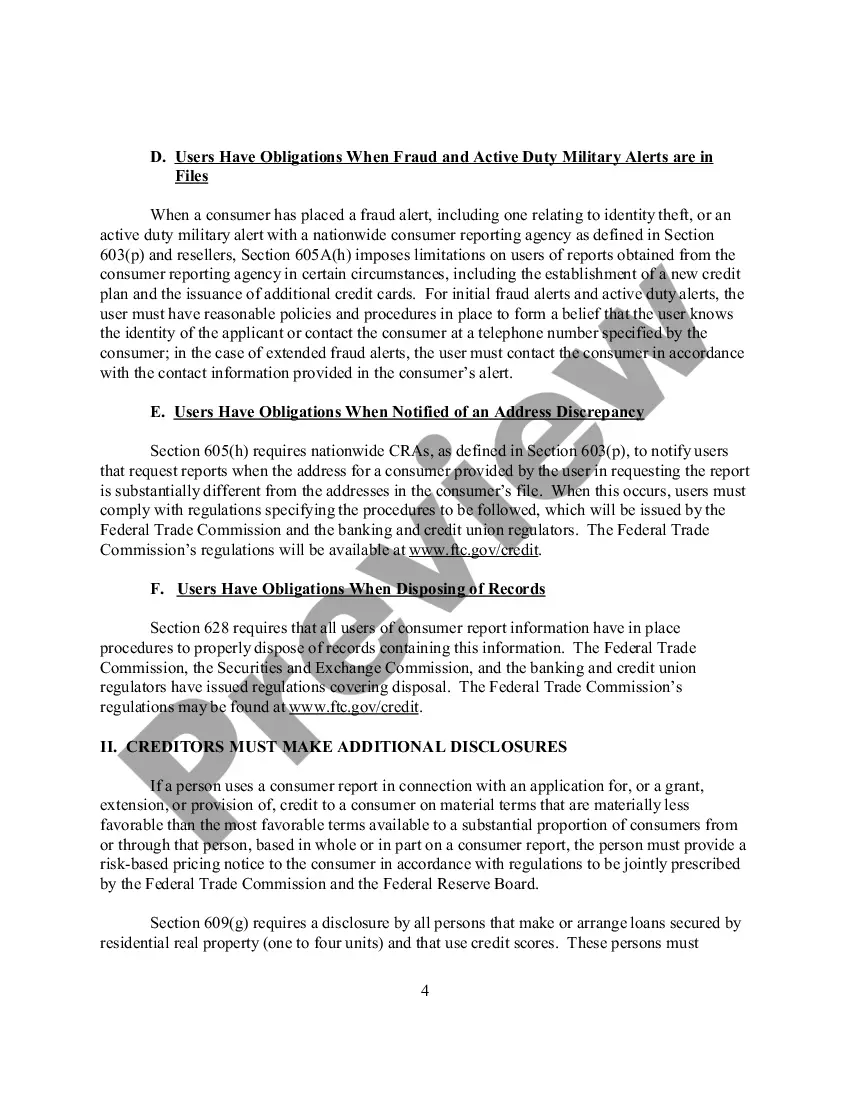
- Procedures regarding fraud and active duty military alerts.
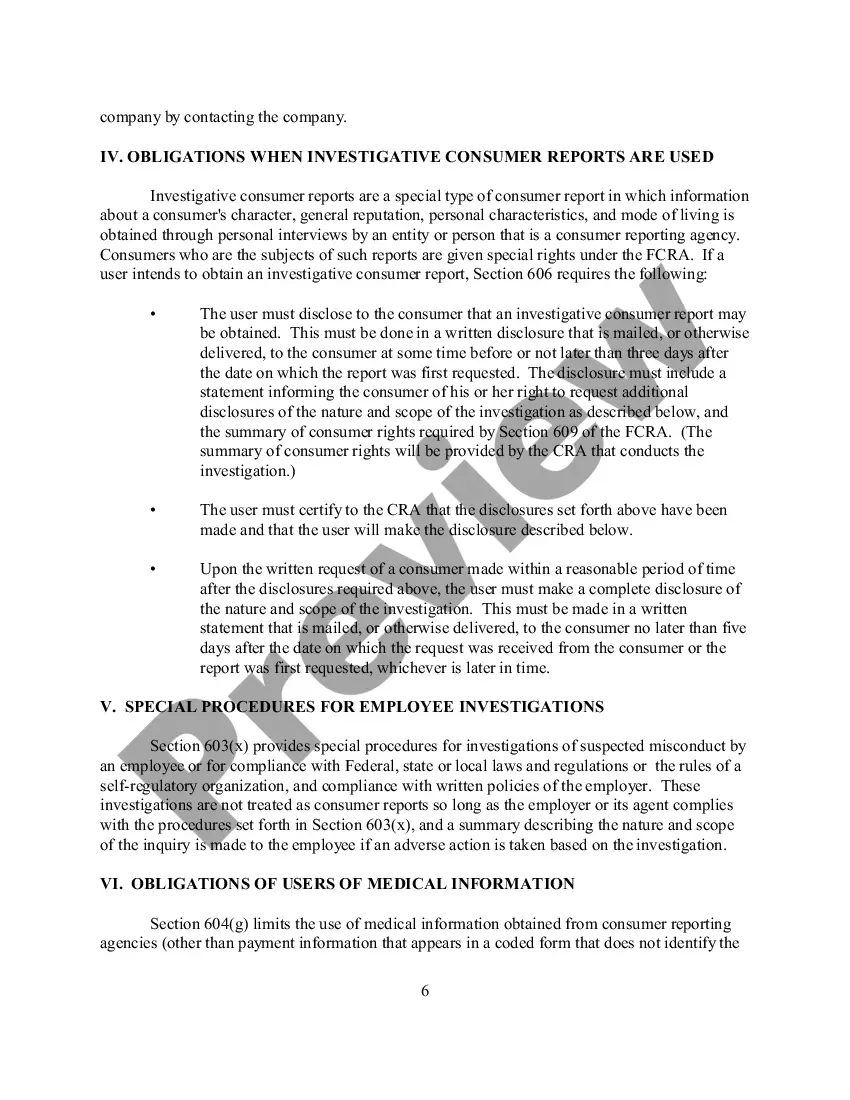
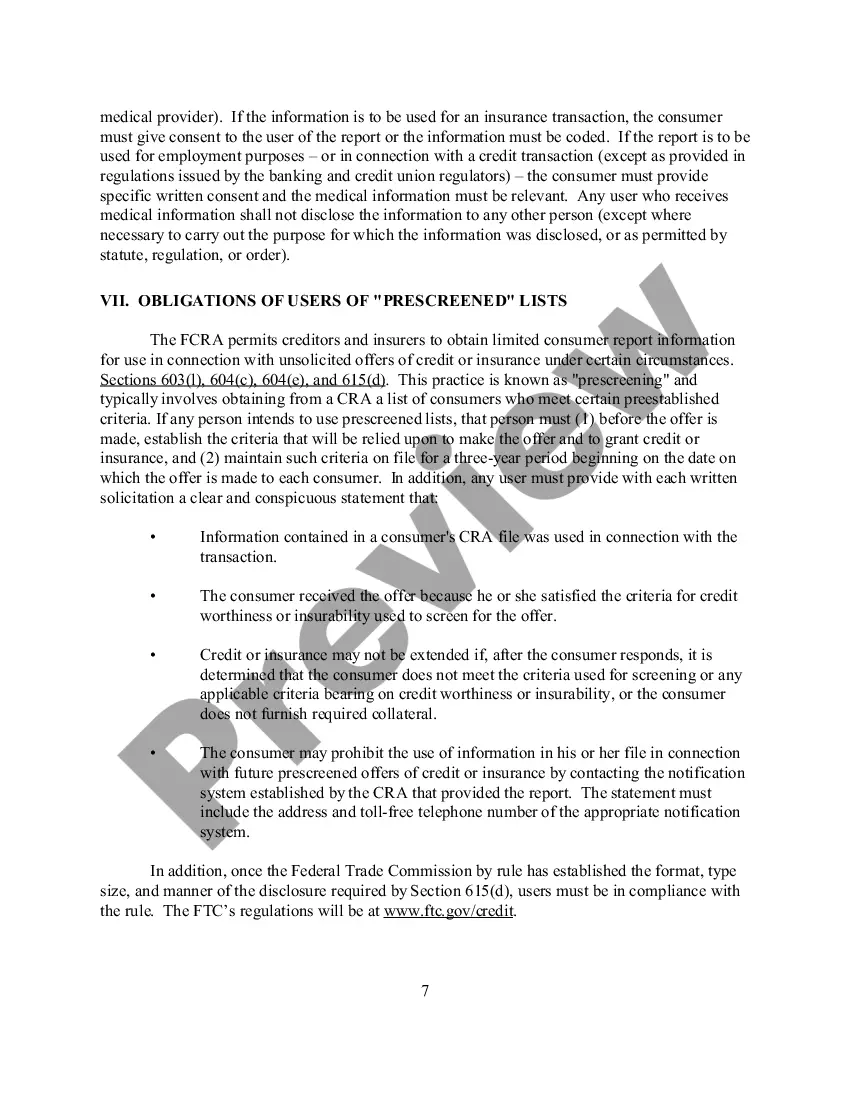
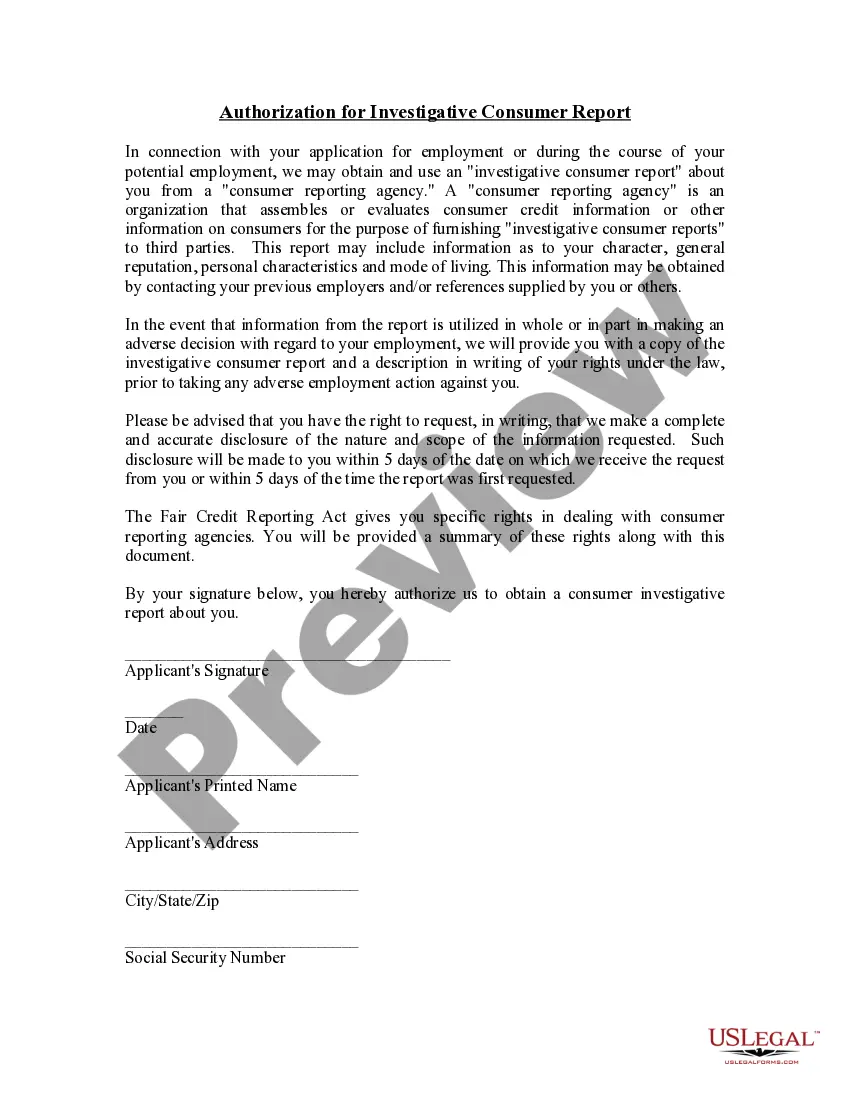
- Disclosure requirements for users of medical information.
When to use this form
This form should be used when an organization or individual plans to obtain consumer reports for specific purposes, such as credit evaluation, employment decisions, or insurance underwriting. It serves as a reminder of their legal obligations under the FCRA and helps ensure compliance before accessing consumer information. Users must provide this notice to ensure that they are operating within the law and respecting consumer rights.
Intended users of this form
- Creditors extending credit to consumers.
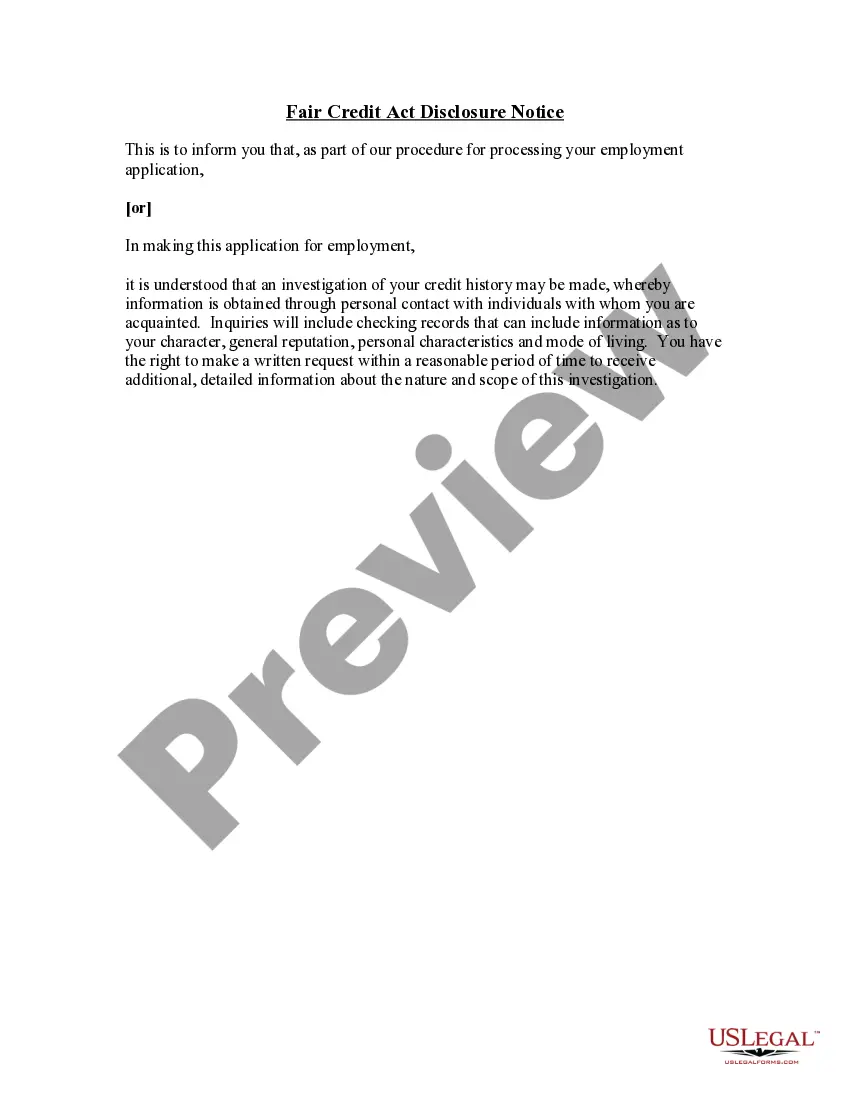
- Employers checking potential employeesâ backgrounds.
- Insurers evaluating applications for coverage.
- Any entity that utilizes consumer reports for permissible purposes.
- Businesses looking to ensure compliance with federal regulations related to consumer reports.
Steps to complete this form
- Review the permissible purposes under the FCRA to determine why you need a consumer report.
- Certify to the consumer reporting agency (CRA) that you have a legitimate purpose for obtaining the report.
- Inform consumers of any adverse actions you intend to take as a result of the report.
- Maintain documentation of your compliance with the FCRA regulations, including consumer notifications.
- Ensure proper disposal of consumer report information once it is no longer needed.
Is notarization required?
Notarization is generally not required for this form. However, certain states or situations might demand it. You can complete notarization online through US Legal Forms, powered by Notarize, using a verified video call available anytime.
Get your form ready online
Our built-in tools help you complete, sign, share, and store your documents in one place.
Make edits, fill in missing information, and update formatting in US Legal Forms—just like you would in MS Word.
Download a copy, print it, send it by email, or mail it via USPS—whatever works best for your next step.
Sign and collect signatures with our SignNow integration. Send to multiple recipients, set reminders, and more. Go Premium to unlock E-Sign.
If this form requires notarization, complete it online through a secure video call—no need to meet a notary in person or wait for an appointment.
We protect your documents and personal data by following strict security and privacy standards.

Make edits, fill in missing information, and update formatting in US Legal Forms—just like you would in MS Word.

Download a copy, print it, send it by email, or mail it via USPS—whatever works best for your next step.

Sign and collect signatures with our SignNow integration. Send to multiple recipients, set reminders, and more. Go Premium to unlock E-Sign.

If this form requires notarization, complete it online through a secure video call—no need to meet a notary in person or wait for an appointment.

We protect your documents and personal data by following strict security and privacy standards.
Common mistakes
- Failing to have a permissible purpose for obtaining consumer reports.
- Not notifying consumers of adverse actions taken based on their consumer report.
- Neglecting to maintain proper records or certifications required under the FCRA.
- Disregarding state-specific laws in addition to federal regulations.
Why complete this form online
- Convenient access to legally compliant templates optimized for user needs.
- Editable forms that can be tailored to specific business requirements.
- Reliable updates to ensure compliance with the latest regulations.
Legal use & context
- Providing this notice is a legal requirement under the FCRA.
- Failure to comply may result in enforcement actions or lawsuits.
- The form helps users protect consumer rights and potential legal liabilities.
Summary of main points
- This form is essential for all users of consumer reports to ensure compliance with the FCRA.
- Understanding the obligations detailed in this notice is crucial for lawful consumer report usage.
- Keeping consumer information private and secure is not only a legal obligation but also a best practice.
Looking for another form?

Form popularity
FAQ
Two federal laws the Equal Credit Opportunity Act (ECOA), as implemented by Regulation B, and the Fair Credit Reporting Act (FCRA) reflect Congress's determination that consumers and businesses applying for credit should receive notice of the reasons a creditor took adverse action on the application or on an
The statement that a dispute meets the requirements of the FCRA means both that the consumer filed a formal dispute, and that the CRA has issued a formal Notice of Results of Reinvestigation finding the asserted inaccuracy has been verified as accurate.
A dispute notice from a consumer must include: 1) Sufficient information to identify the account or other relationship that is in dispute, such as an account number and the name, address, and telephone number of the consumer; 2) The specific information that the consumer is disputing and an explanation of the basis for
An adverse action notice is to inform you that you have been denied credit, employment, insurance, or other benefits based on information in a credit report. The notice should indicate which credit reporting agency was used, and how to contact them.
The Fair Credit Reporting Act (FCRA) is a federal law that helps to ensure the accuracy, fairness and privacy of the information in consumer credit bureau files. The law regulates the way credit reporting agencies can collect, access, use and share the data they collect in your consumer reports.
The FCRA defines a consumer report as any written or oral communication that meets all of the following conditions:220e It bears on a consumer's creditworthiness, credit standing, credit capacity, character, general reputation, personal characteristics, or mode of living.
File a Dispute. You can file your dispute through a written letter to the CRA (it's free to submit) or you can look up the CRA's online filing instructions. Wait. Once you've notified the CRA, it has 30 business days to investigate your claims. Get the Results. Your Report is Corrected. Complain.
Notified the applicant or employee and got their permission to get a consumer report; complied with all of the FCRA requirements; and.
Common violations of the FCRA include: Creditors give reporting agencies inaccurate financial information about you. Reporting agencies mixing up one person's information with another's because of similar (or same) last name or social security number. Agencies fail to follow guidelines for handling disputes.