Employee Confidentiality and Assignment of Inventions Agreement
What this document covers
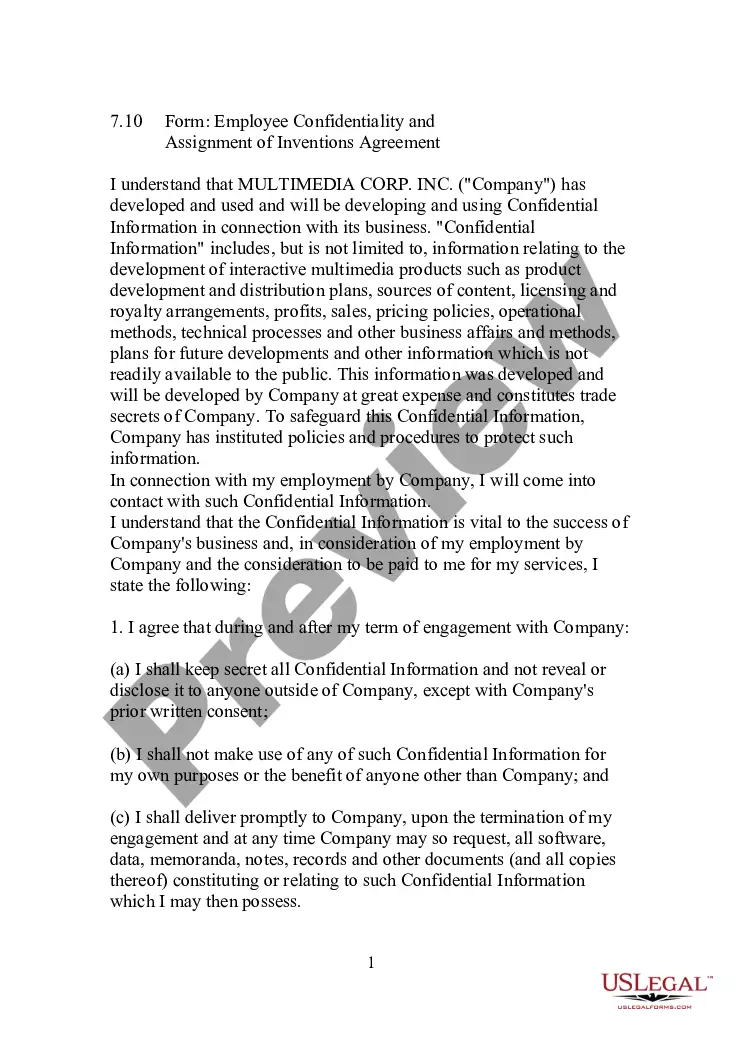
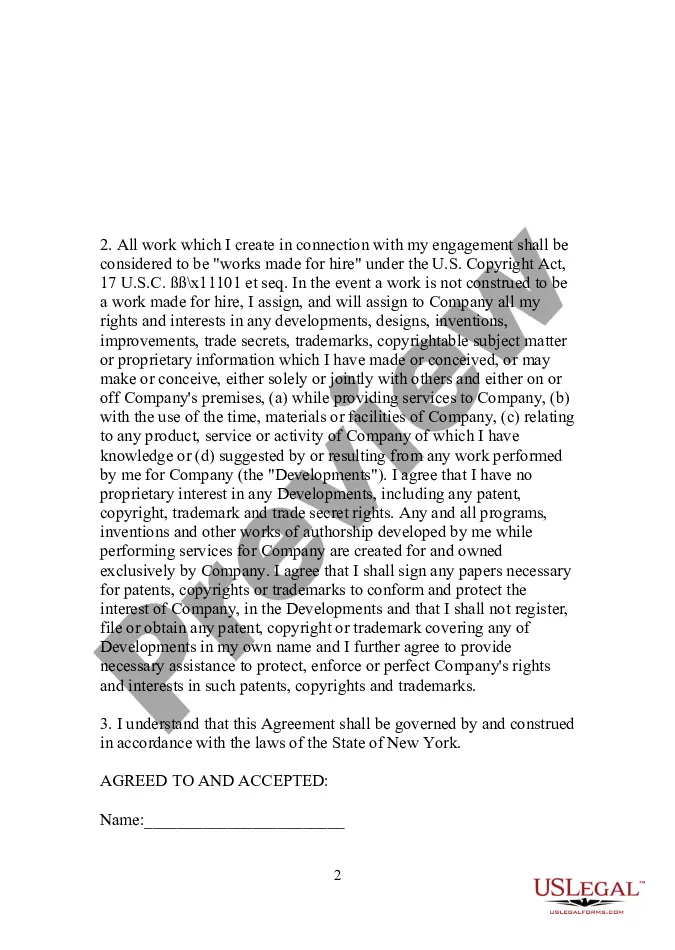
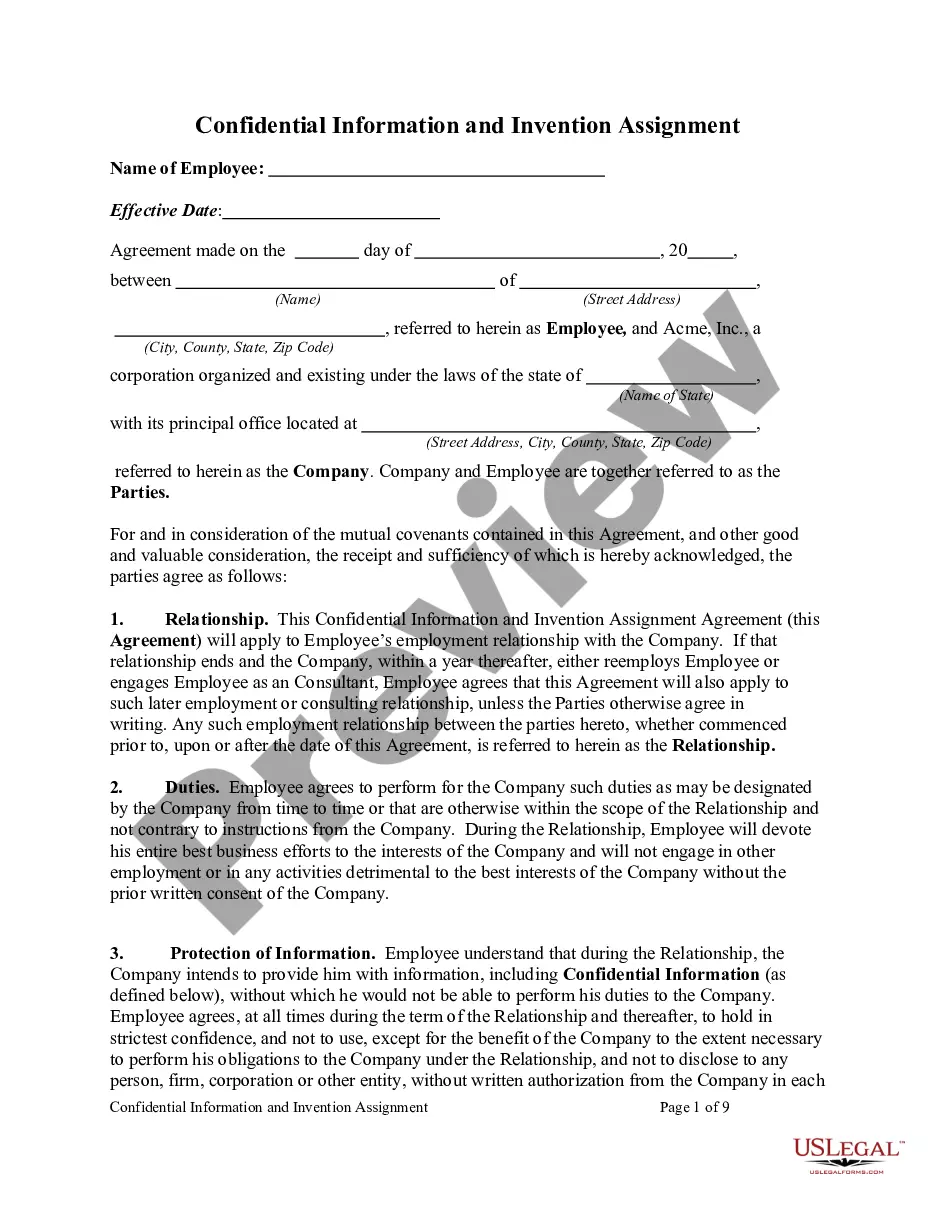
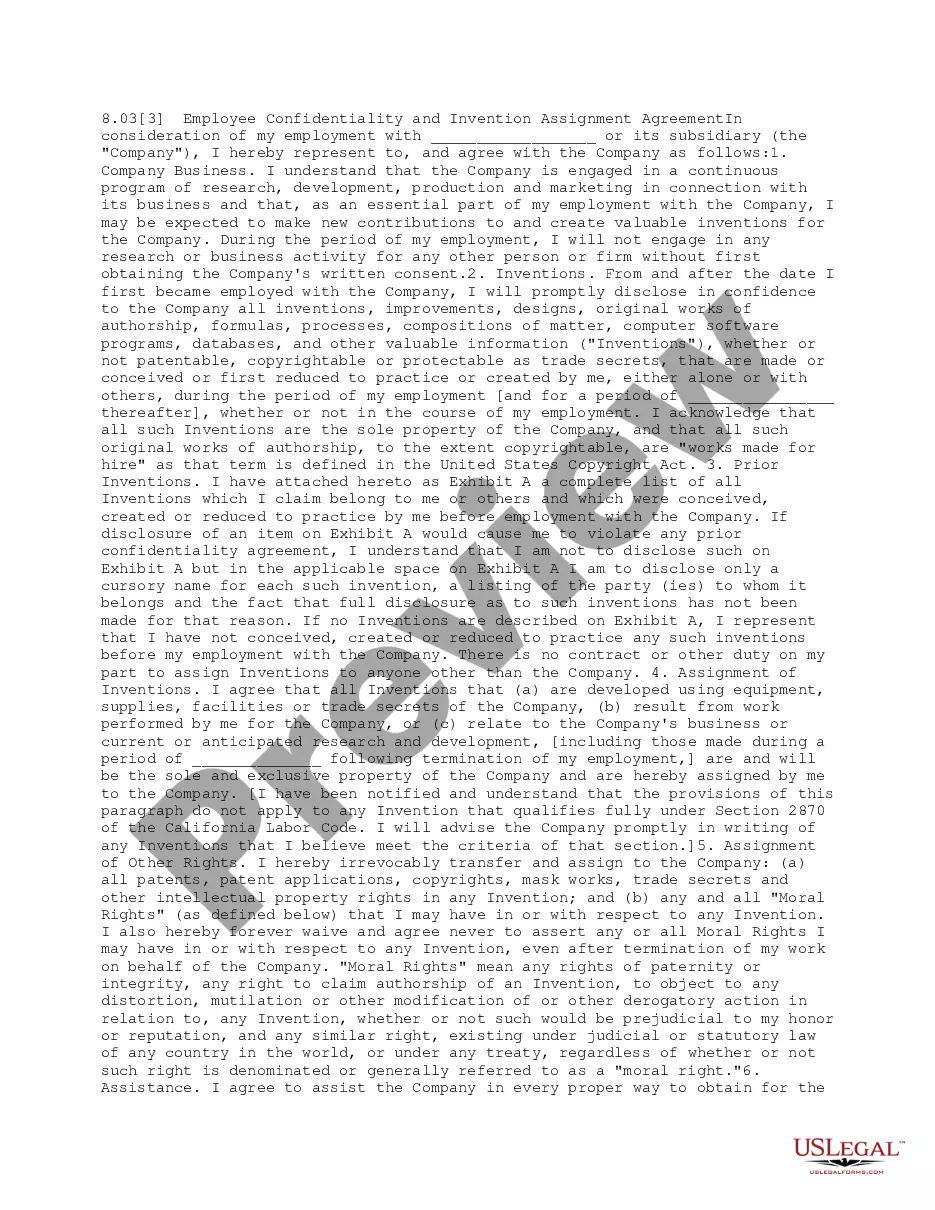
The Employee Confidentiality and Assignment of Inventions Agreement is a legal document that establishes the terms under which an employee agrees to protect the company's confidential information and assign any inventions created during their employment. This form differs from general confidentiality agreements by specifically addressing ownership rights over intellectual property developed by the employee, ensuring that all creations related to the company's business are legally owned by the company.
Form components explained
- Definition of Confidential Information: Outlines what constitutes confidential information for the company.
- Non-disclosure obligations: Details the employee's responsibilities to keep confidential information secret both during and after employment.
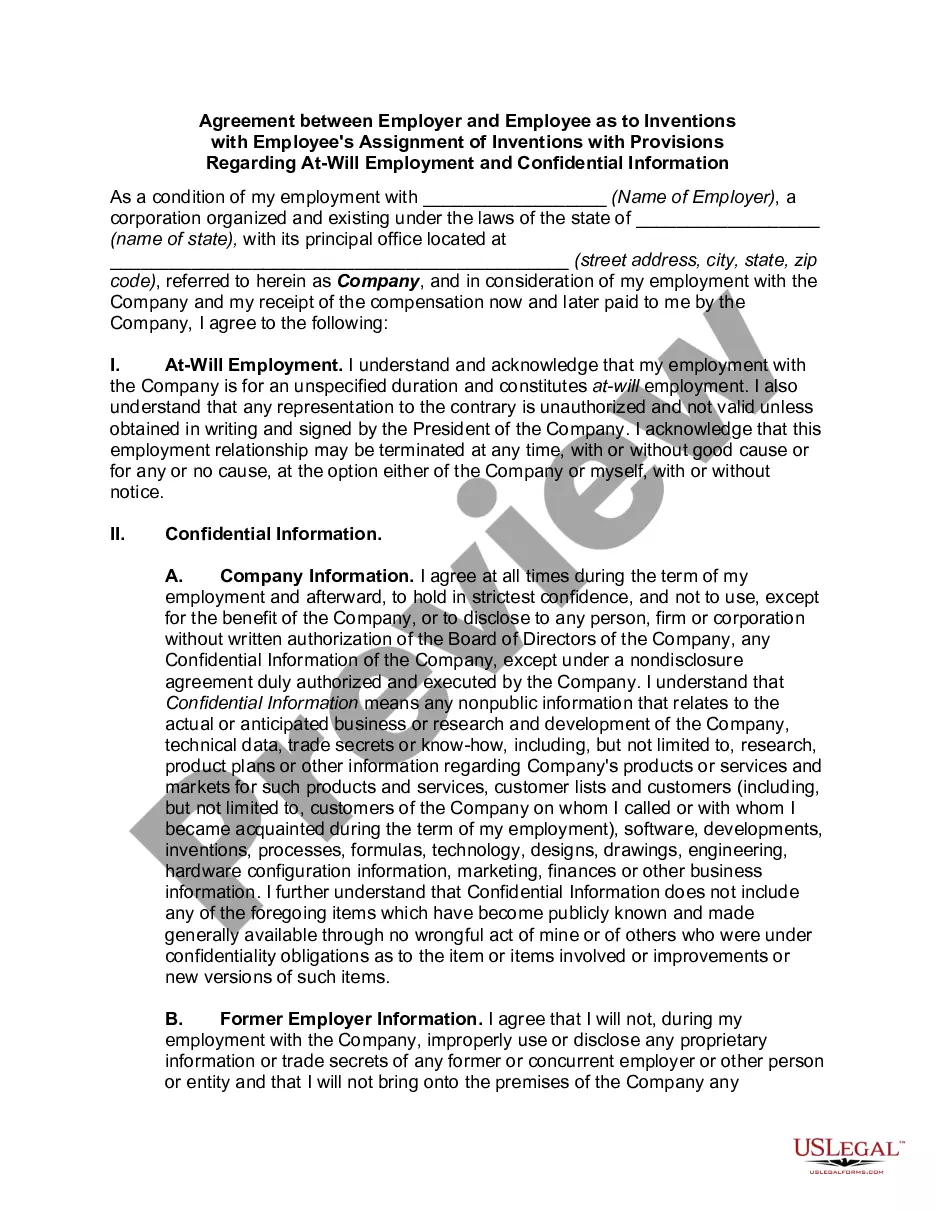
- Assignment of inventions clause: States that any work created by the employee is owned by the company and clarifies the rights regarding intellectual property.
- Governing law provision: Specifies that the agreement is governed by the laws of the State of New York.
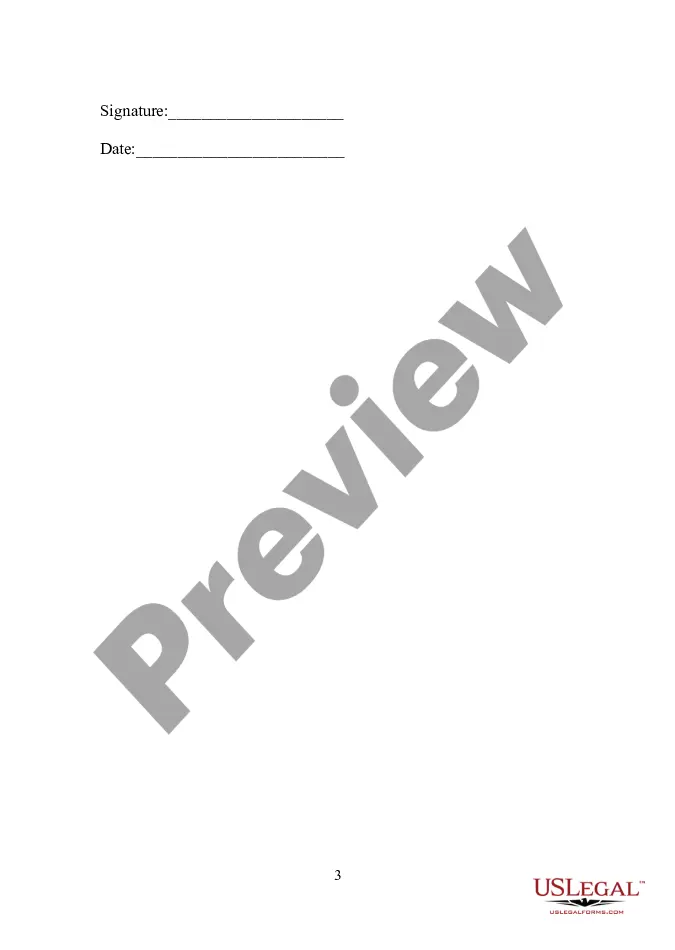
- Signatory section: Provides space for the employee's name, signature, and date to validate the agreement.
Common use cases
This form should be used when hiring new employees who will have access to sensitive company information or when current employees will be engaged in projects that involve the development of new intellectual property. It is essential for protecting trade secrets and ensuring that any inventions created during employment are rightfully owned by the company.
Who can use this document
- Employers looking to protect their business's confidential information and intellectual property.
- Employees engaged in creative or innovative work that could lead to the development of new inventions or products.
- Human resource departments responsible for onboarding and legal compliance.
Completing this form step by step
- Identify the parties: Enter the full legal name of the company and the employee.
- Define Confidential Information: Review and ensure all sensitive information relevant to your business is included in the agreement.
- Review non-disclosure obligations: Ensure that the employee understands their responsibilities regarding confidential information.
- Fill out the assignment of inventions section: Clearly outline the rights being assigned to the company regarding any intellectual property created.
- Obtain signatures: Ensure that both the company representative and the employee sign and date the agreement.
Does this form need to be notarized?
This form does not typically require notarization unless specified by local law. However, it is recommended to have a witness during the signing process to enhance its enforceability.
Get your form ready online
Our built-in tools help you complete, sign, share, and store your documents in one place.
Make edits, fill in missing information, and update formatting in US Legal Forms—just like you would in MS Word.
Download a copy, print it, send it by email, or mail it via USPS—whatever works best for your next step.
Sign and collect signatures with our SignNow integration. Send to multiple recipients, set reminders, and more. Go Premium to unlock E-Sign.
If this form requires notarization, complete it online through a secure video call—no need to meet a notary in person or wait for an appointment.
We protect your documents and personal data by following strict security and privacy standards.

Make edits, fill in missing information, and update formatting in US Legal Forms—just like you would in MS Word.

Download a copy, print it, send it by email, or mail it via USPS—whatever works best for your next step.

Sign and collect signatures with our SignNow integration. Send to multiple recipients, set reminders, and more. Go Premium to unlock E-Sign.

If this form requires notarization, complete it online through a secure video call—no need to meet a notary in person or wait for an appointment.

We protect your documents and personal data by following strict security and privacy standards.
Common mistakes to avoid
- Failing to clearly define what constitutes "Confidential Information."
- Not including all relevant parties in the agreement.
- Overlooking dates and signatures, which are crucial for legal validity.
- Neglecting to communicate the terms to the employee prior to signing.
Why use this form online
- Convenient download access allows for immediate use and editing.
- Forms are drafted by licensed attorneys, ensuring legal compliance.
- The ability to customize the form to fit specific business needs without extensive legal fees.
- Time-saving as it can be filled out and signed from anywhere.
Legal use & context
- The agreement is enforceable under state law, provided it adheres to applicable legal standards.
- Breach of this agreement may result in legal repercussions, including potential lawsuits for damages.
Key takeaways
- The Employee Confidentiality and Assignment of Inventions Agreement protects a company's sensitive information and intellectual property.
- It is crucial for employers who want to safeguard their competitive advantage.
- Proper completion and understanding of the agreement help avoid legal disputes in the future.
Looking for another form?
Form popularity
FAQ
Employee confidentiality agreements are generally one sided, unless you are also obtaining confidential information from the employee.Each state sets its own law regarding confidentiality agreement enforcement. Check with your state for more information.
PIIA is the acronym for the most common name for these agreements, ''proprietary information and invention assignment'' agreements.The agreement also requires that the employee agree that whatever the employee creates, discovers, develops or invents while employed with the company is owned by the company.
Employees can void any non-competes that require a court outside of California to decide disputes. In other words, the company cannot enforce an employee's non-compete agreement in a state that allows these agreements. Employees are able to void contracts with illegal non-compete terms.
To prevent employees from revealing sensitive information that could jeopardize your business, you might have them sign an employee confidentiality agreement. Businesses use employee confidentiality agreements to protect their innovative ideas, effective processes, unique products, or customer information.
Personnel information is confidential, and information in an employee's file, such as social security number, salary, health records, disciplinary actions and termination reason can't be discussed with other employees. Most of this information can't be discussed with potential employers who call for a reference.
Insurance and benefit enrollment forms and claims information. Medical exam information. Workers' compensation records. FMLA leave certifications and medical documentation; leave information (e.g. dates)
A confidentiality agreement is a written legal contract between an employer and an employee. The confidentiality agreement lays out binding terms and conditions that prohibit the employee from disclosing company confidential and proprietary information.
To the extent that the Company is not considered the first owner of the Intellectual Property Rights created by the Employee, the copyright and all related rights, title and interest in all such Company Intellectual Property is irrevocably assigned by the Employee to the Company in consideration of the Employment which
Confidentiality agreements usually allow the recipient to disclose confidential information if required to do so by court order or other legal process.