Sample Stock Purchase Agreement between Humana, Inc., Physician Corporation of America and Folksamerica Holding Company, Inc
Understanding this form
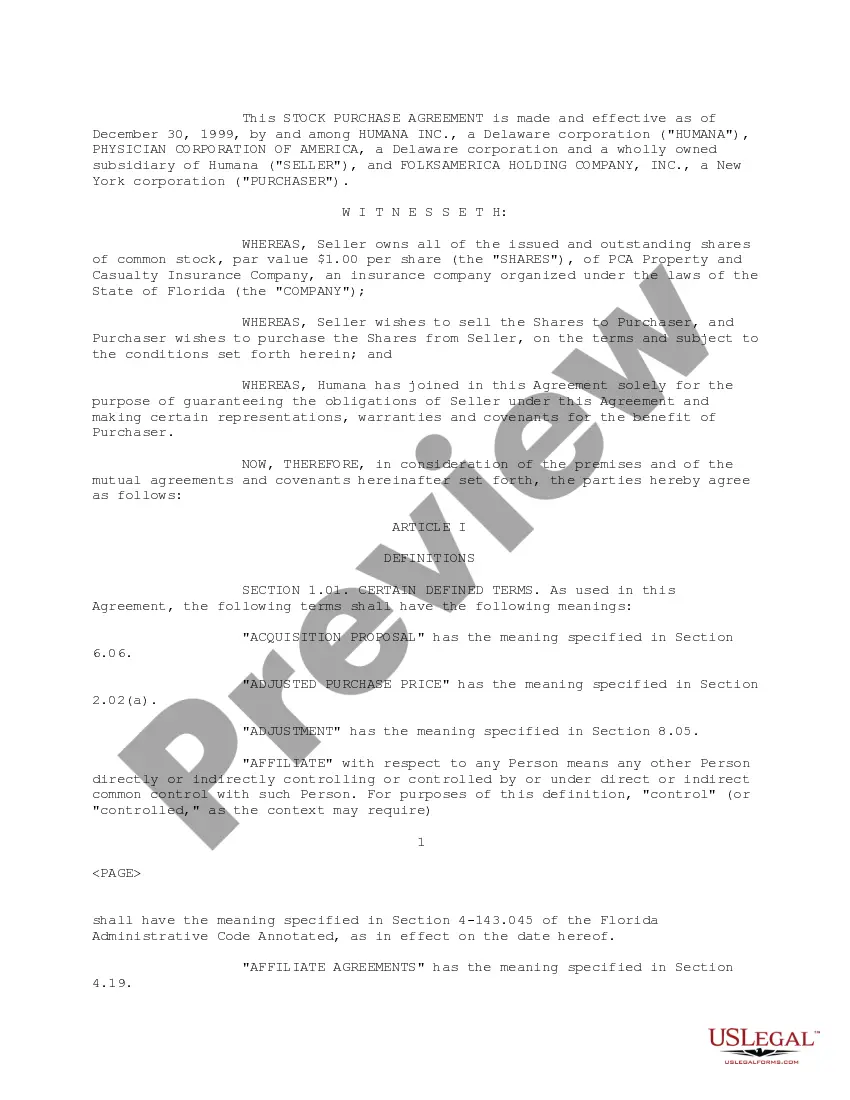
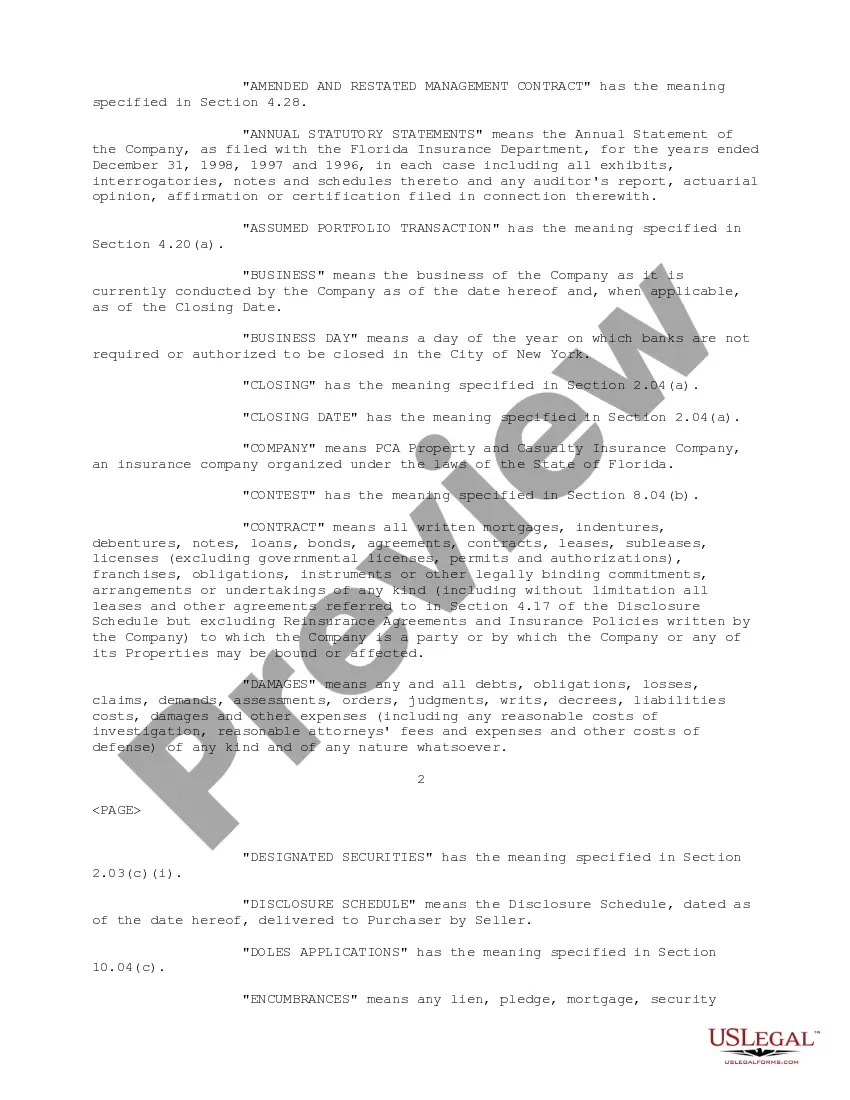
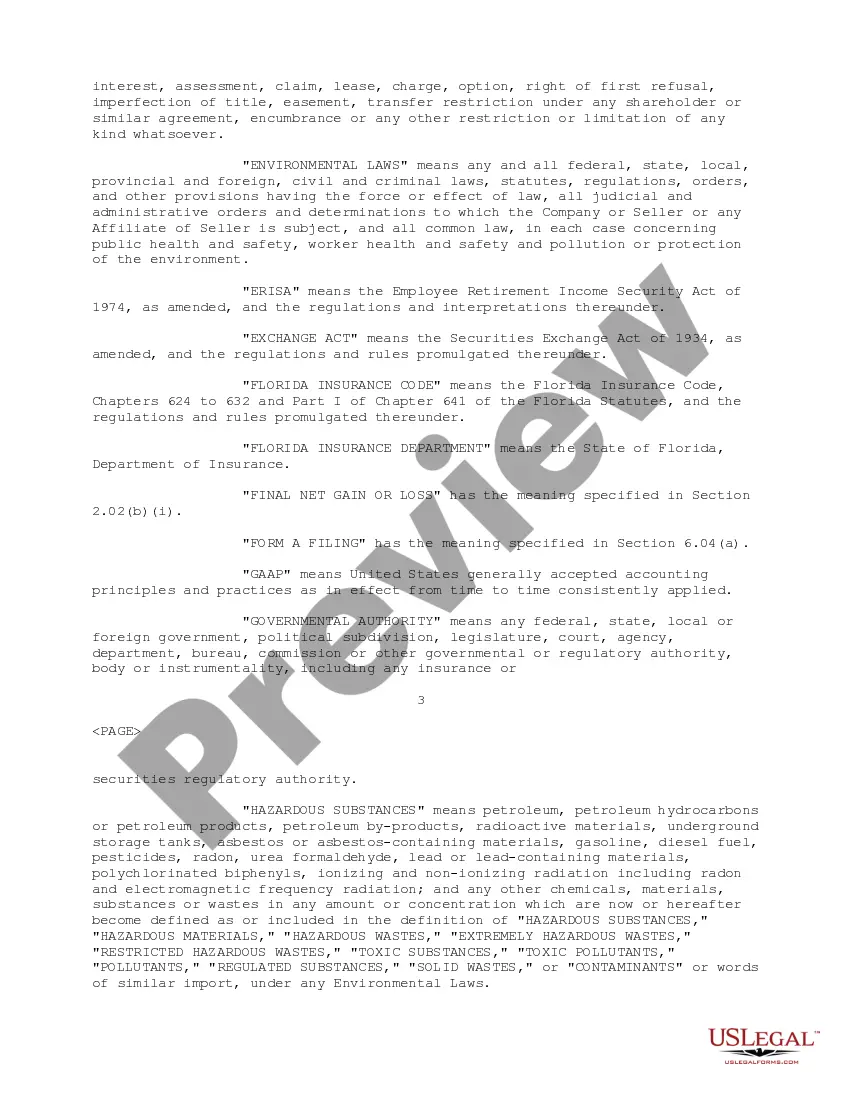
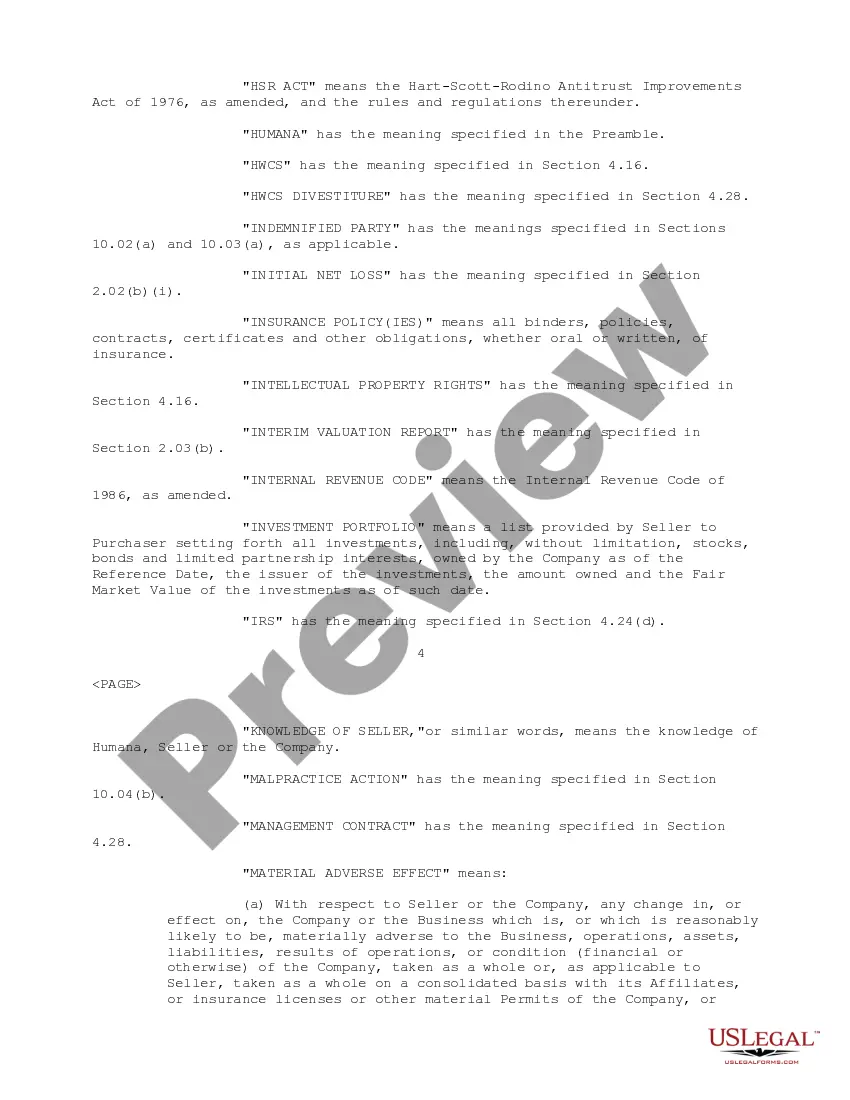
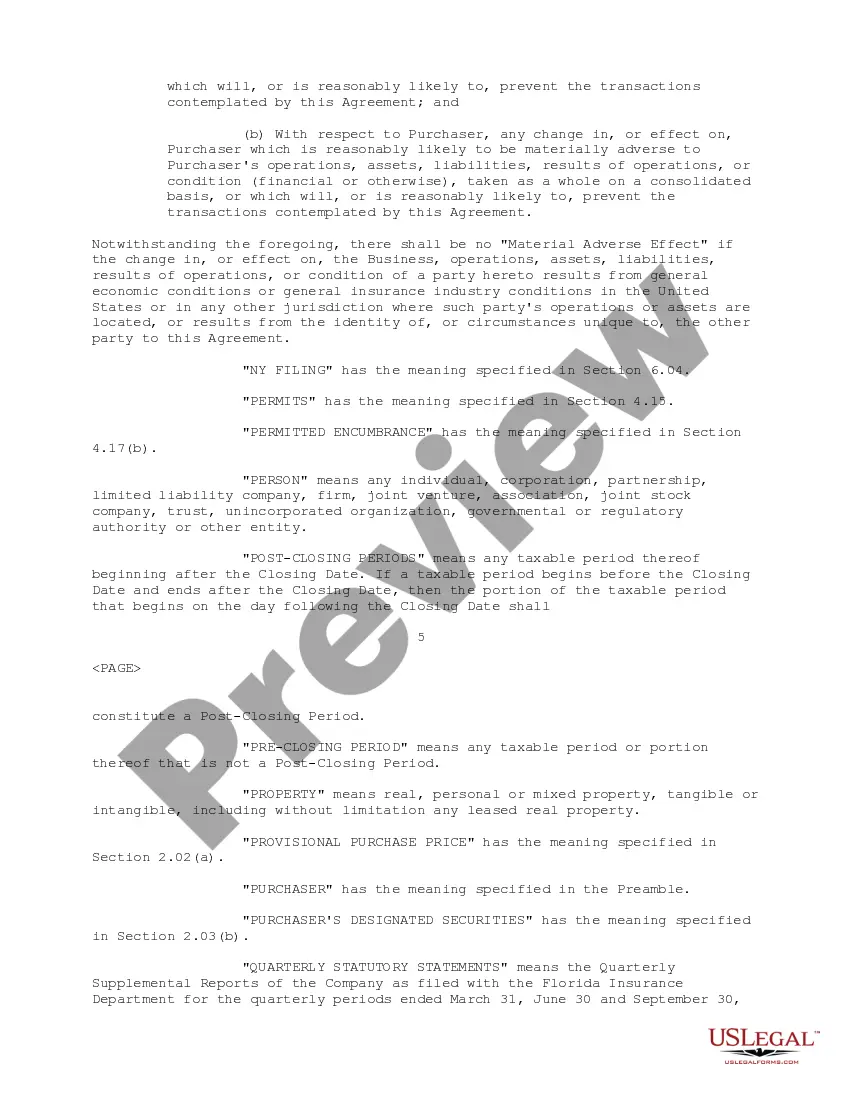
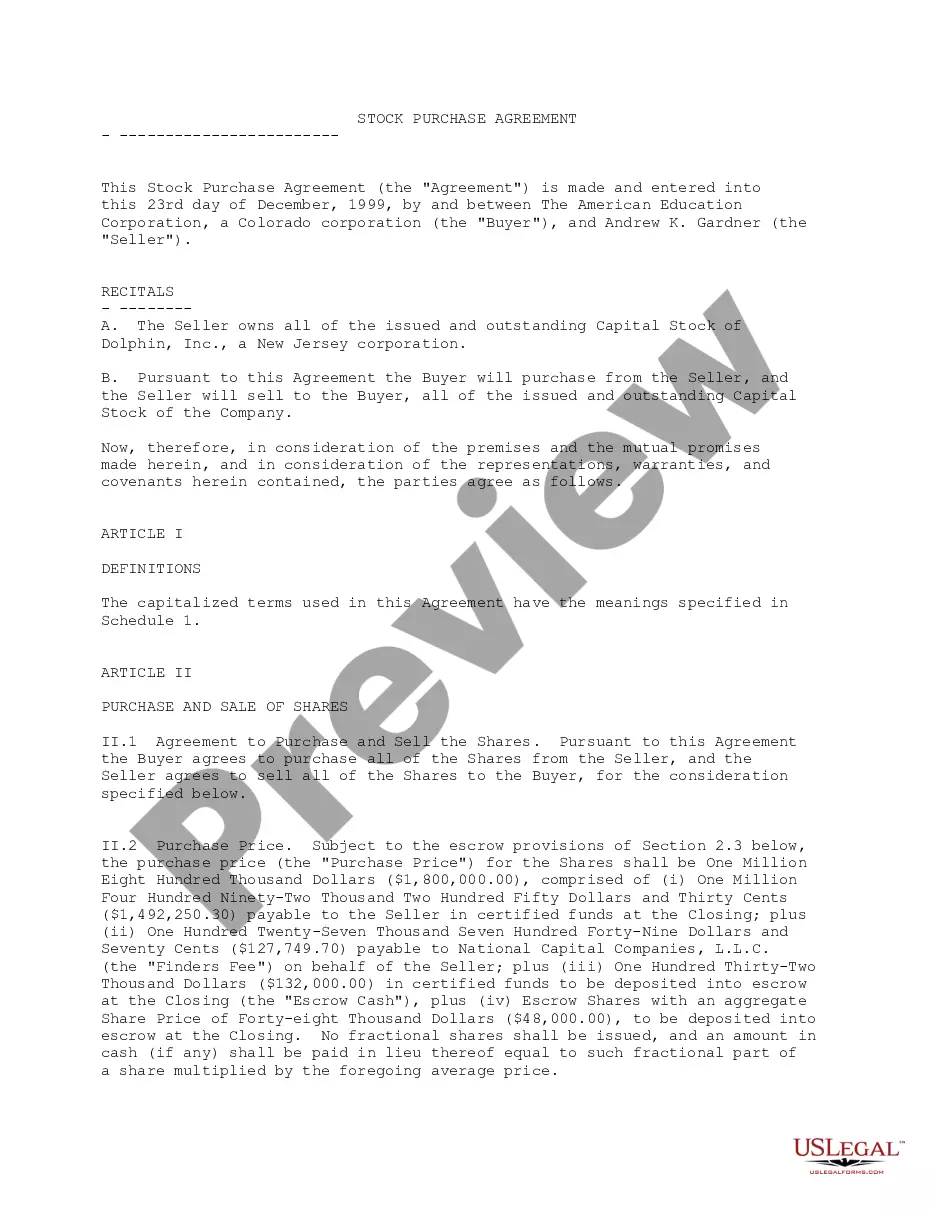
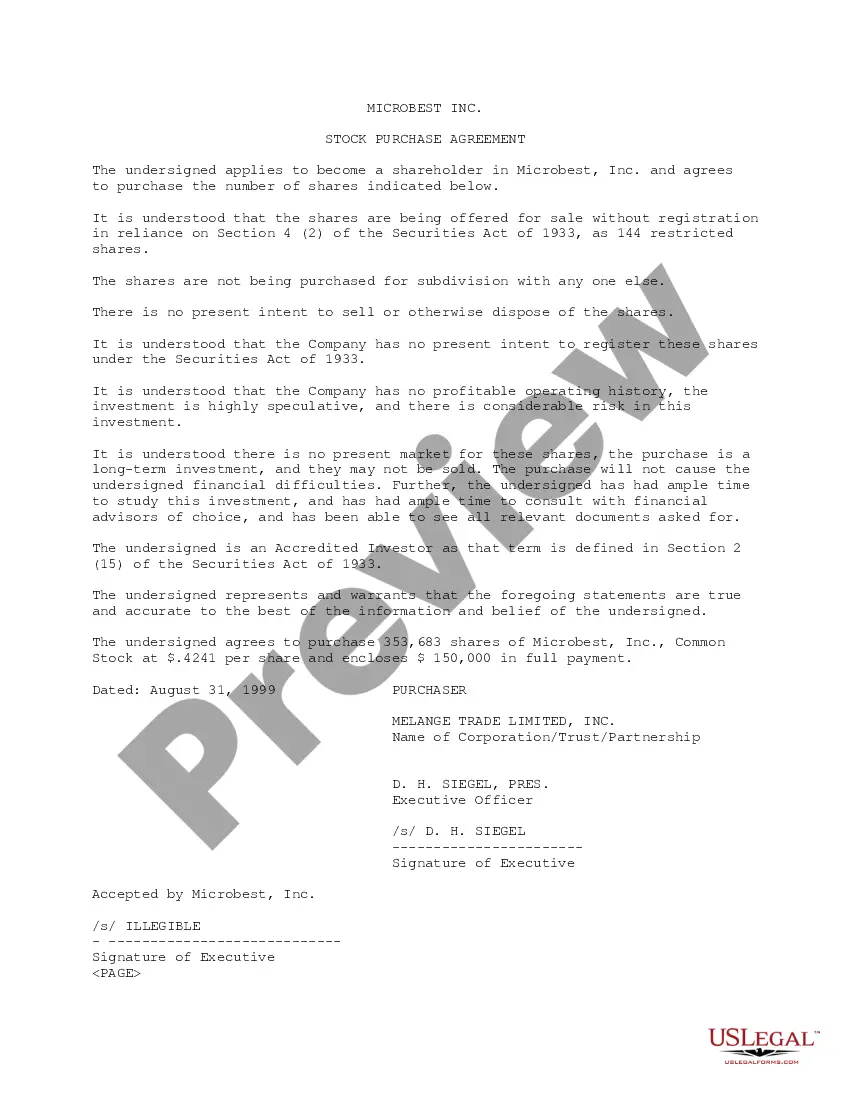
The Sample Stock Purchase Agreement establishes the terms regarding the sale of shares between Humana, Inc., Physician Corporation of America, and Folksamerica Holding Company, Inc. This legal document outlines the obligations of each party concerning the transfer of ownership, making it essential for ensuring compliance and protecting the rights of involved parties. Unlike simpler agreements, this stock purchase agreement is comprehensive and includes details on pricing, conditions of sale, representations, warranties, and indemnities specific to shareholders of corporations.
Key parts of this document
- Definitions of key terms utilized in the agreement.
- Purchase and sale of shares including conditions, pricing, and adjustments.
- Representations and warranties concerning each party's authority and business standing.
- Indemnification clauses addressing liability that may arise from the agreement.
- Conditions to closing that must be satisfied before finalizing the transaction.








When to use this document
This form is typically used when two or more parties are engaged in a corporate transaction involving the sale and purchase of stock, especially prominent in scenarios like complete acquisitions, mergers, or significant investment transactions in which the details surrounding liability and obligations need to be clearly defined.
Who this form is for
Intended Audience:
- Corporations looking to formally outline the sale of stock.
- Shareholders seeking a definitive agreement for share transactions.
- Legal professionals handling corporate merger and acquisition deals.
- Investors wishing to protect their interests during a share transaction.
Steps to complete this form
Steps to Complete the Stock Purchase Agreement:
- Identify and list all parties involved in the agreement, including full legal names and addresses.
- Clearly define the shares being sold, including the type and amount of stock.
- Determine and document the purchase price along with any adjustments that may apply.
- Review and verify all representations and warranties required from each party.
- Obtain necessary consents from any third parties if required by state law or corporate policy.
- Ensure all signatures are collected and dated properly to finalize the agreement.
Does this form need to be notarized?
This form does not typically require notarization unless specified by local law.
Get your form ready online
Our built-in tools help you complete, sign, share, and store your documents in one place.
Make edits, fill in missing information, and update formatting in US Legal Forms—just like you would in MS Word.
Download a copy, print it, send it by email, or mail it via USPS—whatever works best for your next step.
Sign and collect signatures with our SignNow integration. Send to multiple recipients, set reminders, and more. Go Premium to unlock E-Sign.
If this form requires notarization, complete it online through a secure video call—no need to meet a notary in person or wait for an appointment.
We protect your documents and personal data by following strict security and privacy standards.

Make edits, fill in missing information, and update formatting in US Legal Forms—just like you would in MS Word.

Download a copy, print it, send it by email, or mail it via USPS—whatever works best for your next step.

Sign and collect signatures with our SignNow integration. Send to multiple recipients, set reminders, and more. Go Premium to unlock E-Sign.

If this form requires notarization, complete it online through a secure video call—no need to meet a notary in person or wait for an appointment.

We protect your documents and personal data by following strict security and privacy standards.
Avoid these common issues
Common Mistakes:
- Failing to include all required signatures on the agreement.
- Omitting necessary disclosures related to the company's financial status.
- Incorrectly outlining the purchase price or failing to specify adjustments.
- Not ensuring proper representations and warranties are included.
- Neglecting to address necessary approvals from regulatory bodies.
Advantages of online completion
Benefits of Using This Form Online:
- Convenient access to customizable legal forms tailored to corporate transactions.
- Instant downloads that facilitate speedy completion of agreements.
- Professional templates created by licensed attorneys ensure legal compliance.
- Streamlined processes that help avoid common legal pitfalls.
- This Stock Purchase Agreement is legally binding upon execution by all parties.
- Parties should ensure compliance with corporate governance guidelines to avoid legal challenges.
- It is advisable to retain a copy of the agreement for future reference to ensure enforcement of the terms.
Main things to remember
- The Sample Stock Purchase Agreement formalizes stock ownership changes between corporate entities.
- Key components like indemnification and closing conditions protect both parties post-agreement.
- Consultation with legal professionals is recommended to ensure compliance with state-specific requirements.
Looking for another form?





Form popularity
FAQ
Disadvantages for Management Since the holding company likely has a controlling interest in several corporations, management may have limited knowledge in the industry, operations and investment decisions of the controlled company. Such limitations may result in ineffective decision-making.
Over capitalization. Since capital of holding company and its subsidiaries may be pooled together it may result in over capitalization. Misuse of power. Exploitation of subsidiaries. Manipulation. Concentration of economic power. Secret monopoly.
2. It reduces the legal risks of those involved. Holding companies are basically just a major shareholder for the companies where they own outstanding stock. That means there is a reduced risk of legal action taken against them for the goods and services being produced by the company they own.
Reduces Transparency. Management Challenges. Personal over Professional Gains. Threat of Monopoly. Not Easy to Sell Shares. Require Massive Capital.
A holding company is one that individuals form for the purpose of purchasing and owning shares in other companies. By holding stock, the parent company gains the right to influence and control business decisions.
Holding Companies and Parent Companies: Examples Another well-known holding company is Alphabet, which owns Google, YouTube, Nest and other companies.Other holding companies are umbrella corporations that own, as subsidiaries, various operating units of what might otherwise be the same company.
How do holding companies make money? Holding companies make money when the businesses they own make money.The holding company could sell its shares in that business for a profit. If the firm pays dividends, the holding company receives cash dividends that it can use for other investments.
Business owners usually consider setting up a holding company and one or more subsidiaries to help structure their business as it grows. This is because the holding company can provide greater safeguards against risks and streamline operations for a business that's still growing and diversifying.