Strategic Planning Meeting Checklist
What this document covers
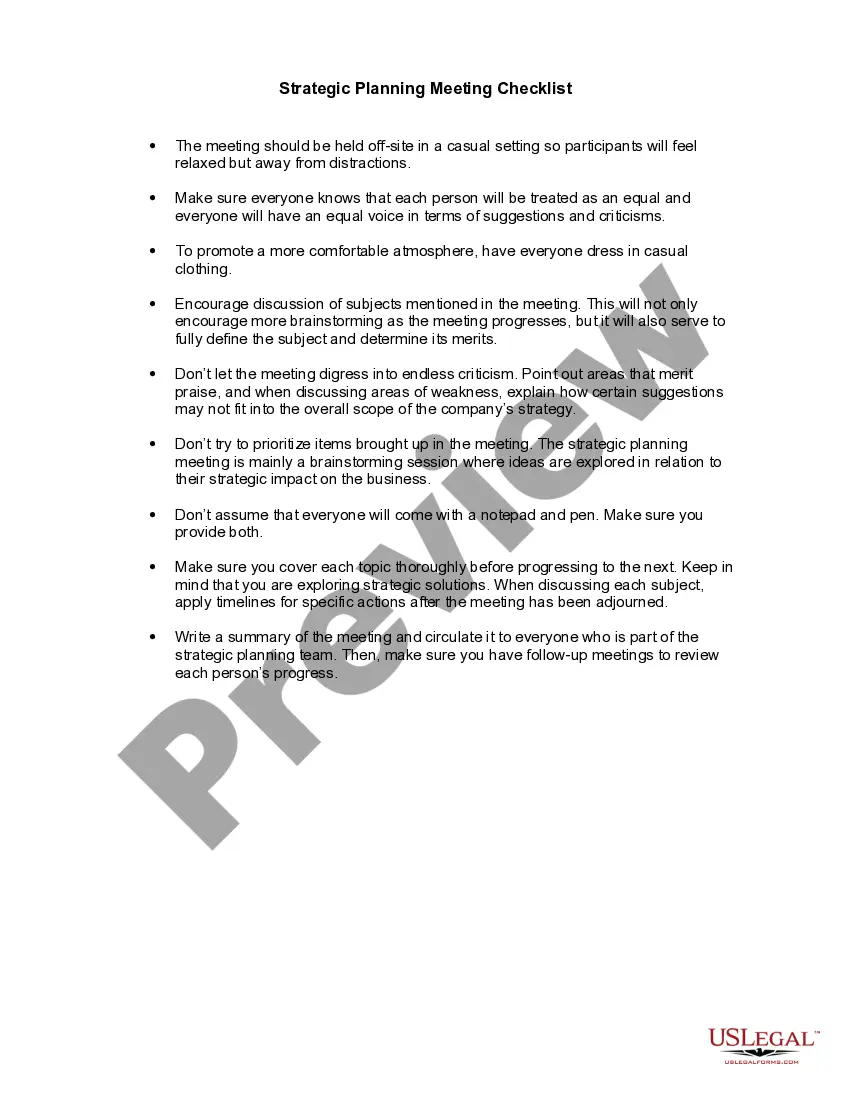
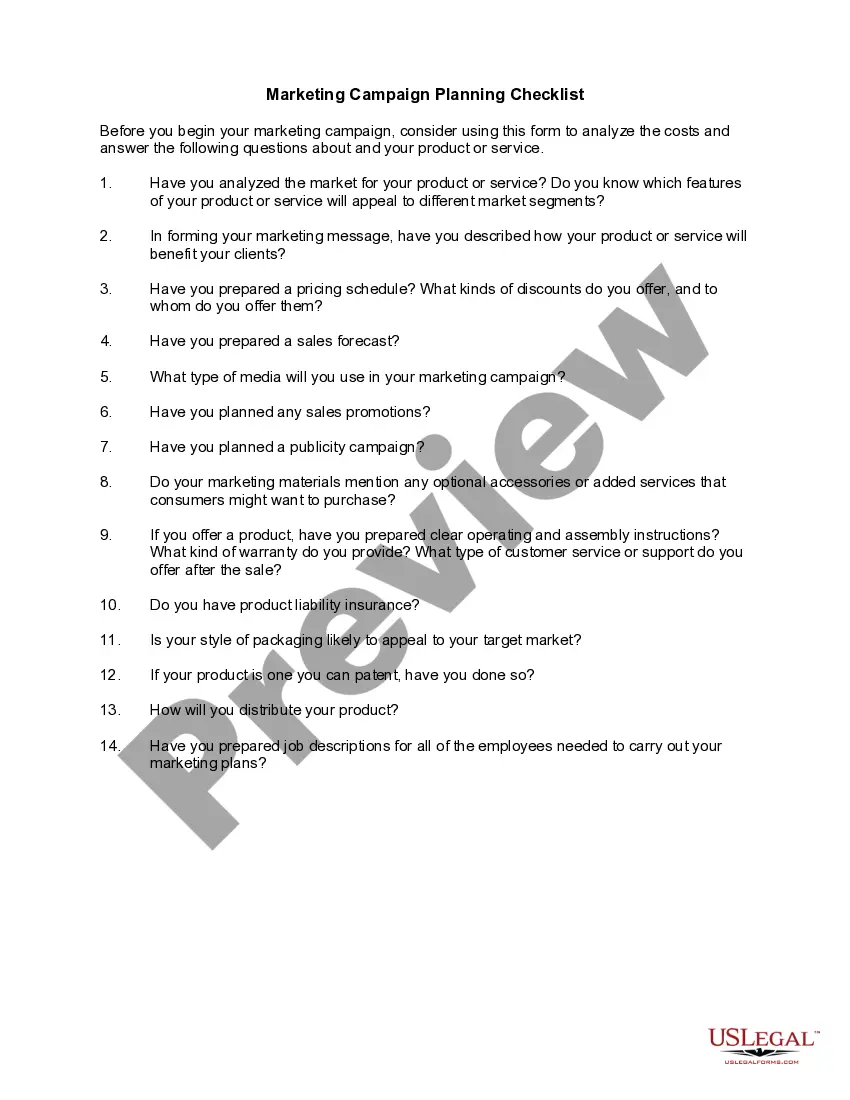
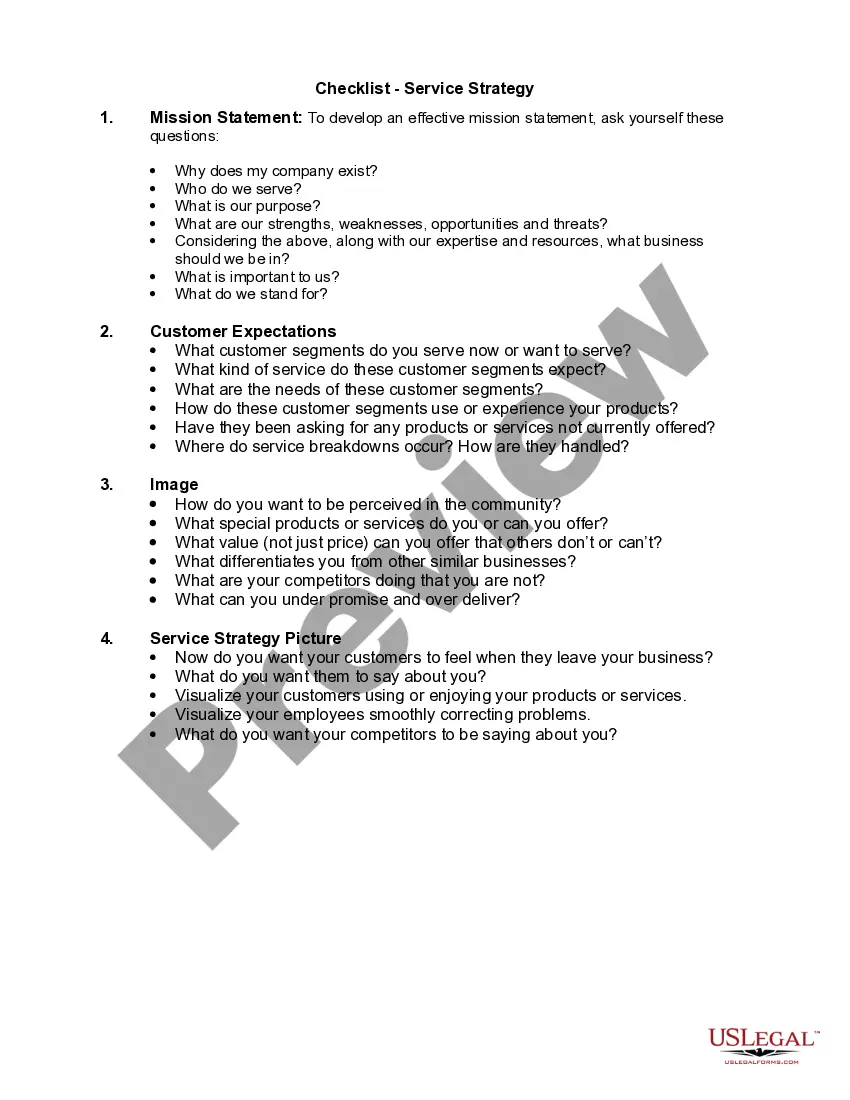
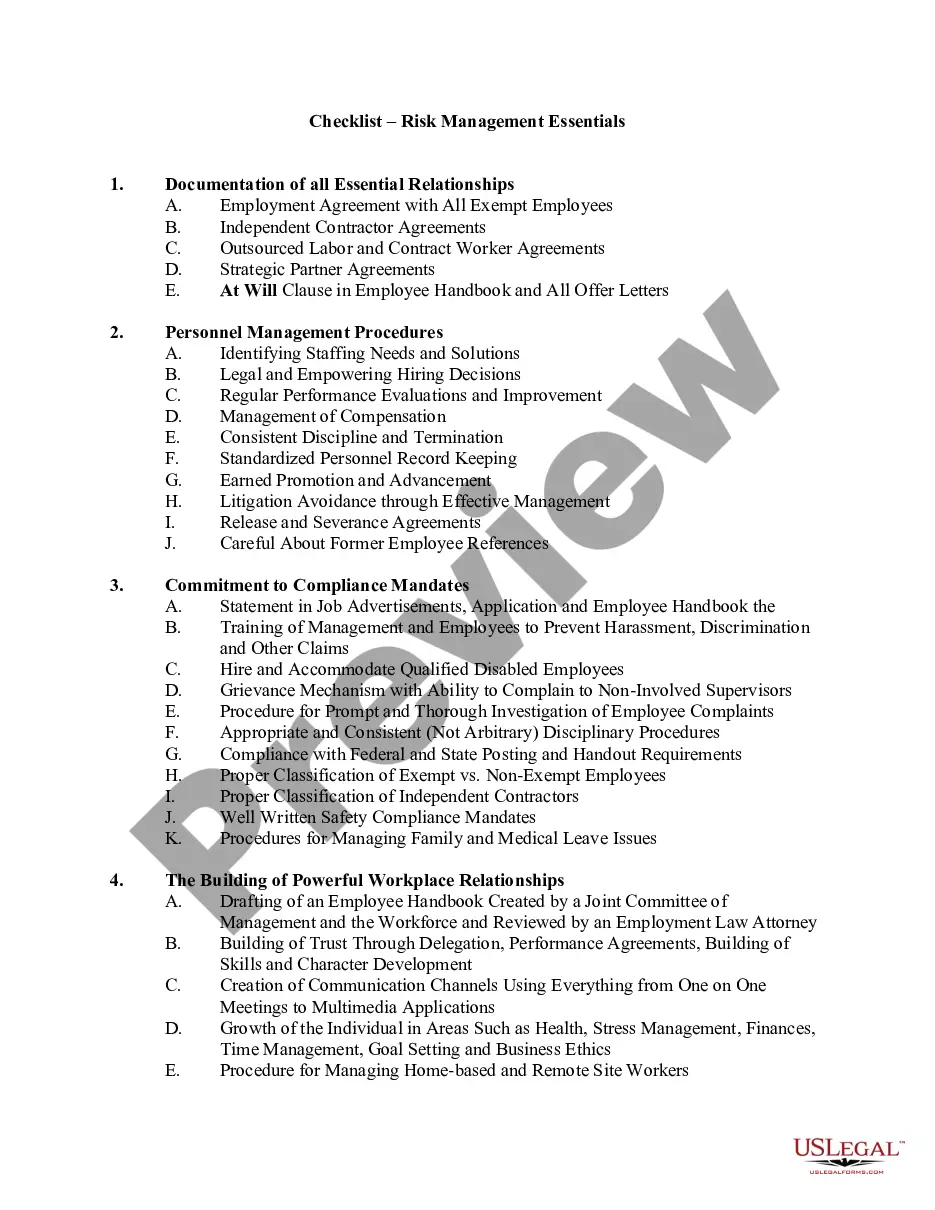
The Strategic Planning Meeting Checklist is a tool designed to facilitate effective strategic planning meetings. It serves as a guideline for organizing and conducting meetings aimed at evaluating past projects and setting future goals. Unlike other meeting checklists, this form specifically focuses on strategic discussions, ensuring that all participants contribute equally to brainstorming new ideas and strategies. It is essential for businesses looking to enhance their strategic planning efforts.
Key components of this form
- Meeting environment: Suggestions for an off-site, casual setting to promote relaxation.
- Equality of voice: Emphasis on equal participation from all attendees to ensure diverse input.
- Discussion guidelines: Strategies to encourage meaningful discussions while avoiding endless criticisms.
- Action timelines: Establishing specific follow-up actions post-meeting to ensure accountability.
- Meeting summary: Instructions for documenting and circulating the meeting outcomes.
Common use cases
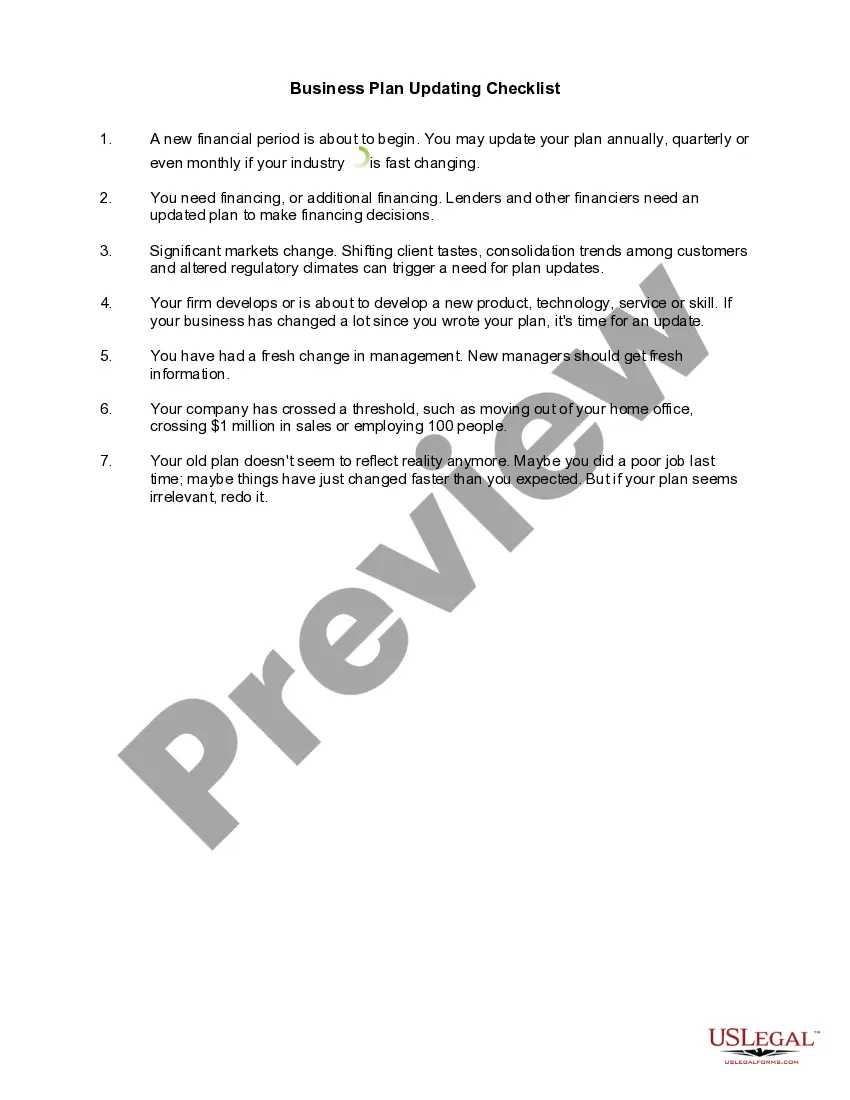
This form is useful when planning to hold a strategic meeting within an organization. Typically, it should be utilized annually or whenever there is a need to reassess company objectives and develop new strategies based on recent market research. It is also applicable when significant changes in the business environment necessitate reevaluation of existing projects and goals.
Who needs this form
This form is intended for:
- Executive managers and team leaders responsible for strategic oversight.
- Key supervisors involved in project execution and goal setting.
- Organizations looking to improve their strategic planning process.
- Consultants facilitating strategic planning sessions for clients.
Instructions for completing this form
- Determine the meeting participants and communicate the agenda in advance.
- Select an appropriate off-site location that fosters a relaxed atmosphere.
- Prepare materials including notepads and pens for all attendees.
- Facilitate the meeting by encouraging open discussion on each topic.
- Document the discussions and decisions, creating a summary to share post-meeting.
- Schedule follow-up meetings to track progress on action items discussed.
Does this document require notarization?
Notarization is not commonly needed for this form. However, certain documents or local rules may make it necessary. Our notarization service, powered by Notarize, allows you to finalize it securely online anytime, day or night.
Get your form ready online
Our built-in tools help you complete, sign, share, and store your documents in one place.
Make edits, fill in missing information, and update formatting in US Legal Forms—just like you would in MS Word.
Download a copy, print it, send it by email, or mail it via USPS—whatever works best for your next step.
Sign and collect signatures with our SignNow integration. Send to multiple recipients, set reminders, and more. Go Premium to unlock E-Sign.
If this form requires notarization, complete it online through a secure video call—no need to meet a notary in person or wait for an appointment.
We protect your documents and personal data by following strict security and privacy standards.

Make edits, fill in missing information, and update formatting in US Legal Forms—just like you would in MS Word.

Download a copy, print it, send it by email, or mail it via USPS—whatever works best for your next step.

Sign and collect signatures with our SignNow integration. Send to multiple recipients, set reminders, and more. Go Premium to unlock E-Sign.

If this form requires notarization, complete it online through a secure video call—no need to meet a notary in person or wait for an appointment.

We protect your documents and personal data by following strict security and privacy standards.
Common mistakes
- Not preparing sufficient materials for all participants, such as notes or agendas.
- Allowing the meeting to stray off-topic without addressing critical issues.
- Failing to document and distribute meeting outcomes and action items.
- Underestimating the importance of an inclusive environment for brainstorming.
Benefits of completing this form online
- Convenience: Access the checklist from anywhere and download it instantly.
- Editable: Customize the checklist to suit your organization's specific needs.
- Reliable: Ensure a structured approach to your strategic planning meetings.
Quick recap
- The Strategic Planning Meeting Checklist promotes organized and effective planning sessions.
- Encouraging equal participation fosters a culture of collaboration and innovation.
- Documenting discussions and setting follow-up actions are crucial for accountability.
Looking for another form?
Form popularity
FAQ
Schedule the monthly strategy meetings on the same day and time each month in order to encourage making strategy a habit. Invite individuals or heads of departments. Make the meeting mandatory no exceptions. Start and end on time and stay on task with an agenda.
The definition of facilitate is "to make easy" or "ease a process." What a facilitator does is plan, guide and manage a group event to ensure that the group's objectives are met effectively, with clear thinking, good participation and full buy-in from everyone who is involved.
Start meeting after you get ready. Allow time for big-picture thinking together. Ask the hard questions. Concentrate on what moves the dial. Don't write your plan in stone. Keep it simple and clear. Make strategy a habit, not just a retreat. Have Fun!
Strategic planning facilitation is when an outside facilitator is hired to work with an organization and the strategic planning meeting (and to possibly assist with implementation coaching). If you don't have a facilitator, you are the facilitator.
Schedule the monthly strategy meetings on the same day and time each month in order to encourage making strategy a habit. Invite individuals or heads of departments. Make the meeting mandatory no exceptions. Start and end on time and stay on task with an agenda.
Start meeting after you get ready. Allow time for big-picture thinking together. Ask the hard questions. Concentrate on what moves the dial. Don't write your plan in stone. Keep it simple and clear. Make strategy a habit, not just a retreat. Have Fun!
Vision. One's vision for the business is where we imagine it will be at a future date. Core competencies and market opportunities. Effective execution.
Begin your meetings with a quick check-in. Review desired outcomes and agenda items. Assign meeting roles. Practice active listening. Synthesize the main themes to reframe the conversation. Pause and allow for reflection. Encourage and balance participation.
Identify your core mission. Have a future-focused vision statement. Identify priorities. Build a communication or rollout plan. Hold people accountable. Review, review, review.