Bylaws of Professional Recovery Systems, Inc.
About this form
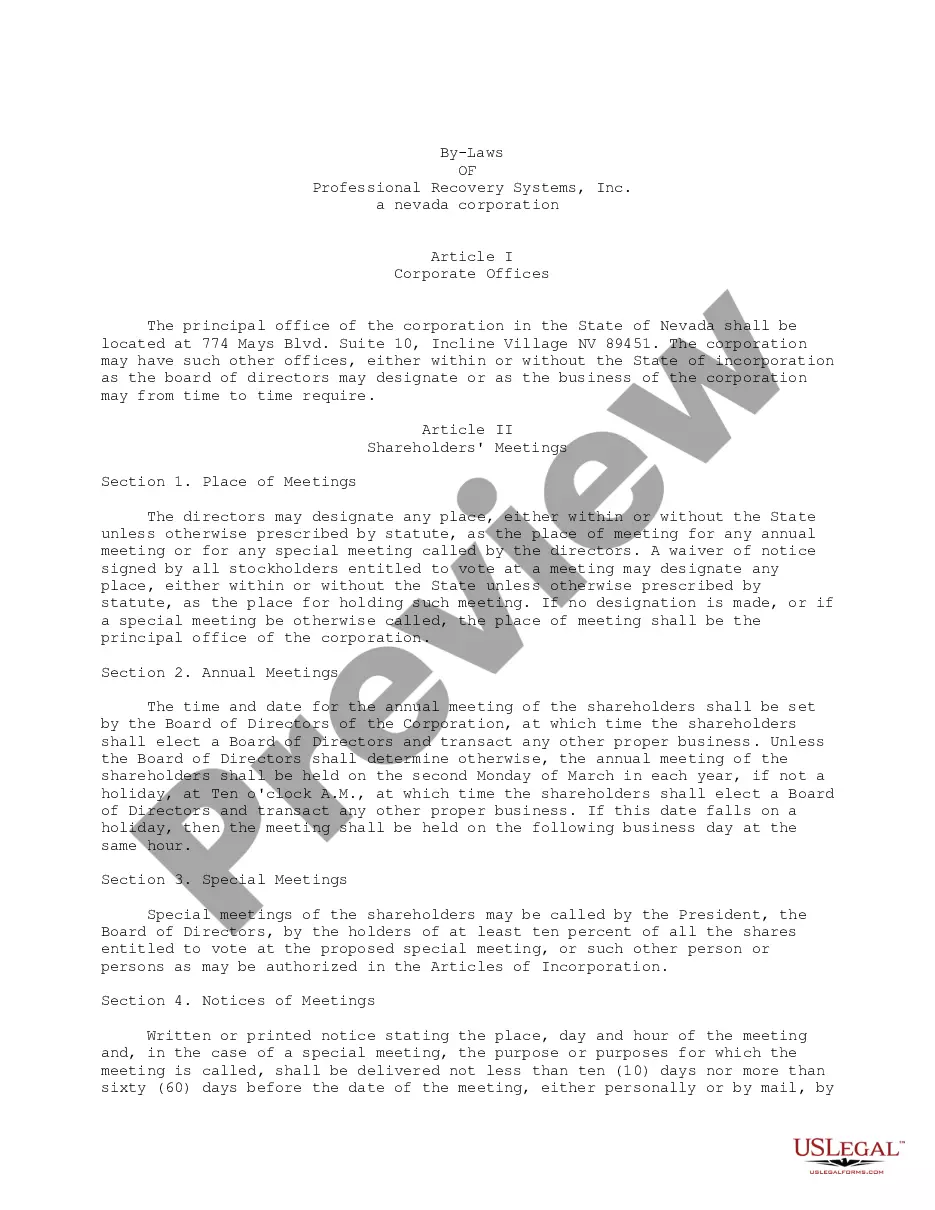
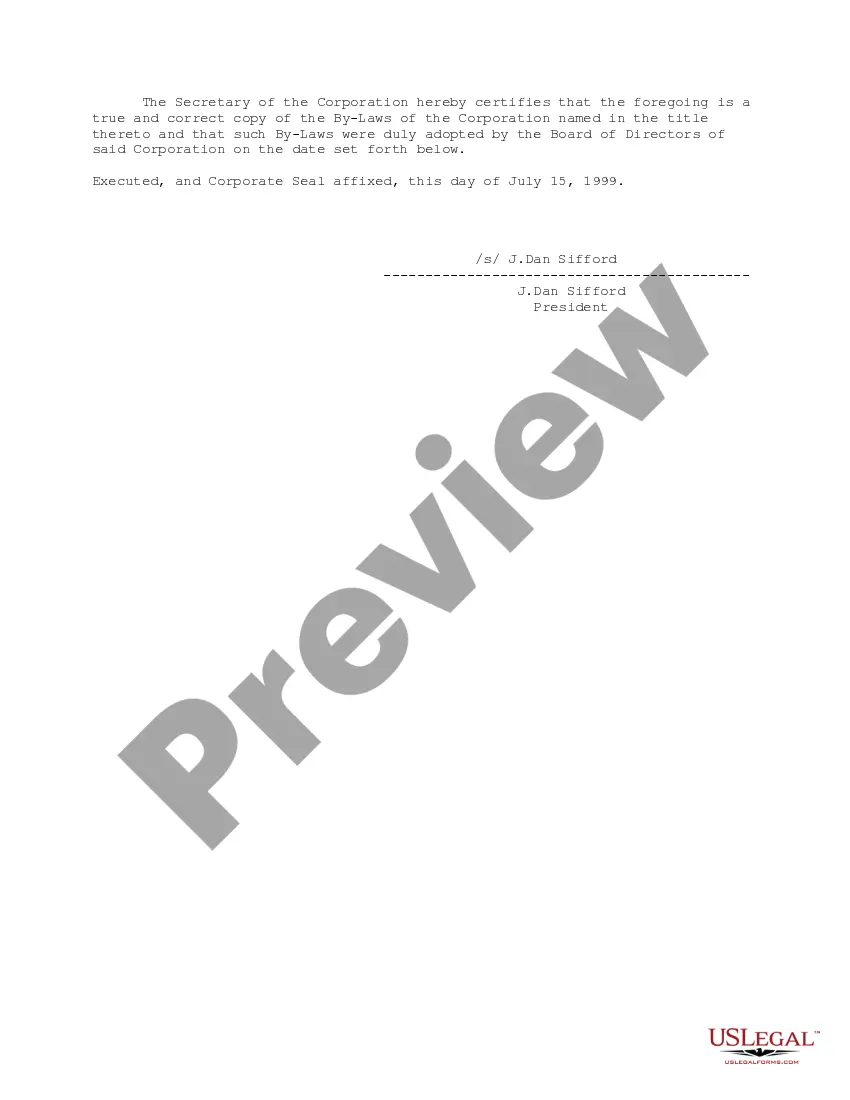
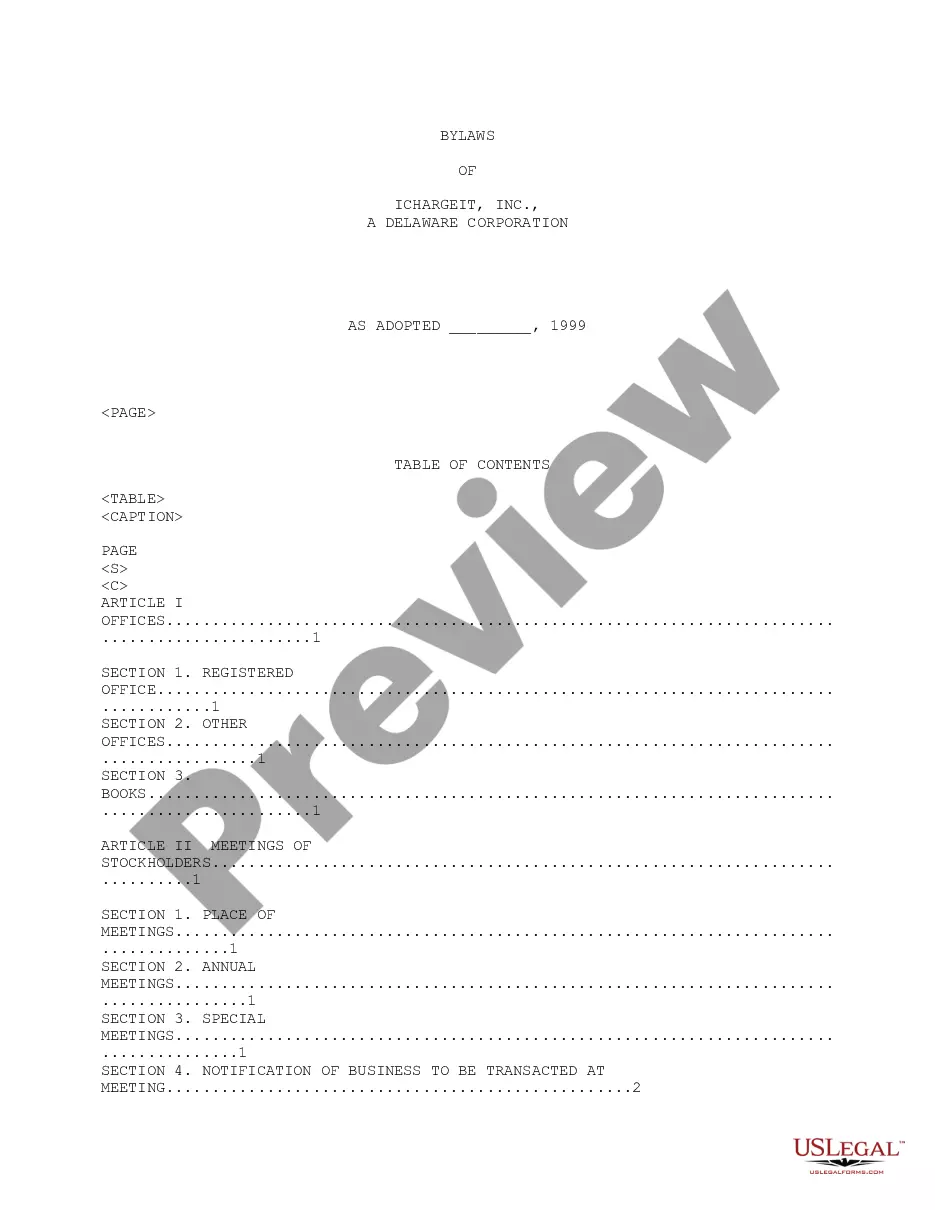
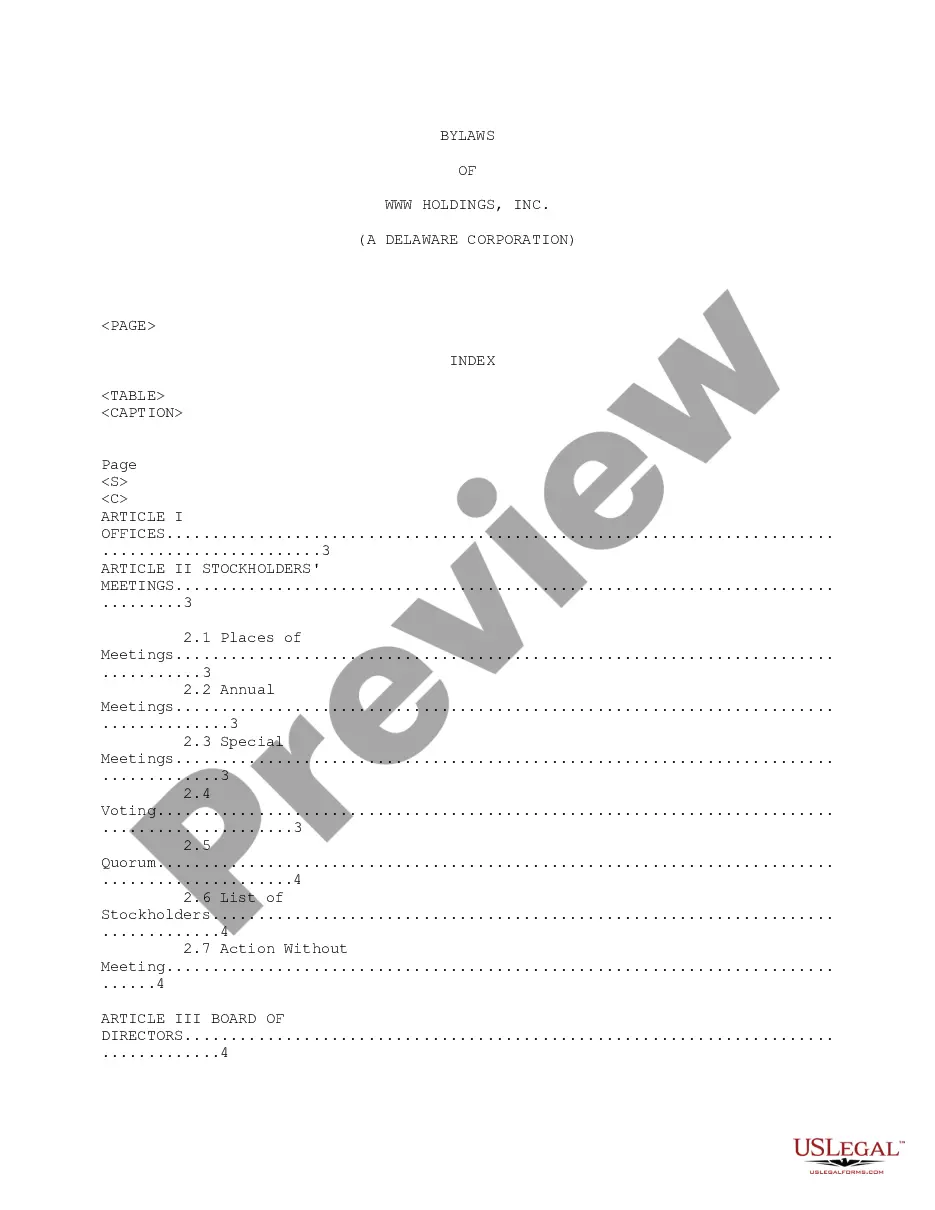
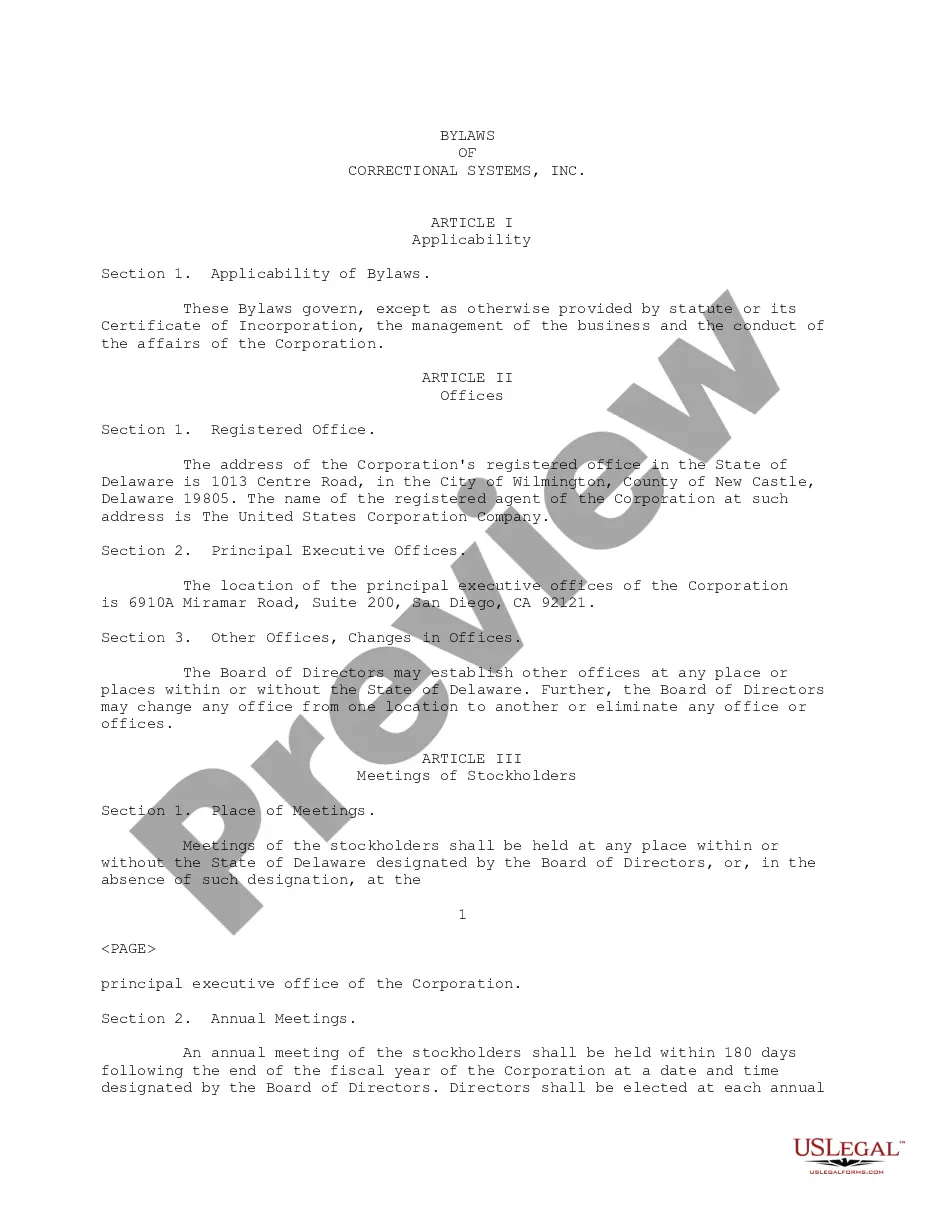
The Bylaws of Professional Recovery Systems, Inc. is a legal document that outlines the internal rules and procedures governing the operations of the corporation. This form serves as the foundational framework that dictates how the corporation is managed, including the roles of directors, the process for shareholder meetings, and the responsibilities of corporate officers. Unlike other corporate documents, the bylaws provide specific guidelines on governance, ensuring compliance with state laws and the corporation's Articles of Incorporation.
Main sections of this form
- Article I: Describes the principal office and potential locations for additional offices.
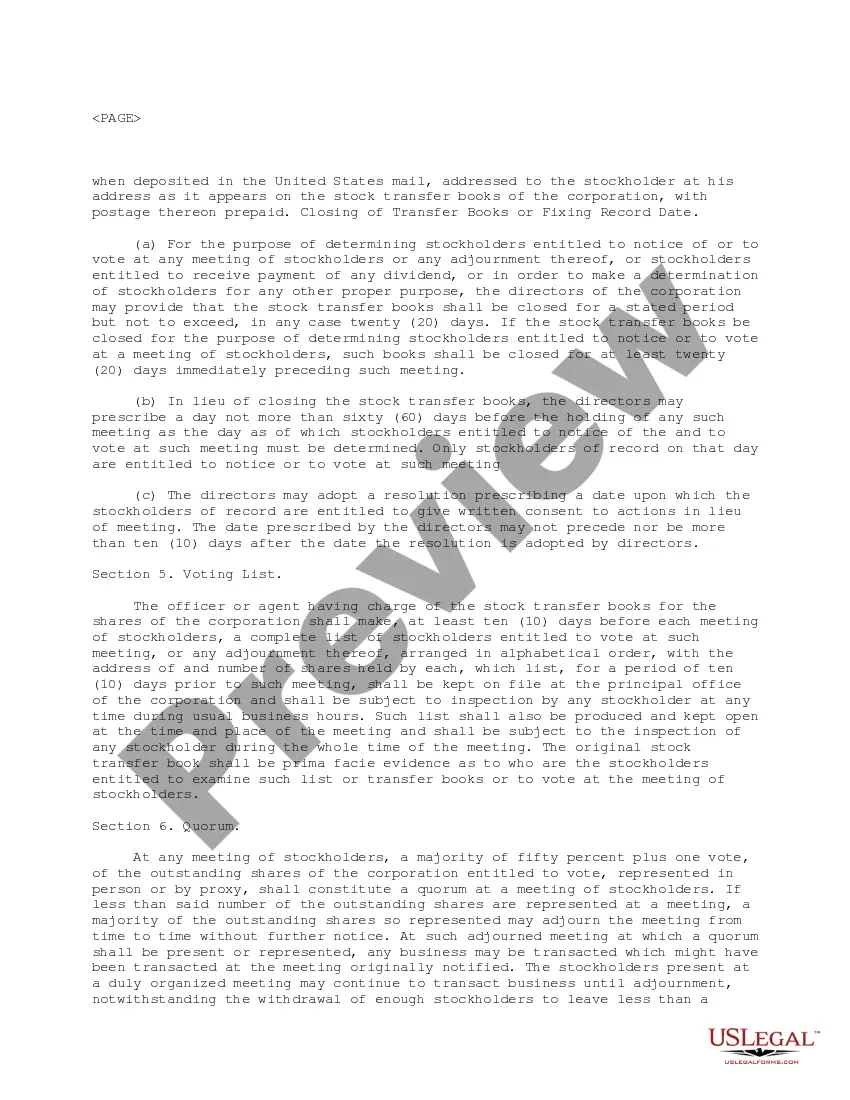
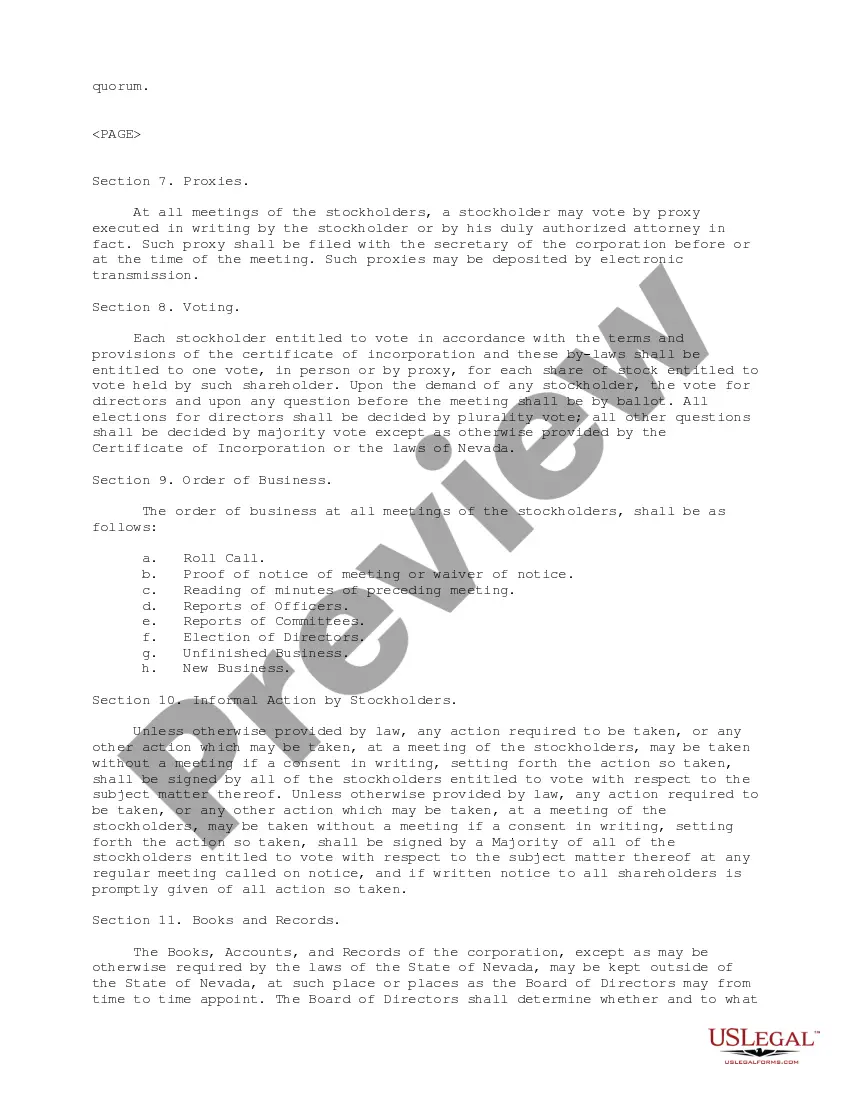
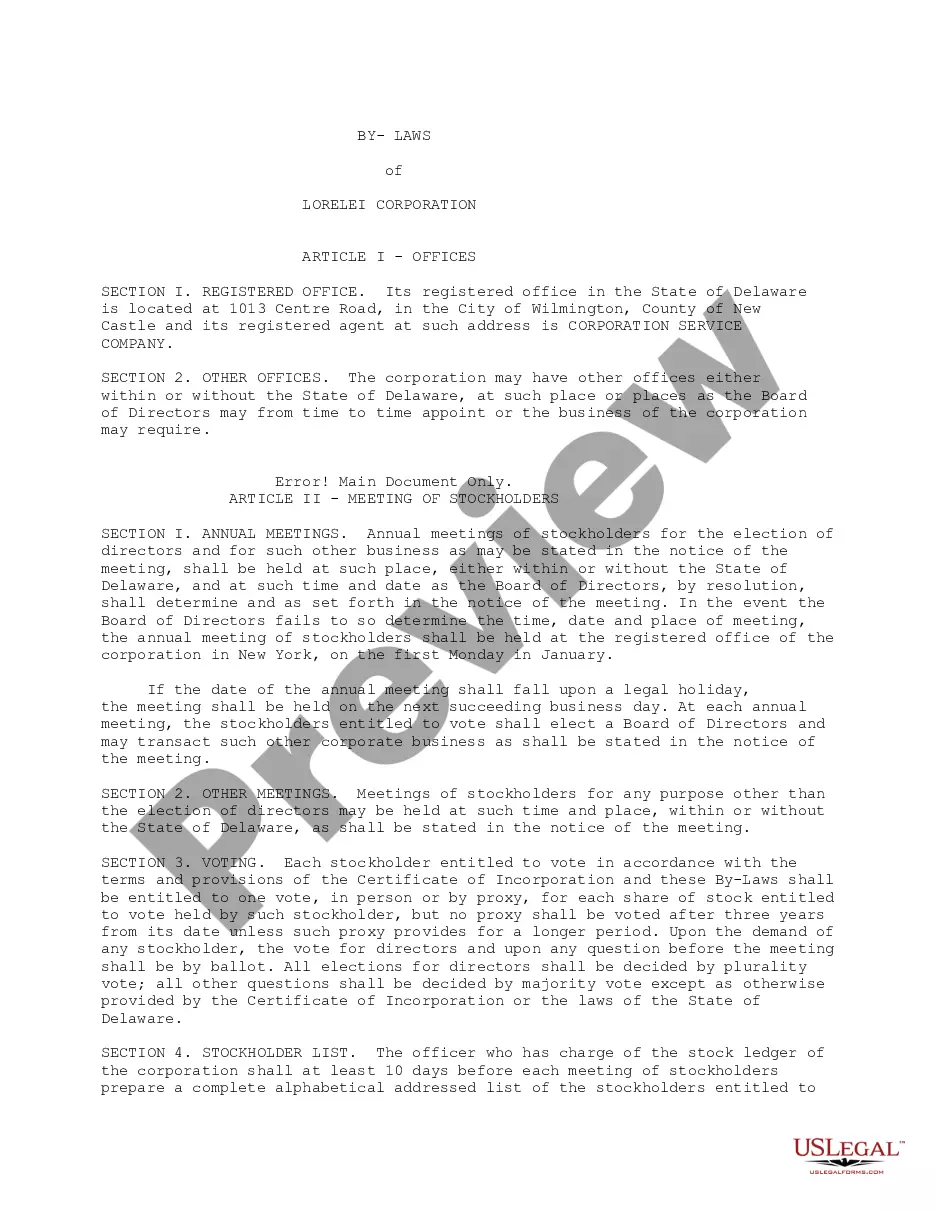
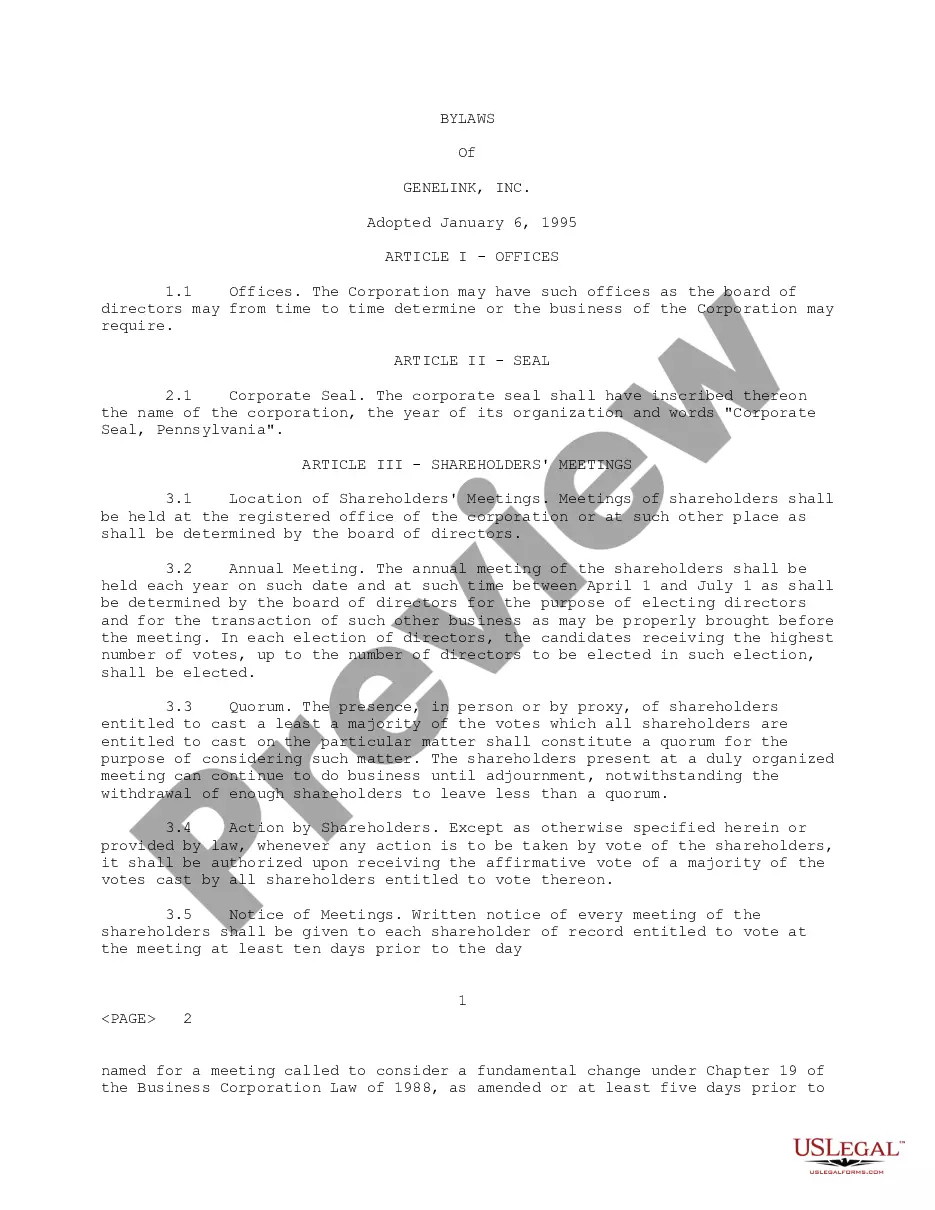
- Article II: Covers shareholder meetings, including annual and special meetings, notice requirements, and voting procedures.
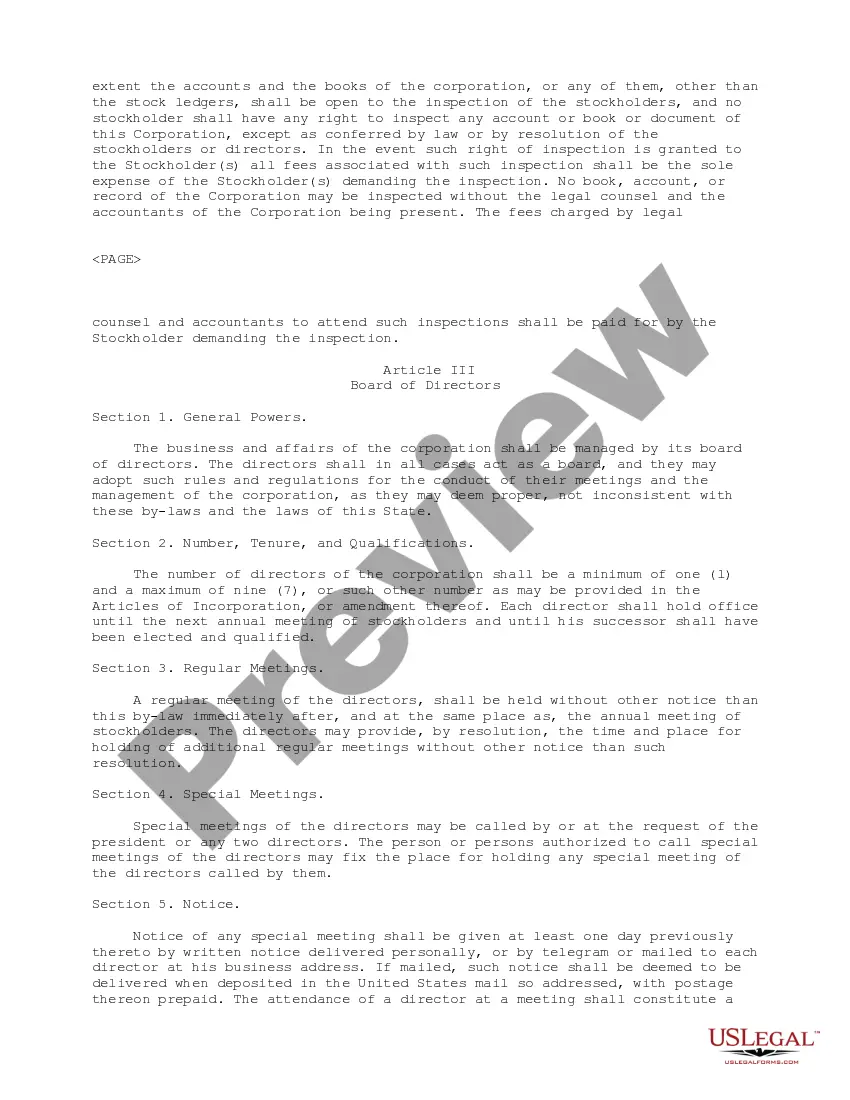
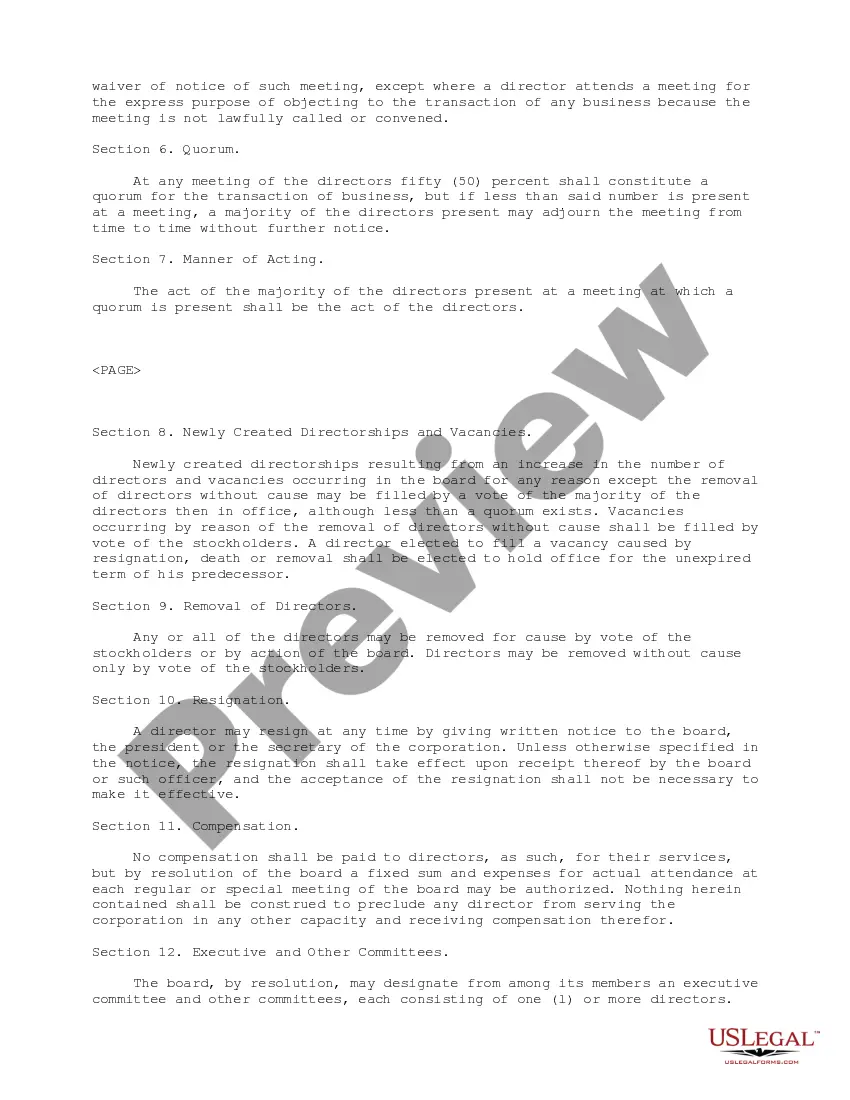
- Article III: Details the board of directors' powers, number of directors, and protocols for meetings and voting.
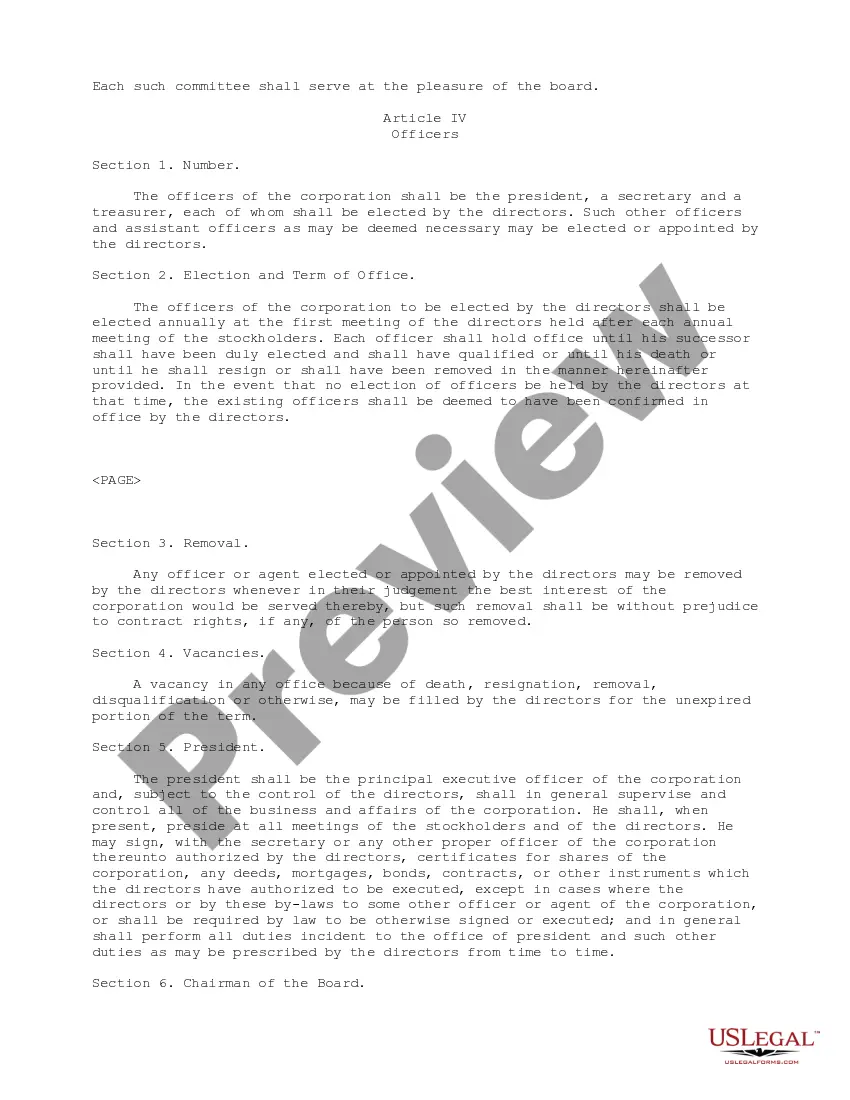
- Article IV: Outlines the roles, election, and responsibilities of corporate officers.
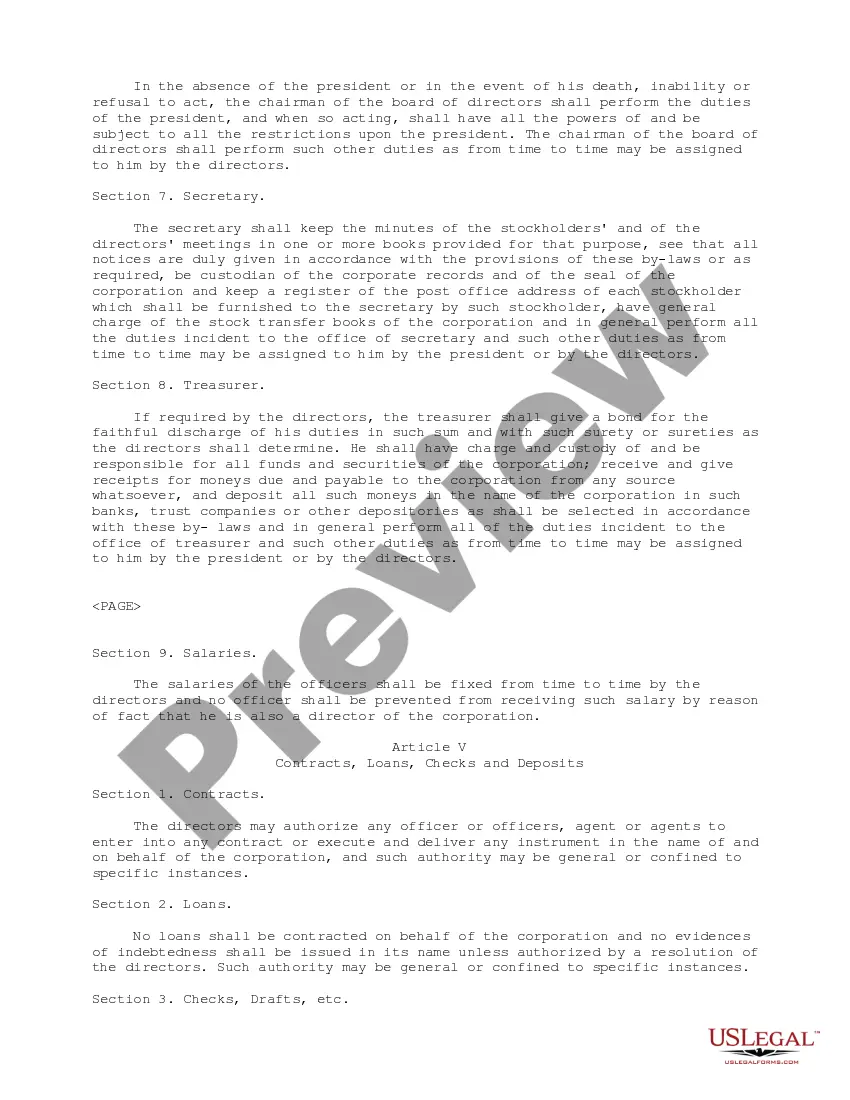
- Article V: Addresses corporate contracts, loans, checks, and deposits.
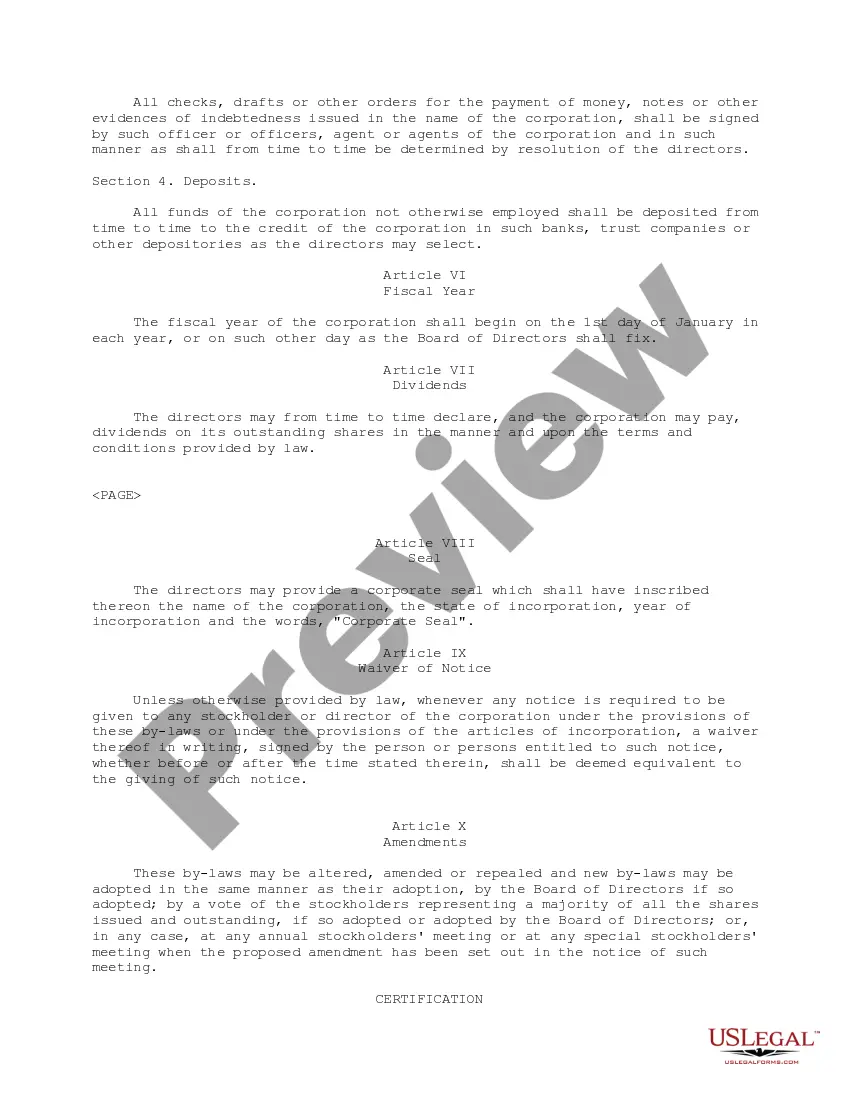
- Amendment provisions for altering or repealing bylaws.
Common use cases
This form is essential for establishing clear operational guidelines for a corporation, especially when forming a new business or restructuring an existing one. Use this form when you need to:
- Create or update your corporation's operational framework.
- Define procedures for shareholder meetings and board governance.
- Ensure compliance with state corporate laws.
Who can use this document
The Bylaws of Professional Recovery Systems, Inc. is intended for:
- Business owners establishing a corporation in Nevada.
- Corporations seeking to update their governance structure.
- Shareholders needing clarity on meeting procedures and voting rights.
- Corporate directors and officers involved in governance.
Steps to complete this form
- Identify the corporationâs principal office location and any other intended offices.
- Outline the procedures for shareholder meetings, including scheduling and notice requirements.
- Designate the number of directors and outline their powers and responsibilities.
- Detail the roles and duties of the corporate officers, including the president, secretary, and treasurer.
- Specify the corporate policies on contracts, loans, and the management of funds.
- Ensure the bylaws are signed and dated by the appropriate corporate officers.
Notarization requirements for this form
This form does not typically require notarization unless specified by local law. It's advisable to check with your legal advisor regarding specific requirements in your jurisdiction.
Get your form ready online
Our built-in tools help you complete, sign, share, and store your documents in one place.
Make edits, fill in missing information, and update formatting in US Legal Forms—just like you would in MS Word.
Download a copy, print it, send it by email, or mail it via USPS—whatever works best for your next step.
Sign and collect signatures with our SignNow integration. Send to multiple recipients, set reminders, and more. Go Premium to unlock E-Sign.
If this form requires notarization, complete it online through a secure video call—no need to meet a notary in person or wait for an appointment.
We protect your documents and personal data by following strict security and privacy standards.

Make edits, fill in missing information, and update formatting in US Legal Forms—just like you would in MS Word.

Download a copy, print it, send it by email, or mail it via USPS—whatever works best for your next step.

Sign and collect signatures with our SignNow integration. Send to multiple recipients, set reminders, and more. Go Premium to unlock E-Sign.

If this form requires notarization, complete it online through a secure video call—no need to meet a notary in person or wait for an appointment.

We protect your documents and personal data by following strict security and privacy standards.
Mistakes to watch out for
- Failing to define clear voting procedures for shareholders.
- Not updating bylaws following major changes in the board or management structure.
- Ignoring state-specific requirements or procedures.
- Omitting necessary provisions related to the roles of officers and directors.
Why use this form online
- Accessibility: Download and complete the bylaws from anywhere.
- Editability: Tailor the document easily to fit your corporation's specific needs.
- Reliability: Ensure that the form is up-to-date and compliant with current legal standards.
Looking for another form?
Form popularity
FAQ
Bylaws are legally binding. And while your Bylaws aren't a public document (like your IRS Form 990), they also aren't confidential. You can share them, for instance, with a prospective board member who asks to review them before joining your board.
Directors and officers who violate a corporation's bylaws run the risk of being removed from office. State law authorizes the directors to remove an officer without cause.If the shareholders are not removing the entire board, an individual director may be protected from removal depending on state law.
Point out to them that bylaws are not a suggestion, they are mandatory. They form the foundation of how the entire organization functions. Failing to follow them puts the board, and the nonprofit, at legal risk. It may also put each director at individual risk, which D&O insurance will not cover.
Put simply, Corporate Bylaws are the internal rules of your organization. They create the structure of your company and help to make sure that it runs smoothly. These fundamental rules will guide how your business will operate so everyoneshareholders, executives, and employeesare on the same page.
The bylaws of a corporation specify the numerous methods that affect the company's operations. A corporation's bylaws can contain provisions relating to the ways it conducts its affairs, the duties of its directors and the responsibilities of its officers and employees.
Your nonprofit's bylaws are both a legal document and a roadmap for your organization's actions. A required element when forming a corporation, bylaws are a form of agreement or a contract between the corporation and its owners to conduct itself in a certain way.
Point out to them that bylaws are not a suggestion, they are mandatory. They form the foundation of how the entire organization functions. Failing to follow them puts the board, and the nonprofit, at legal risk. It may also put each director at individual risk, which D&O insurance will not cover.
Organizations have bylaws because they want to maintain consistency in the running of the business. They use bylaws to communicate organizational rules so internal disputes and conflict can be avoided.
Simply put, bylaws are the fundamental rules by which an organization governs itself. Bylaws can be considered the organization's contract with its members. They state, interpret or implement the general governance policies of the organization.