Underwriting Agreement of ABFS Mortgage Loan Trust 1999-4 and Prudential Securities, Inc.
What this document covers
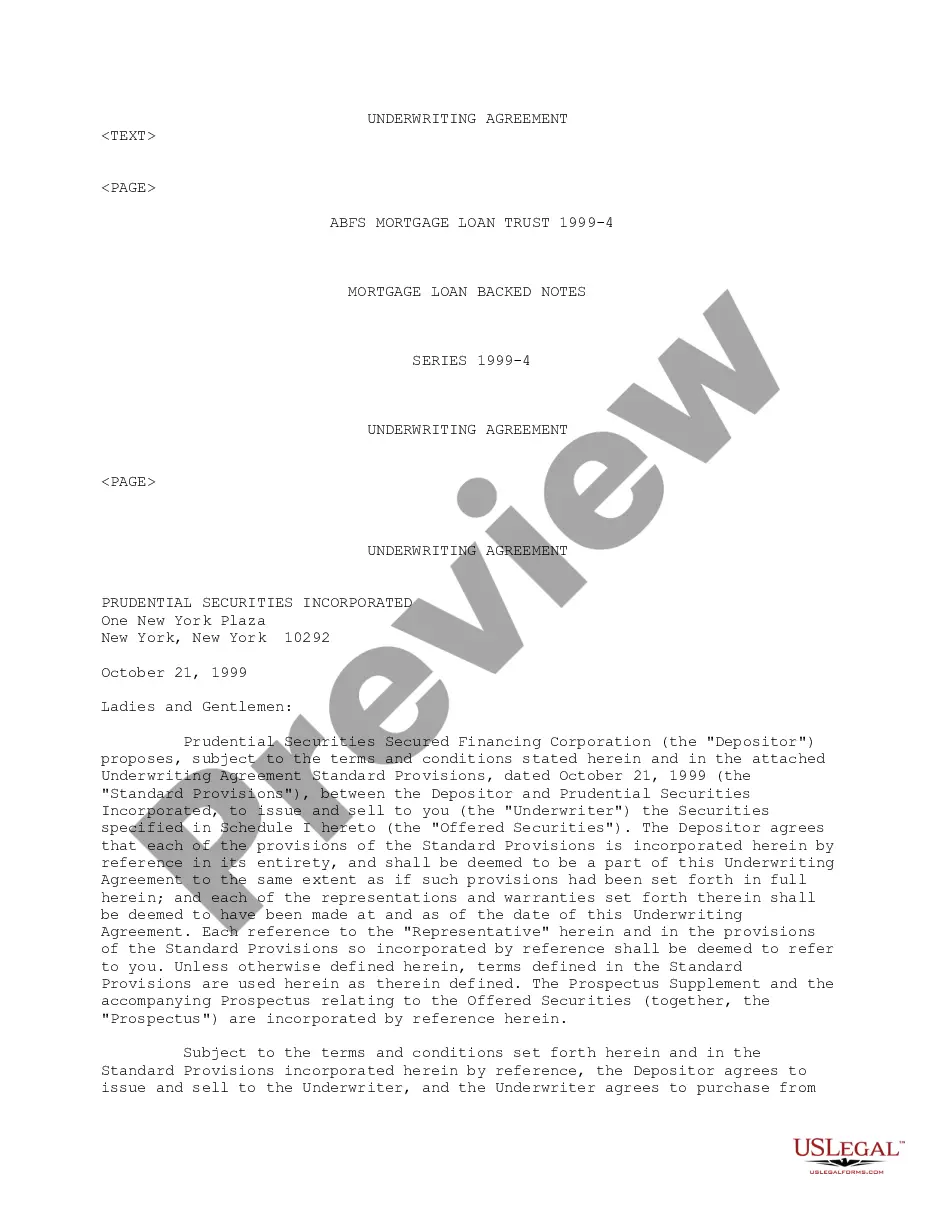
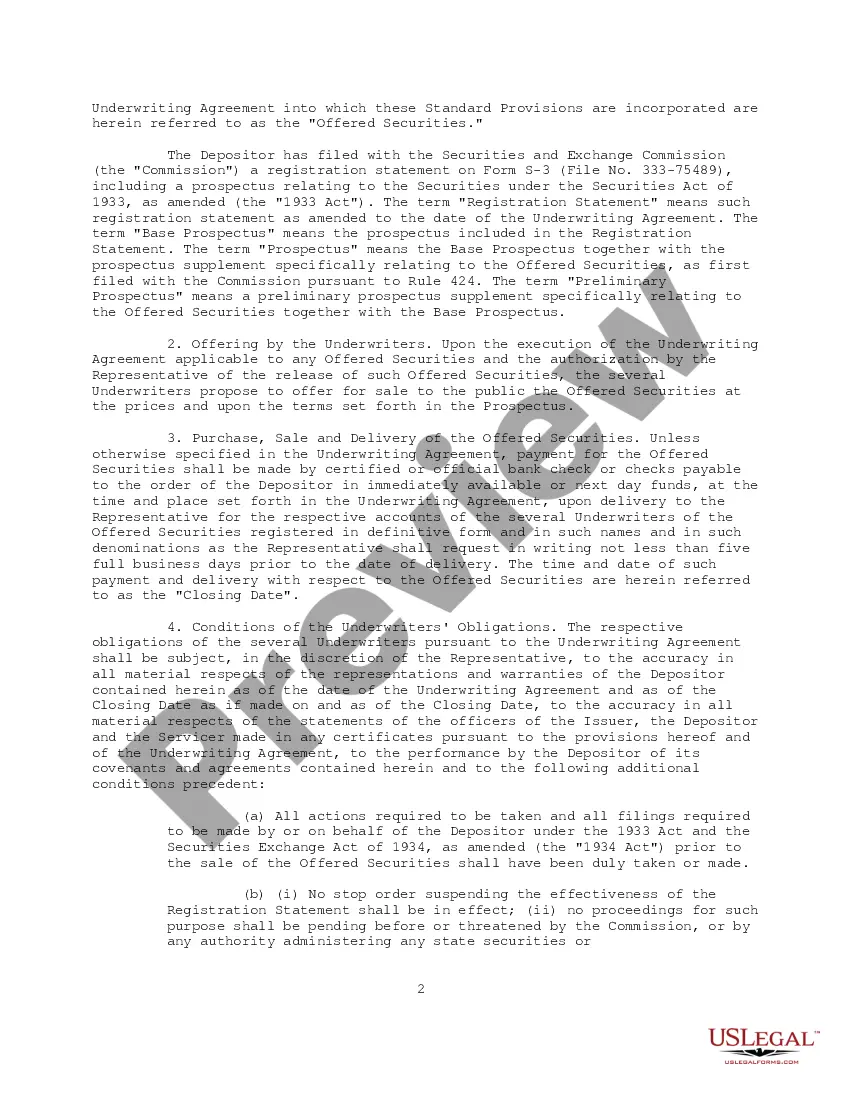
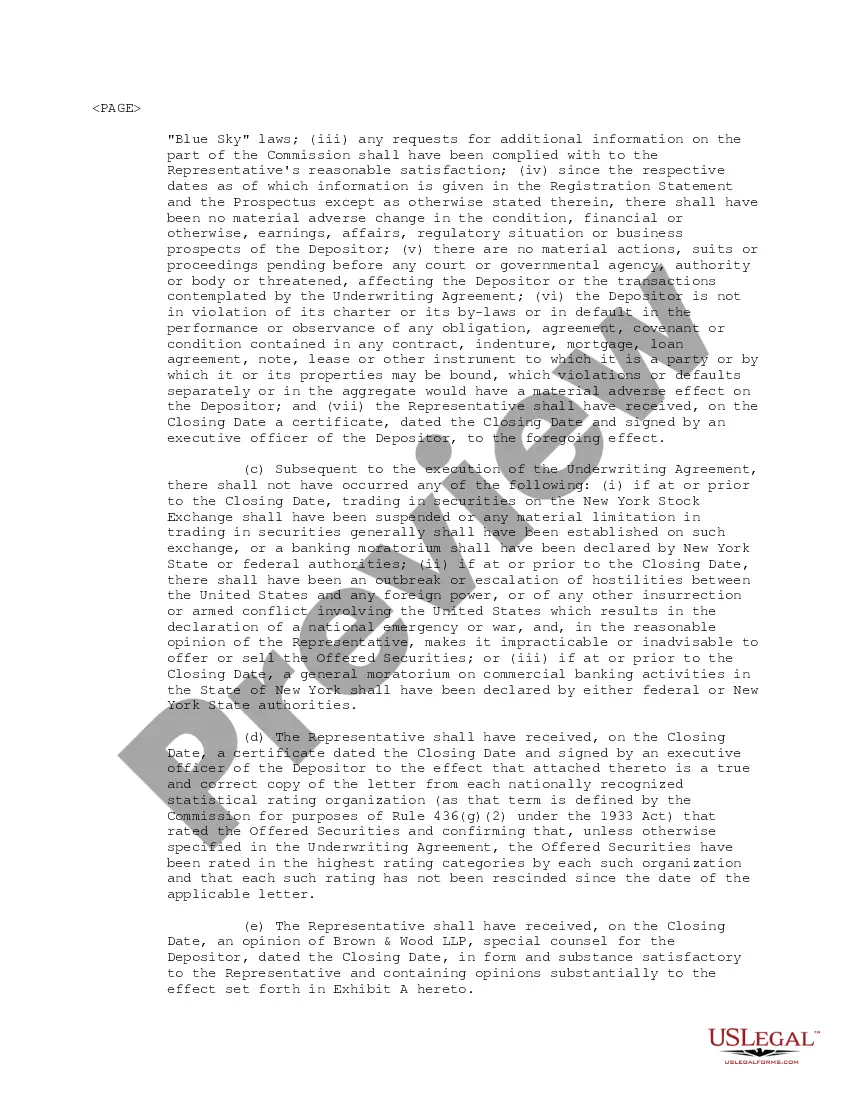
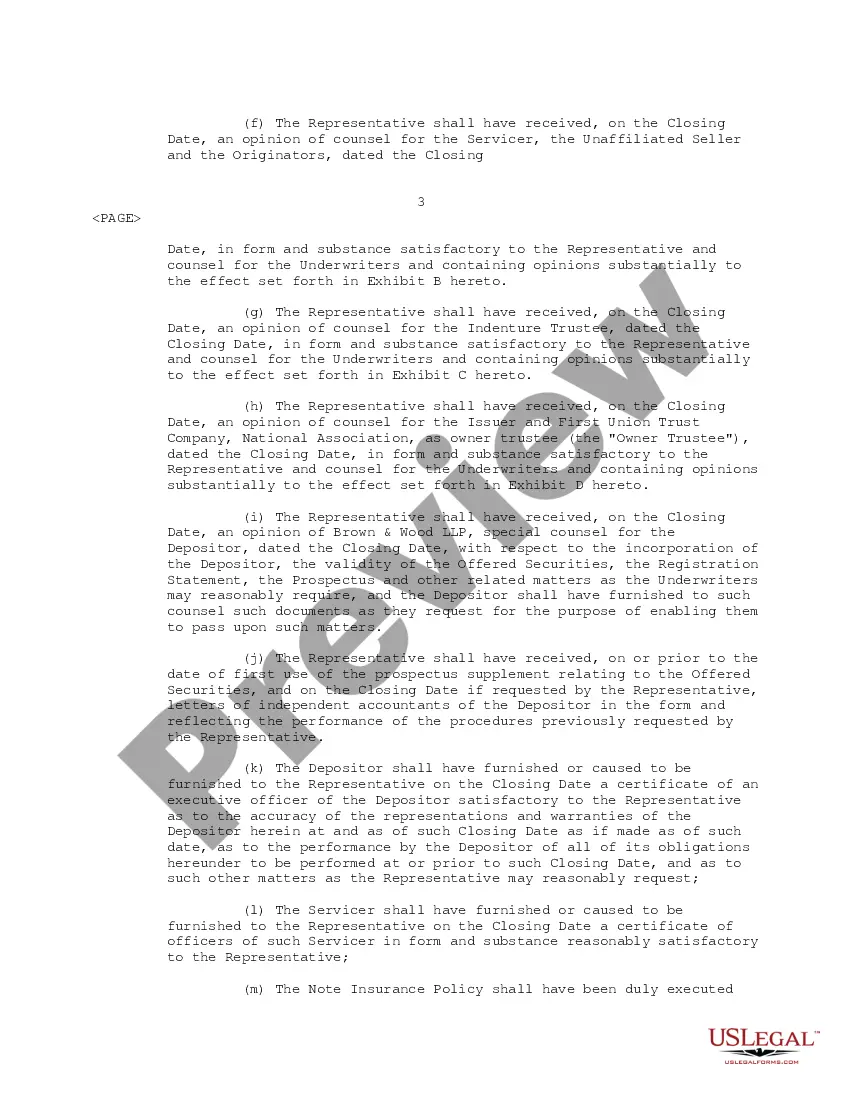
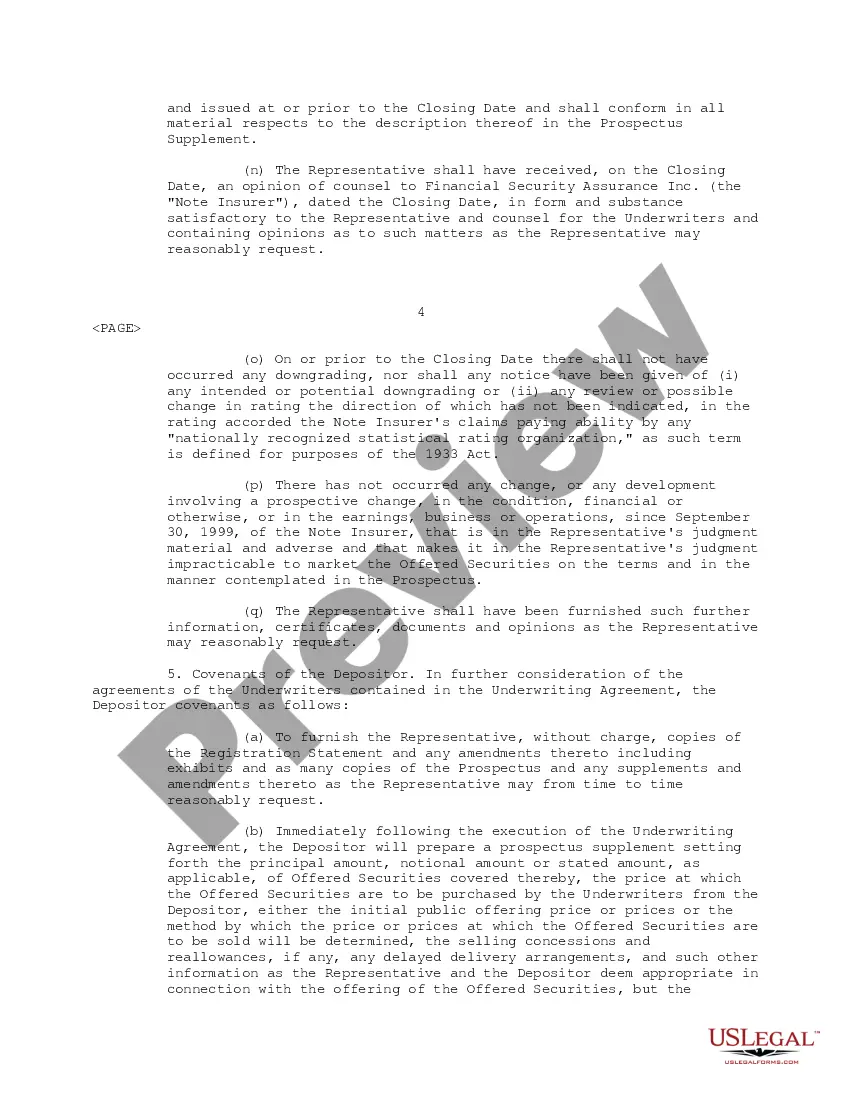
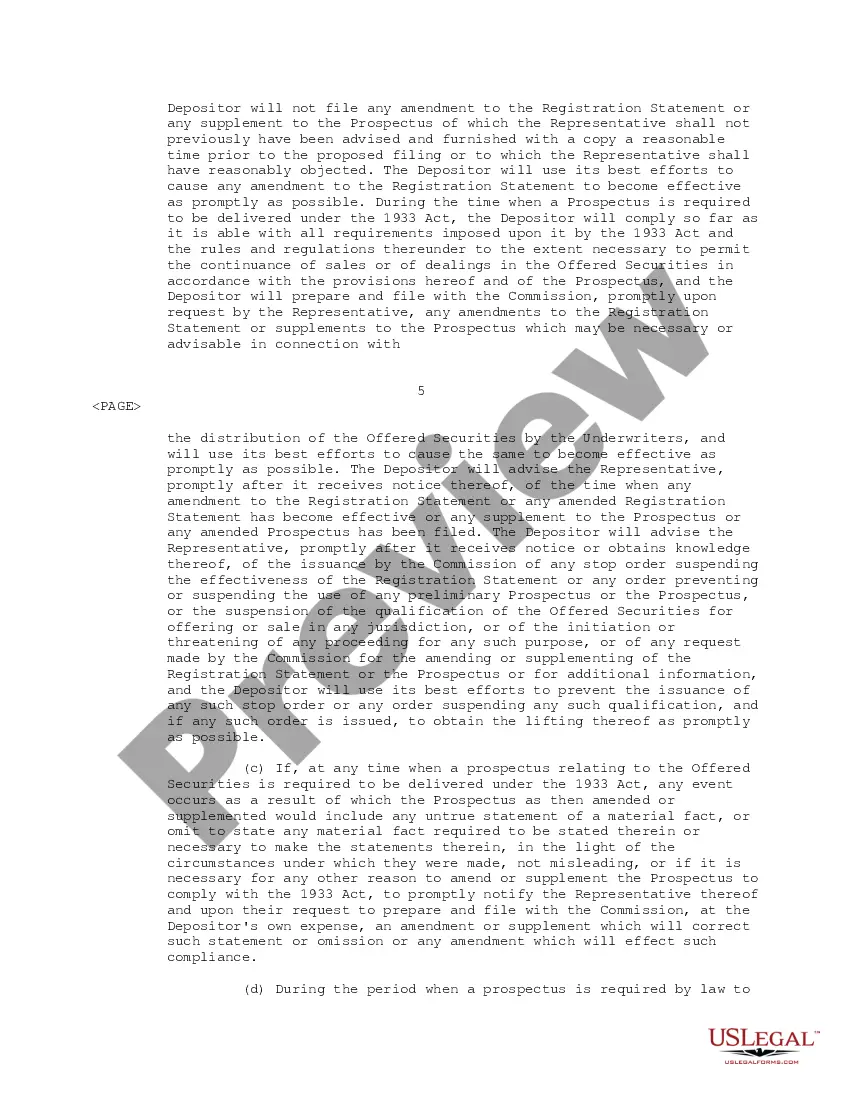
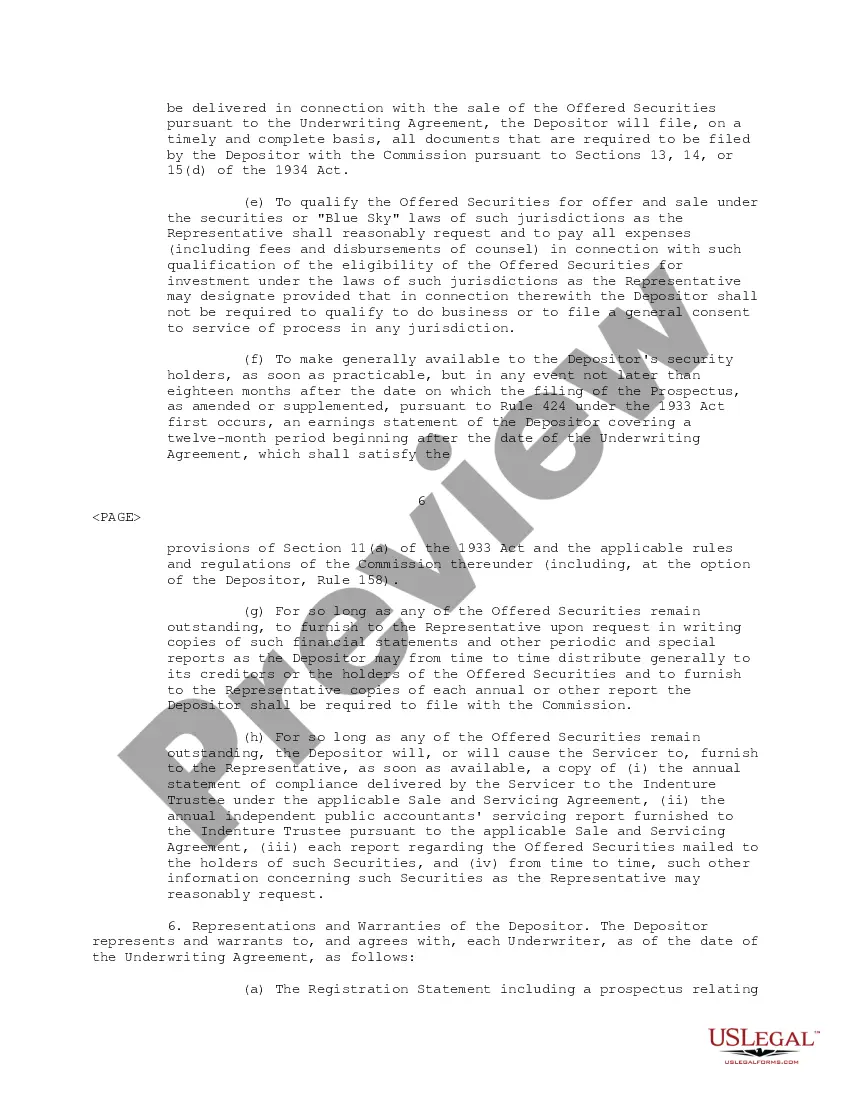
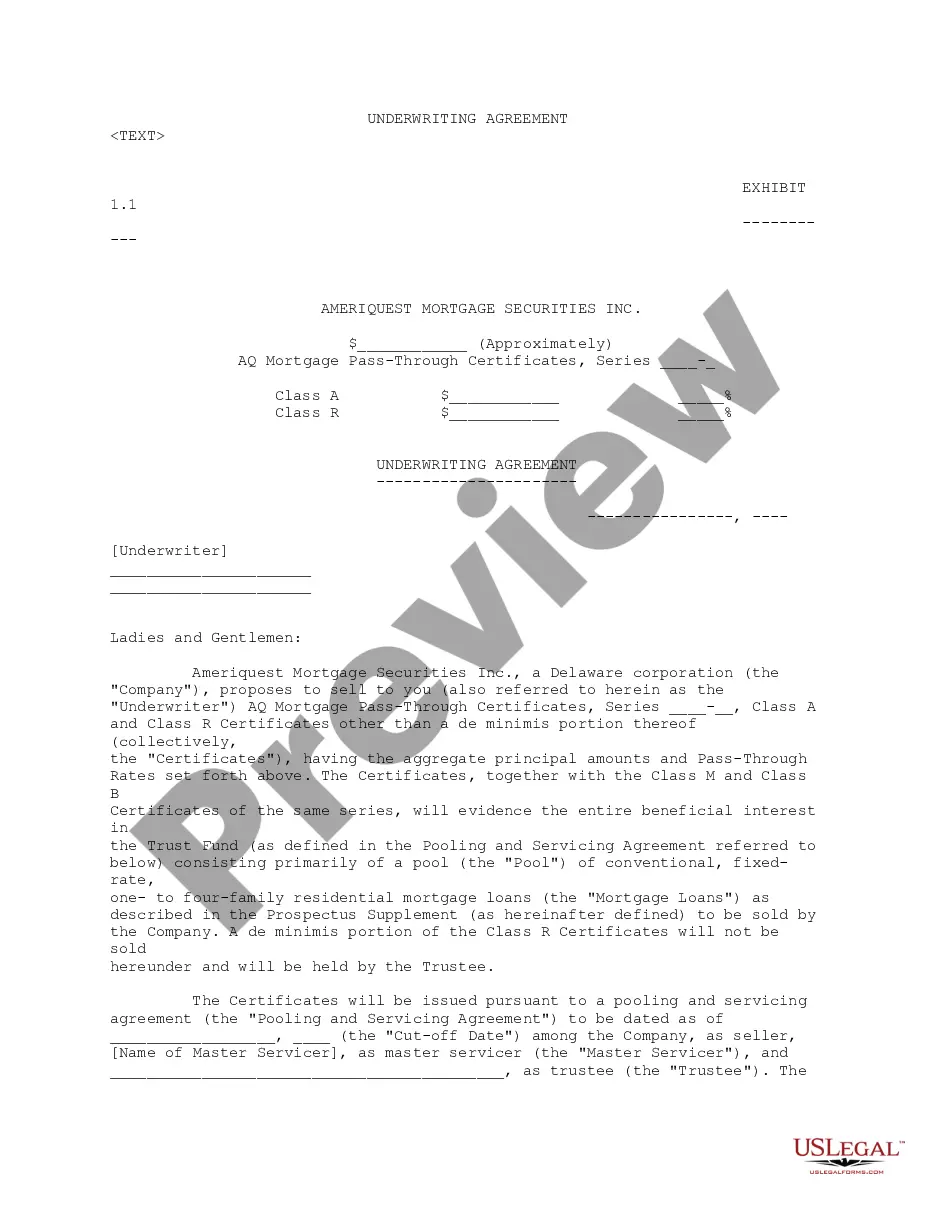
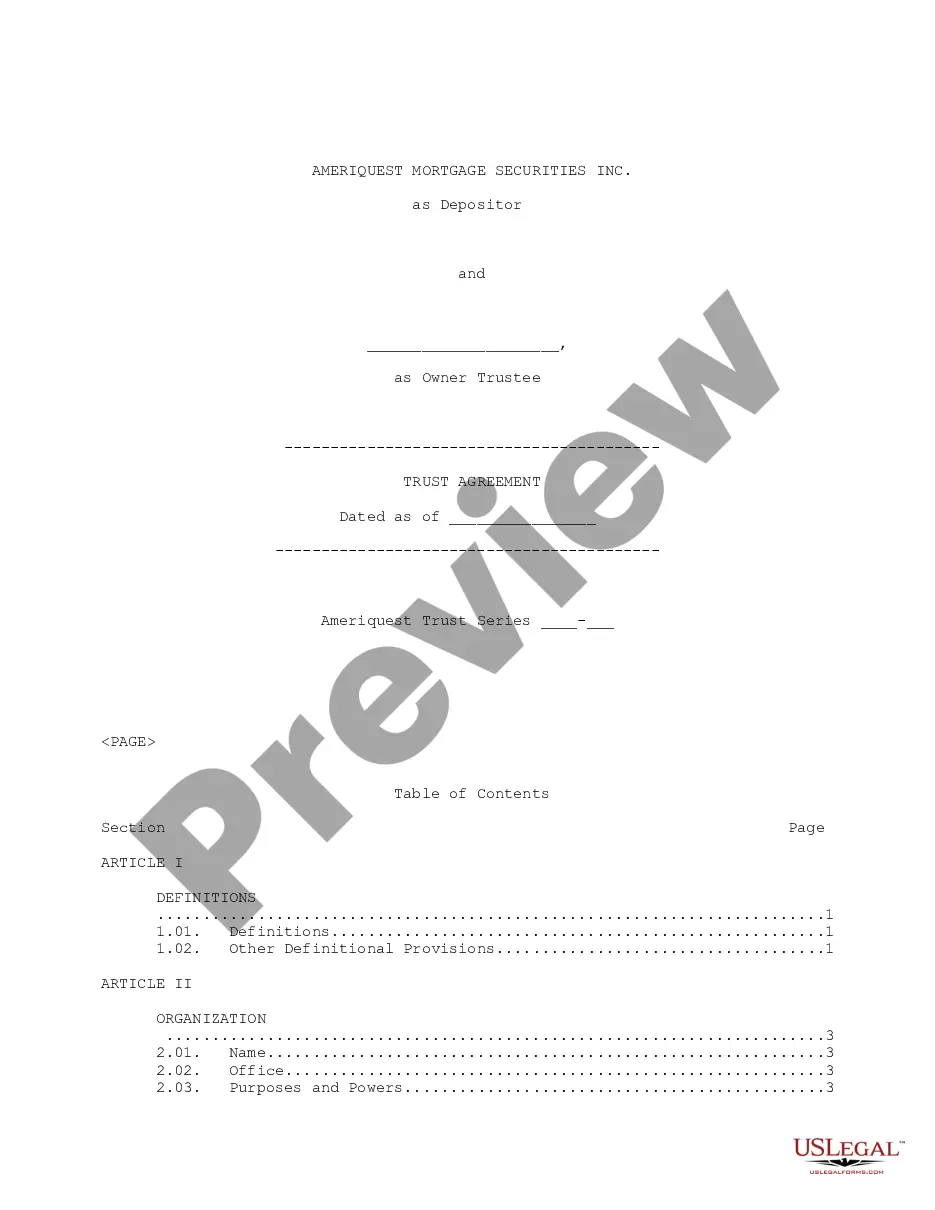
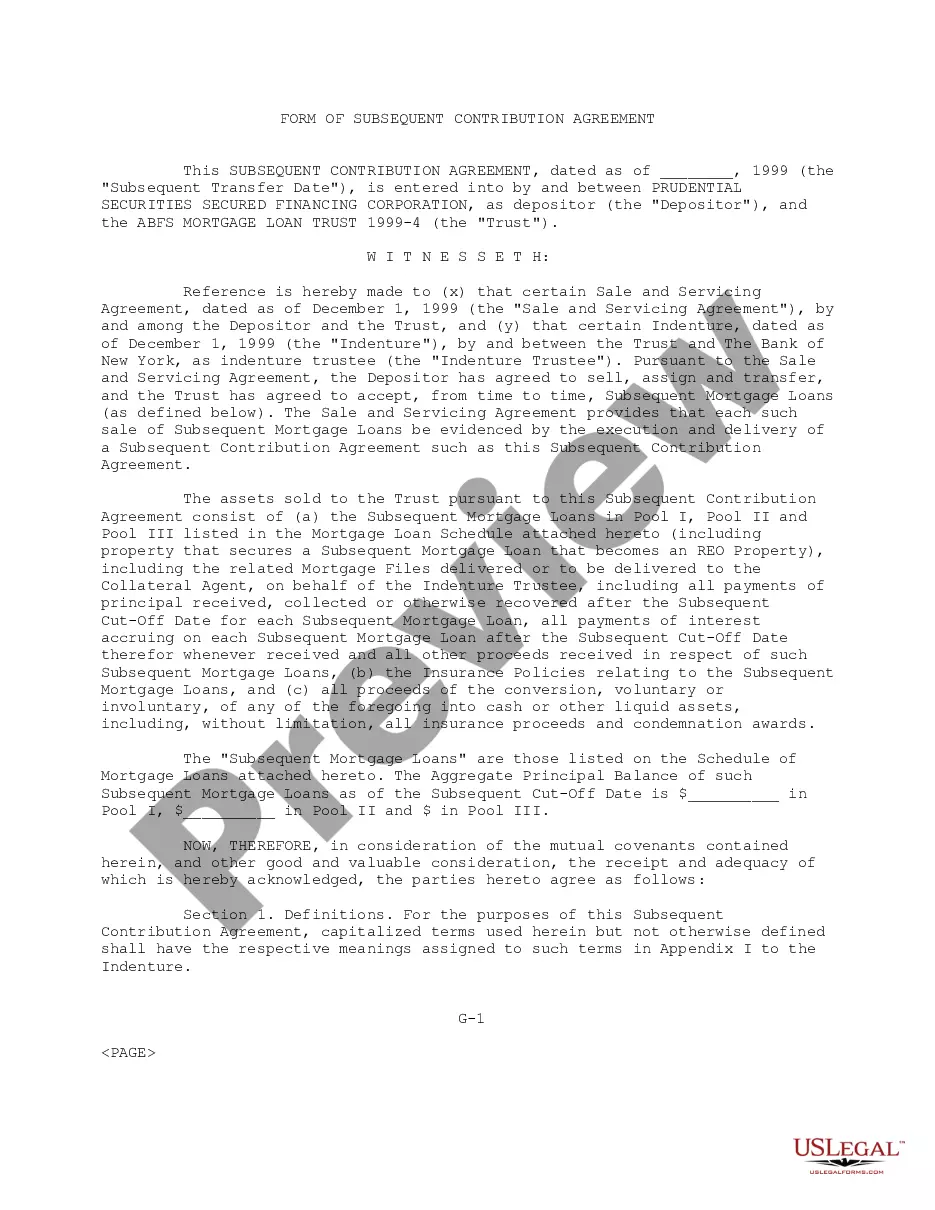
The Underwriting Agreement of ABFS Mortgage Loan Trust 1999-4 and Prudential Securities, Inc. outlines the terms under which Prudential Securities will underwrite and sell specific mortgage loan-backed securities for ABFS Mortgage Loan Trust. This agreement is essential for facilitating the issuance and sale of securities backed by mortgage loans, typically used in the financial and investment sectors. Unlike general financial contracts, this underwriting agreement is specifically tailored to the unique requirements and regulations governing mortgage-backed securities.
Key parts of this document
- Identification of the Depositor and Underwriter, along with their roles.
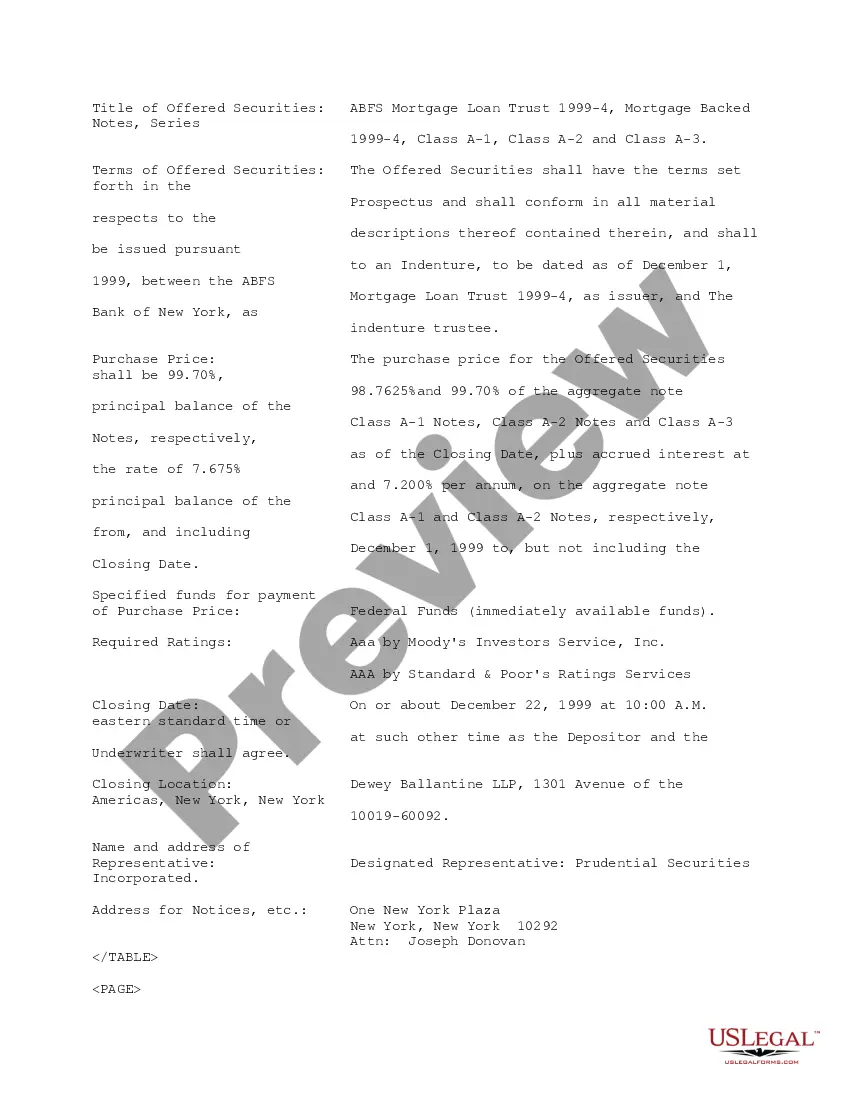
- Details on the Offered Securities, including specific classes and their terms.
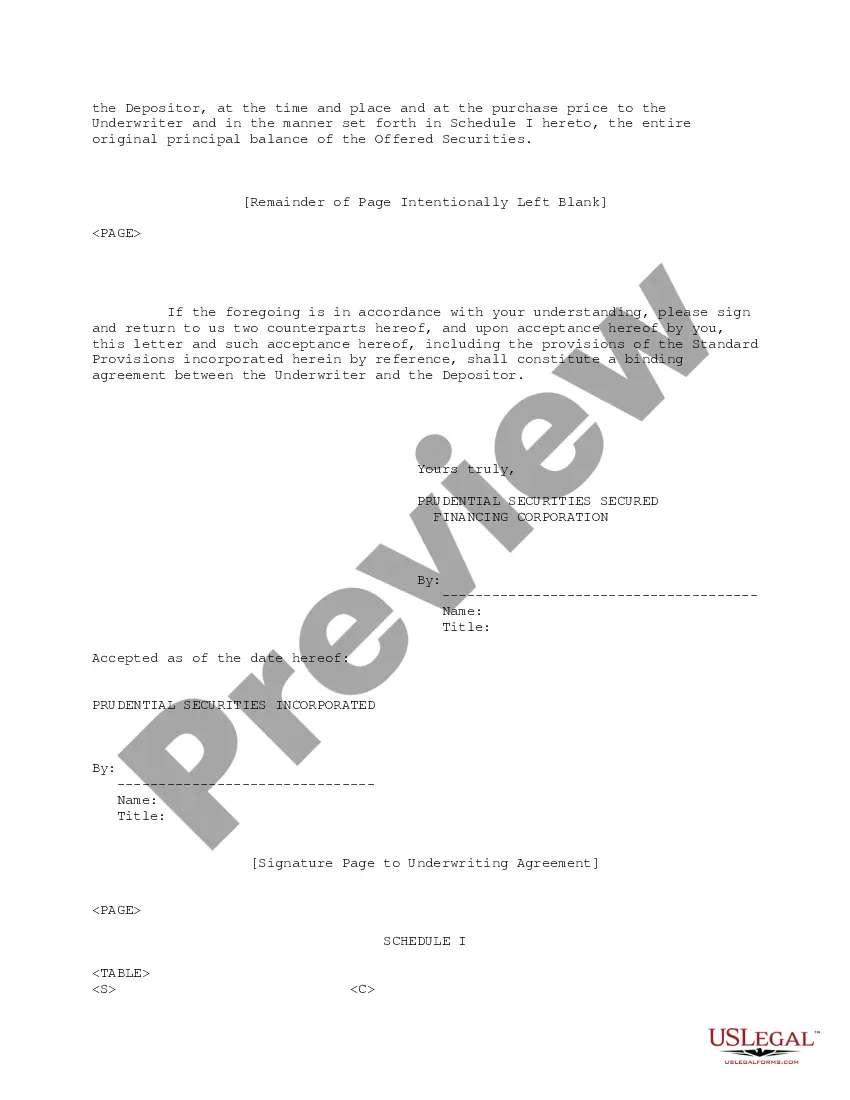
- Provisions for the purchase, sale, and delivery of the Offered Securities.
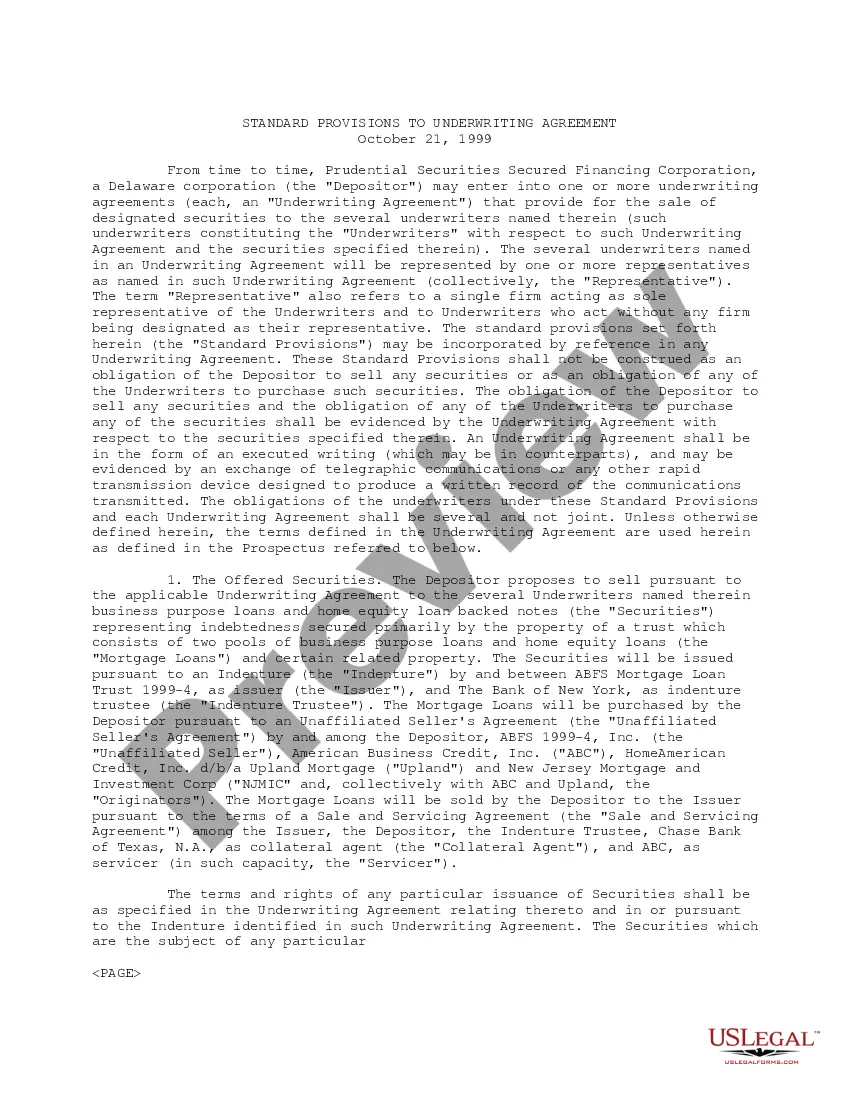
- Standard Provisions section outlining general terms applicable to the agreement.
- Indemnification clauses protecting parties in case of legal or financial claims.

When to use this document
This form should be used when a financial institution or individual intends to underwrite mortgage loan-backed securities. It is relevant in situations where a company seeks to issue these securities publicly, ensuring compliance with relevant federal regulations. It's typically utilized by underwriters like Prudential Securities for investor protection and to fulfill regulatory requirements during the security's issuance process.
Who needs this form
- Investment firms looking to underwrite securities backed by mortgage loans.
- Banks and financial institutions involved in issuing mortgage-backed securities.
- Corporate treasurers managing the investment and funding strategies of their organization.
- Legal representatives drafting financial contracts for clients engaged in securities offerings.
How to complete this form
- Identify the parties involved: the Depositor and the Underwriter.
- Specify the Offered Securities, detailing classes and terms as outlined in Schedule I.
- Enter the purchase price and payment details, ensuring correct financial terms are included.
- Complete the signature section for both the Depositor and Underwriter to finalize the agreement.
- Review the Standard Provisions to ensure all necessary conditions and requirements are met.
Notarization guidance
Notarization is generally not required for this form. However, certain states or situations might demand it. You can complete notarization online through US Legal Forms, powered by Notarize, using a verified video call available anytime.
Get your form ready online
Our built-in tools help you complete, sign, share, and store your documents in one place.
Make edits, fill in missing information, and update formatting in US Legal Forms—just like you would in MS Word.
Download a copy, print it, send it by email, or mail it via USPS—whatever works best for your next step.
Sign and collect signatures with our SignNow integration. Send to multiple recipients, set reminders, and more. Go Premium to unlock E-Sign.
If this form requires notarization, complete it online through a secure video call—no need to meet a notary in person or wait for an appointment.
We protect your documents and personal data by following strict security and privacy standards.

Make edits, fill in missing information, and update formatting in US Legal Forms—just like you would in MS Word.

Download a copy, print it, send it by email, or mail it via USPS—whatever works best for your next step.

Sign and collect signatures with our SignNow integration. Send to multiple recipients, set reminders, and more. Go Premium to unlock E-Sign.

If this form requires notarization, complete it online through a secure video call—no need to meet a notary in person or wait for an appointment.

We protect your documents and personal data by following strict security and privacy standards.
Common mistakes
- Failing to accurately describe the Offered Securities, leading to confusion or legal issues.
- Omitting important signatures from either party, making the agreement invalid.
- Not specifying the purchase price clearly or incorrectly calculating it.
Benefits of completing this form online
- Convenience: Downloadable formats allow for immediate access and completion.
- Editability: Users can fill out the form at their own pace and make necessary adjustments.
- Reliability: Forms are drafted by licensed attorneys, ensuring compliance with current laws.
Legal use & context
- The agreement serves as a binding contract between the underwriter and the depositor, ensuring both parties adhere to their commitments.
- It outlines the legal obligations of each party, protecting against potential liabilities.
- Understanding the agreement's terms is crucial for enforceability in case of disputes.
What to keep in mind
- The Underwriting Agreement is essential for the successful issuance of mortgage-backed securities.
- Accurate completion can prevent legal issues and misunderstandings between parties.
- This form can adapt to a variety of financial settings, highlighting its importance in structured finance.
Looking for another form?
Form popularity
FAQ
Yes, you can place real property with a mortgage into a revocable living trust.So, to summarize, it's fine to put your house into a revocable trust to avoid probate, even if that house is subject to a mortgage.
The lender gives the borrower the money to buy the home in exchange for one or more promissory notes, while the trustee holds the legal title to the property until the loan is paid off. Some states use this method instead of a traditional mortgage.
A Mortgage Agreement is a pledge by a borrower that they will relinquish their claim to the property if they cannot pay their loan. Contrary to common belief, a Mortgage Agreement isn't the loan itself; it's a lien on the property.A Mortgage Agreement is the remedy in case the loan isn't repaid.
A mortgage in trust may be something that you have never previously considered, but it may be appropriate. Anyone who owns property can put their mortgage in a revocable living trust so as to not deal with the probate process after death and utilize other estate planning benefits.
Trust Agreement or Trust Deed is an agreement in which one person transfers ones assets to another person (Trustee). In accordance with the terms of this agreement it is possible to transfer money, securities, real estate, personal and intellectual property and other ownership rights.
Whether you have a deed of trust or a mortgage, they both serve to assure that a loan is repaid, either to a lender or an individual person. A mortgage only involves two parties the borrower and the lender. A deed of trust adds an additional party, a trustee, who holds the home's title until the loan is repaid.
A Deed of Trust is essentially an agreement between a lender and a borrower to give the property to a neutral third party who will serve as a trustee. The trustee holds the property until the borrower pays off the debt.The trustee, however, holds the legal title to the property.
They serve different purposes and are signed by different parties. The warranty deed transfers the property's ownership from the current owner to the new buyer, while the deed of trust ensures the lender has interest in the property in the event a buyer defaults on the loan.
A trust agreement is a document that spells out the rules that you want followed for property held in trust for your beneficiaries. Common objectives for trusts are to reduce the estate tax liability, to protect property in your estate, and to avoid probate.