Plan of Merger between two corporations
What this document covers
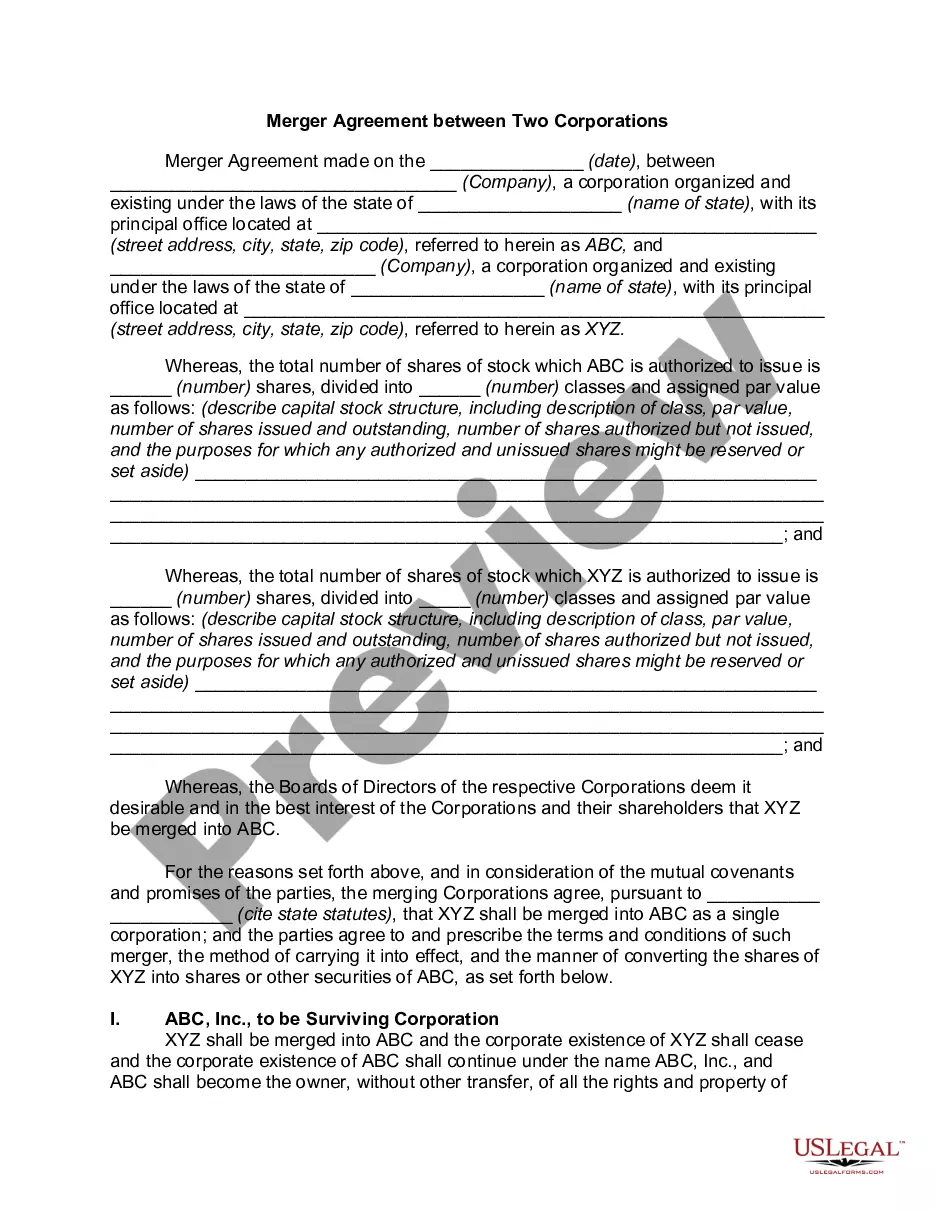
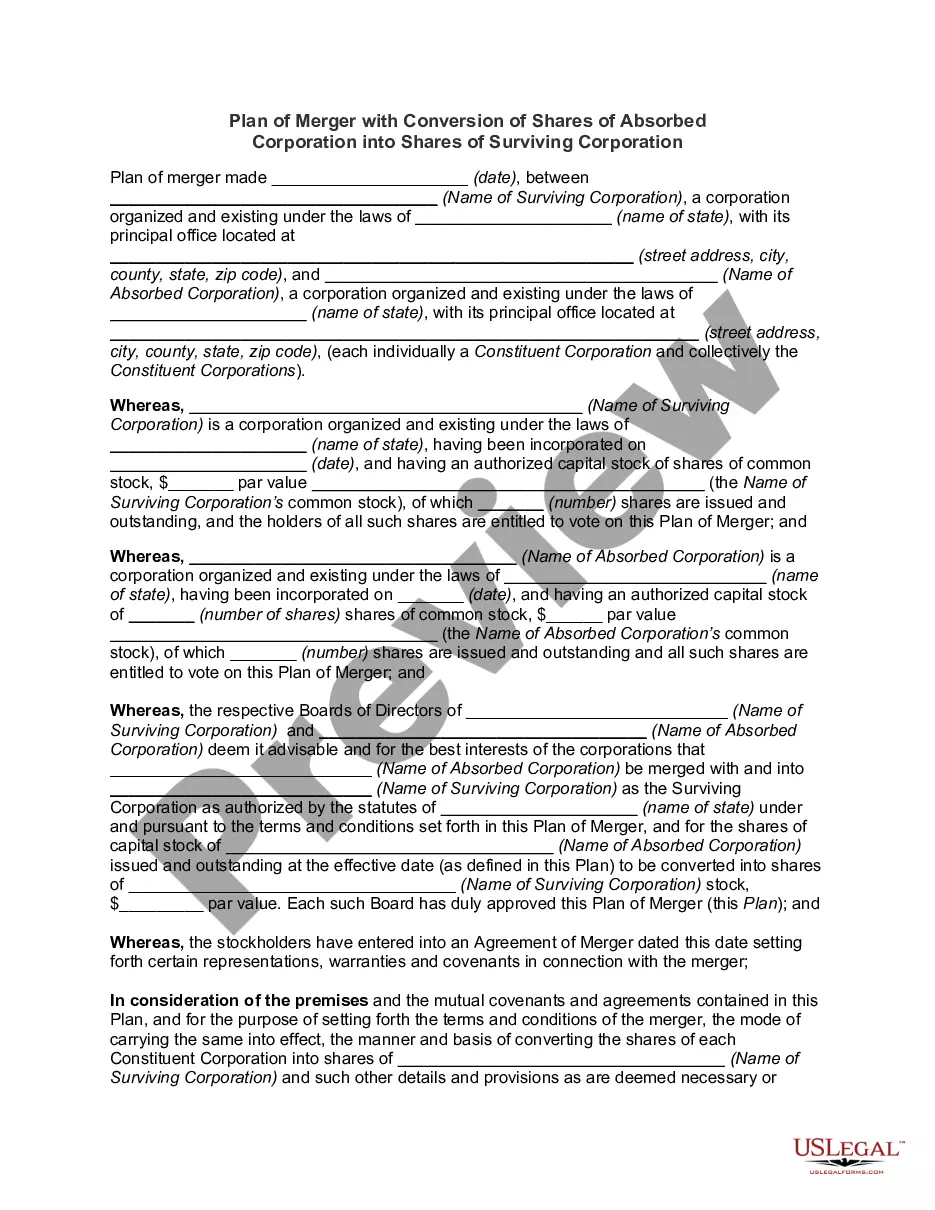
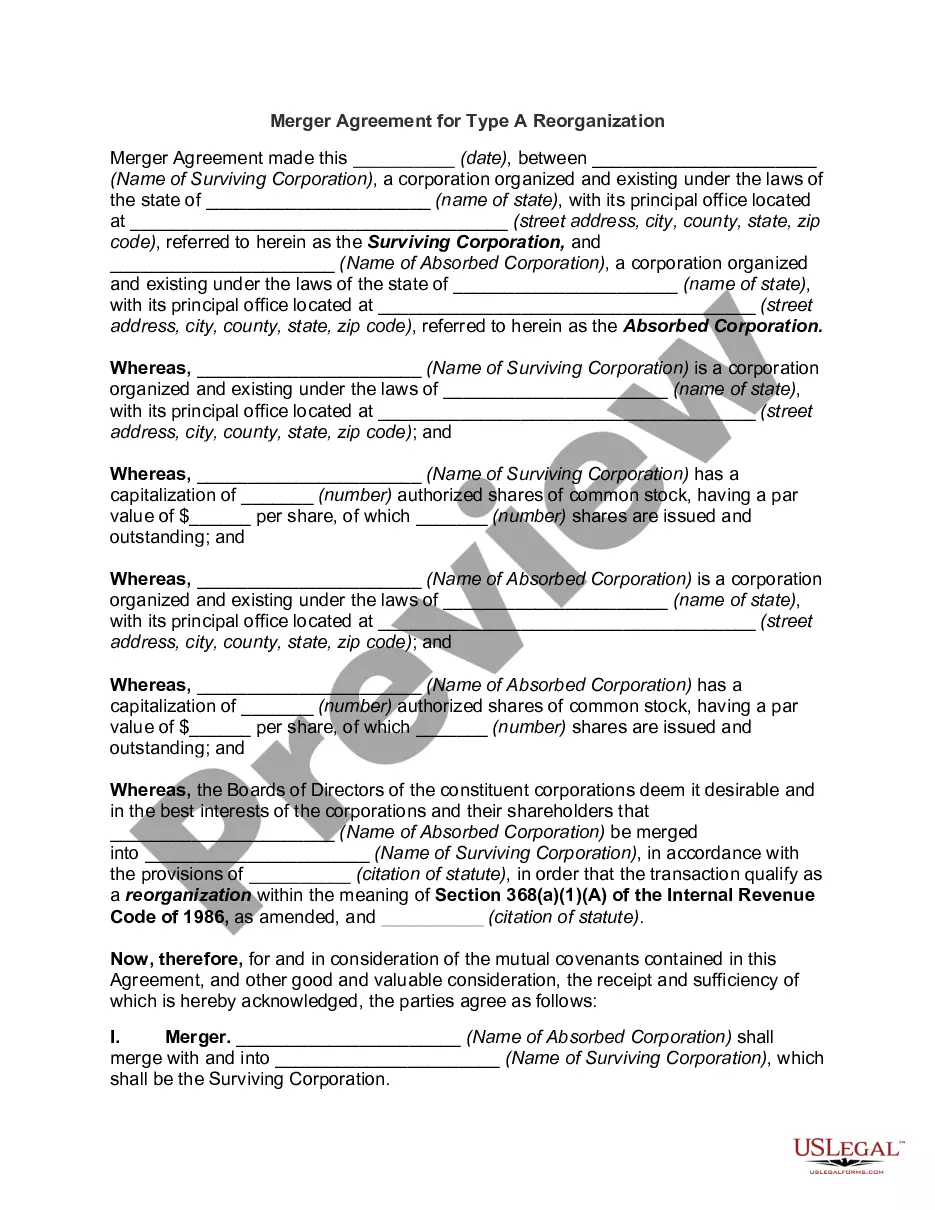
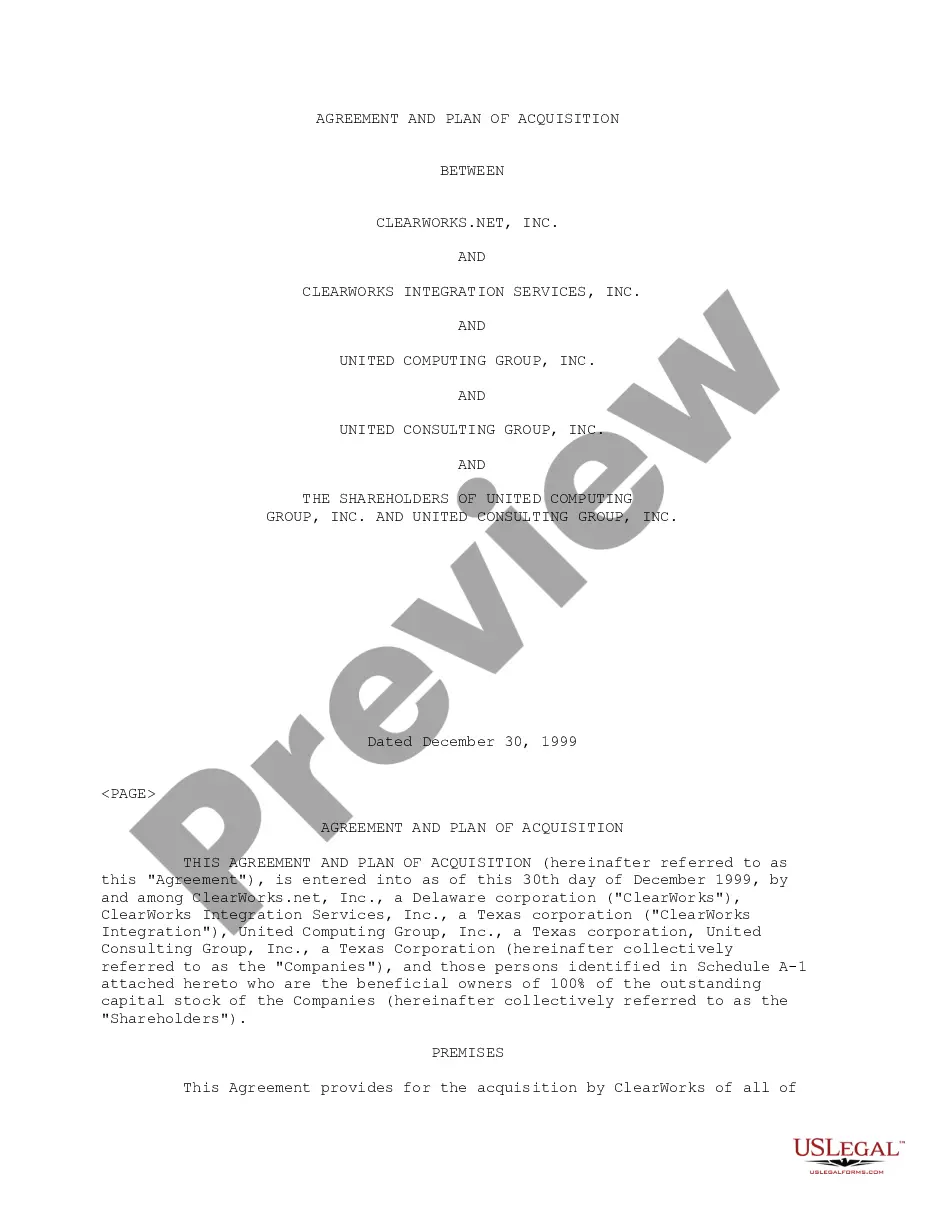
This Plan of Merger form is a legal document that establishes the agreement for merging two corporations. It outlines the terms and conditions under which one corporation will absorb another, resulting in the transfer of assets, liabilities, and operations. Specifically designed for corporate transactions, this merger agreement differentiates itself from other types of agreements by explicitly detailing the process of fusion between two corporate entities, ensuring legal clarity and enforceability.
Key components of this form
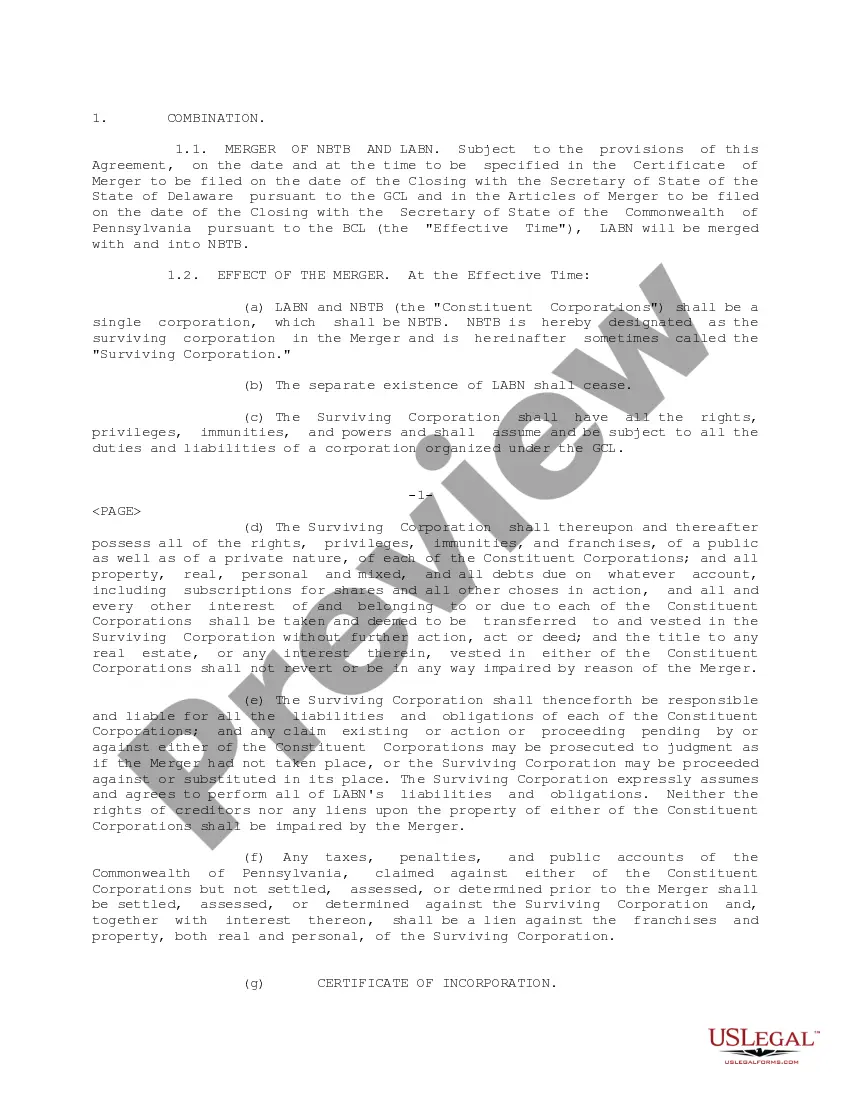
- Combination details, including merger execution and effects.
- Consideration for the merger, specifying share exchanges and payments.
- Conditions precedent to the merger, such as approvals from regulatory bodies and shareholder votes.
- Rights and duties post-merger, including stock option treatments and employee benefits.
- Termination clauses and procedures for breach or withdrawal from the agreement.











Situations where this form applies
This form should be used when two corporations intend to merge into a single entity. It is essential in situations where one company aims to acquire another and consolidate operations, assets, and liabilities. This merger plan is particularly relevant for corporate boards and legal teams preparing for significant corporate restructuring, ensuring compliance with legal and regulatory requirements.
Intended users of this form
This form is intended for:
- C corporate executives and board members planning a merger.
- Legal professionals assisting with corporate merger transactions.
- Shareholders involved in the approval process of a merger agreement.
- Financial advisors evaluating merger implications for their clients.
How to prepare this document
- Identify and provide the names and principal offices of both corporations involved in the merger.
- Specify the details of the merger, including the nature of the process and timeline for execution.
- Outline the consideration, detailing the stock exchange ratio and any cash payments.
- List any preconditions, such as necessary approvals from shareholders and regulatory boards.
- All signatories, including officers from both corporations, must sign and date the agreement.
Is notarization required?
This form does not typically require notarization unless specified by local law. It's crucial to confirm any jurisdiction-specific requirements before submission.
Get your form ready online
Our built-in tools help you complete, sign, share, and store your documents in one place.
Make edits, fill in missing information, and update formatting in US Legal Forms—just like you would in MS Word.
Download a copy, print it, send it by email, or mail it via USPS—whatever works best for your next step.
Sign and collect signatures with our SignNow integration. Send to multiple recipients, set reminders, and more. Go Premium to unlock E-Sign.
If this form requires notarization, complete it online through a secure video call—no need to meet a notary in person or wait for an appointment.
We protect your documents and personal data by following strict security and privacy standards.

Make edits, fill in missing information, and update formatting in US Legal Forms—just like you would in MS Word.

Download a copy, print it, send it by email, or mail it via USPS—whatever works best for your next step.

Sign and collect signatures with our SignNow integration. Send to multiple recipients, set reminders, and more. Go Premium to unlock E-Sign.

If this form requires notarization, complete it online through a secure video call—no need to meet a notary in person or wait for an appointment.

We protect your documents and personal data by following strict security and privacy standards.
Common mistakes
- Forgetting to obtain required shareholder approvals before executing the merger.
- Not specifying the effective date of the merger clearly within the agreement.
- Failing to list and agree upon preconditions that need to be met for the merger.
- Neglecting to review the potential tax implications associated with the merger.
Why complete this form online
- Convenient access to the latest legal templates and updates.
- Easy customization to meet specific merger requirements.
- Secure storage for all legal documentation in one place.
- Guidance through the form completion process to reduce errors.
Looking for another form?




Form popularity
FAQ
Mergers combine two separate businesses into a single new legal entity. True mergers are uncommon because it's rare for two equal companies to mutually benefit from combining resources and staff, including their CEOs. Unlike mergers, acquisitions do not result in the formation of a new company.
A merger is when two corporations combine to form a new entity.The stocks of both companies in a merger are surrendered, and new equity shares are issued for the combined entity. An acquisition is when one company takes over another company, and the acquiring company becomes the owner of the target company.
A merger typically occurs when one company purchases another company by buying a certain amount of its stock in exchange for its own stock.Shareholders are able to vote on whether a merger should take place or not. Analyzing the financial statements of both companies can help determine what the merger might look like.
Types of Mergers. The three main types of mergers are horizontal, vertical, and conglomerate. In a horizontal merger, companies at the same stage in the same industry merge to reduce costs, expand product offerings, or reduce competition.
Co-branding (also called brand partnership) as described in Co-Branding: The Science of Alliance, is when two companies form an alliance to work together thus creating marketing synergy.
A merger is the voluntary fusion of two companies on broadly equal terms into one new legal entity. The five major types of mergers are conglomerate, congeneric, market extension, horizontal, and vertical.
Develop an acquisition strategy. The first thing a buyer needs to do is strategize about how they will pursue an acquisition. Set M&A search criteria. Search for potential target companies. Start acquisition planning. Perform valuation.
During a true merger, two companies form a new entity by combining their teams and resources. During an acquisition, one company buys the other company and brings it into its fold. The acquiring company doesn't experience much, if any, change.