Right of Way Easement and Underground Conductor Agreement
What this document covers
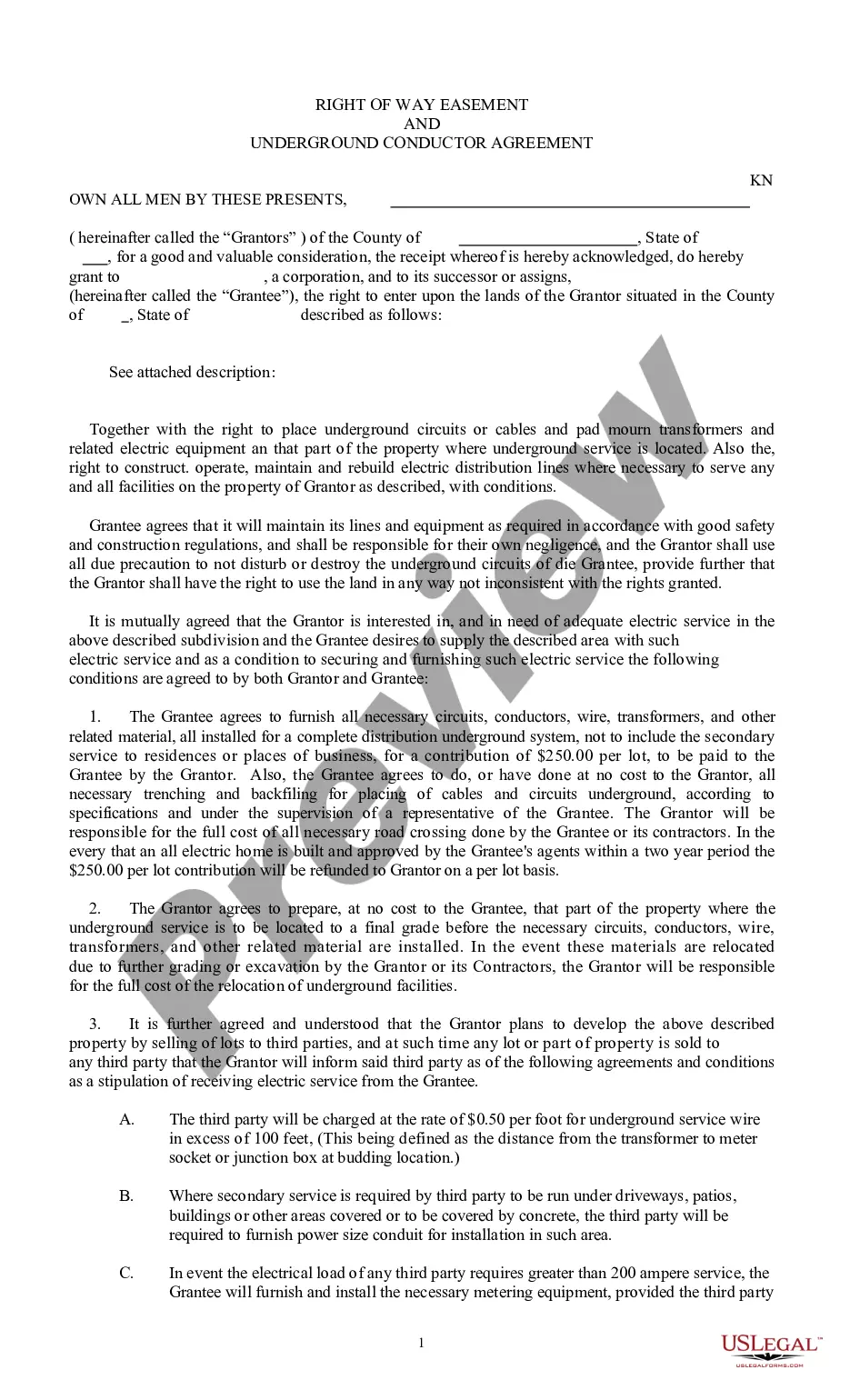
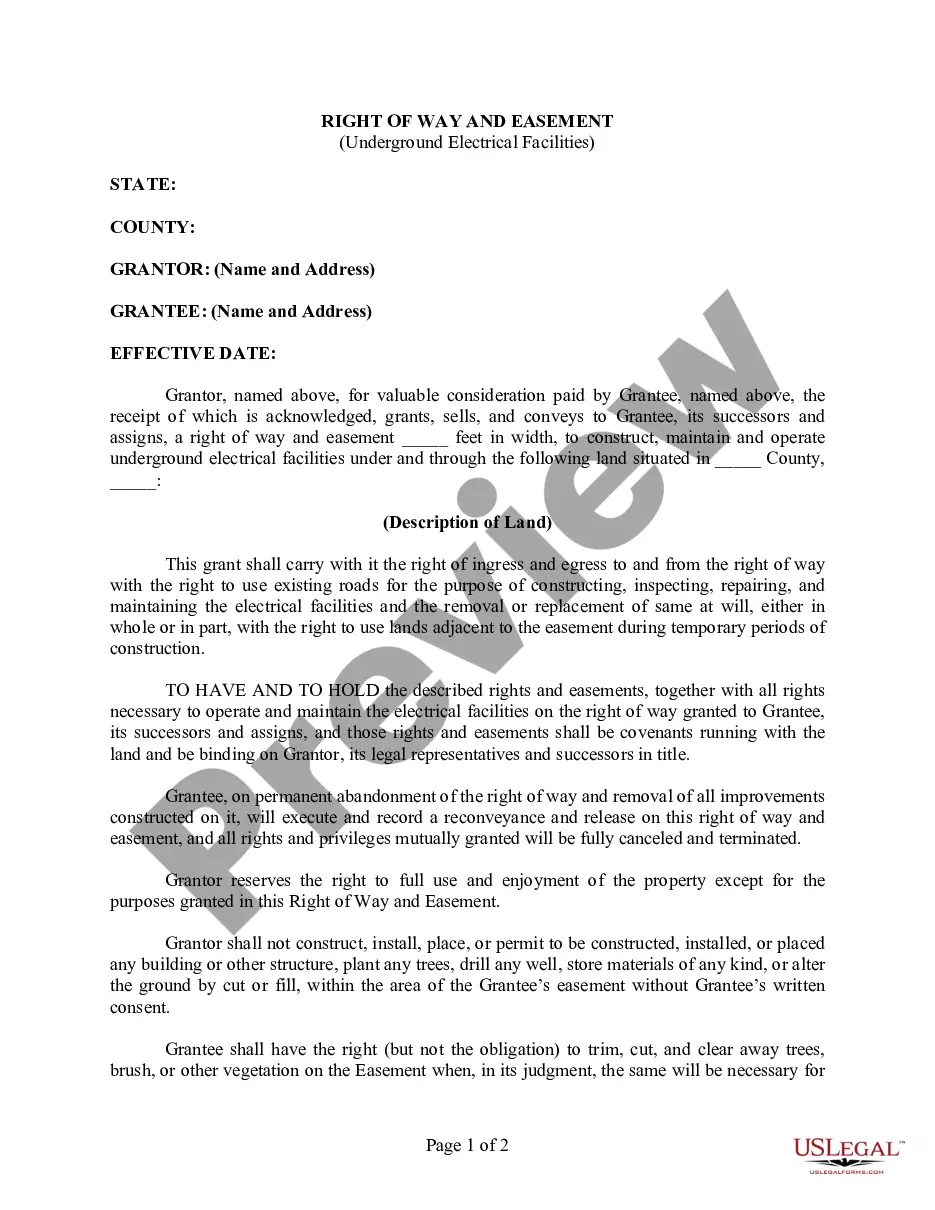
The Right of Way Easement and Underground Conductor Agreement is a legal form that establishes the rights of a utility provider to enter a property for the installation and maintenance of underground electrical circuits or cables. Unlike standard easements, this agreement specifically pertains to the placement of underground infrastructure and outlines the responsibilities of both the Grantee (utility provider) and Grantor (property owner). This form is essential in ensuring that all parties are legally protected and aware of their rights in the context of utility services.
Key components of this form
- Identification of the Grantee and Grantor
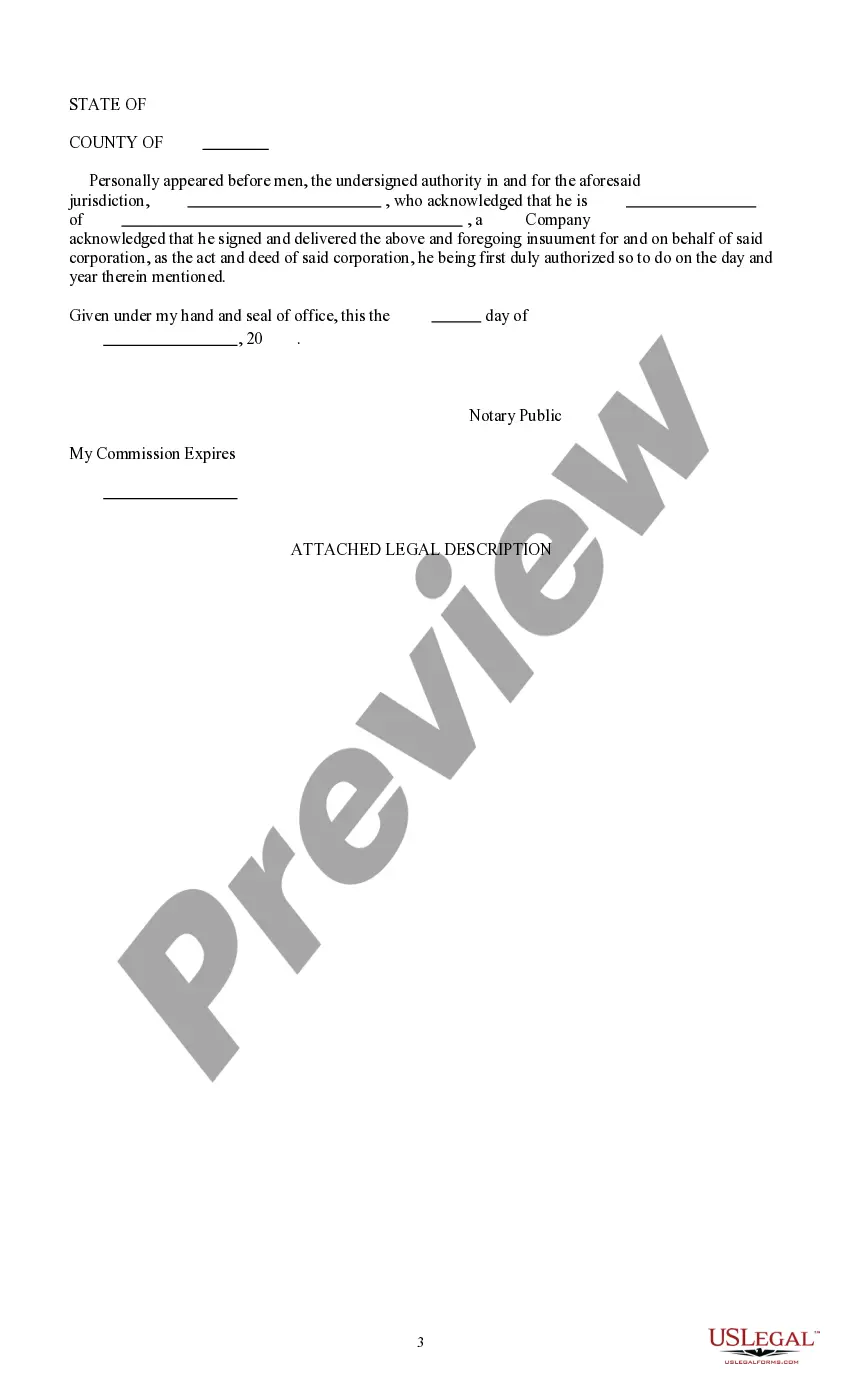
- Description of the property involved
- Rights granted to the Grantee for installation and maintenance
- Conditions and obligations for both parties
- Cost contribution details for underground utilities
- Utility service specifications for third-party property owners

When to use this form
This form is often used in scenarios involving the development of land where utilities need to be supplied underground. If you are a property owner seeking to allow a utility company access to install wiring, pipes, or other underground equipment, this agreement provides clear guidelines. Additionally, it can be relevant when new lots are being sold in a subdivision where electric service is necessary for future homeowners.
Intended users of this form
- Property owners or Grantors who plan to develop land
- Utility companies or Grantees providing underground services
- Developers selling lots in a subdivision
- Individuals involved in property transactions requiring utility access
Steps to complete this form
- Identify the parties involved: Fill in the names and contact information of the Grantor and Grantee.
- Specify the property: Clearly describe the location and boundaries of the property in question.
- Detail the rights granted: Outline the specific rights the Grantee has for installing and maintaining underground utilities.
- Enter financial terms: Input any cost contributions that the Grantor agrees to pay for utility services.
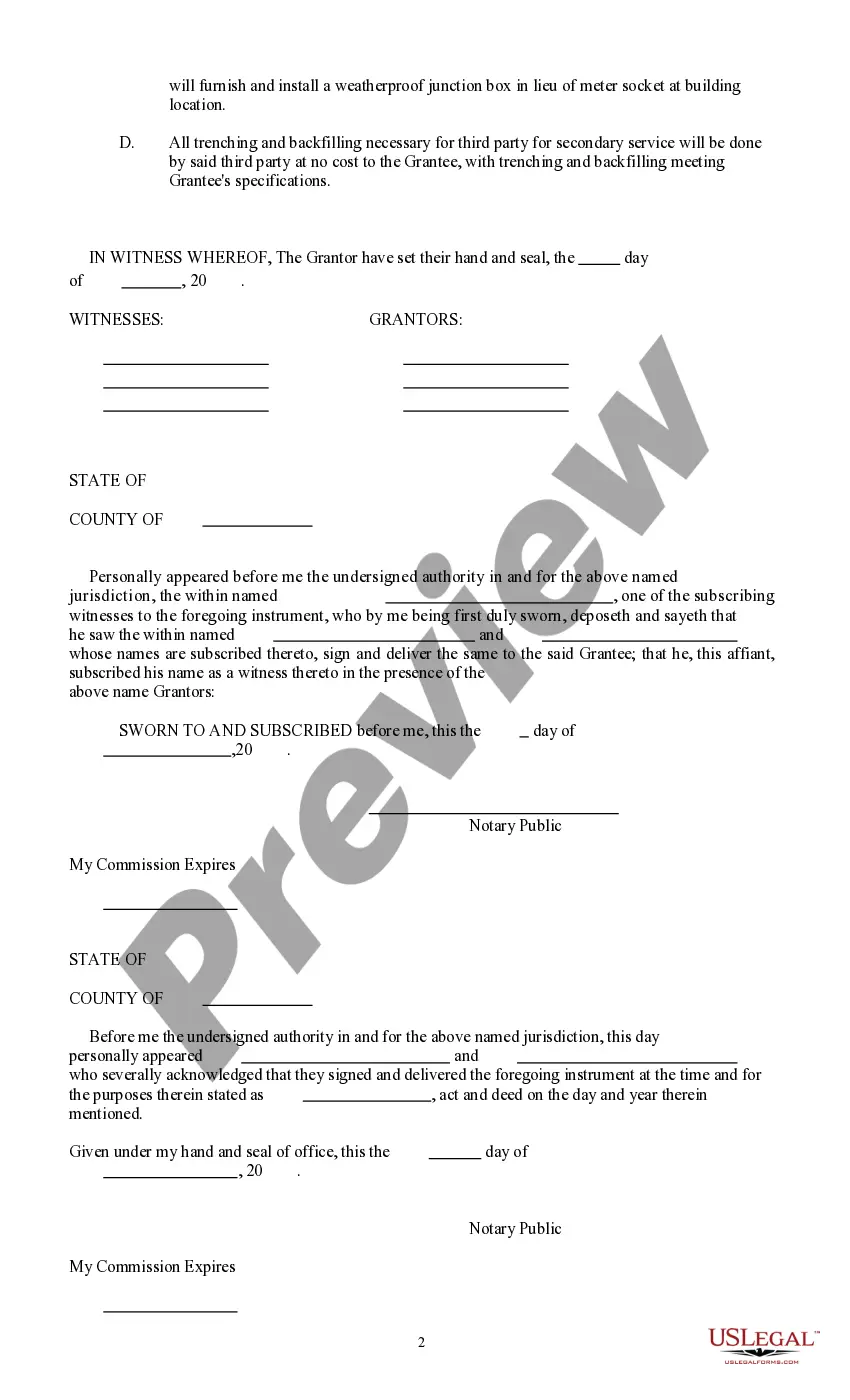
- Signatures: Ensure both parties sign the agreement to make it legally binding.
Does this document require notarization?
This form needs to be notarized to ensure legal validity. US Legal Forms provides secure online notarization powered by Notarize, allowing you to complete the process through a verified video call, available anytime.
Get your form ready online
Our built-in tools help you complete, sign, share, and store your documents in one place.
Make edits, fill in missing information, and update formatting in US Legal Forms—just like you would in MS Word.
Download a copy, print it, send it by email, or mail it via USPS—whatever works best for your next step.
Sign and collect signatures with our SignNow integration. Send to multiple recipients, set reminders, and more. Go Premium to unlock E-Sign.
If this form requires notarization, complete it online through a secure video call—no need to meet a notary in person or wait for an appointment.
We protect your documents and personal data by following strict security and privacy standards.

Make edits, fill in missing information, and update formatting in US Legal Forms—just like you would in MS Word.

Download a copy, print it, send it by email, or mail it via USPS—whatever works best for your next step.

Sign and collect signatures with our SignNow integration. Send to multiple recipients, set reminders, and more. Go Premium to unlock E-Sign.

If this form requires notarization, complete it online through a secure video call—no need to meet a notary in person or wait for an appointment.

We protect your documents and personal data by following strict security and privacy standards.
Common mistakes
- Failing to include a precise description of the property.
- Not clearly defining the rights being granted to the utility provider.
- Overlooking details regarding financial contributions and obligations.
- Forgetting to sign the agreement, making it unenforceable.
Why use this form online
- Easy access to professionally drafted templates tailored by licensed attorneys.
- Edit and customize the form to fit your specific needs conveniently.
- Secure storage and quick retrieval of important legal documents.
- Streamlined process that saves time compared to traditional paper forms.
Legal use & context
- This agreement creates a legally binding right for the Grantee to access the property for installation and maintenance of underground utilities.
- Failure to comply with the terms outlined in the agreement can result in legal disputes.
- The easement may be enforceable across property transfers, meaning subsequent owners must adhere to the agreement.
Looking for another form?


Form popularity
FAQ
A right of way is a type of easement granted or reserved over the land for transportation purposes, such as a highway, public footpath, rail transport, canal, as well as electrical transmission lines, oil and gas pipelines.In the case of an easement, it may revert to its original owners if the facility is abandoned.
A private Right of Way typically gives one land owner the right to use another's property, usually a road of some kind, to get to and from her land. This right is usually given in the form of a deed, much like a deed to property.
A: Firstly you should establish whether there is any legal right of way to the property.With an easement your mother may insist your neighbour removes the fence obstructing her right of way. That access has been blocked for two years is likely to be irrelevant. Easements can also be abandoned.
A: If the extent of a right of way is properly defined, the owner of the land over which the right of way passes cannot alter its route or insist on its removal without the consent of the person who benefits from the right ie. the neighbour above, or some other provisions permitting them to do so.
A Any substantial interference with a right of way is a nuisance in common law. The owner of the right (known as the dominant owner) can apply to court for an injunction and damages if the landowner (or servient owner) blocks it.
"National roads shall have a right of way of not less than twenty (20) meters, provided, that such minimum width may be reduced at the discretion of the Minister of Public Highways to fifteen (15) meters in highly urbanized areas and that a right of way of at least sixty (60) meters shall be reserved for roads
It is well established that for a gate to be an obstruction to a private right of way it must substantially interfere with the right of way.However, as in this case, three gates within less than 100 meteres of each other did amount to a substantial interference with the private right of way.
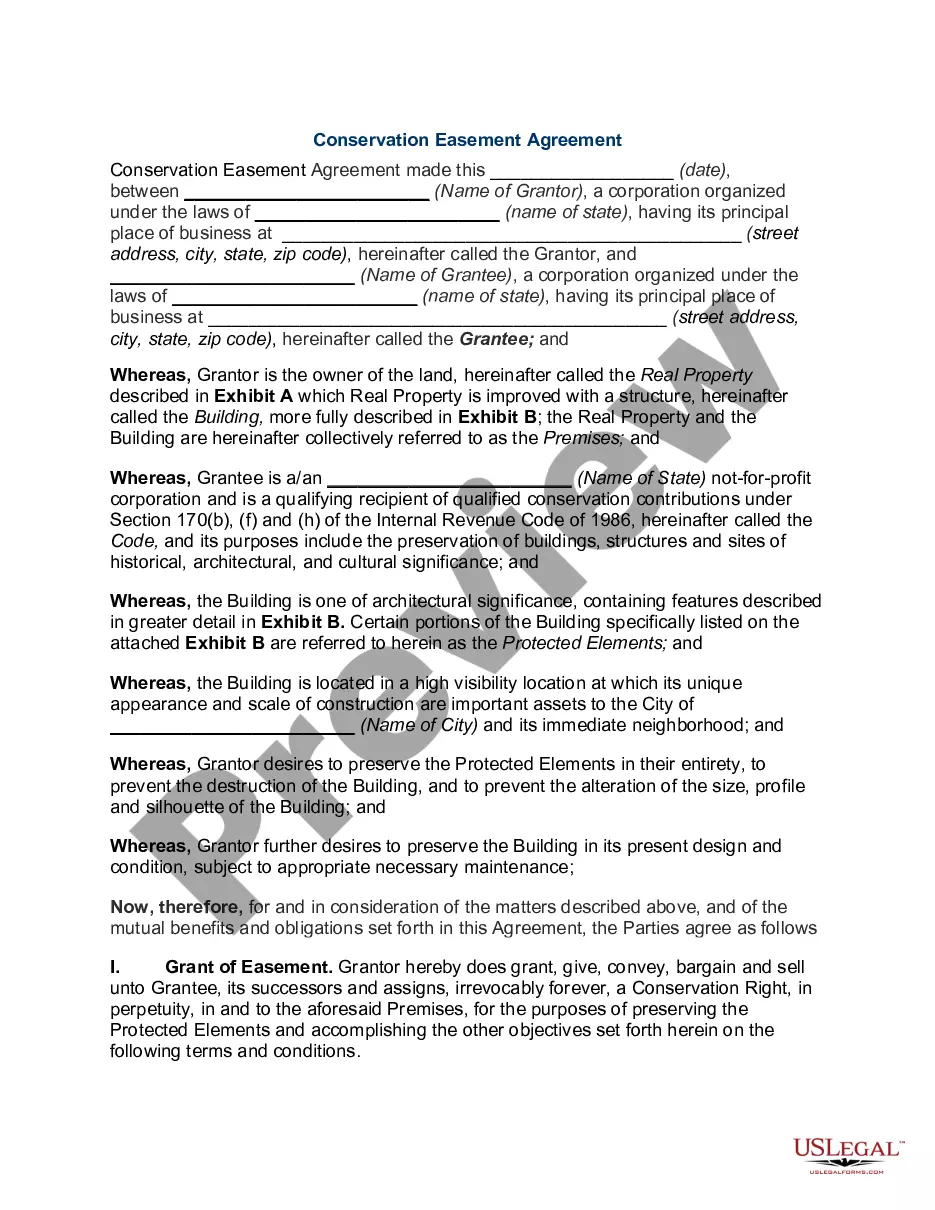
What are Easements and Rights-of-Way? Easements are nonpossessory interests in real property. More simply, an easement is the right to use another's property for a specific purpose. Rights-of-way are easements that specifically grant the holder the right to travel over another's property.