Directors Meeting Compliance with Requirements
Understanding this form
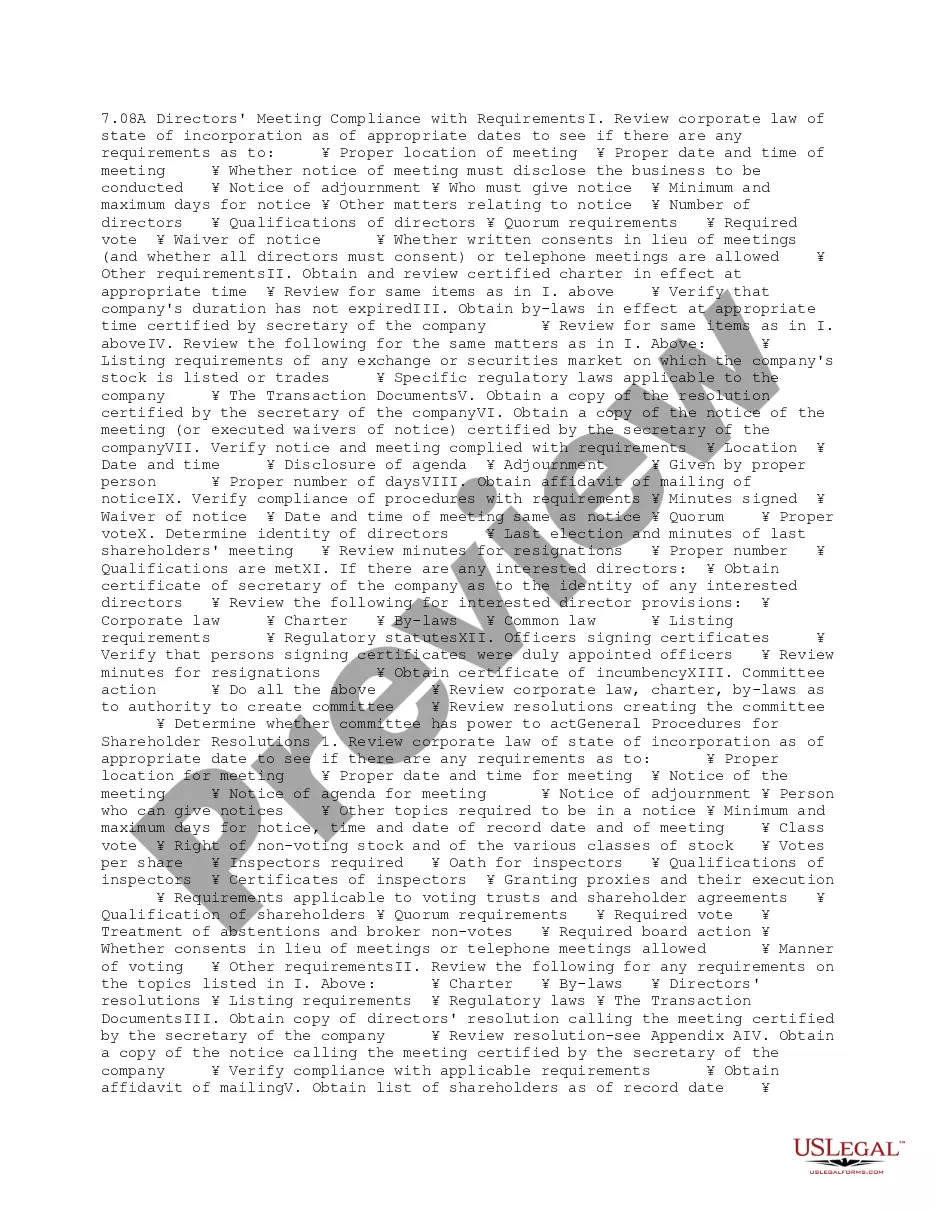
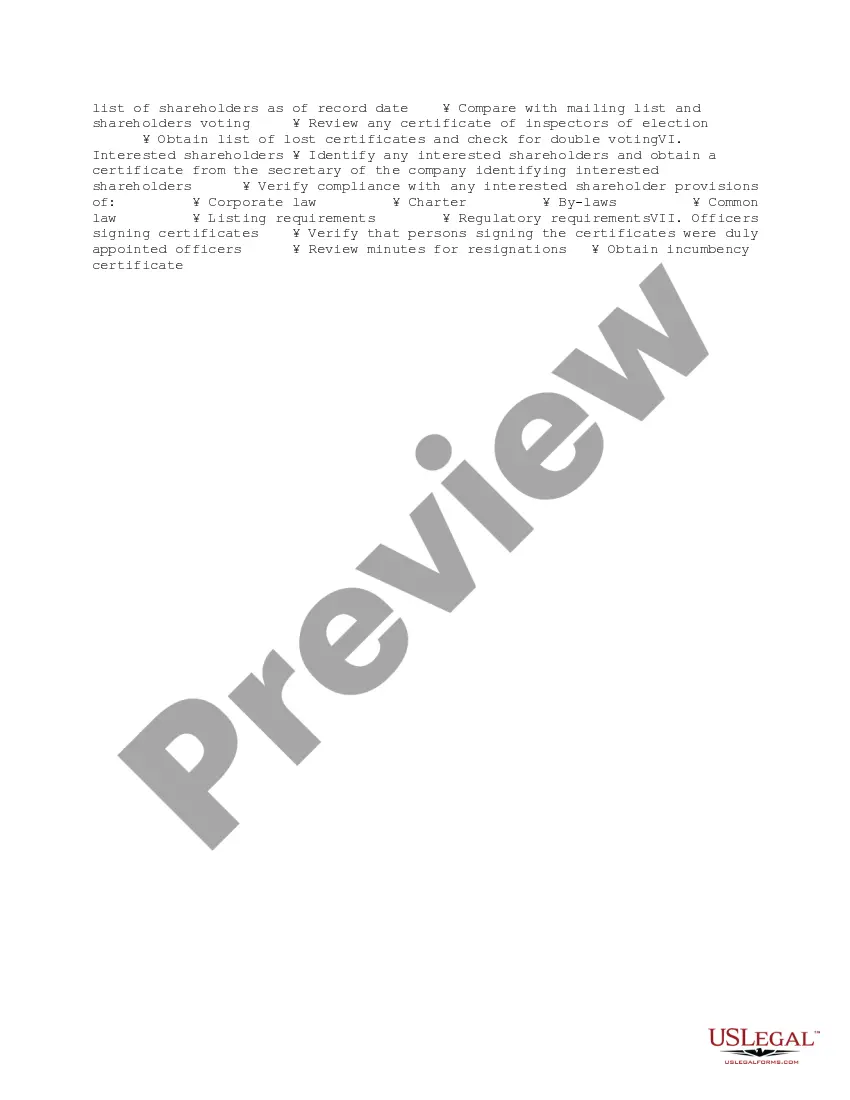
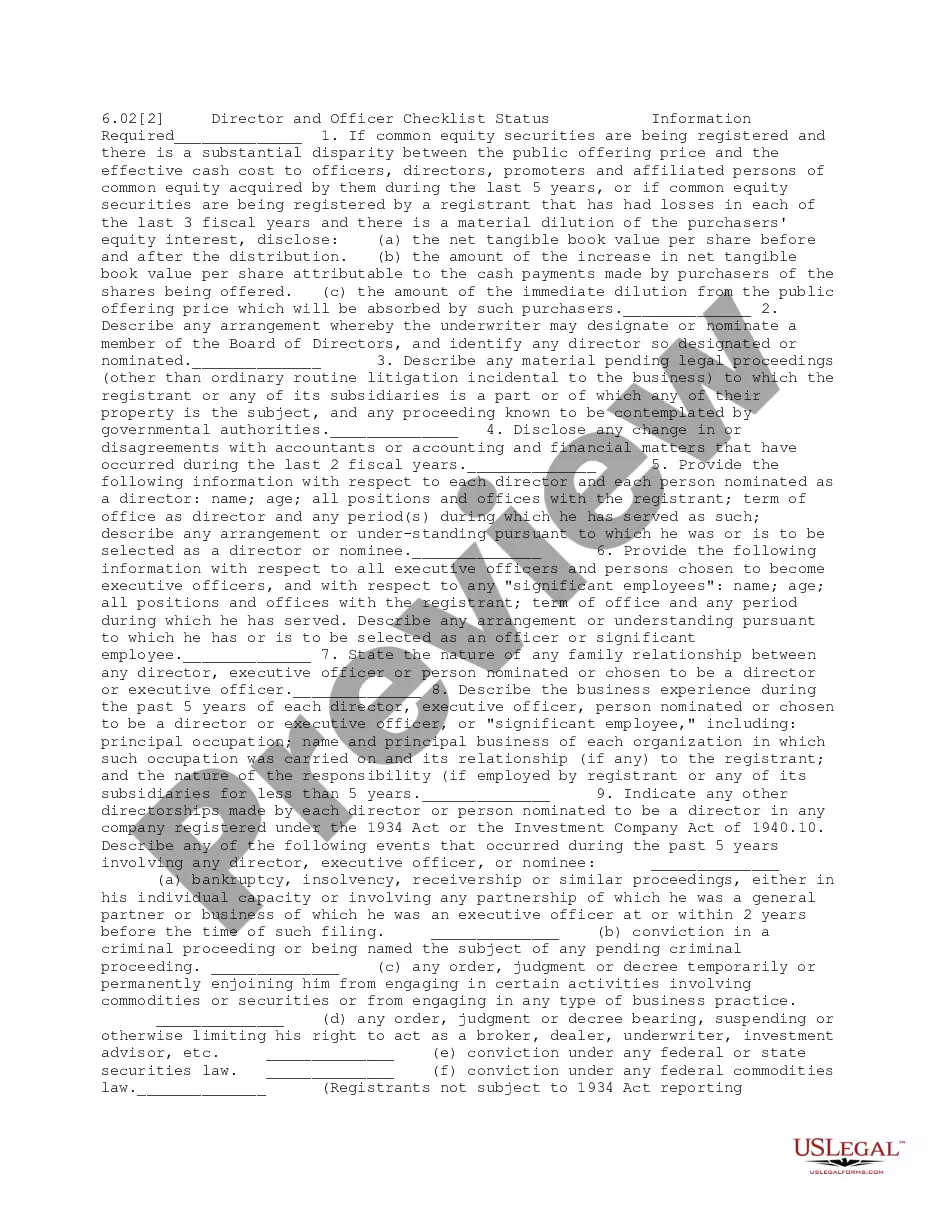
The Directors Meeting Compliance with Requirements form is a crucial legal document that helps ensure compliance with corporate law during directors' meetings. This form provides a comprehensive checklist of the necessary steps and requirements for conducting a valid meeting. Unlike other general meeting forms, this specific form focuses on the due diligence needed to fulfill legal obligations, making it essential for maintaining corporate governance and legal integrity.
Form components explained
- Review of corporate law requirements for the meeting's location, date, and time.
- Notices regarding the meeting and its agenda that must be disclosed.
- Verification of quorum requirements and the voting process.
- Documentation of by-laws and charter compliance.
- Identification of interested directors and adherence to corporate regulations.

When this form is needed
This form should be used when corporate directors plan to hold a meeting concerning business transactions that must comply with state regulations. It is particularly important during the negotiation of significant deals, amendments to by-laws, or anytime a meeting's validity could be questioned due to potential compliance issues.
Who can use this document
- Corporate directors or board members who are preparing for a meeting.
- Corporate secretaries responsible for meeting documentation.
- Legal professionals overseeing corporate governance.
- Shareholders involved in voting and decision-making processes.
How to complete this form
- Review the applicable corporate laws relating to directors' meetings in your state.
- Gather necessary documents, such as the company's charter and by-laws.
- Verify the required number of directors and their qualifications before the meeting.
- Prepare and send out meeting notices to all directors, ensuring compliance with state notice requirements.
- Document all actions taken and resolutions passed during the meeting with signed minutes.
Notarization requirements for this form
Notarization is not commonly needed for this form. However, certain documents or local rules may make it necessary. Our notarization service, powered by Notarize, allows you to finalize it securely online anytime, day or night.
Get your form ready online
Our built-in tools help you complete, sign, share, and store your documents in one place.
Make edits, fill in missing information, and update formatting in US Legal Forms—just like you would in MS Word.
Download a copy, print it, send it by email, or mail it via USPS—whatever works best for your next step.
Sign and collect signatures with our SignNow integration. Send to multiple recipients, set reminders, and more. Go Premium to unlock E-Sign.
If this form requires notarization, complete it online through a secure video call—no need to meet a notary in person or wait for an appointment.
We protect your documents and personal data by following strict security and privacy standards.

Make edits, fill in missing information, and update formatting in US Legal Forms—just like you would in MS Word.

Download a copy, print it, send it by email, or mail it via USPS—whatever works best for your next step.

Sign and collect signatures with our SignNow integration. Send to multiple recipients, set reminders, and more. Go Premium to unlock E-Sign.

If this form requires notarization, complete it online through a secure video call—no need to meet a notary in person or wait for an appointment.

We protect your documents and personal data by following strict security and privacy standards.
Common mistakes to avoid
- Failing to provide adequate notice of the meeting.
- Not verifying the attendance requirement for quorum.
- Neglecting to document the meeting minutes properly.
- Overlooking the need for disclosures regarding interested directors.
Why use this form online
- Convenience of downloading and filling out the form at your own pace.
- Ability to edit fields as per specific state requirements.
- Access to attorney-drafted templates ensuring legal validity.
- Reduced risk of errors by following a structured process.
Looking for another form?







Form popularity
FAQ
Discussing long- and short-term goals. Developing good working relationships with managers. Understanding the role of the agenda. Managing conflicts of interest.
The board of directors of a public limited company shall consist of minimum 3 members, and such board members are elected by the shareholders at the shareholders meeting. No requirements are set for the number of board members in private limited companies.
Meetings of the Board: -In addition to the first meeting to be held within thirty days of the date of incorporation, there shall be minimum of four Board meetings every year and not more one hundred and twenty days shall intervene between two consecutive Board meetings.
Have a purpose. Provide enough notice and appropriate materials for members to be prepared. Be chaired effectively. Follow proper meeting procedures and respect the time of board members. Have clear supporting documents such as an agenda, minutes and other reports.
The main legal considerations for holding meetings include: whether there are strict requirements to hold meetings or special rights to call a meeting. providing proper notice (time periods, content of notice and required recipients) meeting quorums (minimum number of people present to make a meeting valid)
Company performance. Future strategies. Key performance indicators (KPIs) Problems and opportunities. Making plans of action.
The law varies from state to state as to how often a board of directors meeting should be held; however, most are held at least once a year. A board of directors meeting may also be called when momentous decisions are necessary.
What's In. The minutes should include the title of the group that is meeting; the date, time, and venue; the names of those in attendance (including staff) and the person recording the minutes; and the agenda.
Recognize a quorum. Calling meeting to order. Approve the agenda and minutes. Communication and reports. Old/new/Other business. Close the meeting.