Notice to Debt Collector - Failure to Provide Mini-Miranda
About this form
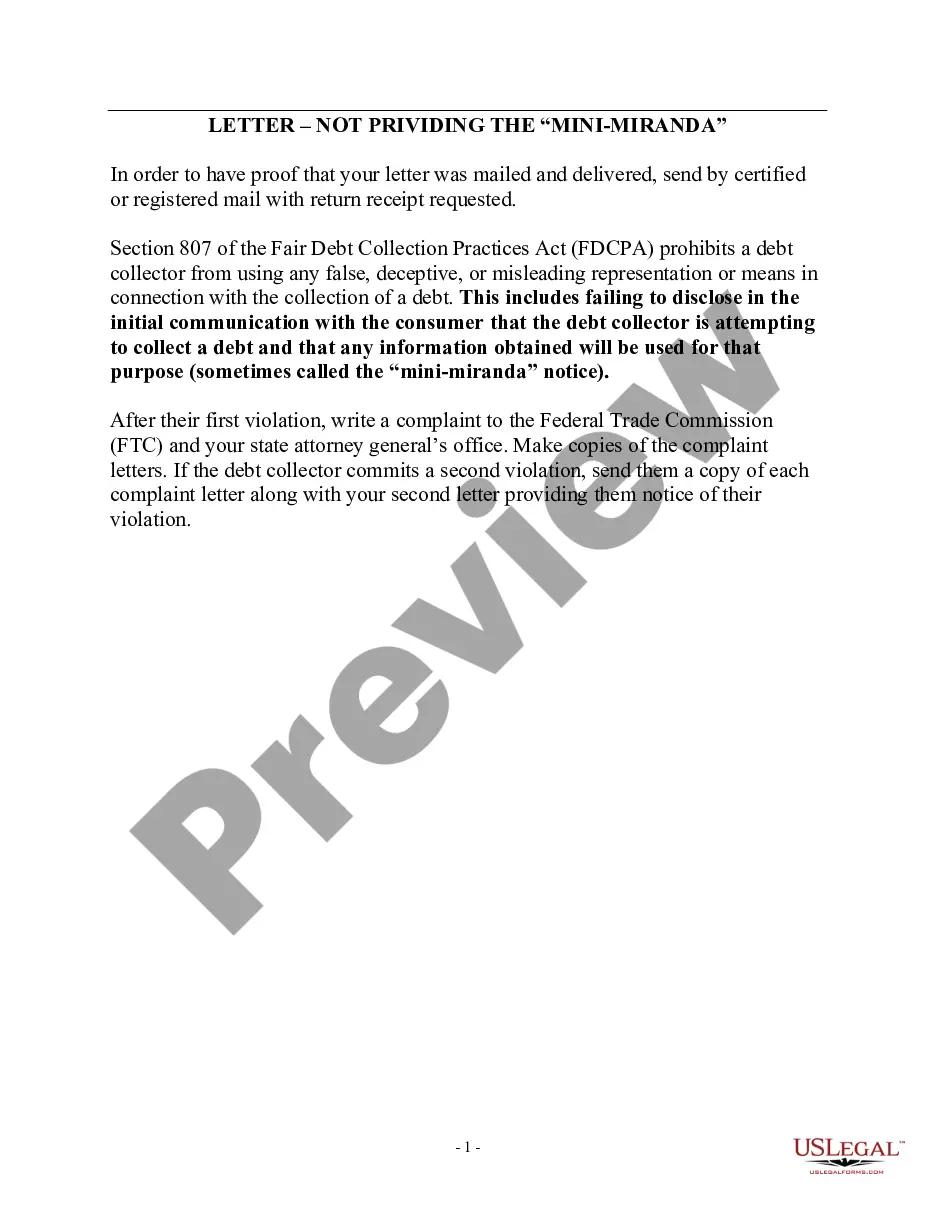
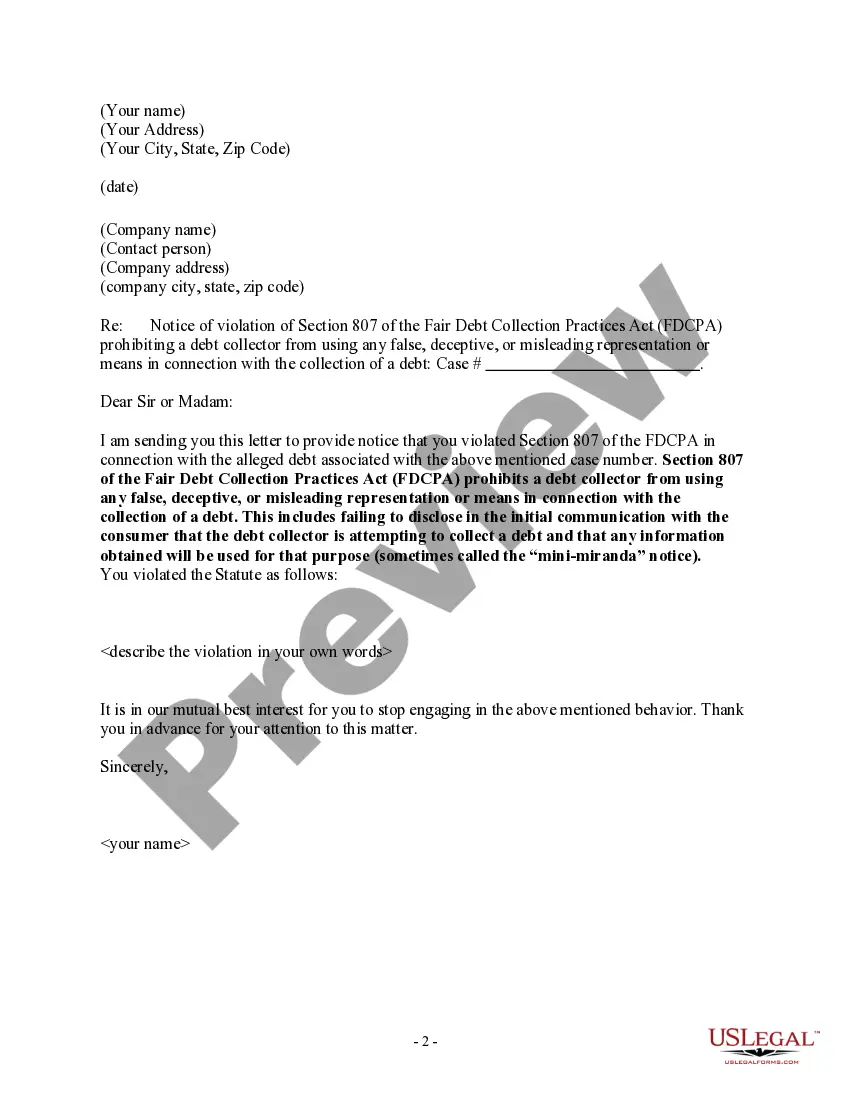
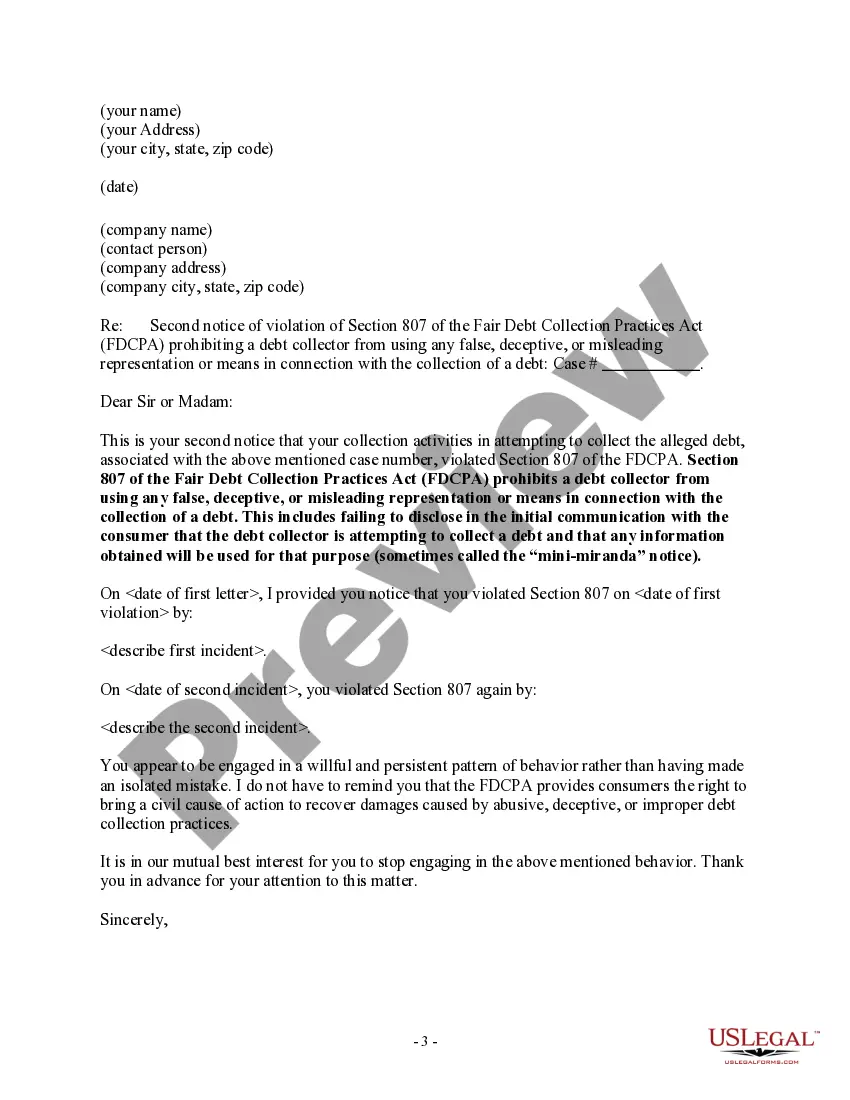
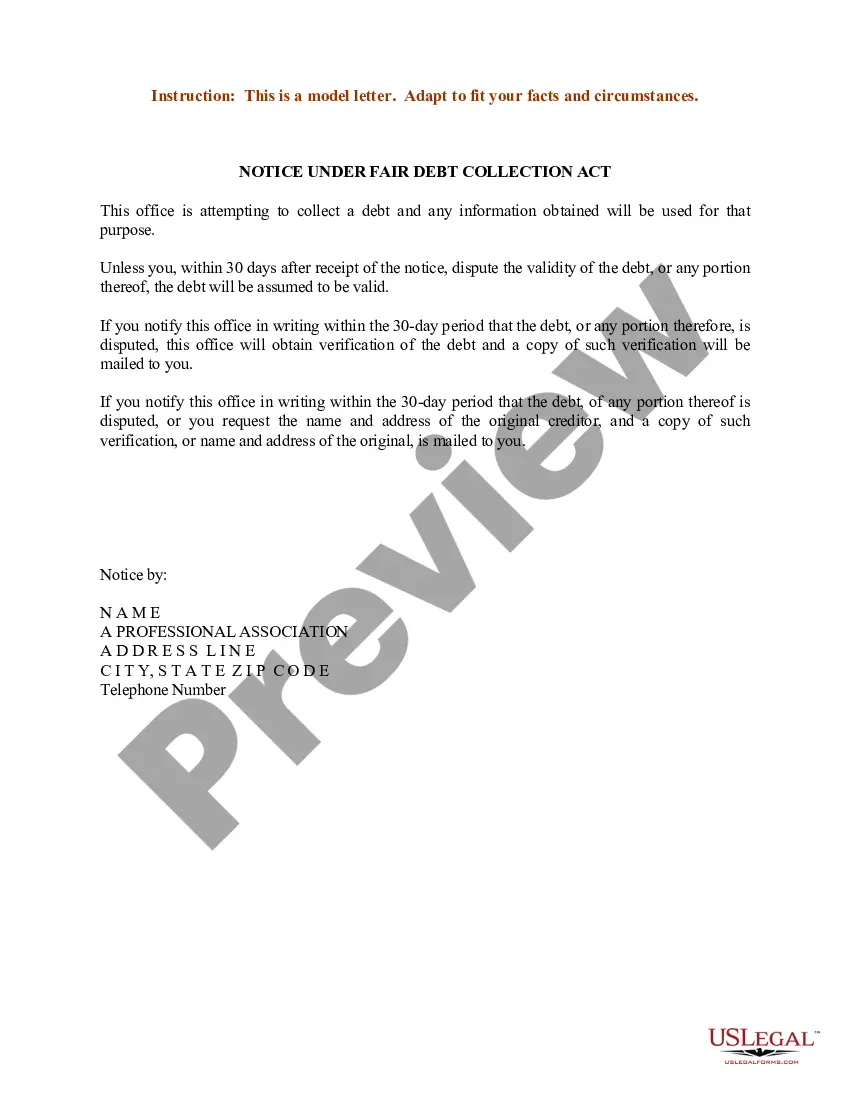
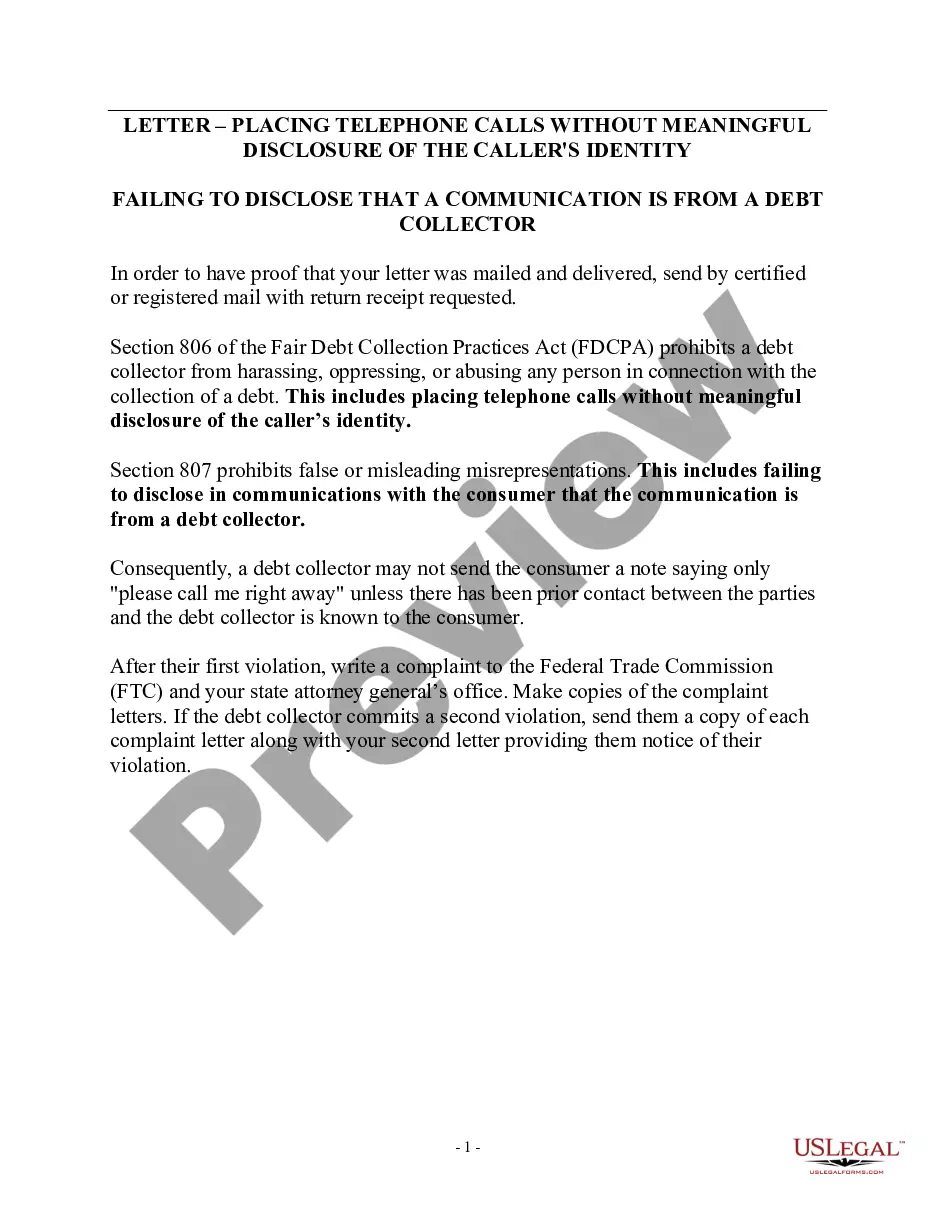
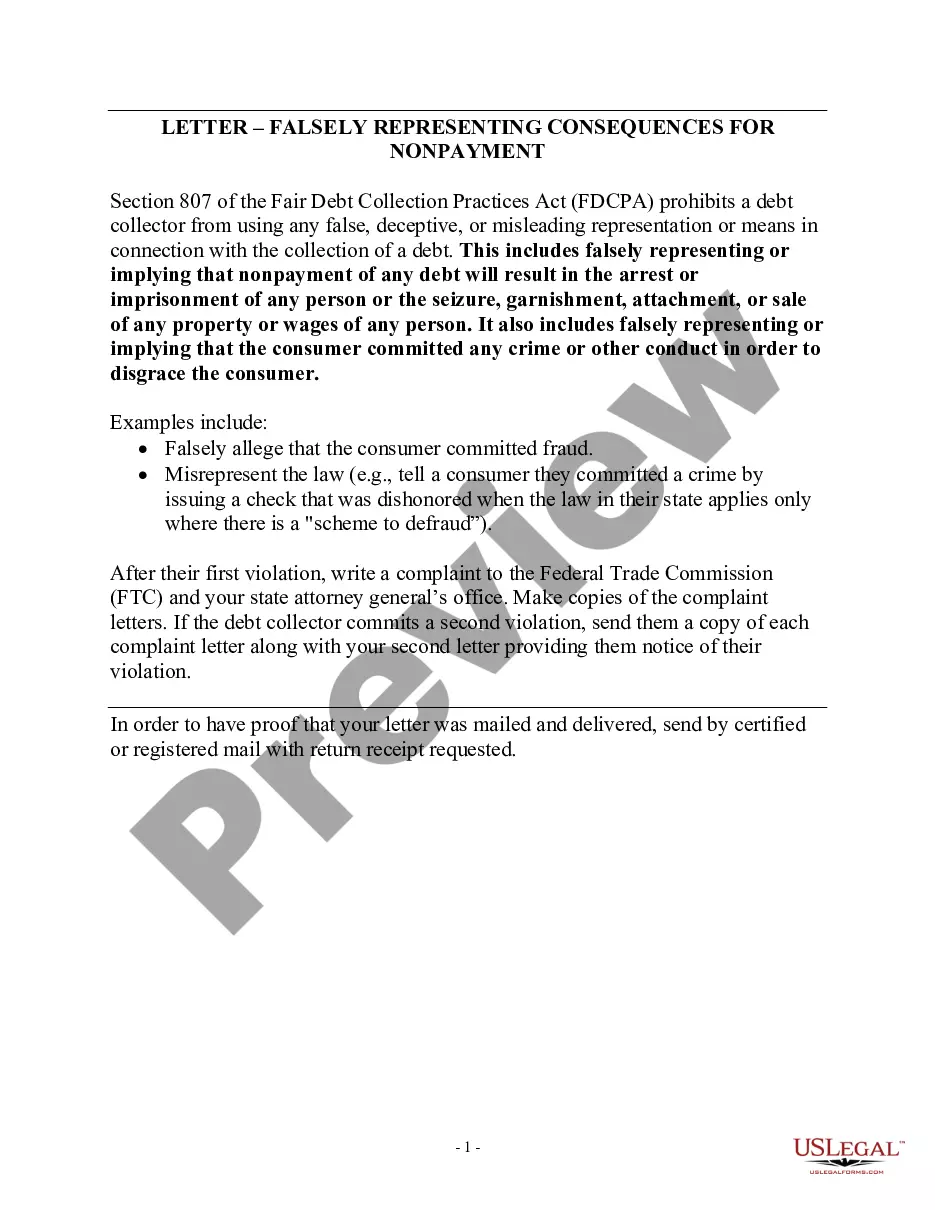
The Notice to Debt Collector - Failure to Provide Mini-Miranda is a legal document used to inform debt collectors that they have violated the Fair Debt Collection Practices Act (FDCPA). This form specifically addresses instances where a debt collector fails to provide the required Mini-Miranda notice, which informs consumers that they are attempting to collect a debt and how the obtained information will be used. Sending this notice is important as it encourages compliance from the debt collector and can strengthen your position should you need to take further action.
What’s included in this form
- Your name and contact information.
- Debt collectorâs name and contact information.
- Case number associated with the alleged debt.
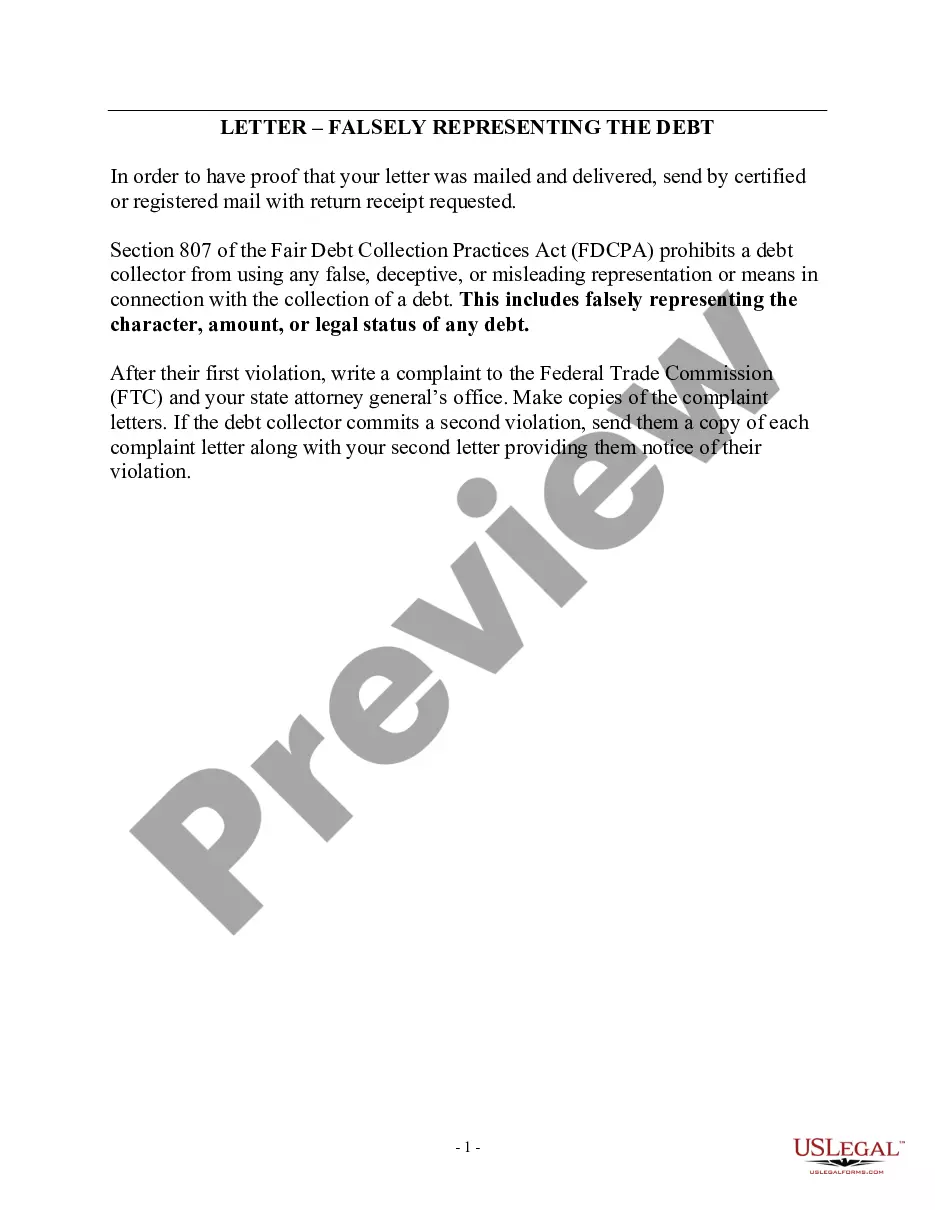
- Description of the violation of Section 807 of the FDCPA.
- Indication of previous related complaints to authorities.
- Request for the debt collector to cease deceptive practices.
When to use this form
This form is essential when you receive communication from a debt collector that does not include the Mini-Miranda notice. Use it to formally notify the collector of their violation and to document your efforts to address the issue. It is particularly relevant if the collector continues to engage in deceptive practices after you have provided them with notice.
Who needs this form
- Consumers who have been contacted by debt collectors.
- Individuals who believe their rights under the FDCPA have been violated.
- Anyone who has received a communication that lacked the necessary Mini-Miranda disclosure.
How to complete this form
- Enter your name and address at the top of the letter.
- Fill in the debt collectorâs name and address.
- Include the case number associated with the alleged debt.
- Clearly describe the specific violation of the FDCPA.
- State that you have previously notified relevant authorities about this issue, if applicable.
- Sign and date the letter, then send it via certified mail for proof of delivery.
Is notarization required?
In most cases, this form does not require notarization. However, some jurisdictions or signing circumstances might. US Legal Forms offers online notarization powered by Notarize, accessible 24/7 for a quick, remote process.
Get your form ready online
Our built-in tools help you complete, sign, share, and store your documents in one place.
Make edits, fill in missing information, and update formatting in US Legal Forms—just like you would in MS Word.
Download a copy, print it, send it by email, or mail it via USPS—whatever works best for your next step.
Sign and collect signatures with our SignNow integration. Send to multiple recipients, set reminders, and more. Go Premium to unlock E-Sign.
If this form requires notarization, complete it online through a secure video call—no need to meet a notary in person or wait for an appointment.
We protect your documents and personal data by following strict security and privacy standards.

Make edits, fill in missing information, and update formatting in US Legal Forms—just like you would in MS Word.

Download a copy, print it, send it by email, or mail it via USPS—whatever works best for your next step.

Sign and collect signatures with our SignNow integration. Send to multiple recipients, set reminders, and more. Go Premium to unlock E-Sign.

If this form requires notarization, complete it online through a secure video call—no need to meet a notary in person or wait for an appointment.

We protect your documents and personal data by following strict security and privacy standards.
Typical mistakes to avoid
- Failing to include your correct contact information.
- Not specifying the exact nature of the violation.
- Using standard mail instead of certified mail for sending the notice.
- Neglecting to keep copies of all correspondence for your records.
Why use this form online
- Easy access to downloadable templates drafted by licensed attorneys.
- Convenient to customize and print from home.
- Time-saving by avoiding the complexities of legal jargon.
- Enhanced flexibility to address your specific situation quickly.
Legal use & context
This form serves as a formal notification and can be used in any disputes with debt collectors. It establishes a record of violations under the FDCPA, which can be presented in any legal proceedings. Ensure to document all communications with the debt collector after sending this notice, as further violations may strengthen your case.
Quick recap
- This form is for notifying a debt collector of their failure to provide a Mini-Miranda notice.
- Use this notice to encourage compliance and document violations for future actions.
- Always send the letter via certified mail to keep proof of delivery.
- Consult state laws for any additional requirements regarding debt collection practices.
Looking for another form?






Form popularity
FAQ
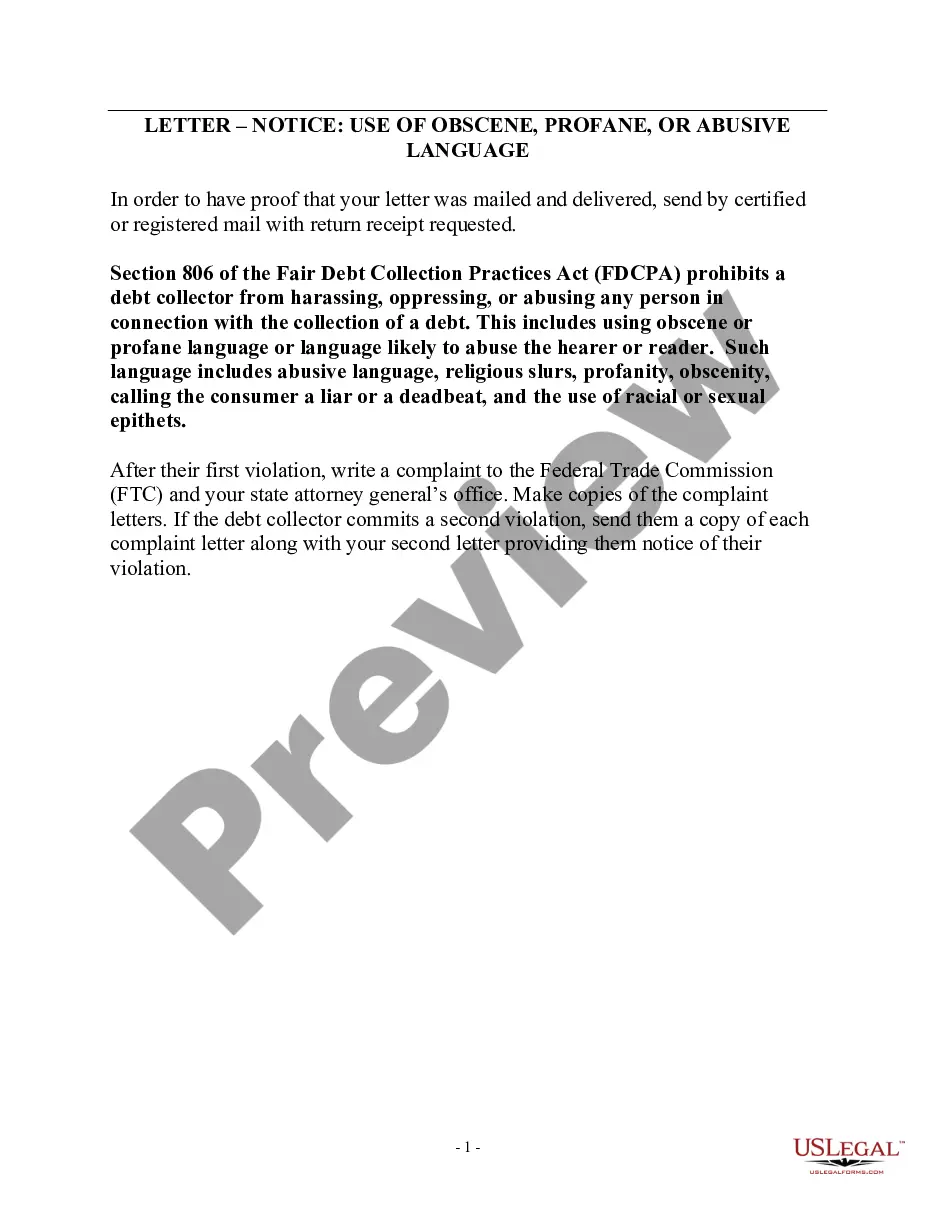
When a debt collector calls, it's important to know your rights and what you need to do. The FTC enforces the Fair Debt Collection Practices Act (FDCPA), which makes it illegal for debt collectors to use abusive, unfair, or deceptive practices when they collect debts.
Instances When the Mini Miranda Must Be Stated Debt collectors are required to give the full mini Miranda in their initial communication with you, no matter what form. 1fefffeff The first time a third-party debt collector speaks with you on the phone or sends you a letter, the mini Miranda statement must be included.
It's a violation of the collection practices act for a debt collector to refuse to send a validation notice or fail to respond to your verification letter. If you encounter such behavior, you can file a complaint with the Consumer Financial Protection Bureau.
If you can prove the debt collector has violated your rights under the FDCPA, you can sue in federal or state court for up to $1,000, including damages. 5feff You should also report violations to the Federal Trade Commission (FTC).
Never Give Them Your Personal Information. A call from a debt collection agency will include a series of questions. Never Admit That The Debt Is Yours. Even if the debt is yours, don't admit that to the debt collector. Never Provide Bank Account Information.
It is the purpose of this subchapter to eliminate abusive debt collection practices by debt collectors, to insure that those debt collectors who refrain from using abusive debt collection practices are not competitively disadvantaged, and to promote consistent State action to protect consumers against debt collection
1 attorney answer As a franchise attorney, I believe the states that have mini miranda requirements include, but may not be limited to, Colorado, Connecticut, Georgia, Hawaii, Iowa, Maine, North Carolina, Texas, Vermont, West Virginia and Wyoming.
Instances When the Mini Miranda Doesn't Have to Be Stated 1fefffeff Your creditors have no such obligation under this law.
At the beginning of a collection call, a debt collector must recite wording that has come to be called the mini-Miranda disclosure. It informs the consumer that the call is from a debt collector, that they are calling to collect a debt, and that any information revealed in the call will be used to collect that debt.