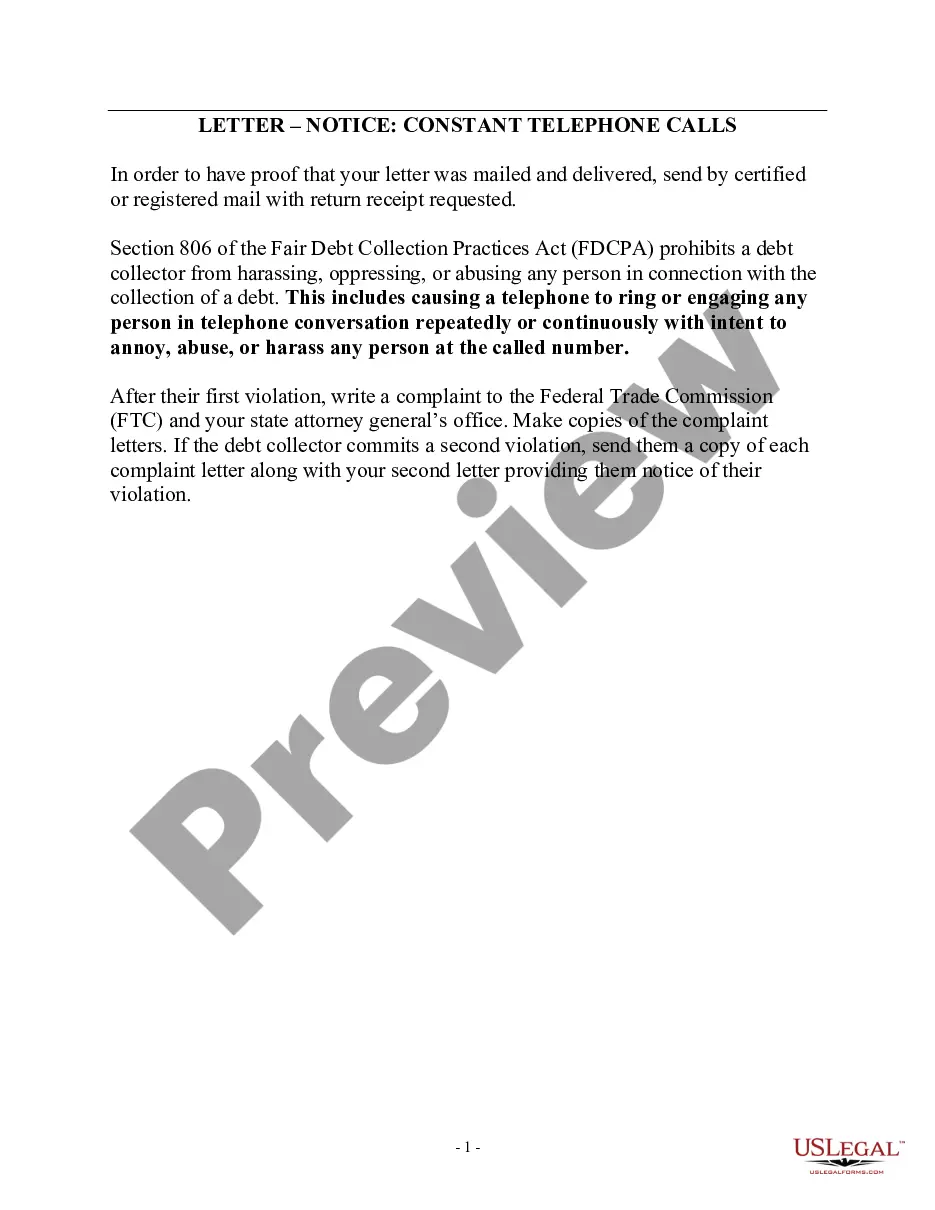
Notice to Debt Collector - Unlawful Repeated or Continuous Telephone Calls
Overview of this form
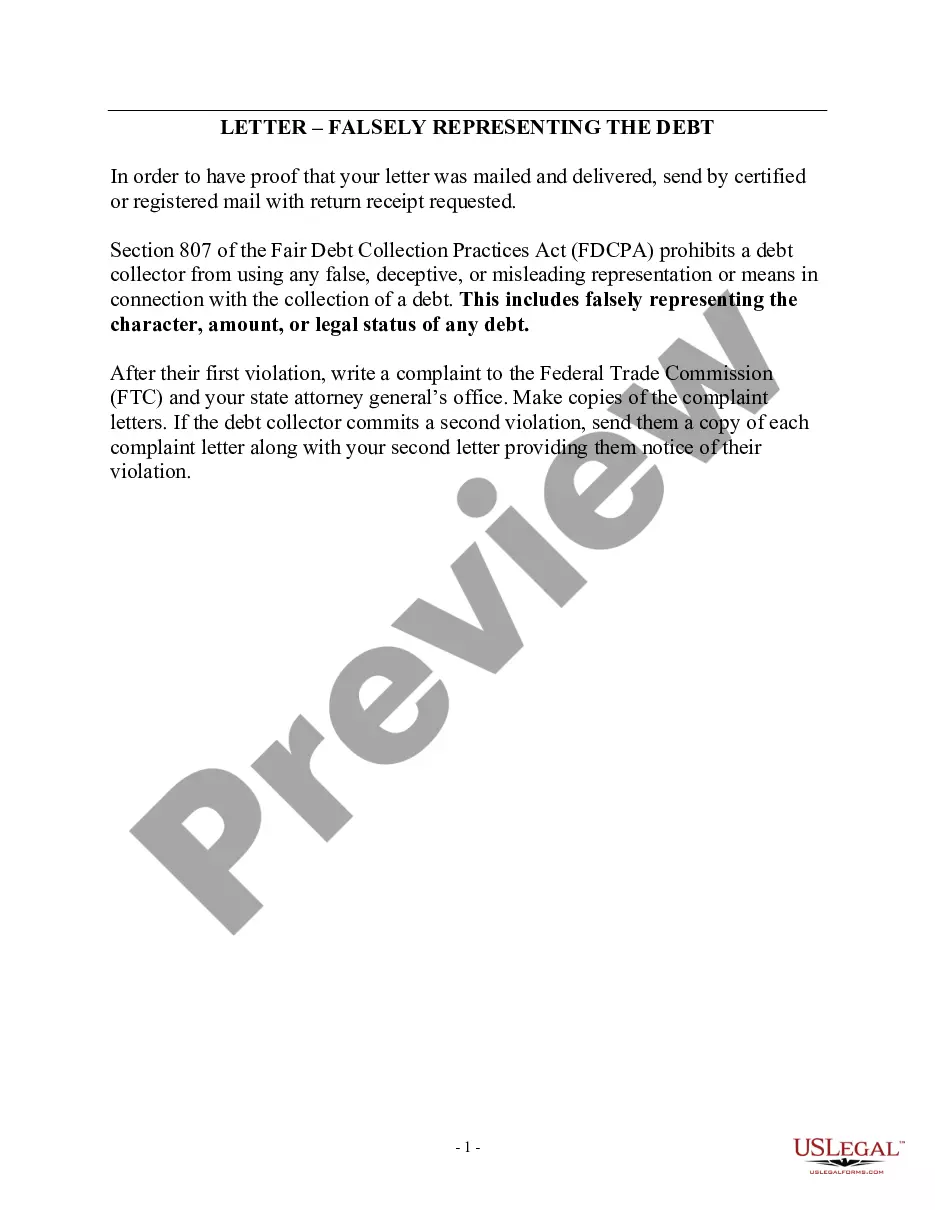
This form, the Notice to Debt Collector - Unlawful Repeated or Continuous Telephone Calls, is a legal document used to inform a debt collector that they have violated the Fair Debt Collection Practices Act (FDCPA). This act prohibits debt collectors from harassing consumers through repeated or continuous phone calls. By using this form, you can clearly communicate the violation and encourage the debt collector to adhere to the law in the future. It differs from other forms by focusing specifically on telephonic harassment as prohibited under Section 806 of the FDCPA.
Key components of this form
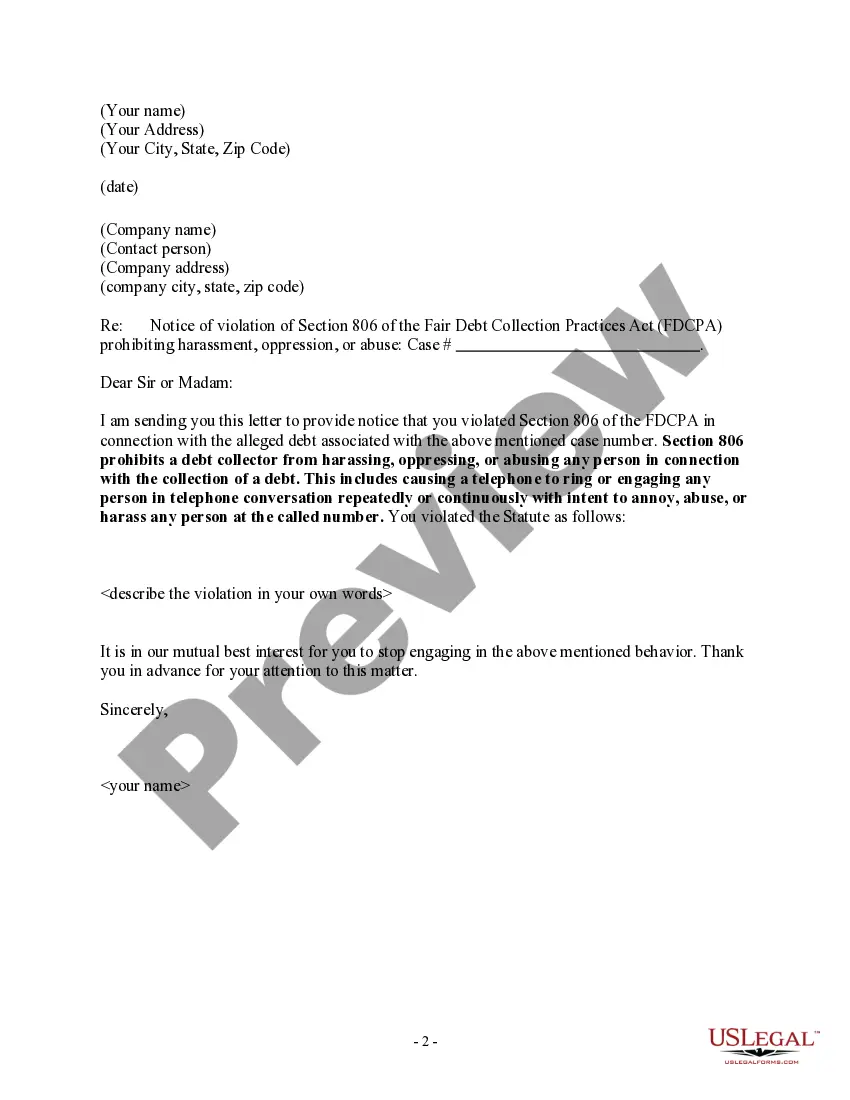
- Sender's contact information: Provides your name and address.
- Debt collector's contact information: Includes the company name and contact person.
- Case details: Identifies the specific case number related to the alleged debt.
- Violation description: Outlines how the debt collector's actions constituted harassment.
- Notification intent: States your expectation for the debt collector to cease harassment.
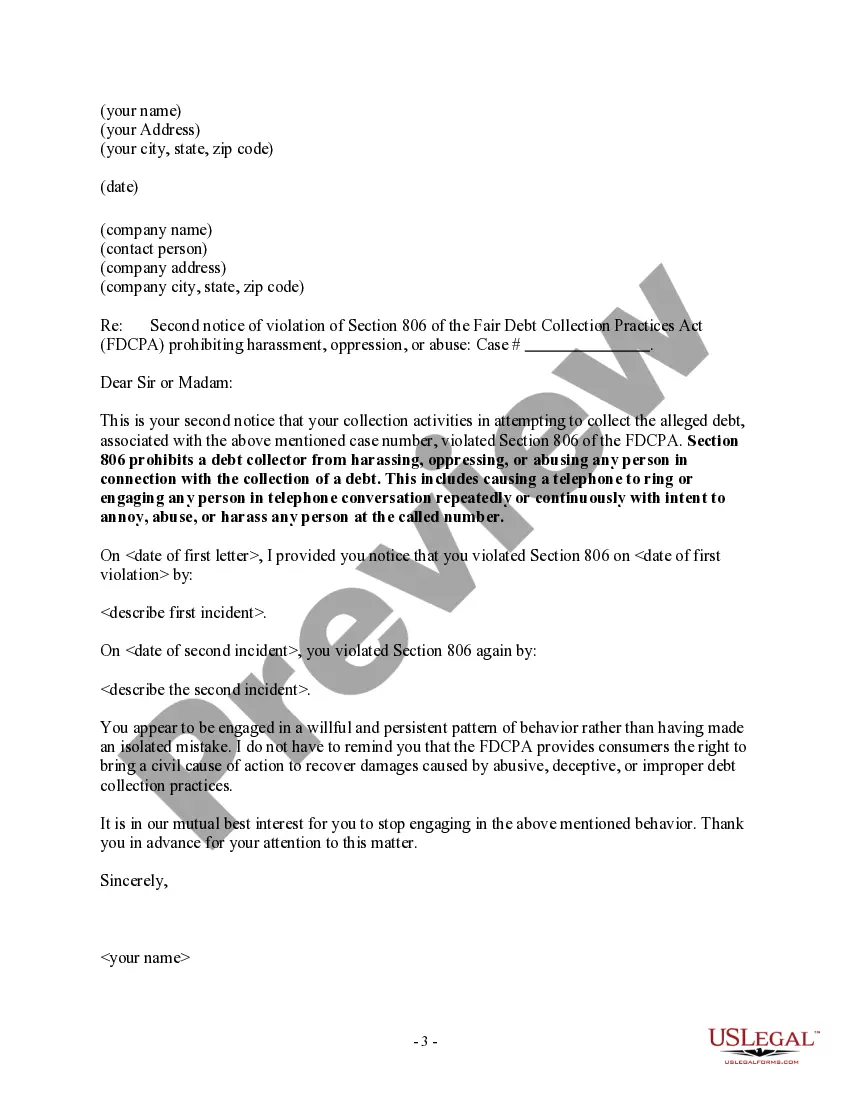
- Second notice option: Allows for a follow-up if violations continue.

When to use this form
You should use this form if you have received multiple calls from a debt collector that you believe violate the FDCPA. For example, if a debt collector calls you several times a day or engages in conversations excessively with the intent to annoy or harass you, sending this notice may prompt them to stop. It is also appropriate if you have already notified them of a first violation and they continue the same conduct.
Who should use this form
- Consumers who have been subjected to repeated or continuous harassment from debt collectors.
- Individuals wanting to formally document violations of FDCPA by debt collection agencies.
- Anyone seeking to file a complaint with the Federal Trade Commission or state attorney's office regarding abusive debt collection practices.
How to prepare this document
- Enter your full name and address in the designated fields.
- Provide the debt collector's company name and address.
- Include the case number associated with the debt in question.
- Describe the instances of harassment or violations in your own words.
- Sign and date the letter before sending it by certified or registered mail.
Is notarization required?
This form does not typically require notarization to be legally valid. However, some jurisdictions or document types may still require it. US Legal Forms provides secure online notarization powered by Notarize, available 24/7 for added convenience.
Get your form ready online
Our built-in tools help you complete, sign, share, and store your documents in one place.
Make edits, fill in missing information, and update formatting in US Legal Forms—just like you would in MS Word.
Download a copy, print it, send it by email, or mail it via USPS—whatever works best for your next step.
Sign and collect signatures with our SignNow integration. Send to multiple recipients, set reminders, and more. Go Premium to unlock E-Sign.
If this form requires notarization, complete it online through a secure video call—no need to meet a notary in person or wait for an appointment.
We protect your documents and personal data by following strict security and privacy standards.

Make edits, fill in missing information, and update formatting in US Legal Forms—just like you would in MS Word.

Download a copy, print it, send it by email, or mail it via USPS—whatever works best for your next step.

Sign and collect signatures with our SignNow integration. Send to multiple recipients, set reminders, and more. Go Premium to unlock E-Sign.

If this form requires notarization, complete it online through a secure video call—no need to meet a notary in person or wait for an appointment.

We protect your documents and personal data by following strict security and privacy standards.
Mistakes to watch out for
- Not providing specific details of the harassment in the description section.
- Failing to send the notice via certified or registered mail.
- Not keeping copies of the notice and any correspondence for your records.
- Overlooking to mention previous complaints made to the authorities.
Benefits of using this form online
- Convenience: Access and complete the form from anywhere, anytime.
- Editability: Make changes easily before finalizing the document.
- Reliability: Forms are drafted by licensed attorneys, ensuring legal accuracy.
Legal use & context
- The FDCPA provides consumers with protection against abusive debt collection practices.
- This notice serves as a formal record of the debt collector's violations, potentially aiding in future legal actions.
- Failure to comply with this notice could result in the debt collector facing civil penalties.
Looking for another form?







Form popularity
FAQ
If you discover that the debt the collection agency is calling about indeed belongs to you, one way you can get a collection agency to stop calling is to request in writing that they only communicate with you in writing. This is sometimes called a cease and desist request.
Federal law doesn't give a specific limit on the number of calls a debt collector can place to you. A debt collector may not call you repeatedly or continuously intending to annoy, abuse, or harass you or others who share the number. You do have a right to tell the debt collector to stop calling you.
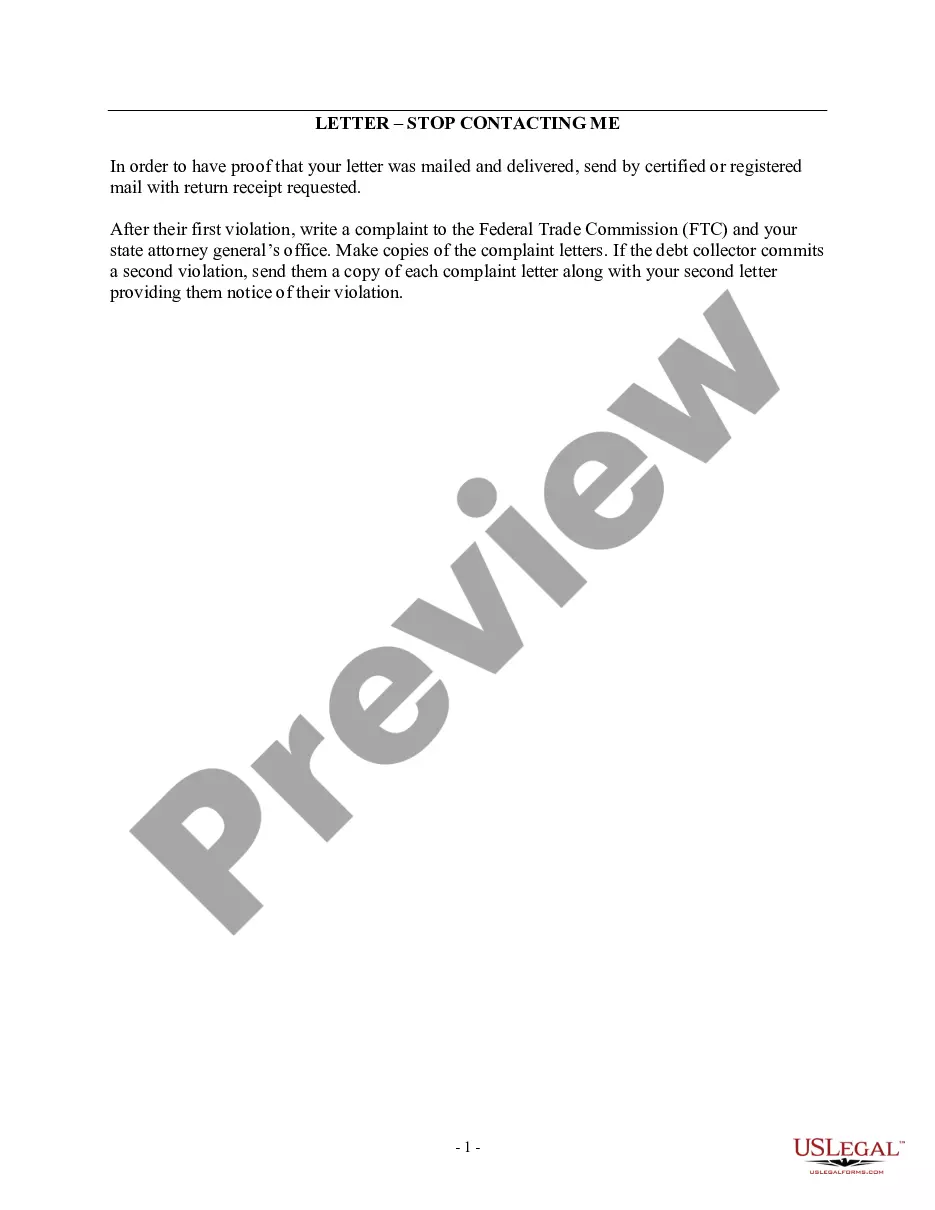
Write to the Collector to Request it Stop Contacting You (If That's What You Want) Under the federal FDCPA, if you request that a debt collector stop contacting you completely, it must do so, subject to a few exceptions. Your request must be in writing.
However, in Ontario, Alberta, and Nova Scotia there is a three strikes rule, limiting collection agents from emailing you, leaving a voicemail, or speaking with you more than three times within a seven-day period after having an initial conversation with you.
Make Sure You Have Time to Talk. Get a Pen and Paper. Ask the Collector to Send Information About the Debt. Don't Admit to the Debt. Don't Give Information About Your Income, Debts, or Other Bills. Hang Up, If Necessary. After the Call, Decide What to Do Next.
Debt collectors are not allowed to call you at a time that's inconvenient to you, according to the Fair Debt Collection Practices Act (FDCPA). So if a debt collector is calling you at work, you're legally allowed to tell them to stop.
Also, debt collectors can't call you numerous times a day. Doing so is considered a form of harassment by the Federal Trade Commission (FTC) and is explicitly not allowed.