Online Promotion and License Agreement Between
Understanding this form
The Online Promotion and License Agreement is a comprehensive contract used for defining the terms between companies or individuals engaging in online promotional activities in conjunction with software or computer services. This agreement ensures that the responsibilities and rights of both parties are clearly established, setting it apart from more general agreements.
What’s included in this form
- Definitions: Includes key terms relevant to the agreement, such as "Co-Branded Web Pages" and "End User."
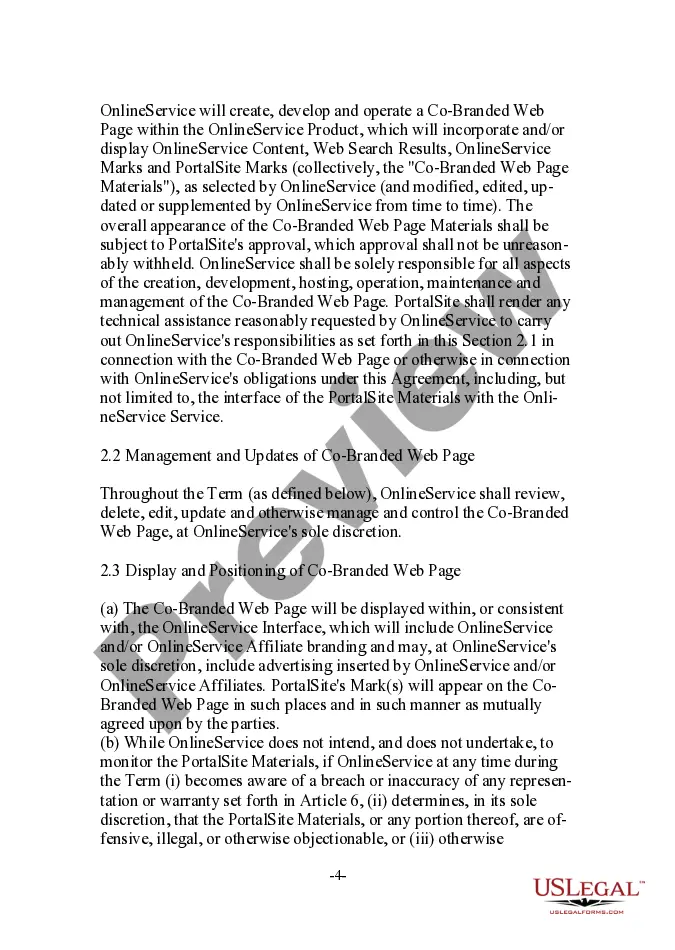
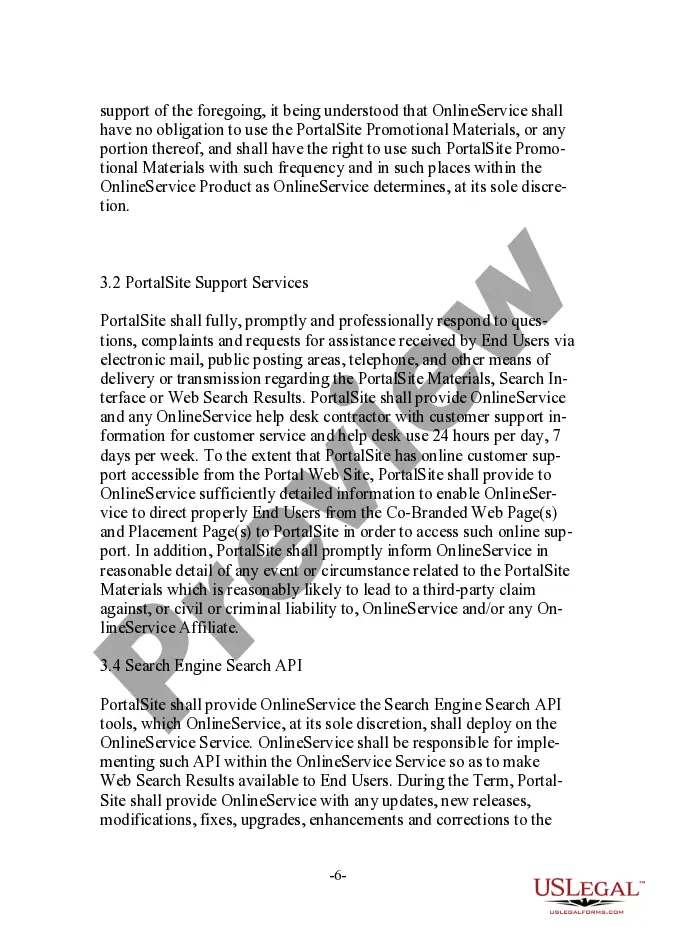
- Obligations of OnlineService: Outlines the responsibilities of OnlineService in creating and managing the Co-Branded Web Page.
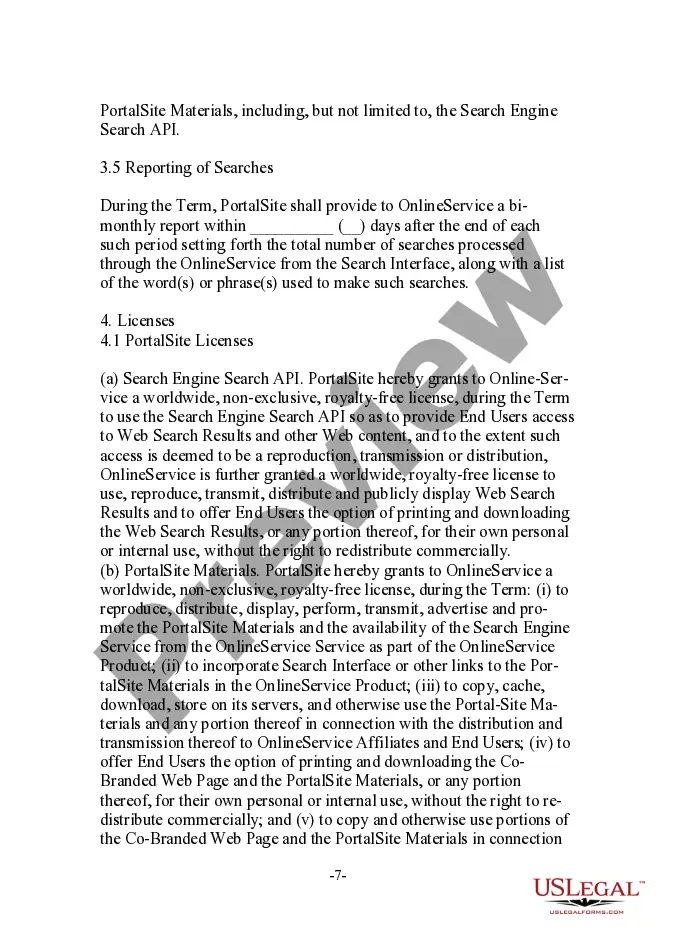
- Licenses: Details the licenses granted by PortalSite to OnlineService regarding the use of materials and marks.
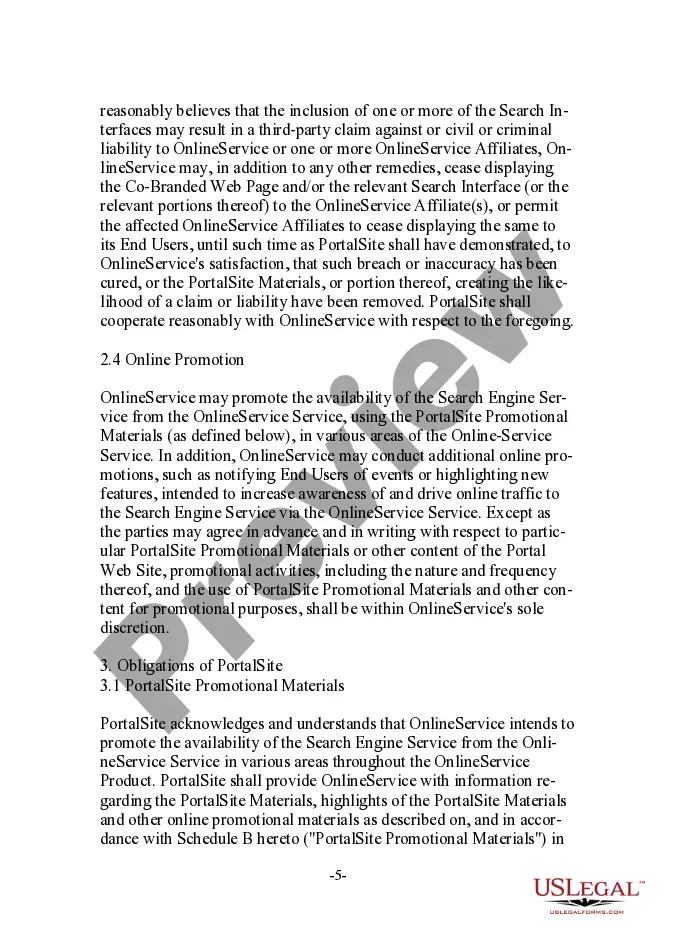
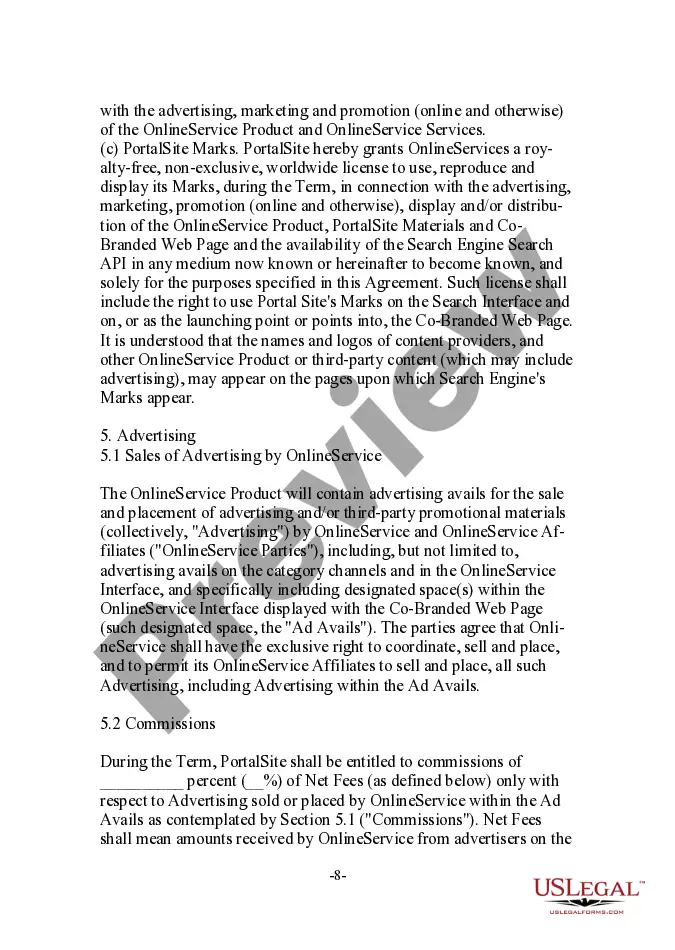
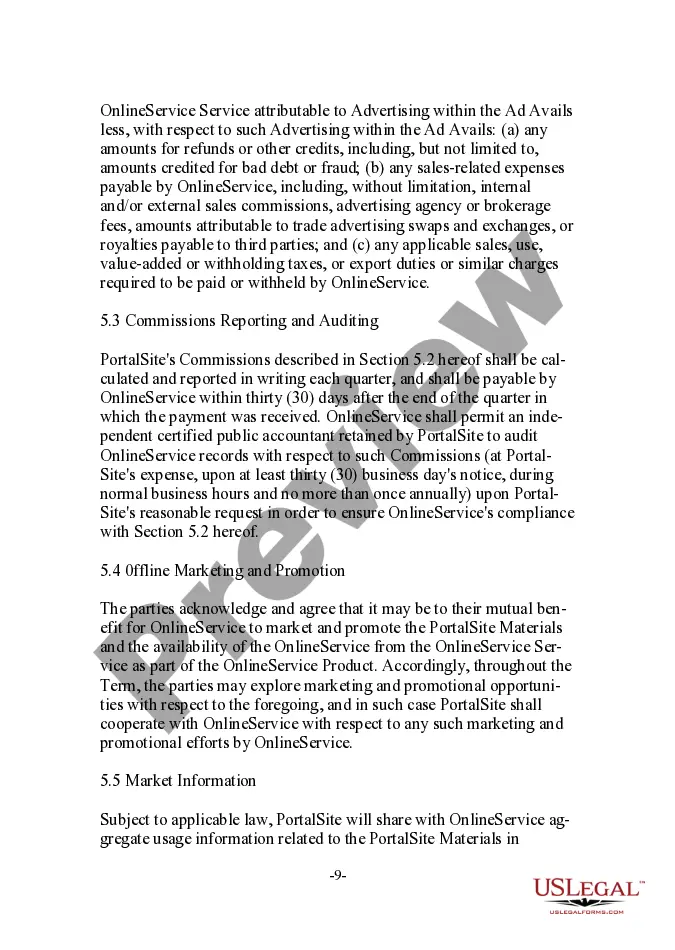
- Advertising: Discusses the rights and responsibilities regarding advertisement placements within the OnlineService.
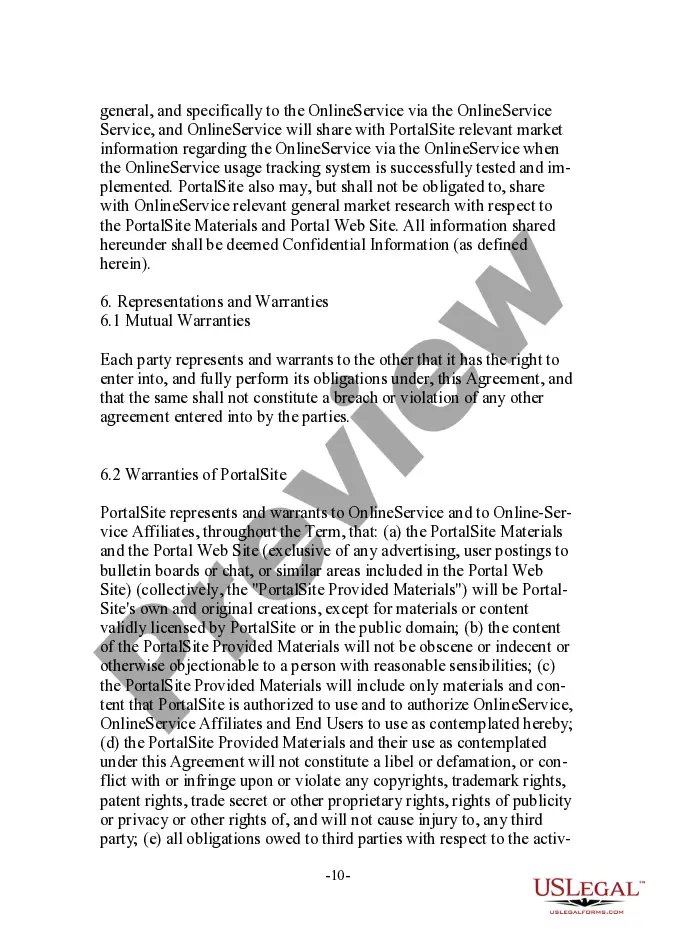
- Indemnity: Specifies obligations for indemnifying the other party against breaches.

Common use cases
This form is essential when two parties, typically a software service provider and an online service company, wish to collaborate for promotional purposes. For example, if your business is looking to integrate search engine capabilities within its platform and promote those services, this agreement will outline your rights, responsibilities, and how revenue from advertisements will be managed.
Who should use this form
This agreement is suitable for:
- Businesses seeking to partner with other companies for online promotions.
- Contractors providing software or computer services.
- Organizations wishing to outline software licensing and promotion agreements clearly.
Steps to complete this form
To complete this agreement:
- Identify the parties involved, including their full legal names and business addresses.
- Fill in the effective date and term of the agreement.
- Define and describe the obligations of each party regarding services and promotional materials.
- Specify any licensing agreements regarding the use of materials and marks.
- Detail the promotional methods and responsibilities for managing advertisements.
- Ensure both parties sign and date the agreement to finalize it.
Notarization requirements for this form
This form does not typically require notarization unless specified by local law. However, for added legal security, parties may choose to have the agreement notarized.
Get your form ready online
Our built-in tools help you complete, sign, share, and store your documents in one place.
Make edits, fill in missing information, and update formatting in US Legal Forms—just like you would in MS Word.
Download a copy, print it, send it by email, or mail it via USPS—whatever works best for your next step.
Sign and collect signatures with our SignNow integration. Send to multiple recipients, set reminders, and more. Go Premium to unlock E-Sign.
If this form requires notarization, complete it online through a secure video call—no need to meet a notary in person or wait for an appointment.
We protect your documents and personal data by following strict security and privacy standards.

Make edits, fill in missing information, and update formatting in US Legal Forms—just like you would in MS Word.

Download a copy, print it, send it by email, or mail it via USPS—whatever works best for your next step.

Sign and collect signatures with our SignNow integration. Send to multiple recipients, set reminders, and more. Go Premium to unlock E-Sign.

If this form requires notarization, complete it online through a secure video call—no need to meet a notary in person or wait for an appointment.

We protect your documents and personal data by following strict security and privacy standards.
Common mistakes
- Failing to specify all relevant parties and their roles in the agreement.
- Not clearly defining the terms of licenses and usage rights of promotional materials.
- Overlooking the necessity of detailing obligations regarding advertisement placements and revenue sharing.
Benefits of using this form online
- Convenience of using a customizable template crafted by legal professionals.
- Editability that allows tailoring the agreement to specific needs without extensive legal assistance.
- Reliability of a legally vetted form that helps protect both partiesâ interests.
- Properly executed agreements serve as enforceable contracts under applicable laws.
- Ensure compliance with advertising standards and software licensing laws to mitigate legal risks.
Quick recap
- The Online Promotion and License Agreement clearly outlines the partnership between two parties for online and software services.
- Understanding definitions and obligations is crucial to prevent future disputes.
- This agreement facilitates a cooperative effort in promoting services beneficial for both parties.
Looking for another form?

Form popularity
FAQ
A license agreement is a business contract between two parties. The licensor (the seller of the license) owns the asset being licensed and the licensee (the buyer) pays for the right to use the license. The licensee pays royalties to the owner in exchange for the right to sell the product or use the technology.
Exclusive or non-exclusive. In an exclusive license, the intellectual property holder is licensing the work only to one person, for that particular use/territory. Territory. Use. Attribution. Derivative works. Confidentiality. Time frame. Termination.
Download a template for a licensing agreement. Choose your role as the licensor or licensee. Define the license(s) in the agreement. Decide whether the license is exclusive or not. Settle the matter of fees and payment schedule. Add a renewal date and rules.
An example of a licensing agreement is a contract between the copyright holders of software and another company, allowing the latter to use the computer software for their daily business operations.
In a typical licensing agreement, the licensor agrees to provide the licensee with intellectual property rights such as the licensor's technology, brand name, or product creation know-how.
A licensing agreement is a legal contract between two parties, known as the licensor and the licensee. In a typical licensing agreement, the licensor grants the licensee the right to produce and sell goods, apply a brand name or trademark, or use patented technology owned by the licensor.
An example of a licensing agreement is a contract between the copyright holders of software and another company, allowing the latter to use the computer software for their daily business operations.
The 3 P's of collegiate licensing are protection, promotion, and profit.