Patent License Agreement Nonexclusive
Understanding this form
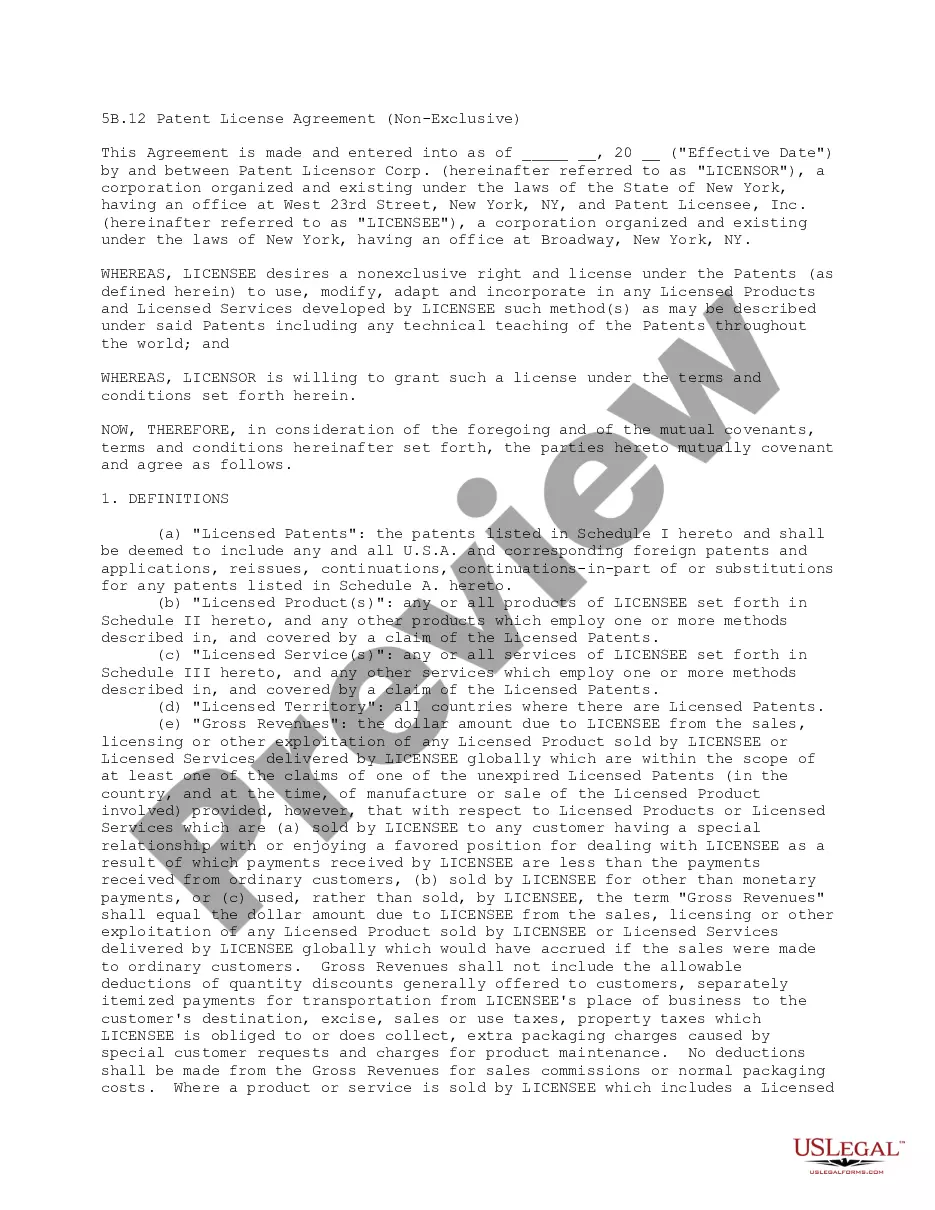
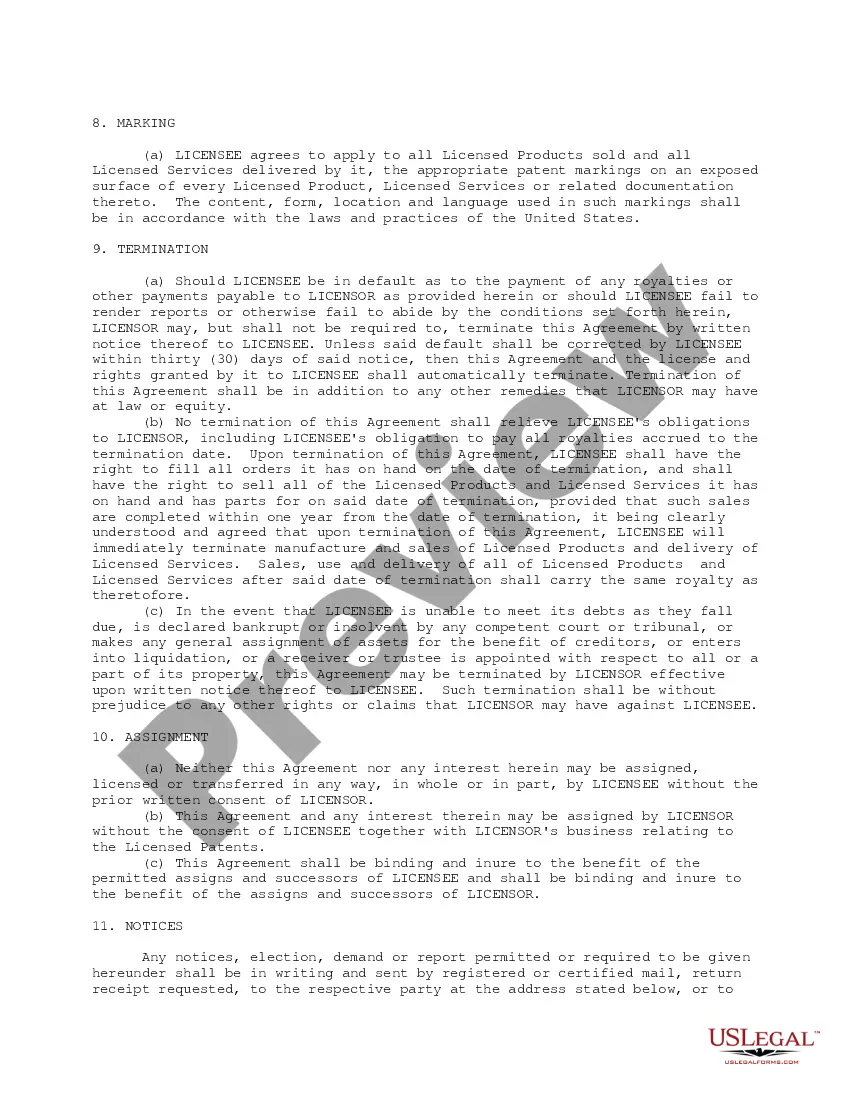
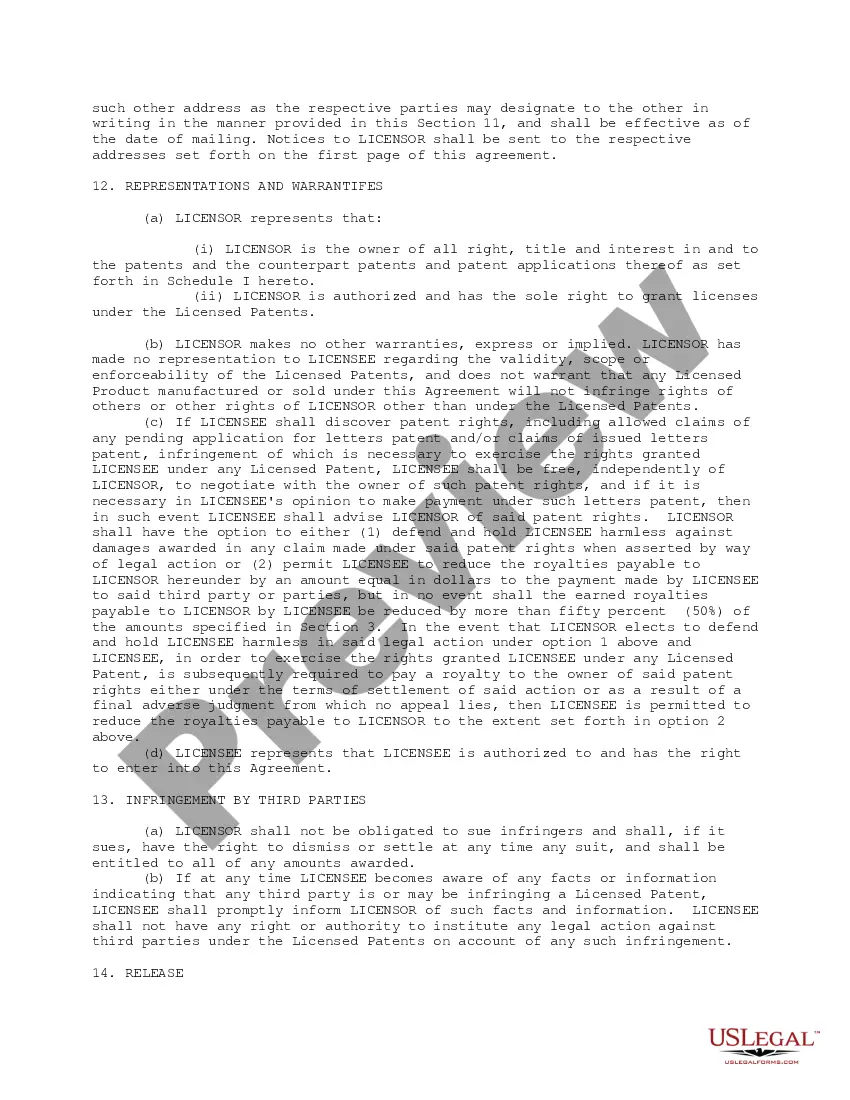
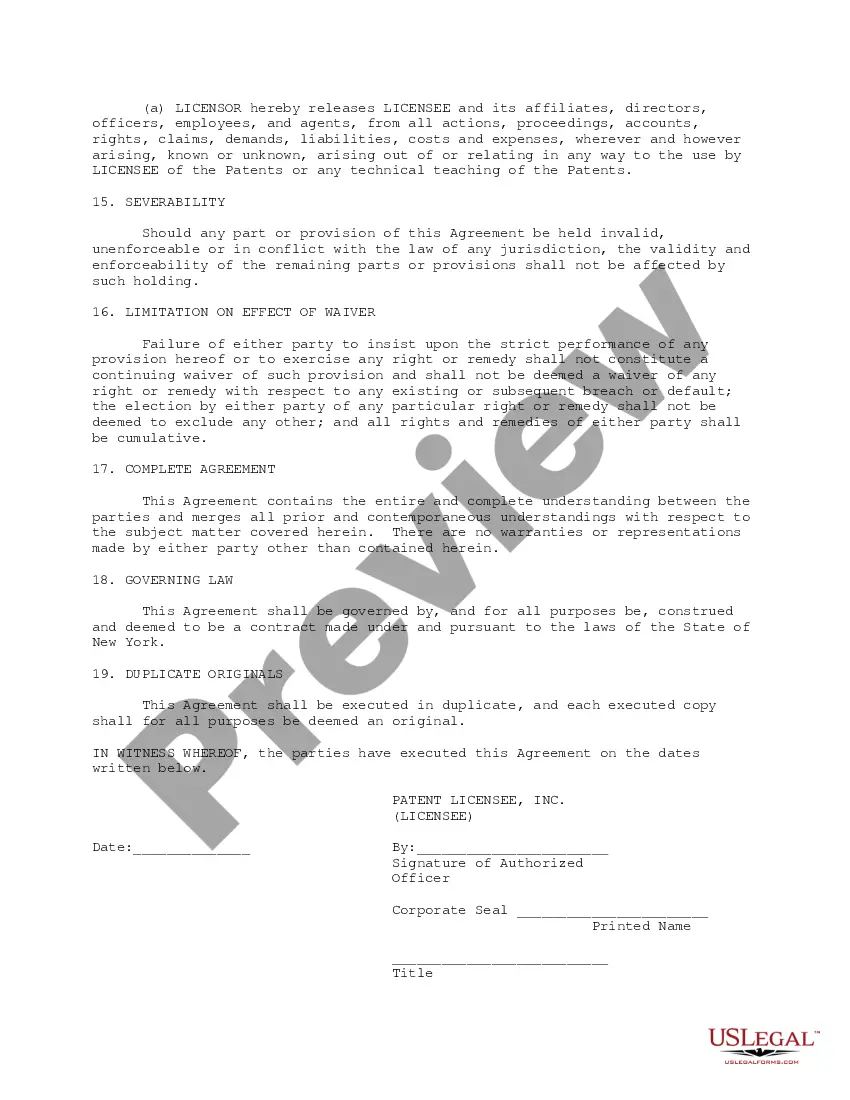
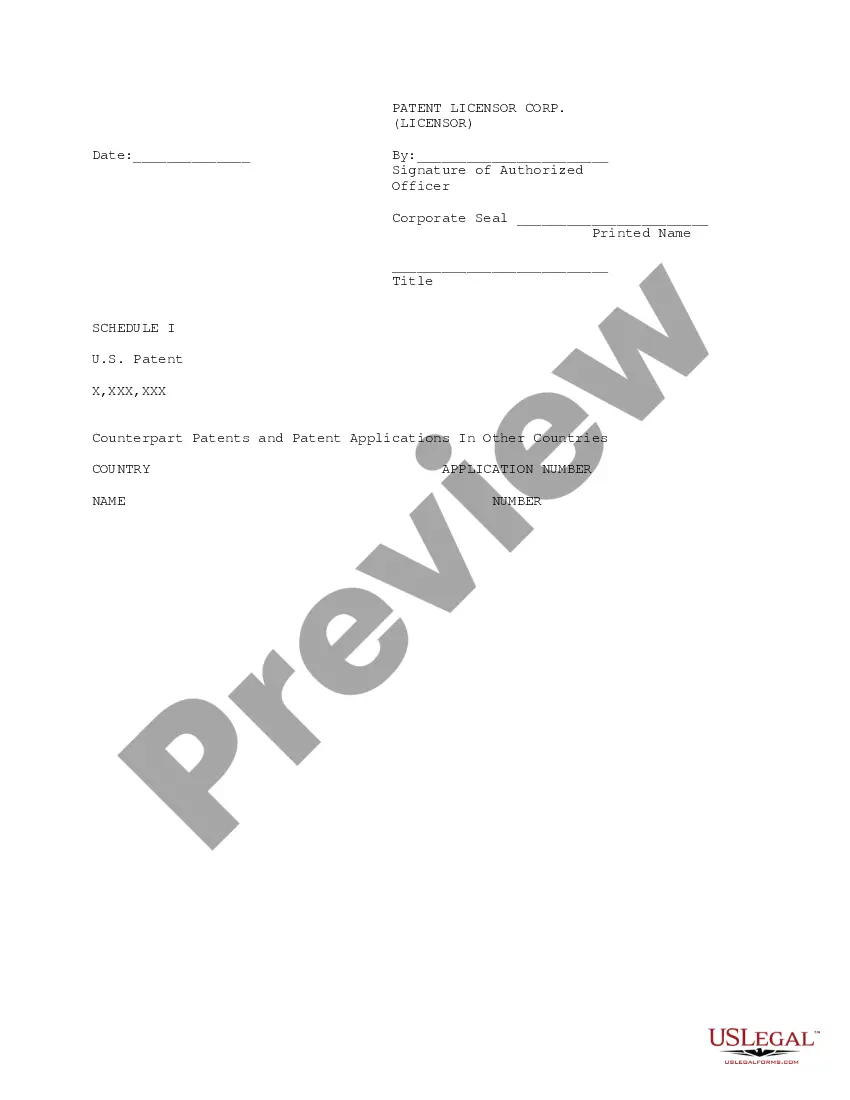
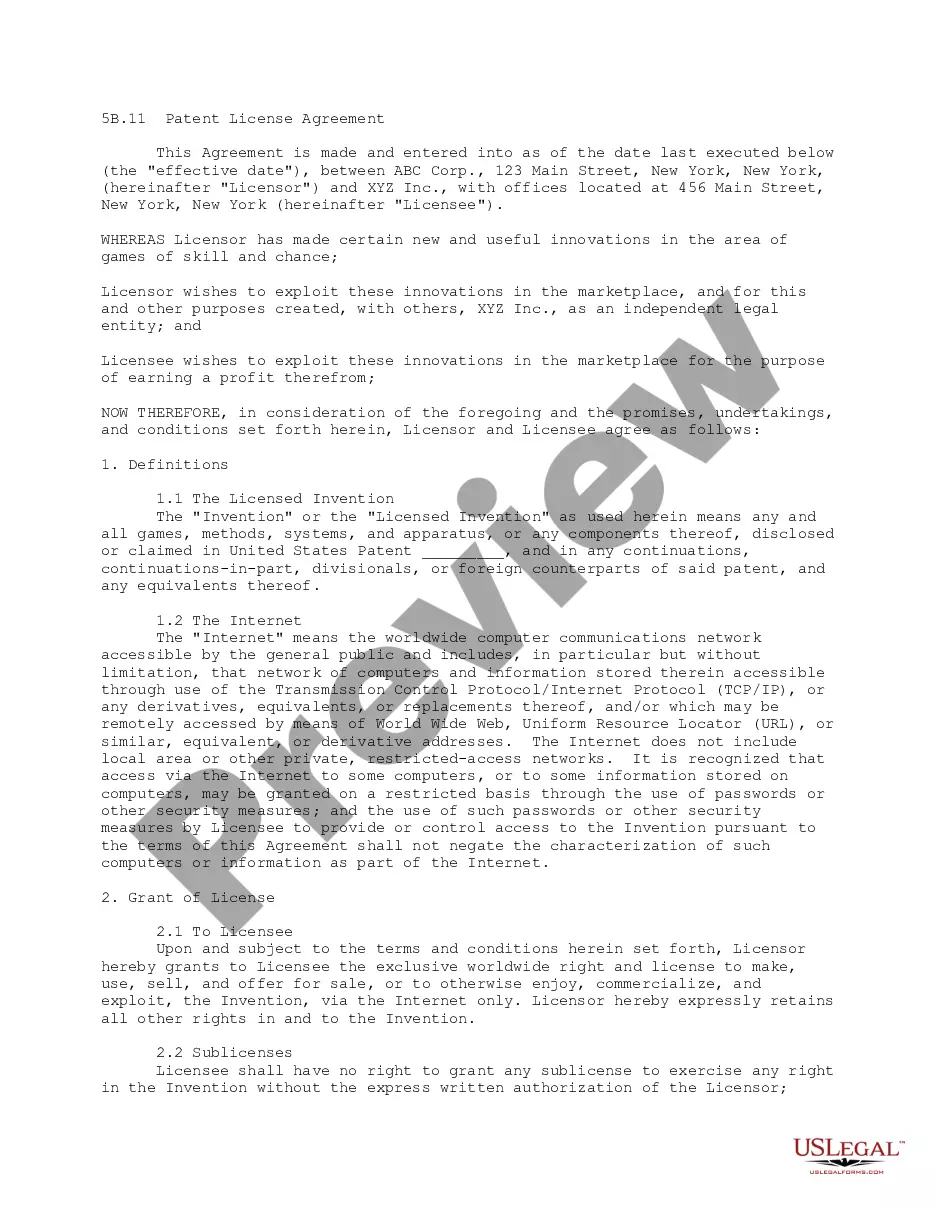
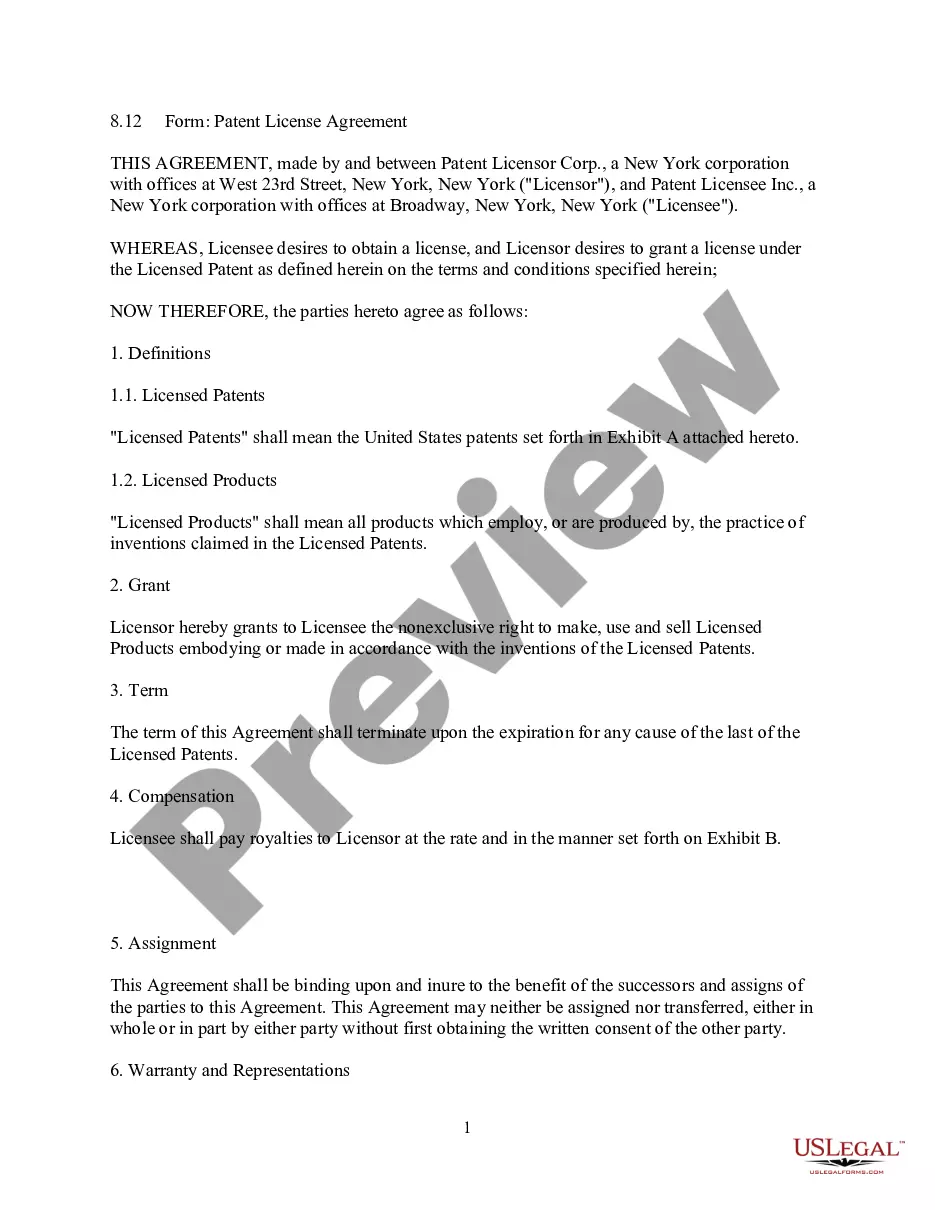
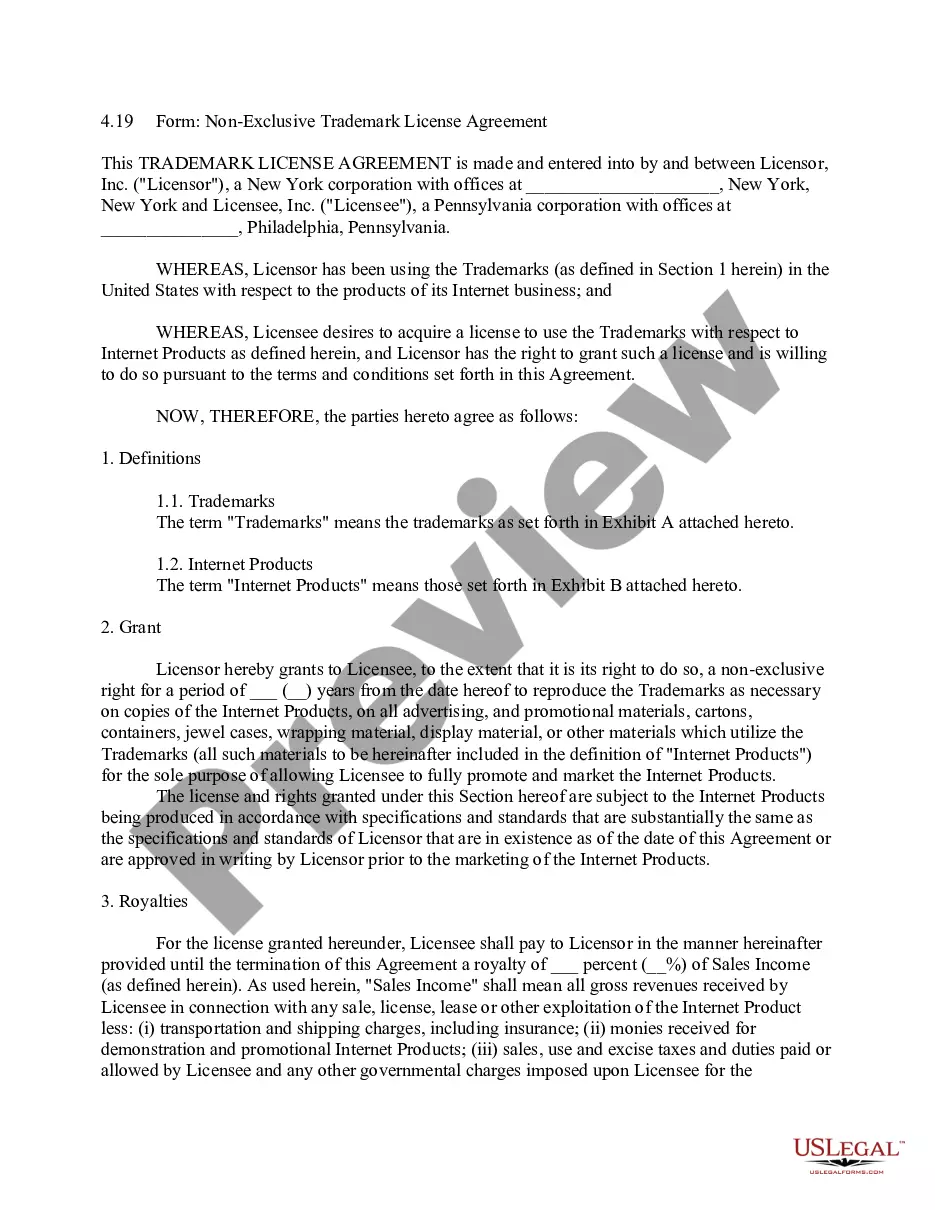
The Patent License Agreement Nonexclusive is a legal document that allows the Licensor to grant a non-exclusive, non-transferable license to the Licensee. This form enables the Licensee to make, use, sell, and import products or services covered by the Licensor's patents within a specified territory. Unlike exclusive agreements, this type of license permits multiple Licensees to operate under the same patents, which can encourage innovation and competition. This form is essential for businesses looking to legally utilize patented technology without infringing on the patent owner's rights.
Main sections of this form
- Definitions: Clarifies key terms such as Licensed Patents, Licensed Products, and Licensed Services.
- License Grant: Describes the scope of the non-exclusive license granted to the Licensee.
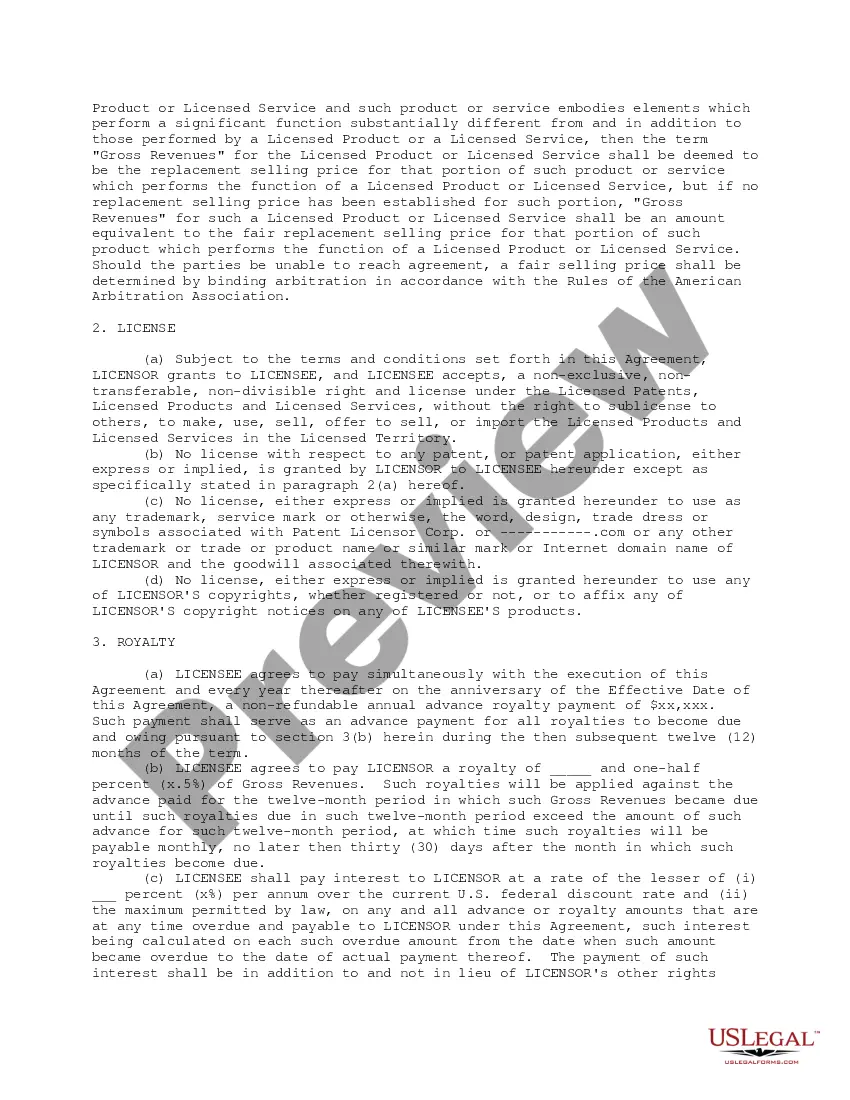
- Royalty Payment: Outlines the payment obligations and the calculation of royalties based on Gross Revenues.
- Duration: States how long the agreement remains in effect and conditions for termination.
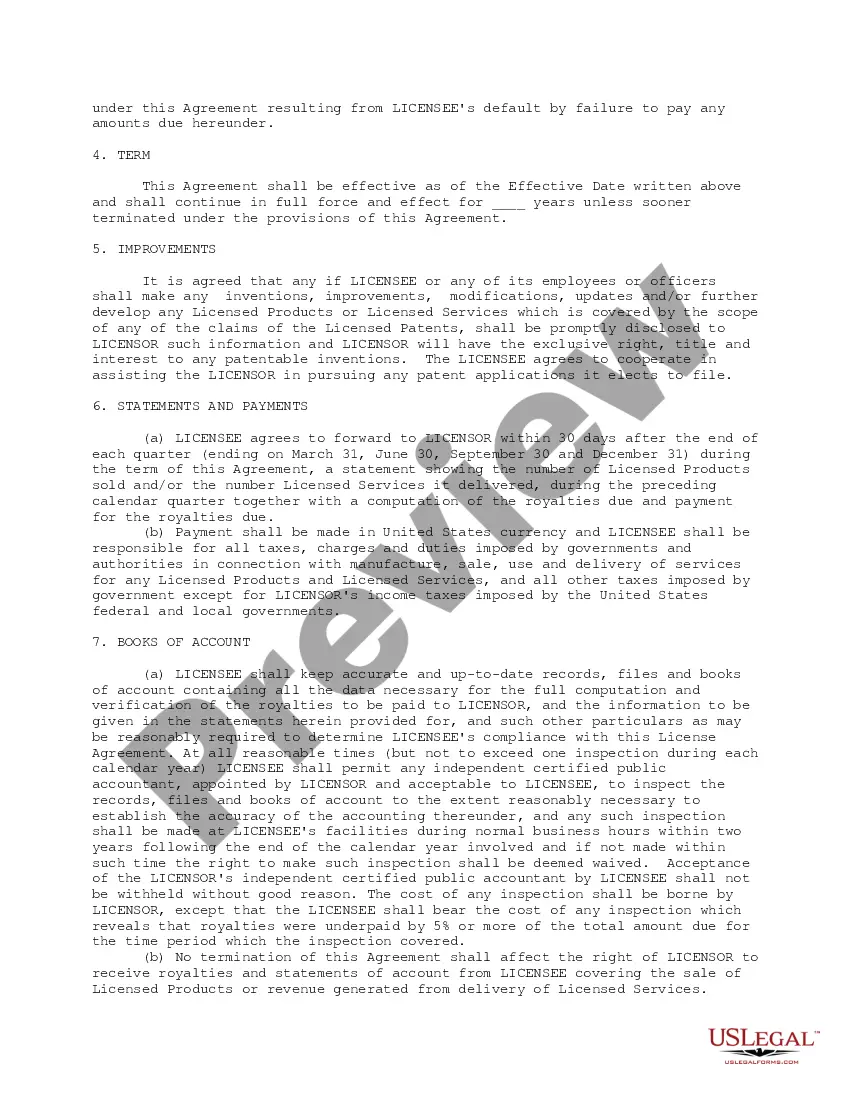
- Improvements: Specifies the rights regarding any new inventions or adaptations made by the Licensee that relate to the Licensed Patents.
- Payment and Reporting: Details the requirements for regular reporting and payment of royalties.
Common use cases
This form is most appropriate when a business (the Licensee) wants to gain the right to use a patented technology or product while avoiding legal issues related to patent infringement. It is essential during negotiations when the Licensor is willing to permit multiple entities to use their patents under a non-exclusive arrangement. Common scenarios include businesses entering new markets, developing new products based on patented technology, or collaborating with others while ensuring legal protections are in place regarding intellectual property.
Intended users of this form
- Businesses or individuals developing products or services that involve patented technology.
- Companies seeking to enter agreements with patent holders without exclusive access.
- Entrepreneurs who want to legally utilize patented inventions to enhance their offerings.
- Lawyers assisting clients with intellectual property agreements.
Completing this form step by step
- Identify the parties by clearly naming the Licensor and Licensee, including their addresses.
- Define key terms mentioned in the agreement to ensure clarity regarding the scope of the license.
- Specify the effective date and duration of the agreement.
- Clearly outline the royalty payment structure, including advance payments and ongoing royalties based on Gross Revenues.
- Include provisions regarding improvements and required reporting mechanisms.
- Ensure all parties sign and date the agreement for validation.
Notarization guidance
This form does not typically require notarization unless specified by local law. However, having the agreement notarized can provide additional legal credibility and verify the identities of the signing parties.
Get your form ready online
Our built-in tools help you complete, sign, share, and store your documents in one place.
Make edits, fill in missing information, and update formatting in US Legal Forms—just like you would in MS Word.
Download a copy, print it, send it by email, or mail it via USPS—whatever works best for your next step.
Sign and collect signatures with our SignNow integration. Send to multiple recipients, set reminders, and more. Go Premium to unlock E-Sign.
If this form requires notarization, complete it online through a secure video call—no need to meet a notary in person or wait for an appointment.
We protect your documents and personal data by following strict security and privacy standards.

Make edits, fill in missing information, and update formatting in US Legal Forms—just like you would in MS Word.

Download a copy, print it, send it by email, or mail it via USPS—whatever works best for your next step.

Sign and collect signatures with our SignNow integration. Send to multiple recipients, set reminders, and more. Go Premium to unlock E-Sign.

If this form requires notarization, complete it online through a secure video call—no need to meet a notary in person or wait for an appointment.

We protect your documents and personal data by following strict security and privacy standards.
Common mistakes
- Failing to clearly define the Licensed Patents and Products, leading to confusion over rights.
- Not specifying the payment schedule and terms, which can result in disputes.
- Overlooking the reporting requirements, leading to non-compliance issues.
- Neglecting to obtain signatures from all relevant parties, rendering the agreement unenforceable.
Benefits of completing this form online
- Convenience of downloading and filling out the form at your own pace.
- Access to reliable templates drafted by licensed attorneys, ensuring legal validity.
- The ability to easily edit and customize sections as needed for specific situations.
- Quick access to updates reflecting any changes in applicable laws or regulations.
Legal use & context
- The agreement is legally binding once signed by both parties.
- It is enforceable in a court of law provided all terms are clear and agreed upon.
- Licensors are responsible for ensuring that they own the rights they are granting.
Quick recap
- This agreement allows a Licensor to grant non-exclusive rights to use patented products and services.
- It is critical for users to clearly define terms and payment obligations to avoid future conflicts.
- This document is specifically tailored for use in New York but can be relevant in multi-state contexts.
- Proper completion and execution are essential for legal effectiveness.
Looking for another form?

Form popularity
FAQ
An exclusive licence is one where the licensee is given the right to commercialise the IP to the exclusion of all others, including the licensor.
An example of a licensing agreement is a contract between the copyright holders of software and another company, allowing the latter to use the computer software for their daily business operations.
At first, I read the word worldwide without concern, as this term is commonly used in license agreements to convey that there are no geographic restrictions on the recipient's use of the licensed technology.
What is a Licensing Agreement? A licensing agreement is a contract between two parties (the licensor and licensee) in which the licensor grants the licensee the right to use the brand name, trademark, patented technology, or ability to produce and sell goods owned by the licensor.
The exclusivity gives the licensee the incentive to invest in developing the market potential of the technology.This is because the licensor could sell licenses to all of the company's competitors after the first licensee educates and cultivates the market for the product.
Download a template for a licensing agreement. Choose your role as the licensor or licensee. Define the license(s) in the agreement. Decide whether the license is exclusive or not. Settle the matter of fees and payment schedule. Add a renewal date and rules.
A Non-Exclusive Licence grants to the licensee the right to use the intellectual property, but means that the licensor remains free to exploit the same intellectual property and to allow any number of other licensees to also exploit the same intellectual property.
An example of a licensing agreement is a contract between the copyright holders of software and another company, allowing the latter to use the computer software for their daily business operations.
An exclusive license grants the licensee singular permission to exploit the intellectual property in question.Non-exclusive licenses allow more latitude in the number of licenses granted while allowing the licensor to retain the rights to further develop and exploit its own intellectual property.