Confidential Information Exchange Agreement between Software Developer and Receiver Distributor
About this form
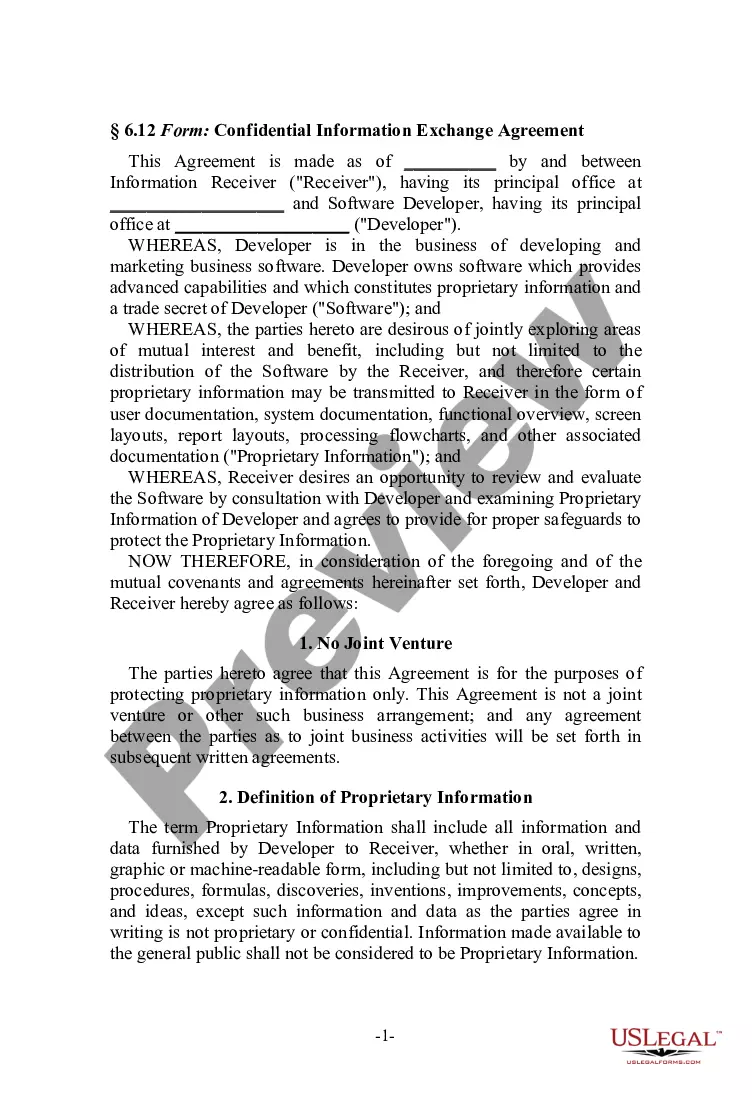
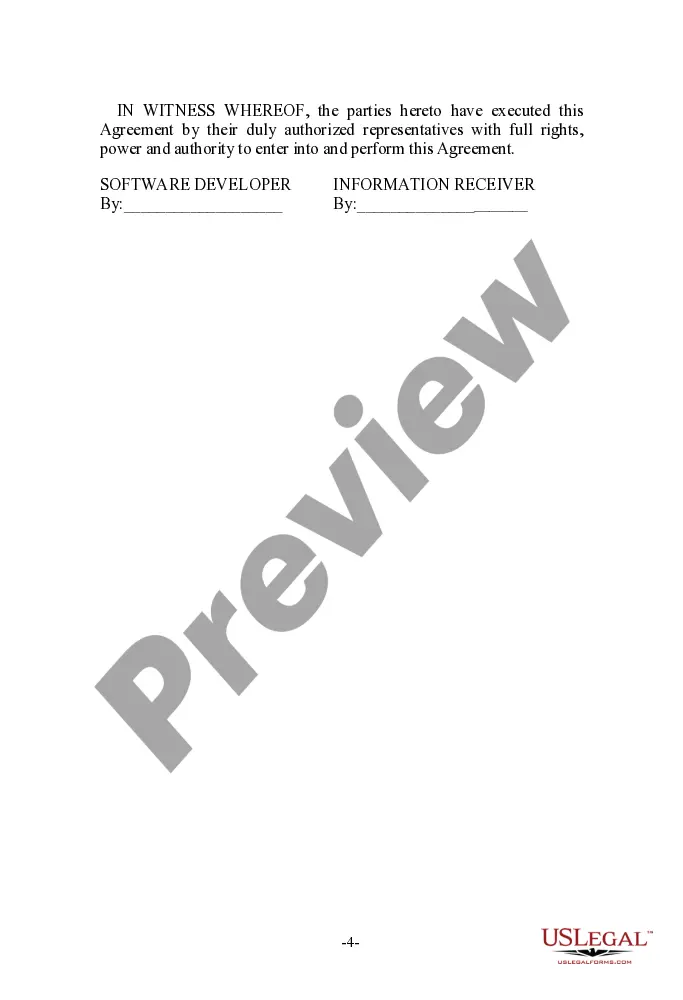
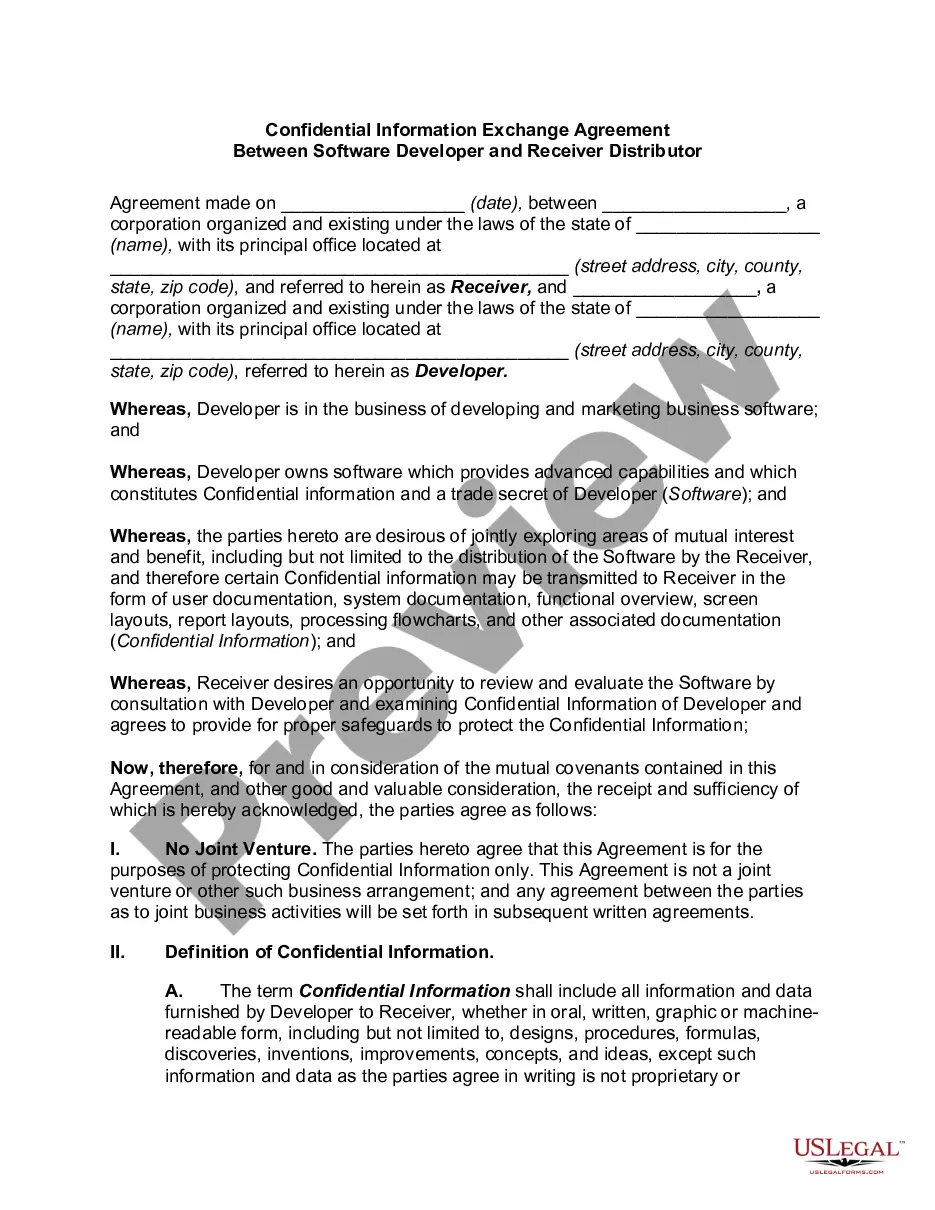
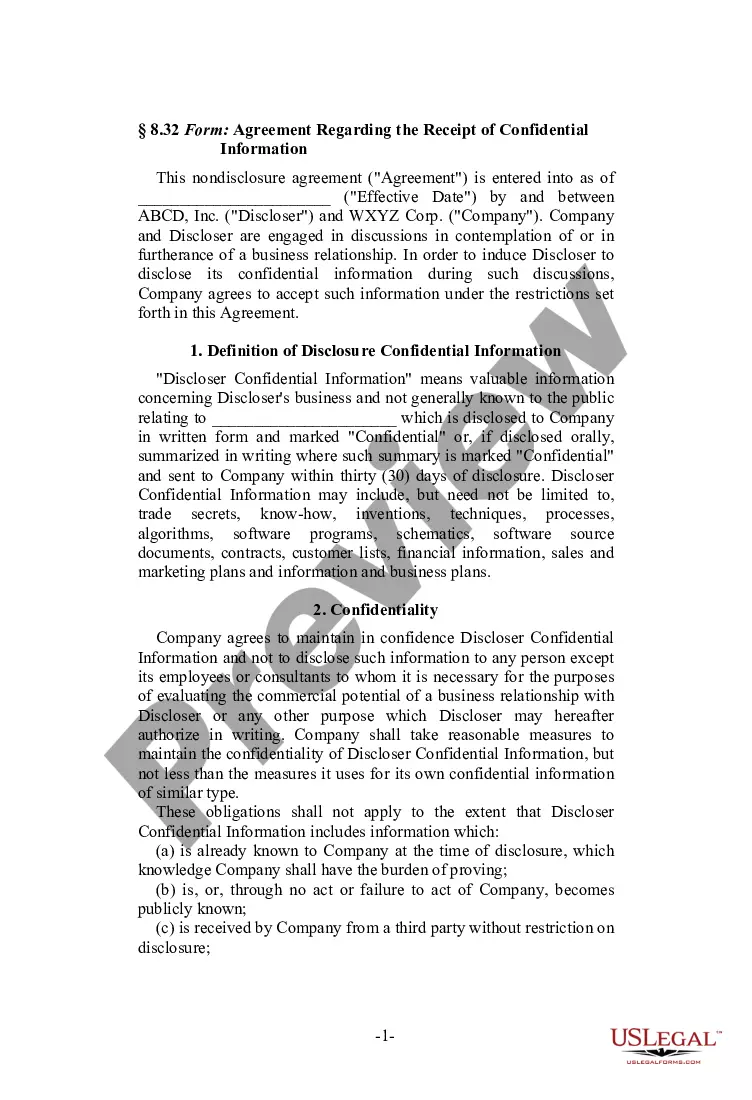
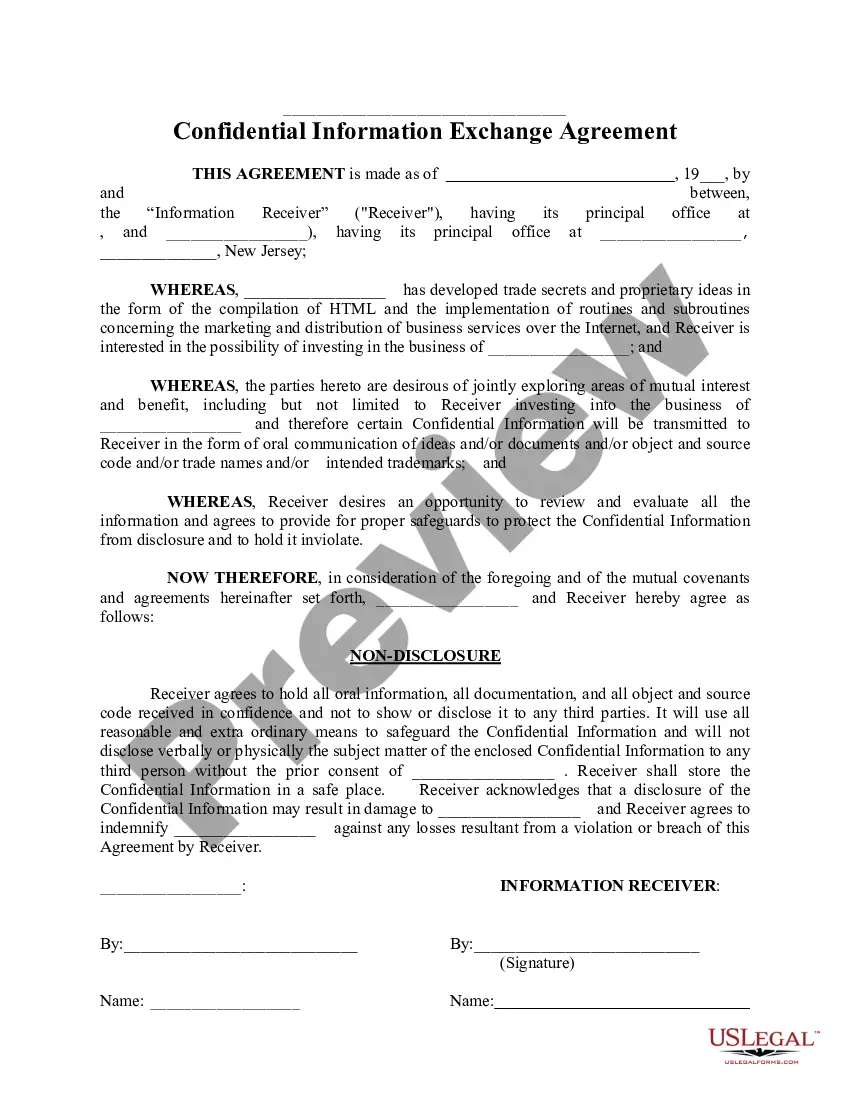
The Confidential Information Exchange Agreement between Software Developer and Receiver Distributor is a legal document that facilitates the sharing of proprietary information between two parties in the software industry. This agreement protects sensitive information and ensures that the receiving party will not disclose or misuse it. Unlike other contracts, this agreement specifically emphasizes the confidentiality of exchanged information, making it crucial for software developers and distributors exploring potential collaborations.
Key components of this form
- Definitions: A clear definition of proprietary information and what constitutes confidentiality.
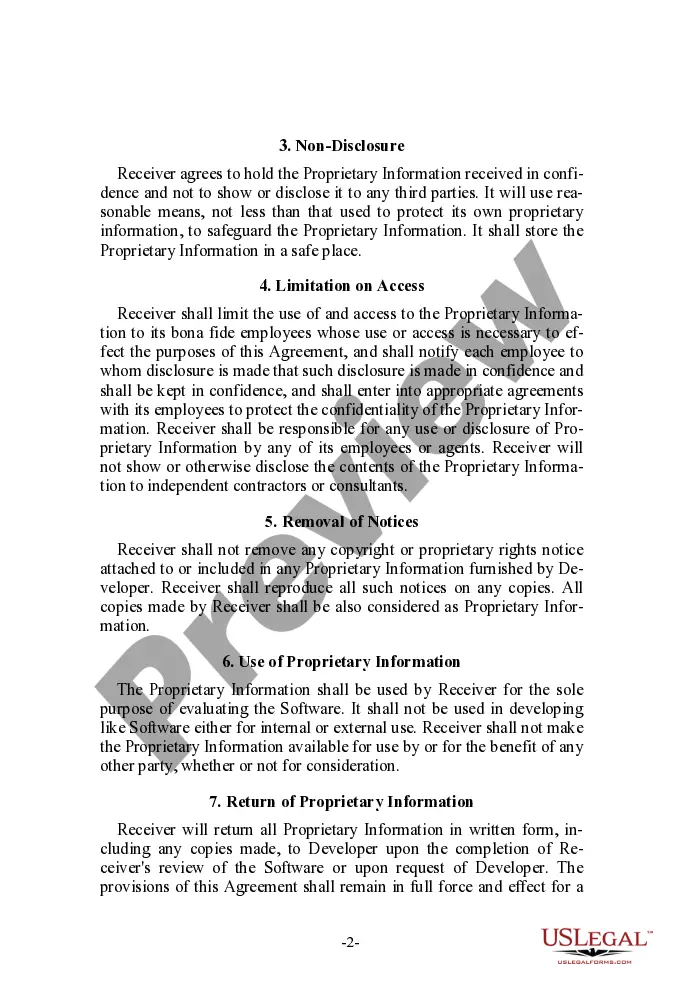
- Non-disclosure: Obligations for the Receiver to maintain confidentiality and restrict access to the proprietary information.
- Return of Information: Requirements for returning or destroying proprietary materials at the end of the evaluation period.
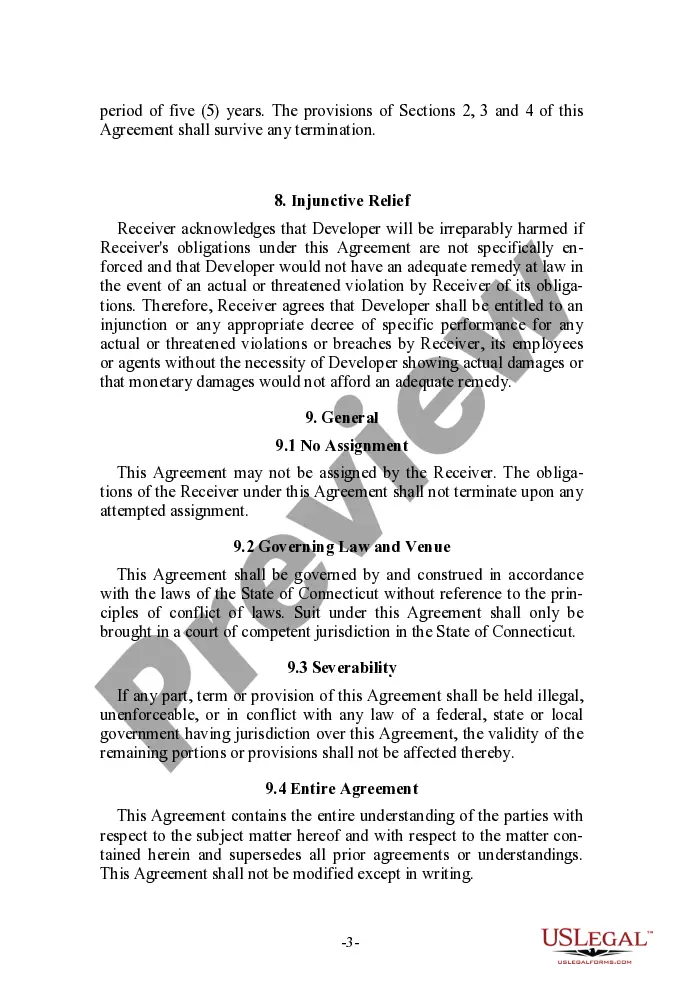
- Injunctive Relief: Provisions that allow the Developer to seek injunctive relief in case of breach.
- Governing Law: The jurisdiction under which the agreement is to be interpreted and enforced.
Situations where this form applies
This form is essential when a software developer and a distributor intend to exchange confidential information to explore a potential business relationship. It is commonly used when evaluating new software products, negotiating distribution rights, or engaging in collaborative projects where proprietary information needs to be safeguarded from public disclosure or use by third parties.
Who can use this document
- Software developers looking to protect their proprietary information when discussing partnerships.
- Distributors who need to review a developer's confidential information to assess potential software offerings.
- Businesses in the technology sector engaging in negotiations involving sensitive data.
How to complete this form
- Identify the parties: Fill in the names and principal offices of the Software Developer and the Receiver Distributor.
- Define proprietary information: Clearly articulate what information will be deemed as proprietary.
- Include non-disclosure terms: Specify the obligations of the Receiver regarding the handling of proprietary information.
- Sign and date the agreement: Ensure that authorized representatives from both parties sign the document and include the execution date.
- Keep a copy: Maintain a signed copy of the agreement for record-keeping purposes.
Notarization guidance
This form does not typically require notarization to be legally valid. However, some jurisdictions or document types may still require it. US Legal Forms provides secure online notarization powered by Notarize, available 24/7 for added convenience.
Get your form ready online
Our built-in tools help you complete, sign, share, and store your documents in one place.
Make edits, fill in missing information, and update formatting in US Legal Forms—just like you would in MS Word.
Download a copy, print it, send it by email, or mail it via USPS—whatever works best for your next step.
Sign and collect signatures with our SignNow integration. Send to multiple recipients, set reminders, and more. Go Premium to unlock E-Sign.
If this form requires notarization, complete it online through a secure video call—no need to meet a notary in person or wait for an appointment.
We protect your documents and personal data by following strict security and privacy standards.

Make edits, fill in missing information, and update formatting in US Legal Forms—just like you would in MS Word.

Download a copy, print it, send it by email, or mail it via USPS—whatever works best for your next step.

Sign and collect signatures with our SignNow integration. Send to multiple recipients, set reminders, and more. Go Premium to unlock E-Sign.

If this form requires notarization, complete it online through a secure video call—no need to meet a notary in person or wait for an appointment.

We protect your documents and personal data by following strict security and privacy standards.
Typical mistakes to avoid
- Failing to clearly define what constitutes proprietary information.
- Not limiting access to the proprietary information appropriately.
- Neglecting to include necessary signatures or dates on the agreement.
- Overlooking annual reviews or updates to the terms of confidentiality.
Why use this form online
- Convenient access: Download and complete the form at your convenience without needing to visit a law office.
- Editability: Modify the agreement to suit your specific needs easily.
- Legal reliability: This form is drafted by licensed attorneys, ensuring its validity and enforceability.
Legal use & context
- This agreement is legally binding and enforceable if properly executed.
- It may be used in court to seek remedies in case of a breach of confidentiality.
- The terms within should be tailored to reflect the specific relationship and nature of information exchanged.
Key takeaways
- The Confidential Information Exchange Agreement protects sensitive proprietary information shared between parties.
- It should clearly outline the definition and handling of proprietary information.
- This agreement is useful for software developers and distributors engaged in partnerships.
Looking for another form?
Form popularity
FAQ
Employers must be prepared to terminate any employee who refuses to sign the agreement. If an employer allows even one employee to refuse and remain employed, the agreements signed by the other employees will not be legally binding.
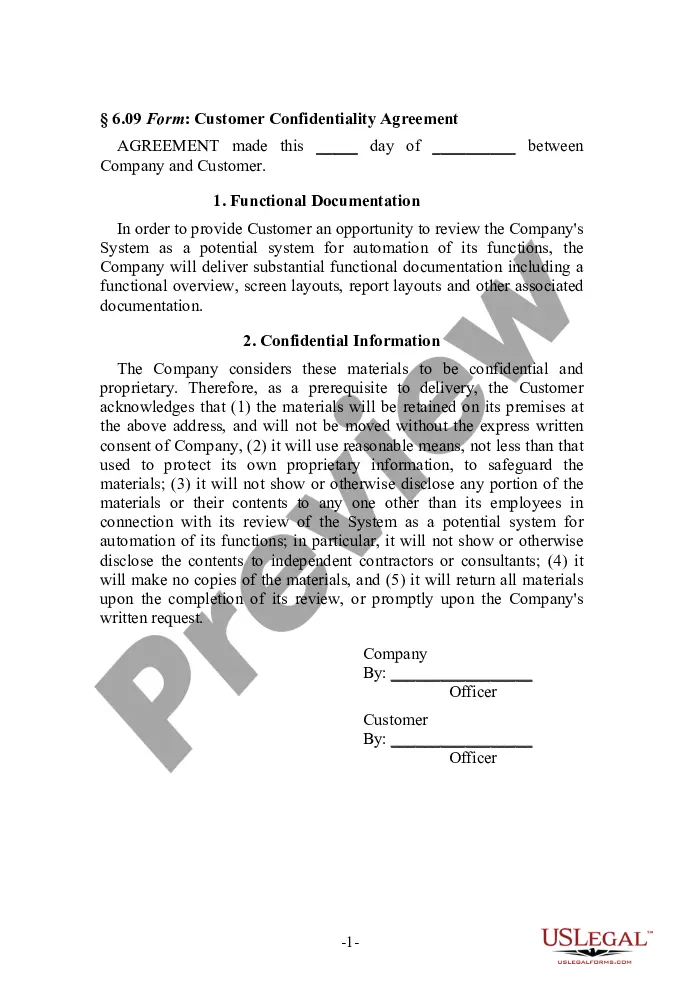
A confidentiality agreement (also called a nondisclosure agreement or NDA) is a legally binding contract in which a person or business promises to treat specific information as a trade secret and promises not to disclose the secret to others without proper authorization.
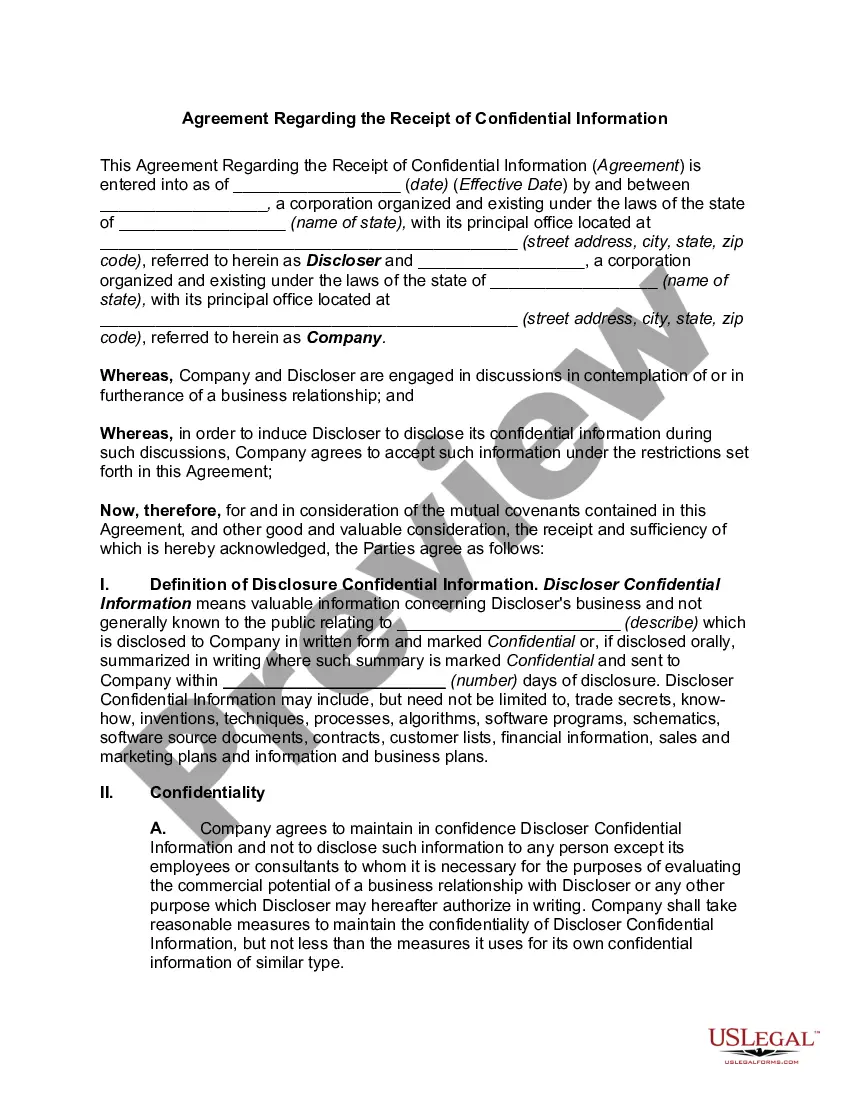
Set the date of the agreement. Describe the two parties, sometimes called the Disclosing Party and the Receiving Party.7feff Include names and identification, so there can be no misunderstanding about who signed the agreement.
Non-disclosure agreements (NDAs), otherwise known as confidentiality agreements, are generally agreed upon and signed either at the beginning, or the end of a period of employment.An NDA may also be written into the contract of an employee working in a sector such as banking.
A confidentiality agreement is a legal tool that binds one or more parties to non-disclosure of confidential or proprietary information. An NDA is actually a type of confidentiality agreement that establishes a confidential relationship and legally binds any signed parties to that relationship.
A confidentiality agreement is a written legal contract between an employer and an employee. The confidentiality agreement lays out binding terms and conditions that prohibit the employee from disclosing company confidential and proprietary information.
1. Confidentiality Agreement is used when a higher degree of secrecy is required. Non-disclosure implies you must not disclose personal or private information. But keeping confidential implies you be more proactive in making sure information is kept secret.
A confidentiality agreement is a legal tool that binds one or more parties to non-disclosure of confidential or proprietary information. An NDA is actually a type of confidentiality agreement that establishes a confidential relationship and legally binds any signed parties to that relationship.
Confidentiality agreements, sometimes called secrecy or nondisclosure agreements, are contracts entered into by two or more parties in which some or all of the parties agree that certain types of information that pass from one party to the other or that are created by one of the parties will remain confidential.