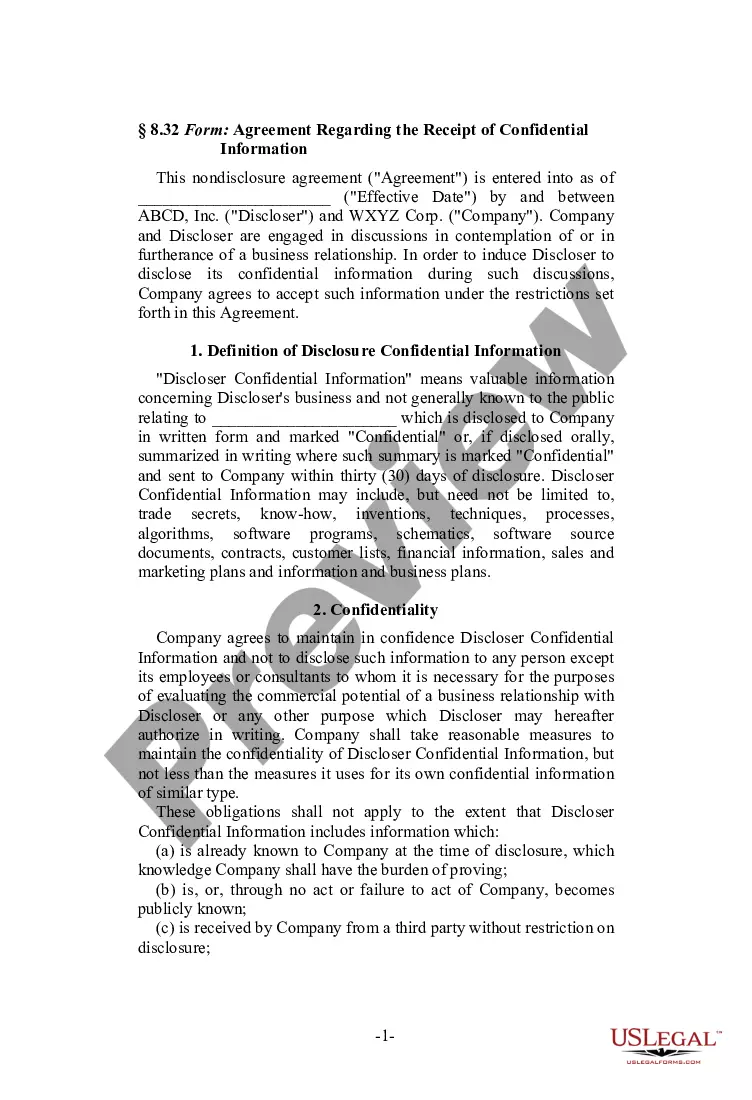
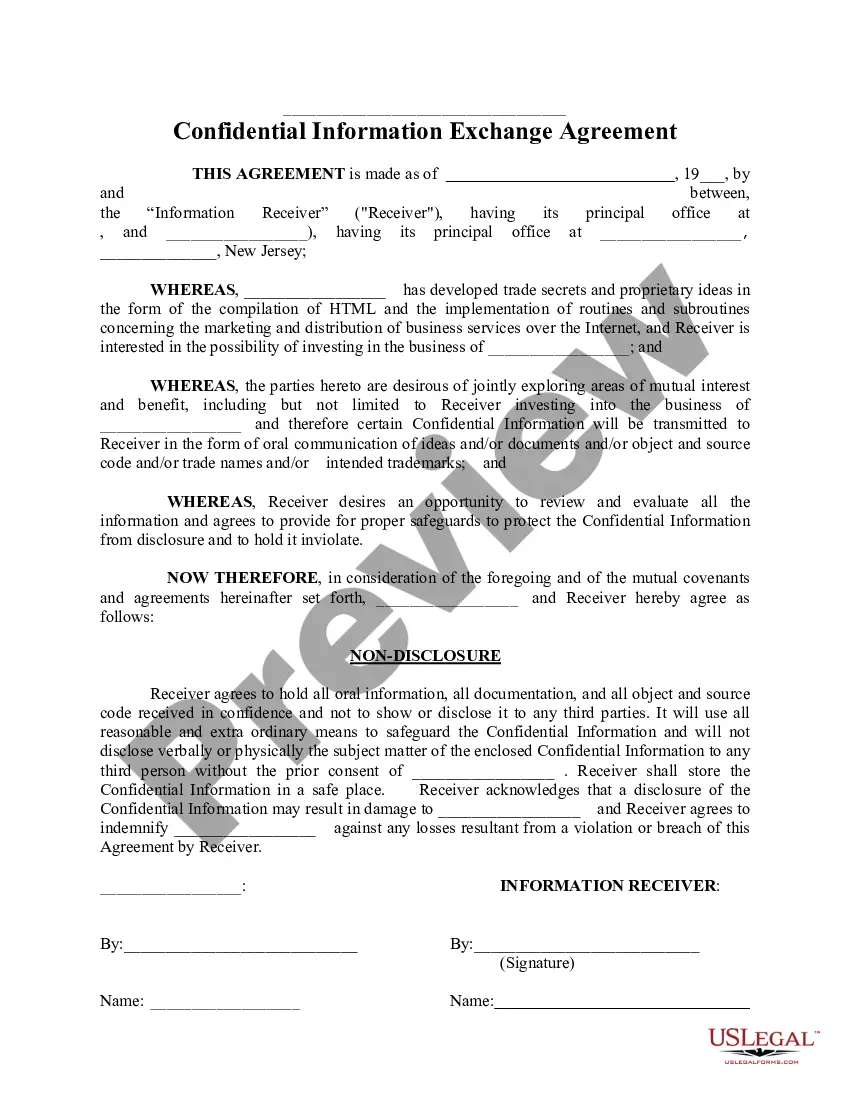
Confidential Information Exchange Agreement Between Software Developer and Receiver Distributor
Understanding this form
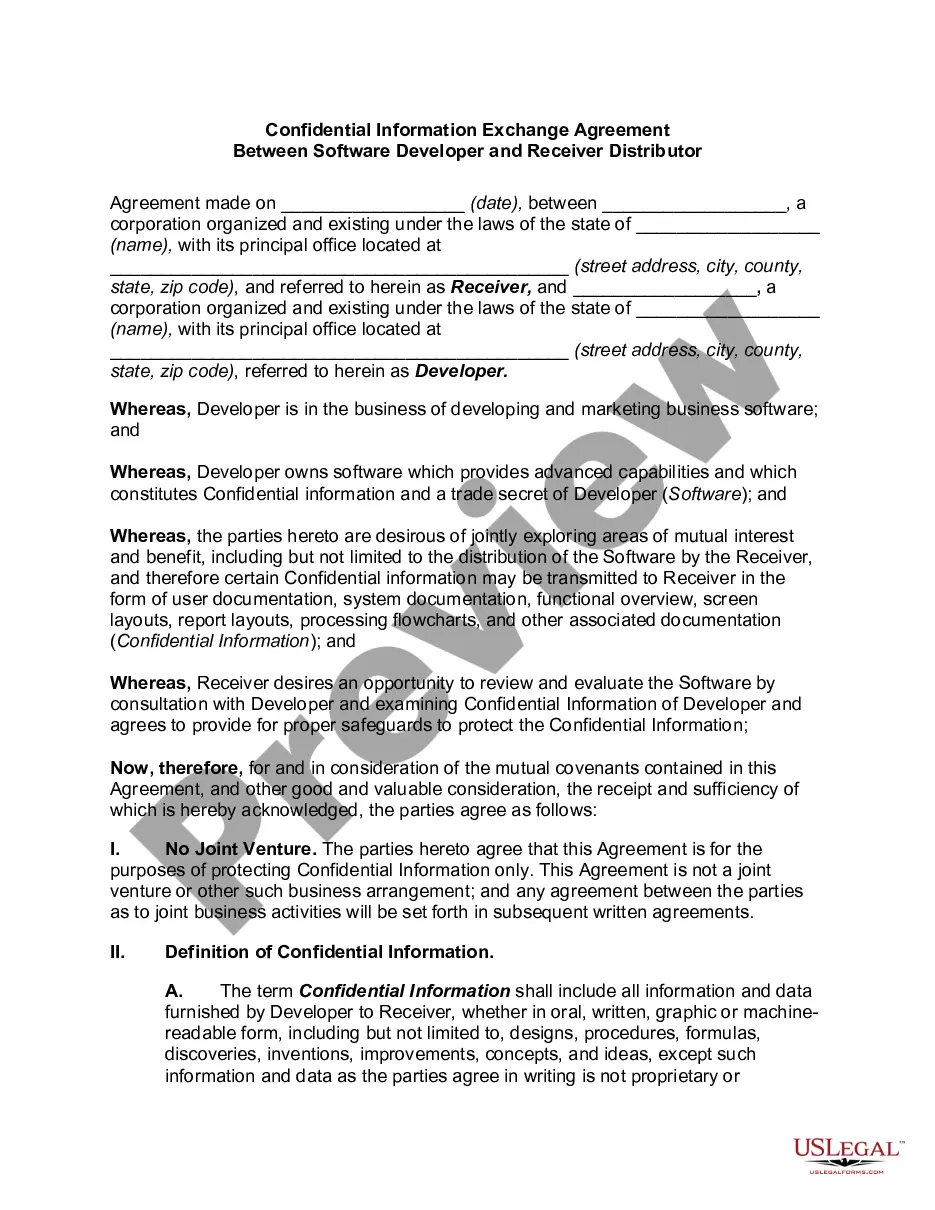
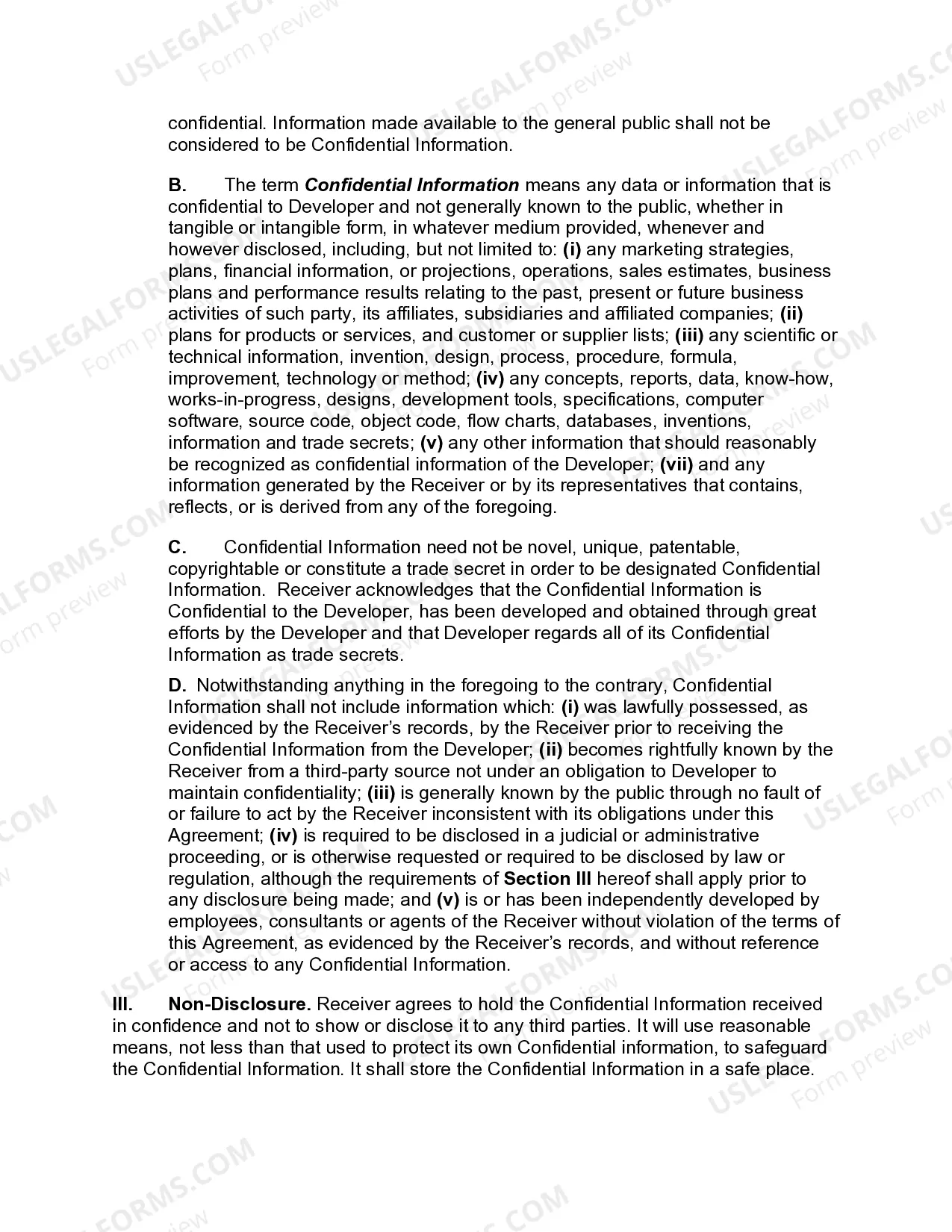
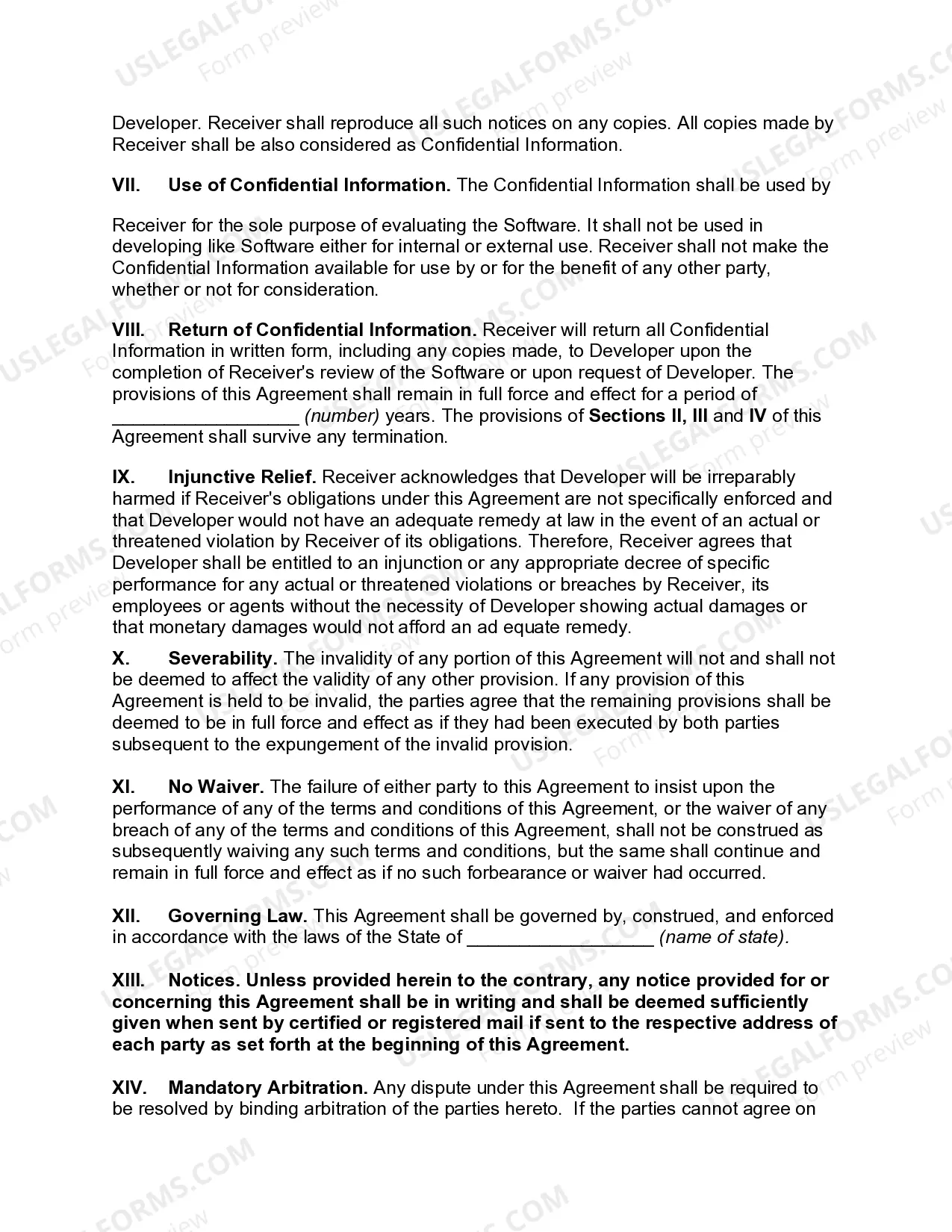
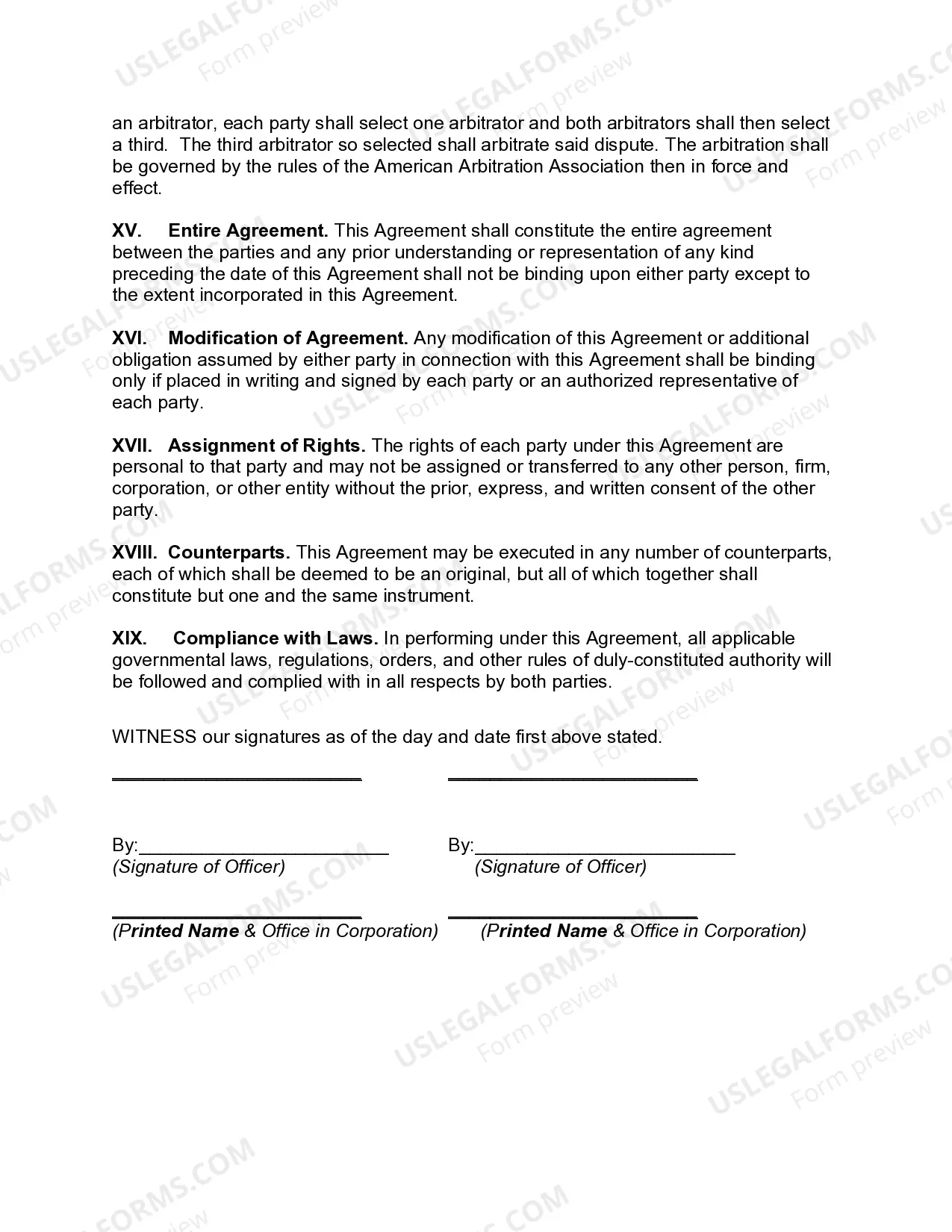
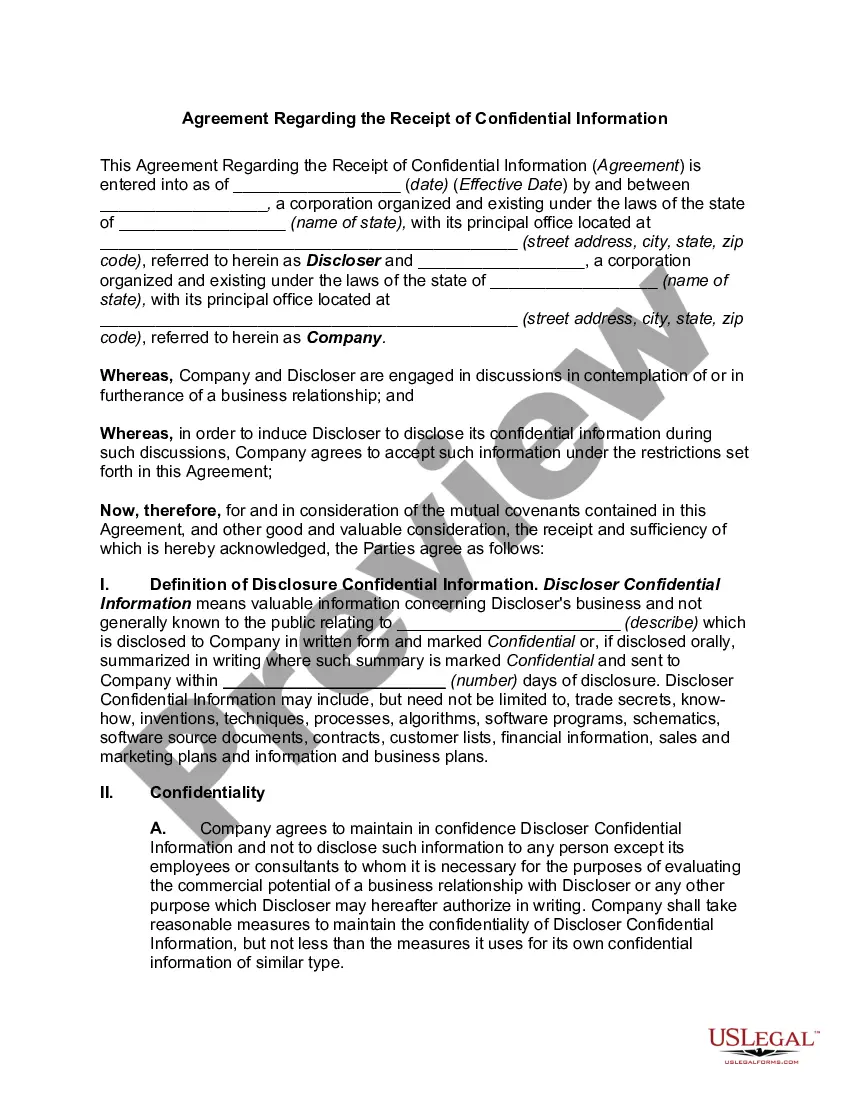
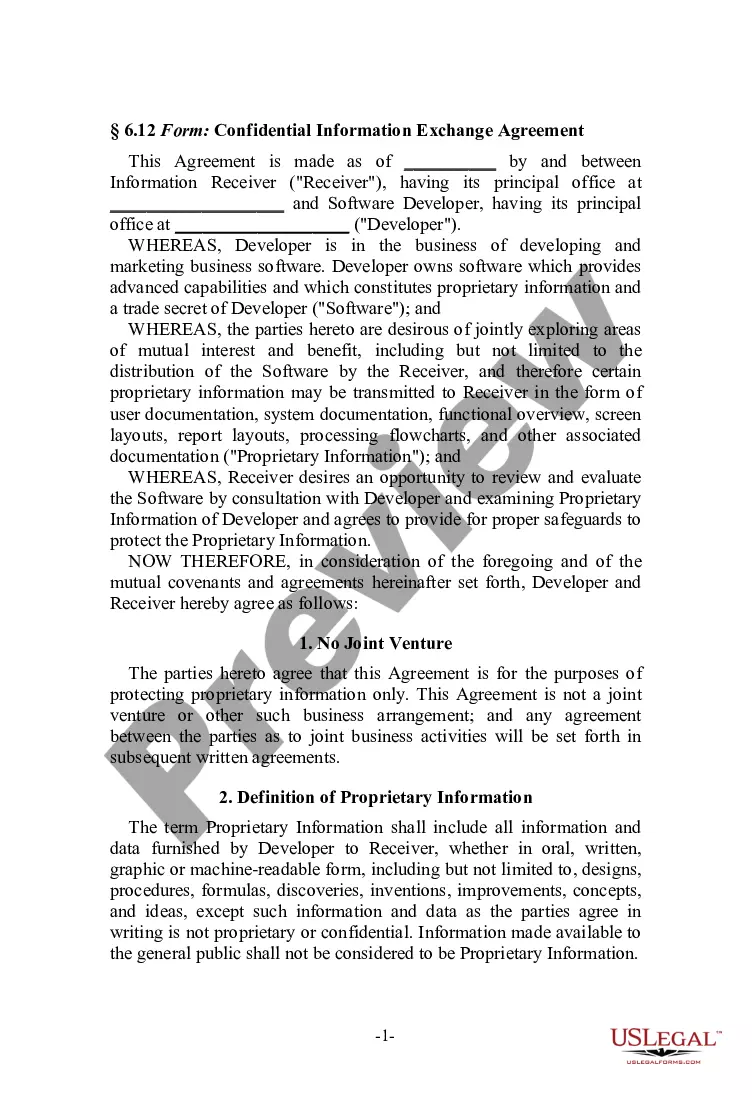
The Confidential Information Exchange Agreement is a legal document used primarily in the software and technology industries. It establishes the terms under which a software developer shares confidential information with a distributor or receiver. This agreement protects sensitive data and intellectual property, ensuring that both parties understand their obligations concerning the confidentiality of the information shared. Unlike general non-disclosure agreements, this form is specifically tailored for confidential exchanges related to software development and distribution.
Key components of this form
- Date and parties involved in the agreement.
- Definitions of what constitutes confidential information.
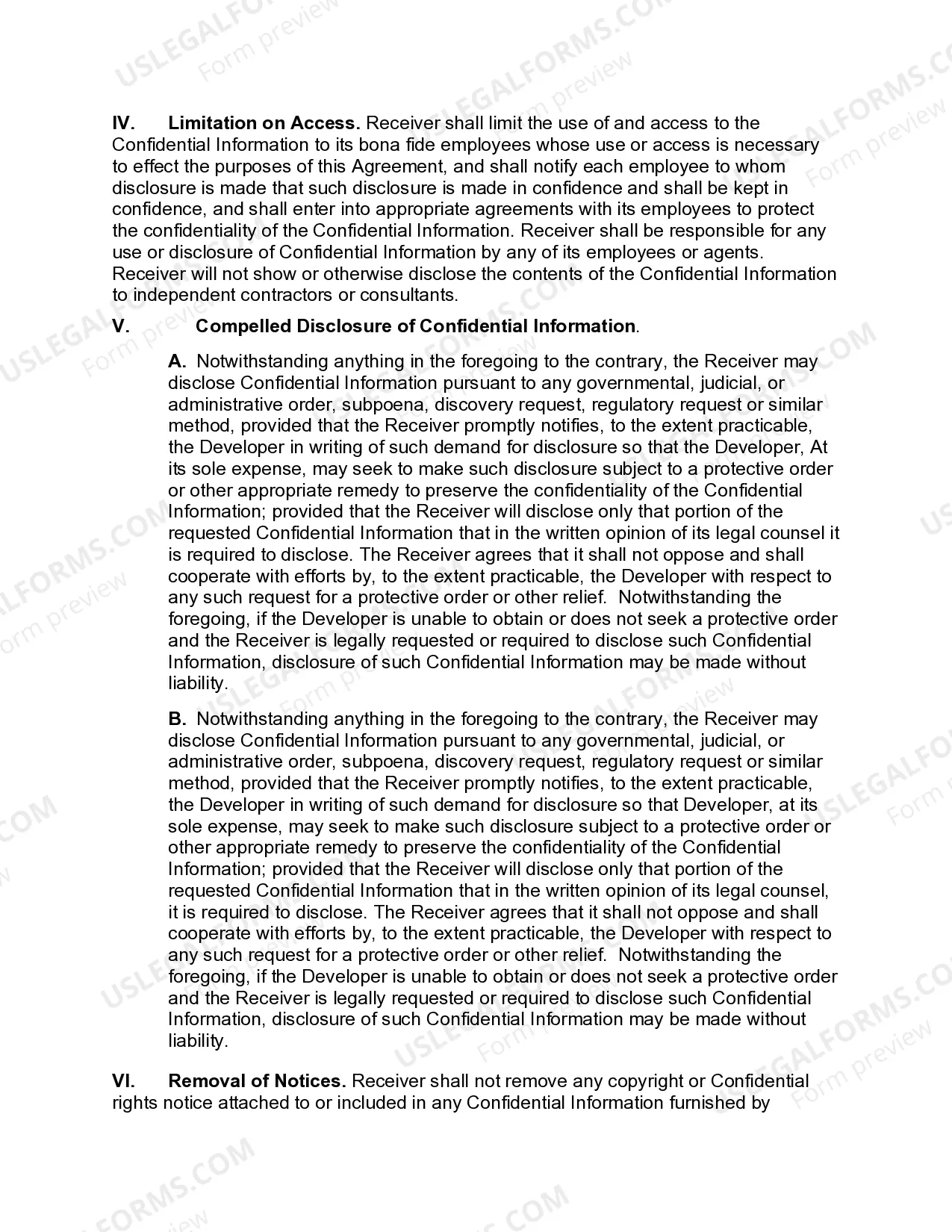
- Obligations of the receiving party regarding the handling of confidential information.
- Limitations on the use and access to confidential information.
- Provisions for returning or destroying the confidential information after use.
- Details on the governing law and dispute resolution through arbitration.
When to use this form
This agreement should be used when a software developer intends to share proprietary or sensitive information with a distributor who may evaluate or market the software. It is essential in scenarios where the developer needs to protect trade secrets and confidential data while exploring business opportunities with potential partners. Use this form when discussing software specifications, marketing strategies, or development processes that must remain confidential.
Who can use this document
- Software developers looking to share proprietary information securely.
- Receiver distributors interested in evaluating a developer's software before proceeding with a business relationship.
- Businesses operating in technology or software sectors that require sharing sensitive information.
Instructions for completing this form
- Identify the parties involved by entering the names and addresses of the software developer and the receiver distributor.
- Fill in the date on which the agreement is made.
- Specify the definition of confidential information, ensuring clarity on what is considered proprietary.
- Outline the obligations regarding the handling and safeguarding of the confidential information.
- Sign and date the agreement by authorized officers from both parties.
Does this form need to be notarized?
This form does not typically require notarization unless specified by local law. It is wise to consult relevant statutes or legal counsel to verify any additional requirements in your jurisdiction.
Get your form ready online
Our built-in tools help you complete, sign, share, and store your documents in one place.
Make edits, fill in missing information, and update formatting in US Legal Forms—just like you would in MS Word.
Download a copy, print it, send it by email, or mail it via USPS—whatever works best for your next step.
Sign and collect signatures with our SignNow integration. Send to multiple recipients, set reminders, and more. Go Premium to unlock E-Sign.
If this form requires notarization, complete it online through a secure video call—no need to meet a notary in person or wait for an appointment.
We protect your documents and personal data by following strict security and privacy standards.

Make edits, fill in missing information, and update formatting in US Legal Forms—just like you would in MS Word.

Download a copy, print it, send it by email, or mail it via USPS—whatever works best for your next step.

Sign and collect signatures with our SignNow integration. Send to multiple recipients, set reminders, and more. Go Premium to unlock E-Sign.

If this form requires notarization, complete it online through a secure video call—no need to meet a notary in person or wait for an appointment.

We protect your documents and personal data by following strict security and privacy standards.
Common mistakes
- Failing to clearly define what constitutes confidential information.
- Not specifying the duration for which the confidentiality obligations will last.
- Neglecting to include the procedure for returning confidential information.
- Overlooking the necessity for both parties to sign the agreement.
Benefits of using this form online
- Convenience of downloading and filling out the form at your own pace.
- Editability allows customization to fit specific business needs.
- Access to reliable templates drafted by licensed attorneys, ensuring legal adequacy.
Looking for another form?
Form popularity
FAQ
Set the date of the agreement. Describe the two parties, sometimes called the Disclosing Party and the Receiving Party.7feff Include names and identification, so there can be no misunderstanding about who signed the agreement.
The cold hard truth is that most NDAs do not hold up in court. Non-Disclosure Agreements are most effective in establishing a paper trail of confidential information as it relates to partnerships, and discouraging partners from misappropriating proprietary information.
A definition of confidential information. Who is involved. Why the recipient knows the information. Exclusions or limits on confidential information. Receiving party's obligations. Time frame or term. Discloser to the recipient.
Confidentiality agreements usually allow the recipient to disclose confidential information if required to do so by court order or other legal process.
The party to be charged must have signed the contract. Since the NDAs benefit you, so long as the other party has signed, that ishould be sufficient.
It is a contract through which the parties agree not to disclose information covered by the agreement. An NDA creates a confidential relationship between the parties, typically to protect any type of confidential and proprietary information or trade secrets. As such, an NDA protects non-public business information.
Look for broad and vague language: When analyzing an NDA, make sure the definitions of proprietary and confidential information are thoroughly defined. Be skeptical of broad and vague language that opts to unreasonably limit your ability to discuss and divulge information.
A confidentiality agreement (also called a nondisclosure agreement or NDA) is a legally binding contract in which a person or business promises to treat specific information as a trade secret and promises not to disclose the secret to others without proper authorization.
Depending on the complexity of what you need protected and the number of parties involved, the cost of having an NDA drafted can vary significantly. When you hire a lawyer in the Priori network, drafting an NDA typically costs anywhere from $175-$1,500.