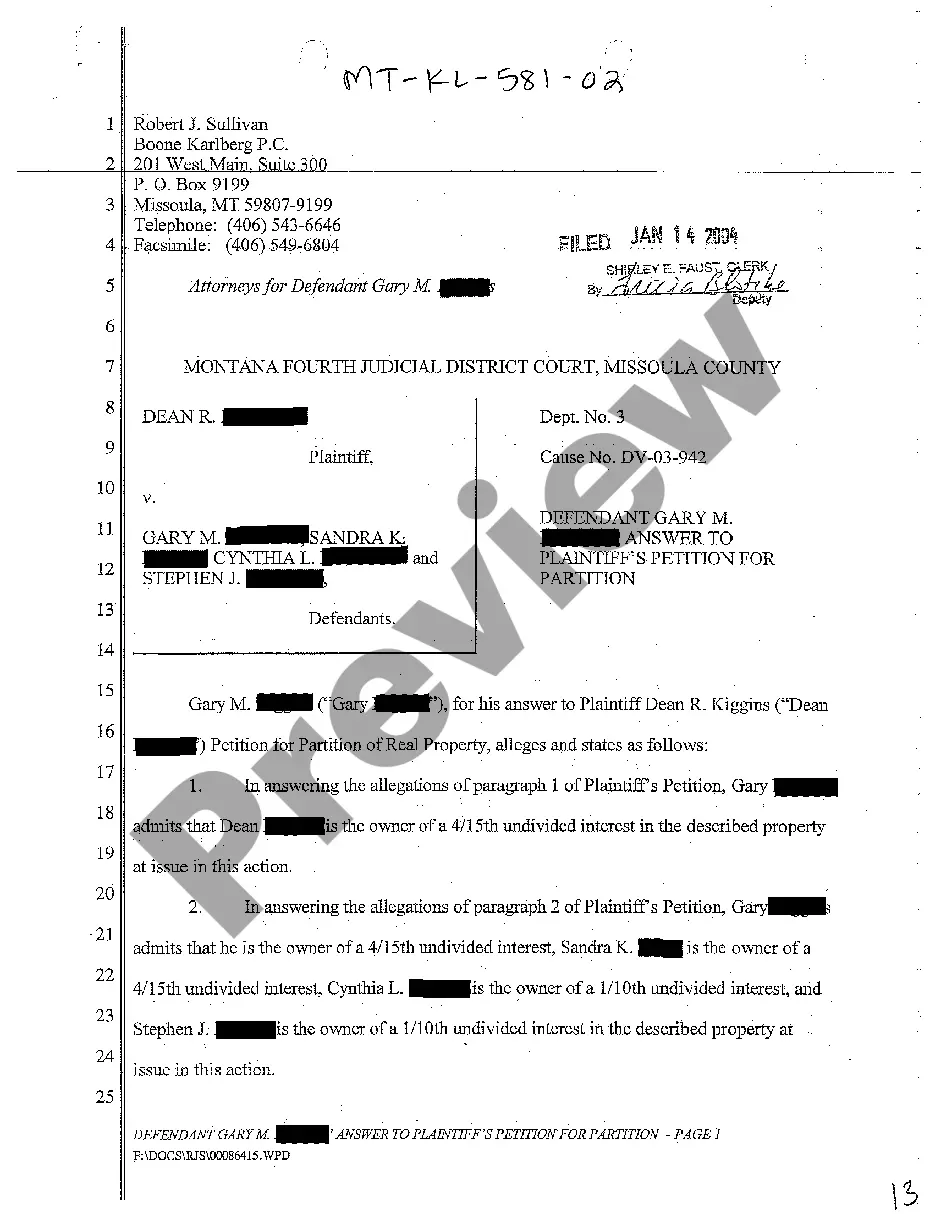
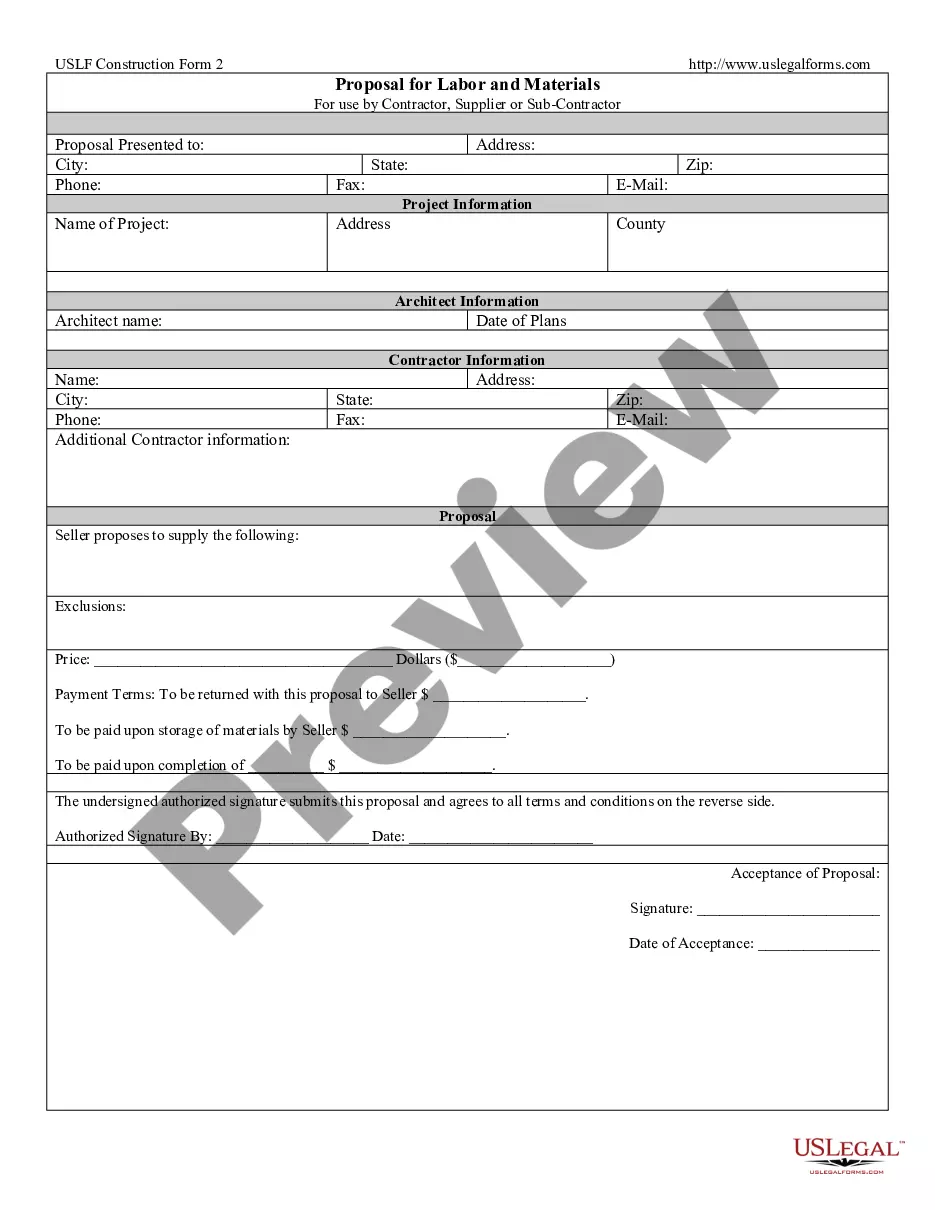
Proposal for Labor and Materials
About this form
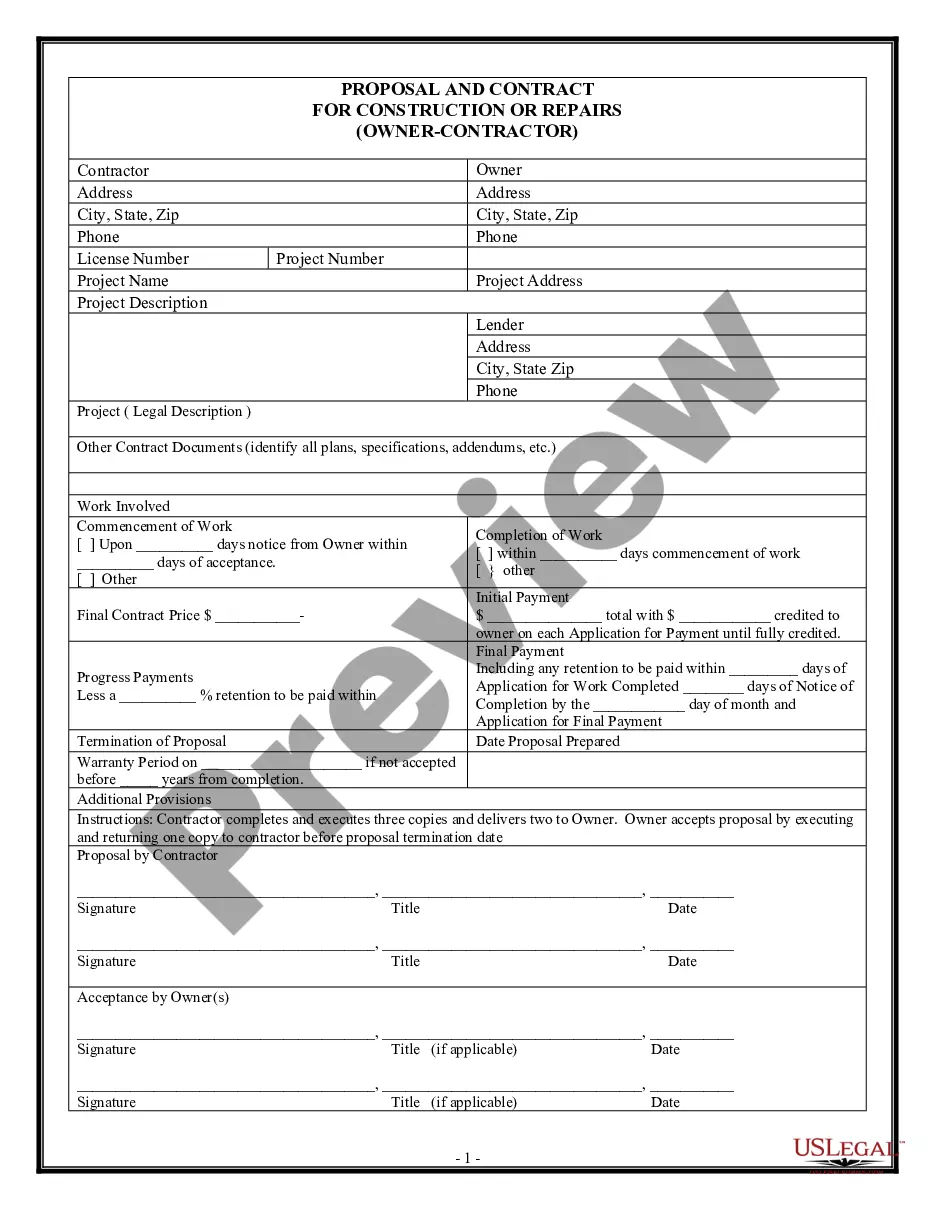
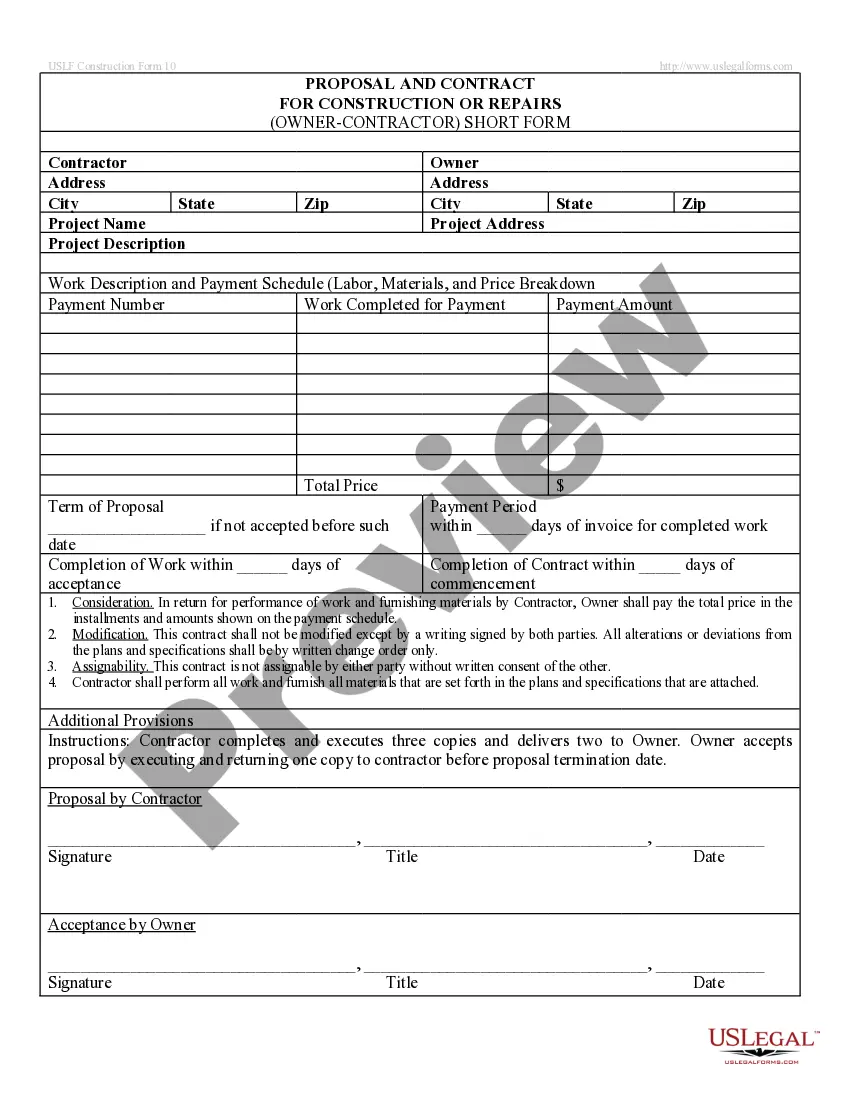
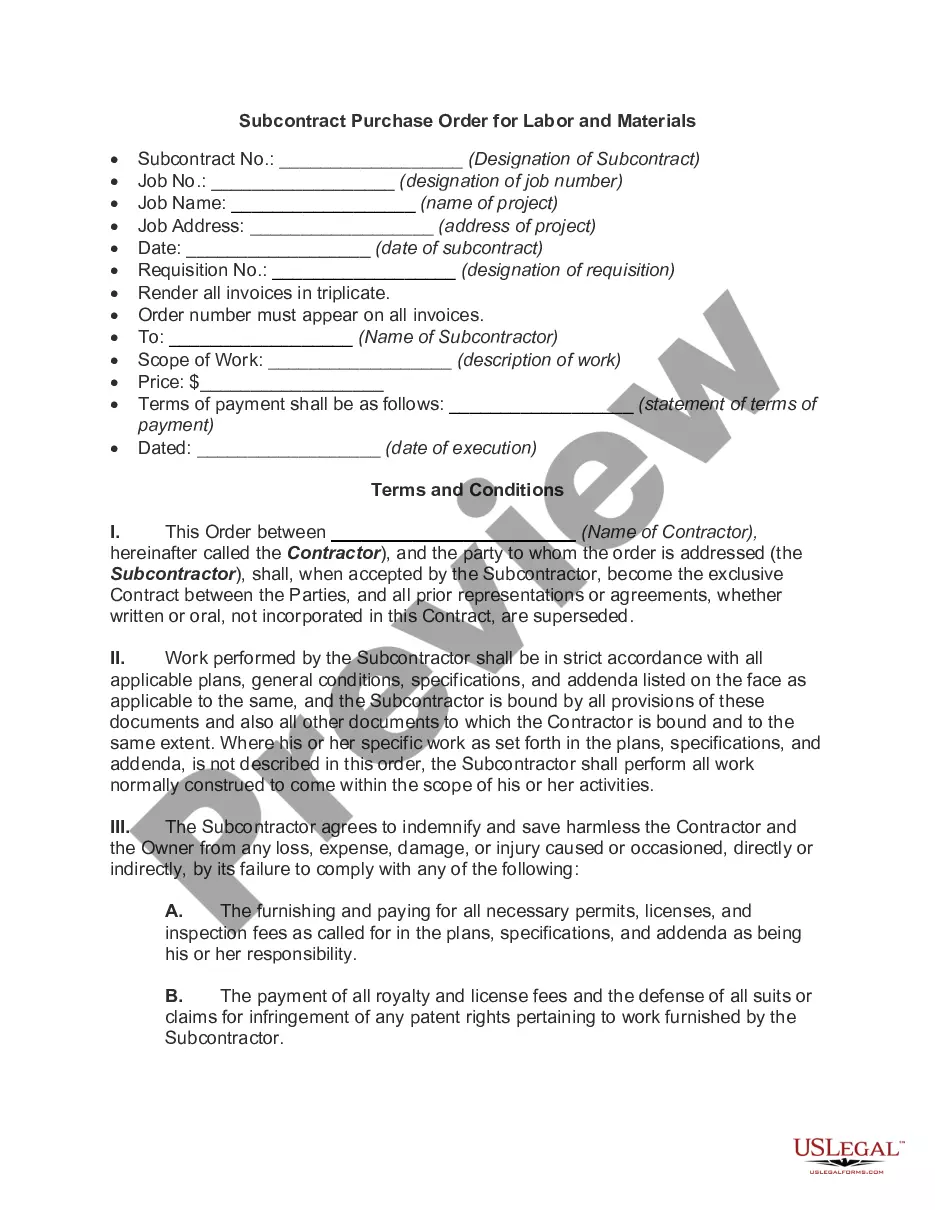
The Proposal for Labor and Materials is a legal document used by contractors, subcontractors, and suppliers to outline the services or materials they propose to provide for a specific project. This form differs from other contracts by focusing specifically on the proposal stage, detailing the cost, timeline, and terms, which must be accepted with a signature to become legally binding.
Form components explained
- Proposal details including project information and scope of work.
- Pricing information with payment terms and conditions.
- Authorized signature section for both the seller and buyer.
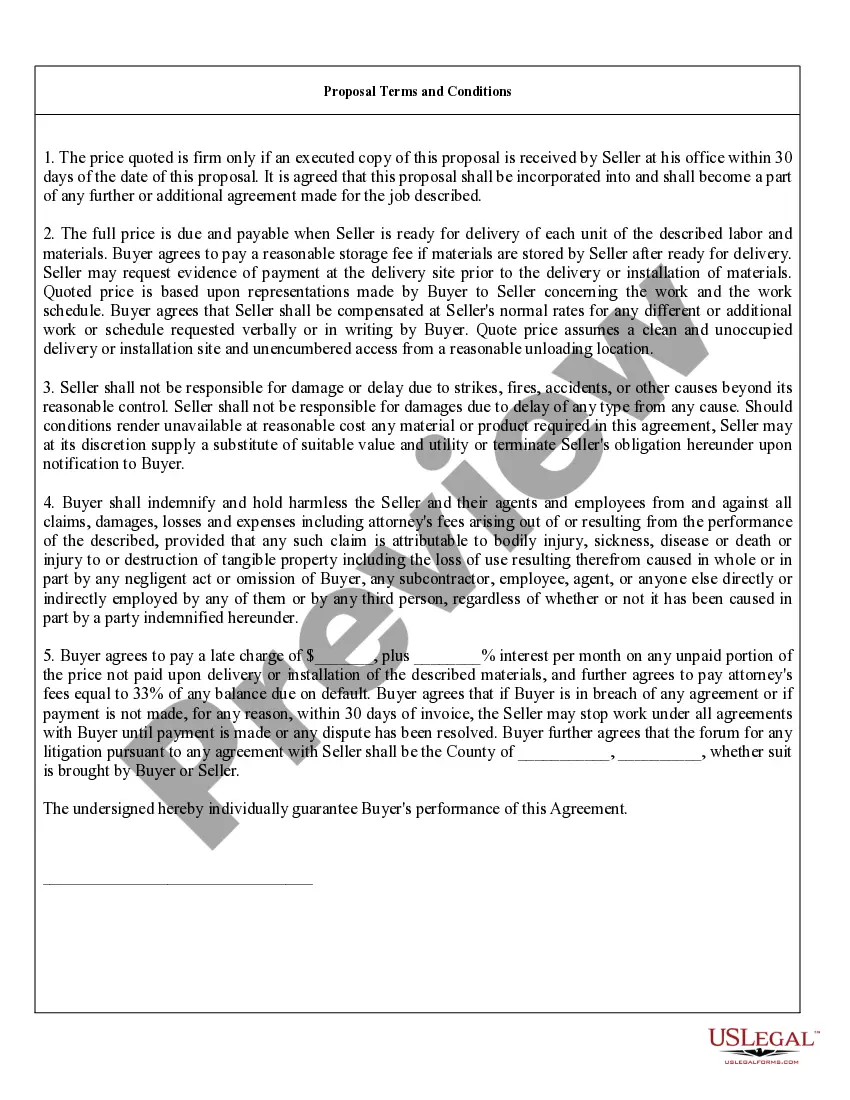
- A comprehensive terms and conditions section addressing responsibilities and liabilities.

Common use cases
You would use the Proposal for Labor and Materials when you need to formally present a bid for a construction project or supply of materials. This form is particularly useful when negotiating contracts with clients, providing clarity on costs and expectations to avoid disputes later on.
Who this form is for
- Contractors looking to provide a proposal for labor or materials.
- Subcontractors needing to outline their services and costs.
- Suppliers offering materials for construction projects.
How to prepare this document
- Identify the parties involved by filling in the contractor, supplier, or subcontractor details.
- Specify the project information, including the name and address of the project.
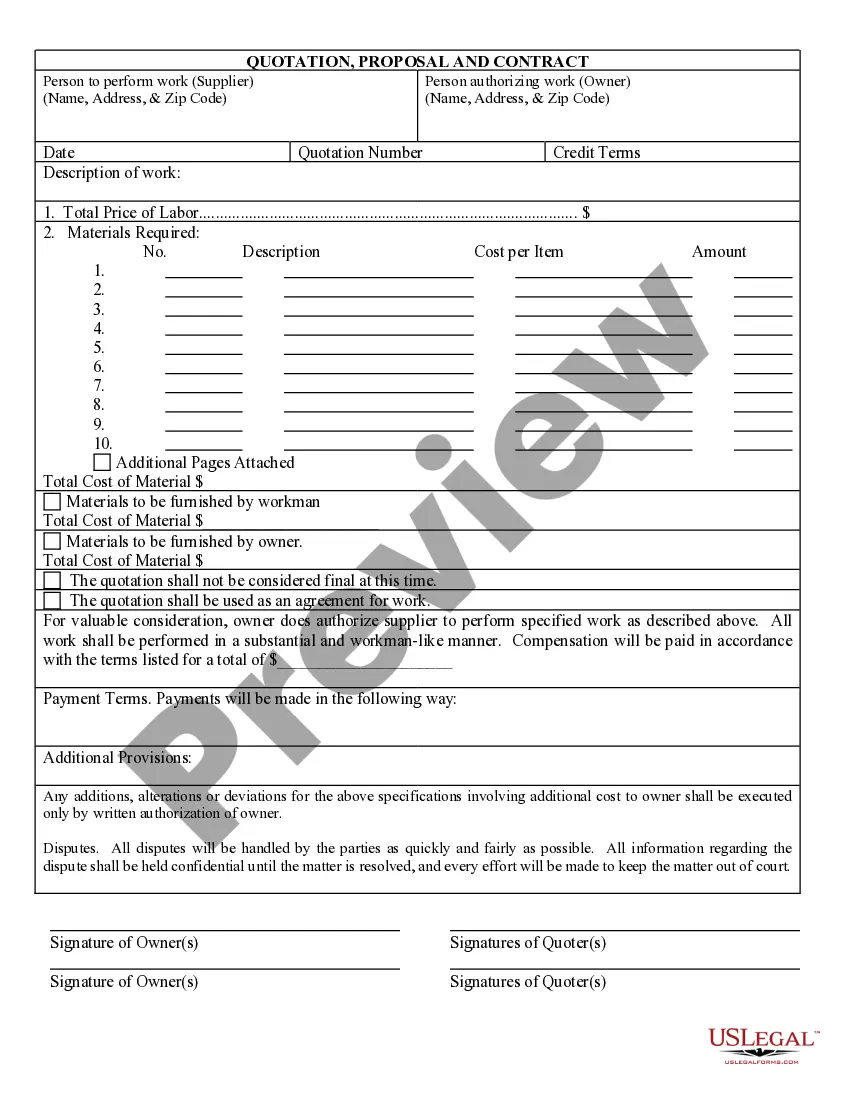
- Detail the labor and materials to be provided along with the associated costs.
- Outline payment terms and any applicable conditions for storage or delivery of materials.
- Ensure both parties sign and date the proposal where indicated to finalize the agreement.
Is notarization required?
This form usually doesn’t need to be notarized. However, local laws or specific transactions may require it. Our online notarization service, powered by Notarize, lets you complete it remotely through a secure video session, available 24/7.
Get your form ready online
Our built-in tools help you complete, sign, share, and store your documents in one place.
Make edits, fill in missing information, and update formatting in US Legal Forms—just like you would in MS Word.
Download a copy, print it, send it by email, or mail it via USPS—whatever works best for your next step.
Sign and collect signatures with our SignNow integration. Send to multiple recipients, set reminders, and more. Go Premium to unlock E-Sign.
If this form requires notarization, complete it online through a secure video call—no need to meet a notary in person or wait for an appointment.
We protect your documents and personal data by following strict security and privacy standards.

Make edits, fill in missing information, and update formatting in US Legal Forms—just like you would in MS Word.

Download a copy, print it, send it by email, or mail it via USPS—whatever works best for your next step.

Sign and collect signatures with our SignNow integration. Send to multiple recipients, set reminders, and more. Go Premium to unlock E-Sign.

If this form requires notarization, complete it online through a secure video call—no need to meet a notary in person or wait for an appointment.

We protect your documents and personal data by following strict security and privacy standards.
Common mistakes to avoid
- Failing to include complete project information, which can lead to misunderstandings.
- Not specifying payment terms clearly, which may cause payment disputes later.
- Neglecting to sign and date the proposal, making it non-binding.
Benefits of using this form online
- Immediate access and download enables quick proposal preparation.
- Edit and customize the template to fit specific project needs.
- Reliability, as forms are designed by licensed attorneys to meet legal standards.
Looking for another form?

Form popularity
FAQ
1 Planning: 2 Sketch your problem or point of improvement. 3 Sketch your proposed solution. 4 Define your reader. 5 Writing: 6 Draft the problem your idea will solve. 7 Include who the proposal will effect. 8 Draft the proposed solution to the problem.
State your purpose. Do this clearly and concisely so that the reader knows immediately why you are writing. Give some background information. State a solution to the problem. Show costs. Conclusion.
Understand the concept. A proposal is a sales tool not an information packet. Research the customer. Lay the appropriate groundwork. Brainstorm your approach. Write the executive summary. Write the body of the proposal. Mercilessly edit the whole thing.
Project proposal should focus on the project's goals and vision, key deliverables, timeframe, and ownership. Other details you can include are key risks and issues, success criteria, and reporting.
TITLE. Your title should give a clear indication of your proposed research approach or key question. BACKGROUND AND RATIONALE. You should include: RESEARCH QUESTION(S) RESEARCH METHODOLOGY. PLAN OF WORK & TIME SCHEDULE. BIBLIOGRAPHY.
State your purpose. Do this clearly and concisely so that the reader knows immediately why you are writing. Give some background information. State a solution to the problem. Show costs. Conclusion.
Title. Table of Contents. Executive Summary. The Problem Statement. The Proposed Solution. Qualifications. The Timeline. Pricing, Billing and Legal.
Writing a winning proposal means writing for the client and providing a clear, valuable solution to their problem. Each proposal must be planned out before a word is written. This planning assures a deep consideration of the audience, the most effective structure, and persuasive content.
The names and contact information of the owner and contractor. The location of the work. A detailed description of the work to be completed (scope of work) The cost of the work and a payment schedule. The signatures of both parties and the date.