Complaint regarding Action by Bank to Recover on Note After Application of Security Proceeds
Understanding this form
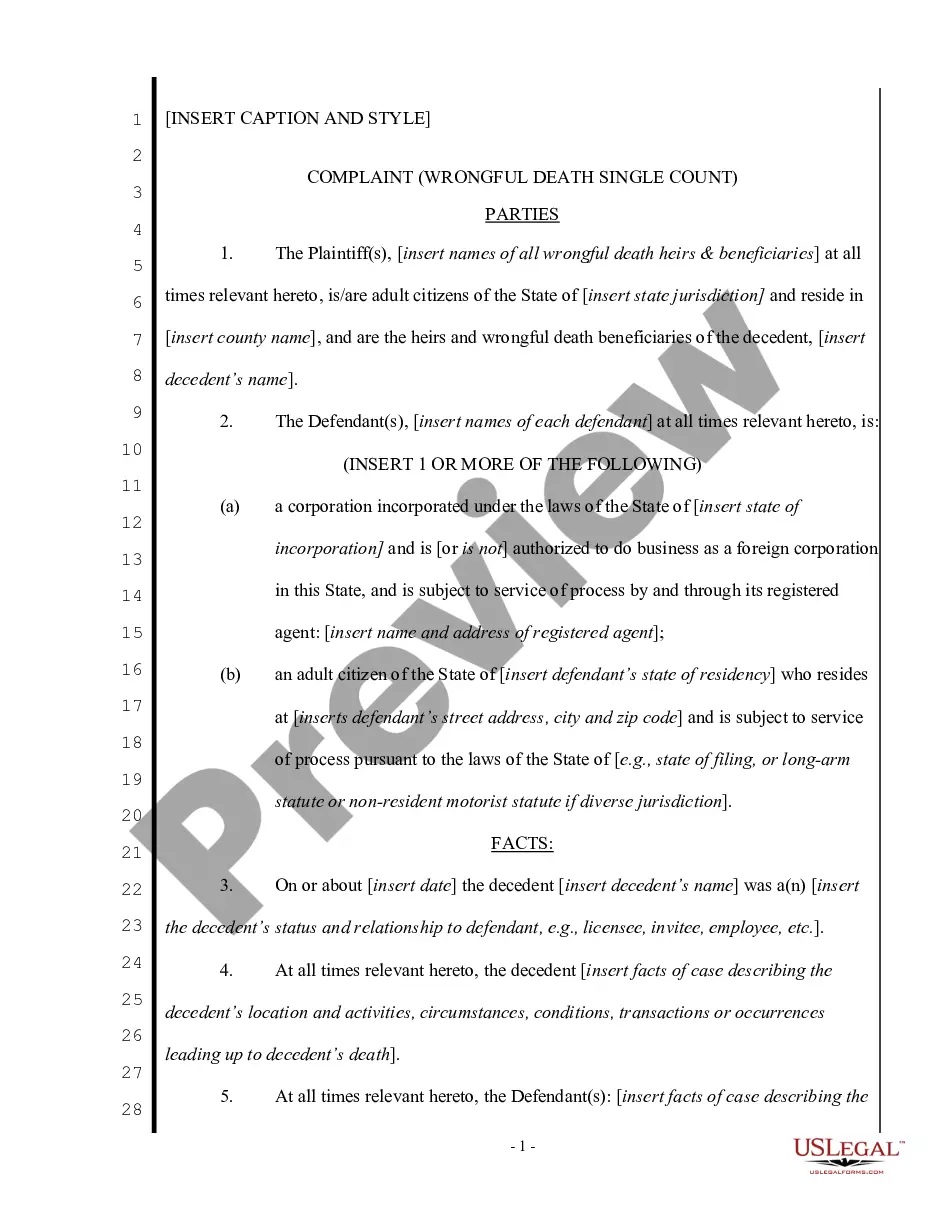
This form, known as a complaint regarding action by bank to recover on note after application of security proceeds, is a legal document used by lending institutions to initiate a lawsuit against a borrower and their guarantors for failing to repay a promissory note. It outlines the details of the default, the loans involved, and the legal basis for the lender's claim, differentiating it from other forms of complaints by focusing on loan recovery actions involving security proceeds.
What’s included in this form
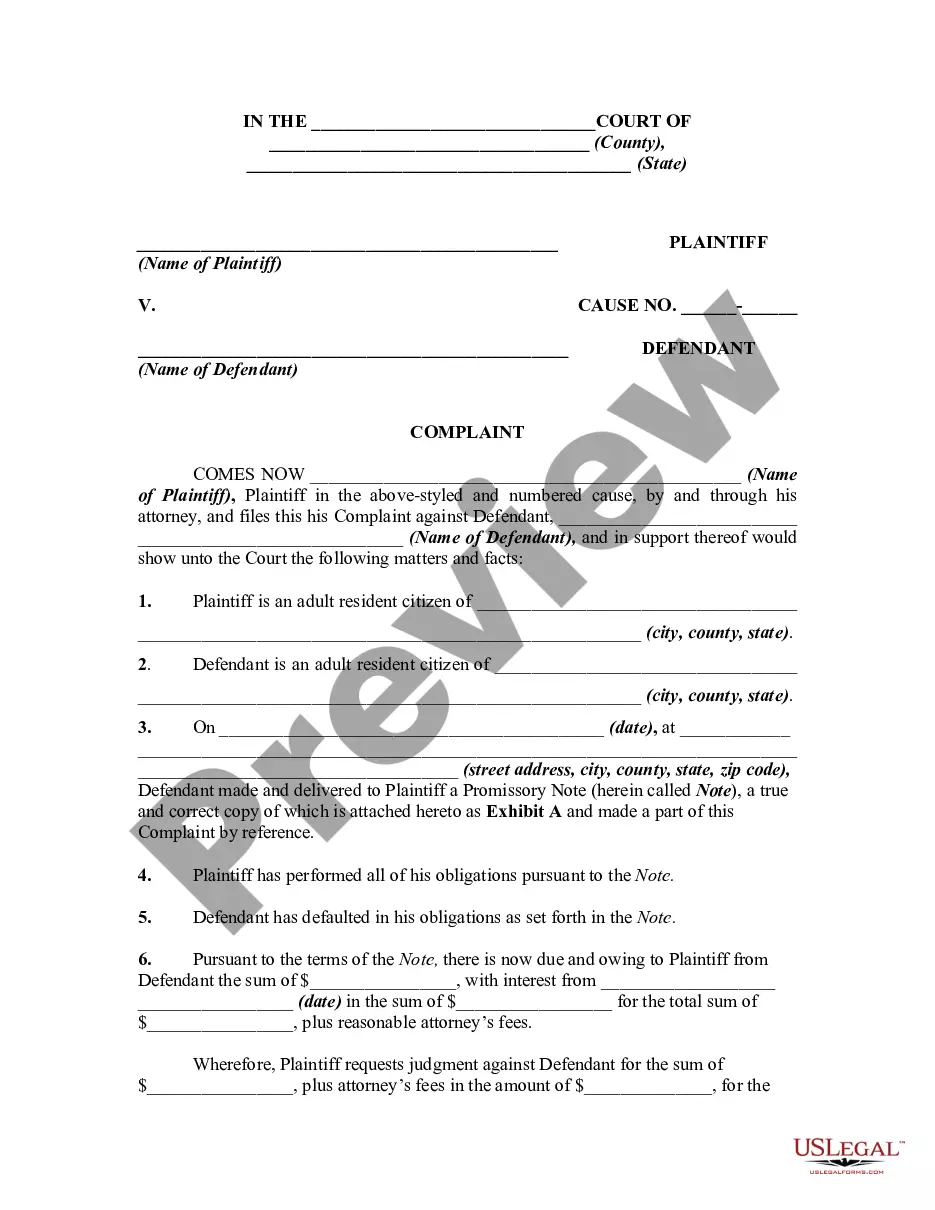
- Identification of the parties: Plaintiff (the bank) and Defendants (the borrowers/guarantors).
- Description of the promissory note and the loan details.
- Jurisdiction and venue related to the case.
- Background information on the borrower's default and the bankruptcy filing.
- Summary of the guarantors' obligations and outstanding amounts owed.
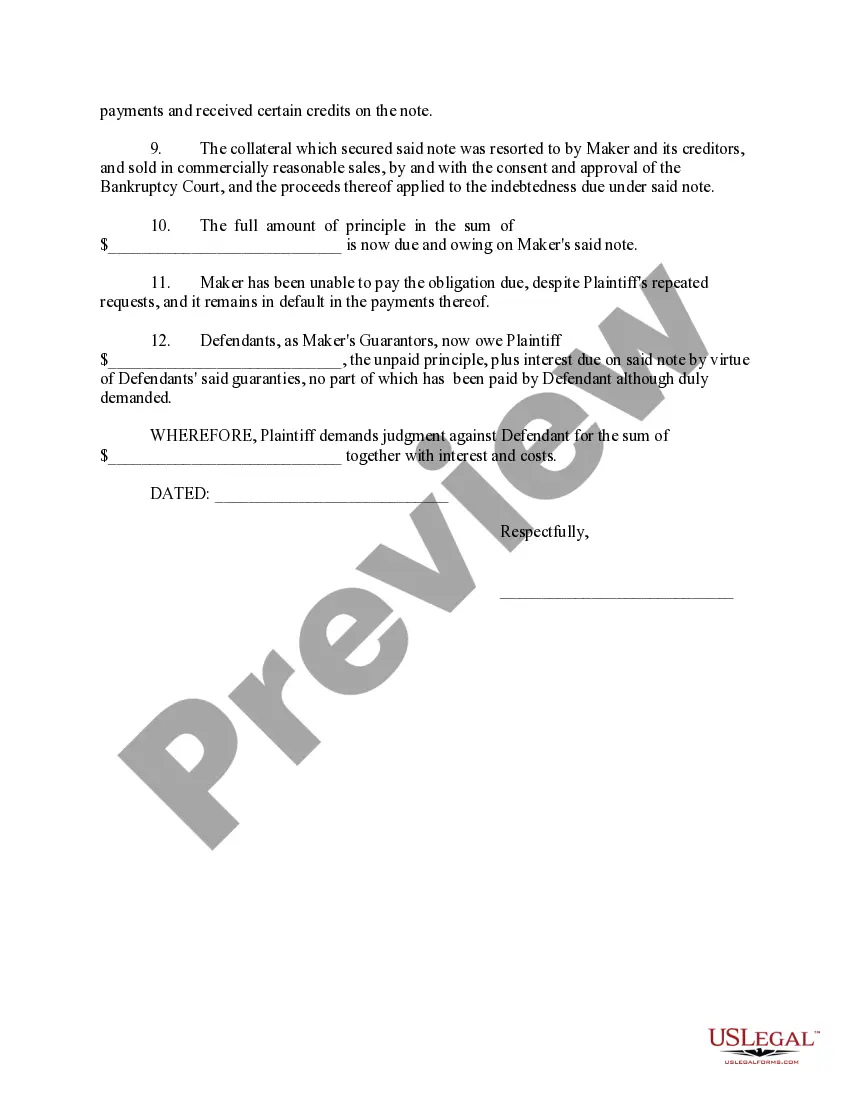
- Request for judgment against the defendants for the unpaid principle and interest.



Common use cases
This form should be utilized when a lender seeks to initiate legal action against a borrower who has defaulted on a loan secured by a promissory note. It is particularly relevant in situations where the borrower has filed for bankruptcy and the lender wishes to recover the debt from guarantors after application of any security proceeds obtained from the collateral.
Who should use this form
- National or local banking institutions seeking to recover funds from defaulting borrowers.
- Creditor parties who wish to hold guarantors accountable for unpaid debts.
- Banks or lenders pursuing legal remedy due to non-payment of a promissory note.
Steps to complete this form
- Identify the parties involved by entering the names of the plaintiff and defendants.
- Provide the court's jurisdiction and the venue details.
- Insert the date and details of the promissory note and any associated guarantees.
- Outline the timeline of defaults and bankruptcy filings as necessary.
- Specify the total amount due and request judgment accordingly.
- Sign and date the document at the bottom to validate the complaint.
Is notarization required?
In most cases, this form does not require notarization. However, some jurisdictions or signing circumstances might. US Legal Forms offers online notarization powered by Notarize, accessible 24/7 for a quick, remote process.
Get your form ready online
Our built-in tools help you complete, sign, share, and store your documents in one place.
Make edits, fill in missing information, and update formatting in US Legal Forms—just like you would in MS Word.
Download a copy, print it, send it by email, or mail it via USPS—whatever works best for your next step.
Sign and collect signatures with our SignNow integration. Send to multiple recipients, set reminders, and more. Go Premium to unlock E-Sign.
If this form requires notarization, complete it online through a secure video call—no need to meet a notary in person or wait for an appointment.
We protect your documents and personal data by following strict security and privacy standards.

Make edits, fill in missing information, and update formatting in US Legal Forms—just like you would in MS Word.

Download a copy, print it, send it by email, or mail it via USPS—whatever works best for your next step.

Sign and collect signatures with our SignNow integration. Send to multiple recipients, set reminders, and more. Go Premium to unlock E-Sign.

If this form requires notarization, complete it online through a secure video call—no need to meet a notary in person or wait for an appointment.

We protect your documents and personal data by following strict security and privacy standards.
Common mistakes to avoid
- Failing to provide accurate names and addresses for all parties involved.
- Neglecting to include supporting documents, such as copies of the promissory note and guarantees.
- Not stating the correct jurisdiction or venue for the legal action.
- Forgetting to sign the form before submission or filing.
Why use this form online
- Convenience of downloading and completing the form at your own pace.
- Access to templates drafted by licensed attorneys, ensuring legal accuracy.
- Ease of editing the form to customize it to your specific case needs.
- No need to travel to a legal office; complete everything from home.
Looking for another form?
Form popularity
FAQ
Be professional. Use professional letterhead and be sure to sign in ink. Express your dissatisfaction clearly, with facts, dates, and details (including copies of receipts and so on) to help substantiate your claim. Be sincere. Be prompt. Don't expect compensation every time.
That I am the complainant/ claimant/ opposite party to the accompanying complaint/ claim/ reply/ counterclaim. 2. That I hereby give voluntary consent to the Banking Ombudsman concerned, to settle disputes as per the Banking Ombudsman Scheme, 2002.
Rule 1: Know what you want to achieve. Rule 2: Threaten the company's reputation. Rule 3: Aim high and get personal. Rule 4: Write or go in person, don't phone. Rule 5: Use social media, especially if you don't get an immediate response. Rule 6: Expect the unexpected. Rule 7: Rule 8:
In that case, you have two options: you can go to the banking ombudsman or take the bank to court. If you get an unsatisfactory response from your bank and want to escalate the issue, you can approach the banking ombudsman. It is appointed by the RBI to resolve customers' complaints regarding banking services.
Complaint Letter to Higher Authorities Writing Tips It should contain the necessary details such as employee name, the nature of the issue, etc. The letter should be brief and concise. If you have a solution for the issue, don't forget to mention it. Include any evidence that you may possess to back up your complaint.
Be clear and concise. State exactly what you want done and how long you're willing to wait for a response. Don't write an angry, sarcastic, or threatening letter. Include copies of relevant documents, like receipts, work orders, and warranties. Include your name and contact information.
Step 1: Escalate Your Complaint at Your Bank Itself. Before reporting your bank to any agency, you should attempt to resolve the complaint with the bank itself. Step 2: Report the Bank to the Federal Reserve. Step 3: Find Your Bank's Regulatory Agency.
Describe your problem and the outcome you want. include key dates, such as when you purchased the goods or services and when the problem occurred. identify what action you've already taken to fix the problem and what you will do if you and the seller cannot resolve the problem.
They're going to... write a strongly worded letter? An attempt at some brave or heroic action that falls ludicrously short. When played for laughs, it's often applied to timid or nerdy characters who mean well but aren't prepared to do anything useful.