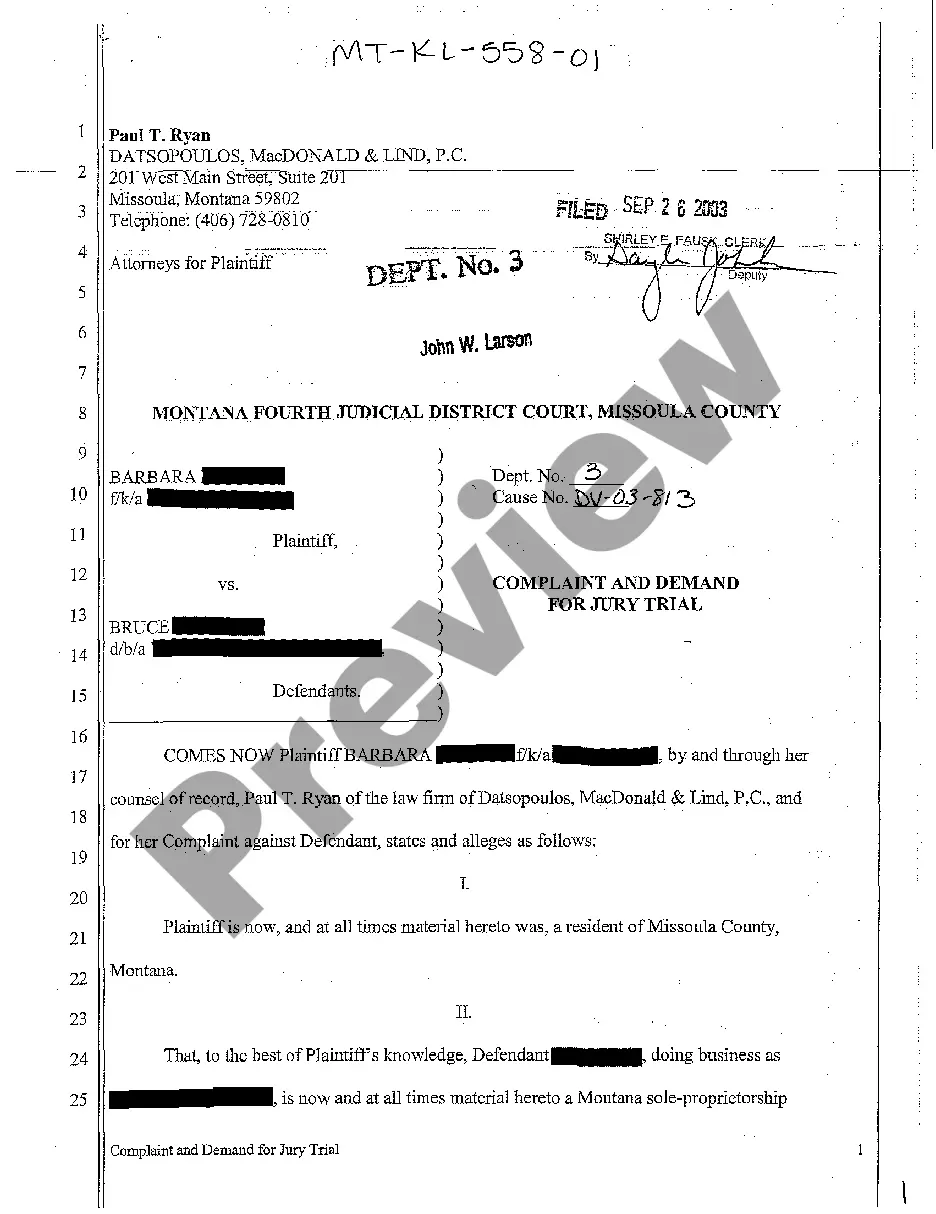
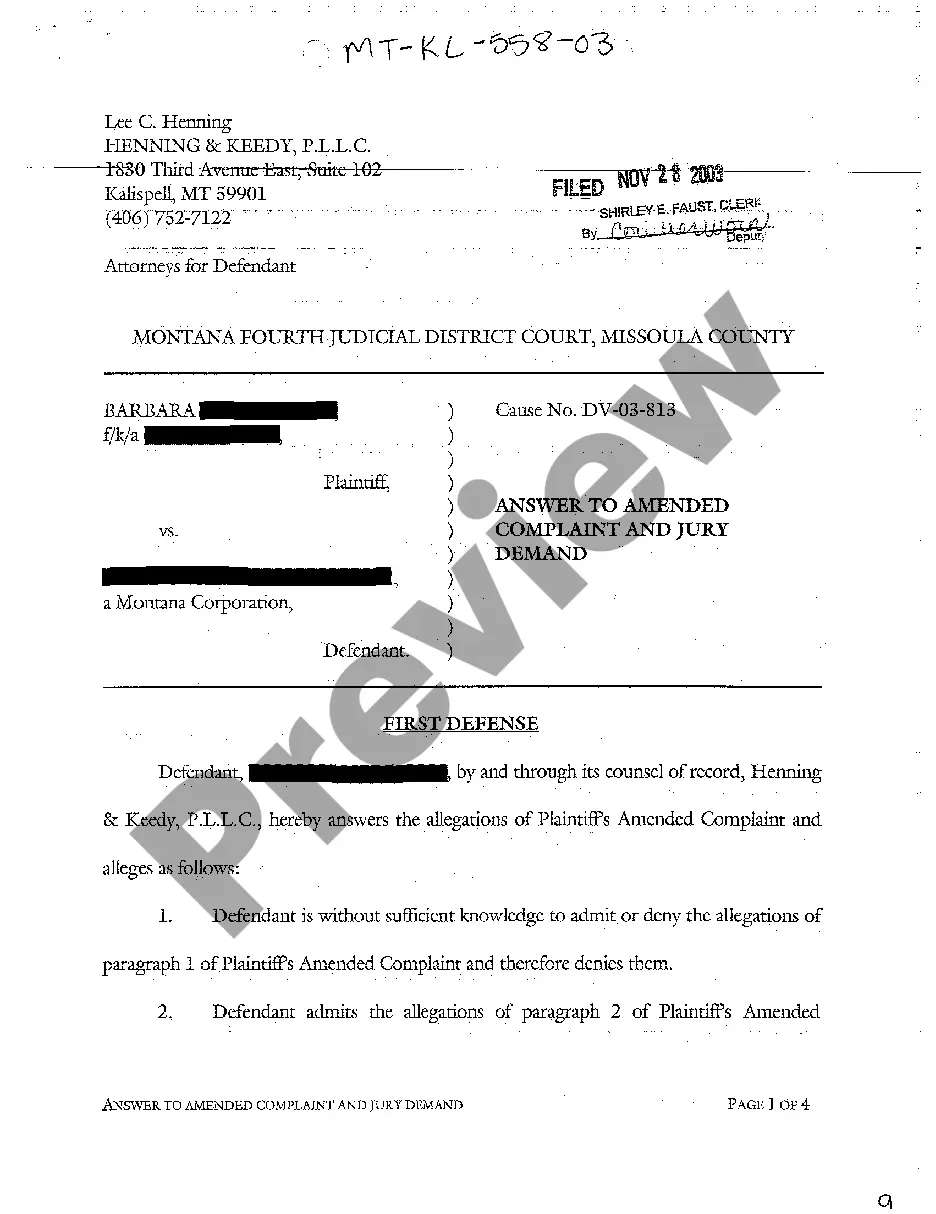
Complaint for faulty construction of stairs - Personal Injury and Wrongful Death
What this document covers
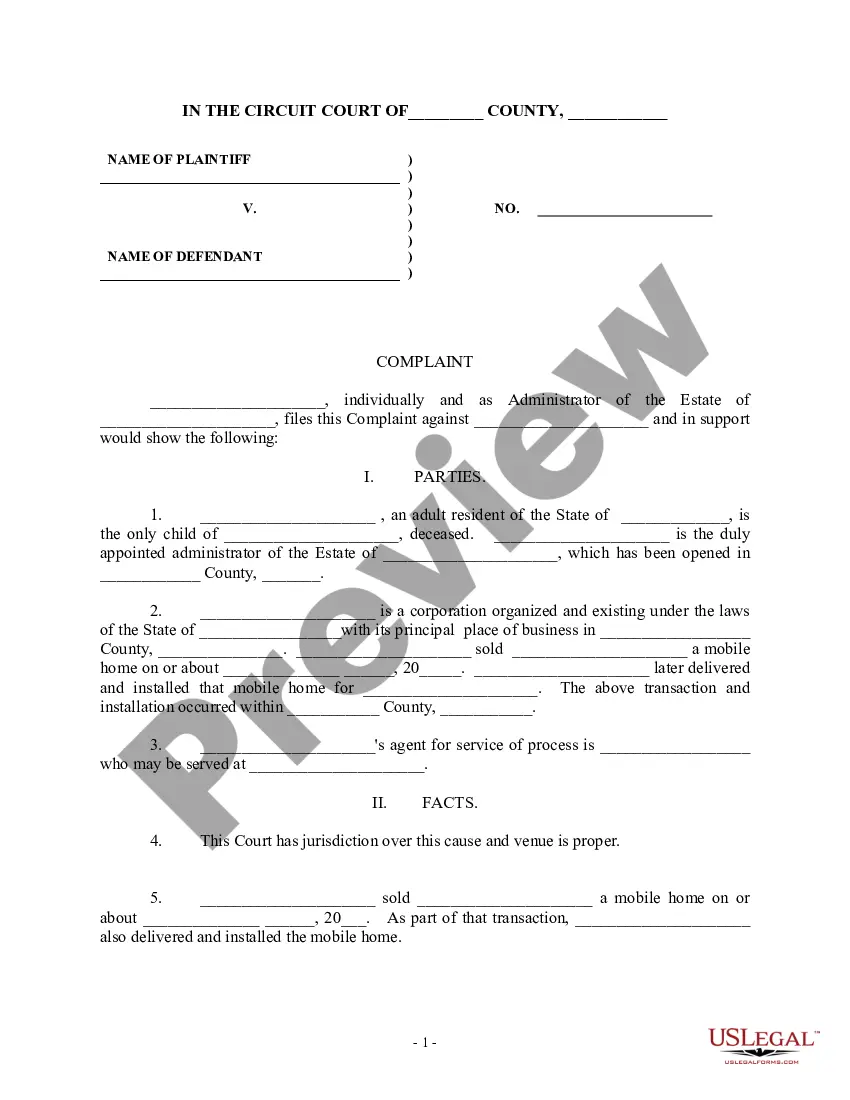
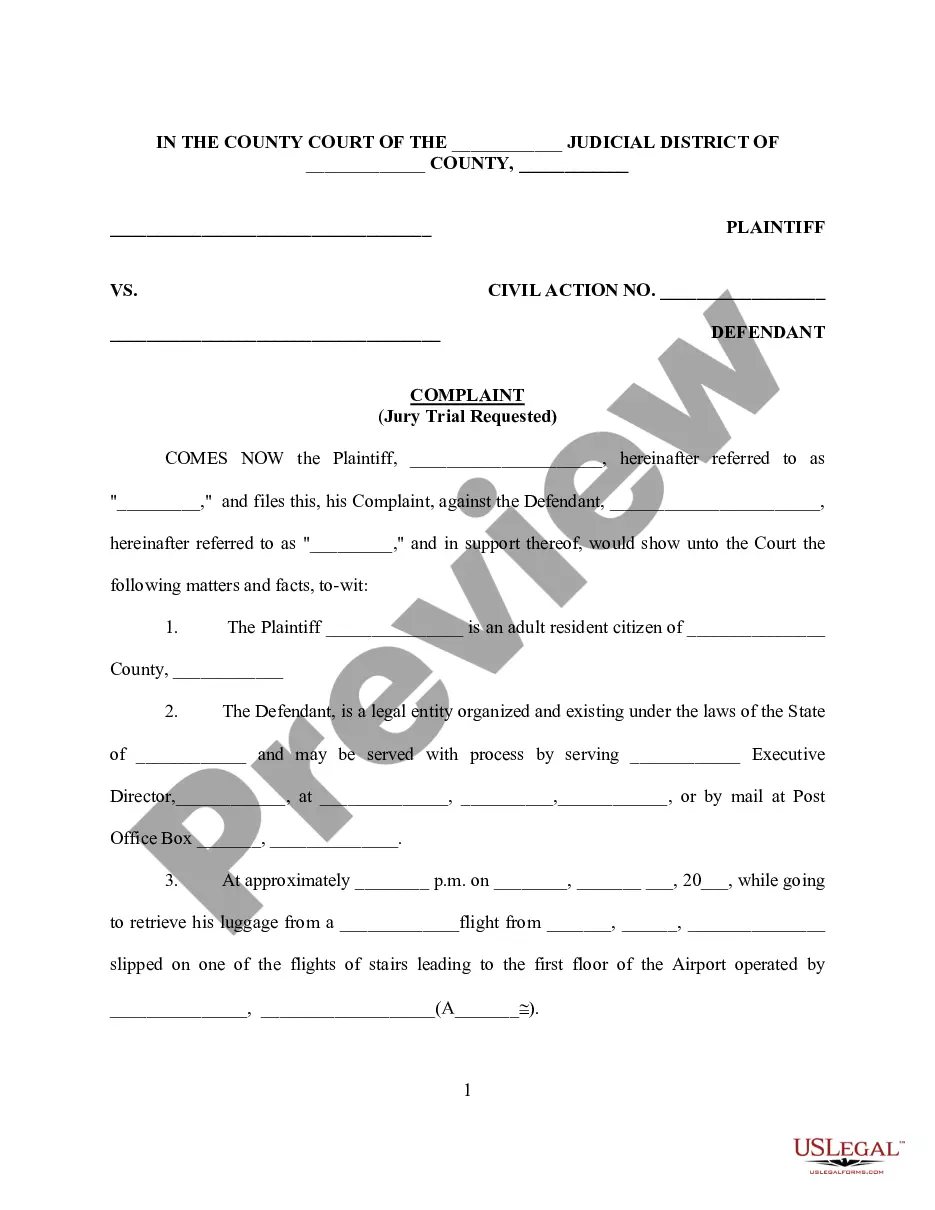
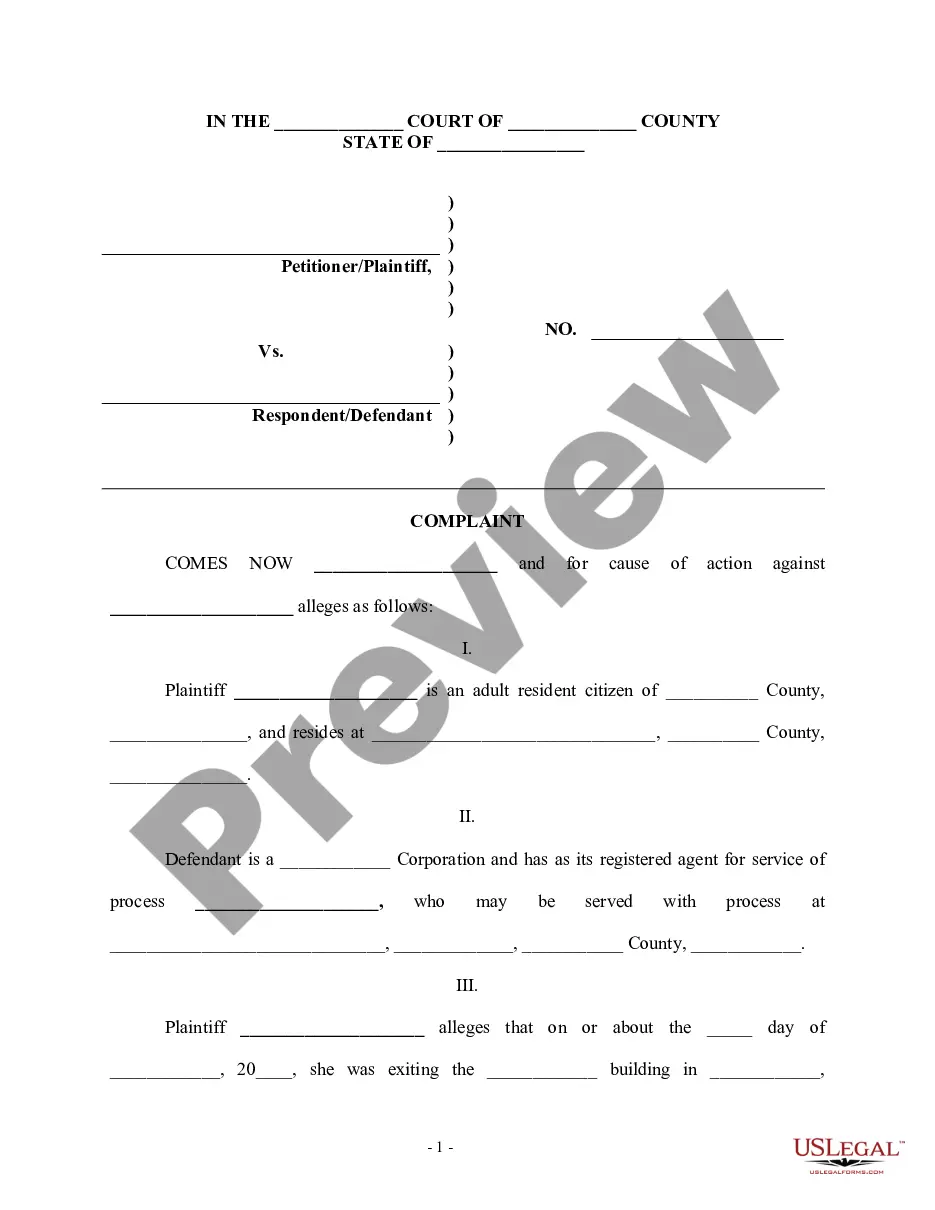
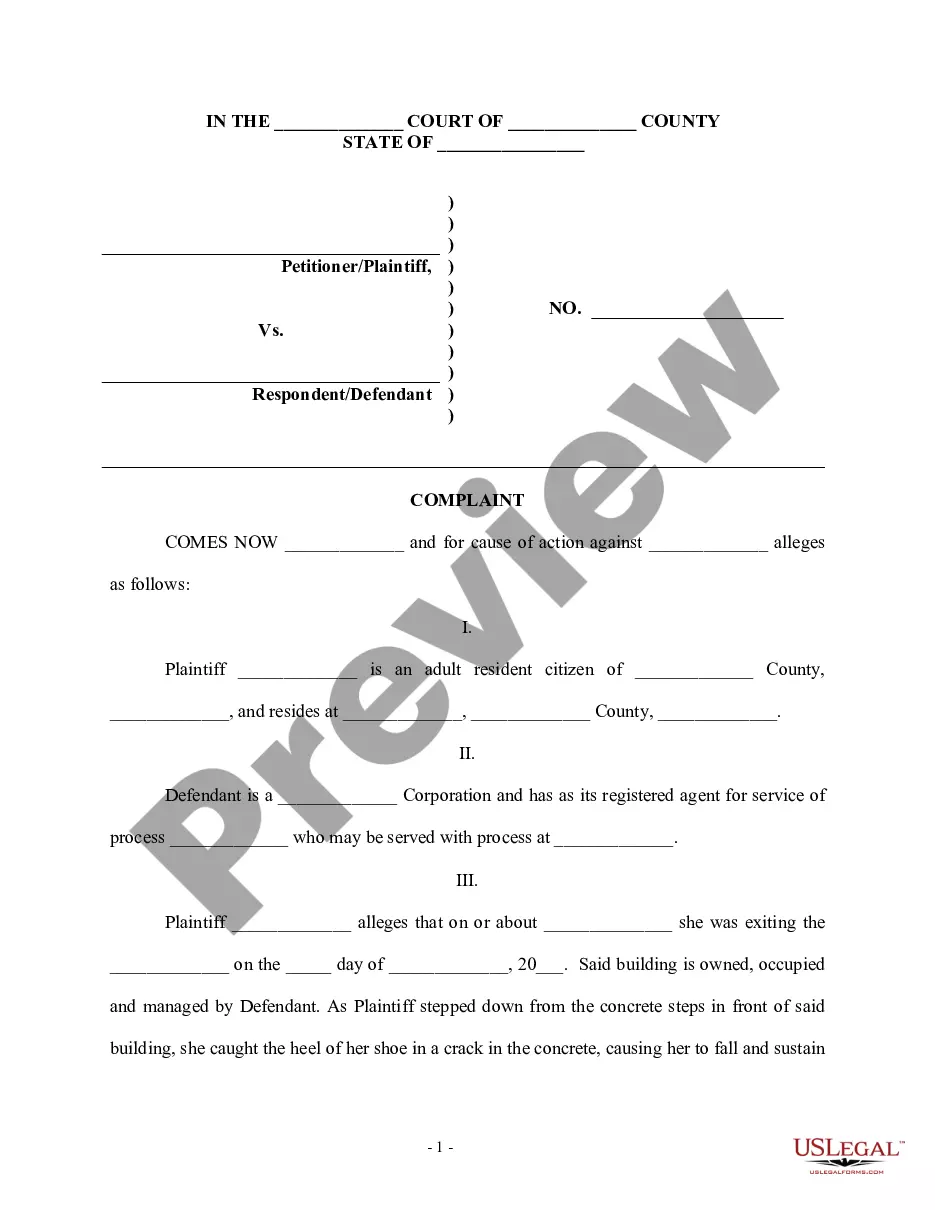
The Complaint for faulty construction of stairs is a legal document used to initiate a lawsuit against parties involved in constructing or installing unsafe stairs that resulted in personal injury or wrongful death. This form allows plaintiffs to detail their claims of negligence and seek compensation for damages. It differs from other personal injury forms by specifically addressing injuries related to faulty construction practices regarding stairs in residential contexts.
Main sections of this form
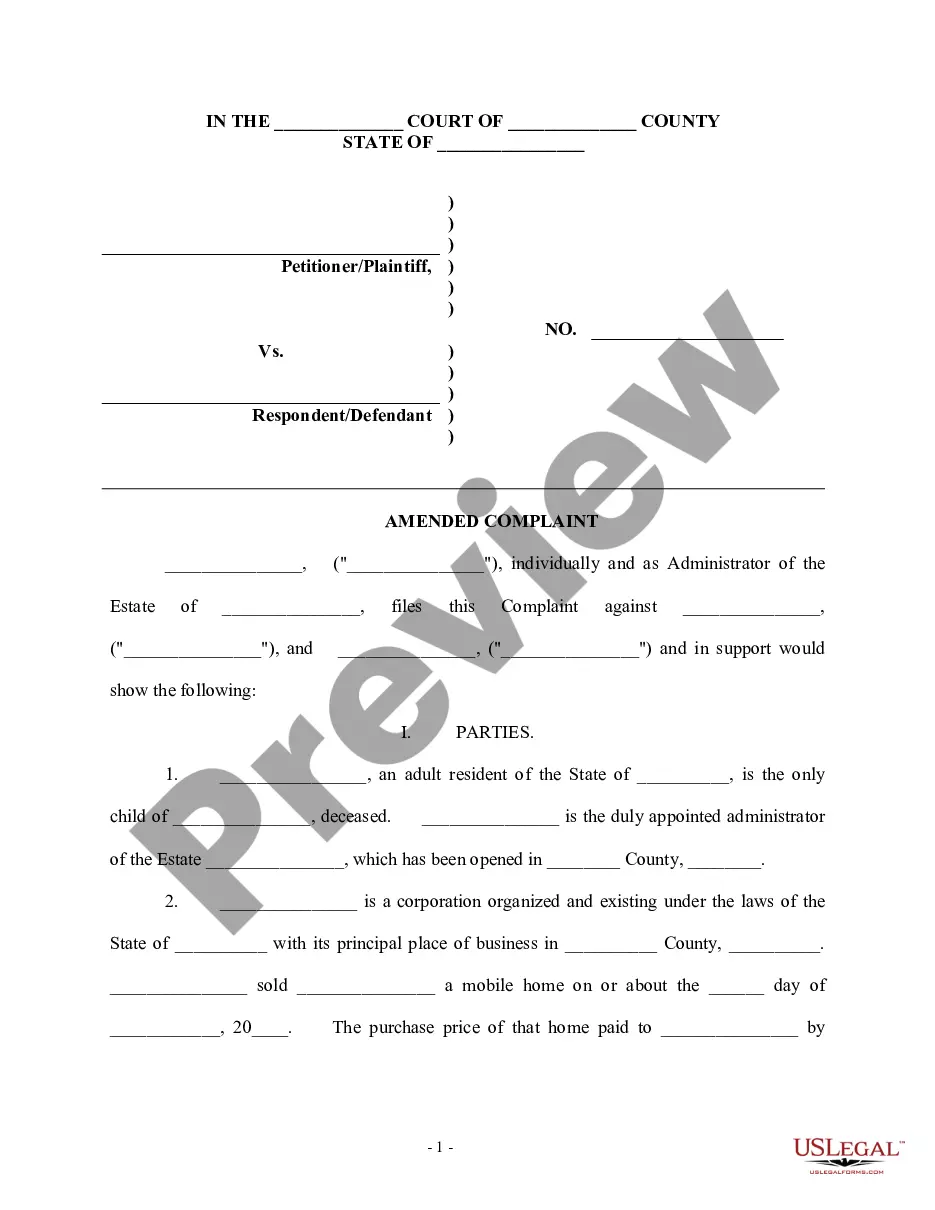
- Identification of parties involved, including the plaintiff, defendant, and any administrators of estates.
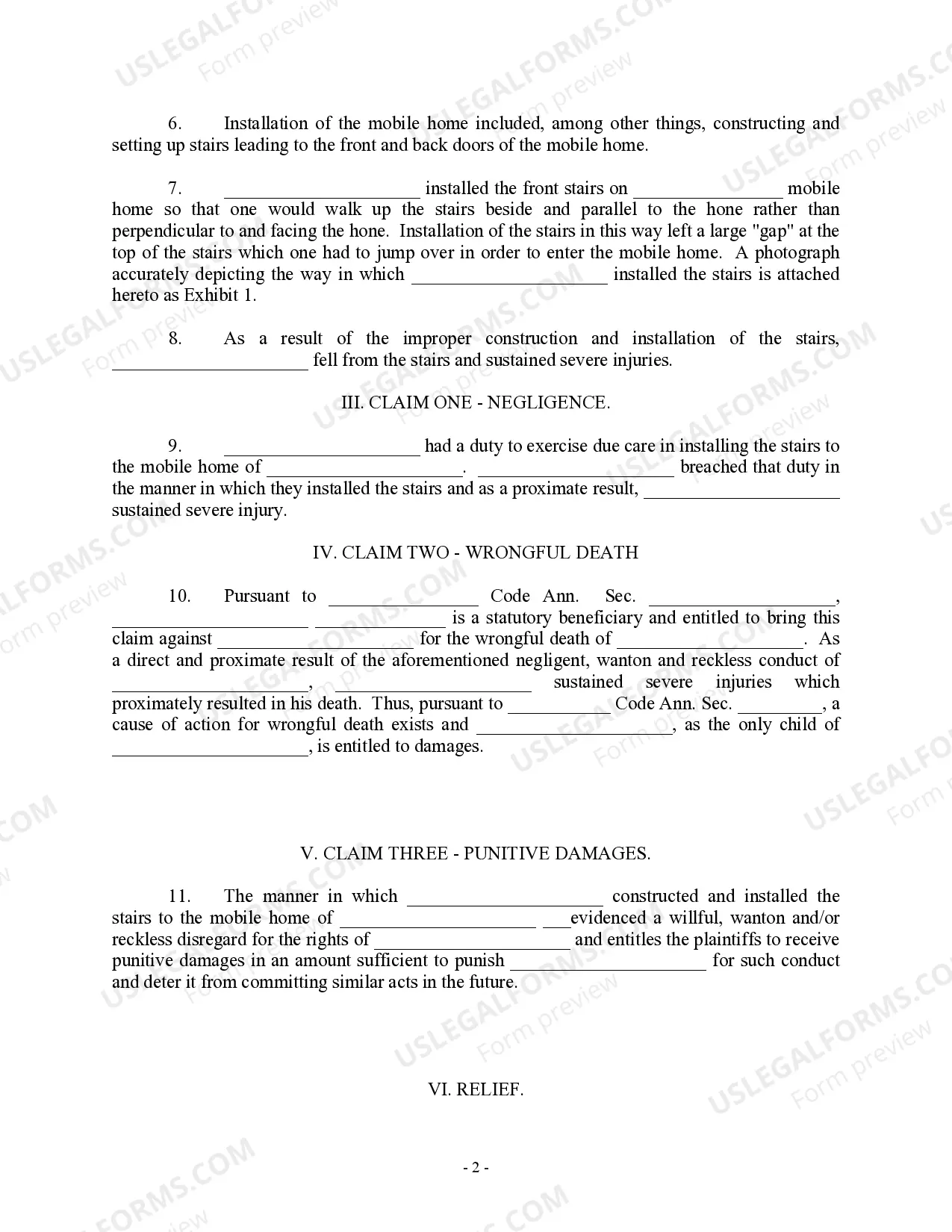
- Statement of facts outlining the circumstances of the injury and details about the construction of the stairs.
- Claims for negligence, wrongful death, and punitive damages.
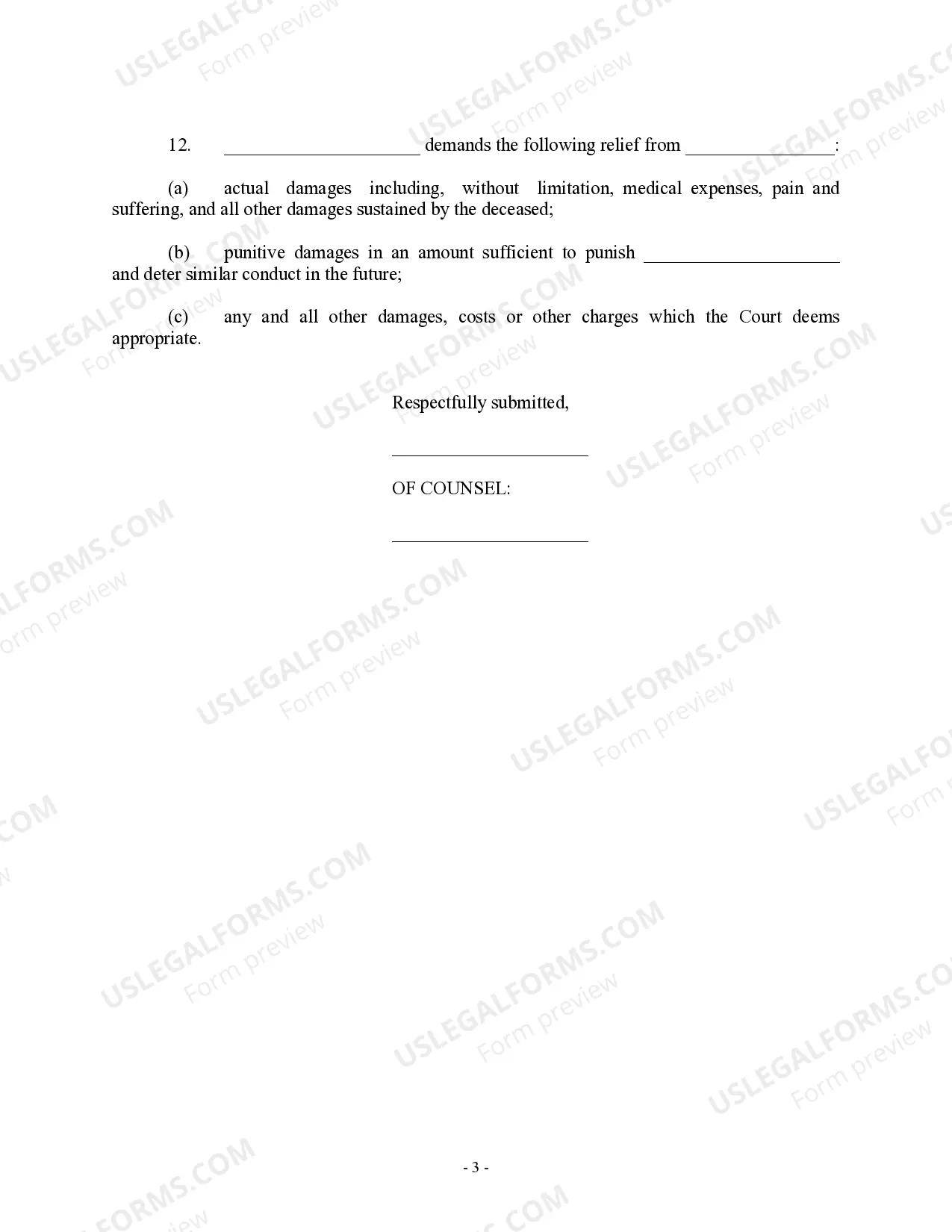
- Relief sought by the plaintiff, including actual damages and punitive damages.

When to use this document
This form should be used when an individual has suffered injuries or when a wrongful death has occurred due to improperly constructed or installed stairs. It is relevant in cases where there is evidence of negligence by contractors, builders, or manufacturers that may have led to unsafe conditions and resulted in accidents.
Who this form is for
This form is intended for:
- Individuals injured as a result of faulty stairs or installations.
- Family members of deceased individuals who are seeking justice for wrongful death due to construction negligence.
- Estate administrators or legal representatives of the injured or deceased parties.
Steps to complete this form
- Identify and fill in the names and addresses of all parties involved, including the plaintiff, defendant, and any estate administrators.
- Detail the facts surrounding the incident, including dates and specific actions leading to the injury.
- Clearly outline the claims for negligence, wrongful death, and punitive damages in separate sections.
- Specify the type and amount of relief sought, including all damages incurred and sought.
Notarization requirements for this form
This form does not typically require notarization to be legally valid. However, some jurisdictions or document types may still require it. US Legal Forms provides secure online notarization powered by Notarize, available 24/7 for added convenience.
Get your form ready online
Our built-in tools help you complete, sign, share, and store your documents in one place.
Make edits, fill in missing information, and update formatting in US Legal Forms—just like you would in MS Word.
Download a copy, print it, send it by email, or mail it via USPS—whatever works best for your next step.
Sign and collect signatures with our SignNow integration. Send to multiple recipients, set reminders, and more. Go Premium to unlock E-Sign.
If this form requires notarization, complete it online through a secure video call—no need to meet a notary in person or wait for an appointment.
We protect your documents and personal data by following strict security and privacy standards.

Make edits, fill in missing information, and update formatting in US Legal Forms—just like you would in MS Word.

Download a copy, print it, send it by email, or mail it via USPS—whatever works best for your next step.

Sign and collect signatures with our SignNow integration. Send to multiple recipients, set reminders, and more. Go Premium to unlock E-Sign.

If this form requires notarization, complete it online through a secure video call—no need to meet a notary in person or wait for an appointment.

We protect your documents and personal data by following strict security and privacy standards.
Mistakes to watch out for
- Failing to identify all relevant parties involved in the construction and installation process.
- Omitting critical facts that detail the negligence and unsafe conditions of the stairs.
- Not including sufficient documentation or evidence to support the claims, such as photographs or witness statements.
Benefits of using this form online
- Convenient access to a professionally drafted legal form tailored for personal injury claims related to faulty construction.
- Editable format allows users to customize the form to reflect specific circumstances and details.
- Reliable legal framework provided ensures that users follow appropriate legal procedures when filing a complaint.
Looking for another form?
Form popularity
FAQ
Homeowner's insurance or property insurance typically do not cover construction defects. The insurance policies usually have language providing that damage due to faulty workmanship and construction is not covered by the policy.
What Is a Construction Defect? Generally, construction defects refer to a deficiency in the construction process be that in design, materials, or workmanship which leads to a failure in some aspect of the structure being built, and that causes damage to a person or property (financial or otherwise).
Design Defects. The first type of defect in construction projects is design defects. Material Defects. The second type of construction contract defect is material defects. Workmanship Defects.
Damage to Your Work A general liability policy is not a warranty against your work. So it's not surprising that damage resulting from defective workmanship, incorrect installation, or faulty materials is generally excluded.
Prevent overcrowding around the casualty; Make space so that he or she can breathe better. Do not move the casualty unless there are life-threatening hazards; He or she may have suffered a neck or spinal injury from the fall.
Sprains and strains (32.3% according to the above study) Fractures (19.3%) such as to the face, hands and wrists. Spinal cord damage. Deep lacerations. Head and neck injuries (21.6%) Injury to the brain. Injuries to the back or neck. Broken bones.
If your employer neglected any one of these aspects and you fell down stairs at work as a result, you may be eligible to file a compensation claim. For example, you can claim compensation for your injuries if there was no hazard sign warning you that the stairs were wet or there was an oil spills on the stairs.
Can You Sue for Falling Down the Stairs?If you were clumsy on a perfectly safe set of stairs, then you cannot hold the property owner liable for your injuries. However, if there was a hazardous stair condition that caused the fall and your injuries, you should talk with a premises liability lawyer about your options.