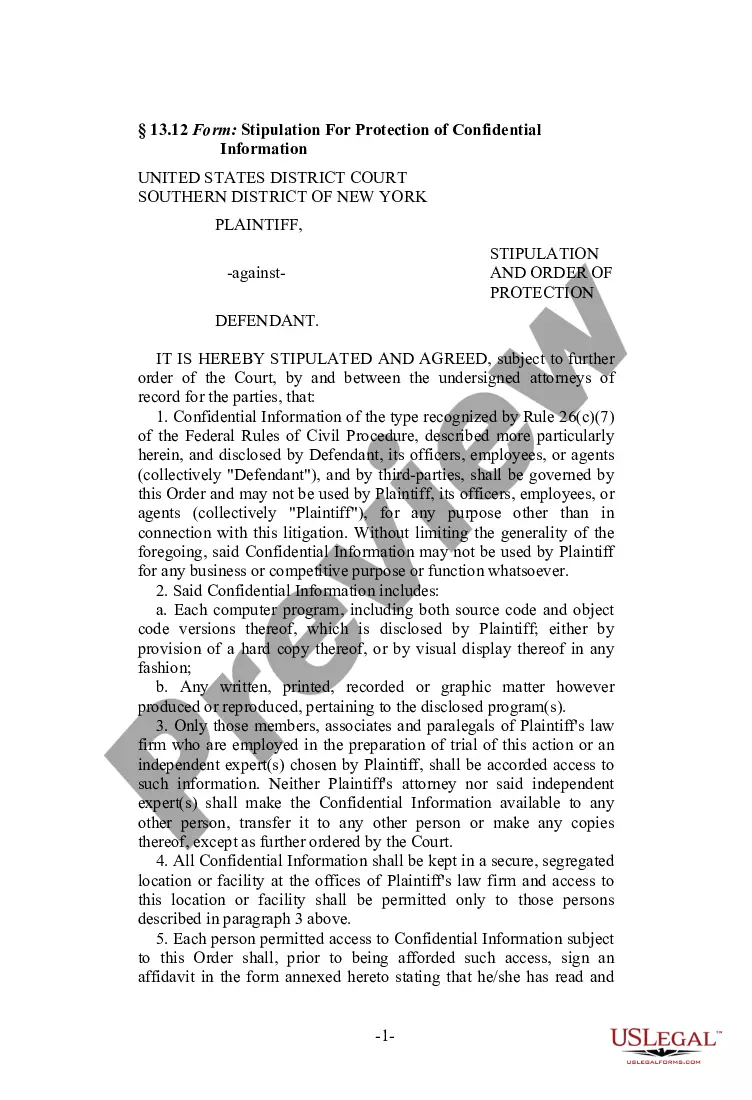
Montana Stipulated Protective Order Regarding Confidentiality
Description
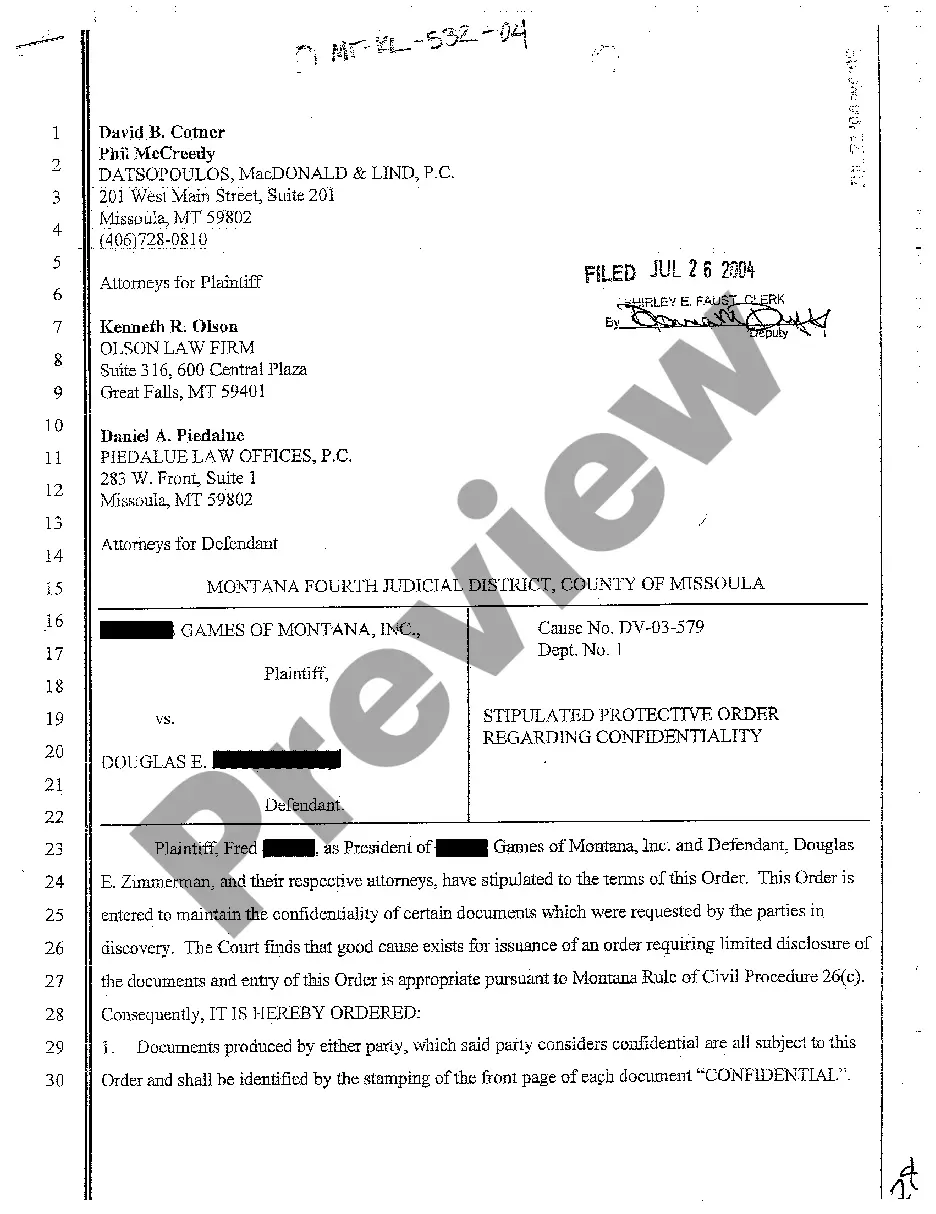
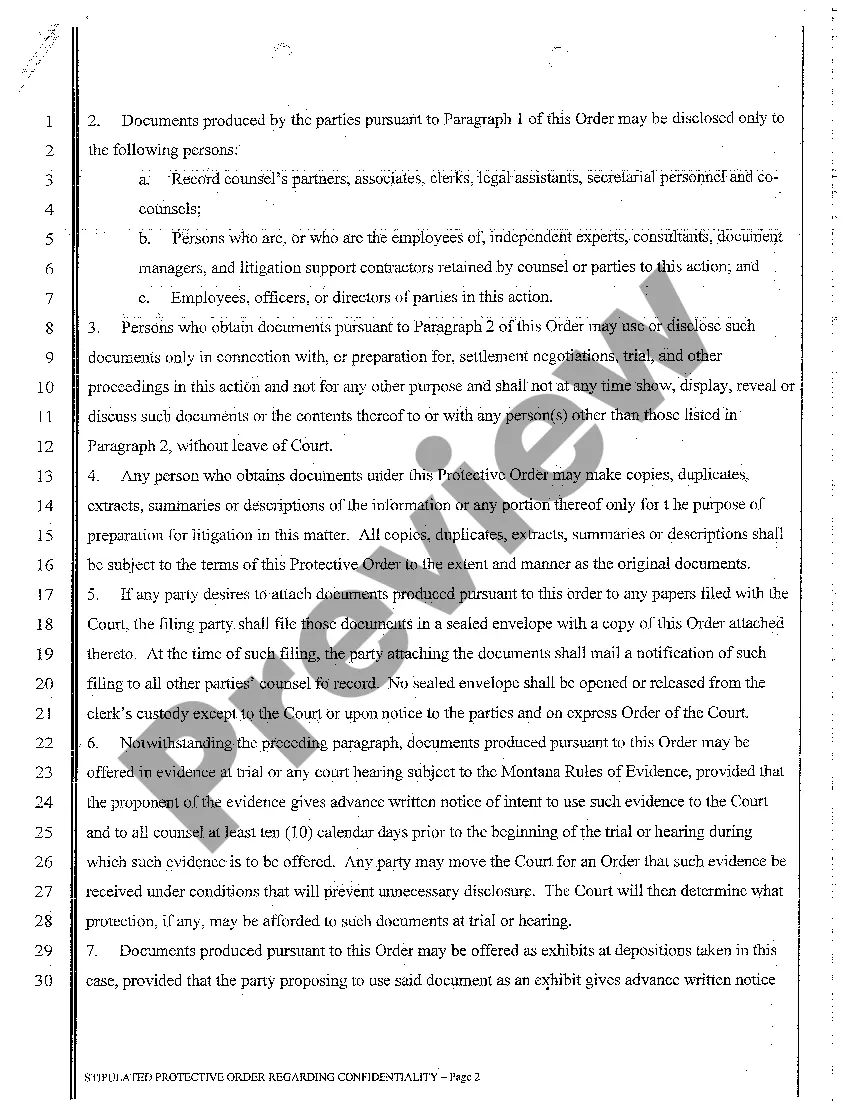
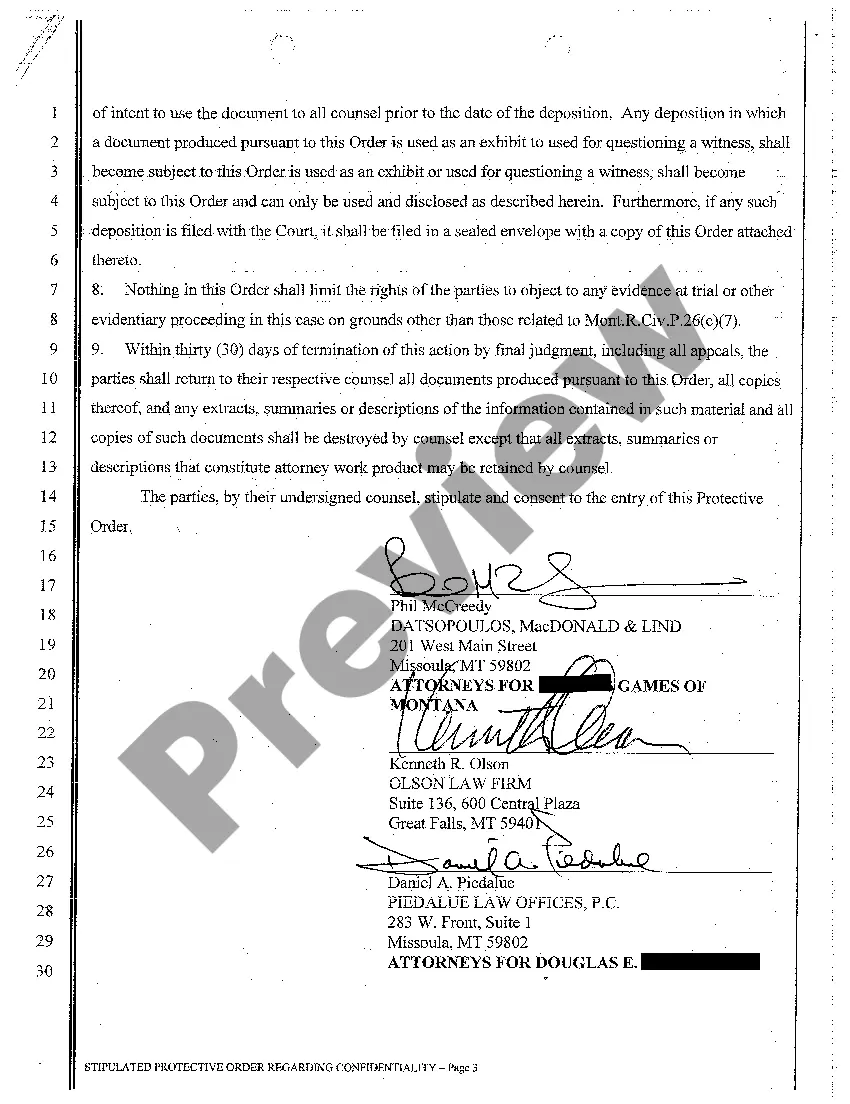


How to fill out Montana Stipulated Protective Order Regarding Confidentiality?
Obtain a printable Montana Stipulated Protective Order Concerning Confidentiality in just a few clicks from the most extensive collection of legal e-forms. Locate, download, and print professionally prepared and verified samples on the US Legal Forms website. US Legal Forms has been the premier provider of affordable legal and tax documents for US citizens and residents online since 1997.
Clients who already possess a subscription must Log In directly to their US Legal Forms account, download the Montana Stipulated Protective Order Concerning Confidentiality, and find it saved in the My documents section. Users without a subscription need to follow the steps outlined below.
After downloading your Montana Stipulated Protective Order Concerning Confidentiality, you can complete it in any online editor or print it out and fill it in by hand. Utilize US Legal Forms to access 85,000 professionally drafted, state-specific documents.
- Ensure your template complies with your state's standards.
- If available, review the form’s description for more details.
- If provided, preview the form to see additional content.
- When you’re confident the form meets your requirements, click Buy Now.
- Create a personal account.
- Choose a subscription plan.
- Make payment via PayPal or credit card.
- Download the form in Word or PDF format.
Form popularity
FAQ
Parties also may agree to enter into a protective order (also referred to as a confidentiality order) to keep confidential information protected from disclosure outside of the case. The parties may agree to provisions:For designating discovery material confidential after a party inadvertently produces it.
The court is looking for a description of your relationship to the respondent, when, where, what happened, and who did what to whom. Using the facts of the incident only, keep your statement brief and to the point. Briefly describe the most recent incident of abuse and/or threats of abuse or other behaviors.
Ask the court to change the order. The court can drop the "no contact" part of the order but keep the "no abuse" part of the order. Get the 209A protective order "terminated." This will end the order completely.
It is confidential. It is used so that your restraining order can be entered into a statewide computer system that lets the police know about your order.
What happens if someone applies for a restraining order against me? An AVO is not a criminal charge. It will not appear on your criminal record.
If you believe the protection order was granted improperly or that it is no longer needed, you can file a motion asking the court to dissolve (terminate or cancel) the protection order. After you file the motion, the court will decide whether or not to schedule a hearing.
It does not cost anything to file for an order of protection. Many orders of protection cases are handled without a lawyer however it can often be helpful to have one represent you in court.If you are going to be in court without a lawyer, our Preparing for Court By Yourself section may be useful to you.
A civil harassment restraining order is a court order that helps protect people from violence, stalking, serious harassment, or threats of violence. You can ask for a civil harassment restraining order if: A person has abused (or threatened to abuse), sexually assaulted, stalked, or seriously harassed you, and.
These are orders to stop specific acts against everyone named in the restraining order as a protected person. Some of the things that the restrained person can be ordered to stop are: Contacting, calling, or sending any messages (including e-mail);