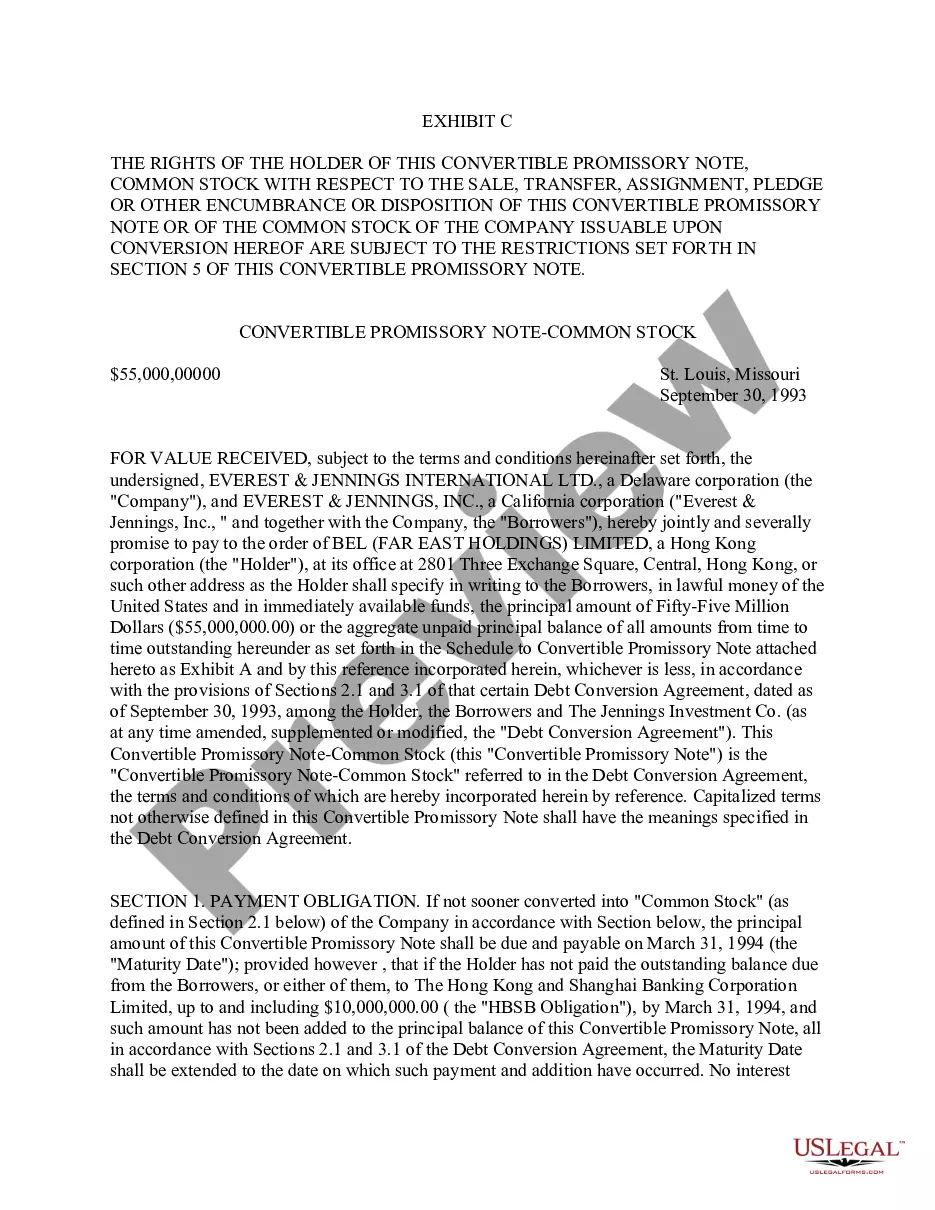
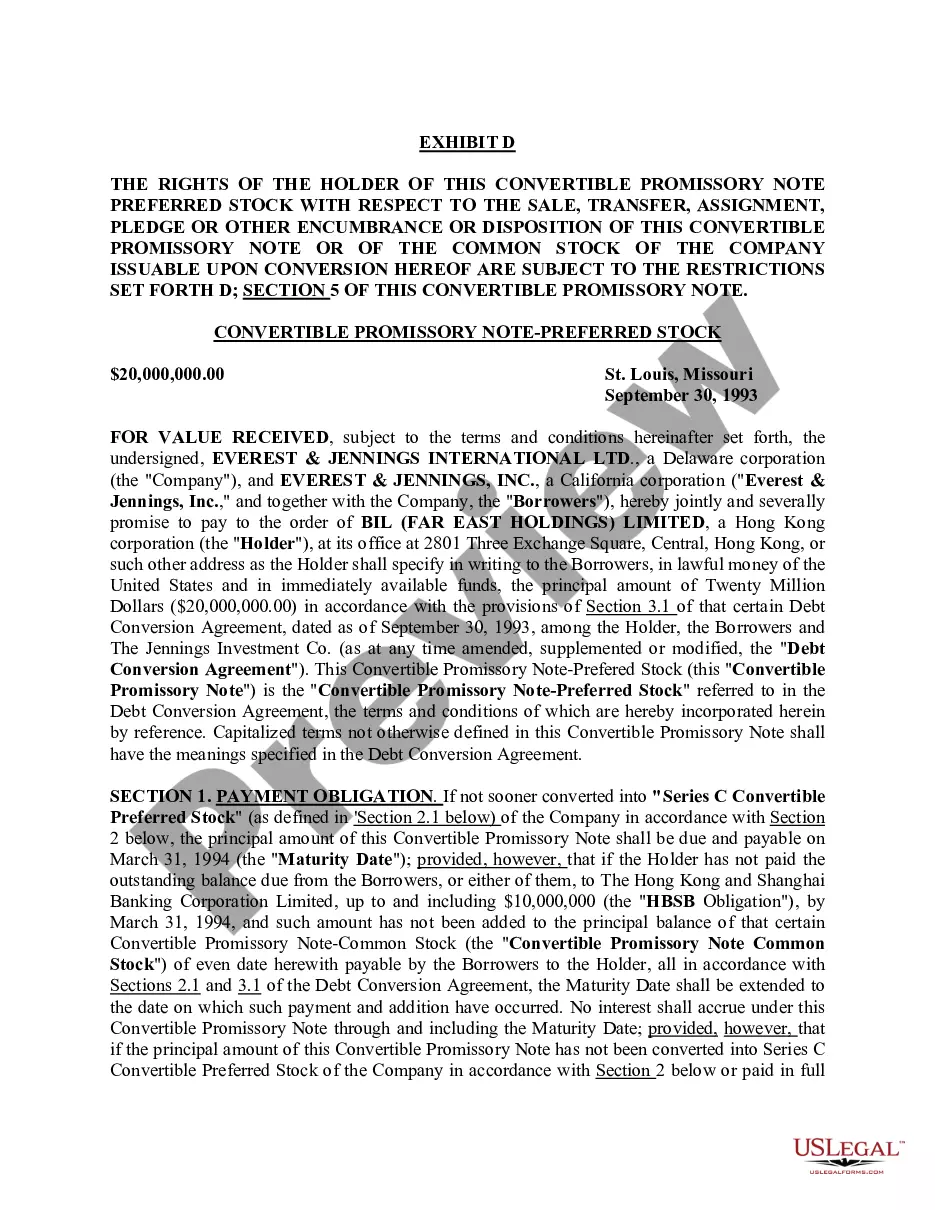
Form of Certificate of Designations, Preferences and Rights of Series C Convertible Preferred Stock
Overview of this form
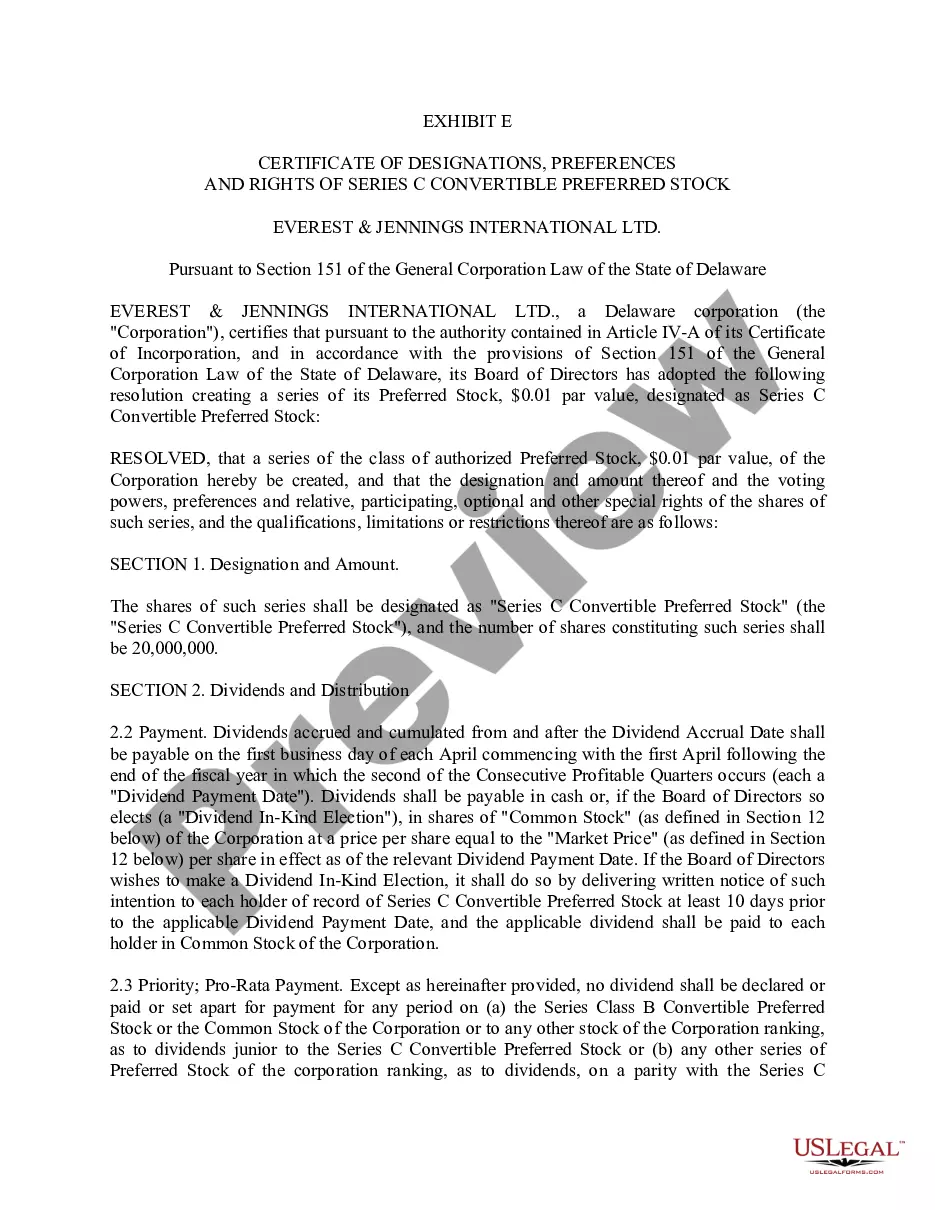
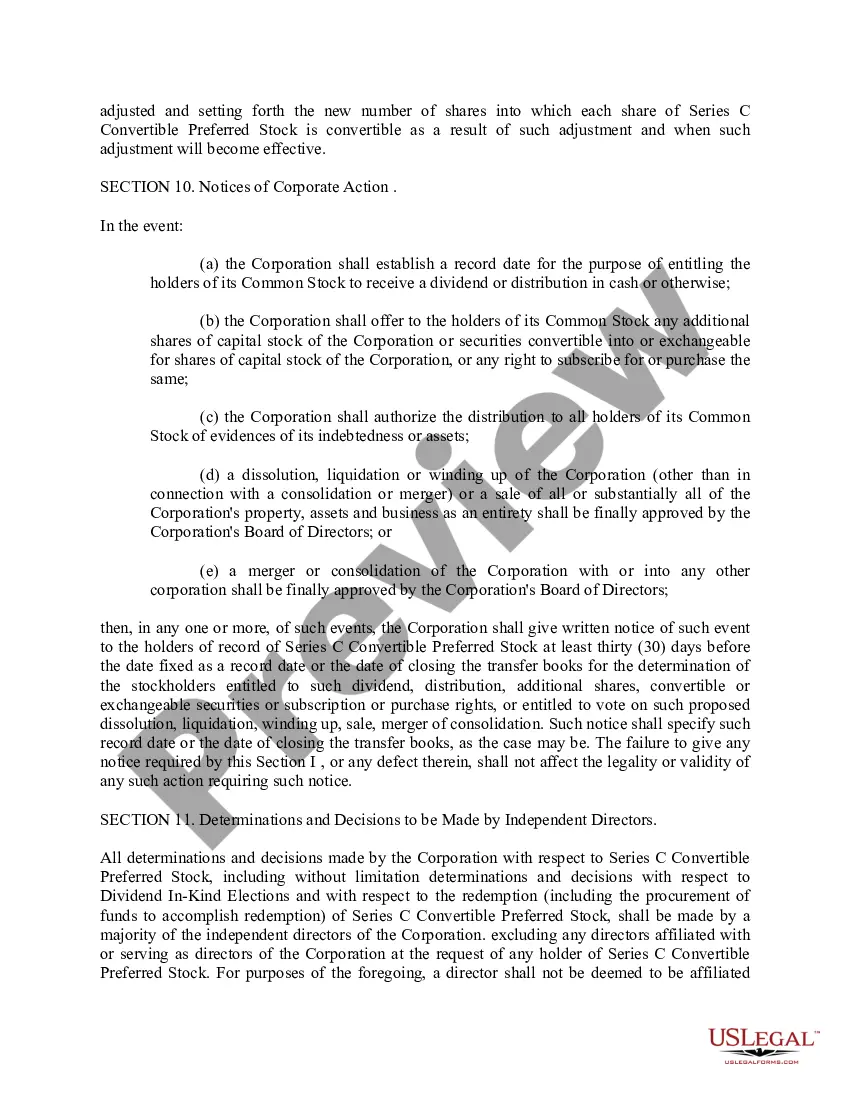
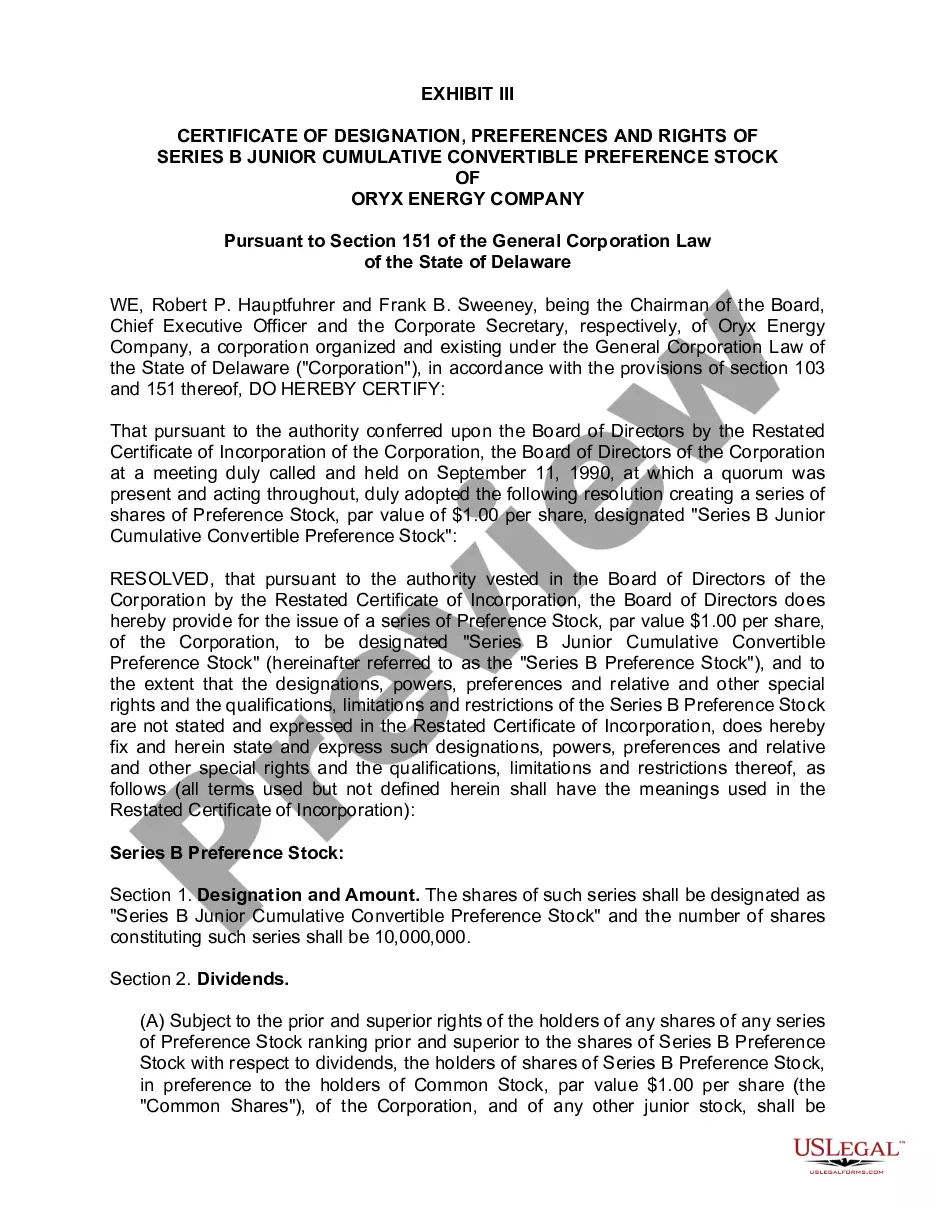
The Certificate of Designations, Preferences and Rights of Series C Convertible Preferred Stock is a formal document used by corporations to outline specific details regarding a newly created series of preferred stock. This certificate includes important provisions such as dividend rights, voting rights, and conversion terms that differ from common stock. It is crucial for establishing the legal framework for this type of financial instrument and ensuring compliance with relevant state laws.
Key components of this form
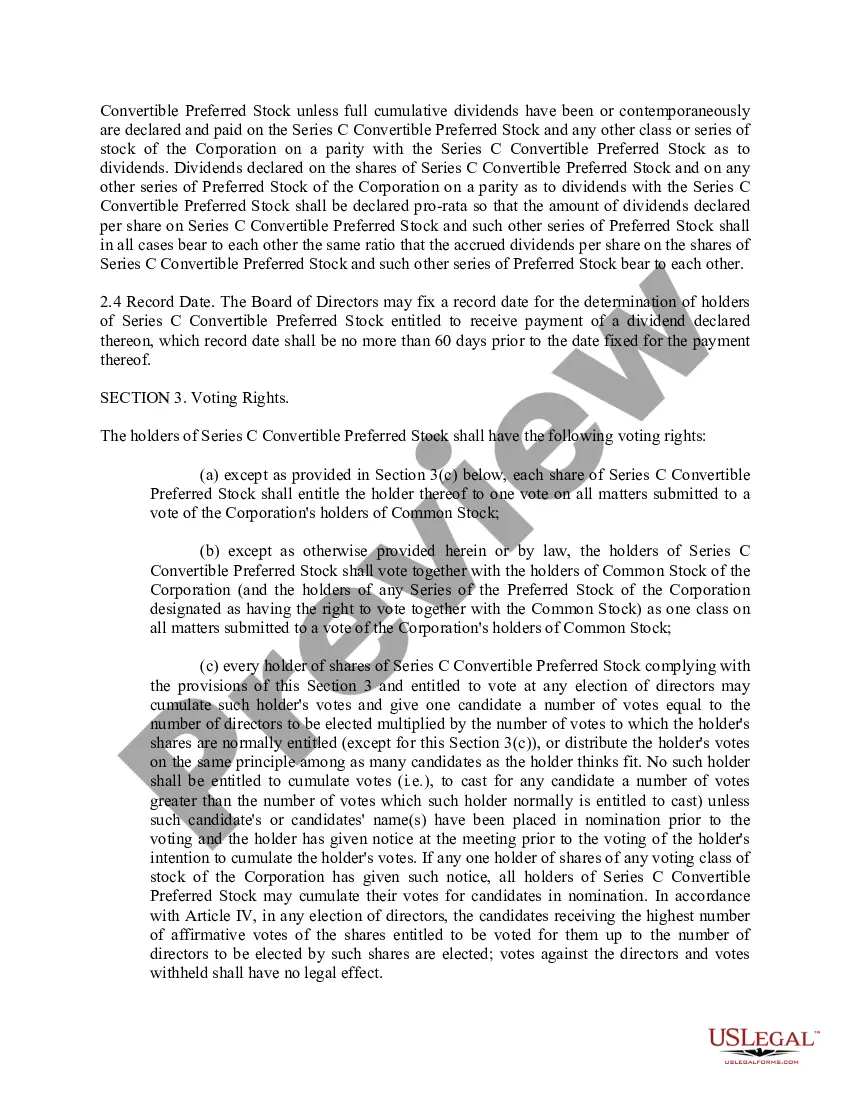
- Designation and amount of the Series C Convertible Preferred Stock.
- Dividends and distribution rights, including the payment schedule and priority of dividends.
- Voting rights associated with the shares.
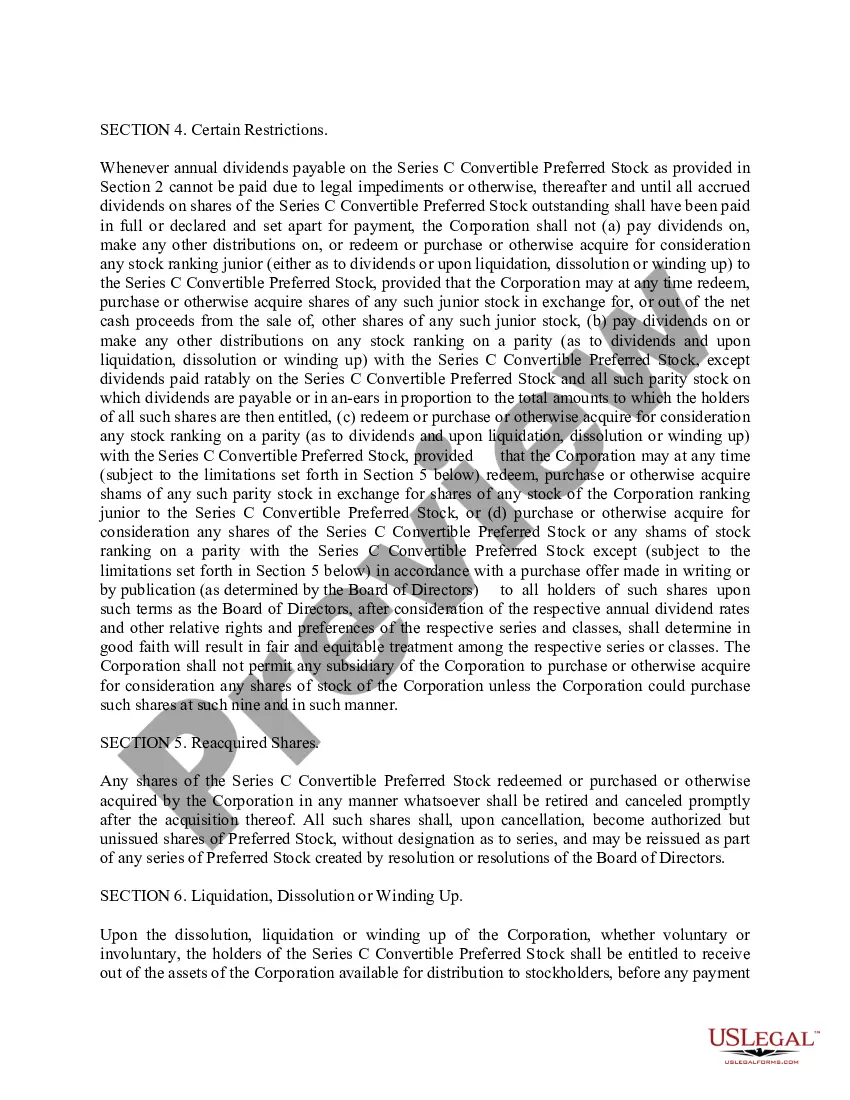
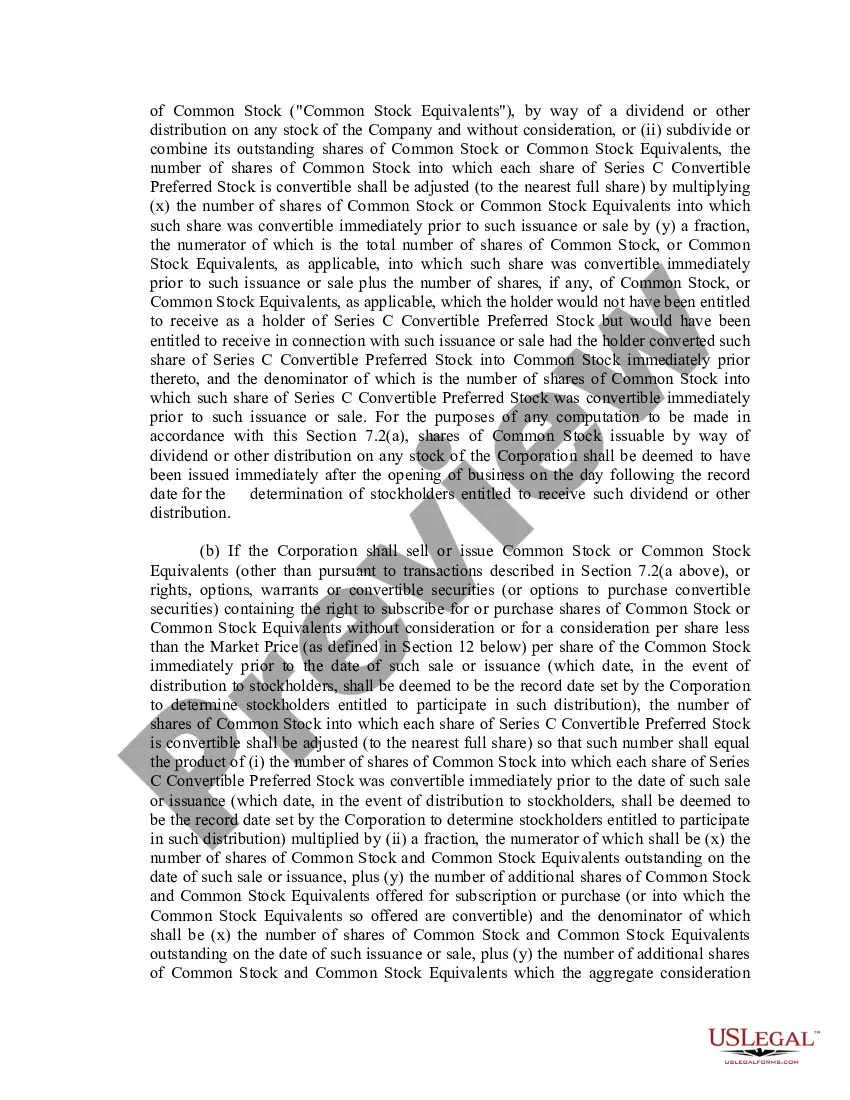
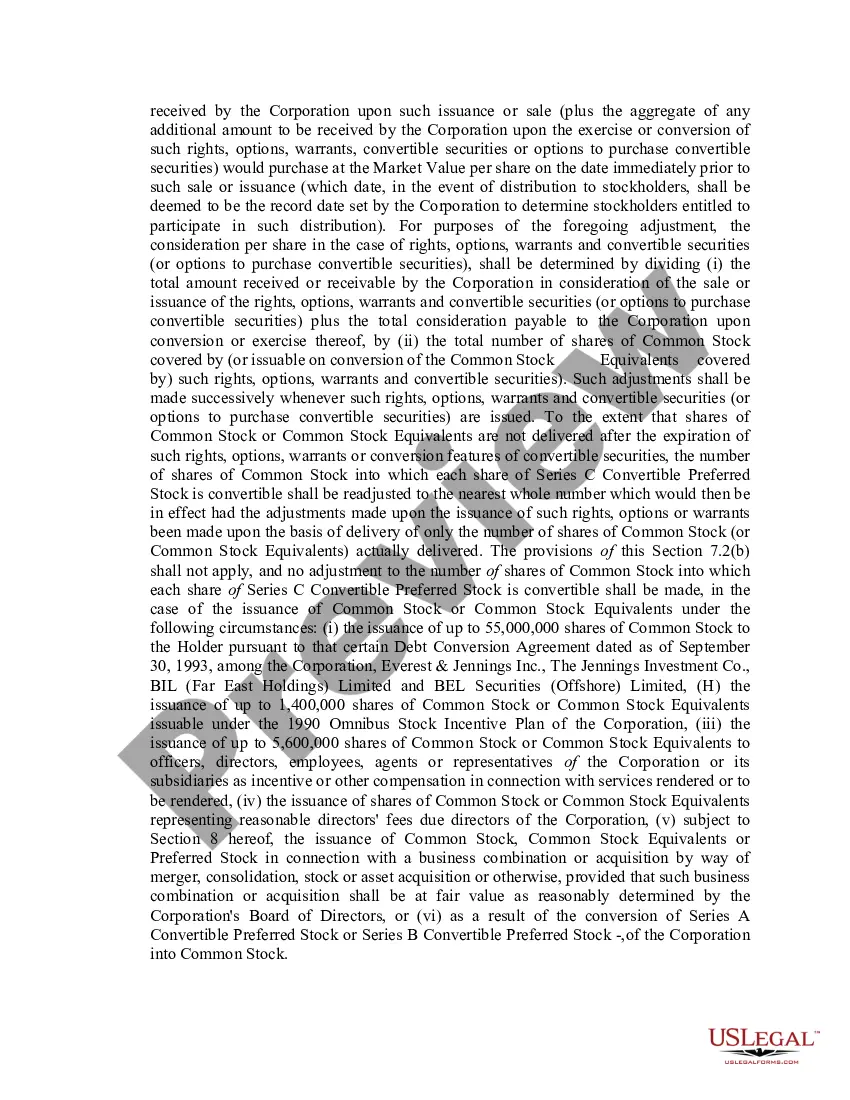
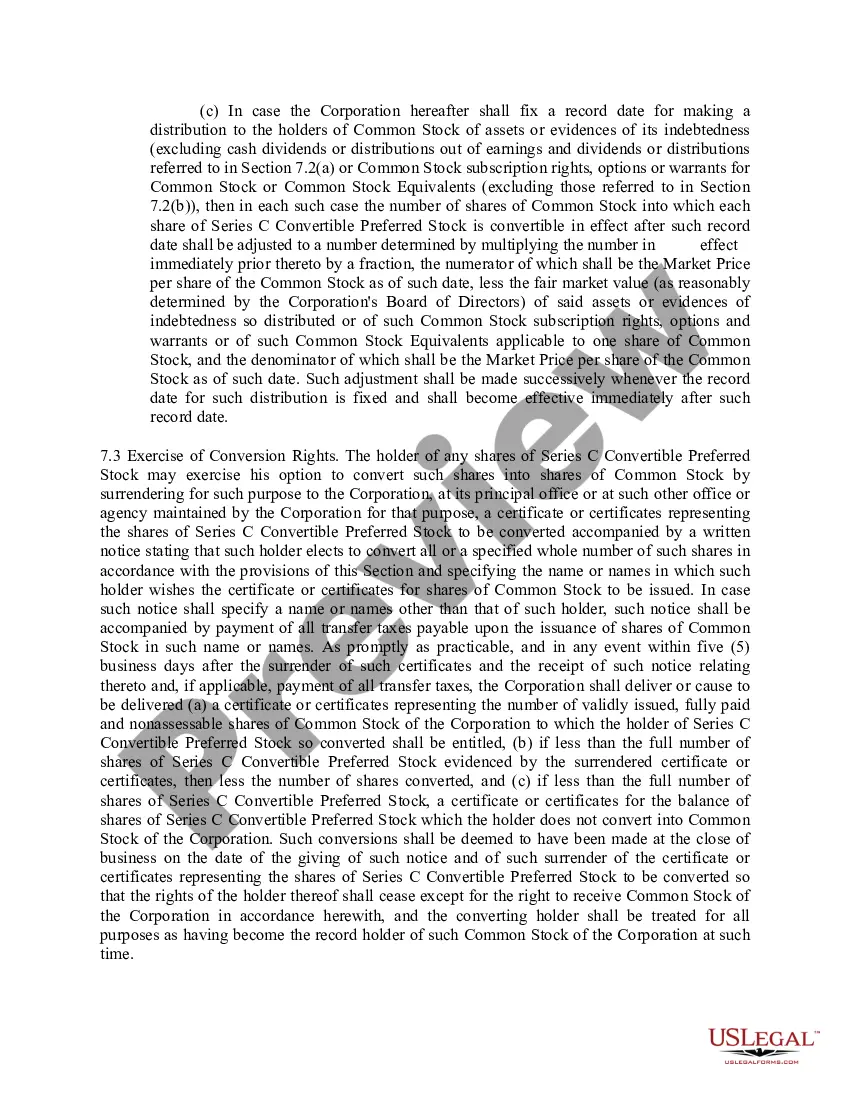
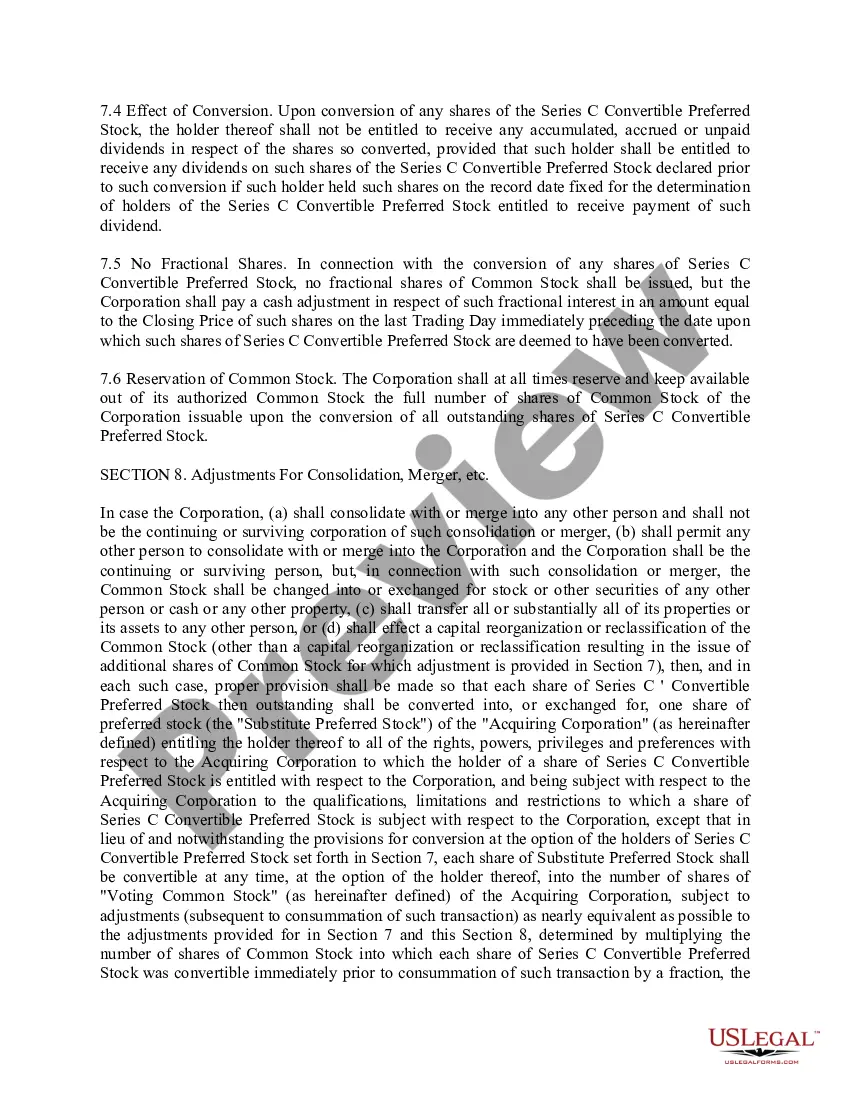
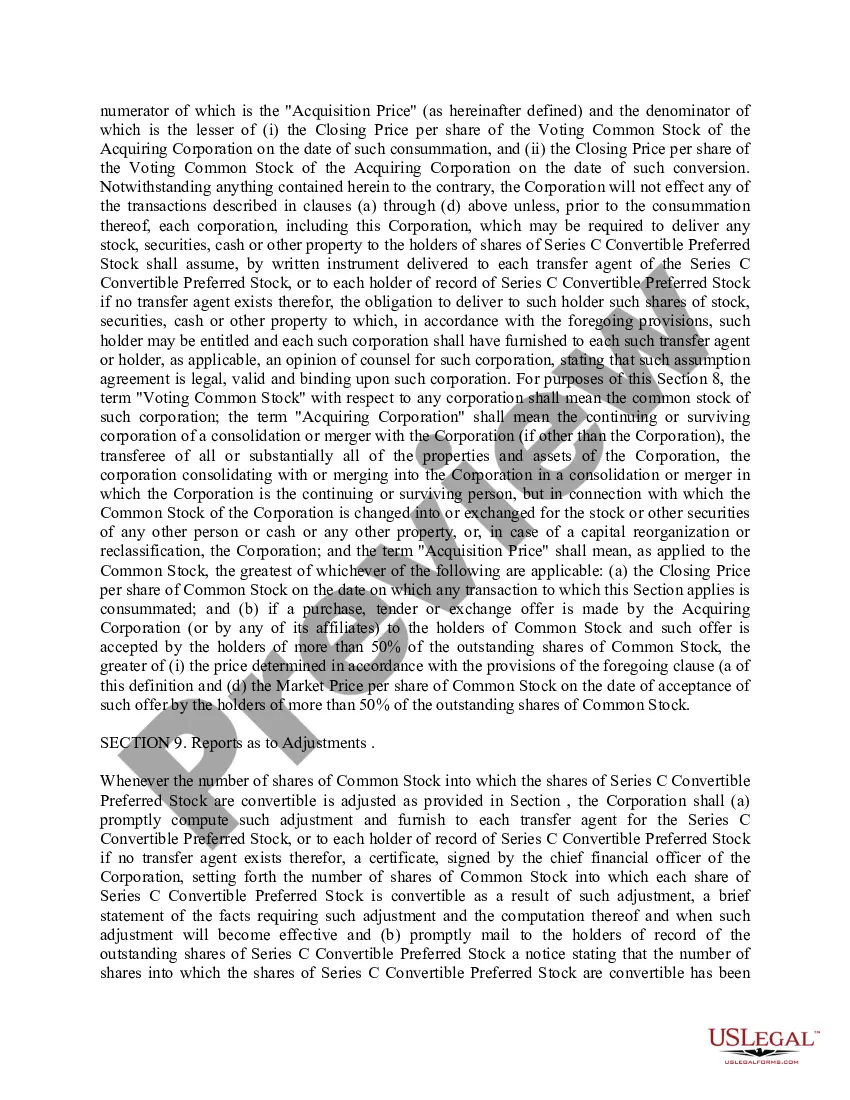
- Conditions and procedures for conversion into common stock.
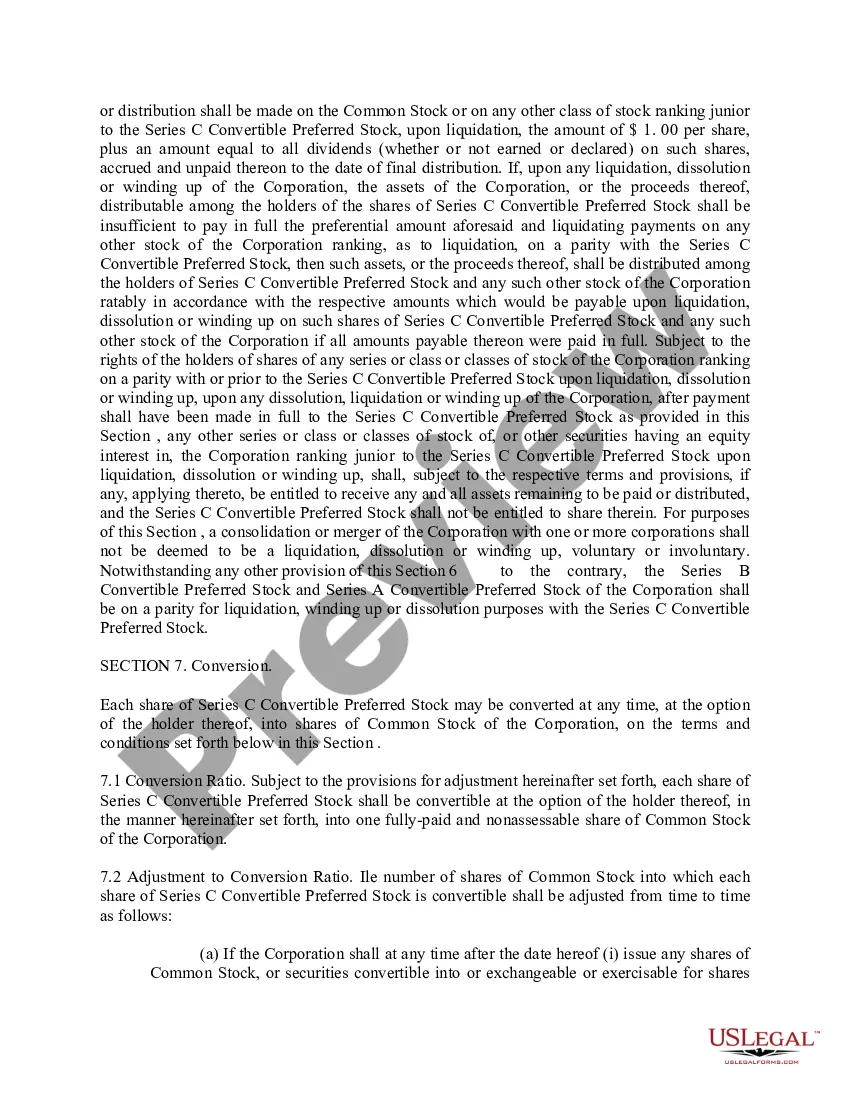
- Rights and preferences in case of liquidation or dissolution of the company.

When to use this form
This form should be used when a corporation intends to create a new series of convertible preferred stock. It is applicable during initial public offerings (IPOs), corporate restructuring, capital raising efforts, or when existing stockholders need clarity on the terms associated with newly issued stocks.
Who can use this document
Eligible users of this form include:
- Corporate directors or officers looking to issue new shares of preferred stock.
- Shareholders who want to understand their rights and preferences related to this type of stock.
- Legal professionals advising corporations on equity financing.
How to complete this form
- Identify the corporation and provide its official name and state of incorporation.
- Specify the designation and total number of shares for the Series C Convertible Preferred Stock.
- Detail the rights related to dividends, including any conditions for payment and distribution.
- Outline the voting rights of preferred stockholders.
- Include terms related to stock conversion into common shares, including conversion ratios.
Does this document require notarization?
This form does not typically require notarization unless specified by local law. However, it is advisable to consult with legal counsel to confirm any specific requirements for your jurisdiction.
Get your form ready online
Our built-in tools help you complete, sign, share, and store your documents in one place.
Make edits, fill in missing information, and update formatting in US Legal Forms—just like you would in MS Word.
Download a copy, print it, send it by email, or mail it via USPS—whatever works best for your next step.
Sign and collect signatures with our SignNow integration. Send to multiple recipients, set reminders, and more. Go Premium to unlock E-Sign.
If this form requires notarization, complete it online through a secure video call—no need to meet a notary in person or wait for an appointment.
We protect your documents and personal data by following strict security and privacy standards.
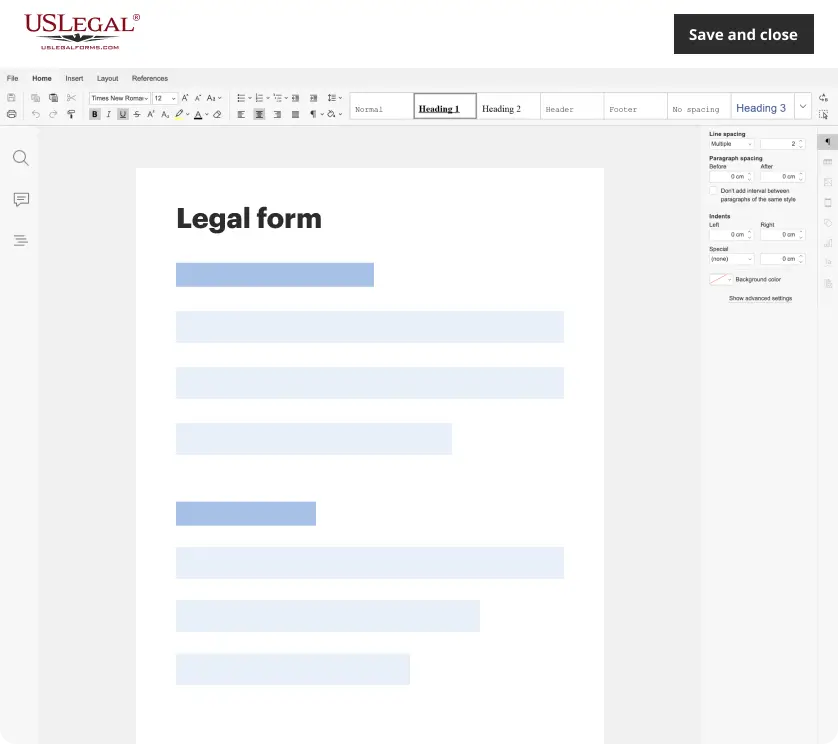
Make edits, fill in missing information, and update formatting in US Legal Forms—just like you would in MS Word.

Download a copy, print it, send it by email, or mail it via USPS—whatever works best for your next step.
Sign and collect signatures with our SignNow integration. Send to multiple recipients, set reminders, and more. Go Premium to unlock E-Sign.

If this form requires notarization, complete it online through a secure video call—no need to meet a notary in person or wait for an appointment.

We protect your documents and personal data by following strict security and privacy standards.
Common mistakes
- Failing to accurately specify the number of shares can lead to legal challenges.
- Neglecting to outline dividend payment schedules can create confusion among shareholders.
- Not updating the certificate when corporate actions occur, such as changes in stock structure.
Advantages of online completion
- Quick access to legally vetted templates created by licensed attorneys.
- Convenient online completion, allowing for faster processing of necessary corporate actions.
- Ability to edit and save forms for future reference or adjustments as needed.
Legal use & context
The Certificate of Designations, Preferences and Rights helps to ensure the validity and enforceability of the rights of preferred stockholders. It serves as important evidence of the corporation's commitment to offering this type of equity, protecting both the issuer and the investors involved.
Key takeaways
- The certificate defines the terms of Series C Convertible Preferred Stock in a corporation.
- It outlines the rights of shareholders, including dividends and voting privileges.
- Using this form ensures compliance with state laws related to corporate governance and equity financing.
Looking for another form?


Form popularity
FAQ
To comply with state regulations, the par value of preferred stock is recorded in its own paid-in capital account Preferred Stock. If the corporation receives more than the par amount, the amount greater than par will be recorded in another account such as Paid-in Capital in Excess of Par - Preferred Stock.
Preferred stock is generally considered less volatile than common stock but typically has less potential for profit. Preferred stockholders generally do not have voting rights, as common stockholders do, but they have a greater claim to the company's assets.
Convertible preferred stocks are preferred shares that include an option for the holder to convert the shares into a fixed number of common shares after a predetermined date.The value of a convertible preferred stock is ultimately based on the performance of the common stock.
Preferred stock is an equity security with properties of both an equity and a debt instrument, and is generally considered a hybrid instrument. Preferreds are senior (higher ranking) to common stock, but subordinate to bonds in terms of claim.
Preferred stock usually carries no voting rights, but may carry a dividend and may have priority over common stock in the payment of dividends and upon liquidation.Some preferred shares gain voting rights when the preferred dividends are in arrears for a substantial time.
All preferred stock is reported on the balance sheet in the stockholders' equity section and it appears first before any other stock. The par value, authorized shares, issued shares, and outstanding shares is disclosed for each type of stock.
While preferred stock and common stock are both equity instruments, they share important distinctions. First, preferreds receive a fixed dividend as dividend obligations to preferred shareholders must be satisfied first.
Current Assets: Common stock, therefore, cannot be considered a cash equivalent, but preferred stock, acquired shortly before its redemption date, can be. Accounts (Trade) Receivables these are classified as a current asset if they are due within one year or less.
A certificate which contains a copy of the board resolution setting out the powers, designations, preferences or rights of a class or series of a class of stock of a corporation (typically a series of preferred stock) if they are not already contained in the certificate of incorporation of the corporation.