Proposal to amend the restated articles of incorporation to create a second class of common stock
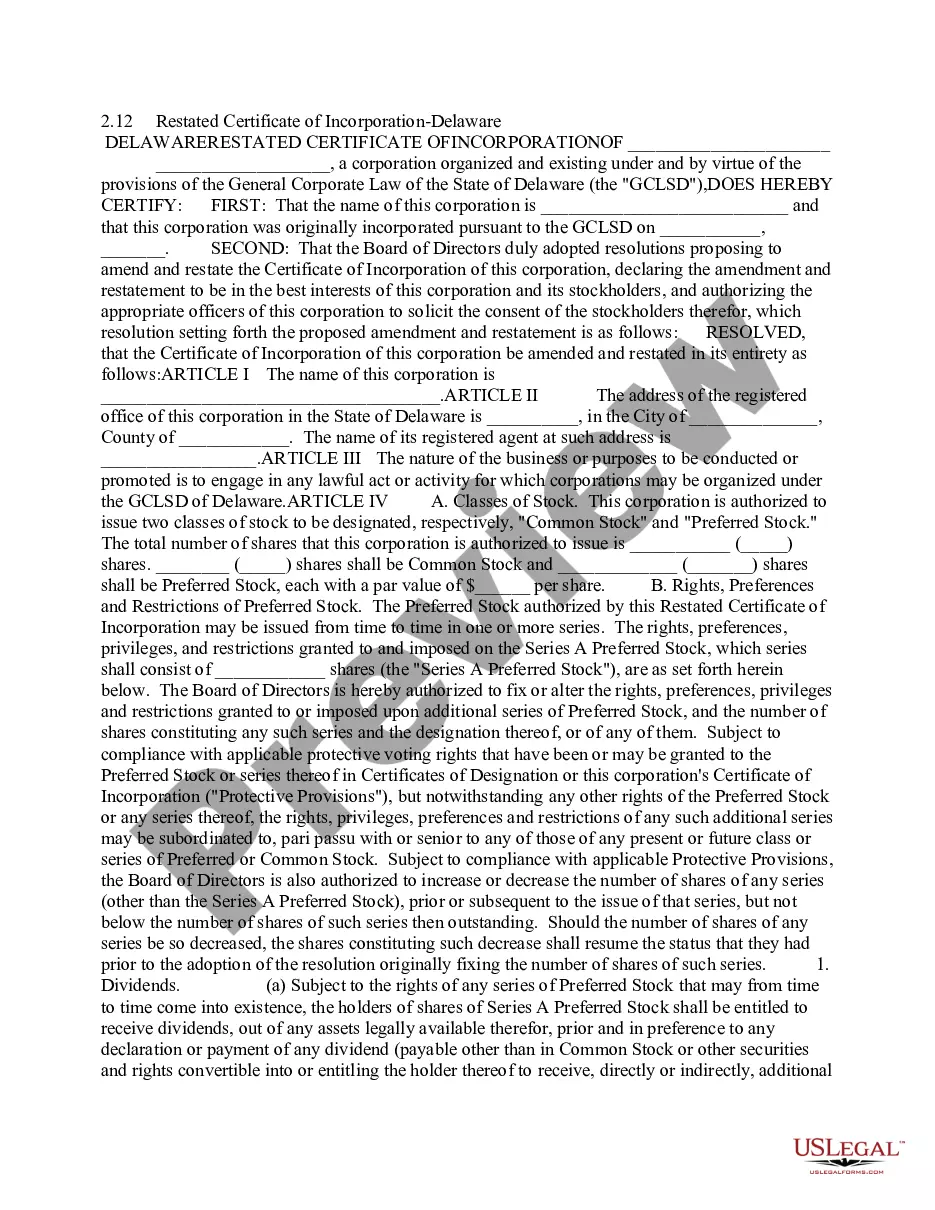
What is this form?
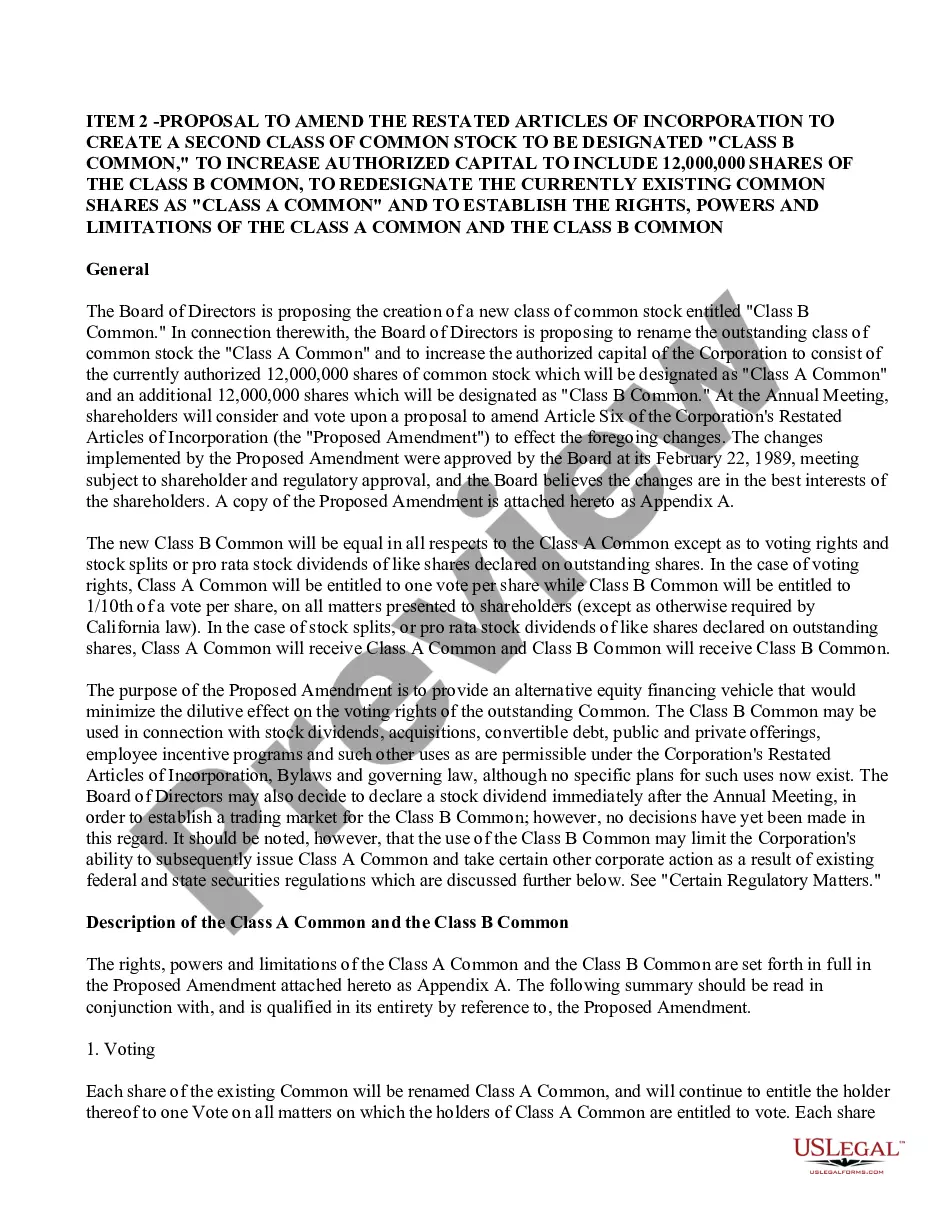
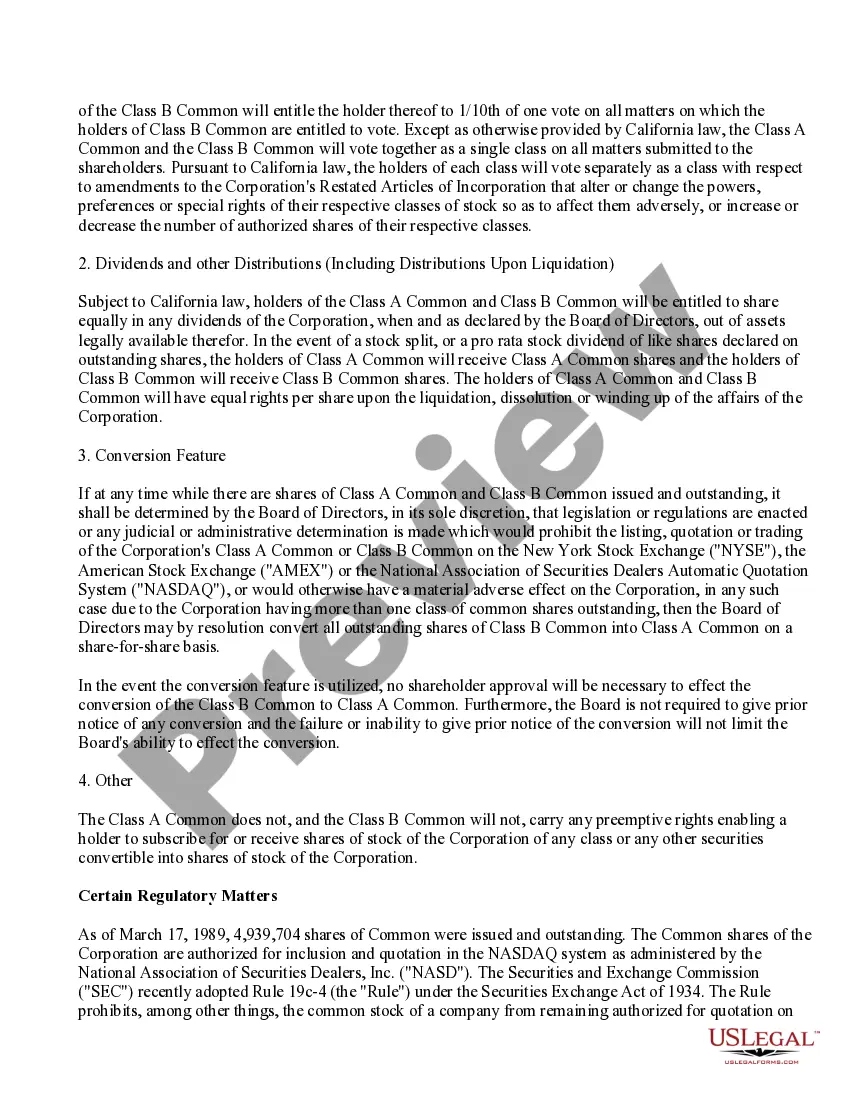
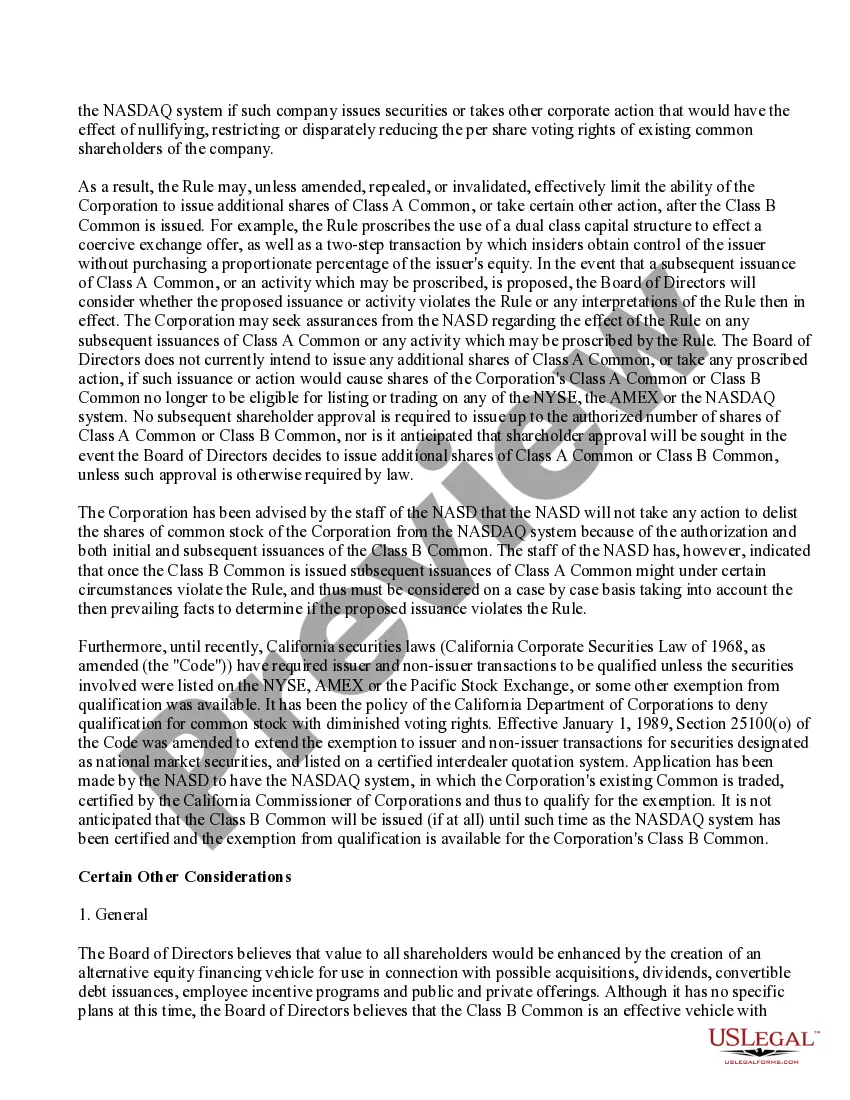
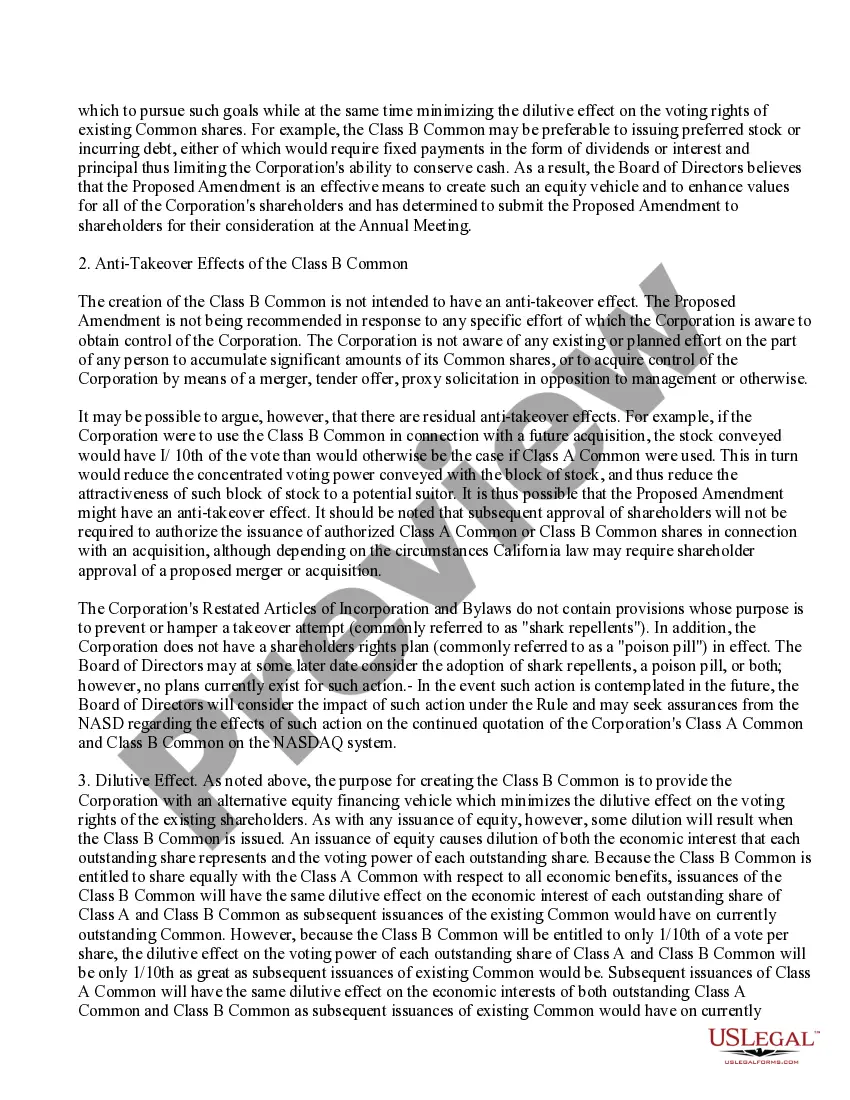
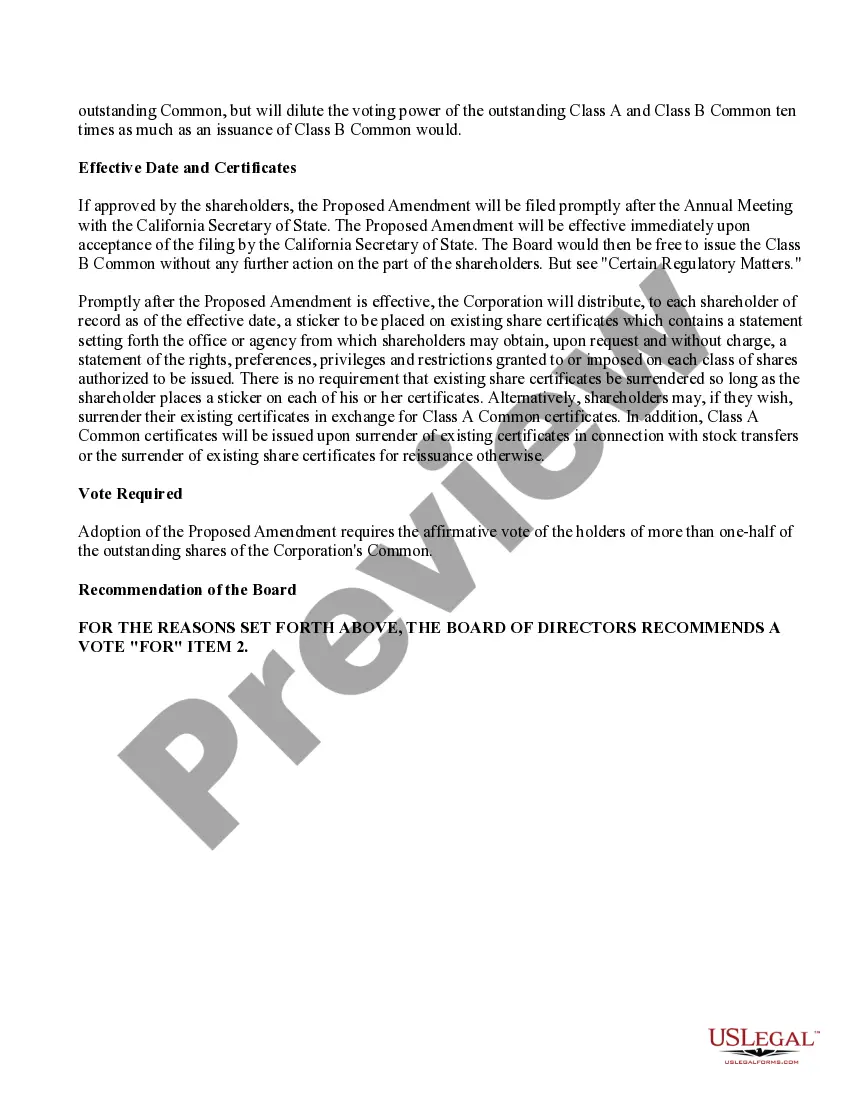
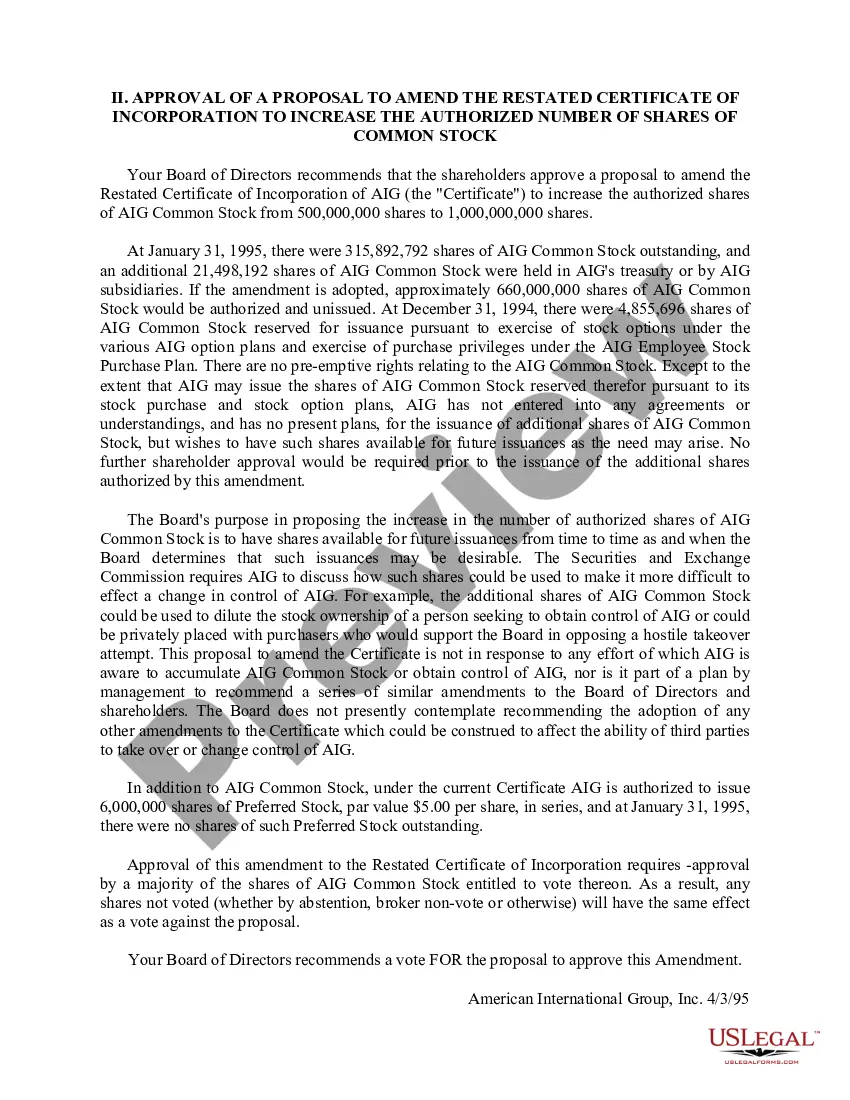
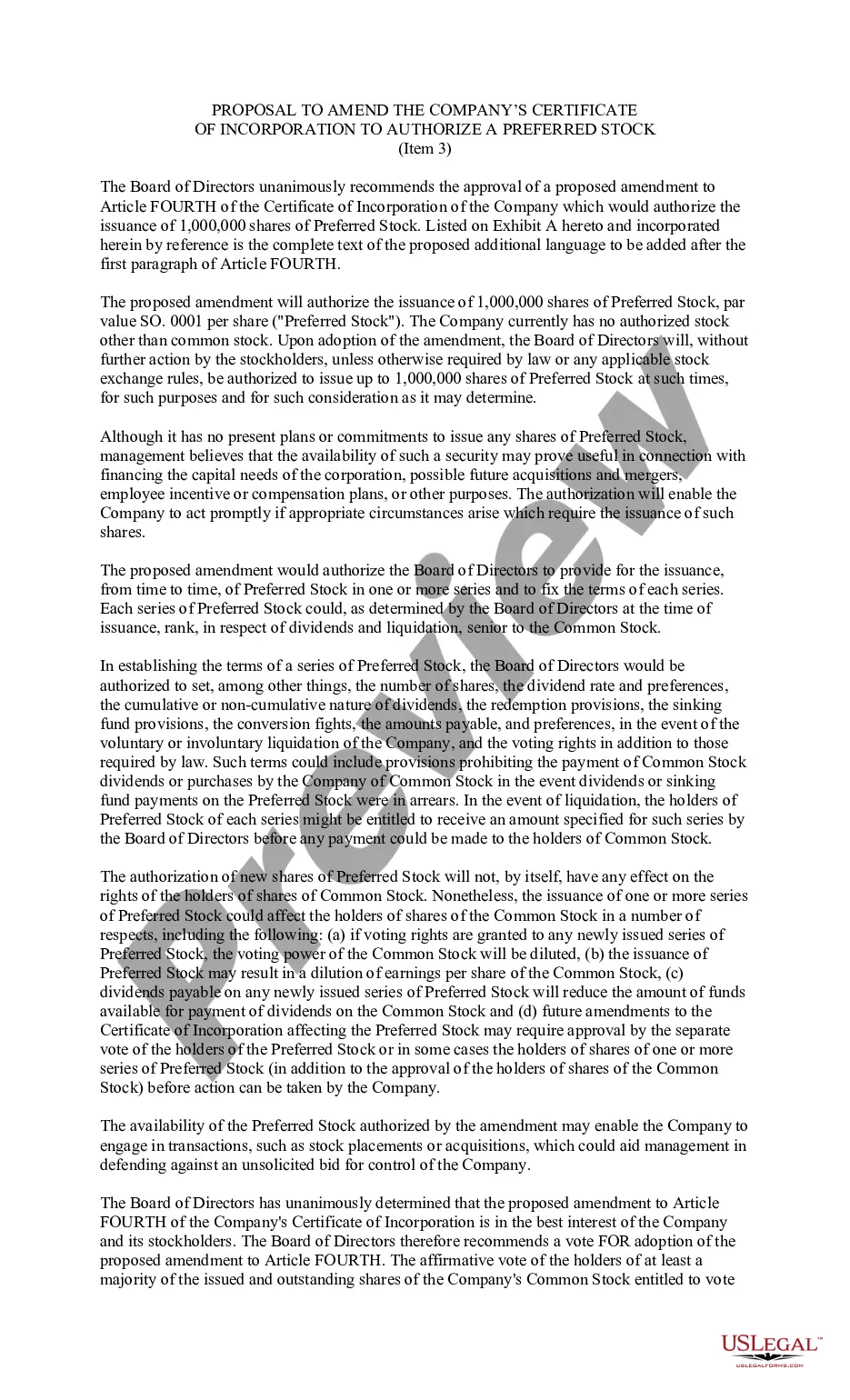
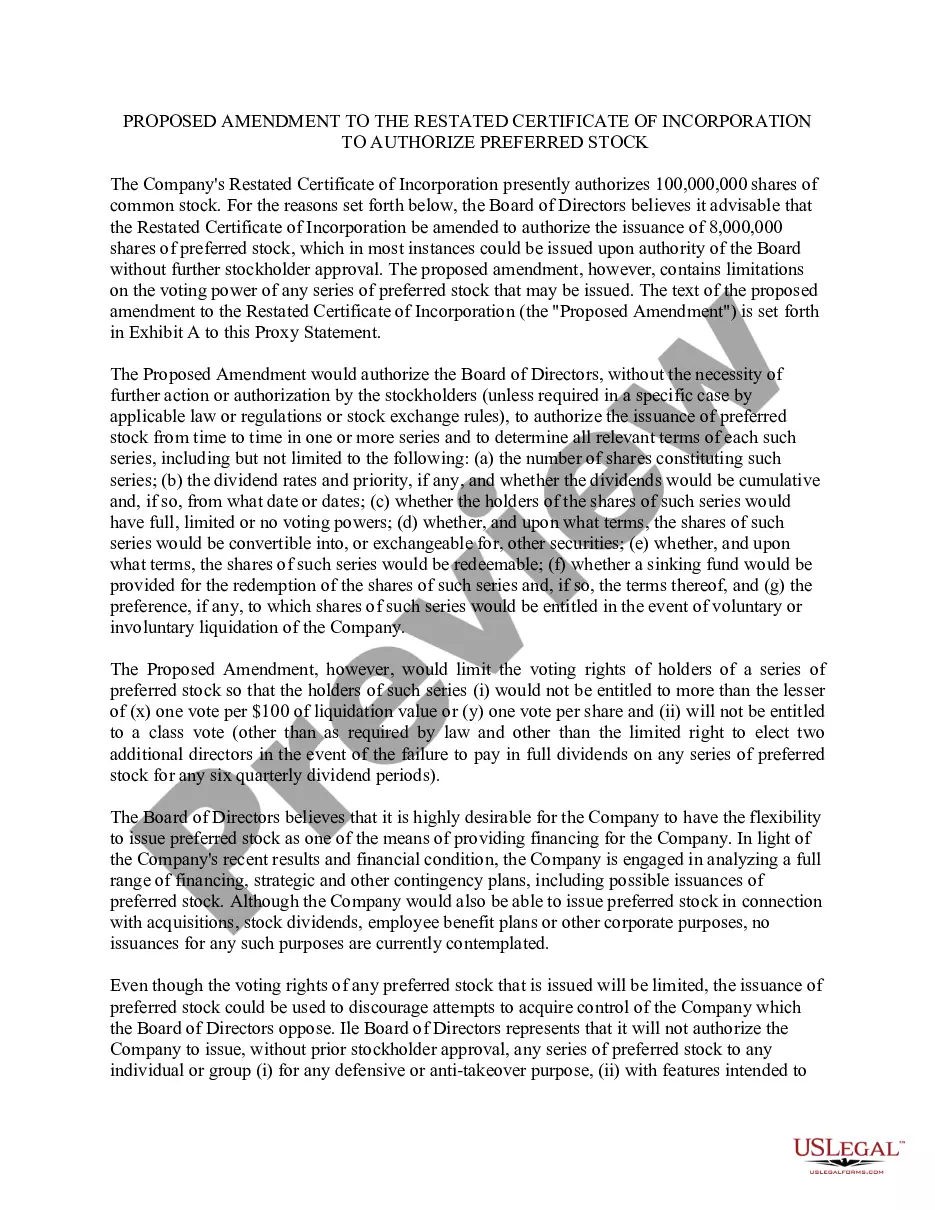
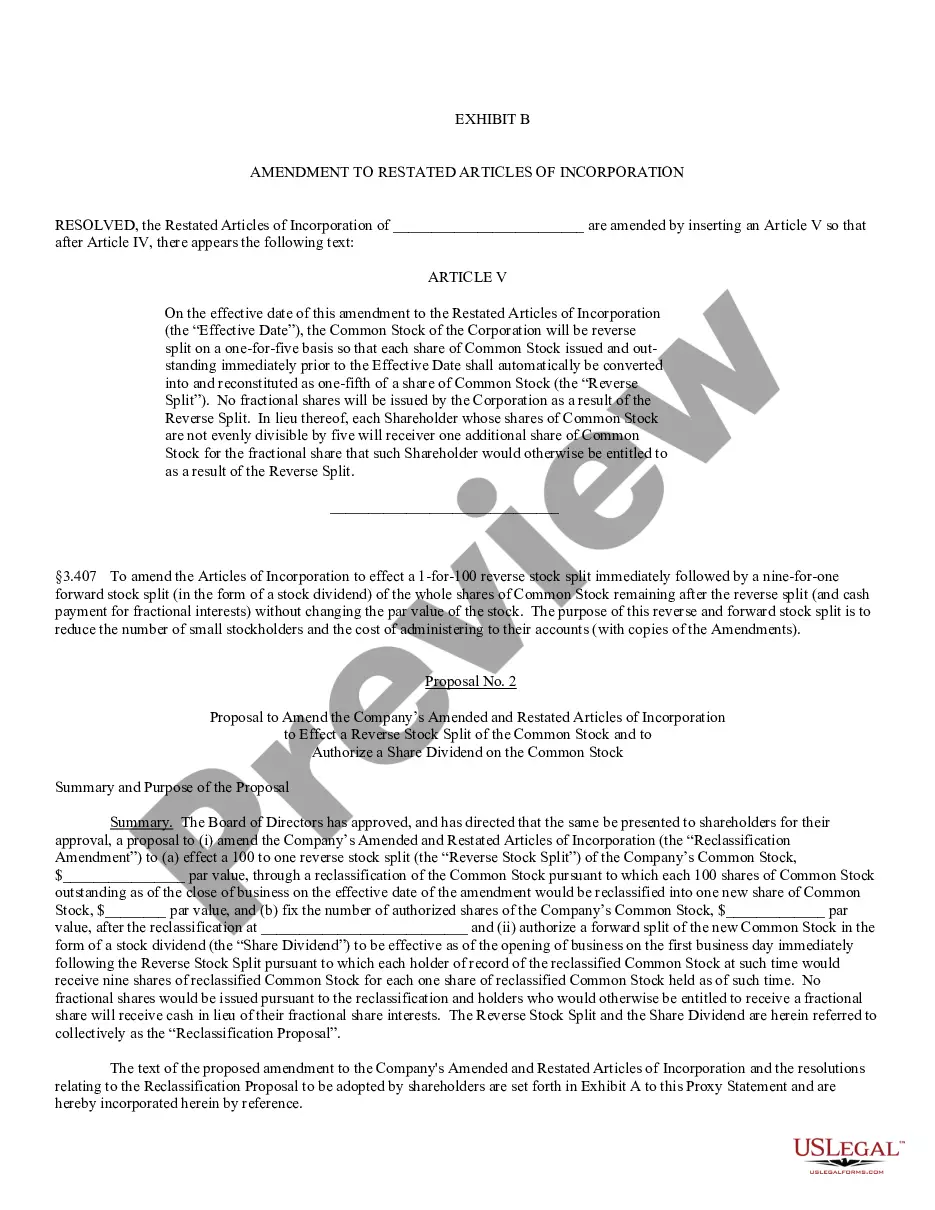
This form is a Proposal to Amend the Restated Articles of Incorporation to Create a Second Class of Common Stock. It is designed for corporations seeking to introduce a new class of common stock (Class B Common) while renaming the existing shares (Class A Common). This proposal allows shareholders to vote on whether to approve the changes, aiming to enhance financial flexibility without unduly diluting existing voting rights.
Key components of this form
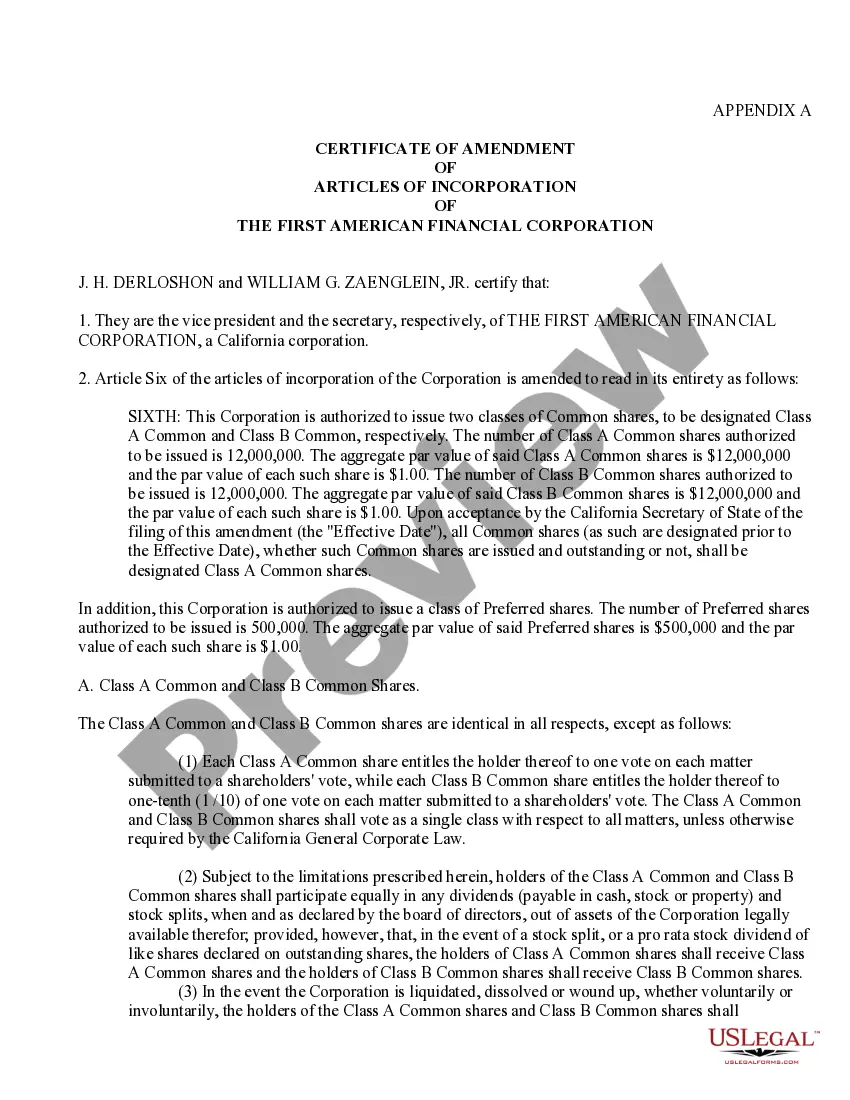
- Details of the proposed creation of Class B Common stock.
- Renaming of existing common stock to Class A Common.
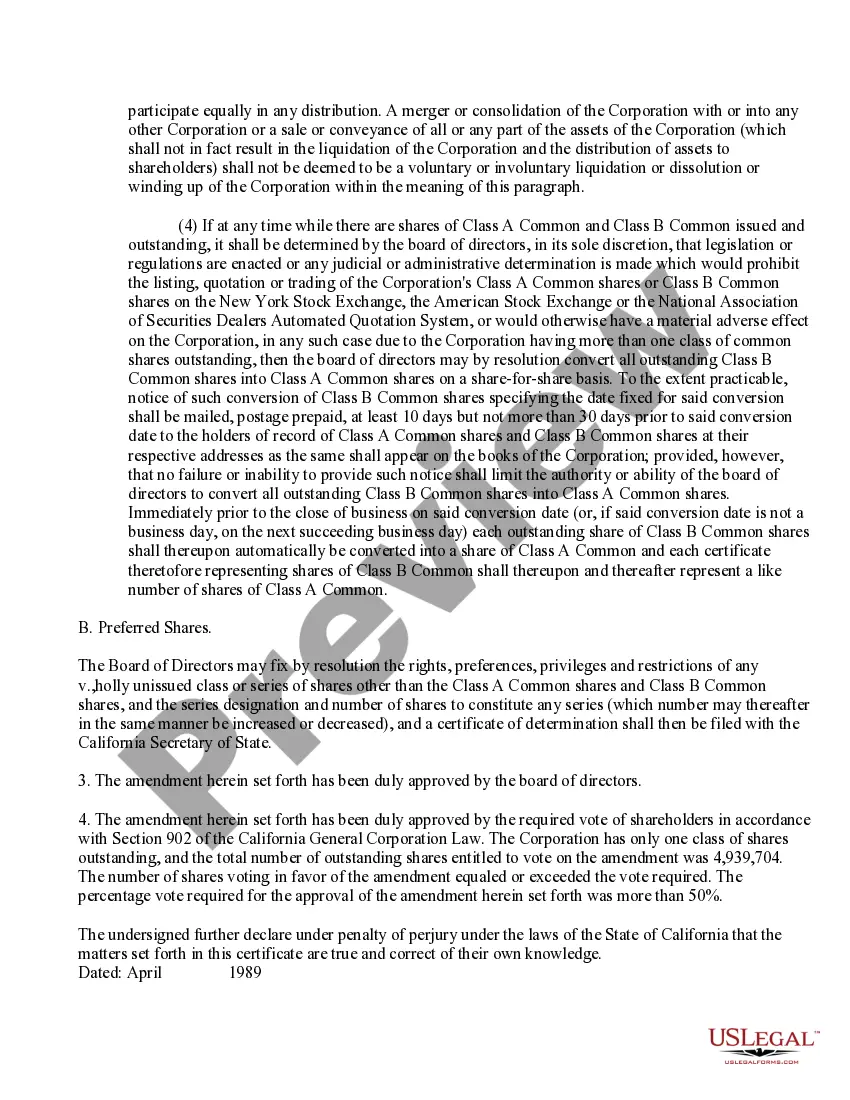
- Voting rights between Class A and Class B Common shares.
- Provisions for dividends and distributions.
- Conversion feature for Class B Common shares under specific conditions.
- Potential anti-takeover effects and dilution considerations.

When this form is needed
This form should be used when a corporationâs Board of Directors proposes to create a second class of common stock to enhance capital-raising abilities or manage shareholder equity, particularly in situations involving potential acquisitions or employee incentive programs. It is necessary when a formal vote by shareholders is required for such amendments to the articles of incorporation.
Intended users of this form
- Corporate Board of Directors considering structural changes to their equity.
- Shareholders who need to understand the implications of the proposed amendment.
- Legal professionals assisting corporations with governance matters.
Instructions for completing this form
- Identify the corporation's current stock structure and the proposed changes.
- Draft a detailed proposal outlining the specifics of Class A and Class B Common shares.
- Schedule an Annual Meeting for shareholders to discuss and vote on the amendment.
- Provide shareholders with all necessary information about the proposed changes.
- Submit the approved amendment to the California Secretary of State promptly.
Does this document require notarization?
This form does not typically require notarization unless specified by local law. Ensure to check any specific local regulations that may apply.
Get your form ready online
Our built-in tools help you complete, sign, share, and store your documents in one place.
Make edits, fill in missing information, and update formatting in US Legal Forms—just like you would in MS Word.
Download a copy, print it, send it by email, or mail it via USPS—whatever works best for your next step.
Sign and collect signatures with our SignNow integration. Send to multiple recipients, set reminders, and more. Go Premium to unlock E-Sign.
If this form requires notarization, complete it online through a secure video call—no need to meet a notary in person or wait for an appointment.
We protect your documents and personal data by following strict security and privacy standards.

Make edits, fill in missing information, and update formatting in US Legal Forms—just like you would in MS Word.

Download a copy, print it, send it by email, or mail it via USPS—whatever works best for your next step.

Sign and collect signatures with our SignNow integration. Send to multiple recipients, set reminders, and more. Go Premium to unlock E-Sign.

If this form requires notarization, complete it online through a secure video call—no need to meet a notary in person or wait for an appointment.

We protect your documents and personal data by following strict security and privacy standards.
Avoid these common issues
- Failing to provide adequate notice to shareholders about the meeting.
- Not ensuring compliance with state-specific legal requirements.
- Making unclear or vague statements in the proposal.
Benefits of completing this form online
- Convenience of accessing the form anytime and from anywhere.
- Editability allows for easy customization to fit unique corporate needs.
- Reliability of attorney-drafted materials ensures legal compliance.
Legal use & context
- Legally required for any changes to a corporationâs articles of incorporation.
- Must be approved by a designated percentage of shareholders according to state law.
- Enhances corporate governance by clarifying rights associated with different classes of stock.
Quick recap
- The form allows for the creation of a second class of common stock, facilitating financial strategies.
- Understanding voting rights and the implications of the new stock class is crucial for shareholders.
- Compliance with state laws is essential for the proposal's validity.
Key terms explained
- Common Stock: Shares that typically represent ownership in a company and come with voting rights.
- Voting Rights: The entitlement of shareholders to vote on corporate matters, such as the election of the Board of Directors.
- Dividends: Payments made to shareholders from the profits of a corporation.
- Liquidation: The process of winding up a companyâs affairs and distributing its assets to creditors and shareholders.
Looking for another form?

Form popularity
FAQ
The easiest way to amend the Articles is to draft, adopt, and file a Certificate of Amendment of Articles of Incorporation. For a name change only, the Secretary of State offers a simple form that can be used. A Certificate of Amendment may be appropriate for minor other changes.
Check your bylaws and state law. First, review your company's bylaws to see what steps you must take to change the articles. Have the board of directors vote on the proposed changes. Hold a shareholder vote, if necessary. Prepare and file an amendment form.
Changes to the entity's name. Changes in the entity's purpose. Changes in the number of authorized shares of a corporation. Changes in the type/class/series of authorized shares of a corporation. Changes in the number of directors of the corporation, if stated in articles of incorporation.
Changes to the entity's name. Changes in the entity's purpose. Changes in the number of authorized shares of a corporation. Changes in the type/class/series of authorized shares of a corporation. Changes in the number of directors of the corporation, if stated in articles of incorporation.
Obtain articles of amendment of the articles of incorporation (sometimes called the certificate of amendment of articles of incorporation) from your state's Secretary of State. Obtain a copy of the original articles of incorporation. Propose the change in the articles of incorporation to the Board of Directors.
You will have to pay a fee for the following types of amendments: Amalgamation: $50. Continuance: $50. Name change: $25.
When you restating, you are rewriting the entire document, with the amendments incorporated into it.
Unless otherwise prescribed by this Code or by special law, and for legitimate purposes, any provision or matter stated in the articles of incorporation may be amended by a majority vote of the board of directors or trustees and the vote or written assent of the stockholders representing at least two-thirds (2/3) of