Montana Flooring Contract for Contractor
Overview of this form
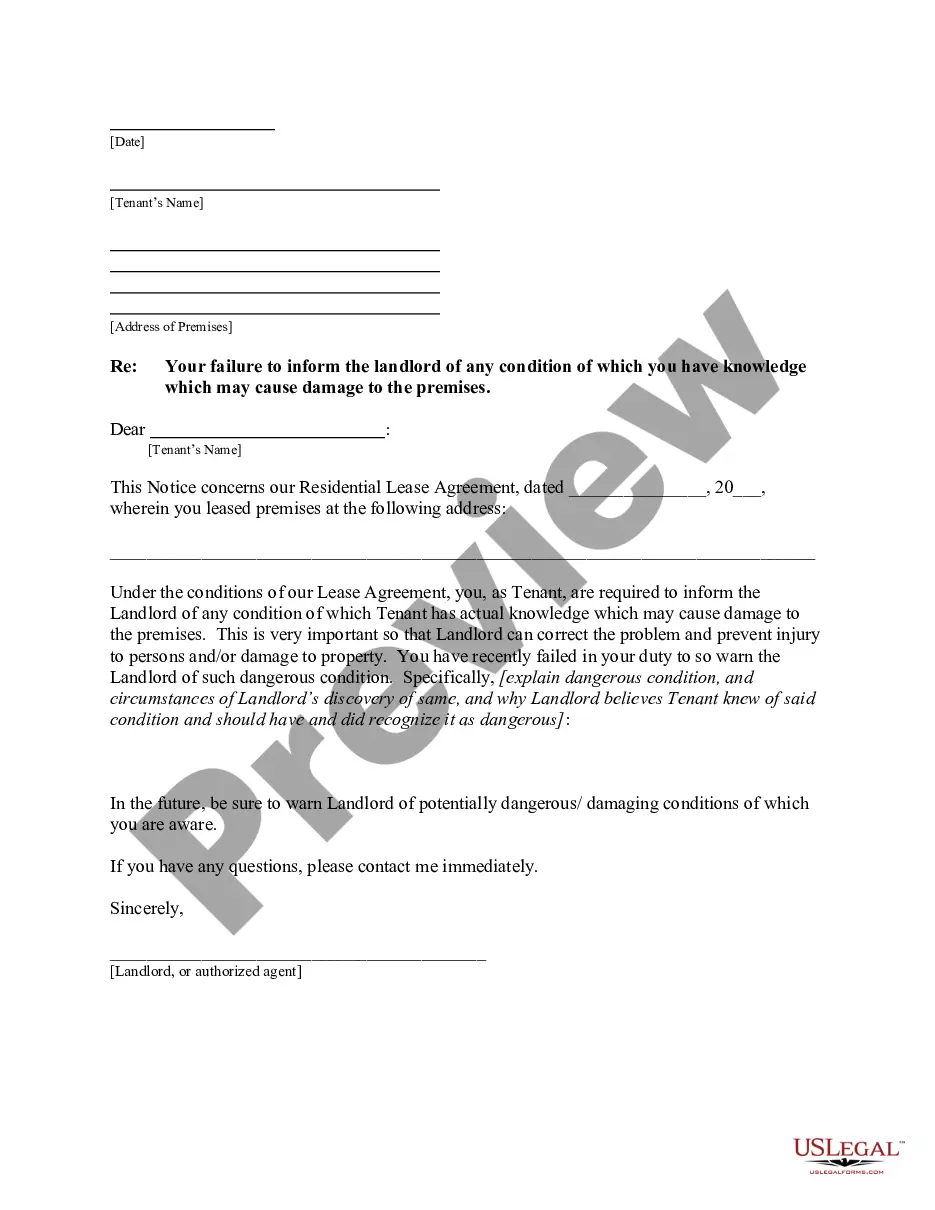
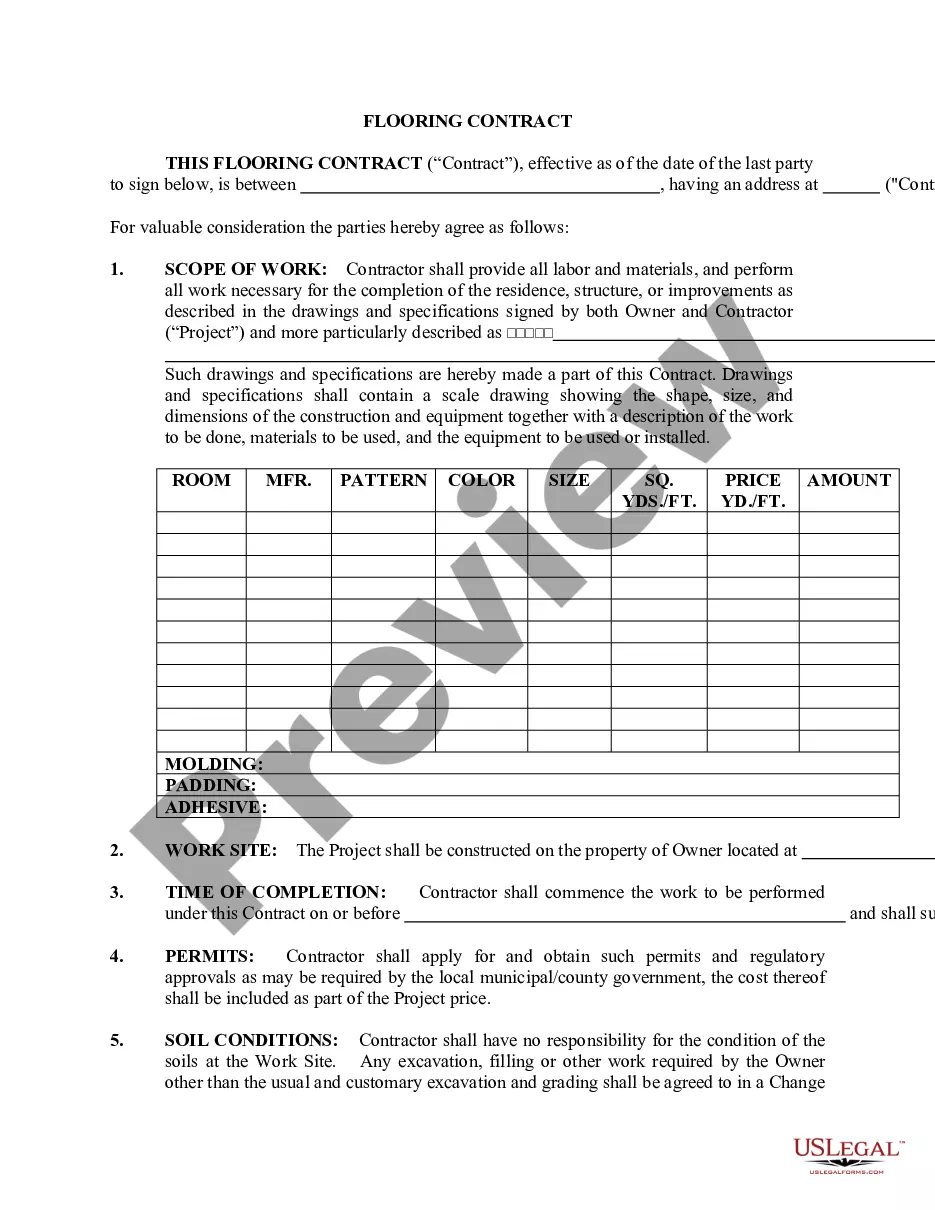
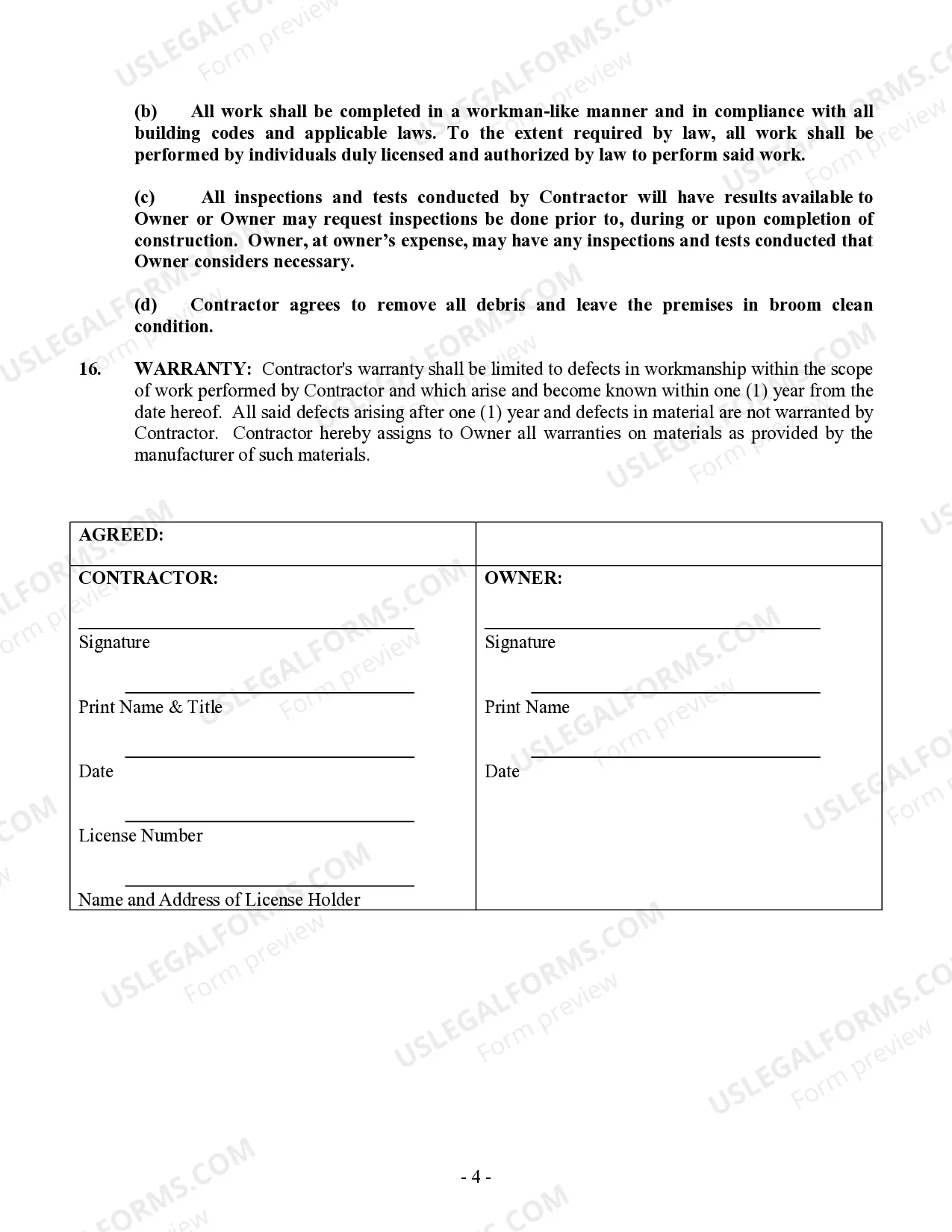
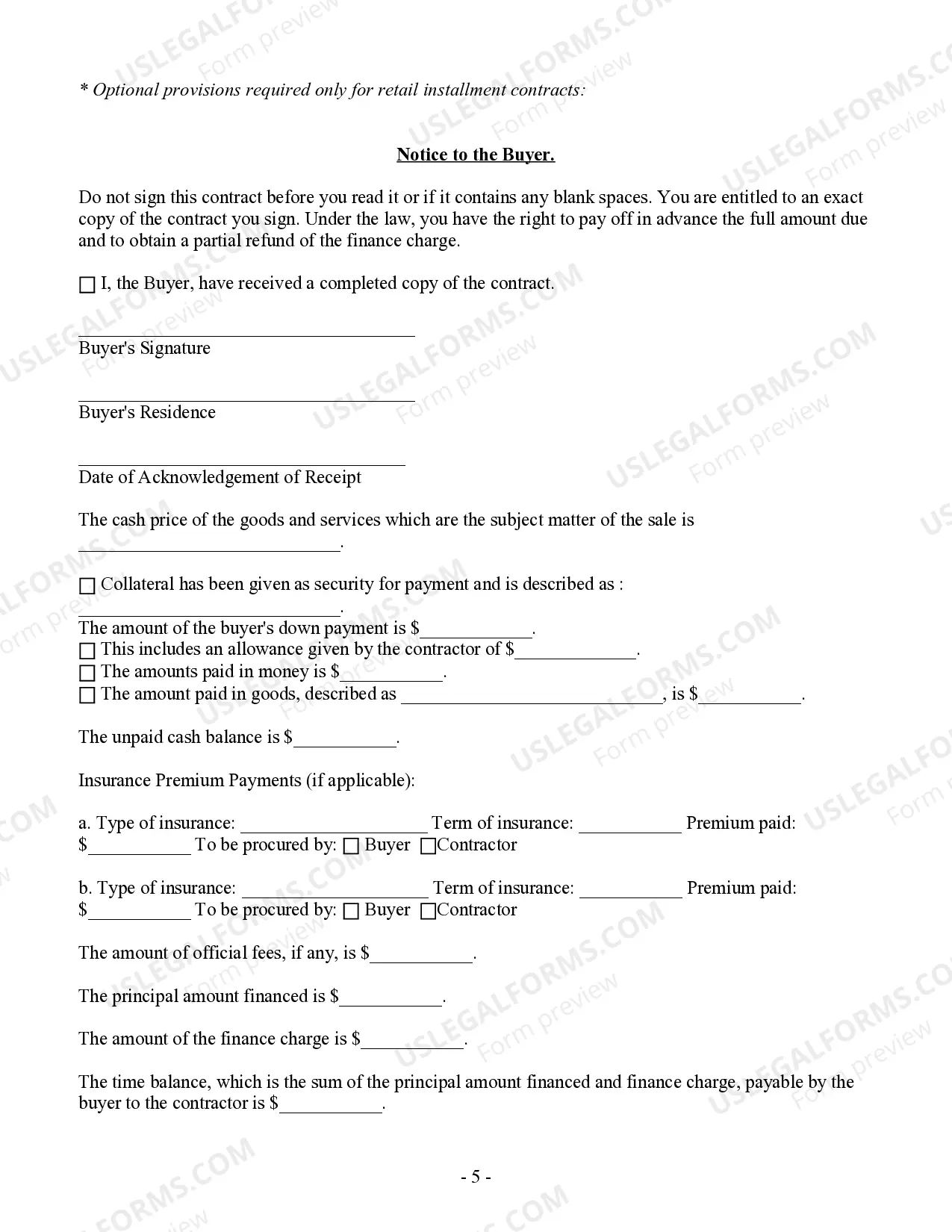
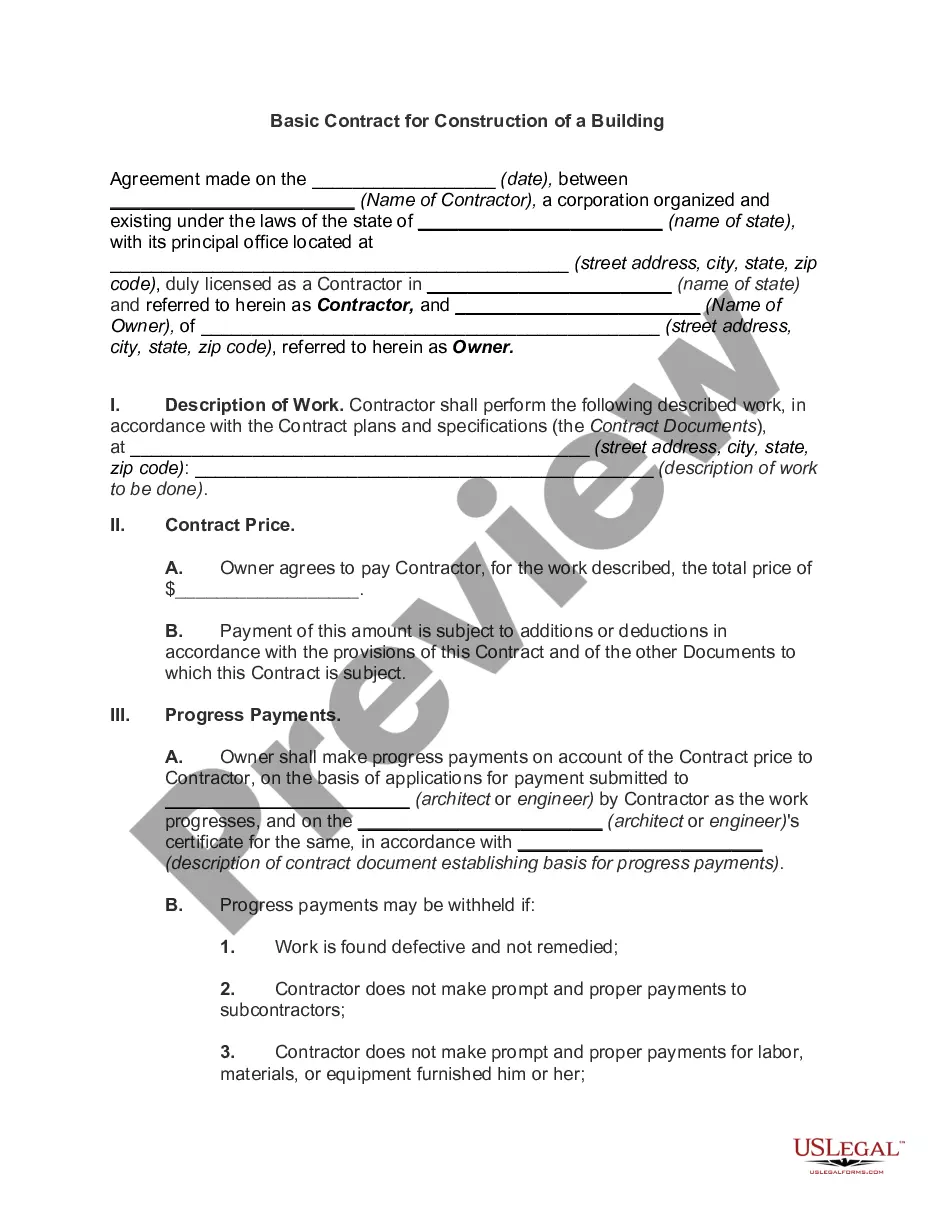
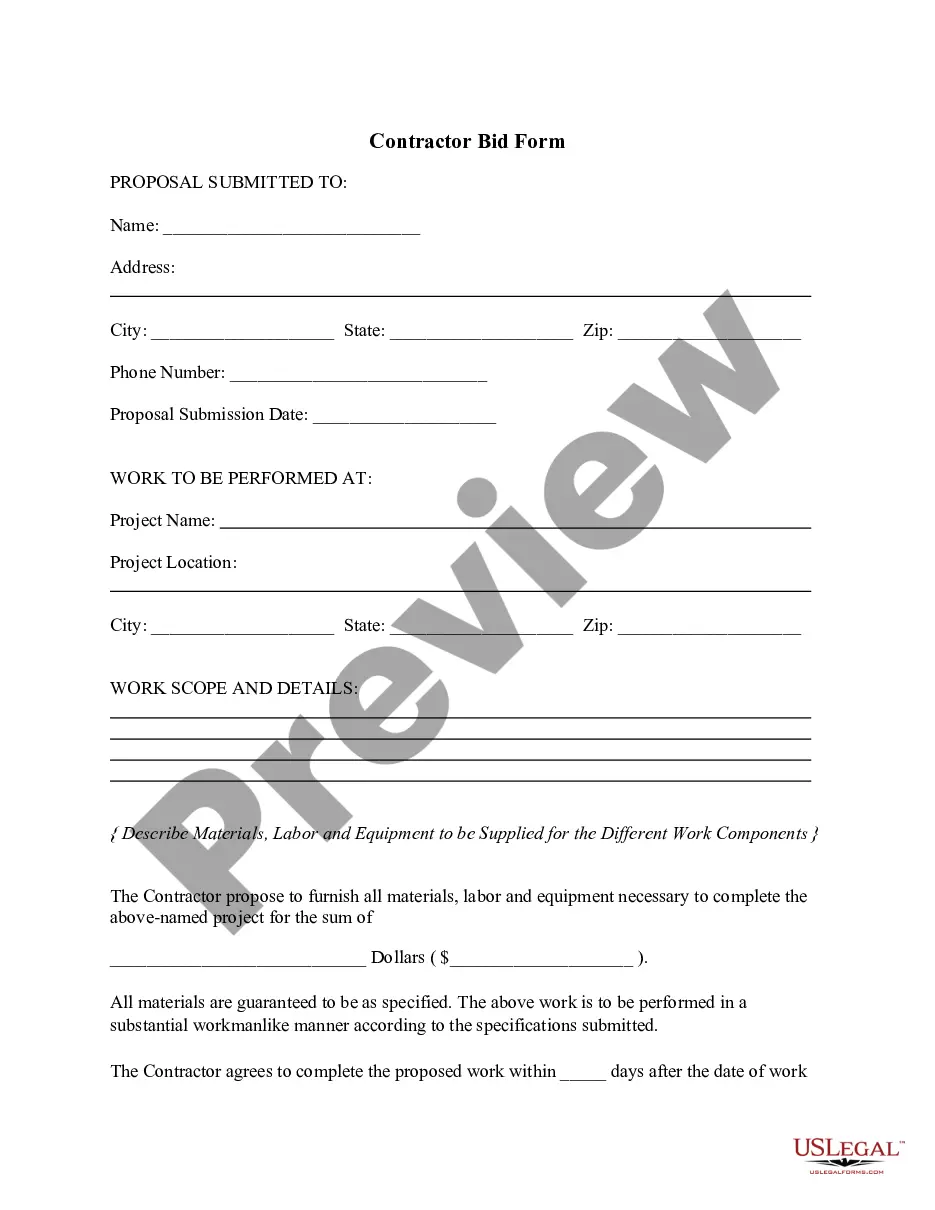
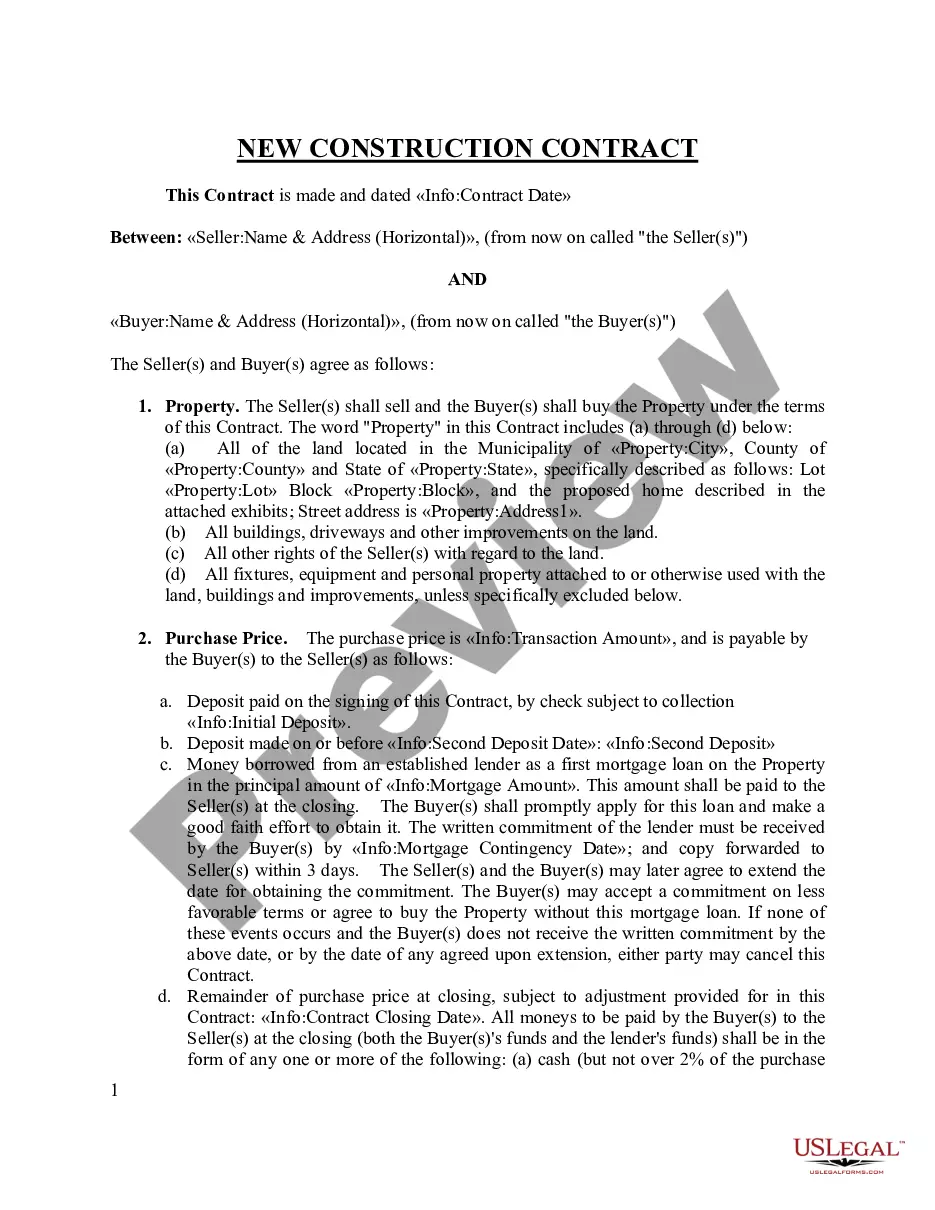
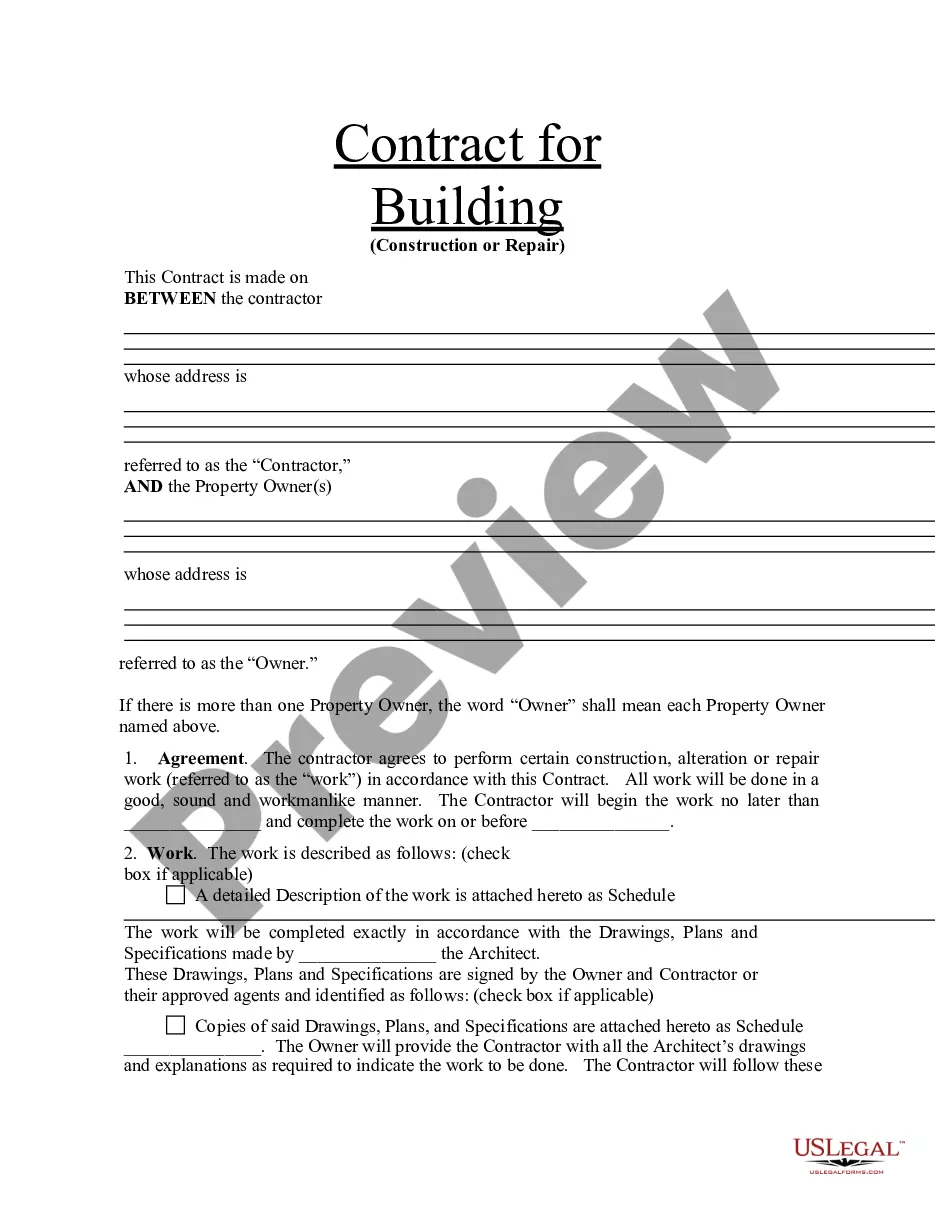
The Flooring Contract for Contractor is a legal agreement designed for use between flooring contractors and property owners. This contract outlines the terms and conditions under which flooring services will be provided, including payment arrangements, warranty information, and responsibilities of both parties. It differs from other contract forms by specifically addressing aspects related to flooring installations and compliance with the laws of Montana.
Key parts of this document
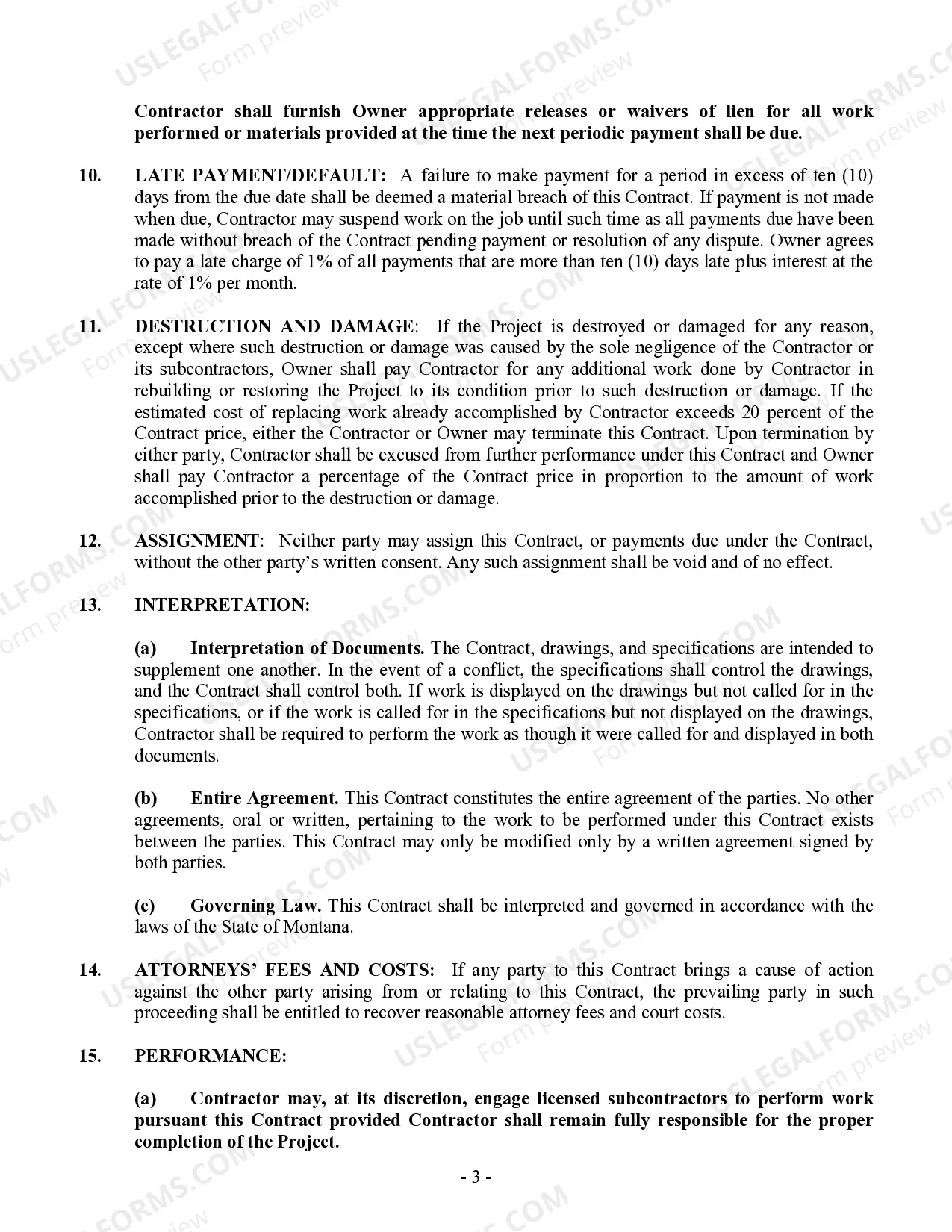
- Payment arrangements: Options for cost plus or fixed fee payments.
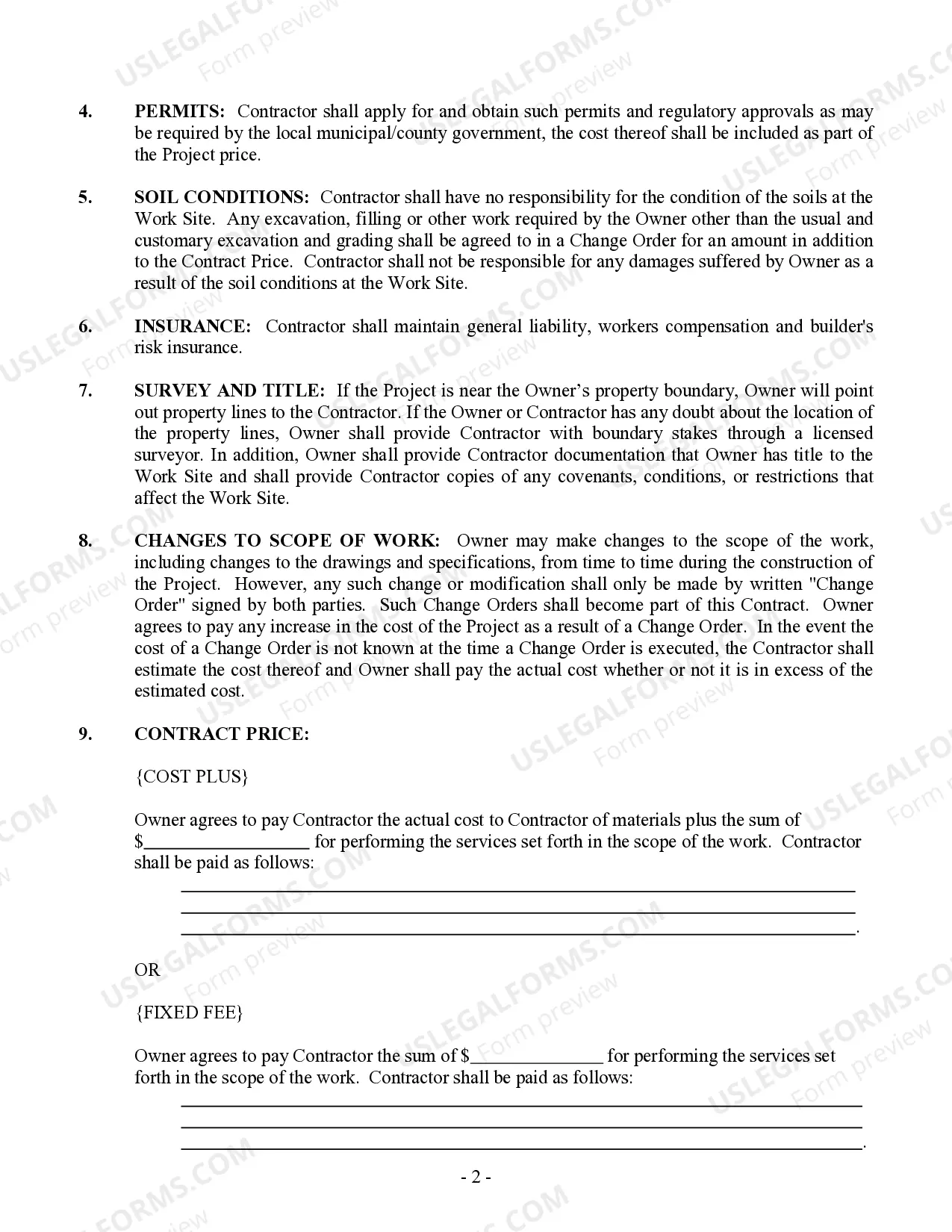
- Permitting: Responsibilities of the contractor regarding obtaining necessary permits.
- Soil conditions: Clarification of liability regarding soil at the work site.
- Insurance requirements: Contractor must maintain various types of insurance.
- Change orders: Procedures for modifying the scope of work and associated costs.
- Warranties: Specifications on workmanship and material warranties.
When this form is needed
This form should be used when a property owner hires a flooring contractor for residential or commercial flooring projects. It is applicable in scenarios involving new installations, repairs, or modifications of existing flooring, ensuring both parties have a clear understanding of their obligations and rights.
Who can use this document
This contract is intended for:
- Property owners who need flooring services.
- Licensed flooring contractors providing services to clients.
- Individuals or businesses looking for clarity and structure in their flooring projects.
How to complete this form
- Identify the parties involved: Enter names and contact information of the contractor and property owner.
- Specify the work description: Detail the scope of flooring work to be completed.
- Document pricing: Indicate whether the payment is cost plus or fixed fee and enter the agreed-upon price.
- Include necessary permits: Confirm which permits the contractor will obtain.
- Sign and date: Ensure all parties sign the contract to make it legally binding.
Notarization requirements for this form
This form does not typically require notarization unless specified by local law. However, it is recommended to keep a signed copy for your records to ensure all parties have a clear agreement.
Get your form ready online
Our built-in tools help you complete, sign, share, and store your documents in one place.
Make edits, fill in missing information, and update formatting in US Legal Forms—just like you would in MS Word.
Download a copy, print it, send it by email, or mail it via USPS—whatever works best for your next step.
Sign and collect signatures with our SignNow integration. Send to multiple recipients, set reminders, and more. Go Premium to unlock E-Sign.
If this form requires notarization, complete it online through a secure video call—no need to meet a notary in person or wait for an appointment.
We protect your documents and personal data by following strict security and privacy standards.

Make edits, fill in missing information, and update formatting in US Legal Forms—just like you would in MS Word.

Download a copy, print it, send it by email, or mail it via USPS—whatever works best for your next step.

Sign and collect signatures with our SignNow integration. Send to multiple recipients, set reminders, and more. Go Premium to unlock E-Sign.

If this form requires notarization, complete it online through a secure video call—no need to meet a notary in person or wait for an appointment.

We protect your documents and personal data by following strict security and privacy standards.
Mistakes to watch out for
- Failing to specify payment terms clearly, leading to disputes.
- Not detailing the scope of work, which can cause misunderstandings.
- Overlooking necessary permit requirements, which may result in legal issues.
- Neglecting to include change order procedures, leading to complications if changes are needed.
- Not obtaining signatures from all parties, making the contract unenforceable.
Advantages of online completion
- Convenience: Download the form instantly and fill it out at your convenience.
- Editability: Easily customize the contract to fit your specific project needs.
- Reliability: Access a form drafted by licensed attorneys, ensuring legal compliance.
- Time-saving: Avoid delays by having a ready-made contract for your flooring project.
Legal use & context
- The contract is legally binding once signed by both parties, providing enforceable terms for the flooring project.
- In Montana, this form ensures compliance with state laws regarding construction contracts and relationships between contractors and property owners.
Summary of main points
- The Flooring Contract for Contractor is essential for formalizing agreements between flooring contractors and property owners.
- It is tailored to comply with Montana's legal requirements.
- Completing the form accurately can prevent disputes and clarify responsibilities.
- Using this contract can significantly streamline the flooring project process.
Looking for another form?
Form popularity
FAQ
1Register and obtain your business license through the Montana secretary of state website.2Show proof of workers' compensation insurance if you have employees.3Complete and submit the application.
Montana law requires construction contractors with employees, corporations or manager-managed limited liability companies in the construction industry to register, which is the same as a license.
ICEC are services that are used to evaluate whether a specific company or worker for a particular assignment meets the legal requirements to perform as an independent contractor.
Acquire 4 years of experience in the trade for which you plan to get the license for. After this, you will have to take two exams: the California Law and Business Exam and the Flooring & Floor Covering C-15 exam.
First, prove you independently own a business. Get a Montana Tax Identification Number with the Montana Department of Revenue. Then fill out an independent contractor exemption certification. Fill out and mail in the application form.
STEP 1: Plan your business. STEP 2: Form a legal entity. STEP 3: Register for taxes. STEP 4: Open a business bank account & credit card. STEP 5: Set up business accounting. STEP 6: Obtain necessary permits and licenses. STEP 7: Get business insurance.
Independent contractor's licenses First, prove you independently own a business. Get a Montana Tax Identification Number with the Montana Department of Revenue. Then fill out an independent contractor exemption certification. You can also choose to purchase a self-elected workers' compensation insurance plan.
What are the costs involved in opening a carpet store? Your startup costs will be between $2,000 and $10,000, depending on your location. You can start from home, or you can use a small workshop with a monthly rent of about $1,000. Expect to pay additional money for high-grade insurance.
Do quality flooring work. Build a great website. Optimize your website for search engines. Take high-quality photographs of your work. Build a strong brand. Build relationships with local contractors. Purchase flooring job leads. Put an ad in the phonebook.