Security ownership of directors, nominees and officers showing sole and shared ownership
Overview of this form
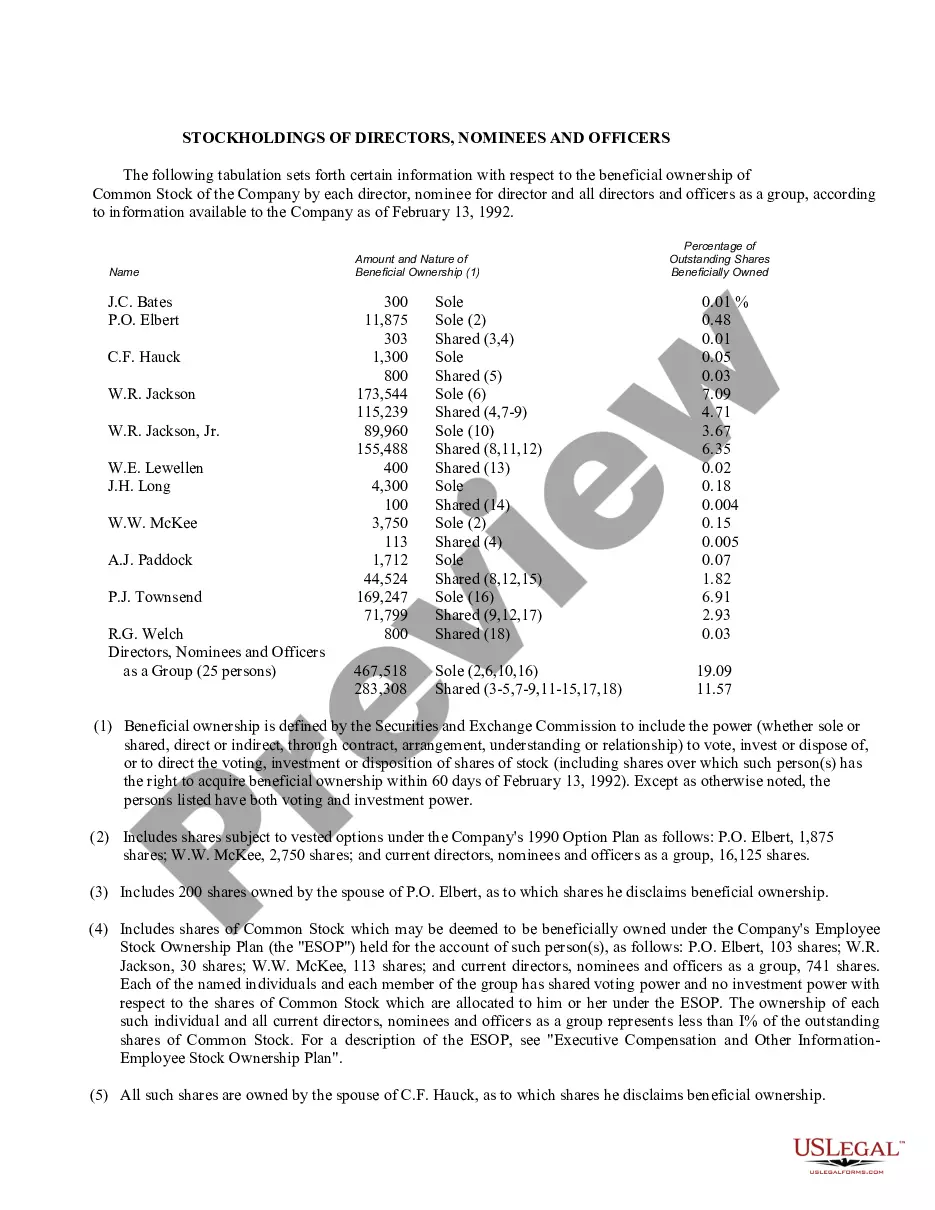
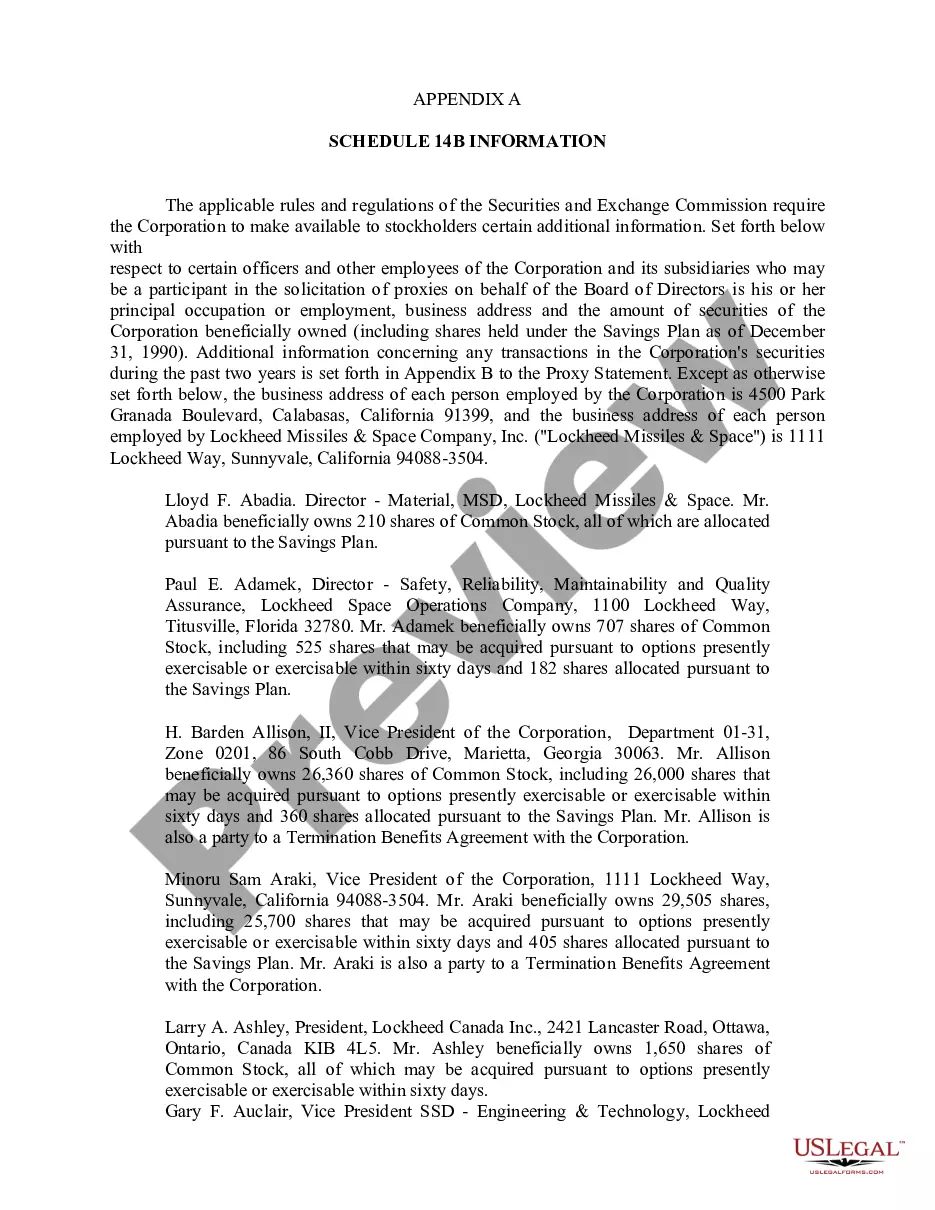
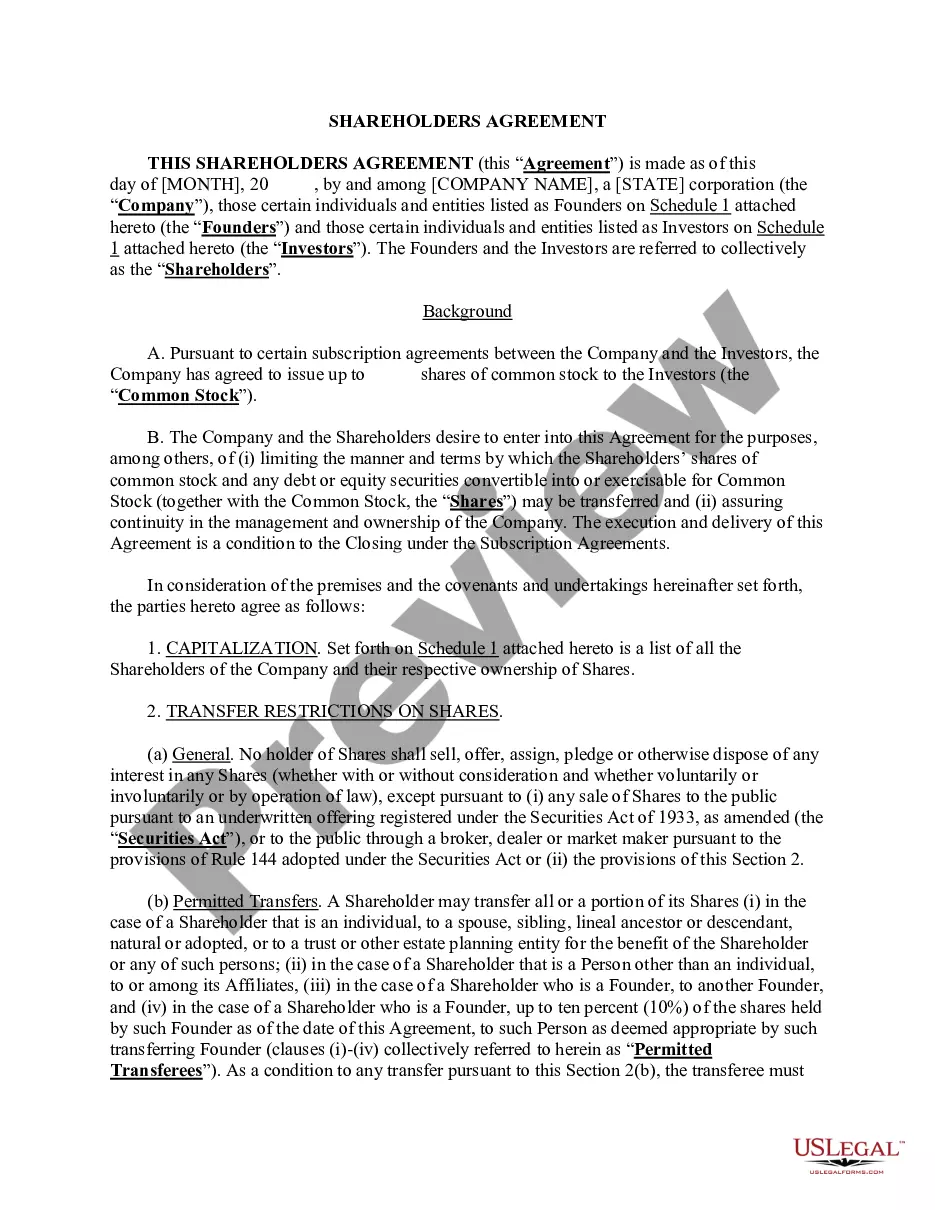
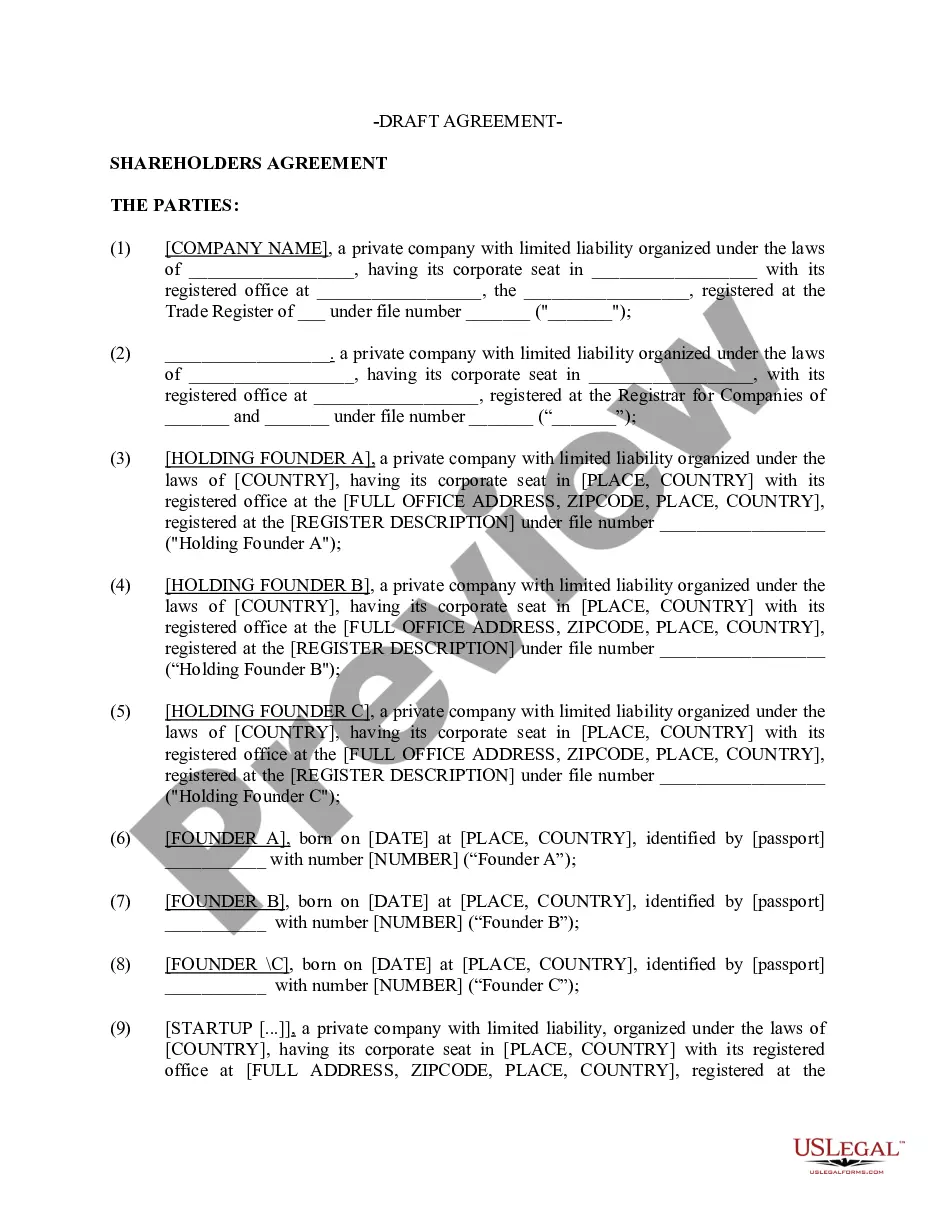
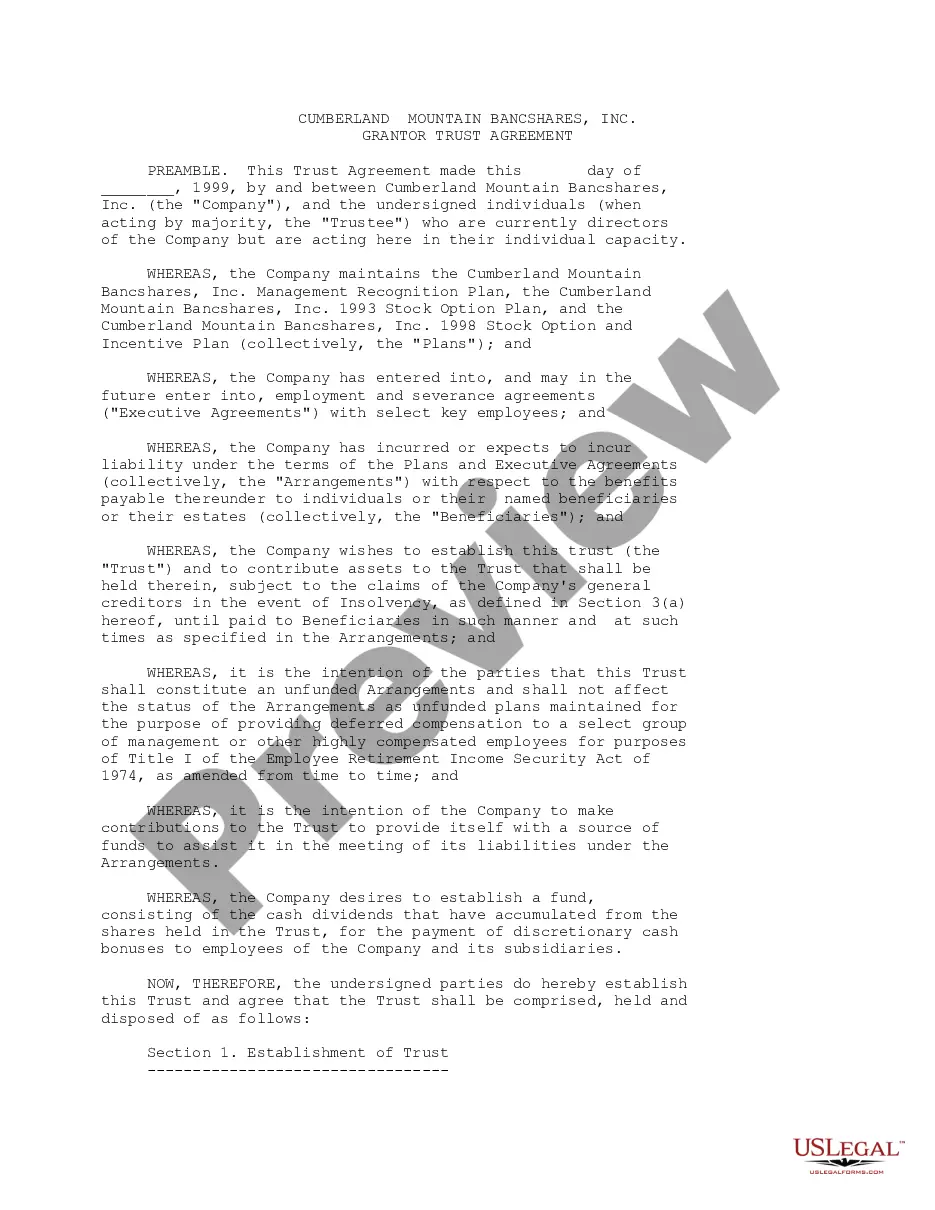
The Security Ownership of Directors, Nominees and Officers Showing Sole and Shared Ownership form is a legal document used in corporate settings to disclose the beneficial ownership of stocks by company directors, nominees, and officers. This form is crucial for ensuring transparency in corporate governance by providing a clear overview of who possesses shares and the nature of their ownership, whether it be sole or shared. It is distinct from other ownership forms as it specifically categorizes stockholdings for corporate governance purposes.
What’s included in this form
- Name of the individual or entity disclosing ownership
- Amount and nature of beneficial stock ownership
- Percentage of outstanding shares owned
- Distinction between sole and shared ownership
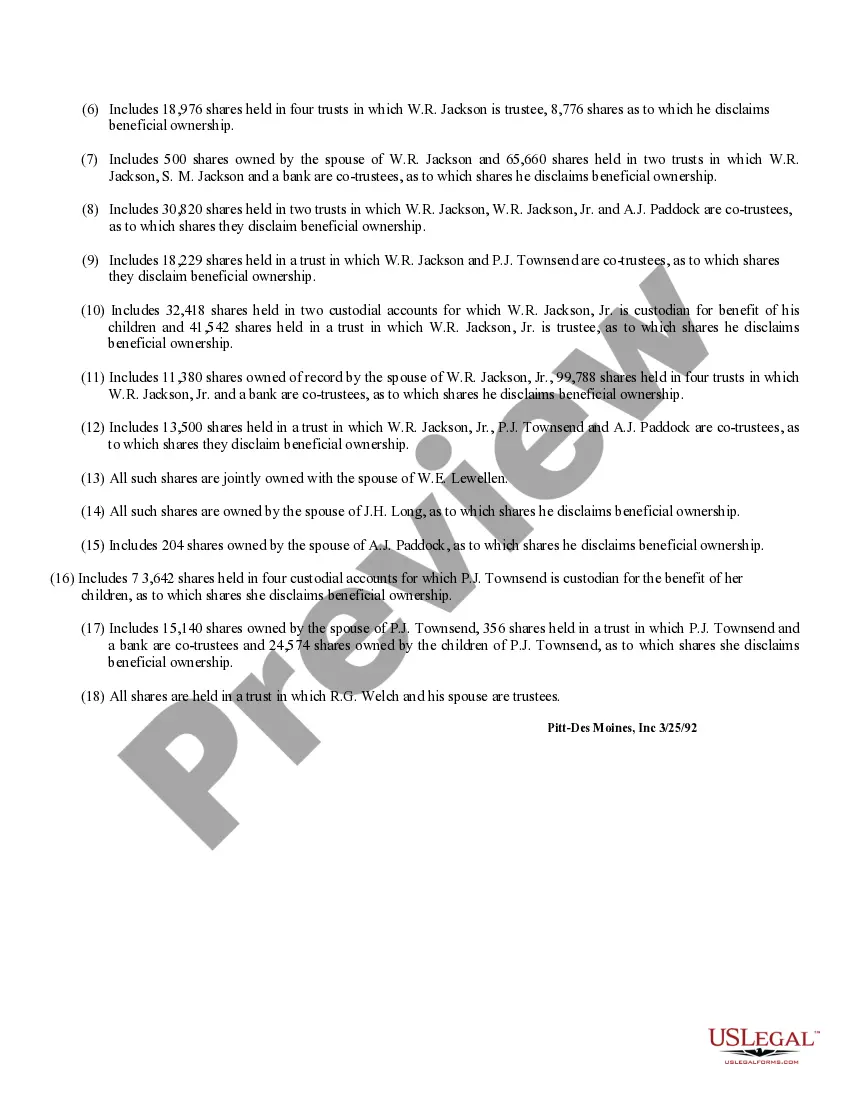
- Explanations of significant ownership conditions and disclaimers
When this form is needed
This form should be used when a company is required to report the ownership of its stock by directors, nominees, and officers. This can occur during annual disclosures, in response to regulatory requirements, or when there are changes in ownership stakes. It ensures compliance with securities laws and promotes transparency among investors and stakeholders.
Who needs this form
This form is intended for:
- Corporations and their management teams
- Corporate board members and nominees
- Officers of the company holding stock
- Legal teams overseeing corporate compliance
How to prepare this document
- Identify all individuals required to report their stock ownership.
- Gather detailed information on the amount of stock each individual holds.
- Clarify and categorize ownership as either sole or shared.
- Calculate the percentage of outstanding shares for each individual.
- Include any necessary disclaimers related to the ownership that should be noted.
Does this form need to be notarized?
This form does not typically require notarization unless specified by local law. Users should verify their specific state regulations to ensure compliance.
Get your form ready online
Our built-in tools help you complete, sign, share, and store your documents in one place.
Make edits, fill in missing information, and update formatting in US Legal Forms—just like you would in MS Word.
Download a copy, print it, send it by email, or mail it via USPS—whatever works best for your next step.
Sign and collect signatures with our SignNow integration. Send to multiple recipients, set reminders, and more. Go Premium to unlock E-Sign.
If this form requires notarization, complete it online through a secure video call—no need to meet a notary in person or wait for an appointment.
We protect your documents and personal data by following strict security and privacy standards.

Make edits, fill in missing information, and update formatting in US Legal Forms—just like you would in MS Word.

Download a copy, print it, send it by email, or mail it via USPS—whatever works best for your next step.

Sign and collect signatures with our SignNow integration. Send to multiple recipients, set reminders, and more. Go Premium to unlock E-Sign.

If this form requires notarization, complete it online through a secure video call—no need to meet a notary in person or wait for an appointment.

We protect your documents and personal data by following strict security and privacy standards.
Avoid these common issues
- Failing to update ownership information after changes.
- Not categorizing ownership correctly as sole or shared.
- Omitting disclaimers which clarify ownership conditions.
- Incorrectly calculating the percentage of outstanding shares.
Benefits of using this form online
- Convenient access to downloadable versions available anytime.
- Edit and customize the form to fit specific corporate needs.
- Reliable information drafted by licensed attorneys.
- Ensures compliance with legal requirements efficiently.
Looking for another form?









Form popularity
FAQ
'Security guard' is sometimes used to denote a watchperson who occupies a particular post or patrols a limit area but exercises little independent judgment. 'Security officer' may be used to denote a professional who has a wider range of duties and exercises more independent judgment.
'Security guard' is sometimes used to denote a watchperson who occupies a particular post or patrols a limit area but exercises little independent judgment. 'Security officer' may be used to denote a professional who has a wider range of duties and exercises more independent judgment.
This can be of one of two types a regular security officer licensure and a firearms licensure. While the eligibility for the first one generally varies from state to state, the typical requirements to obtain it are to be 18 or older; to pass a simple drug test, and to have no criminal record.
This can be of one of two types a regular security officer licensure and a firearms licensure. While the eligibility for the first one generally varies from state to state, the typical requirements to obtain it are to be 18 or older; to pass a simple drug test, and to have no criminal record.
Written and Verbal Communication. Following Complex Instructions. Interpersonal Skills. Knowledge of Security Operations and Procedure. Manage Multiple Tasks. Knowledge of Basic Security and Fire Inspection Procedures. Lifting. Surveillance Skills.
Inspect and patrol premises regularly. Monitor property entrance. Authorize entrance of people and vehicles. Report any suspicious behaviors and happenings. Secure all exits, doors and windows. Monitor surveillance cameras.
Secures premises and personnel by patrolling property; monitoring surveillance equipment; inspecting buildings, equipment, and access points; permitting entry. Obtains help by sounding alarms. Prevents losses and damage by reporting irregularities; informing violators of policy and procedures; restraining trespassers.
Secures premises and personnel by patrolling property; monitoring surveillance equipment; inspecting buildings, equipment, and access points; permitting entry. Obtains help by sounding alarms. Prevents losses and damage by reporting irregularities; informing violators of policy and procedures; restraining trespassers.