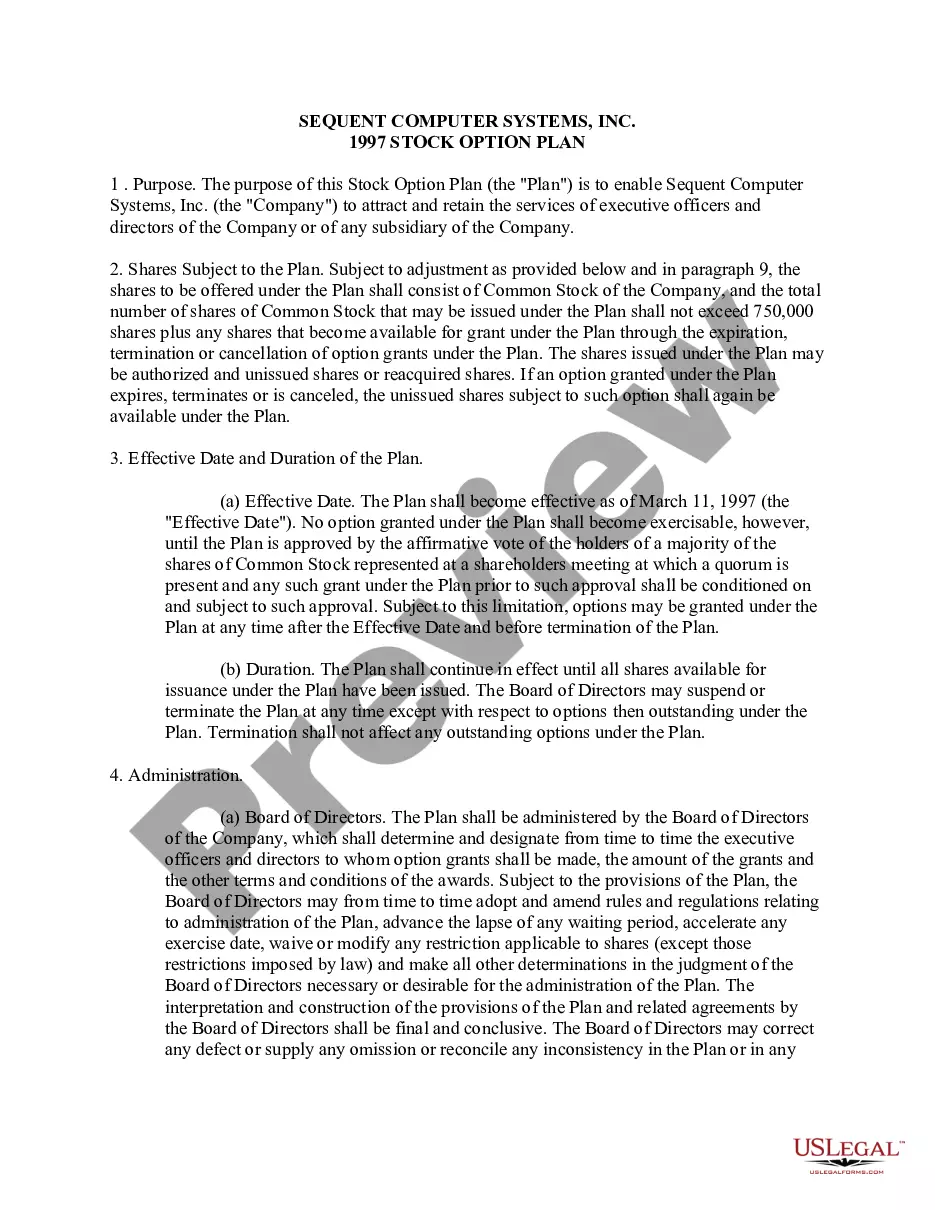
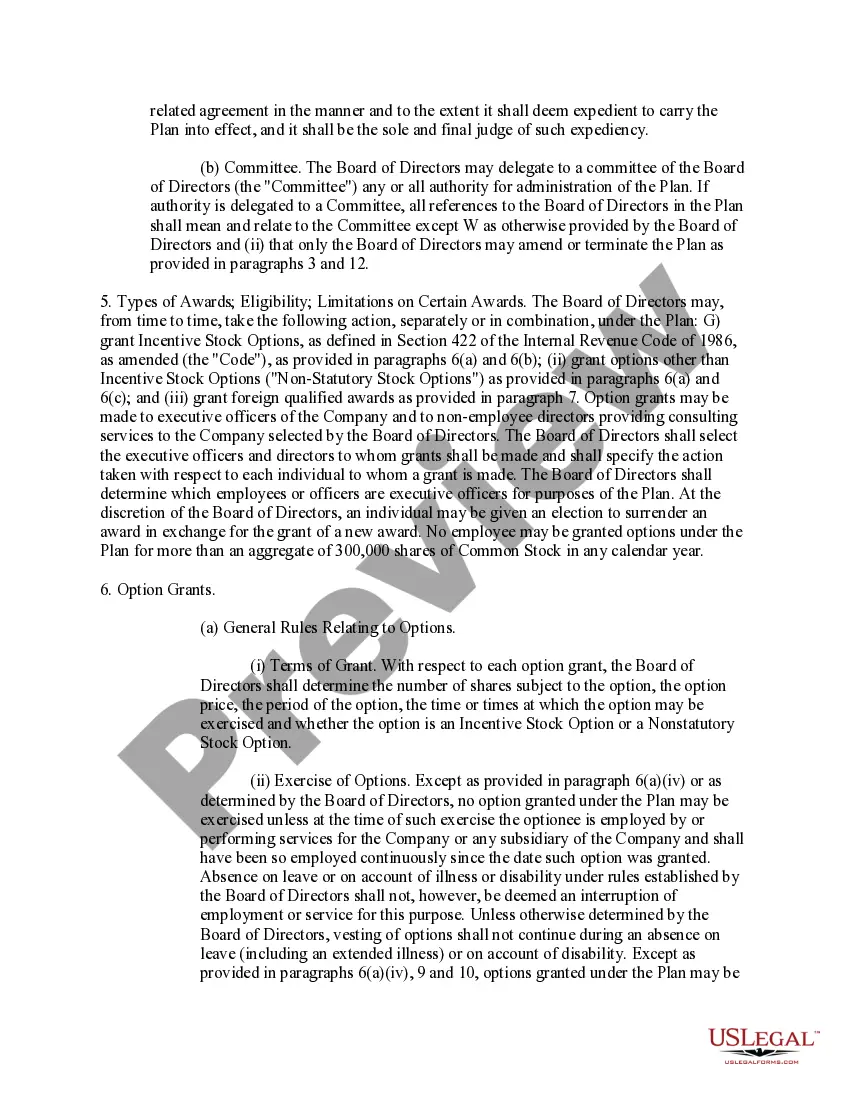
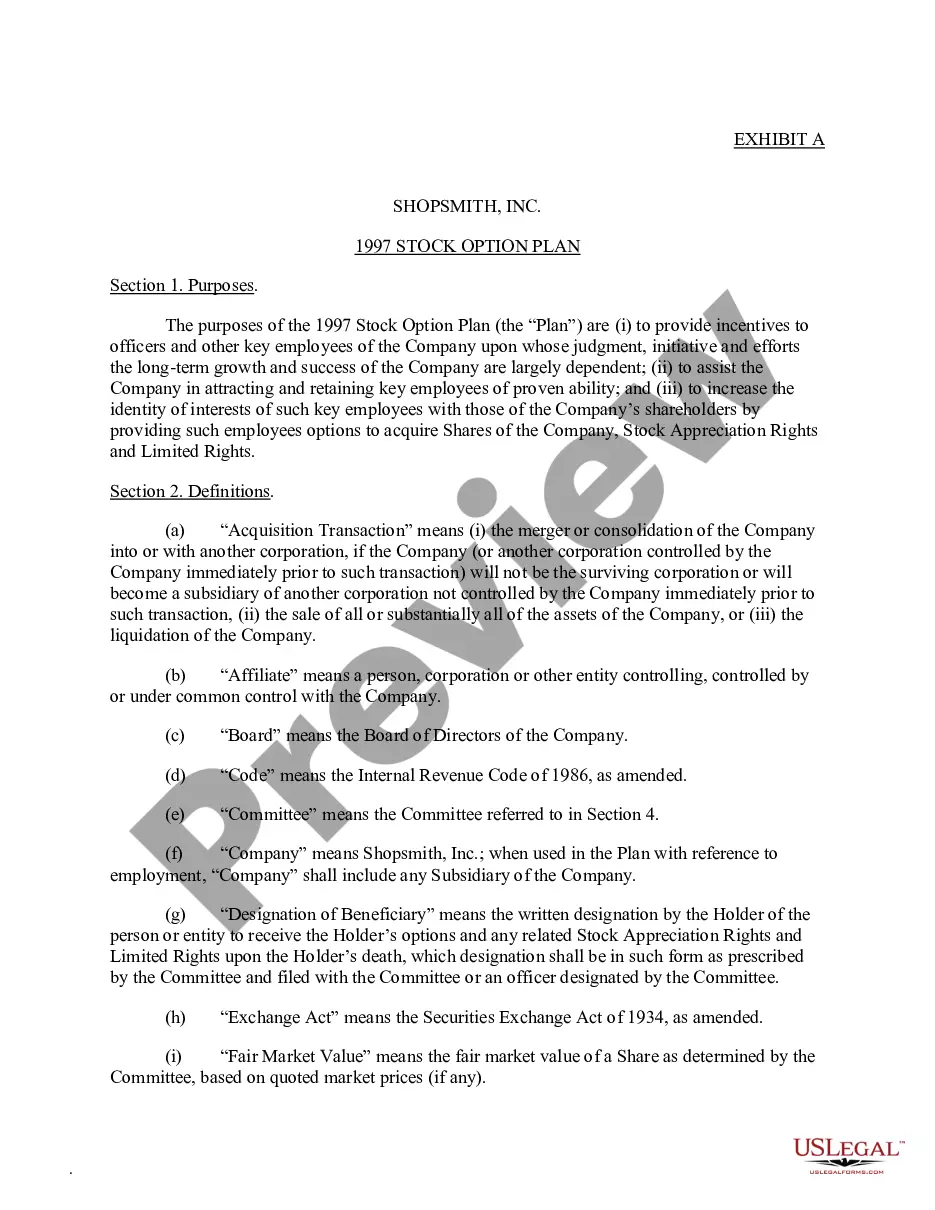
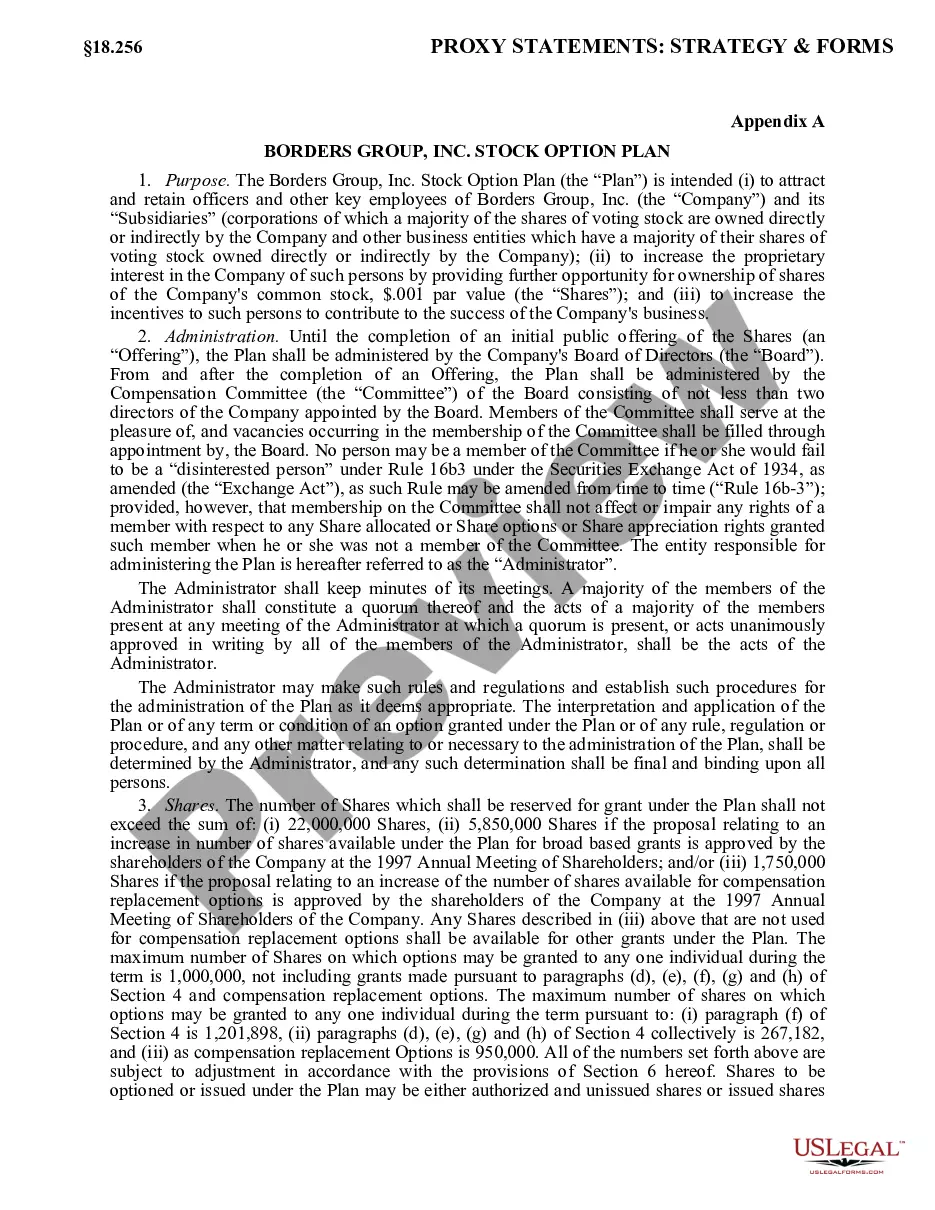
Stock Option Plan which provides for grant of Incentive Stock Options and Nonqualified Stock Options to executive officers
What is this form?
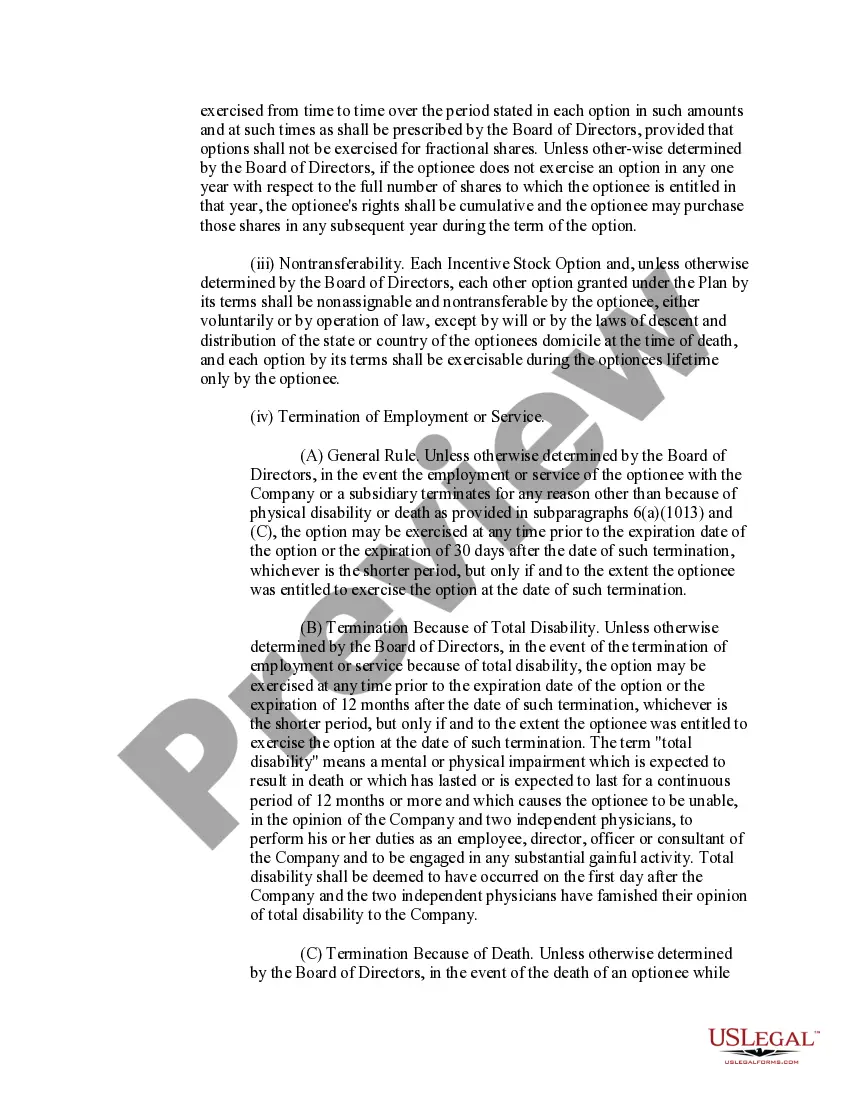
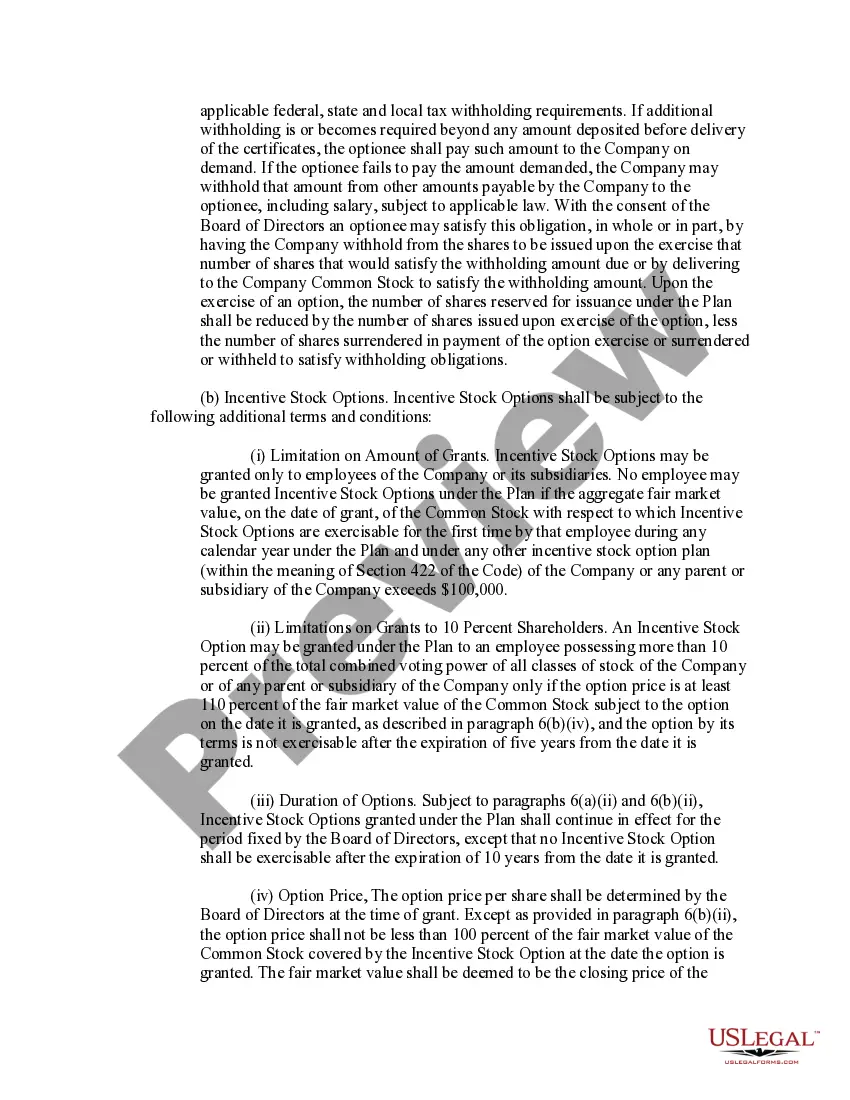
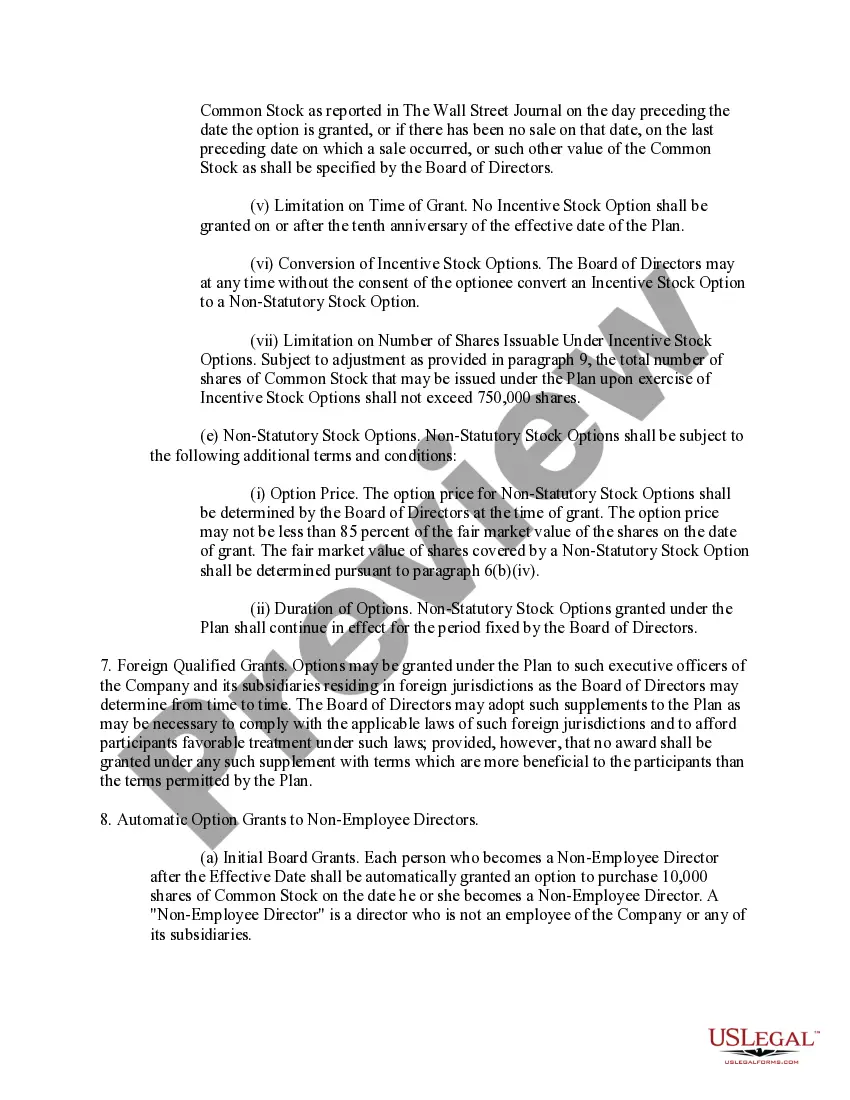
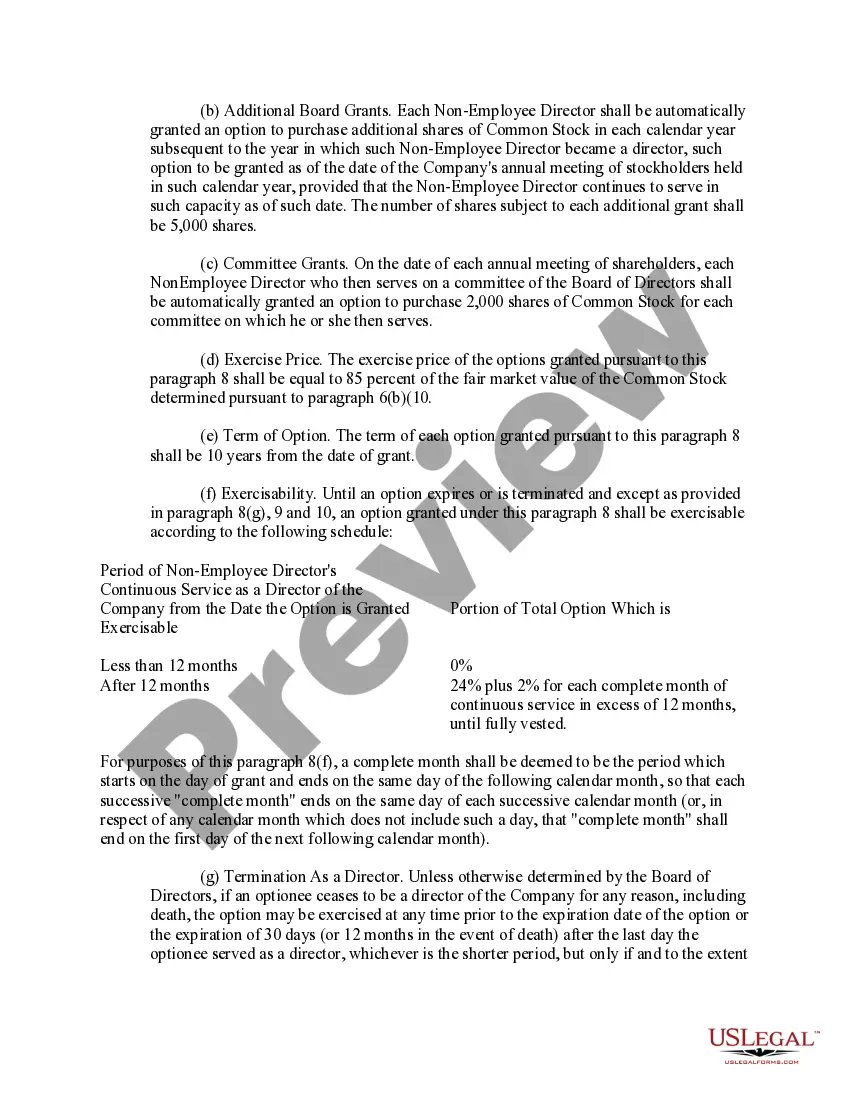
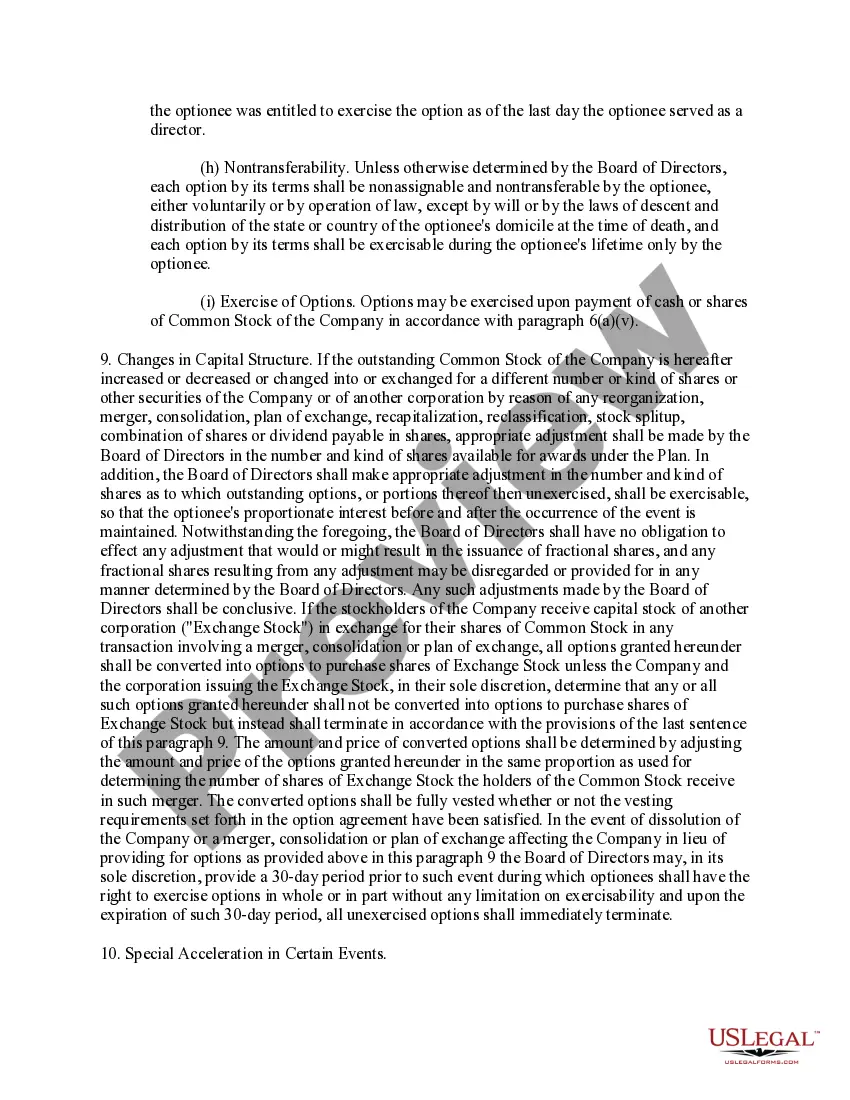
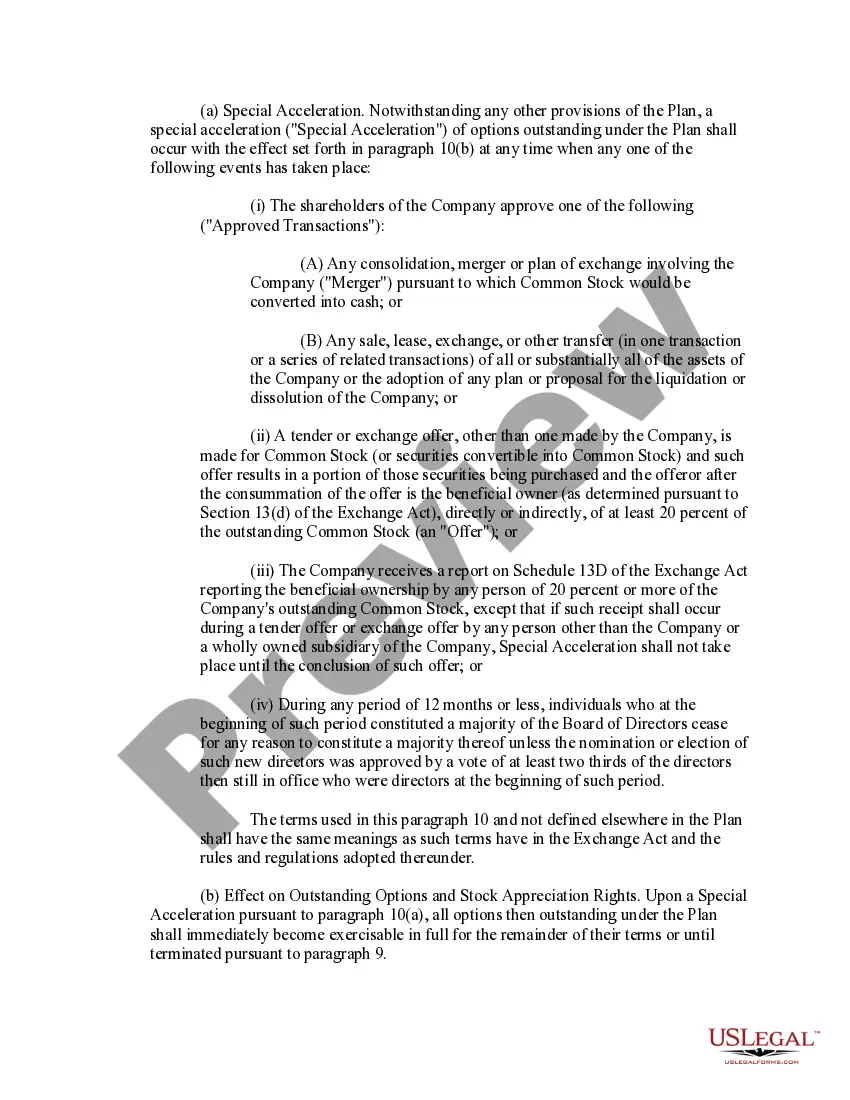
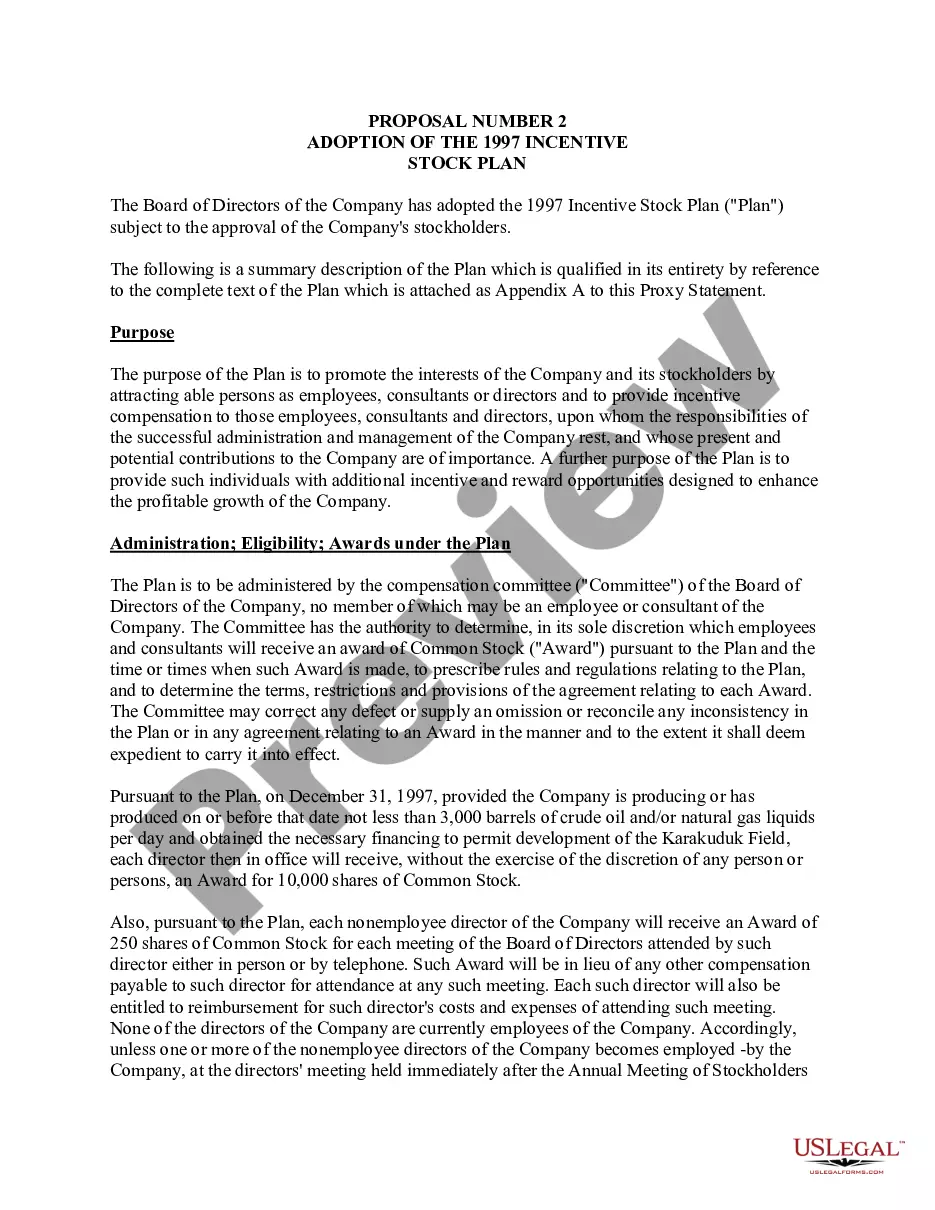
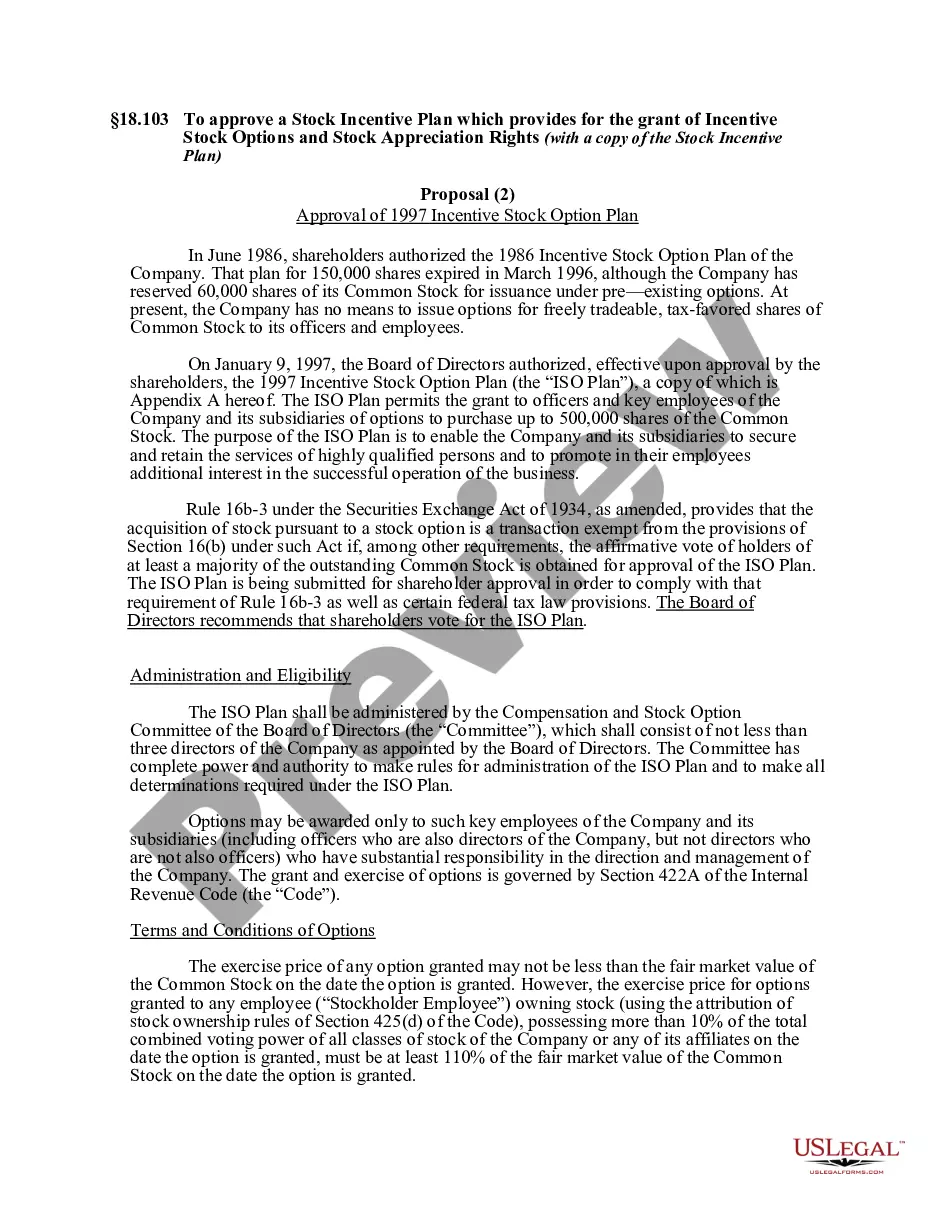
The Stock Option Plan is a legal document that outlines the framework for granting Incentive Stock Options and Nonqualified Stock Options to executive officers and outside directors of a corporation. This form is designed to help companies attract and retain talented individuals by offering stock options as part of their compensation package. Unlike standard employment contracts, this plan specifically focuses on the grant of stock options, ensuring compliance with tax regulations and corporate governance requirements.
Key components of this form
- Purpose of the plan - outlines the goal of attracting and retaining executive officers and directors.
- Shares subject to the plan - specifies the total number of shares that can be issued under the plan.
- Effective date and duration - details when the plan becomes active and how long it remains in effect.
- Types of awards - describes the different types of options that can be awarded, including Incentive and Nonqualified Stock Options.
- Administration - explains how the plan will be managed by the Board of Directors.
- Exercisability clauses - defines the conditions under which options can be exercised, including vesting schedules.



Common use cases
This form should be used by corporations looking to establish a stock option plan for their executive officers and outside directors. It is ideal for situations where a company wishes to incentivize its leaders and align their interests with shareholders by granting them equity in the company. Additionally, this form is useful when adapting to specific legal requirements for stock options in various jurisdictions.
Who needs this form
- Corporations intending to implement a compensation package that includes stock options.
- Human resources departments tasked with designing and managing executive compensation plans.
- Board members involved in corporate governance and compliance regarding stock options.
- Legal professionals advising businesses on employee compensation and incentive structures.
How to prepare this document
- Identify the corporation's name and include the effective date of the stock option plan.
- Specify the total number of shares that can be issued under the plan.
- Detail the types of stock options being granted and the eligibility criteria for executive officers and directors.
- Establish the administration framework, including who will manage the plan and make awards.
- Include clauses regarding the exercisability of the options, such as vesting schedules and conditions of termination.
Notarization requirements for this form
This form does not typically require notarization unless specified by local law. Always verify specific state requirements to ensure compliance.
Get your form ready online
Our built-in tools help you complete, sign, share, and store your documents in one place.
Make edits, fill in missing information, and update formatting in US Legal Forms—just like you would in MS Word.
Download a copy, print it, send it by email, or mail it via USPS—whatever works best for your next step.
Sign and collect signatures with our SignNow integration. Send to multiple recipients, set reminders, and more. Go Premium to unlock E-Sign.
If this form requires notarization, complete it online through a secure video call—no need to meet a notary in person or wait for an appointment.
We protect your documents and personal data by following strict security and privacy standards.

Make edits, fill in missing information, and update formatting in US Legal Forms—just like you would in MS Word.

Download a copy, print it, send it by email, or mail it via USPS—whatever works best for your next step.

Sign and collect signatures with our SignNow integration. Send to multiple recipients, set reminders, and more. Go Premium to unlock E-Sign.

If this form requires notarization, complete it online through a secure video call—no need to meet a notary in person or wait for an appointment.

We protect your documents and personal data by following strict security and privacy standards.
Avoid these common issues
- Failing to specify the total shares available, leading to potential over-issuance.
- Neglecting to detail vesting schedules, which can create confusion among option holders.
- Omitting compliance with state-specific requirements, risking legal challenges.
Advantages of online completion
- Convenience of immediate access and usage without the need for physical paperwork.
- Editability allows customization to fit the specific needs of your corporation.
- Reliability in ensuring compliance with legal standards, reducing the risk of errors.
Looking for another form?








Form popularity
FAQ
Depending upon the tax treatment of stock options, they can be classified into qualified and non-qualified stock options. Qualified stock options are also called Incentive Stock Options (ISO). Nonqualified: Employees generally don't owe tax when these options are granted.
What Is a Non-Qualified Stock Option (NSO)? A non-qualified stock option (NSO) is a type of employee stock option wherein you pay ordinary income tax on the difference between the grant price and the price at which you exercise the option.
Employers must report the income from a 2020 exercise of Non-qualified Stock Options in Box 12 of the 2020 Form W-2 using the code V. The compensation element is already included in Boxes 1, 3 (if applicable) and 5, but is also reported separately in Box 12 to clearly indicate the amount of compensation arising from
Once you exercise your non-qualified stock option, the difference between the stock price and the strike price is taxed as ordinary income. This income is usually reported on your paystub. There are no tax consequences when you first receive your non-qualified stock option, only when you exercise your option.
Incentive stock options, or ISOs, are options that are entitled to potentially favorable federal tax treatment. Stock options that are not ISOs are usually referred to as nonqualified stock options or NQOs.These do not qualify for special tax treatment.
An incentive stock option (ISO) is a corporate benefit that gives an employee the right to buy shares of company stock at a discounted price with the added benefit of possible tax breaks on the profit. The profit on qualified ISOs is usually taxed at the capital gains rate, not the higher rate for ordinary income.
Incentive stock options, or ISOs, are options that are entitled to potentially favorable federal tax treatment. Stock options that are not ISOs are usually referred to as nonqualified stock options or NQOs.These do not qualify for special tax treatment.
The first step in deciding when to exercise is to look at which NSOs are vested and eligible to exercise. Also, you should not exercise if the current stock price is lower than your option price, (under water).
Incentive stock options (ISOs) can only be granted to employees. Non-qualified stock options (NSOs) can be granted to anyone, including employees, consultants and directors.