Insurance Agents Stock option plan
What is this form?
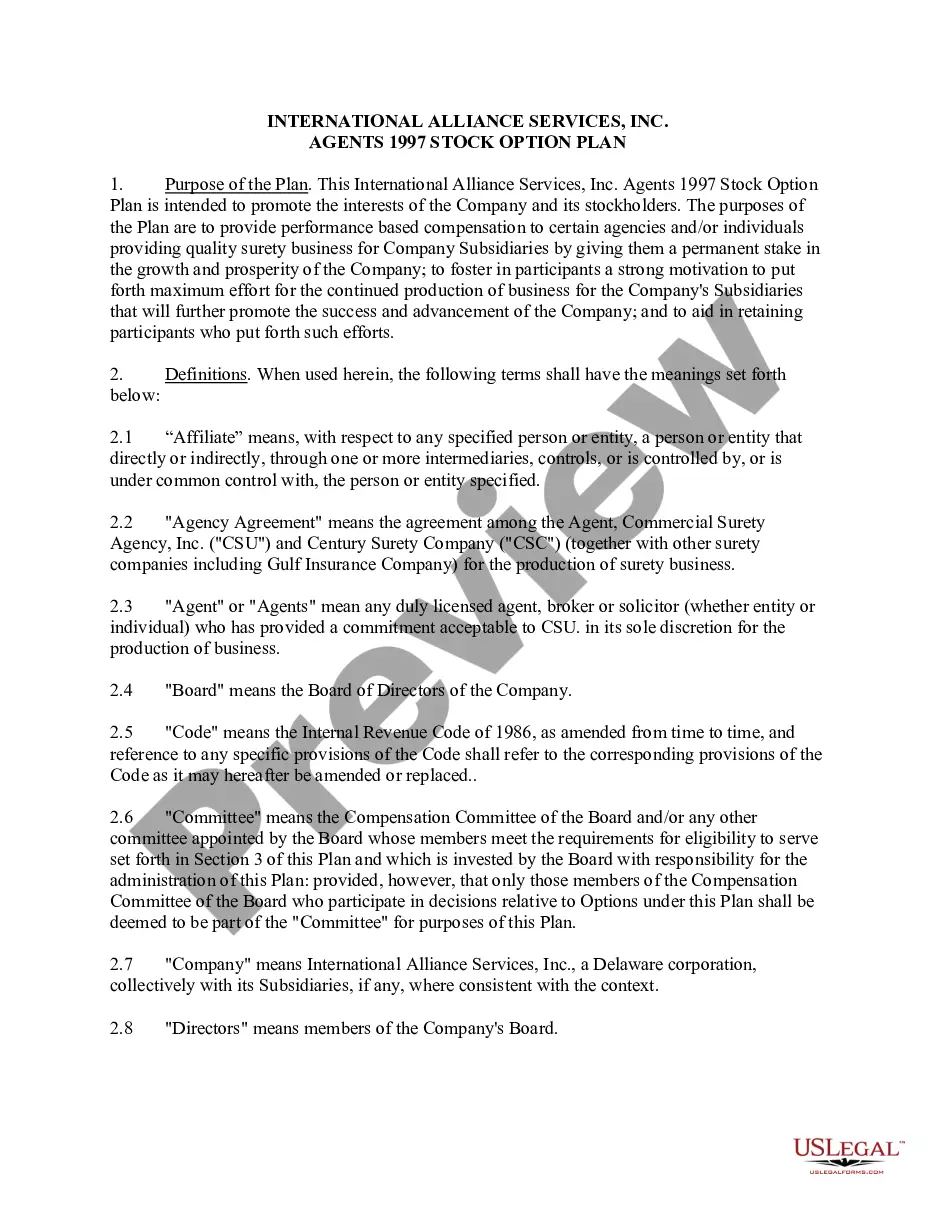
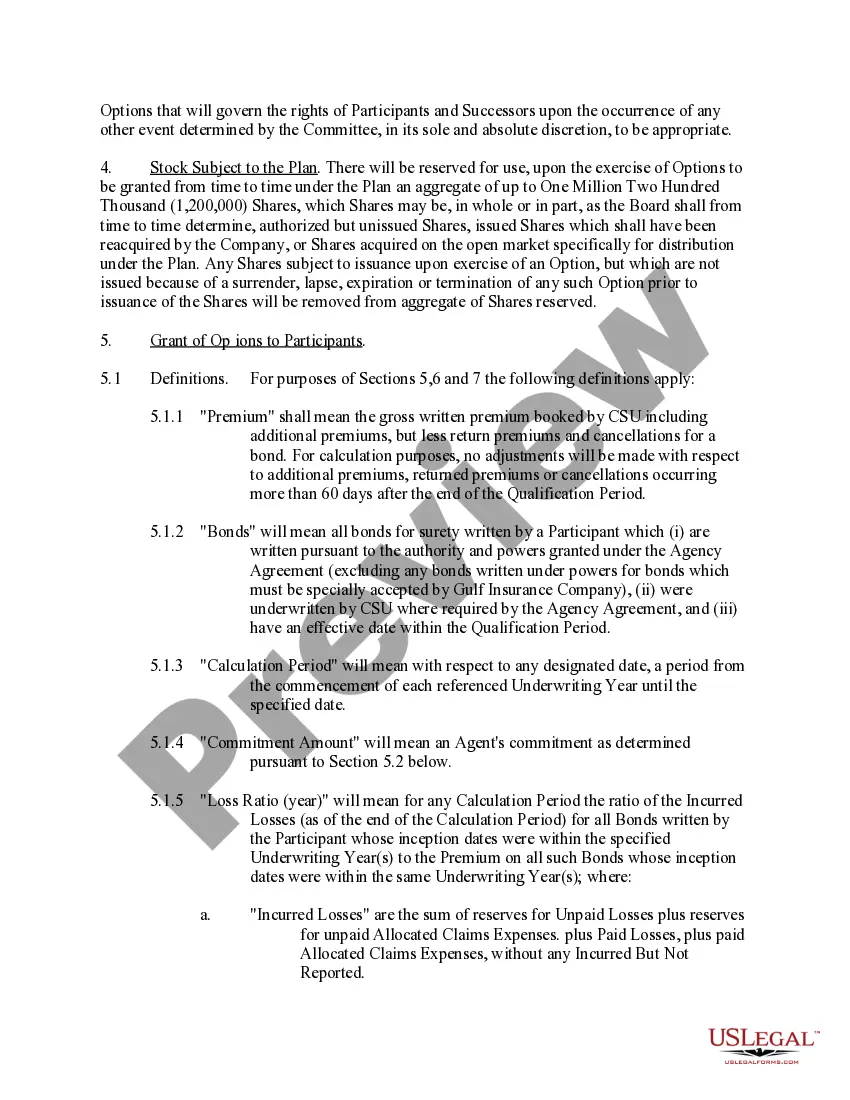
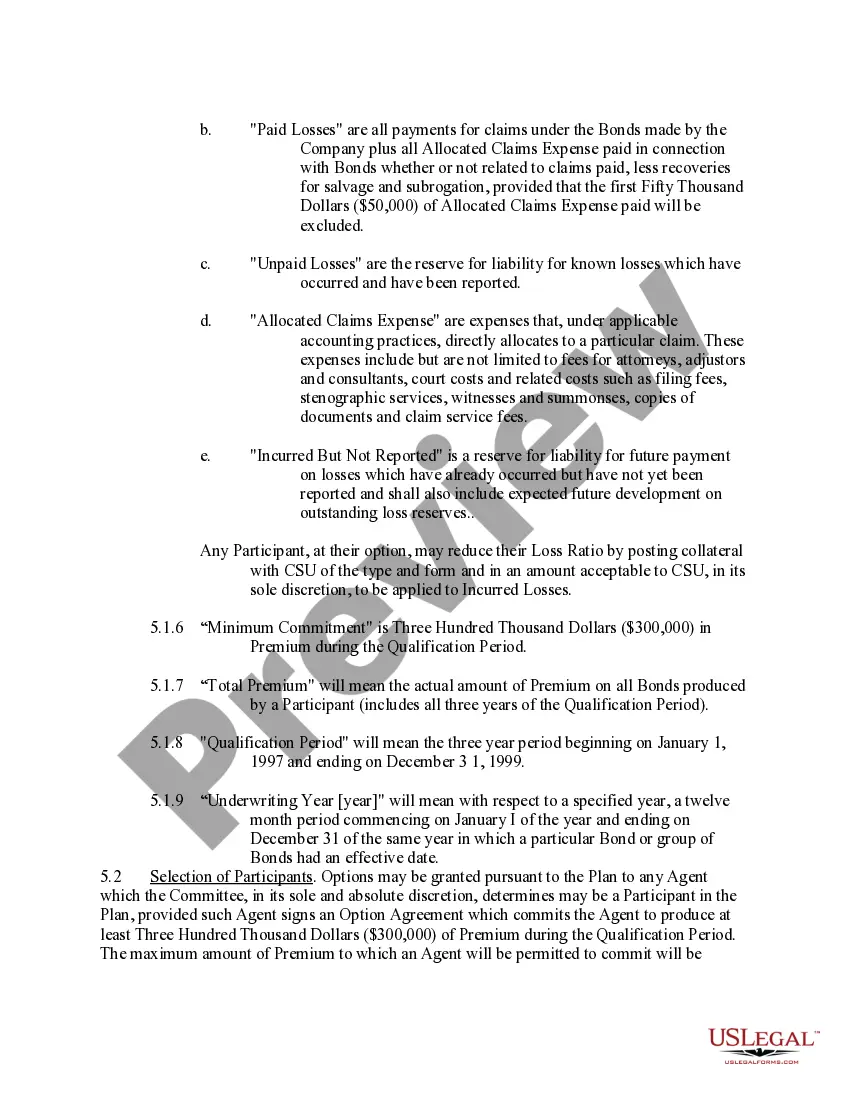
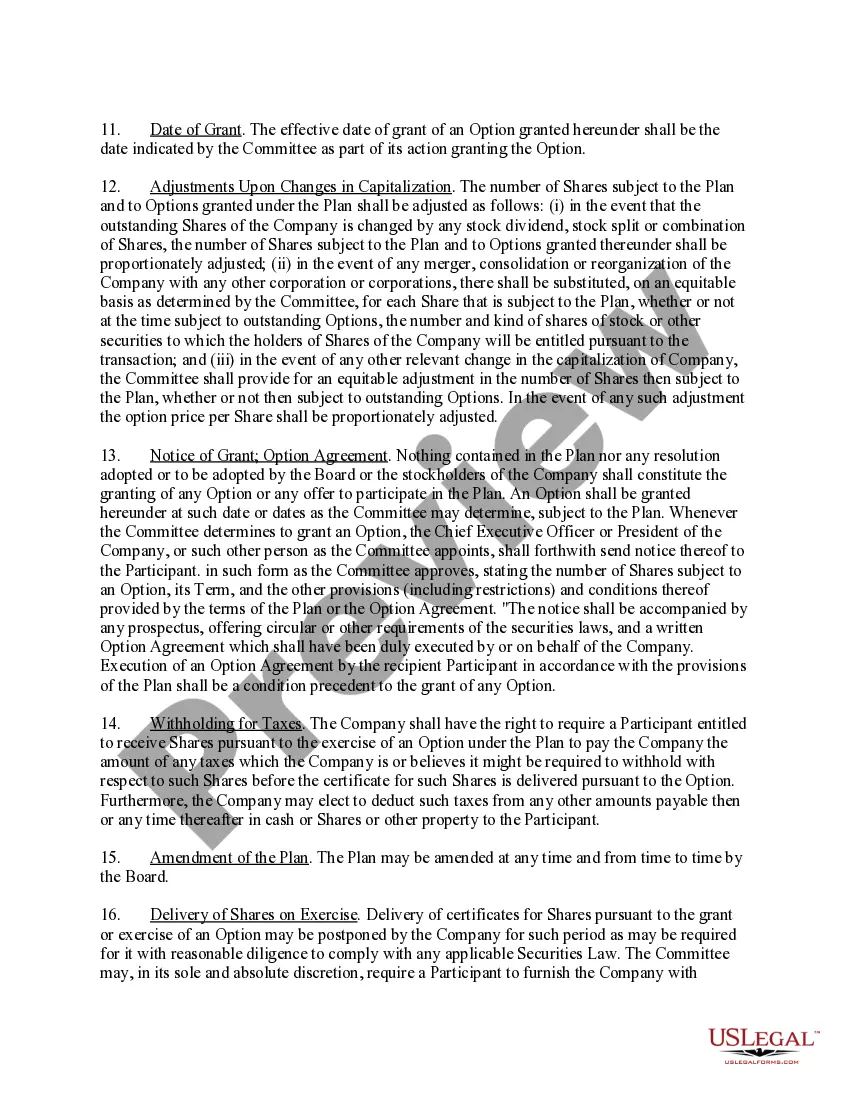
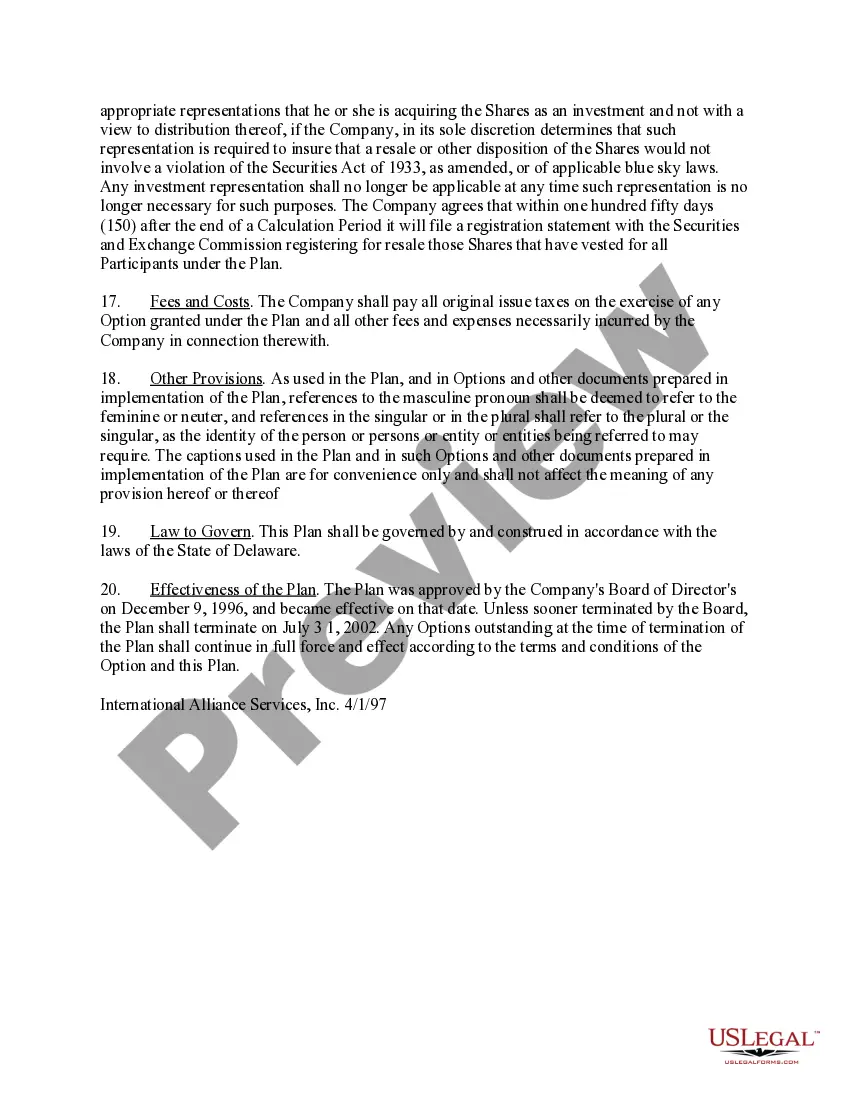
The Insurance Agents Stock Option Plan is a legal document used to grant non-qualified stock options to insurance agents who meet specified performance criteria. This form aims to incentivize agents to produce a minimum of $300,000 in premiums over a designated three-year Qualification Period. Unlike other stock option plans, this particular plan focuses on performance-based compensation tied to premium commitments and loss ratios, helping align the interests of agents with the financial goals of the company.
Form components explained
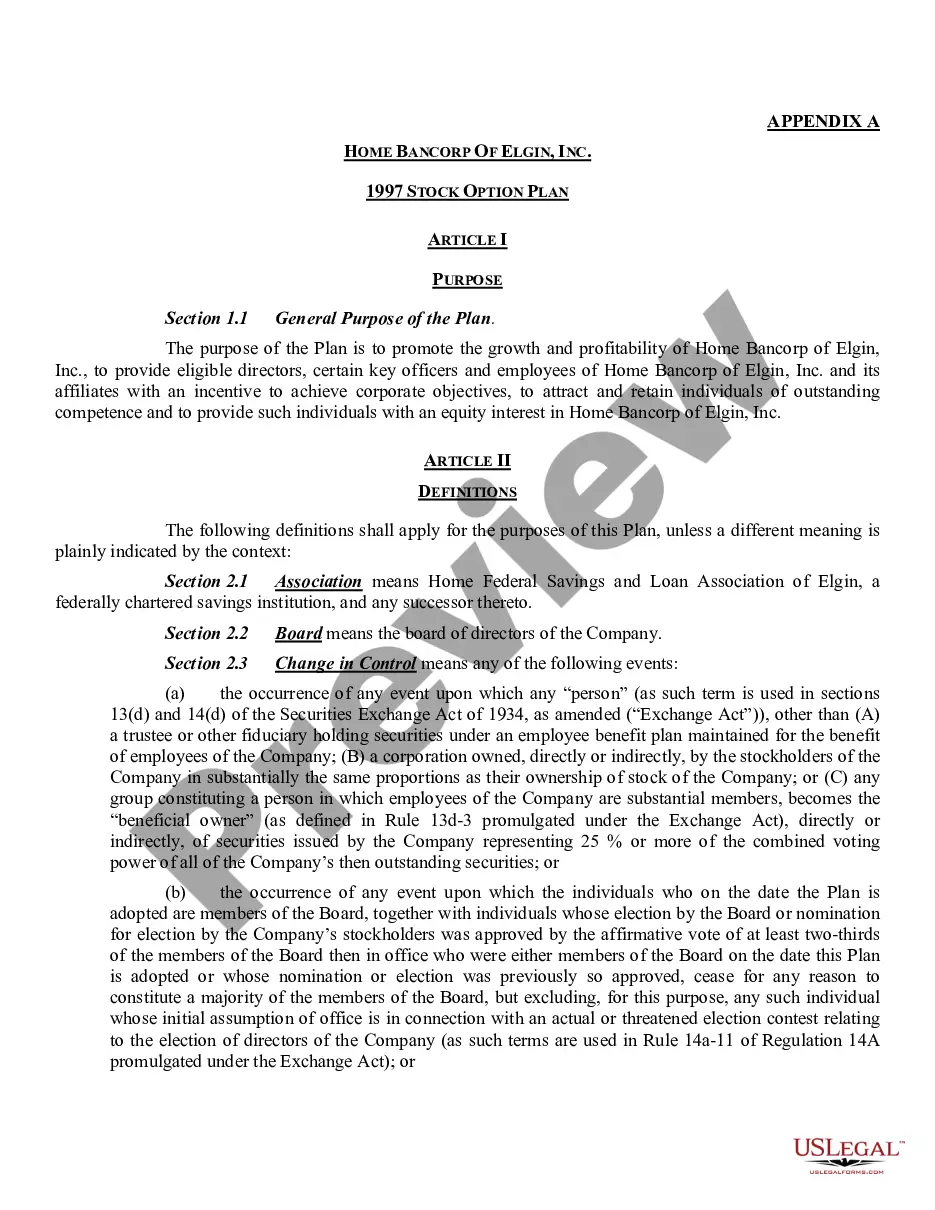
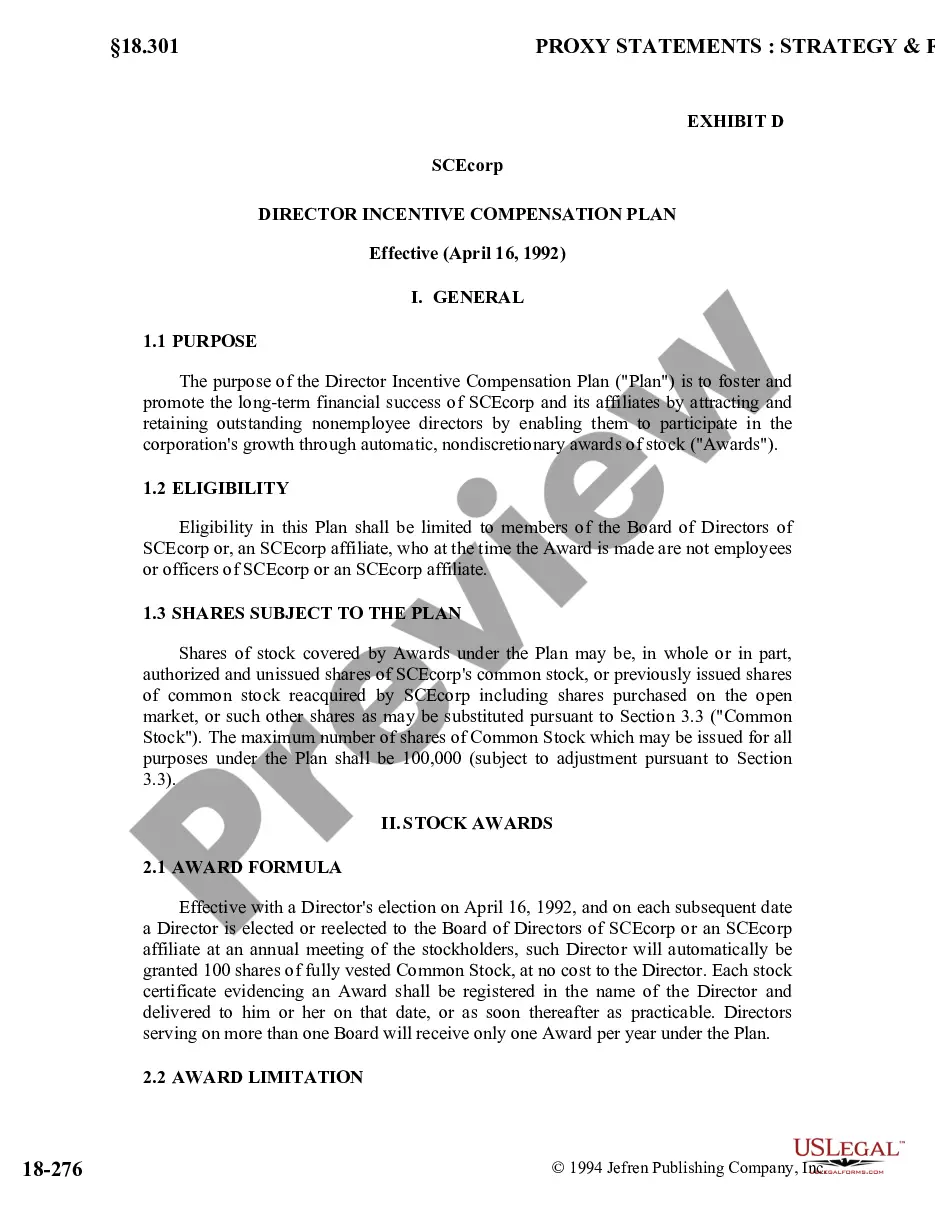
- Purpose of the Plan: Outlines the intended goals of promoting growth and retaining exceptional agents.
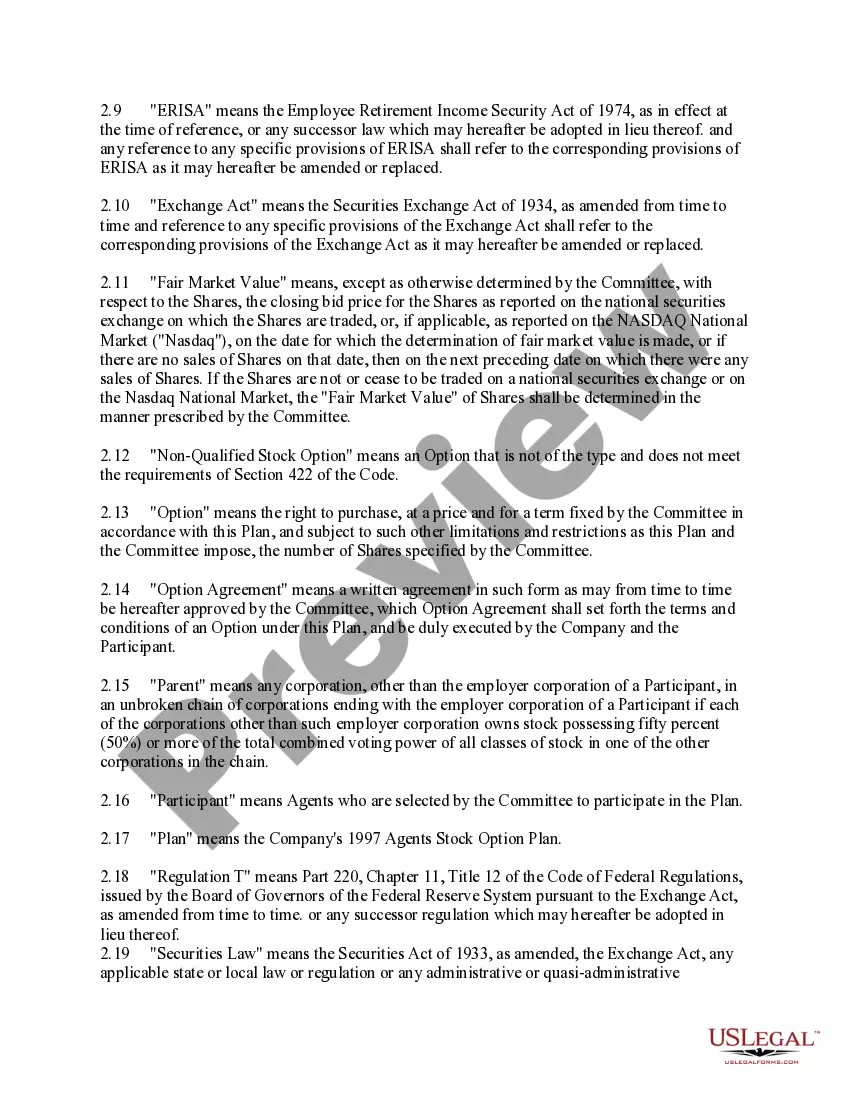
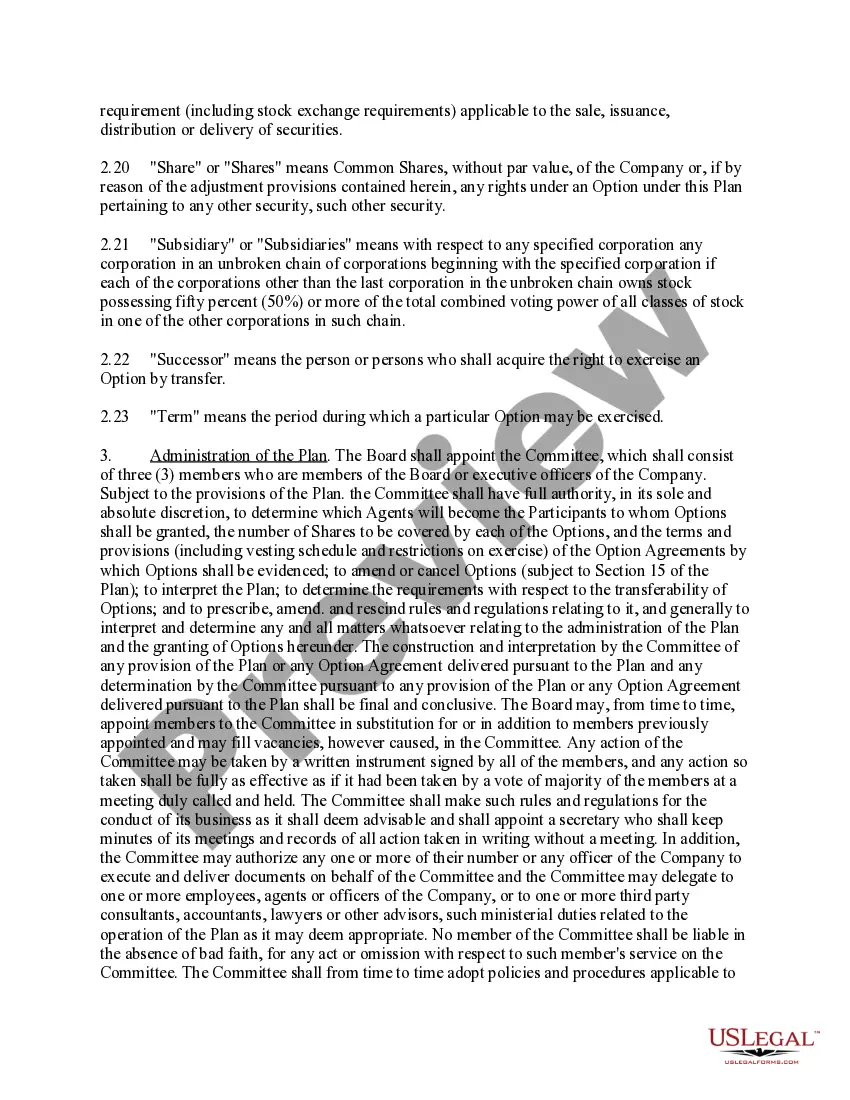
- Definitions: Clarifies key terms used in the plan such as "Agency Agreement," "Fair Market Value," and "Participant."
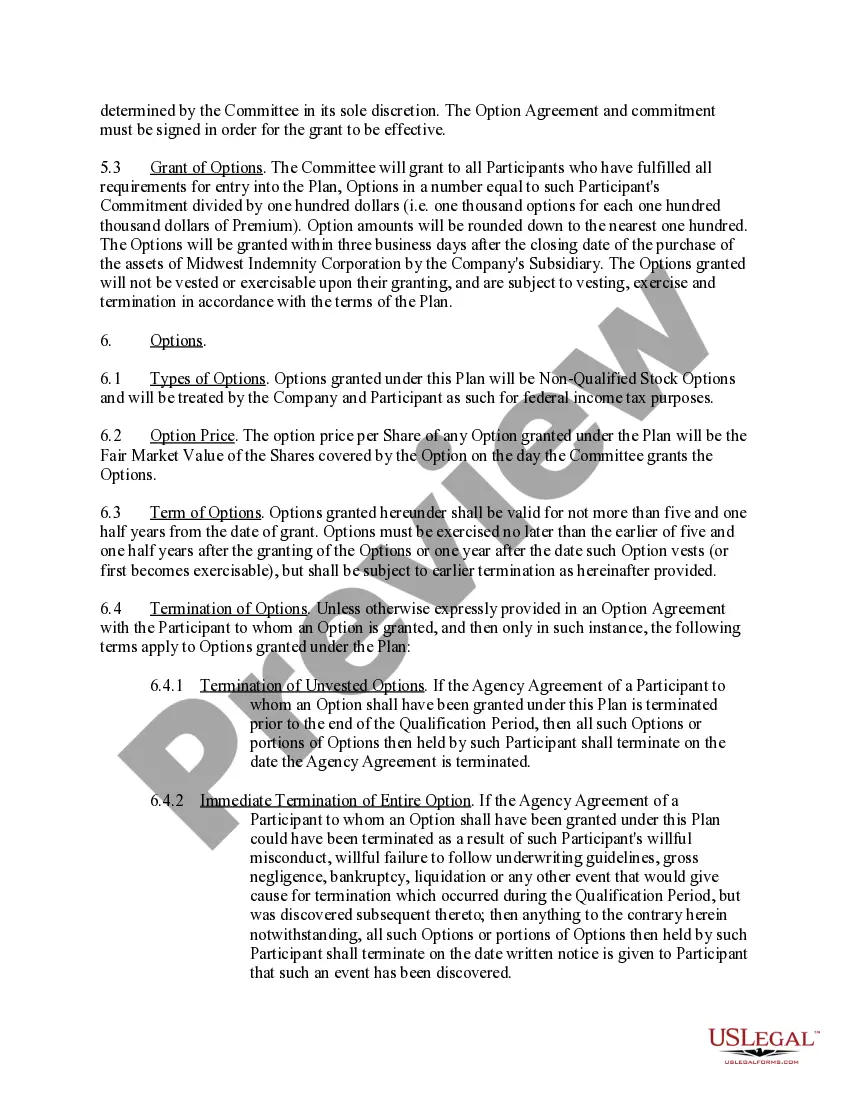
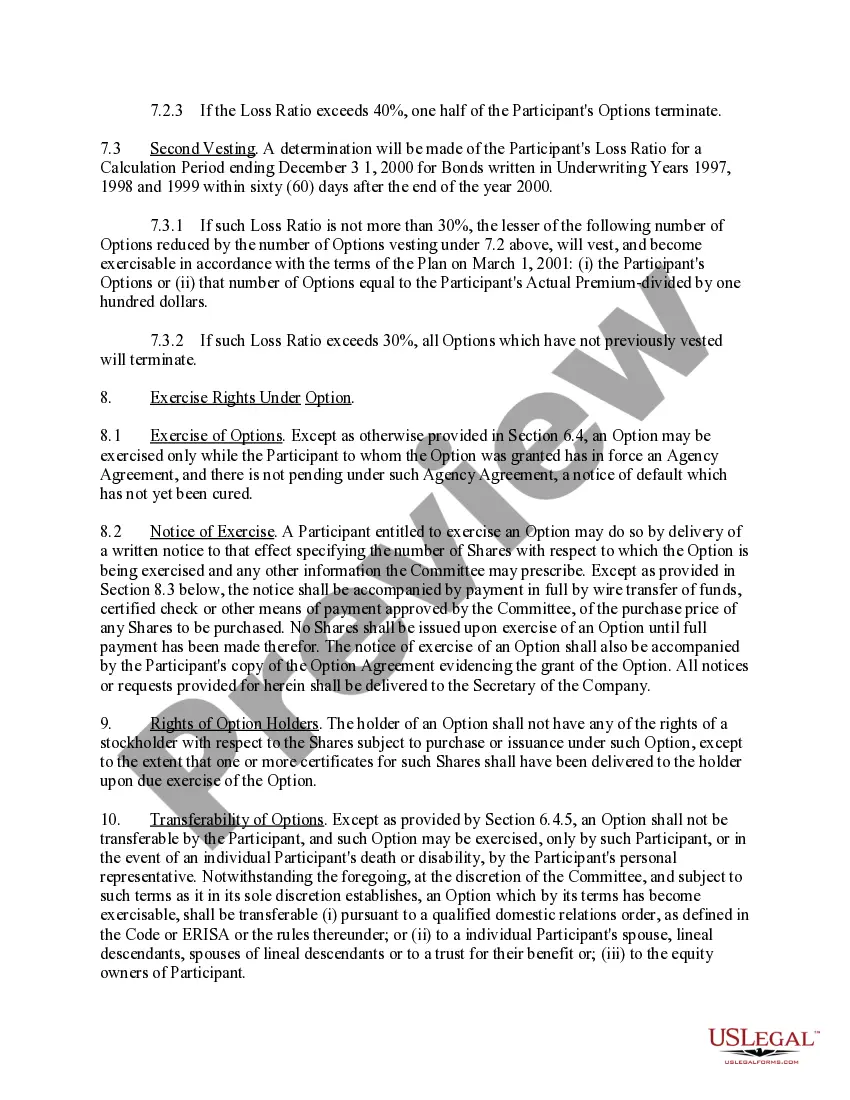
- Grant of Options: Details how options are awarded based on performance metrics and commitments.
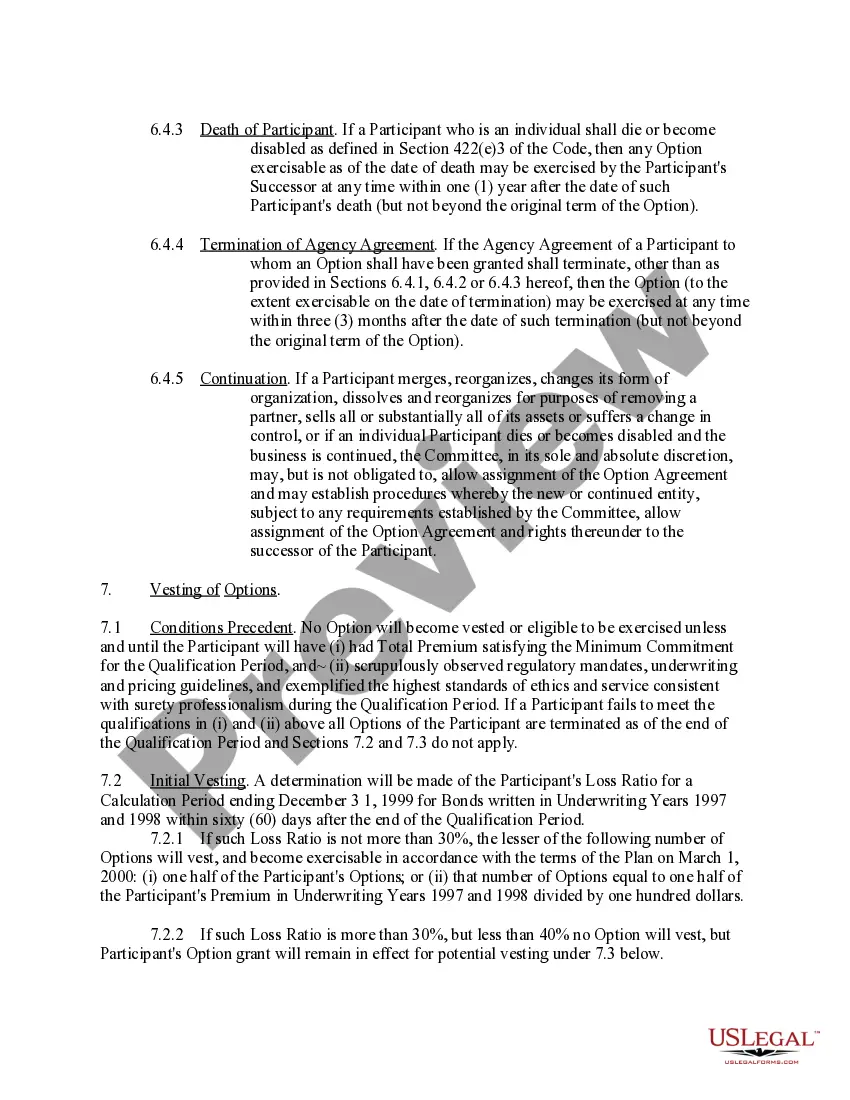
- Vesting of Options: Specifies when options become exercisable based on performance during the Qualification Period.
- Termination Clauses: Outlines conditions under which options may terminate, such as the termination of the Agency Agreement.


When to use this document
This form should be used by companies wishing to implement a stock option plan for their insurance agents. It is particularly relevant when the company seeks to motivate agents to achieve specific premium production targets over a defined period. Additionally, if a company needs to retain high-performing agents and ensure their interests are aligned with the company's long-term goals, this form serves as a beneficial tool.
Intended users of this form
- Insurance companies looking to incentivize their agents.
- Insurance agents who are eligible participants based on their premium production commitments.
- Business professionals involved in the administration of employee stock options.
How to complete this form
- Identify the participating agents and ensure they meet the minimum premium commitment criteria.
- Complete the Grant of Options section by specifying the number of shares granted based on the agentâs premium commitment.
- Include all necessary definitions to clarify terms related to the Agreement.
- Ensure the Participant signs the Option Agreement confirming their acceptance of the terms.
- Establish a clear vesting schedule based on the performance metrics required during the Qualification Period.
Does this form need to be notarized?
This form does not typically require notarization unless specified by local law. It is advisable to consult with a legal professional to determine if notarization is necessary based on your jurisdiction.
Get your form ready online
Our built-in tools help you complete, sign, share, and store your documents in one place.
Make edits, fill in missing information, and update formatting in US Legal Forms—just like you would in MS Word.
Download a copy, print it, send it by email, or mail it via USPS—whatever works best for your next step.
Sign and collect signatures with our SignNow integration. Send to multiple recipients, set reminders, and more. Go Premium to unlock E-Sign.
If this form requires notarization, complete it online through a secure video call—no need to meet a notary in person or wait for an appointment.
We protect your documents and personal data by following strict security and privacy standards.

Make edits, fill in missing information, and update formatting in US Legal Forms—just like you would in MS Word.

Download a copy, print it, send it by email, or mail it via USPS—whatever works best for your next step.

Sign and collect signatures with our SignNow integration. Send to multiple recipients, set reminders, and more. Go Premium to unlock E-Sign.

If this form requires notarization, complete it online through a secure video call—no need to meet a notary in person or wait for an appointment.

We protect your documents and personal data by following strict security and privacy standards.
Avoid these common issues
- Failing to accurately calculate the number of shares based on the agent's premium commitment.
- Not obtaining a signed Option Agreement from eligible participants before granting options.
- Overlooking the vesting criteria which may lead to termination of options if not met.
Benefits of completing this form online
- Convenience of digital access allows for easy downloading and customization.
- Quick completion without the need for in-person meetings or lengthy processes.
- Reliability as the forms are drafted by licensed attorneys ensuring compliance with legal standards.
Legal use & context
- This plan must comply with federal and state securities laws regarding stock options.
- It serves as an enforceable contract between the company and its agents once both parties have agreed and signed.
- Provisions in the plan dictate the conditions under which options can be exercised or forfeited.
Key takeaways
- The Insurance Agents Stock Option Plan incentivizes agents to meet premium production targets.
- Clear definitions and performance metrics are critical components of the plan.
- Proper execution of the form ensures enforceability and compliance with applicable laws.
Key terms explained
- Non-Qualified Stock Option: A stock option that does not adhere to specific regulatory requirements but allows for certain flexibility in terms of issuance.
- Vesting: The process by which an employee earns the right to receive benefits over time.
- Qualification Period: The designated time frame during which specific performance metrics must be met.
Looking for another form?

Form popularity
FAQ
An employee stock option is the right given to you by your employer to buy ("exercise") a certain number of shares of company stock at a pre-set price (the "grant," "strike" or "exercise" price) over a certain period of time (the "exercise period").It can be lower or higher than that, depending on the type of option.
In practice, ESOP participants are actually better off by a considerable margin in terms of retirement assets. Moreover, by their design, ESOPs are particularly better for lower income and younger employees than typical 401(k) plans.
Develop your philosophy. Your stock option plan is an expression of your company philosophy. Paper it. Adopt your stock plan and option agreements and get board and stockholder approval. Make it official. Work with your lawyers to obtain all relevant state permits for your option plan.
If investors fail to consider this dilution, then stock prices can be inflated. Employee options give their owners the right to buy shares at a set price anytime over a given period.The employee could exercise the right to buy the shares for $25, then immediately sell them on the open market for $100.
What Does It Mean to Exercise a Stock Option? Exercising a stock option means purchasing the shares of stock per the stock option agreement. The benefit of the option to the option holder comes when the grant price is lower than the market value of the stock at the time the option is exercised.
With an employee stock option plan, you are offered the right to buy a specific number of shares of company stock, at a specified price called the grant price (also called the exercise price or strike price), within a specified number of years.
RSUs are generally always worth something versus stock options, which can expire worthless if the stock price is below the strike price. Additionally, with RSUs you don't have to come up with the cash to exercise the options if your company doesn't offer some sort of cashless exercise option.
Stock options are a form of compensation. Companies can grant them to employees, contractors, consultants and investors. These options, which are contracts, give an employee the right to buy or exercise a set number of shares of the company stock at a pre-set price, also known as the grant price.
Employee stock options (ESOs) are a type of equity compensation granted by companies to their employees and executives.When a stock's price rises above the call option exercise price, call options are exercised and the holder obtains the company's stock at a discount.