Form Indemnification Agreement by Holiday RV Superstores
Understanding this form
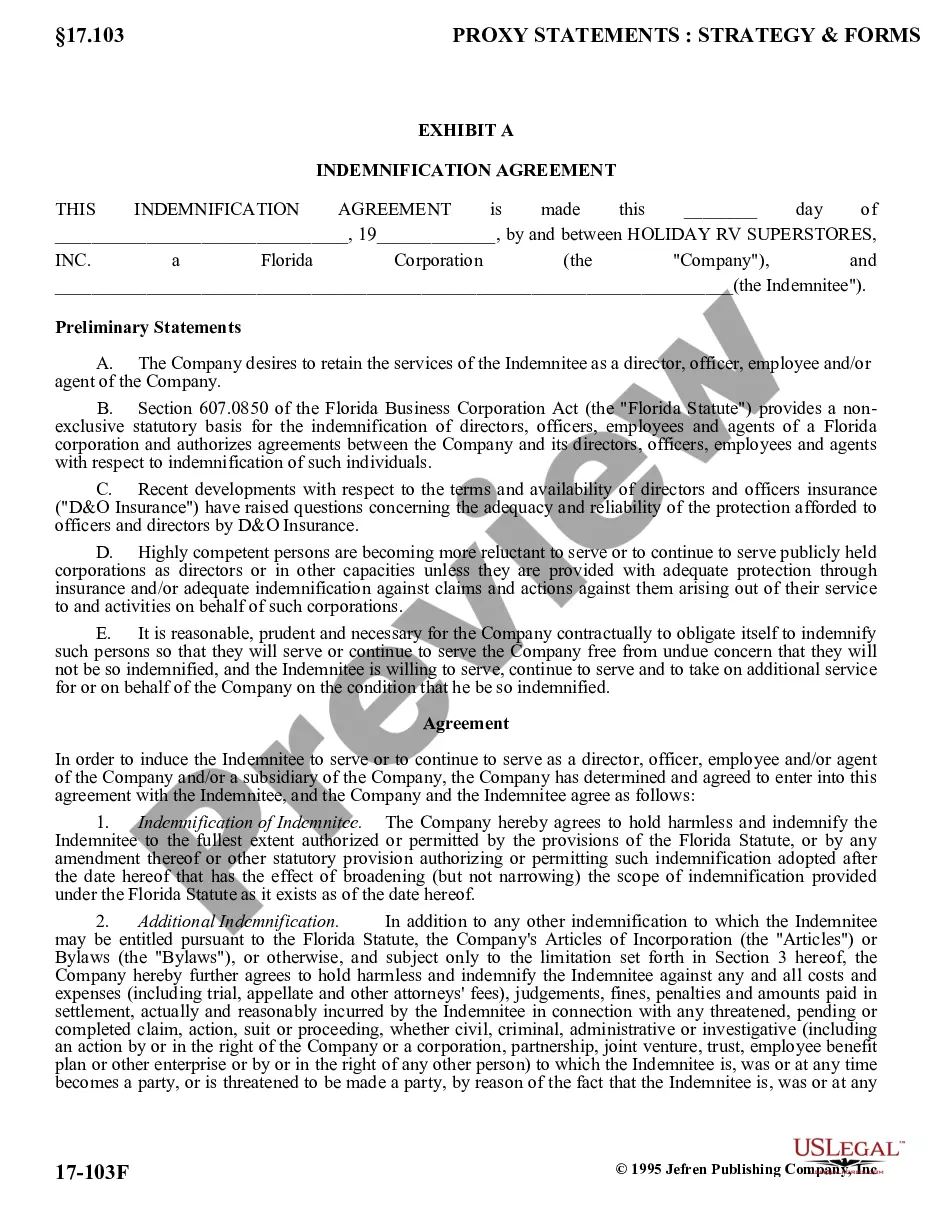
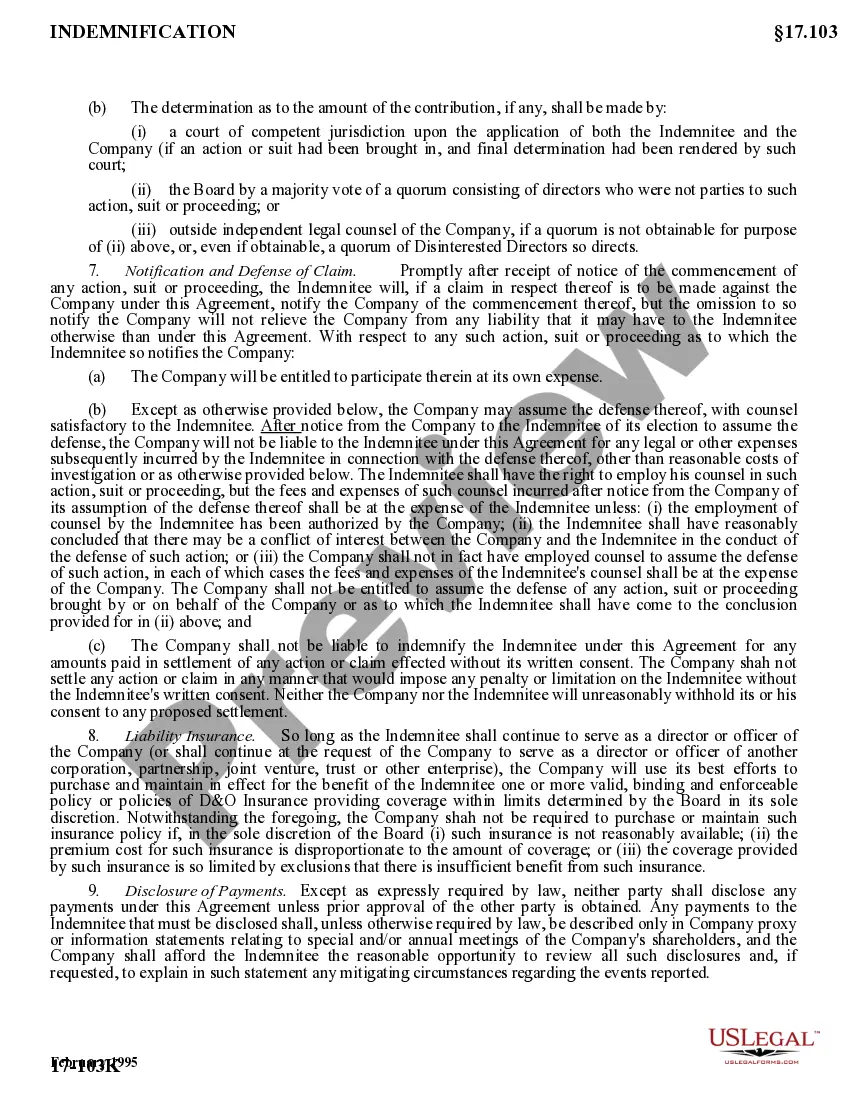
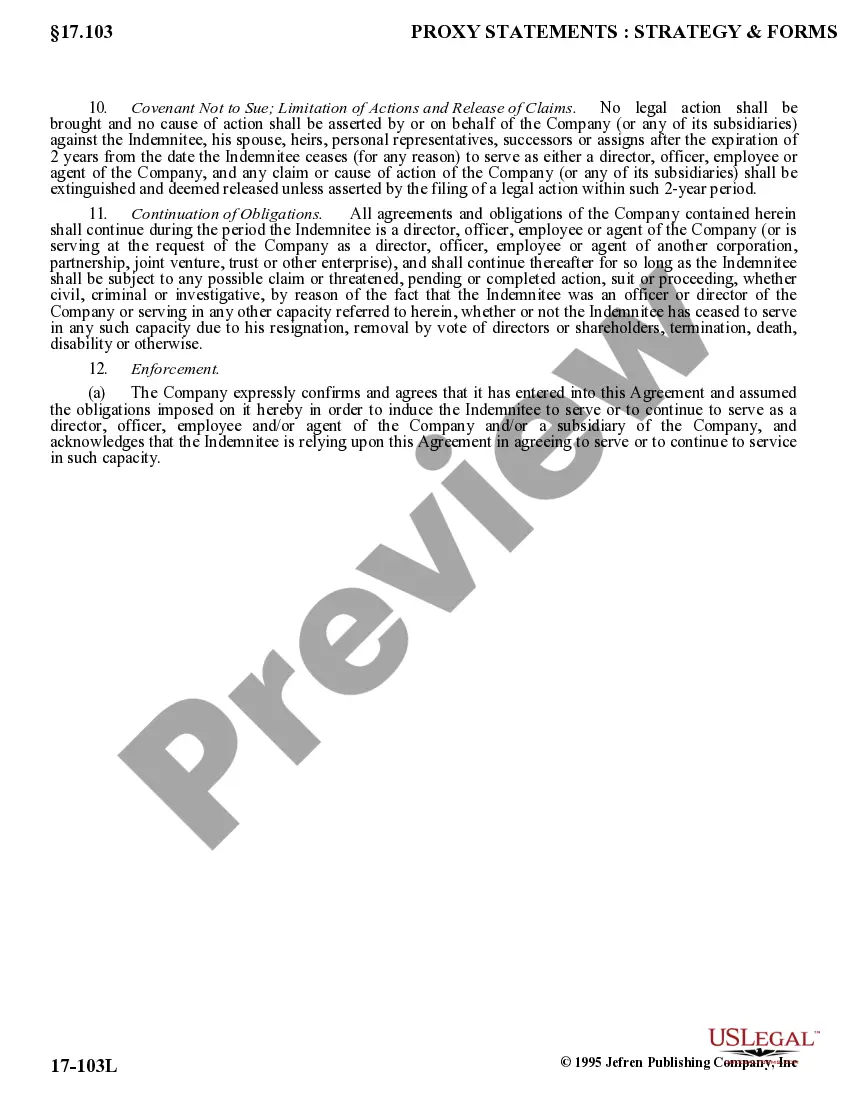
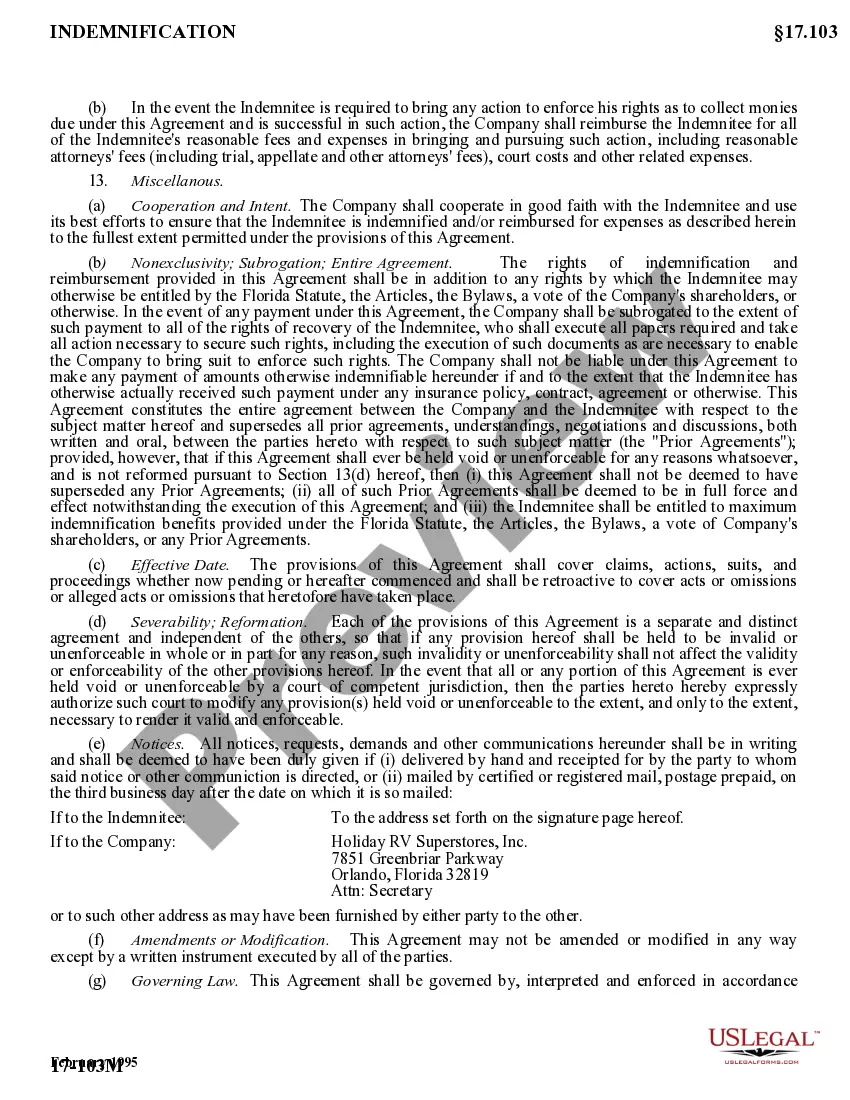
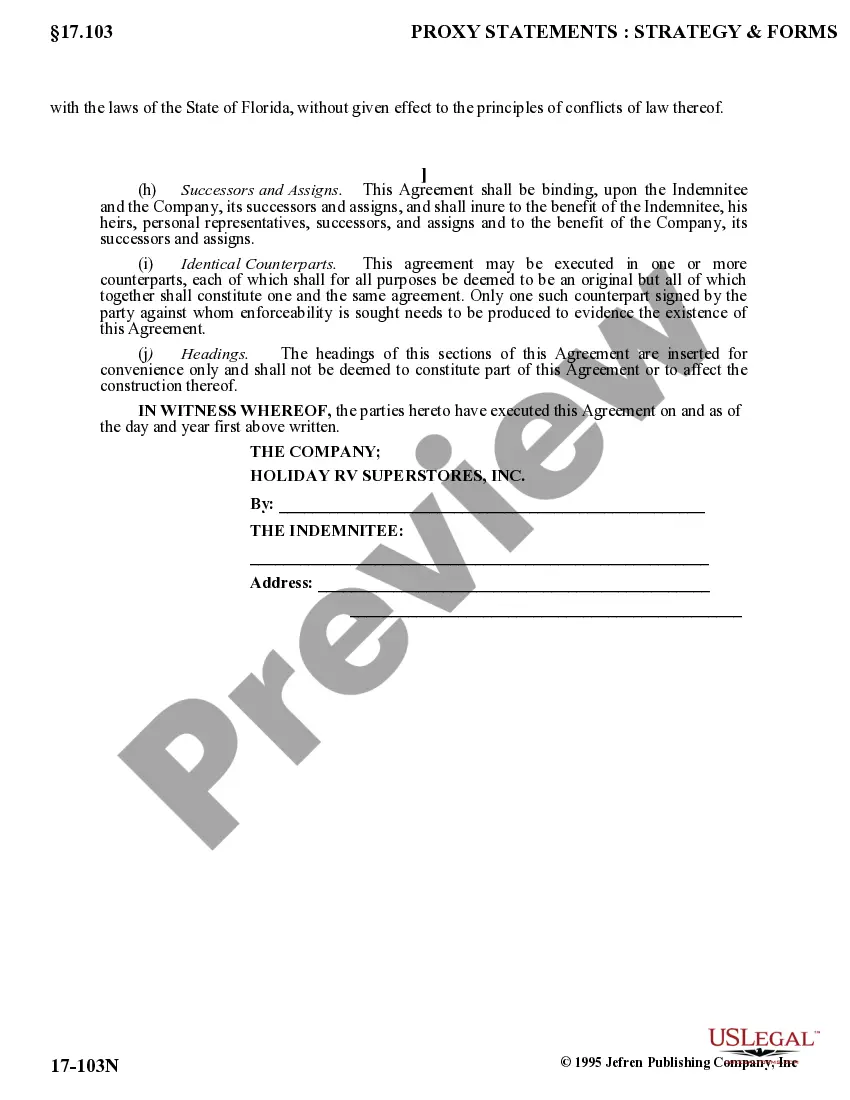
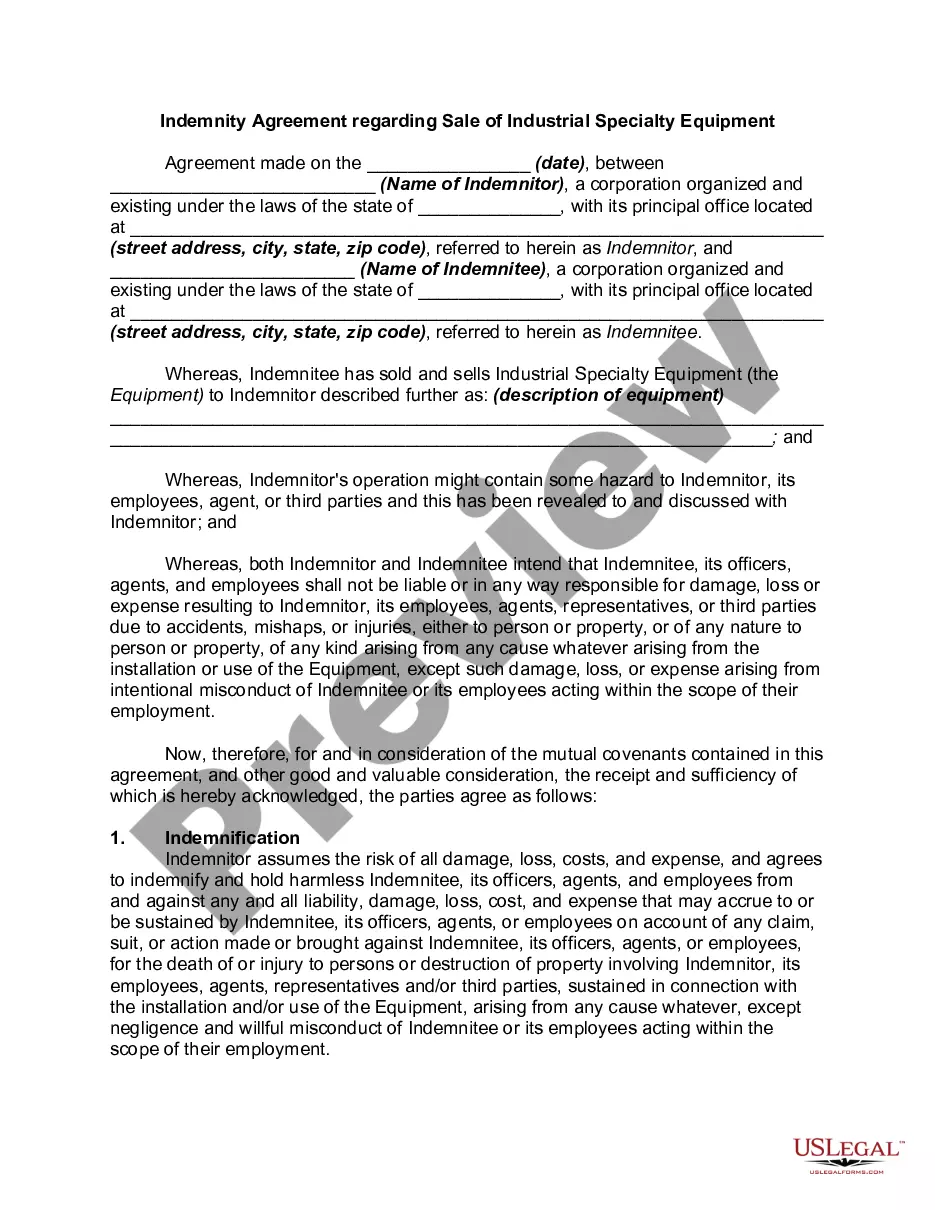
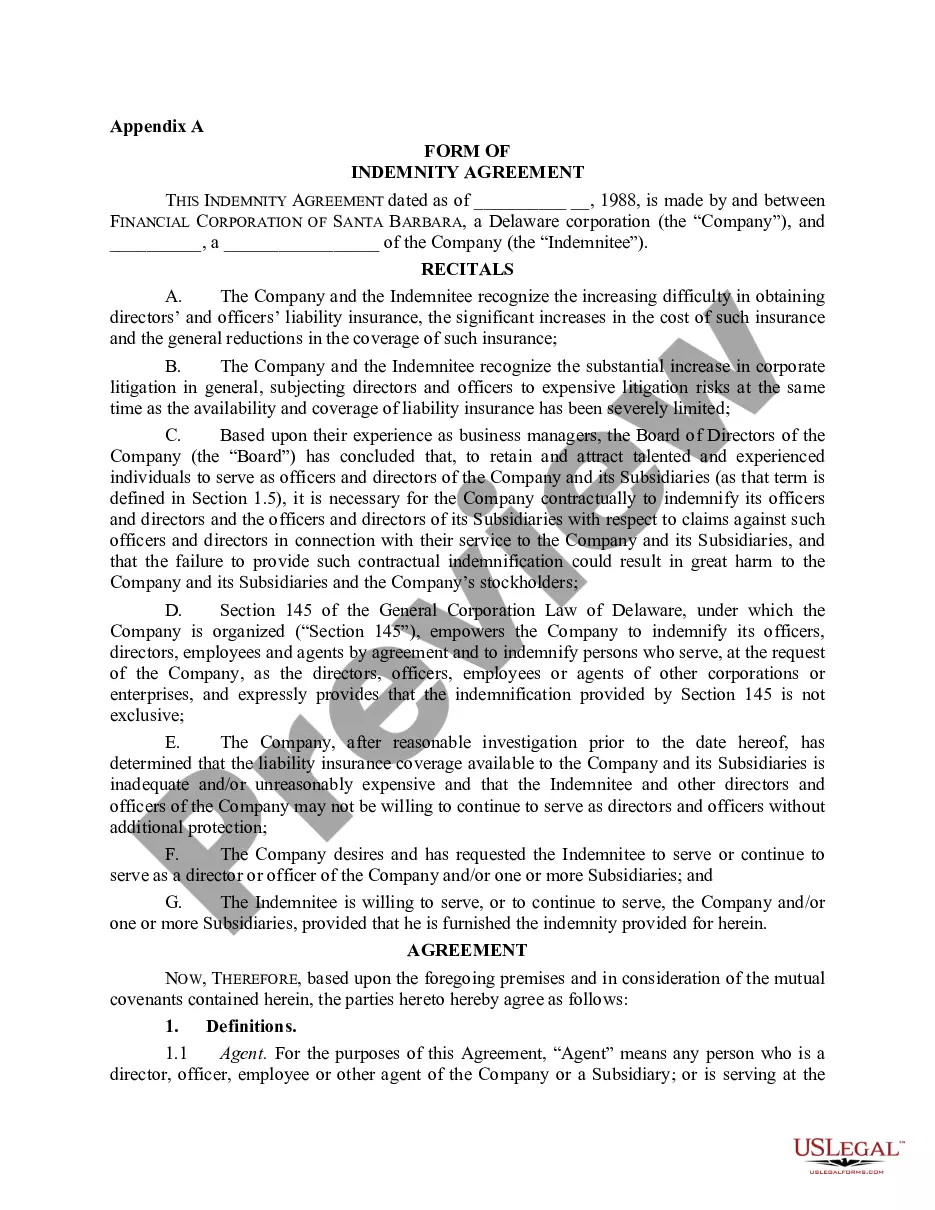
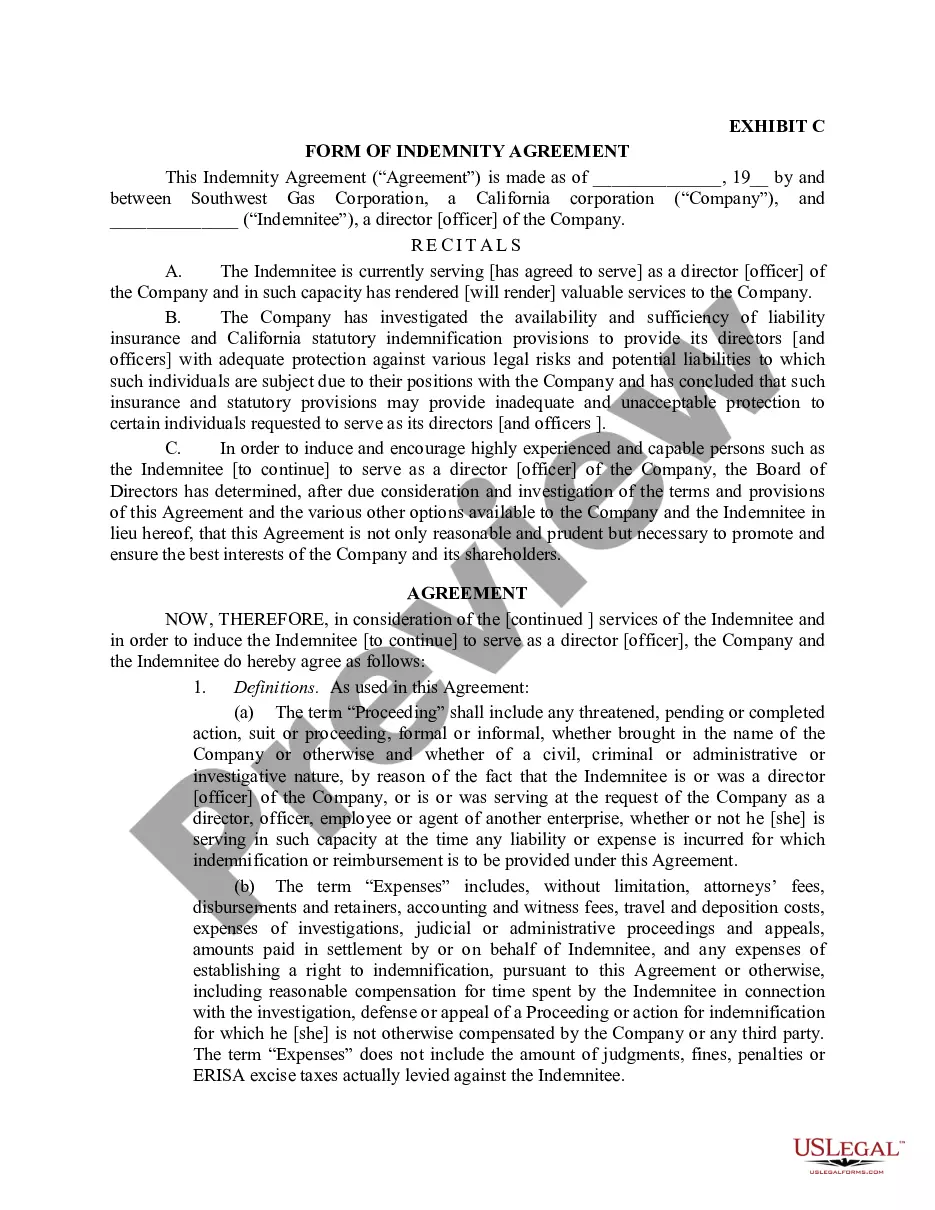
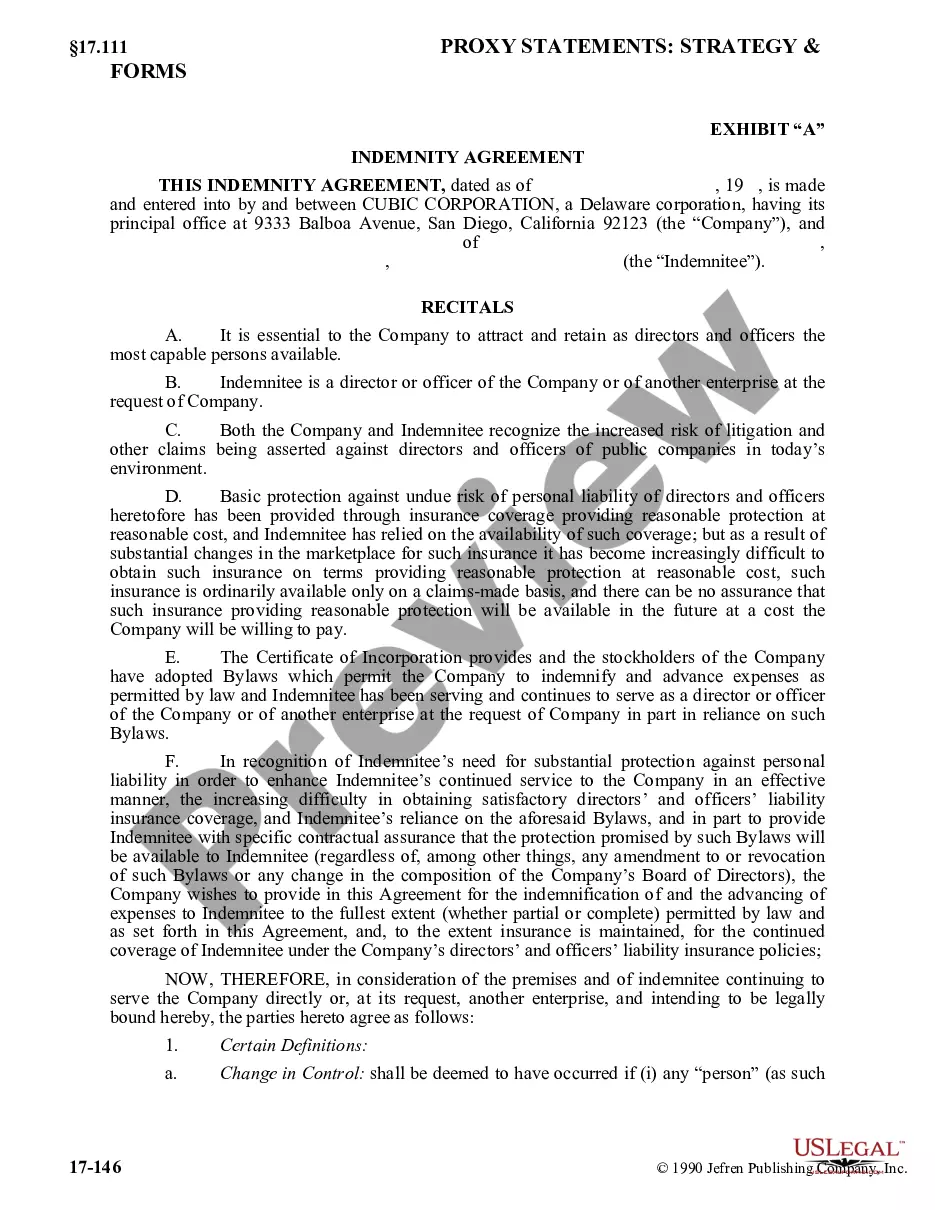
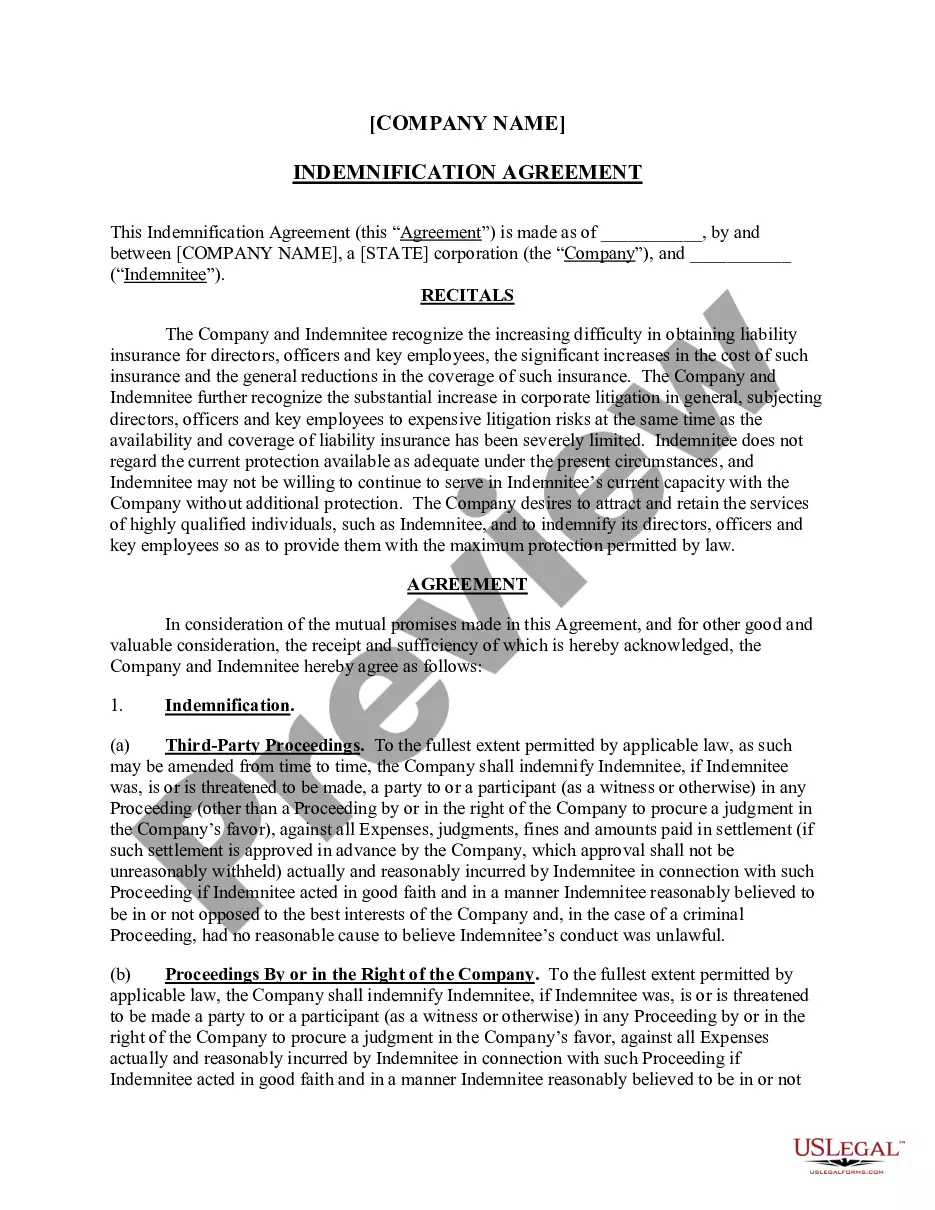
The Indemnification Agreement by Holiday RV Superstores is a legal document that safeguards the interests of directors and officers by providing them with indemnification against legal actions taken against them in their professional capacity. This form aims to enhance the protection beyond what is provided by the Florida Business Corporation Act, addressing concerns that existing protections may be inadequate. The agreement ensures that directors and officers of Holiday RV Superstores can perform their roles without fearing personal liability arising from their corporate activities.
Key parts of this document
- Preliminary statements: Outlines the intent of the agreement and reasons for indemnification.
- Indemnification provisions: Specifies the circumstances under which the Company agrees to indemnify the Indemnitee.
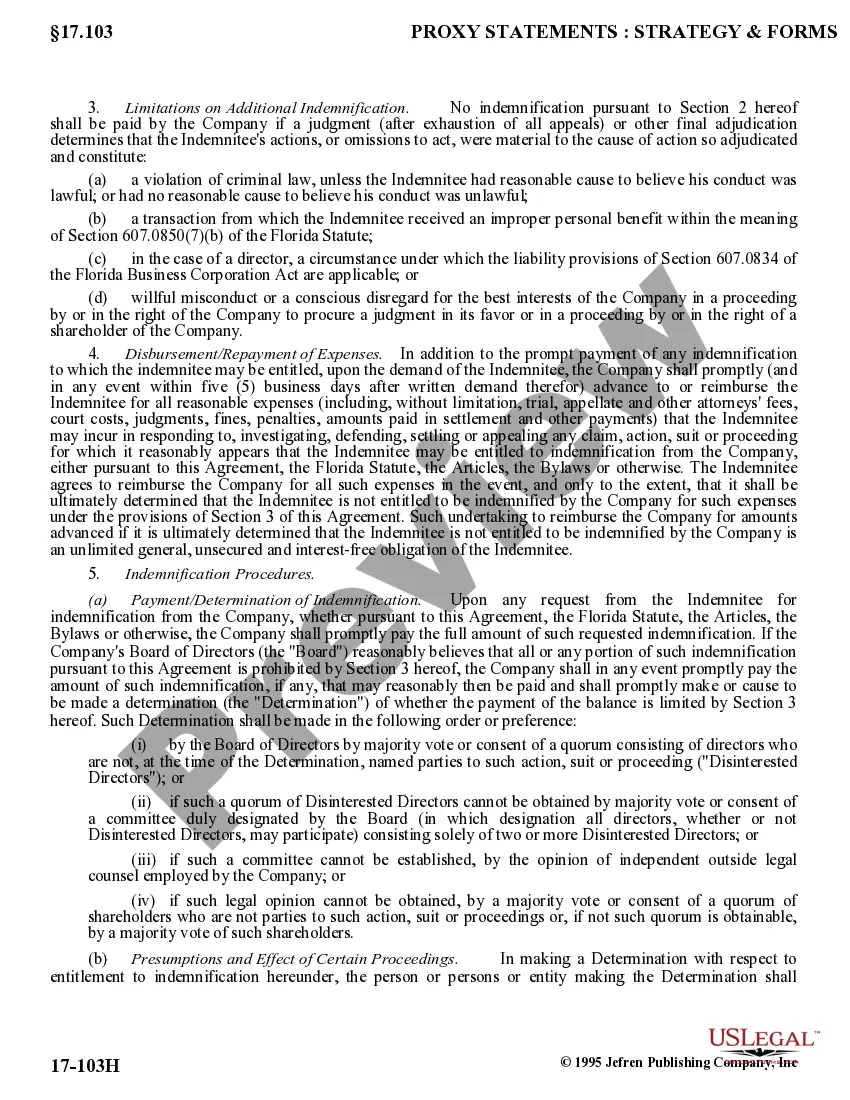
- Limitations on indemnification: Details situations where indemnification will not be provided.
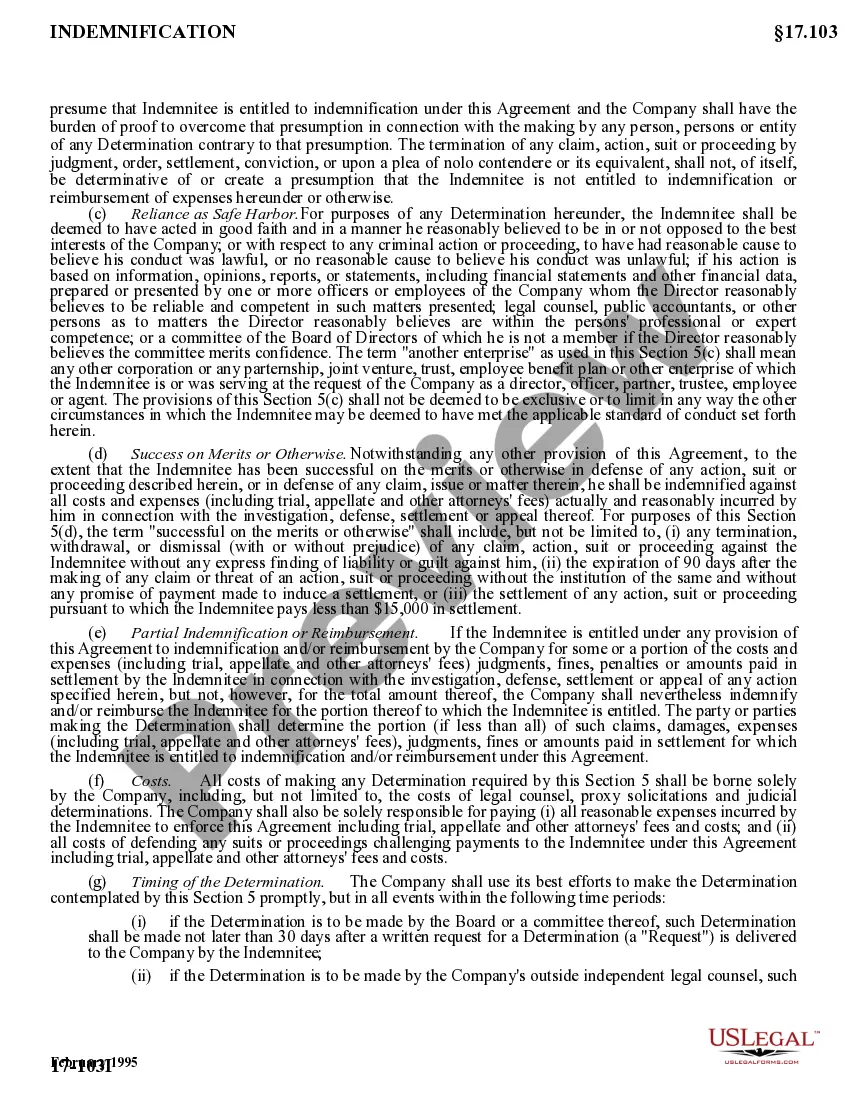
- Expense reimbursements: Outlines the process and timelines for reimbursing legal expenses incurred by the Indemnitee.
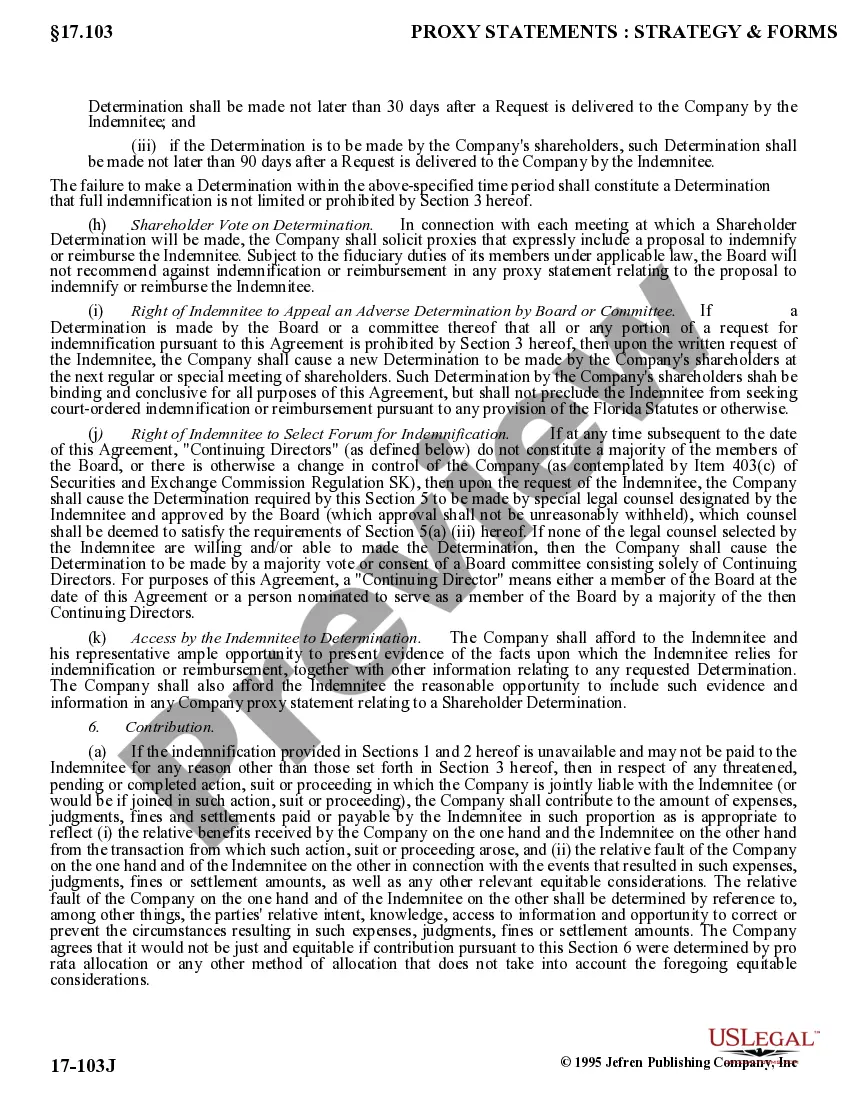
- Indemnification procedures: Describes the steps required for making a request for indemnification.
- Contribution clauses: Addresses how joint liabilities will be handled if the Indemnitee faces shared legal challenges.

Situations where this form applies
This Indemnification Agreement should be used when a corporation wants to provide adequate legal protection to its directors and officers. It is particularly relevant when there are concerns about personal liability stemming from corporate governance or operational decisions. Corporations facing a risk of litigation or those wishing to attract competent individuals to serve as directors or officers can utilize this agreement to reassure potential Indemnitees.
Who needs this form
- Corporations looking to offer indemnification to their directors, officers, and agents.
- Boards of directors seeking to enhance recruitment and retention of qualified individuals for leadership positions.
- Entities that operate in jurisdictions where existing indemnification laws are viewed as insufficient.
Completing this form step by step
- Identify the parties involved, including the Company and the Indemnitee.
- Fill in the date of the agreement to ensure clarity on when indemnification rights are established.
- Review and specify any limitations or conditions under which indemnification would not apply.
- Ensure the signatures of both the Company representative and the Indemnitee are affixed to formalize the agreement.
- Consult corporate bylaws and articles of incorporation to ensure consistency with existing documents.
Does this form need to be notarized?
This form does not typically require notarization unless specified by local law. However, having the agreement notarized can add an additional layer of authenticity and may be advisable depending on the corporate context.
Get your form ready online
Our built-in tools help you complete, sign, share, and store your documents in one place.
Make edits, fill in missing information, and update formatting in US Legal Forms—just like you would in MS Word.
Download a copy, print it, send it by email, or mail it via USPS—whatever works best for your next step.
Sign and collect signatures with our SignNow integration. Send to multiple recipients, set reminders, and more. Go Premium to unlock E-Sign.
If this form requires notarization, complete it online through a secure video call—no need to meet a notary in person or wait for an appointment.
We protect your documents and personal data by following strict security and privacy standards.

Make edits, fill in missing information, and update formatting in US Legal Forms—just like you would in MS Word.

Download a copy, print it, send it by email, or mail it via USPS—whatever works best for your next step.

Sign and collect signatures with our SignNow integration. Send to multiple recipients, set reminders, and more. Go Premium to unlock E-Sign.

If this form requires notarization, complete it online through a secure video call—no need to meet a notary in person or wait for an appointment.

We protect your documents and personal data by following strict security and privacy standards.
Typical mistakes to avoid
- Failing to specify the scope of indemnification, leading to potential misunderstandings.
- Not reviewing the document for compliance with state laws or corporate bylaws.
- Omitting signatures or dates, which can render the agreement unenforceable.
Benefits of using this form online
- Convenience of downloading and completing the form at any time.
- Editability allows users to customize the agreement according to specific corporate needs.
- Access to legal templates crafted by licensed attorneys enhances reliability and legal compliance.
What to keep in mind
- The Indemnification Agreement helps protect directors and officers from personal liability.
- It is specifically designed for use within the state of Florida under local business laws.
- Completing this form involves careful review of the indemnification clauses and obtaining proper signatures.
Looking for another form?
Form popularity
FAQ
2. California employers are not required to pay for time off for holidays, nor are they required to pay additional wages if employees work on holidays. Likewise, there is no requirement that employers pay employees extra pay or holiday pay for work performed on holidays.
New Year's Day. Martin Luther King Jr. Day. Presidents Day (Washington's Birthday) Memorial Day. Independence Day (Fourth of July) Labor Day. Columbus Day. Thanksgiving.
In other words regular overtime rules apply, since the law treats federal holidays as just another business day. Like usual, if you qualify for overtime pay, and you work over 40 hours during the week of a federal holiday, then you are entitled to time and a half pay for the hours worked over 40.
Yes, your employer can refuse your holiday request, for example during busy periods.Although your employer can refuse to give you holiday leave at a certain time, they cannot refuse to let you take your minimum leave entitlement of 28 days for the year.
Specifically, federal law does not require employers to pay their employees additional compensation (i.e., time and a half) for working on a holiday.Employers should indicate in the employment contract which holidays employees will have off, and if employees will be paid for that time off.
The announcement of holidays to the employees should be done in a professional and formal way. One way to do this is to write a memo and send to all the employees to inform them about the upcoming holidays and closing of the office. The other way is to write the letter and send it to each employee individually.
Holidays Are Your Call. California employers are NOT required to provide employees with paid holidays, close their business on a holiday, give employees the day off for a particular holiday, or provide premium pay if an employee works on a holiday. It's up to your company policy (or collective bargaining agreement).
Wednesday, January 1 New Year's Day. Monday, January 20 Birthday of Martin Luther King, Jr. Monday, February 17 Washington's Birthday. Monday, May 25 Memorial Day. Friday, July 3 Independence Day. Monday, September 7 Labor Day. Monday, October 12 Columbus Day.
The announcement of holidays to the employees should be done in a professional and formal way. One way to do this is to write a memo and send to all the employees to inform them about the upcoming holidays and closing of the office. The other way is to write the letter and send it to each employee individually.