Issuance of Common Stock in Connection with Acquisition
What this document covers
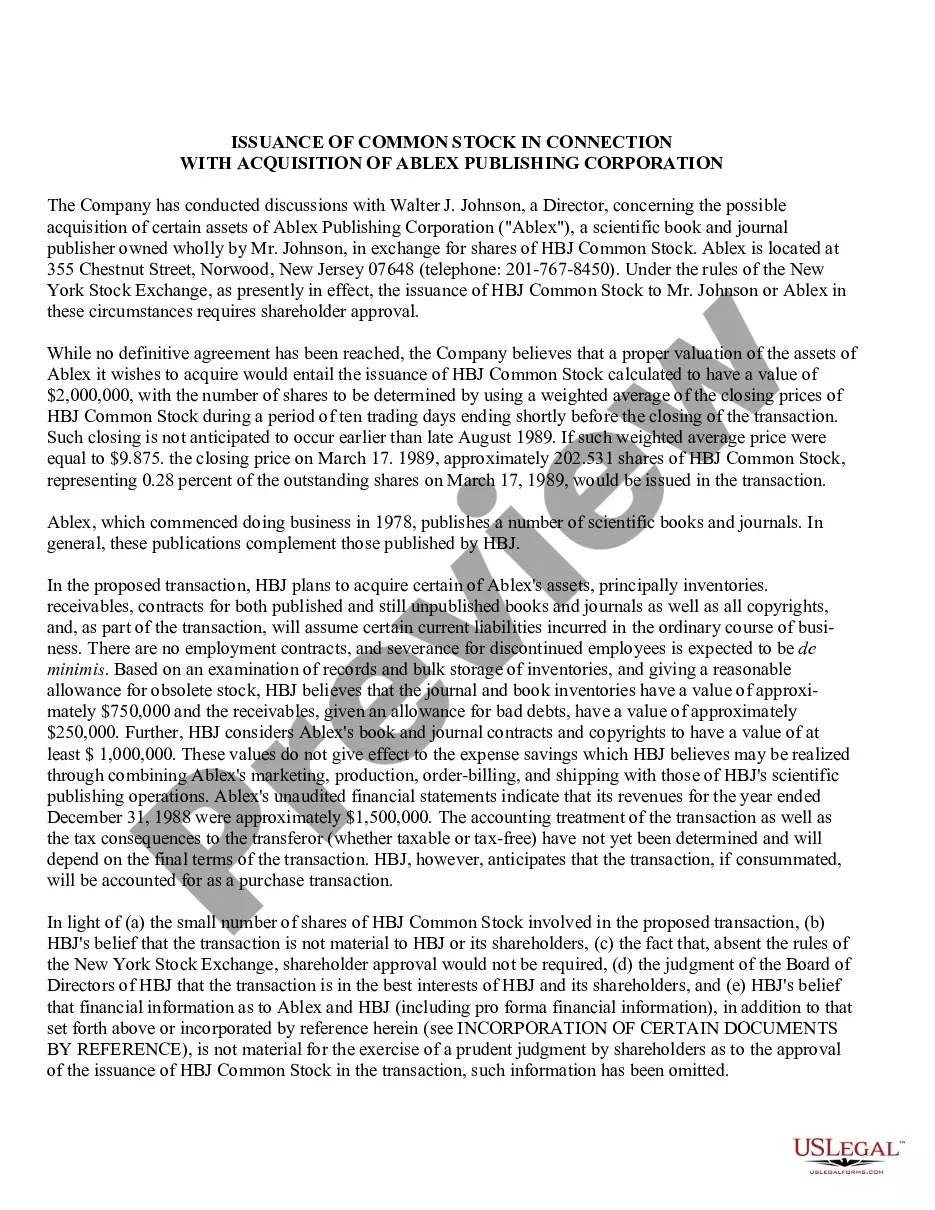
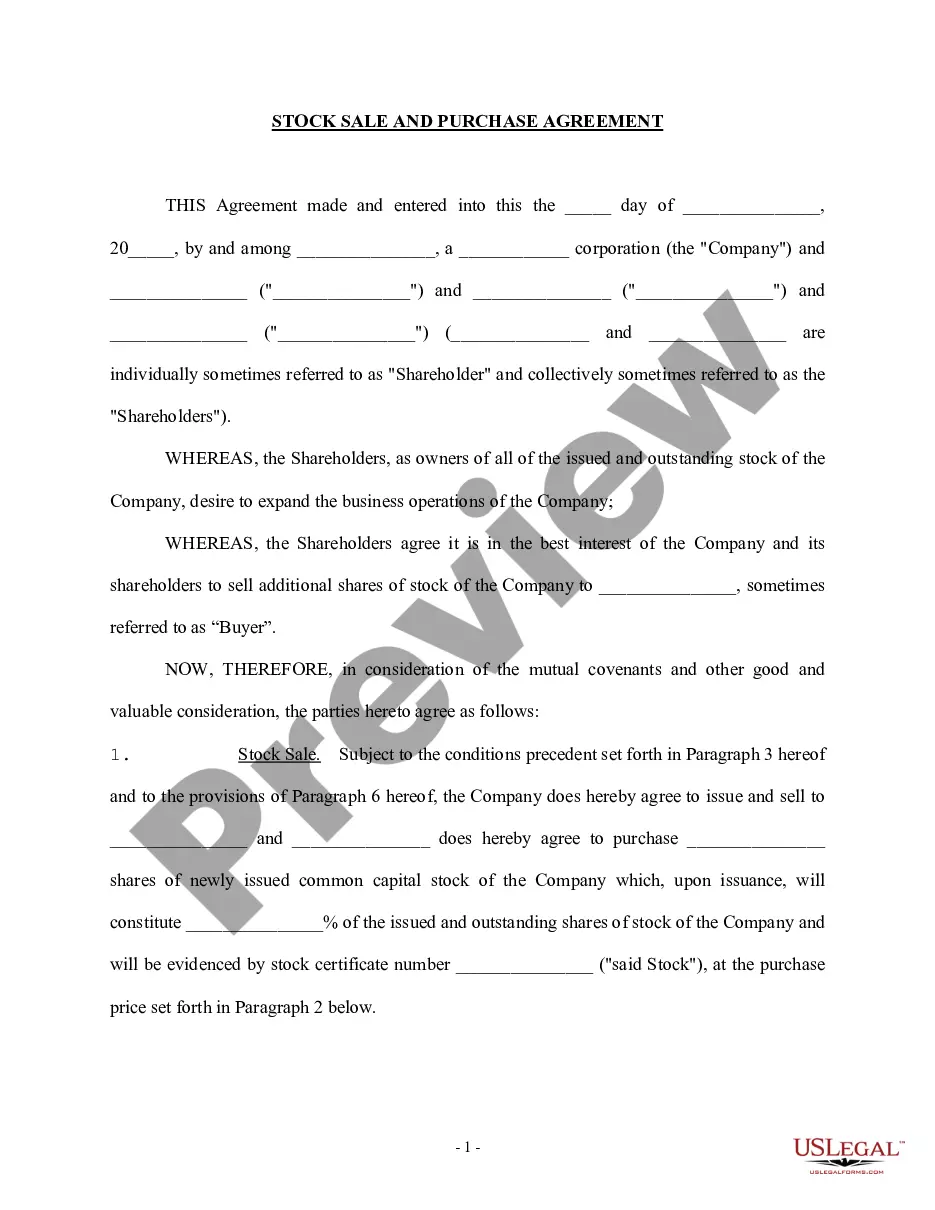
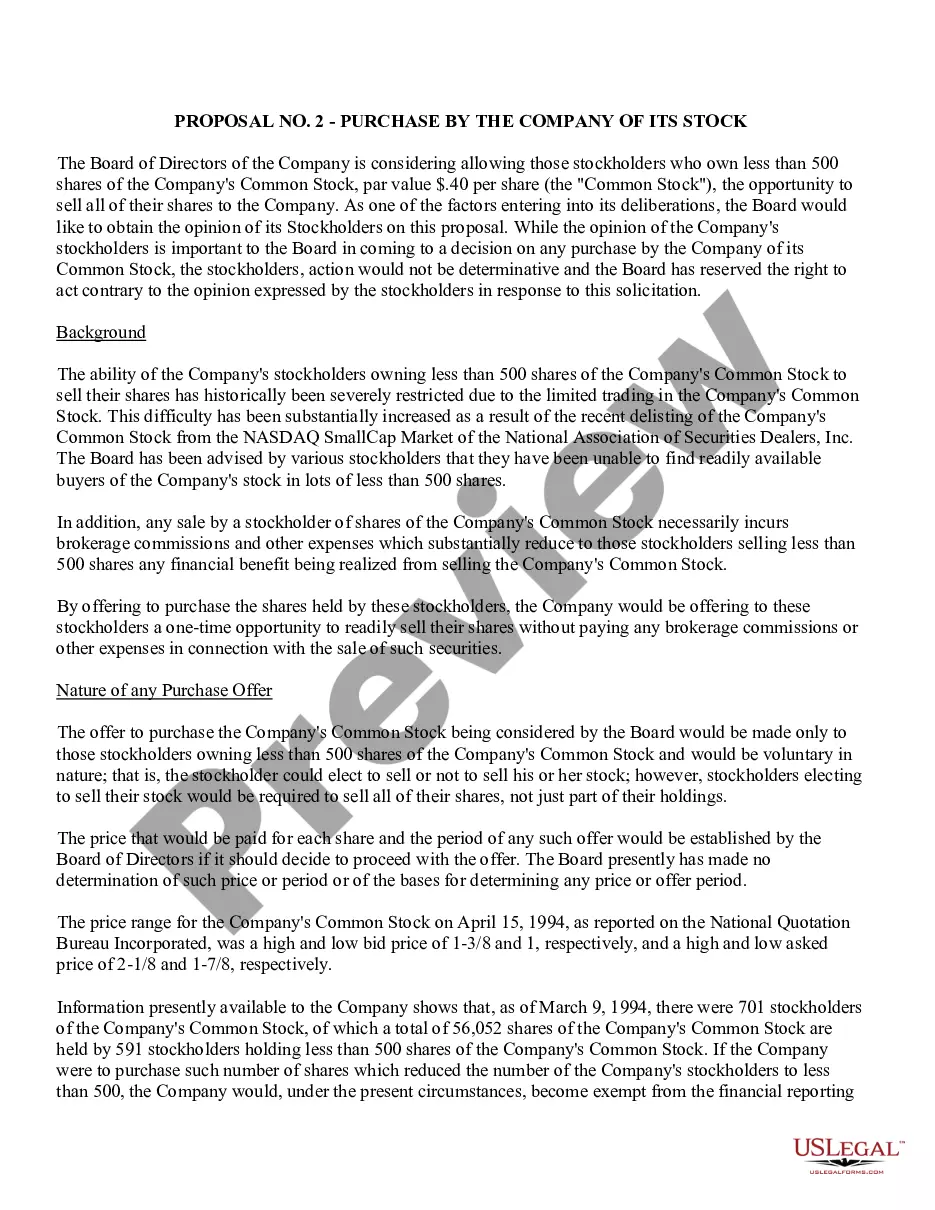
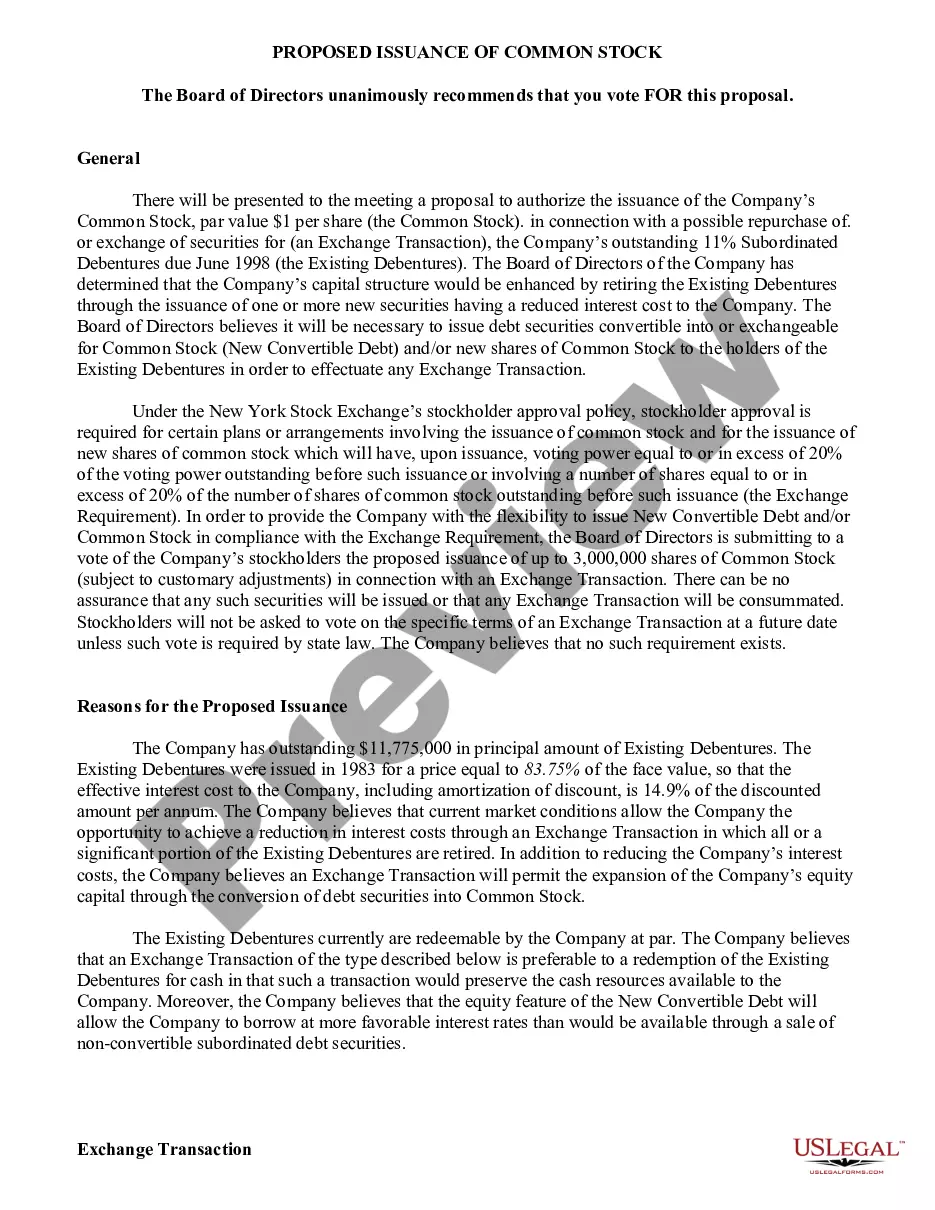
The Issuance of Common Stock in Connection with Acquisition form is a legal document that allows a corporation to issue or sell common stock in relation to an acquisition. This form is crucial for corporations looking to exchange ownership stakes in the company for assets or business interests from another entity. Unlike other stock issuance forms, this one specifically addresses acquisitions and ensures compliance with shareholder approval requirements under applicable securities regulations.
Main sections of this form
- Identification of the companies involved in the acquisition.
- Details about the assets being acquired from the other company.
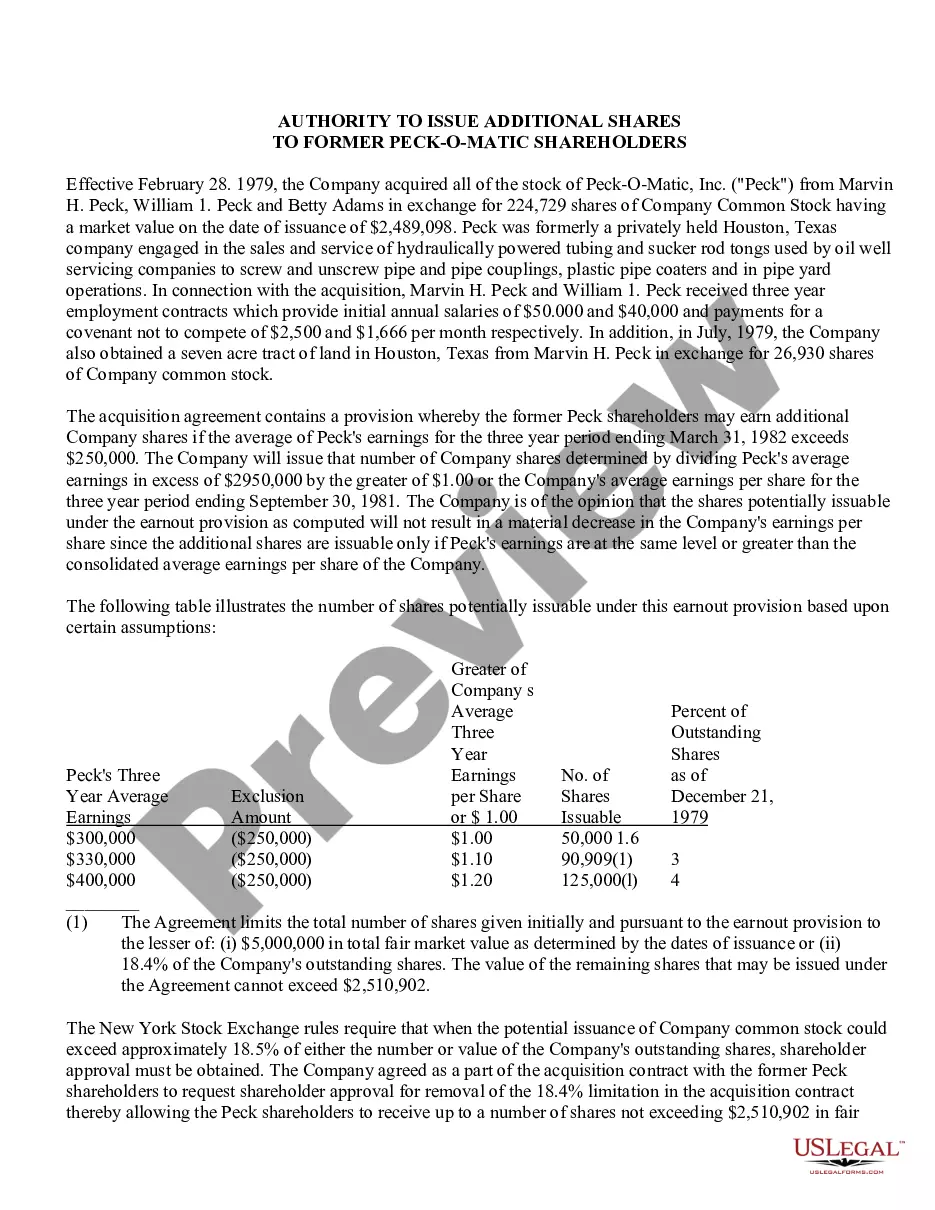
- Valuation of the common stock to be issued, based on market prices.
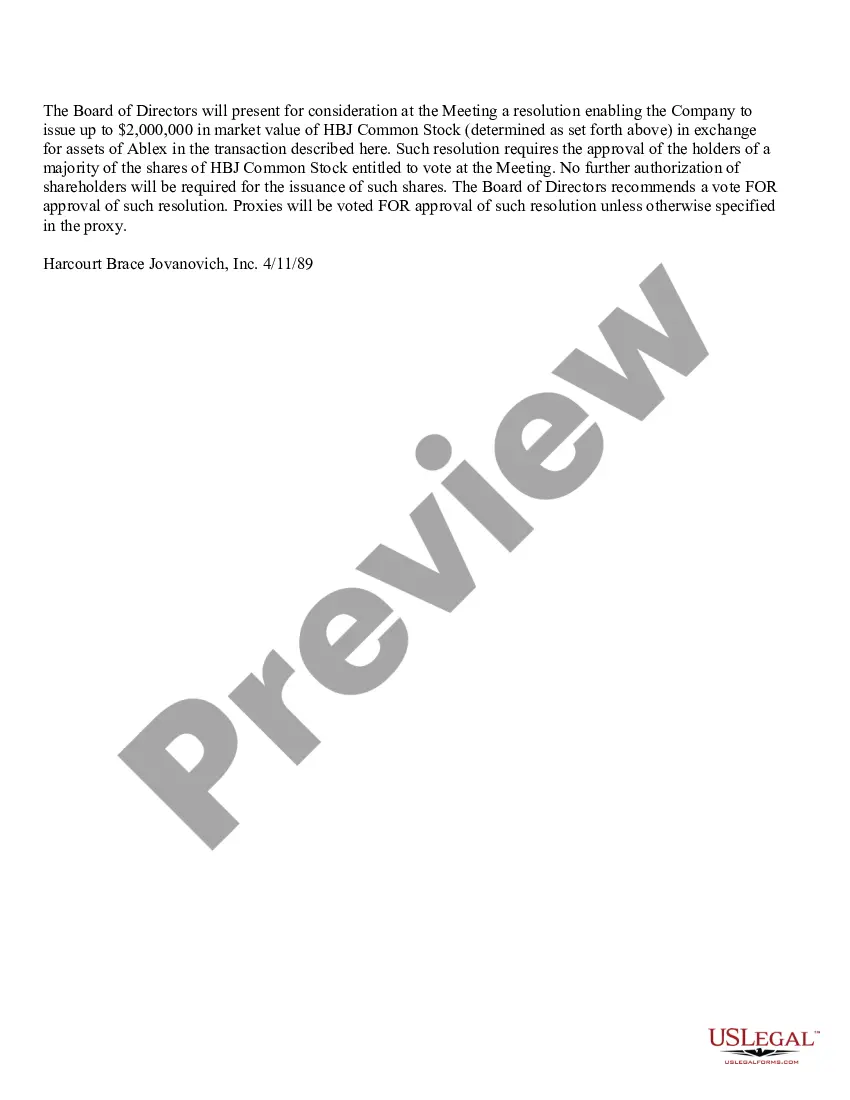
- Shareholder approval clause outlining the need for a majority vote.
- Board of Directors' recommendations regarding the transaction.
When to use this form
This form should be used when a corporation plans to acquire assets from another company in exchange for shares of its common stock. It is particularly necessary when the transaction requires shareholder approval, especially for publicly traded companies that are subject to specific stock exchange regulations. Additionally, this form serves to document the valuation and terms of the stock being issued in relation to the acquisition.
Who needs this form
- Corporations initiating an acquisition of another business.
- Corporate boards or directors involved in negotiating asset purchases.
- Shareholders needing to understand their rights regarding stock issuance.
Steps to complete this form
- Identify the parties involved: the acquiring company and the target company.
- Detail the assets being acquired and provide a valuation for each asset.
- Determine the number of shares to be issued based on the market value of the stock.
- Include the proposed resolution for shareholder approval within the document.
- Obtain signatures from corporate officers as required and submit for approval.
Is notarization required?
This form does not typically require notarization to be legally valid. However, some jurisdictions or document types may still require it. US Legal Forms provides secure online notarization powered by Notarize, available 24/7 for added convenience.
Get your form ready online
Our built-in tools help you complete, sign, share, and store your documents in one place.
Make edits, fill in missing information, and update formatting in US Legal Forms—just like you would in MS Word.
Download a copy, print it, send it by email, or mail it via USPS—whatever works best for your next step.
Sign and collect signatures with our SignNow integration. Send to multiple recipients, set reminders, and more. Go Premium to unlock E-Sign.
If this form requires notarization, complete it online through a secure video call—no need to meet a notary in person or wait for an appointment.
We protect your documents and personal data by following strict security and privacy standards.

Make edits, fill in missing information, and update formatting in US Legal Forms—just like you would in MS Word.

Download a copy, print it, send it by email, or mail it via USPS—whatever works best for your next step.

Sign and collect signatures with our SignNow integration. Send to multiple recipients, set reminders, and more. Go Premium to unlock E-Sign.

If this form requires notarization, complete it online through a secure video call—no need to meet a notary in person or wait for an appointment.

We protect your documents and personal data by following strict security and privacy standards.
Common mistakes
- Failing to accurately value the assets being exchanged.
- Not obtaining the necessary shareholder approval.
- Omitting details about the terms of the transaction.
- Using outdated information regarding stock price calculations.
Advantages of online completion
- Convenient access to legal documents that can be downloaded and completed at your own pace.
- Editability allows for customization based on specific acquisition terms.
- Reliability, since the form is drafted by licensed attorneys.
Legal use & context
- This form serves a critical role in complying with SEC regulations for stock issuance.
- It protects the interests of shareholders by ensuring proper approval processes are followed.
- Using this form helps avoid potential legal disputes regarding asset valuations and stock issuances.
Quick recap
- The form facilitates asset acquisition through stock issuance, important for compliance.
- Accurate valuation and shareholder approvals are crucial for legality and enforceability.
- Available to corporations in multiple states with variations in local regulations.
Looking for another form?



Form popularity
FAQ
The entry to record the issuance of common stock at a price above par includes a debit to Cash. Cash is increased (debit) by the issue price. The journal entry would also include a credit to both Common Stock (increased) and Paid-In Capital in Excess of Par--Common Stock (increased).
It's rare that a company assigns par value to a stock, but if they are required to by state law, then you would calculate stock issuance by multiplying the par value by the number of shares issued. For example, if a company issues 100 common stocks for a par value of $1, the calculation is 100 x $1 = $100.
Issued shares are the subset of authorized shares that have been sold to and held by the shareholders of a company, regardless of whether they are insiders, institutional investors, or the general public (as shown in the company's annual report).
Common Stock Offering MeaningCommon stocks are ordinary shares that companies issue as an alternative to selling debt or issuing a different class of shares known as preferred stock. The first time that a company issues a public offering of common stock, it does so via an initial public offering.
The initial issuance of common stock reflects the sale of the first stock by a corporation. Common stock issued at par value for cash creates an additional paid-in capital account for the excess of the issue price over the par value.
Common stockA type of capital stock that is issued by every corporation; it provides rights to the owner that are specified by the laws of the state in which the organization is incorporated. has also been mentioned in connection with the capital contributed to a company by its owners.
An acquisition by one company of another in which the acquiring company buys the target company's stock. That is, rather than paying with debt or some other means, an acquisition of stock occurs when the acquiring company buys a majority of the target company's shares outstanding.
In issuing its common stock, a company is effectively selling a piece of itself. The stock purchaser gives up cash, and in exchanges receives a small ownership stake in the business.In other words, the company's assets rise. To balance that accounting entry out, stockholders' equity is credited by the same amount.