Letter to Client - Failure to pay account and proposed withdrawal
Overview of this form
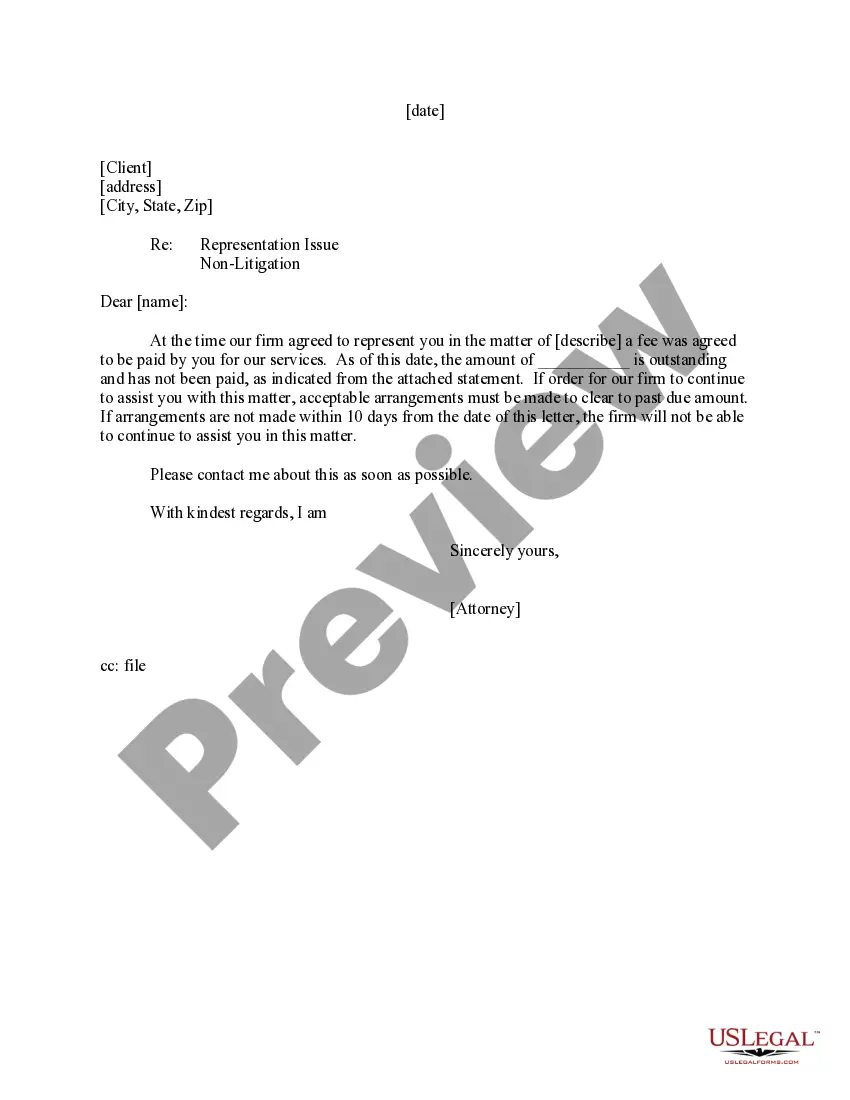
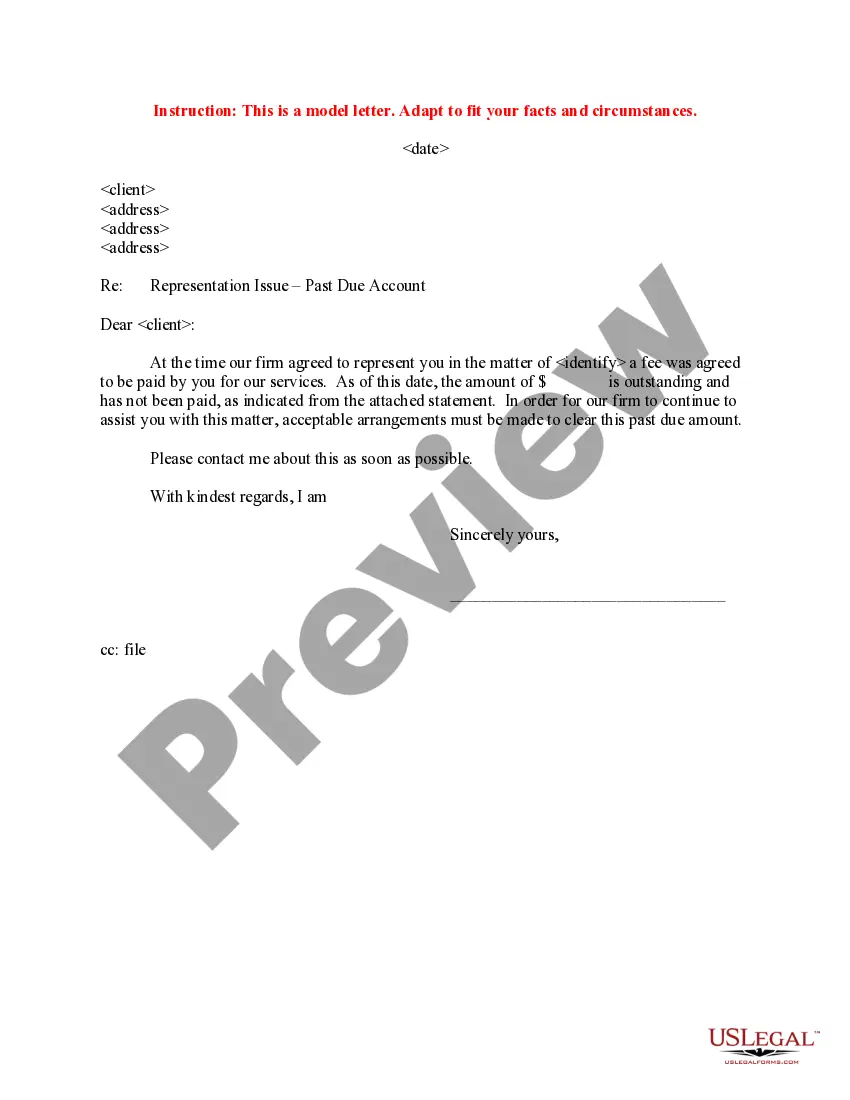
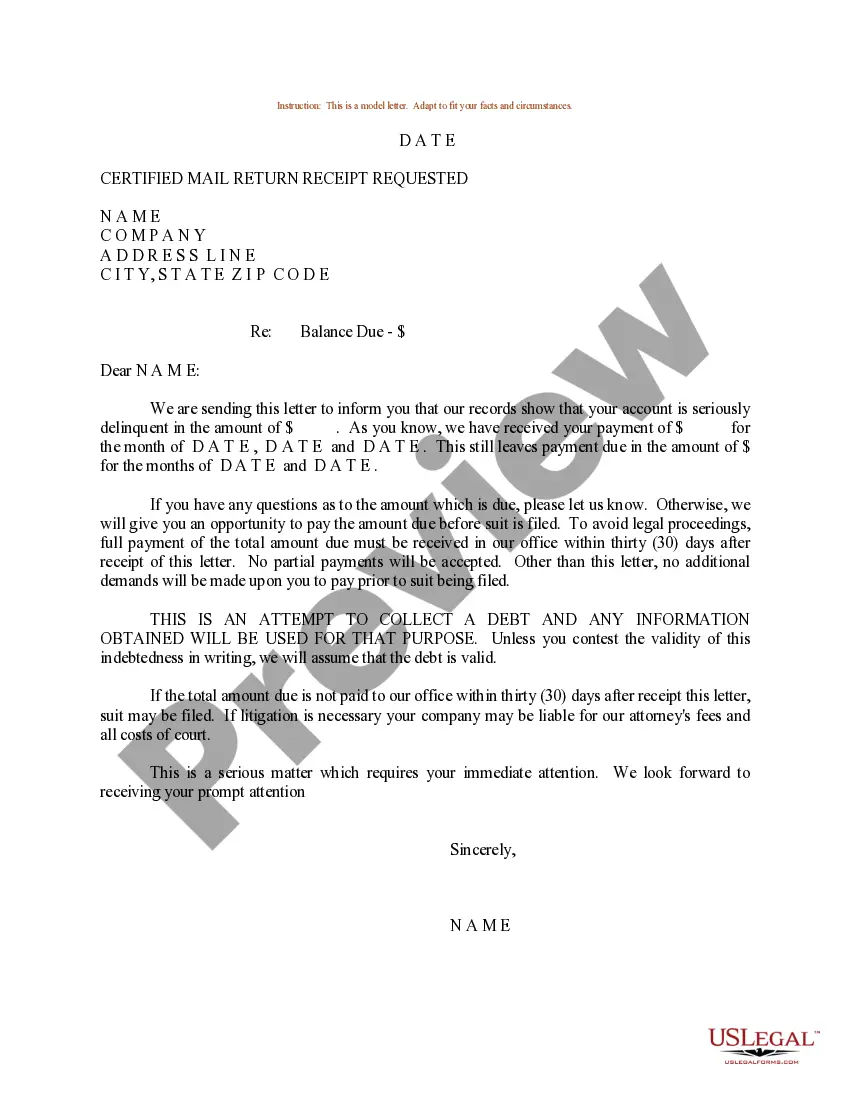
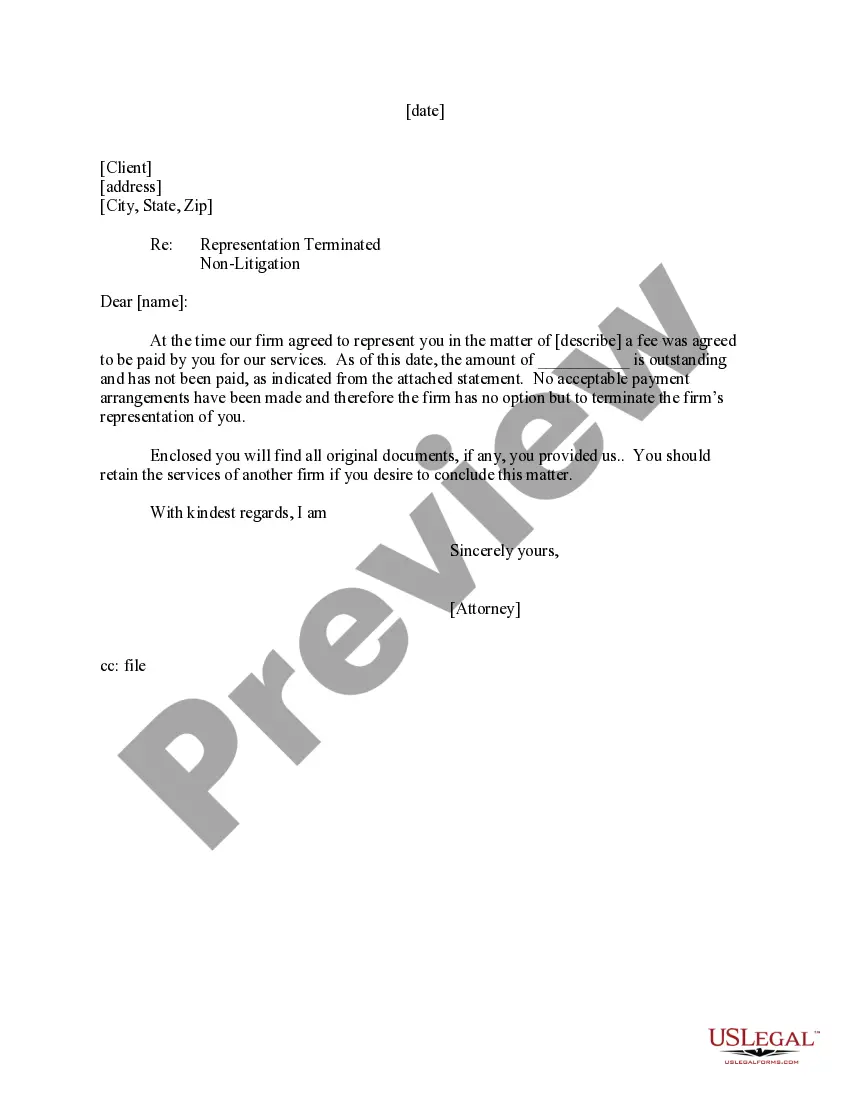
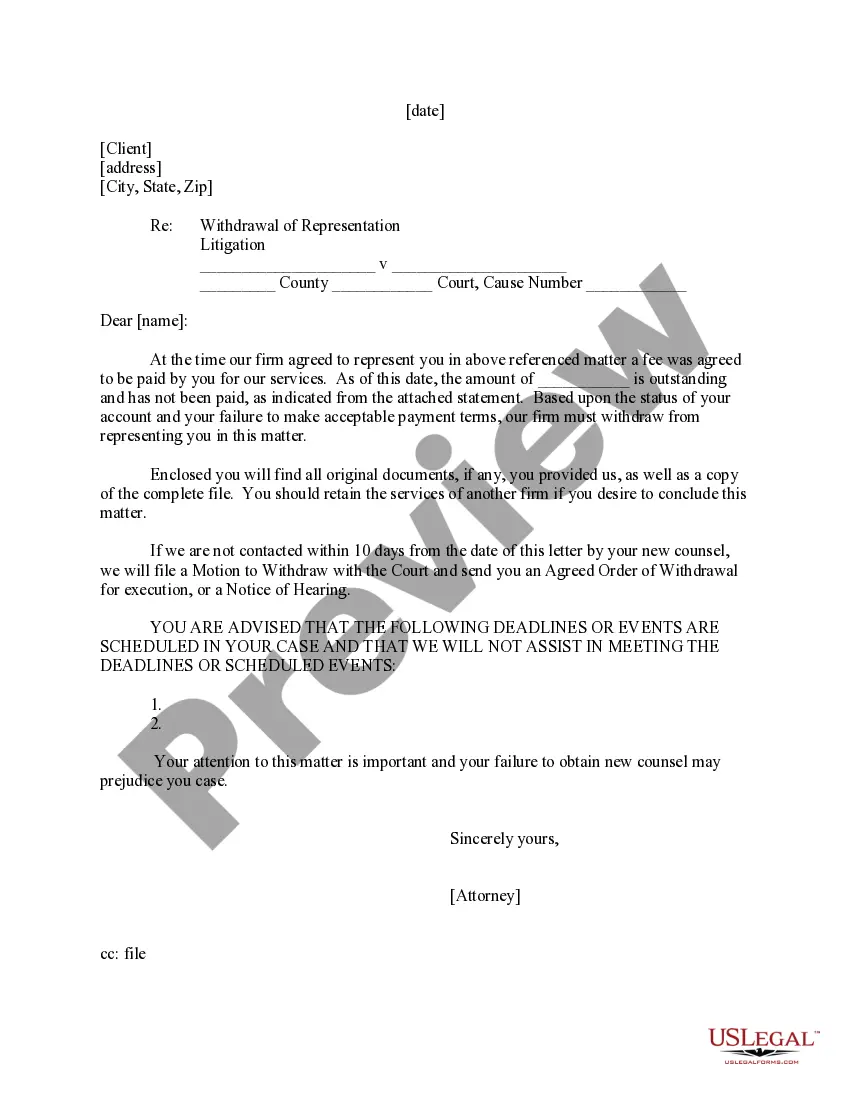
The Letter to Client - Failure to Pay Account and Proposed Withdrawal is a legal document designed to inform a client about outstanding payments and the potential consequences of non-payment. This form is used by attorneys to formally notify clients that they can no longer provide services unless the overdue amount is settled. It differs from other legal communication forms in its specific focus on payment issues rather than general correspondence or litigation matters.
Key parts of this document
- Client address: Essential for identifying the recipient of the notice.
- Subject line: Clearly indicates the nature of the letter and represents the issue at hand.
- Fee description: Outlines the agreed-upon fees and highlights the amount due.
- Deadline for payment: Specifies the timeframe (10 days) for the client to respond or make payment.
- Attorney's contact information: Provides a means for the client to reach out regarding their account.

Situations where this form applies
This form should be used when an attorney needs to address unpaid fees with a client. It is appropriate in situations such as when a client has not paid their account as agreed and the attorney must establish a formal record of communication regarding the payment issue. This letter also serves as a warning that legal representation may be withdrawn if payment arrangements are not made promptly.
Who needs this form
- Legal professionals such as attorneys seeking to communicate payment issues with clients.
- Law firms operating on a fee-for-service basis that require formal documentation regarding outstanding fees.
- Clients who have received this letter and need to understand their obligations and the consequences of non-payment.
Instructions for completing this form
- Fill in the clientâs address at the top of the letter.
- Clearly state the representation issue and the outstanding fee amount.
- Attach a statement showing the balance due, if applicable.
- Specify the deadline for payment arrangements (10 days from the letter's date).
- Sign the letter, including your name as the attorney, and date it.
Is notarization required?
This form does not typically require notarization unless specified by local law. However, it is important to check the legal requirements in your jurisdiction to ensure compliance.
Get your form ready online
Our built-in tools help you complete, sign, share, and store your documents in one place.
Make edits, fill in missing information, and update formatting in US Legal Forms—just like you would in MS Word.
Download a copy, print it, send it by email, or mail it via USPS—whatever works best for your next step.
Sign and collect signatures with our SignNow integration. Send to multiple recipients, set reminders, and more. Go Premium to unlock E-Sign.
If this form requires notarization, complete it online through a secure video call—no need to meet a notary in person or wait for an appointment.
We protect your documents and personal data by following strict security and privacy standards.

Make edits, fill in missing information, and update formatting in US Legal Forms—just like you would in MS Word.

Download a copy, print it, send it by email, or mail it via USPS—whatever works best for your next step.

Sign and collect signatures with our SignNow integration. Send to multiple recipients, set reminders, and more. Go Premium to unlock E-Sign.

If this form requires notarization, complete it online through a secure video call—no need to meet a notary in person or wait for an appointment.

We protect your documents and personal data by following strict security and privacy standards.
Avoid these common issues
- Failing to specify the payment due date, which can create confusion.
- Not including the necessary supporting documentation, such as account statements.
- Omitting the attorneyâs contact information, making it difficult for the client to respond.
Why use this form online
- Convenience of immediate download and printing, allowing for quick communication.
- Editability to customize details specific to the client's account.
- Reliability of having a formalized and professionally drafted letter from licensed attorneys.
Summary of main points
- This form is essential for managing client payments and maintaining clear communication.
- It includes specific information that highlights the consequences of non-payment.
- The form is adaptable for use across various jurisdictions, making it versatile for legal professionals.
Looking for another form?


Form popularity
FAQ
It is difficult for a lawyer to withdraw from representing a client. Judges have discretion in appointing guardian ad litem or indigent cases to attorneys. Judges have discretion in appointing guardian ad litem or indigent cases to attorneys.
Representation of the client does not terminate unless and until the court, after notice and written motion, grants withdrawal. If the court does not allow the attorney to withdraw, the representation must continue.
The Rules of Professional Conduct of the State Bar of California specify three circumstances under which an attorney must terminate a client relationship: (1) where the attorney knows or should know that a client is bringing an action, conducting a defense, asserting a position in litigation, or taking an appeal,
Under ABA Model Rule 1.16(a), a lawyer must withdraw from representing a client when: the lawyer is discharged by the client; the lawyer's physical or mental condition materially impairs the lawyer's ability to represent the client; or.
Identify the Subject Matter. For your letter to be effective, it needs to be direct to the point. Give Final Reminders. Summarize the Fees. Reaffirm the Termination. Suggest to Save Copies. Describe Any Measures.
Lawyers typically withdraw for cause from representing difficult clients citing the permissive grounds of the representation 2026 has been rendered unreasonably difficult by the client or other good cause for withdrawal exists. Examples of withdrawal for these reasons include a client that withheld material
Once a lawyer is representing a client in court, the lawyer can cease to represent the client, either by "withdrawing" or in a "substitution of counsel" (which is far less regulated), but a lawyer can only withdraw and leave the client unrepresented if the lawyer obtains the permission of the court presiding over the
The general practice says that if a client fails to pay the fees then the lawyer can take client's court document into lien and hold it with himself but Rules of professional responsibility allow valid liens to prevail against a lawyer's obligation to return papers and property to a client when a representation ends.