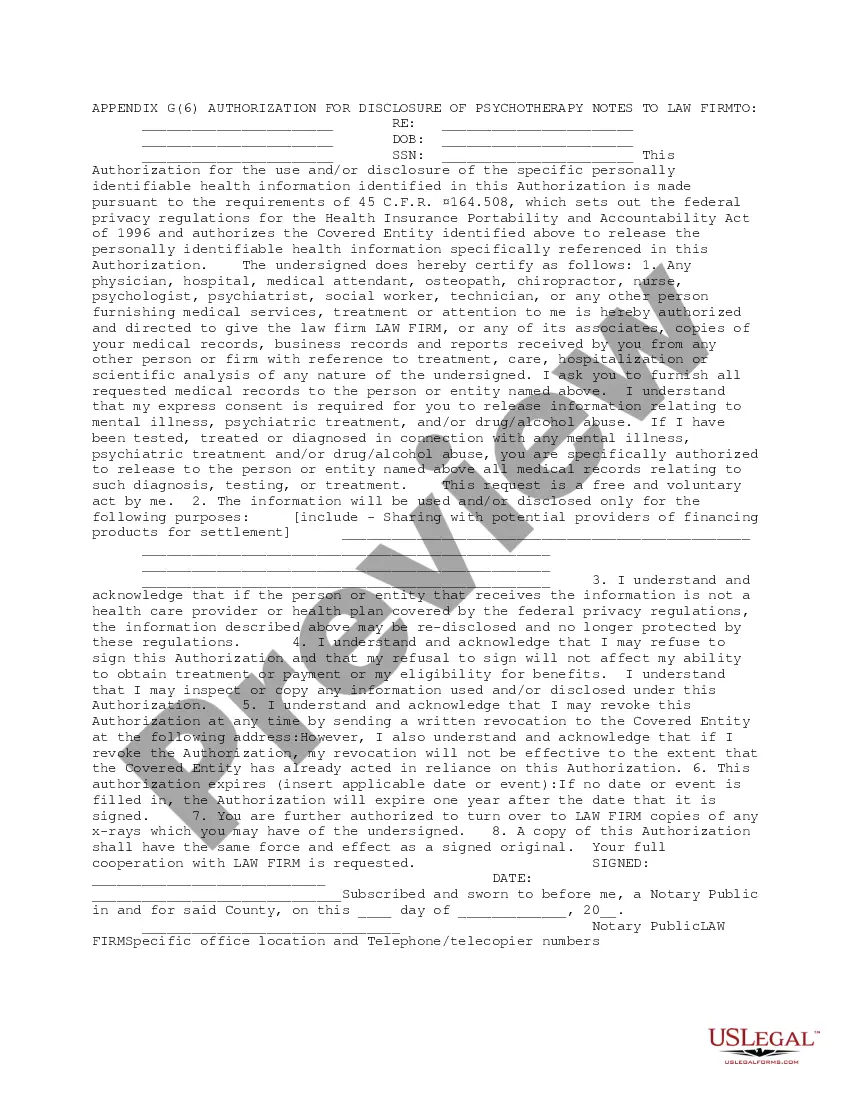
Authorization for Disclosure of Psychotherapy Notes to Law Firm
About this form
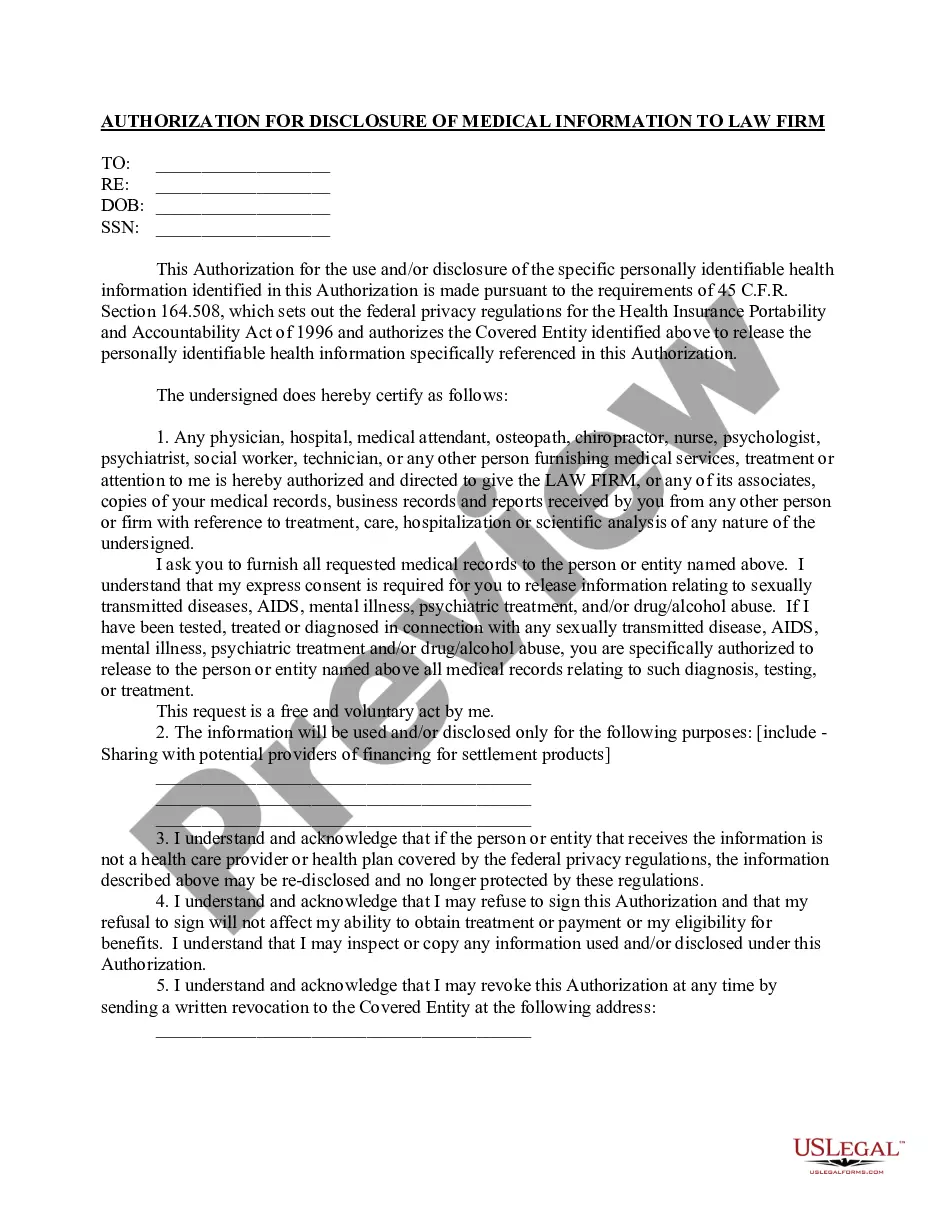
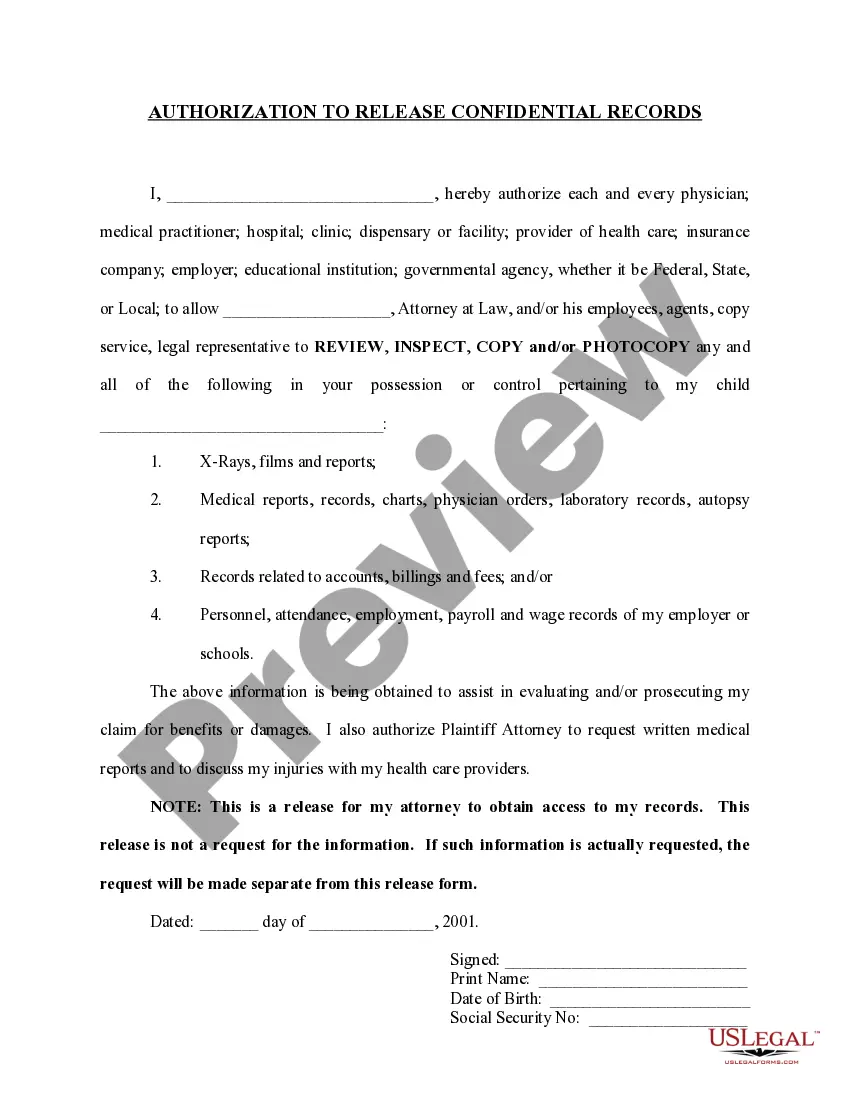
The Authorization for Disclosure of Psychotherapy Notes to Law Firm is a legal document that allows for the release of confidential psychotherapy notes to a specified law firm. This form is crucial for safeguarding client privacy while enabling the sharing of sensitive mental health information necessary for legal processes. Unlike general health information releases, this form specifically targets psychotherapy notes, which are subject to additional federal privacy protections under HIPAA regulations.
Key components of this form
- Identifying information for the patient and the law firm.
- Specific psychotherapy notes to be disclosed.
- Purpose of the disclosure, including any legal case reference.
- Expiration date of the authorization.
- Patient's signature and date to validate consent.
When to use this document
This form should be used when a patient needs to authorize a law firm to access their psychotherapy notes. Common instances include legal disputes where mental health records are relevant, workers' compensation claims involving psychological injuries, or cases where the patient wishes to provide their attorney with detailed therapy insights to strengthen their case.
Intended users of this form
- Patients seeking legal representation involving their mental health.
- Attorneys needing access to psychotherapy notes to support a legal defense.
- Mental health professionals who are required to release therapy notes with patient consent.
How to prepare this document
- Identify the patient's full name and contact information.
- Provide the name and address of the law firm requesting the notes.
- Clearly list the specific psychotherapy notes to be disclosed.
- State the purpose of this disclosure in a brief statement.
- Set an expiration date for the authorization, ensuring it complies with applicable laws.
- Have the patient sign and date the form to finalize the authorization.
Does this form need to be notarized?
This form does not typically require notarization unless specified by local law. However, ensuring the signature is witnessed can add an extra layer of validity.
Get your form ready online
Our built-in tools help you complete, sign, share, and store your documents in one place.
Make edits, fill in missing information, and update formatting in US Legal Forms—just like you would in MS Word.
Download a copy, print it, send it by email, or mail it via USPS—whatever works best for your next step.
Sign and collect signatures with our SignNow integration. Send to multiple recipients, set reminders, and more. Go Premium to unlock E-Sign.
If this form requires notarization, complete it online through a secure video call—no need to meet a notary in person or wait for an appointment.
We protect your documents and personal data by following strict security and privacy standards.

Make edits, fill in missing information, and update formatting in US Legal Forms—just like you would in MS Word.

Download a copy, print it, send it by email, or mail it via USPS—whatever works best for your next step.

Sign and collect signatures with our SignNow integration. Send to multiple recipients, set reminders, and more. Go Premium to unlock E-Sign.

If this form requires notarization, complete it online through a secure video call—no need to meet a notary in person or wait for an appointment.

We protect your documents and personal data by following strict security and privacy standards.
Mistakes to watch out for
- Failing to specify which psychotherapy notes are to be disclosed.
- Not including the patient's signature or date.
- Missing the expiration date for the authorization.
- Providing incomplete contact information for the law firm.
Benefits of completing this form online
- Convenient access to a professionally drafted legal form.
- Easy editing and customization to meet specific needs.
- Reliable compliance with HIPAA regulations to protect patient privacy.
Legal use & context
- This form protects both the individual and the legal entity by ensuring compliance with HIPAA regulations.
- Unauthorized disclosure of psychotherapy notes could lead to legal consequences, making this form essential.
- Knowing legal contexts helps users understand their rights regarding privacy and information sharing.
Summary of main points
- The Authorization for Disclosure of Psychotherapy Notes to Law Firm is essential for legally sharing sensitive mental health information.
- Using this form ensures compliance with privacy regulations and protects patient rights.
- Complete the form carefully to avoid common mistakes and ensure valid authorization.
Looking for another form?
Form popularity
FAQ
We employ rigorous administrative, physical, and technical safeguards to ensure that our business and TherapyNotes2122 software are compliant with all relevant HIPAA regulations. Protecting your records is always our highest priority.
HIPAA affords psychotherapy notes more protection--most notably from third-party payers--than they'd been given in the past. Under HIPAA, disclosure of psychotherapy notes requires more than just generalized consent; it requires patient authorization--or specific permission--to release this sensitive information.
HIPAA requires that the subpoena and/or court order specifically state that the request is for psychotherapy notes, and requires that the patient complete a separate authorization form. For further information: General information on HIPAA and Psychotherapy Notes.
HIPAA permits health care providers to disclose to other health providers any protected health information (PHI) contained in the medical record about an individual for treatment, case management, and coordination of care and, with few exceptions, treats mental health information the same as other health information.
Psychotherapy notes are primarily for personal use by the treating professional and generally are not disclosed for other purposes. Thus, the Privacy Rule includes an exception to an individual's (or personal representative's) right of access for psychotherapy notes.
Psychotherapy notes receive special protection under the HIPAA Privacy Rule (Privacy Rule).1 The psychotherapy notes receive special protection because of their sensitive nature and because they are personal notes of the provider that are generally not required for treatment, payment, or health care operations.
That's right: Access to your therapist's notes is your right (note: laws vary state by state and if it would be harmful to you for any reason, the therapist is allowed to provide a summary). But many people don't ask for them. And many clinicians shy away from sharing.
Preventing a Serious and Imminent Threat. Treating the Patient. Ensuring Public Health and Safety. Notifying Family, Friends, and Others Involved in Care. Notifying Media and the Public.