Demand for Payment of Account by Business to Debtor
What is this form?
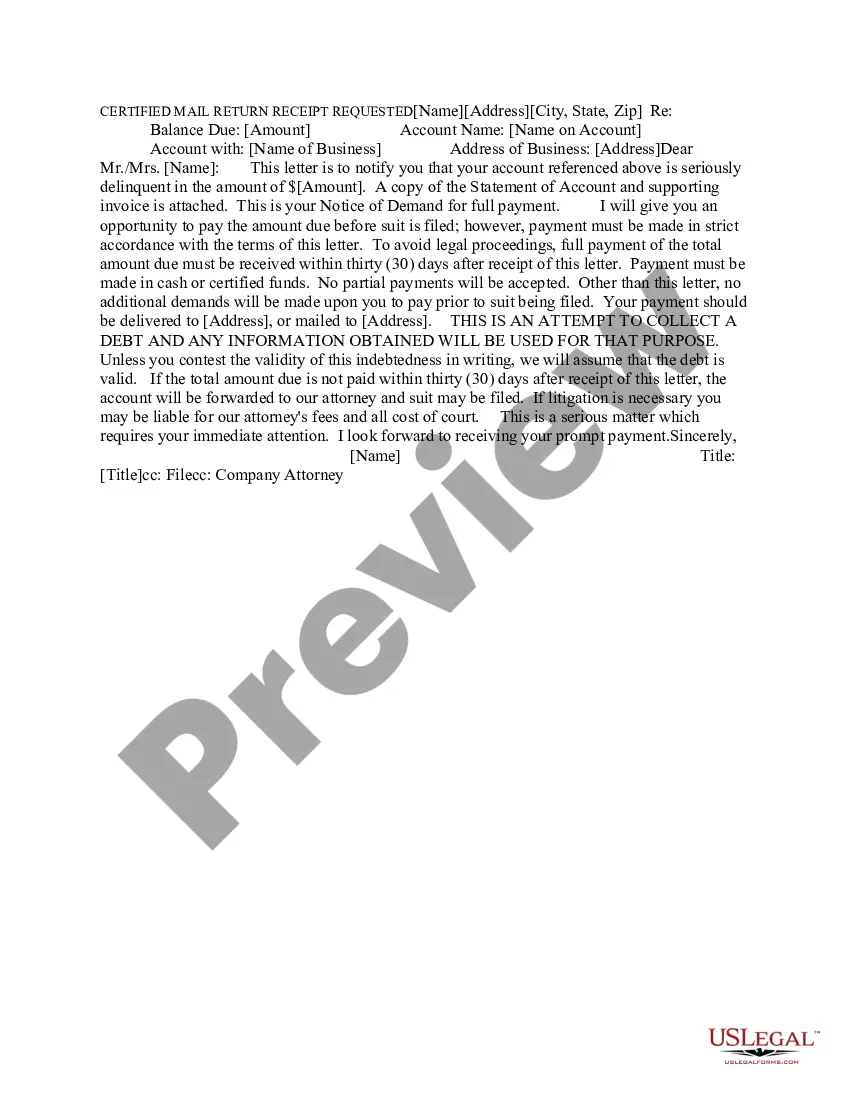
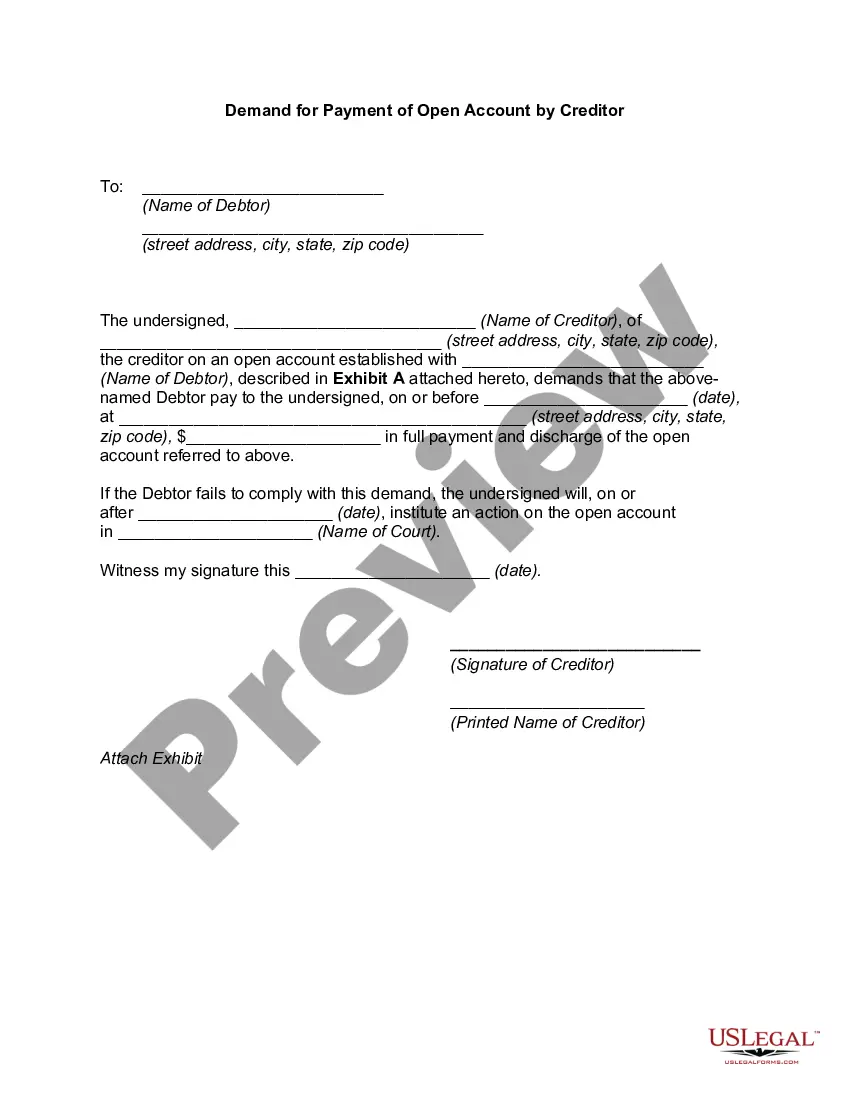
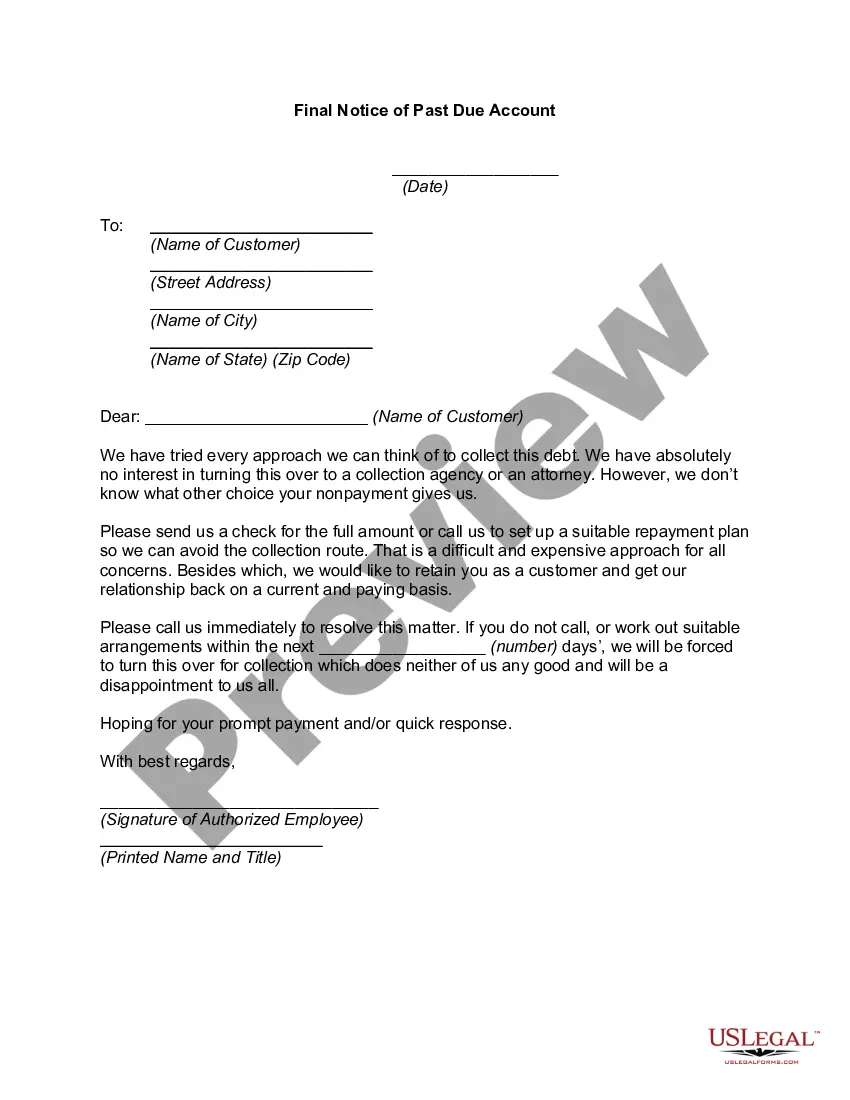
The Demand for Payment of Account by Business to Debtor is a formal letter that a business can use to request payment from a debtor for an outstanding amount. This document serves as a final notice before legal action is considered, making it distinct from informal reminders or payment requests. It clearly outlines the amount owed, the timeframe for payment, and the consequences of non-payment, ensuring that the debtor understands the seriousness of the situation.
Main sections of this form
- Sender's information: Includes the business's address and contact details.
- Debtor's information: Contains the name and address of the debtor.
- Balance due: Clearly states the total amount owed by the debtor.
- Deadline for payment: Specifies that full payment is required within thirty days of receiving the letter.
- Consequences of non-payment: Informs the debtor about potential legal actions and additional costs.
When to use this document
This form should be used when a business has made attempts to collect a debt, but the debtor remains unresponsive or has not made full payment. It is intended as a last warning, giving the debtor a final opportunity to settle their account before the business pursues legal action.
Intended users of this form
- Businesses seeking payment from clients or customers for overdue accounts.
- Creditors looking to formally notify debtors of outstanding balances.
- Financial institutions managing customer accounts with unpaid debts.
How to prepare this document
- Identify the senderâs information, including the business name and address.
- Fill in the debtor's name and address accurately.
- Clearly state the total amount that is due.
- Specify a deadline for full payment, typically thirty days from receipt.
- Include any necessary instructions for the method of payment.
Does this form need to be notarized?
Notarization is not commonly needed for this form. However, certain documents or local rules may make it necessary. Our notarization service, powered by Notarize, allows you to finalize it securely online anytime, day or night.
Get your form ready online
Our built-in tools help you complete, sign, share, and store your documents in one place.
Make edits, fill in missing information, and update formatting in US Legal Forms—just like you would in MS Word.
Download a copy, print it, send it by email, or mail it via USPS—whatever works best for your next step.
Sign and collect signatures with our SignNow integration. Send to multiple recipients, set reminders, and more. Go Premium to unlock E-Sign.
If this form requires notarization, complete it online through a secure video call—no need to meet a notary in person or wait for an appointment.
We protect your documents and personal data by following strict security and privacy standards.

Make edits, fill in missing information, and update formatting in US Legal Forms—just like you would in MS Word.

Download a copy, print it, send it by email, or mail it via USPS—whatever works best for your next step.

Sign and collect signatures with our SignNow integration. Send to multiple recipients, set reminders, and more. Go Premium to unlock E-Sign.

If this form requires notarization, complete it online through a secure video call—no need to meet a notary in person or wait for an appointment.

We protect your documents and personal data by following strict security and privacy standards.
Common mistakes
- Failing to include the correct debtorâs contact information.
- Omitting the total amount due or including incorrect figures.
- Not providing clear payment instructions, leading to confusion.
- Not sending the demand letter via certified mail, which can affect proof of receipt.
Why complete this form online
- Easy to download and customize for your specific situation.
- Instant access allows for quick action on overdue accounts.
- Legally thorough, drafted by licensed attorneys to ensure compliance.
Legal use & context
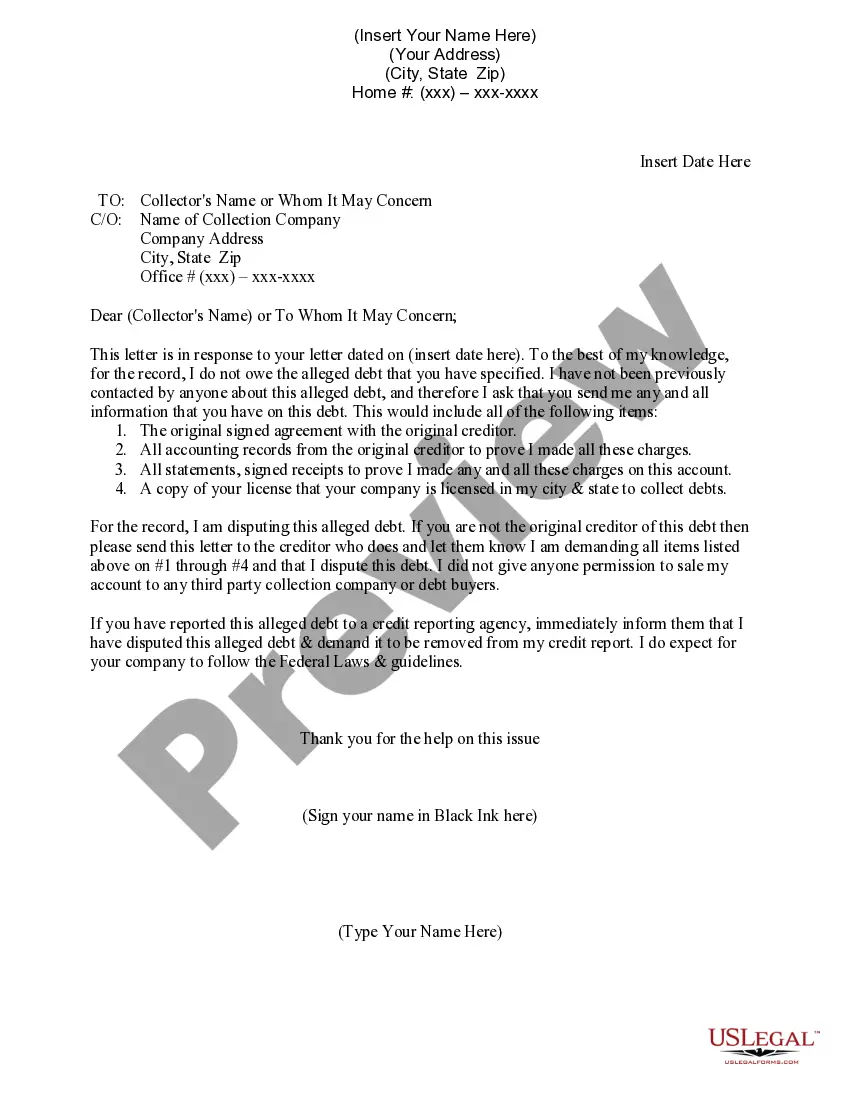
The Demand for Payment of Account by Business to Debtor is a legally recognized method for debt collection. It provides a formal record of the demand for payment and outlines the potential for further legal action if the debt is not resolved. This serves to protect the business's rights and may be used as evidence should litigation become necessary.
Key takeaways
- The Demand for Payment is a critical tool for businesses to recover debts.
- It provides a last chance for debtors to settle before legal action is initiated.
- Using this form helps establish a clear record of debt collection efforts.
Looking for another form?
Form popularity
FAQ
Request for payment of a debt that you believe you might. owe. While most of the amount that is demanded may. be owing, a portion may not be owing. It's important.
After you send a demand letter, one of several things can happen: The insurance company accepts your demand, and the settlement goes forward. You'll receive the compensation you asked for and sign a release of liability in exchange.
Don't Blow It Off. You or your business can suffer consequences from failing to answer a demand letter in a timely fashion. Assess the Validity of the Arguments. Understand the Obligee's Motives. Determine Whether or Not You Need a Lawyer. Respond Formally, Factually, and Professionally. Get Verification of Receipt.
Whether you forgot to pay a bill or your business is facing tough times, a collection agency may come calling to collect an unpaid debt. The agency may contact you, send letters and even report the debt to your business's credit profile.
The purpose of a demand letter is to begin legal negotiation between opposing parties that will result in dispute resolution rather than litigation, and to influence the recipient's understanding of the dispute's risks and rewards in a way that favors the client's interests.
The financial statement also allows the creditor to find out whether you have any equity in your home.Before attending the court you'll also need to collect evidence of your financial situation. You'll need all your financial paperwork, such as: bank statements.
Never ignore a demand letter.If you receive one, contact your attorney immediately. Some people think if they don't respond, the sender will go away. This is usually not the case especially if the other party has retained an attorney. Respond and try to resolve the issue or you run the risk of going to court.
The financial statement also allows the creditor to find out whether you have any equity in your home.Before attending the court you'll also need to collect evidence of your financial situation. You'll need all your financial paperwork, such as: bank statements.
Type your letter. Concisely review the main facts. Be polite. Write with your goal in mind. Ask for exactly what you want. Set a deadline. End the letter by stating you will promptly pursue legal remedies if the other party does not meet your demand. Make and keep copies.