Notice of Termination of Commercial Lease
About this form
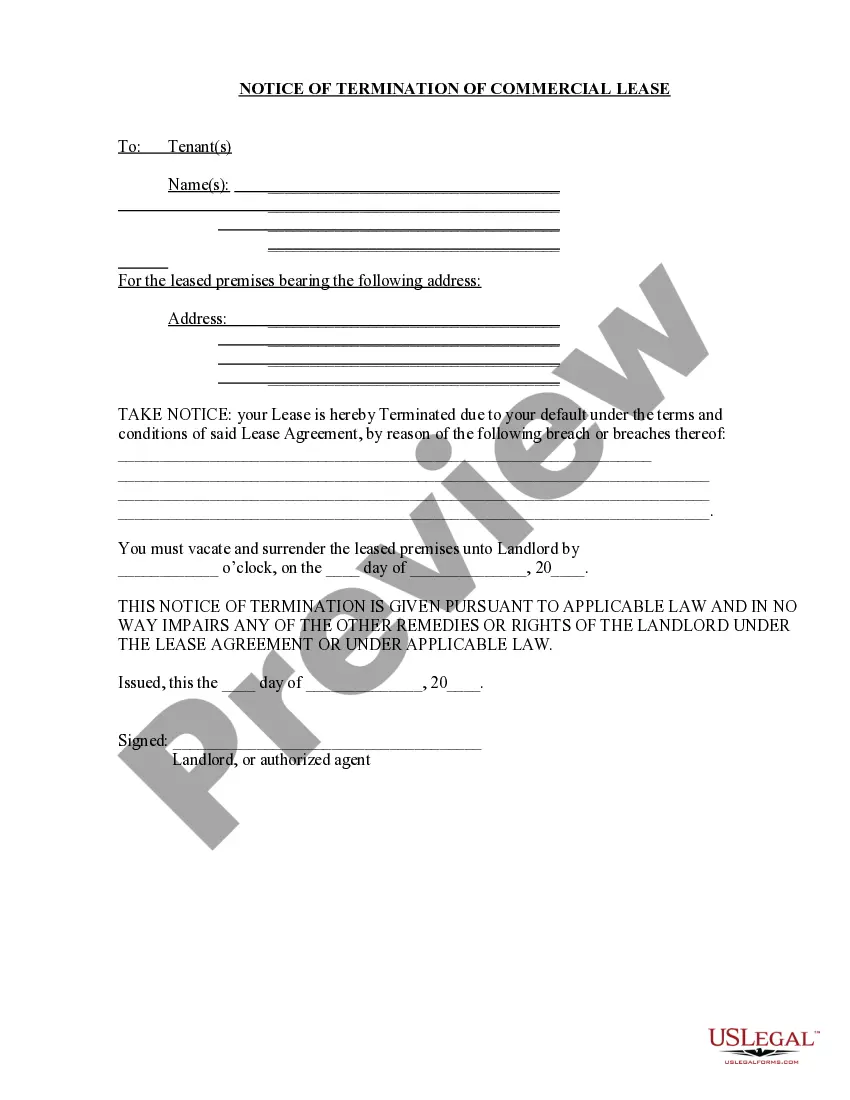
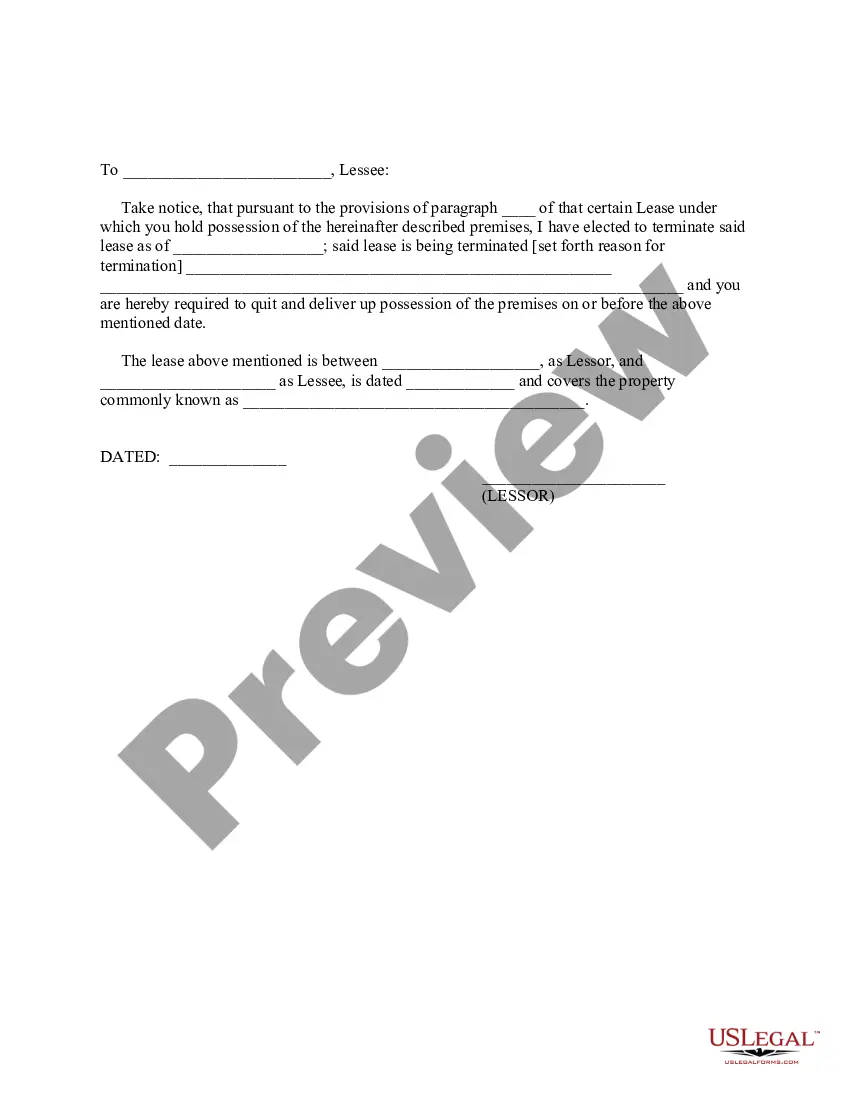
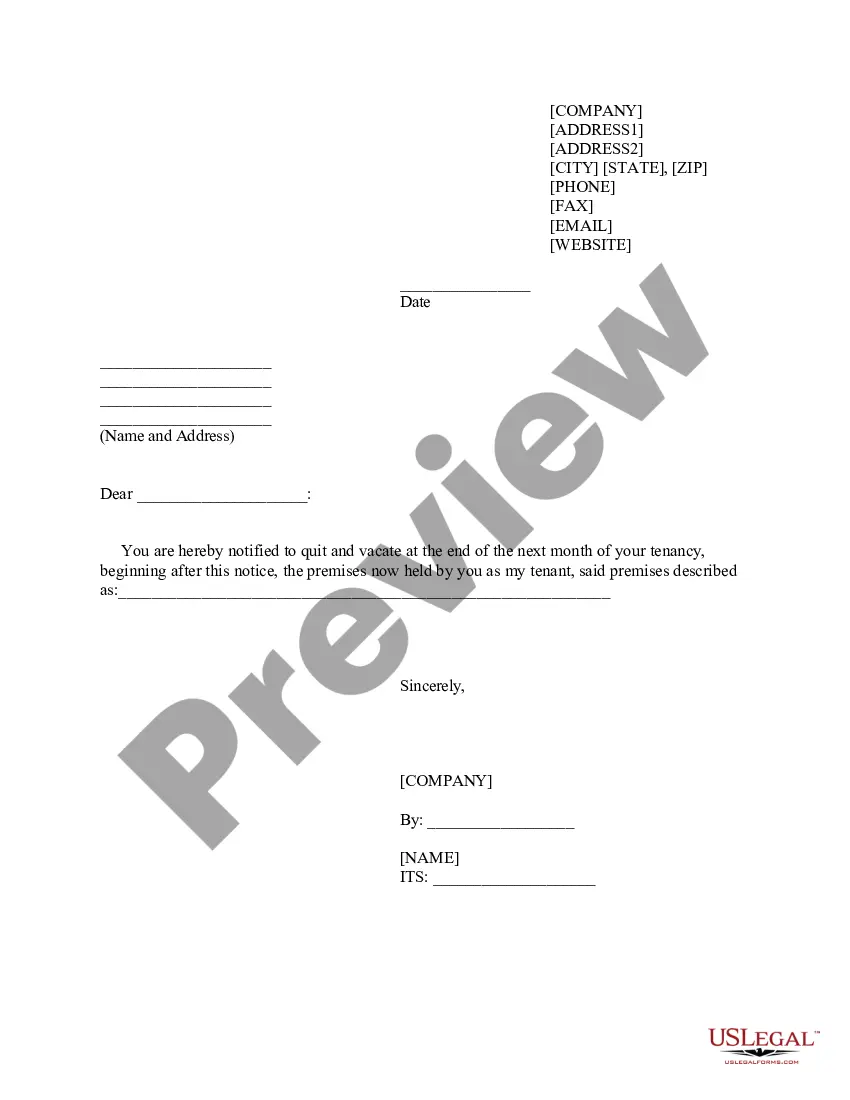
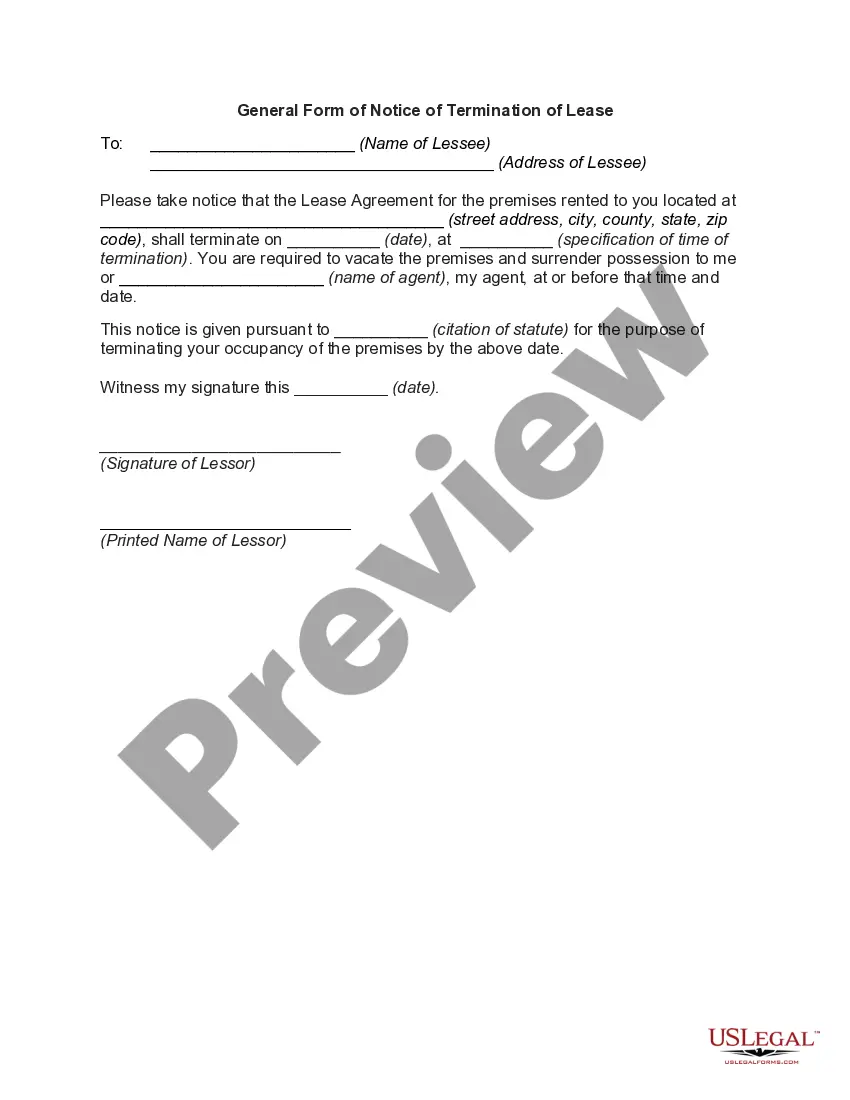
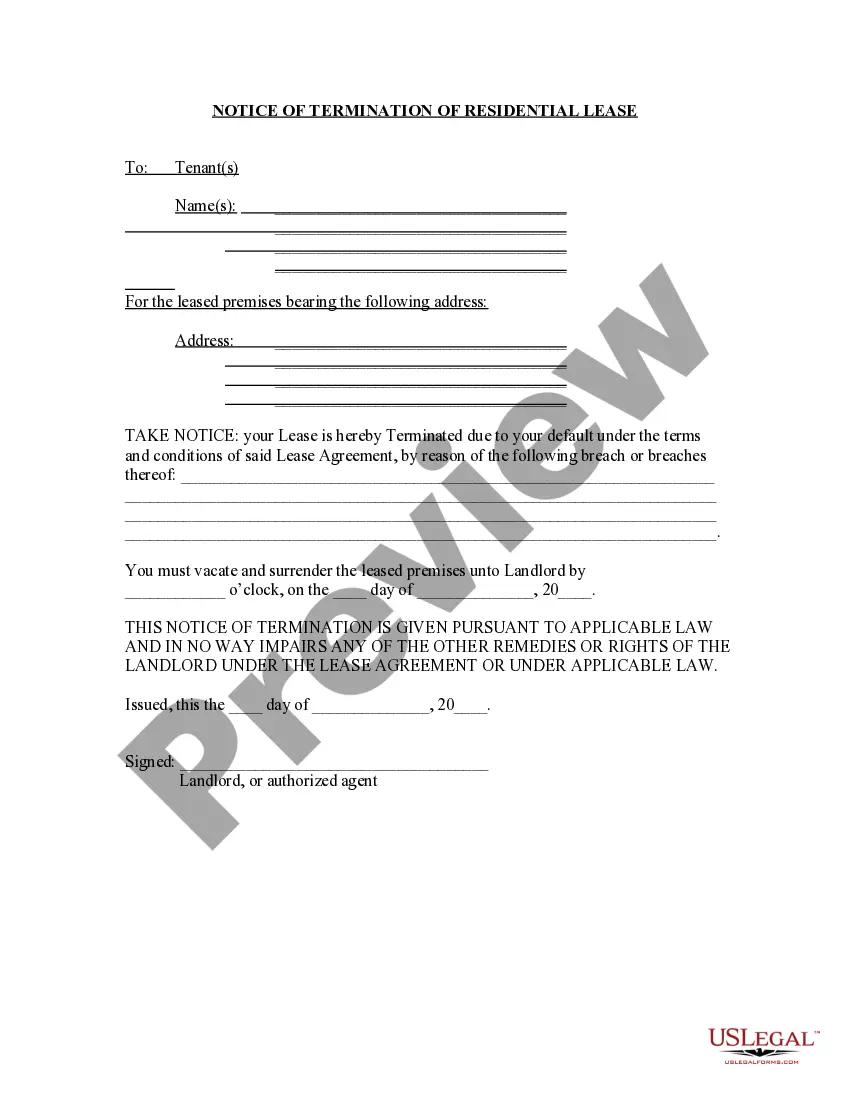
The Notice of Termination of Commercial Lease is a legal document that notifies a tenant of the landlord's decision to terminate their lease agreement. This form is specifically used when the tenant has breached the lease terms. It serves as a formal declaration, helping landlords manage their property interests while providing tenants with a clear understanding of the lease termination process.
Main sections of this form
- Tenant(s) Name(s): The names of the individuals or entities renting the commercial property.
- Leased Premises Address: The specific location of the leased property.
- Breach Description: A section to specify the reasons for the lease termination due to tenant defaults.
- Vacate Date: The deadline by which the tenant must leave the property.
- Landlordâs Signature: The signature of the landlord or authorized agent who issues the notice.

When to use this form
This form should be used when a tenant fails to comply with the terms of a commercial lease, such as not paying rent on time or violating other critical lease conditions. It is a necessary step for landlords who intend to reclaim their property legally and formally communicate the lease's termination. This notice provides a timeline for vacating the premises, ensuring compliance with legal requirements.
Who can use this document
- Landlords seeking to terminate a commercial lease due to tenant breaches.
- Property managers acting on behalf of landlords in lease termination scenarios.
- Legal representatives assisting clients in commercial lease disputes.
Completing this form step by step
- Identify the tenant(s) by entering their names in the designated field.
- Specify the address of the leased premises to clarify which property is affected.
- Clearly describe the breach of lease terms to provide context for the termination.
- Enter the date by which the tenant must vacate the premises.
- Sign the notice as the landlord or authorized agent to validate the form.
Notarization guidance
This form does not typically require notarization unless specified by local law. However, some landlords may choose to have it notarized to enhance its legal standing.
Get your form ready online
Our built-in tools help you complete, sign, share, and store your documents in one place.
Make edits, fill in missing information, and update formatting in US Legal Forms—just like you would in MS Word.
Download a copy, print it, send it by email, or mail it via USPS—whatever works best for your next step.
Sign and collect signatures with our SignNow integration. Send to multiple recipients, set reminders, and more. Go Premium to unlock E-Sign.
If this form requires notarization, complete it online through a secure video call—no need to meet a notary in person or wait for an appointment.
We protect your documents and personal data by following strict security and privacy standards.

Make edits, fill in missing information, and update formatting in US Legal Forms—just like you would in MS Word.

Download a copy, print it, send it by email, or mail it via USPS—whatever works best for your next step.

Sign and collect signatures with our SignNow integration. Send to multiple recipients, set reminders, and more. Go Premium to unlock E-Sign.

If this form requires notarization, complete it online through a secure video call—no need to meet a notary in person or wait for an appointment.

We protect your documents and personal data by following strict security and privacy standards.
Typical mistakes to avoid
- Failing to specify the breach clearly can lead to misunderstandings.
- Not providing a clear vacate date may cause confusion for the tenant.
- Omitting the landlord's signature can render the notice ineffective.
Why use this form online
- Convenience to complete the form from any location, at any time.
- Editability allows for easy customization to suit individual circumstances.
- Reliability through attorney-drafted templates ensuring legal soundness.
Legal use & context
- This form serves as a formal notification to tenants, establishing a clear record of the landlord's intentions.
- It helps prevent disputes by documenting the reason for lease termination.
- Proper use of this form is essential for enforcing rights under the lease agreement.
Summary of main points
- The Notice of Termination of Commercial Lease is crucial for legally terminating a lease due to tenant breaches.
- Clear communication through this form helps protect landlords' rights and interests.
- Completing the form accurately is essential to avoid potential legal issues.
Looking for another form?
Form popularity
FAQ
Anyone renting a building, whether for commercial or personal use, has the right to privacy. You are entitled to do anything on the property that you wish, so long as whatever you are doing is legal. The landlord cannot prevent you from operating your business nor from allowing guests or patrons on the property.
Commercial tenants may have the protection of the Landlord and Tenant Act 1954. The Act grants Security of Tenure to tenants who occupy premises for business purposes. The tenancy will continue after the contractual termination date until it is ended in one of the ways specified by the Act.
You and your landlord agree to terminate early. Enter into a deed of surrender to explicitly release you from all lease obligations. You have an early termination clause or break clause in the lease. You may be able to transfer or assign the lease with your landlord's agreement.
Your name, and the landlord's name and address. The date you're writing the letter. Informing the landlord you're breaking your lease early. The reason why you're breaking your lease. The building and apartment you're vacating. The date by which you're vacating.
Before selling the tenant's property, the landlord must give the tenant five days' notice. Unless the lease requires the landlord to give the tenant notice, the landlord may be able to terminate the lease and evict the tenant if the tenant does not pay the rent on time.
The address of the property (The landlord may have many properties to manage. The specific date you plan to vacate. The date you plan to surrender the keys. The date you plan to have the utilities turned off. A request for property inspection. A forwarding address.
So a tenant is likely to have to give between 3 and 4 months notice if rent is paid monthly, and 3 and 6 months notice if rent is paid quarterly.
So a tenant is likely to have to give between 3 and 4 months notice if rent is paid monthly, and 3 and 6 months notice if rent is paid quarterly.