Notice to Terminate Tenancy ( by Landlord )
What is this form?
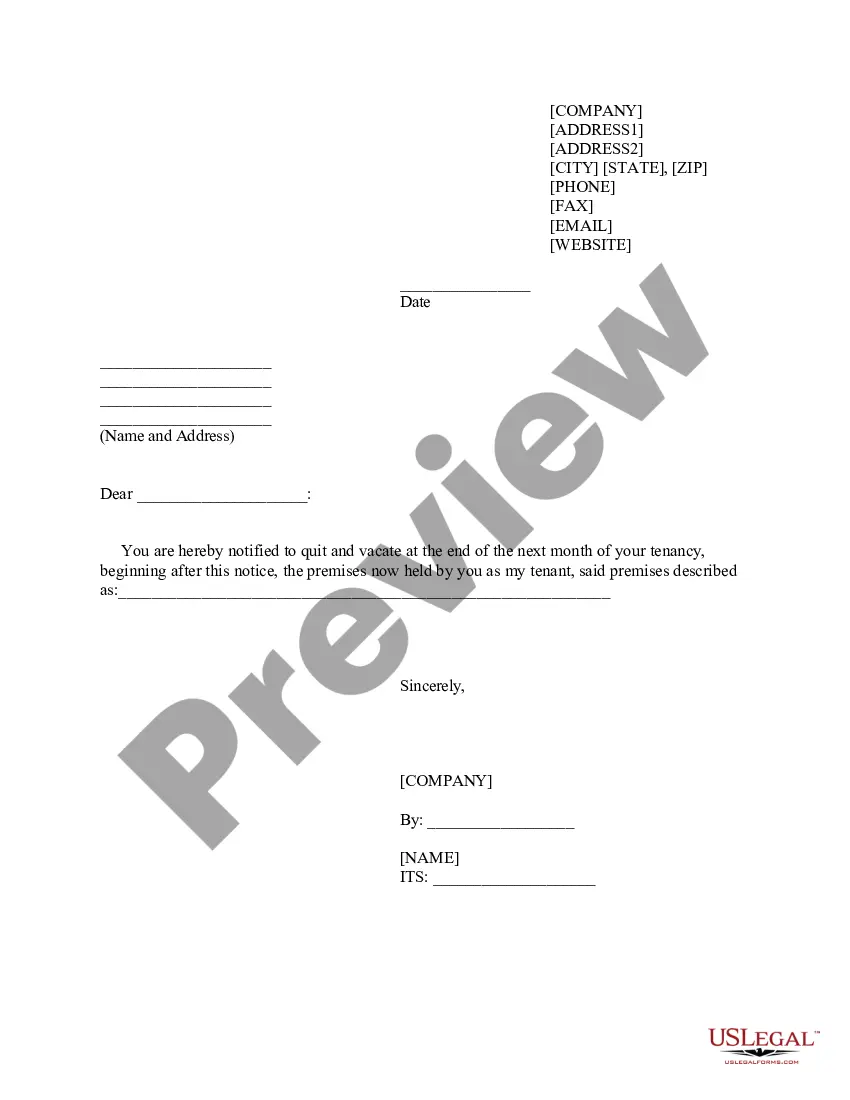
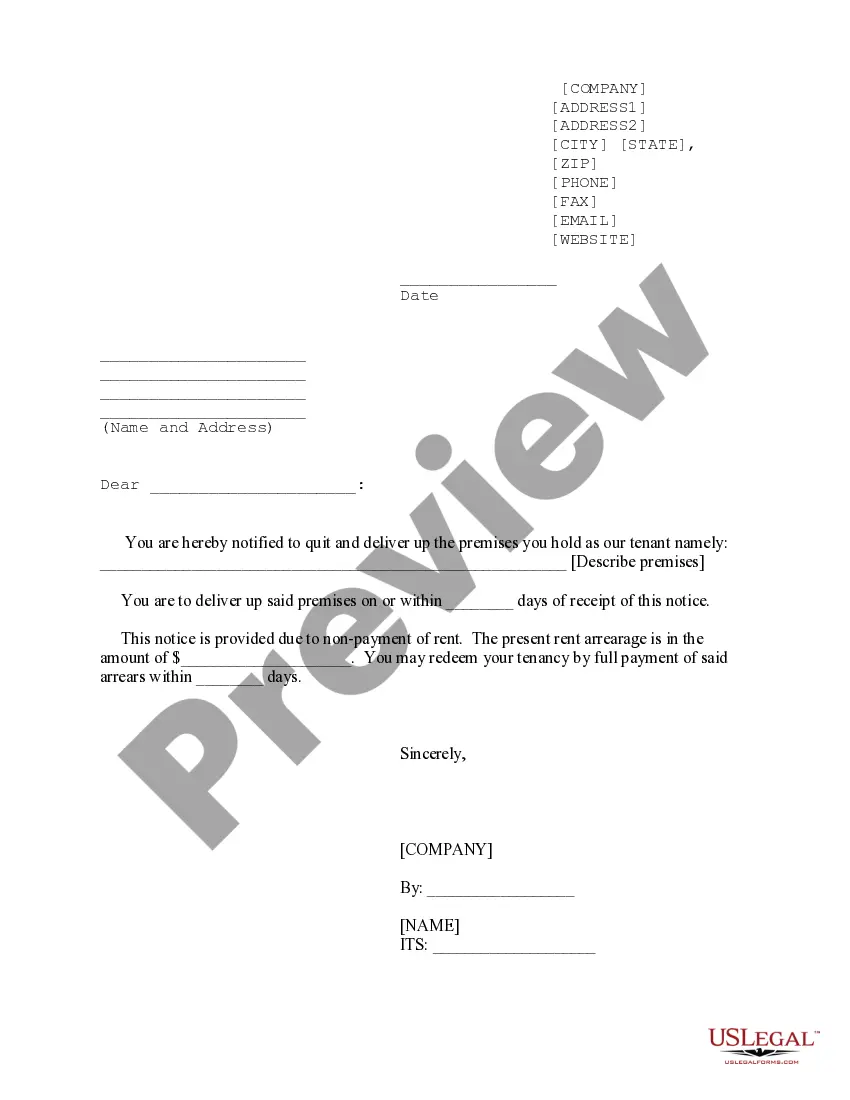
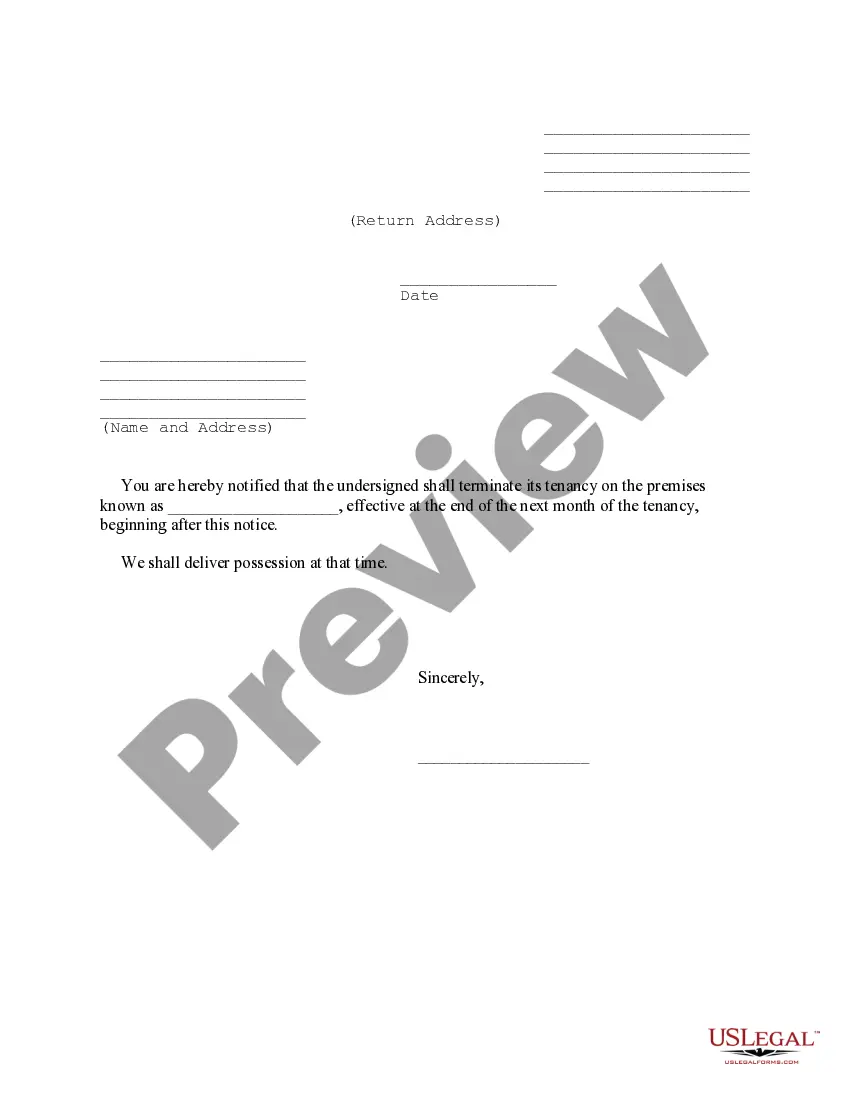
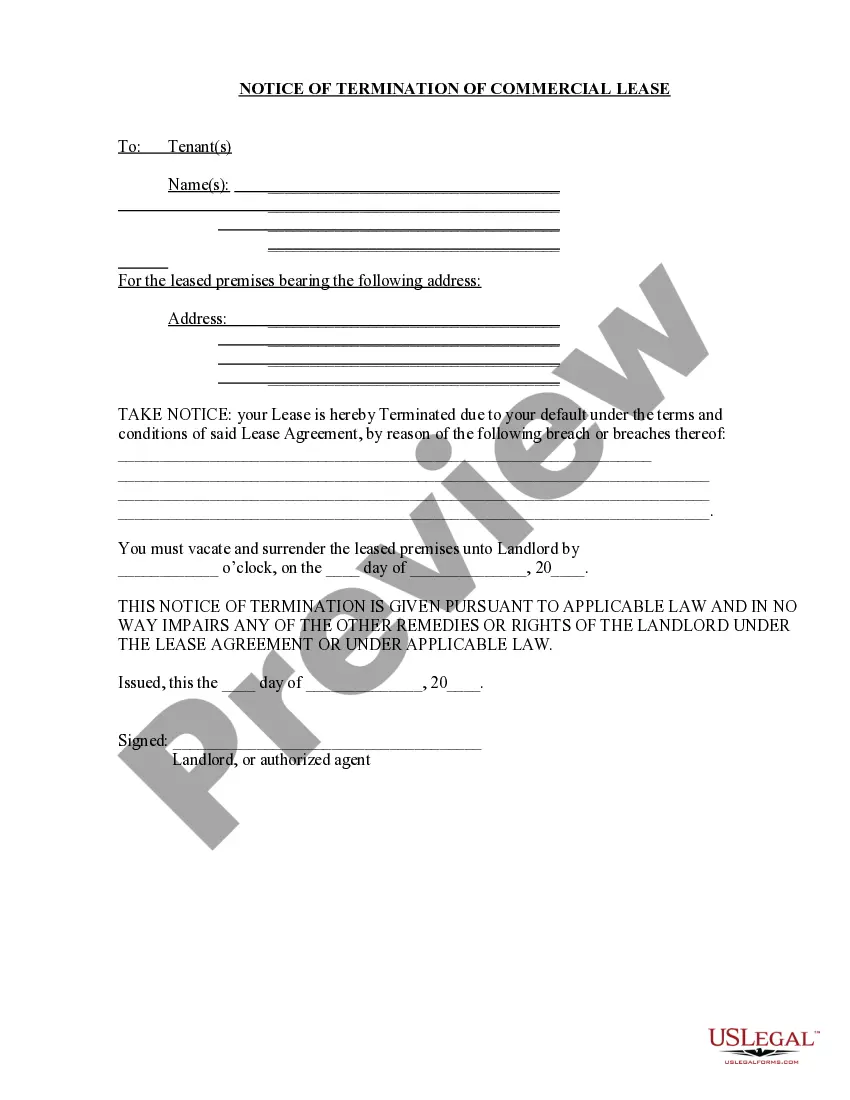
The Notice to Terminate Tenancy (by Landlord) is a legal document used by landlords to inform tenants that their rental agreement will be terminated. This form is a formal way to communicate the need to vacate the property at the end of the next month, ensuring that landlords comply with legal requirements while providing tenants with adequate notice to find alternative housing. Unlike other eviction notices, this form specifies the tenant's responsibility to leave at the end of the established timeframe rather than immediately.
Key components of this form
- Landlord's contact information: Includes address, phone number, and email.
- Date of the notice: The date when the notice is issued.
- Tenant's name and address: Specifies who is receiving the notice.
- Statement of termination: Clearly states that the tenant must vacate the premises by the end of the following month.
- Property description: Details about the premises in question.
- Signature section: Space for the landlord's signature and designation.

Common use cases
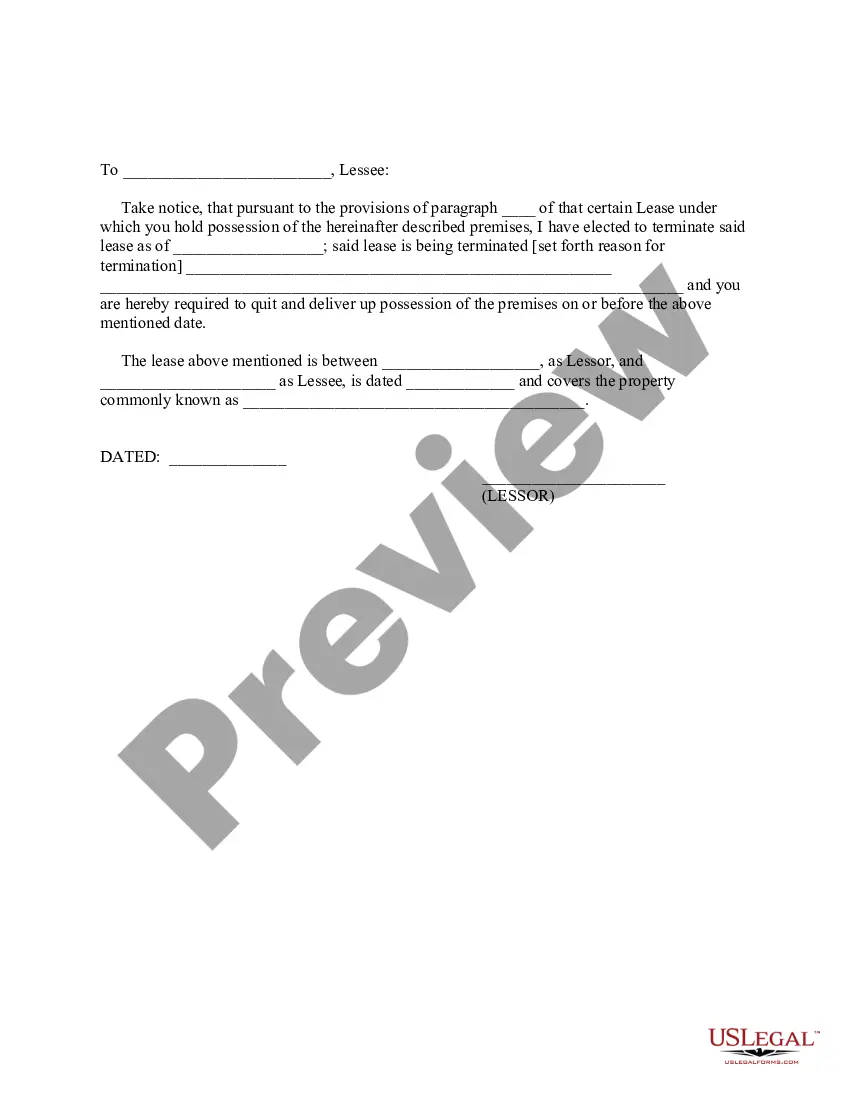
This form should be used when a landlord decides to terminate a rental agreement with a tenant. Common scenarios include when the lease is ending, if the landlord wishes to regain possession of the property for personal use, or if the tenant has violated lease terms and the landlord is seeking to end the tenancy legally. Always ensure that local laws regarding termination notices are followed to avoid potential legal disputes.
Intended users of this form
- Landlords seeking to formally notify tenants of lease termination.
- Property managers who manage rental agreements on behalf of property owners.
- Individuals renting out their property who need to end a tenancy for legitimate reasons.
Instructions for completing this form
- Identify the landlordâs information: Fill in your name, address, phone number, and email.
- Enter the date: Write the current date on which the notice is being issued.
- Provide tenantâs details: Include the name and address of the tenant who is being notified.
- State the termination: Clearly indicate that the tenant must vacate the premises by the end of the next month.
- Describe the property: Provide a detailed description of the rental property involved.
- Sign the document: Include your signature, printed name, and title to validate the notice.
Is notarization required?
This form does not typically require notarization unless specified by local law. However, confirming with local regulations is advisable to ensure compliance.
Get your form ready online
Our built-in tools help you complete, sign, share, and store your documents in one place.
Make edits, fill in missing information, and update formatting in US Legal Forms—just like you would in MS Word.
Download a copy, print it, send it by email, or mail it via USPS—whatever works best for your next step.
Sign and collect signatures with our SignNow integration. Send to multiple recipients, set reminders, and more. Go Premium to unlock E-Sign.
If this form requires notarization, complete it online through a secure video call—no need to meet a notary in person or wait for an appointment.
We protect your documents and personal data by following strict security and privacy standards.

Make edits, fill in missing information, and update formatting in US Legal Forms—just like you would in MS Word.

Download a copy, print it, send it by email, or mail it via USPS—whatever works best for your next step.

Sign and collect signatures with our SignNow integration. Send to multiple recipients, set reminders, and more. Go Premium to unlock E-Sign.

If this form requires notarization, complete it online through a secure video call—no need to meet a notary in person or wait for an appointment.

We protect your documents and personal data by following strict security and privacy standards.
Common mistakes to avoid
- Failing to provide adequate notice based on state requirements.
- Leaving out important details such as tenant's address or property description.
- Not signing the notice, which could render it unenforceable.
- Using outdated forms that do not comply with current laws.
Why complete this form online
- Convenience: Easily download and fill out the form from home.
- Editability: Make necessary adjustments to tailor the notice to specific situations.
- Reliability: Access professionally drafted templates created by licensed attorneys.
Legal use & context
The Notice to Terminate Tenancy (by Landlord) serves as a formal record of the landlord's intention to end the tenantâs lease. It provides tenants with essential information related to their rights and obligations and helps prevent legal disputes regarding eviction proceedings.
Main things to remember
- The notice is legally required to terminate a tenancy.
- It provides essential dates and information for tenants.
- Using a professionally drafted form ensures compliance with state laws.
Looking for another form?
Form popularity
FAQ
Like joint tenancy, holding property as tenants by the entirety permits a right of survivorship (i.e., property passes to the surviving spouse when one spouse dies). Unlike joint tenancy, one spouse cannot sever the tenancy by the entirety unilaterally by transferring his or her interest to the property.
Notice Requirements for Illinois Landlords A landlord can simply give you a written notice to move, allowing you 30 days as required by Illinois law and specifying the date on which your tenancy will end.
Tenancy by the entirety in Illinois is a means of holding title that is exclusively available to married couples. One of the benefits of this type of title is that it affords extra protection to marital property against some creditors.??
A tenancy is a right that a tenant has to temporarily occupy or possess a real estate that belongs to a landlord, commonly under a lease. There are different types of tenancies, like periodic tenancy, tenancy at will, and a month-to-month tenancy. See also: tenancy in common, joint tenancy, and tenancy by the entirety.
A tenant is on a lease and the guests they have in the home they are leasing are not. As such, the former is responsible for paying rent on time and ensuring the property is not damaged.
Illinois Tenant Rights and Responsibilities It is against the law in Illinois to discriminate in all aspects of real estate transactions, including renting or leasing, based on your source of income. This includes non-employment income, such Housing Choice Vouchers (Section 8) or disability payments.
Tenants In Common In Illinois If a property is owned by two or more people, property will be held as ?tenants in common? unless otherwise stated. Holding a property together only lasts as long as both parties want to hold the property together.