Release of Claims and Termination of Noncompetition Agreement
Overview of this form
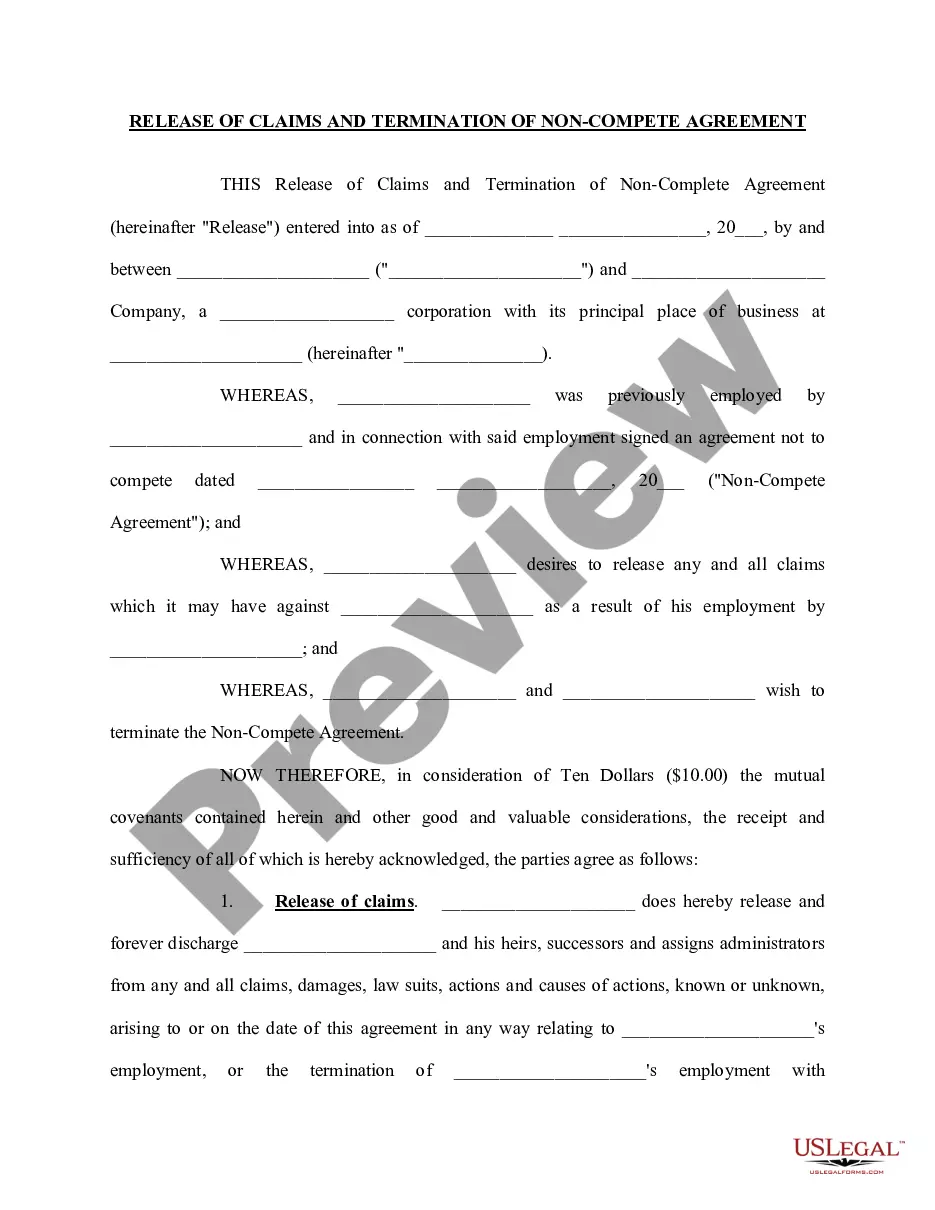
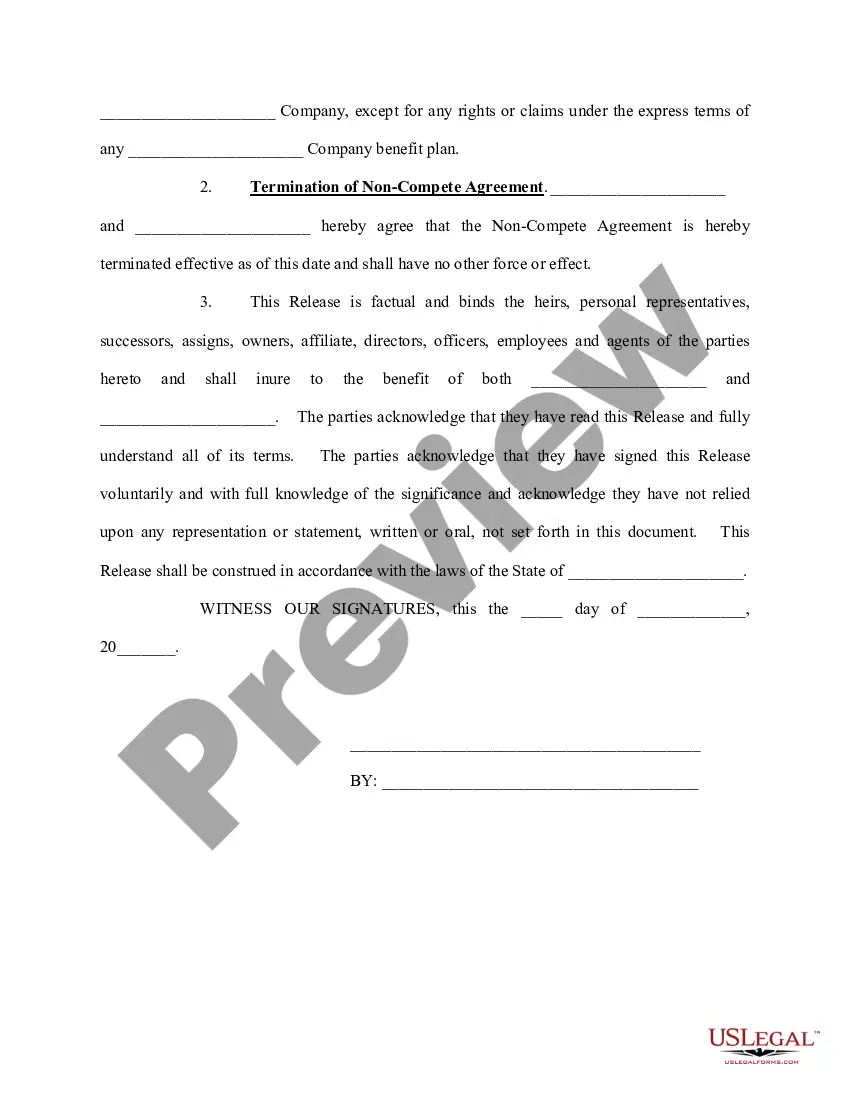
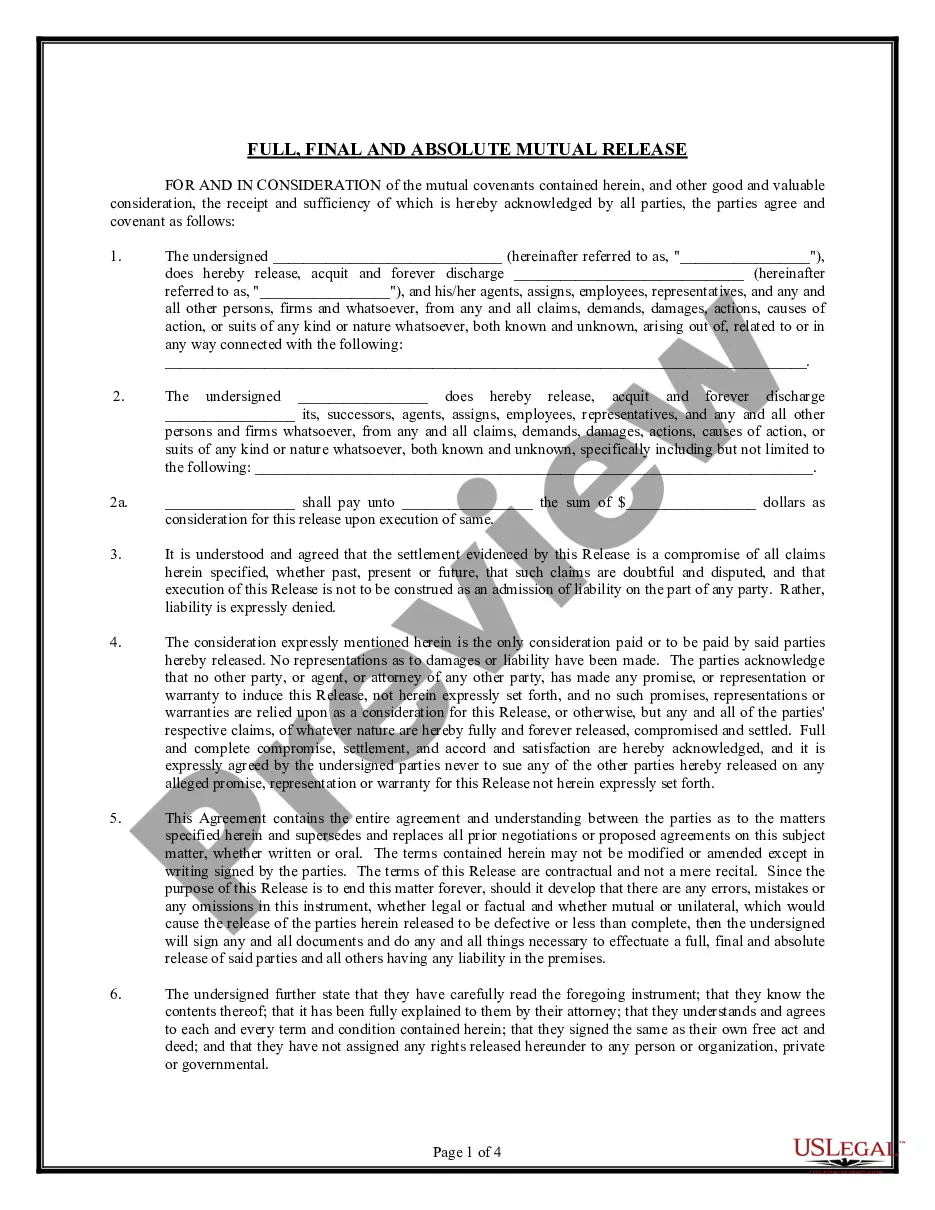
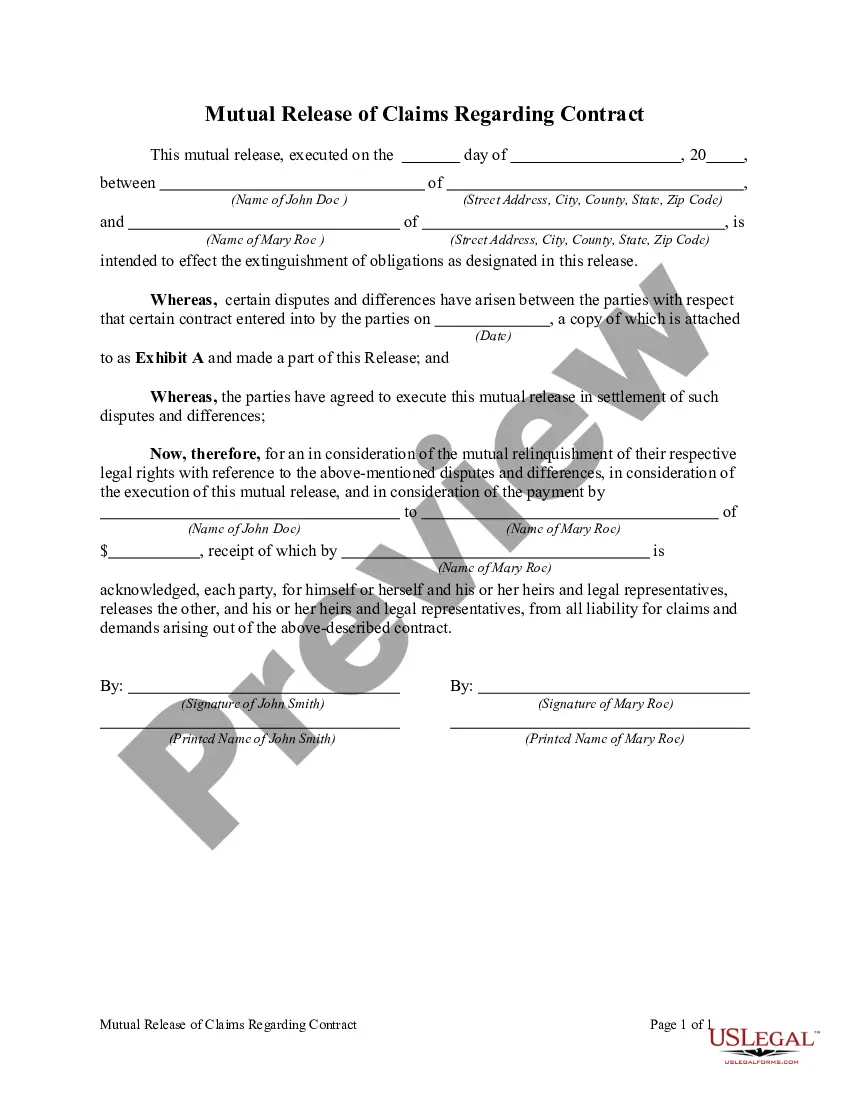
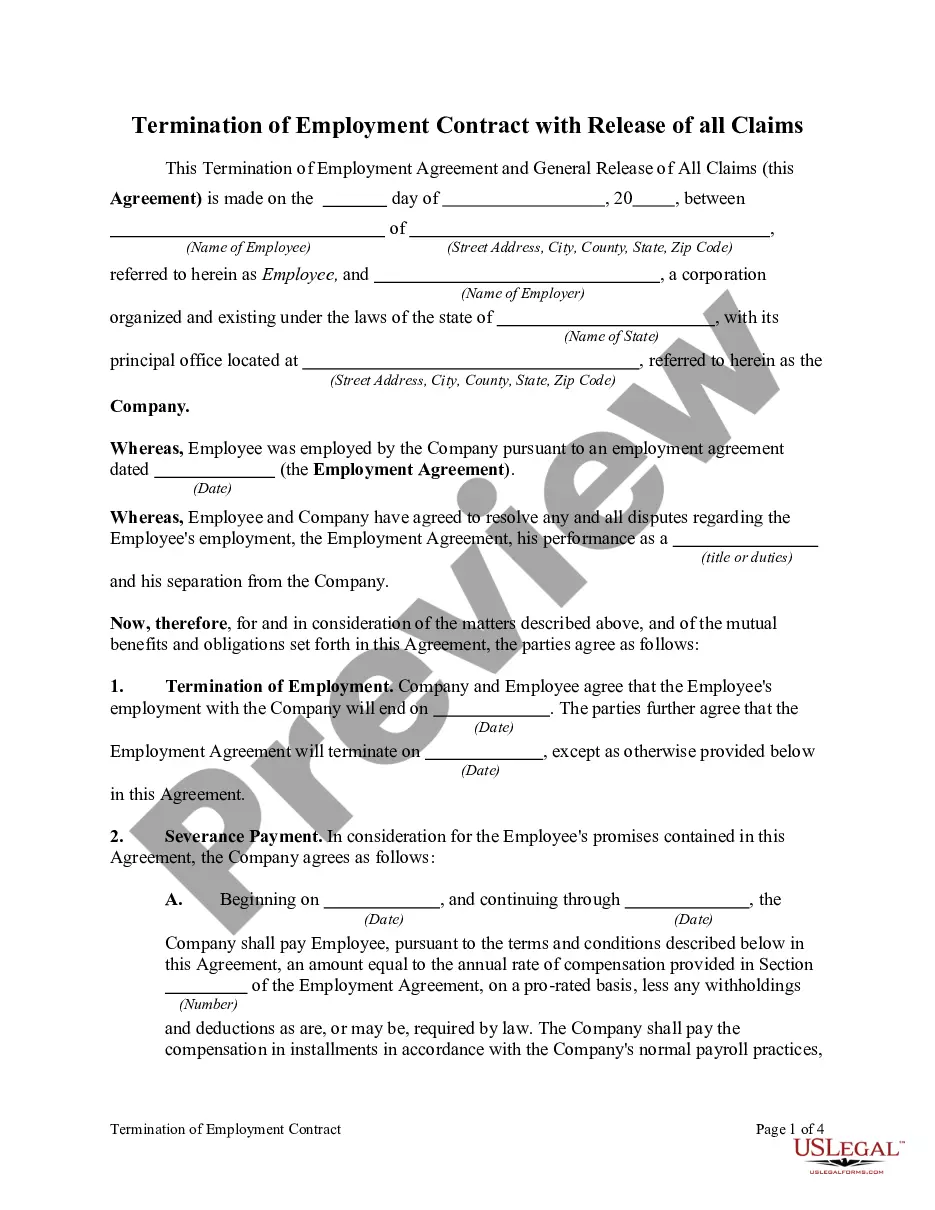
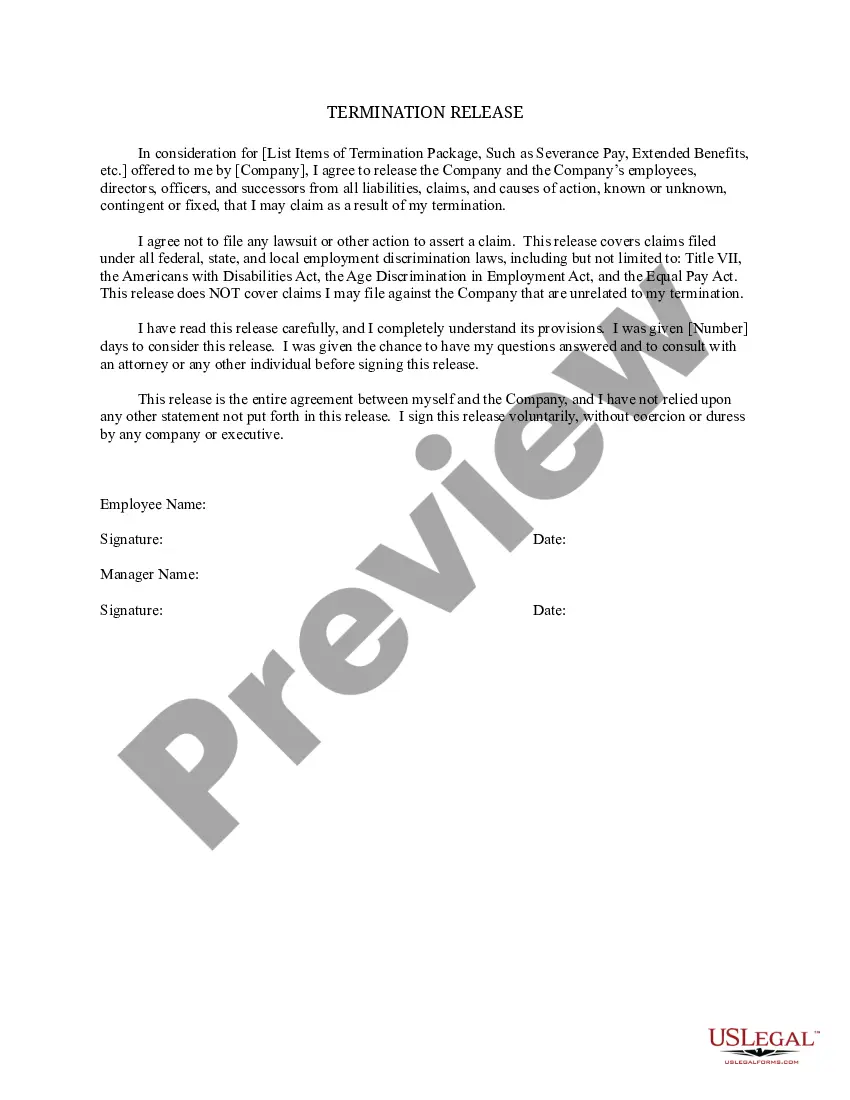
The Release of Claims and Termination of Noncompetition Agreement is a legal document that formally releases an employee from any previous employer's claims related to their employment. It also terminates any existing non-competition agreement, ensuring that the employee is free to work without restrictions post-employment. This form is essential in providing clarity and legal absolution for both parties, distinguishing it from other employment-related agreements which may not terminate a non-competition clause.
What’s included in this form
- Parties Involved: Identifies the releasee and the employer company.
- Release of Claims: Contains the releasee's discharge from all claims by the employer.
- Termination Clause: States that the non-competition agreement is terminated and holds no effect.
- Acknowledgement: Confirms that both parties have read and understood the terms of the agreement.
- Governing Law: Includes the applicable state laws that govern the interpretation of the Release.
Common use cases
This form should be used when an employee is leaving an organization and the employer wishes to relinquish any claims against them, typically after a settlement or agreement has been reached. It is particularly relevant when a non-competition clause exists, ensuring that the former employee can pursue new job opportunities without legal encumbrances.
Who this form is for
- Employees seeking to terminate a non-competition agreement.
- Employers looking to formally release an employee from all claims.
- Human resources professionals managing employee separations.
- Legal representatives drafting release agreements for clients.
Completing this form step by step
- Identify the parties involved by filling in their names and contact information.
- Specify the date of employment and the date the non-compete agreement was signed.
- Complete the release clause by ensuring it covers all necessary claims.
- Sign and date the document, ensuring both parties acknowledge their understanding.
- Consider keeping a copy for record-keeping purposes.
Notarization guidance
This form does not typically require notarization to be legally valid. However, some jurisdictions or document types may still require it. US Legal Forms provides secure online notarization powered by Notarize, available 24/7 for added convenience.
Get your form ready online
Our built-in tools help you complete, sign, share, and store your documents in one place.
Make edits, fill in missing information, and update formatting in US Legal Forms—just like you would in MS Word.
Download a copy, print it, send it by email, or mail it via USPS—whatever works best for your next step.
Sign and collect signatures with our SignNow integration. Send to multiple recipients, set reminders, and more. Go Premium to unlock E-Sign.
If this form requires notarization, complete it online through a secure video call—no need to meet a notary in person or wait for an appointment.
We protect your documents and personal data by following strict security and privacy standards.

Make edits, fill in missing information, and update formatting in US Legal Forms—just like you would in MS Word.

Download a copy, print it, send it by email, or mail it via USPS—whatever works best for your next step.

Sign and collect signatures with our SignNow integration. Send to multiple recipients, set reminders, and more. Go Premium to unlock E-Sign.

If this form requires notarization, complete it online through a secure video call—no need to meet a notary in person or wait for an appointment.

We protect your documents and personal data by following strict security and privacy standards.
Common mistakes to avoid
- Failing to include all relevant claims in the release clause.
- Not specifying the effective date of the termination of the non-competition agreement.
- Forgetting to have both parties sign the document.
- Overlooking state-specific legal requirements that may affect enforceability.
Why use this form online
- Convenience of accessing the form anytime, from anywhere.
- Editability allows for customization of the form to meet specific needs.
- Reliable templates drafted by licensed attorneys.
- Quick downloading enables immediate use once completed.
Looking for another form?
Form popularity
FAQ
Generally, if you violate a valid and enforceable non-compete agreement, it is likely that your employer will file a lawsuit against you.In very rare cases, the court may prevent you from working for a competitor for the duration specified in the non-compete.
On the other hand, the employer may sue you and go to court seeking what is called an "injunction" or restraining order to prevent you from violating your agreement. Because a violation of a non-compete agreement can cause an employer immediate harm, the court will often use expedited procedures in these cases.
Voiding a non-compete contract is possible in certain circumstances. For instance, if you can prove that you never signed the contract, or if you can demonstrate that the contract is against the public interest, you may be able to void the agreement.
Typically, the only way to fight a non-compete agreement is to go to court. If you are an employee (or former employee) who signed such an agreement, this means you must violate the agreement and wait to be sued. It may be that your former employer has never sued another employee to enforce the non-compete agreement.
But what's the penalty? Well, pursuant to the Labor Code Section 2699(e), a California employer may be fined $100 for each aggrieved employee per pay period for such a violation.
Typically, the only way to fight a non-compete agreement is to go to court. If you are an employee (or former employee) who signed such an agreement, this means you must violate the agreement and wait to be sued. It may be that your former employer has never sued another employee to enforce the non-compete agreement.
In most cases, the court will rule in favor of the agreement if the employer can meet certain conditions. This is true regardless of the reason the employee left the company. However, not all non-compete agreements are fully enforceable under the law.
Not necessarily. Fortunately for you, courts have recently limited the power of non-compete agreements to protect employees' rights, making it possible (though not guaranteed) for you to get out of your non-compete. For a non-compete agreement to be enforceable, it must first be reasonable.
Not necessarily. Fortunately for you, courts have recently limited the power of non-compete agreements to protect employees' rights, making it possible (though not guaranteed) for you to get out of your non-compete. For a non-compete agreement to be enforceable, it must first be reasonable.