Release and Indemnity Agreement for Settlement of Small Claims Case
What this document covers
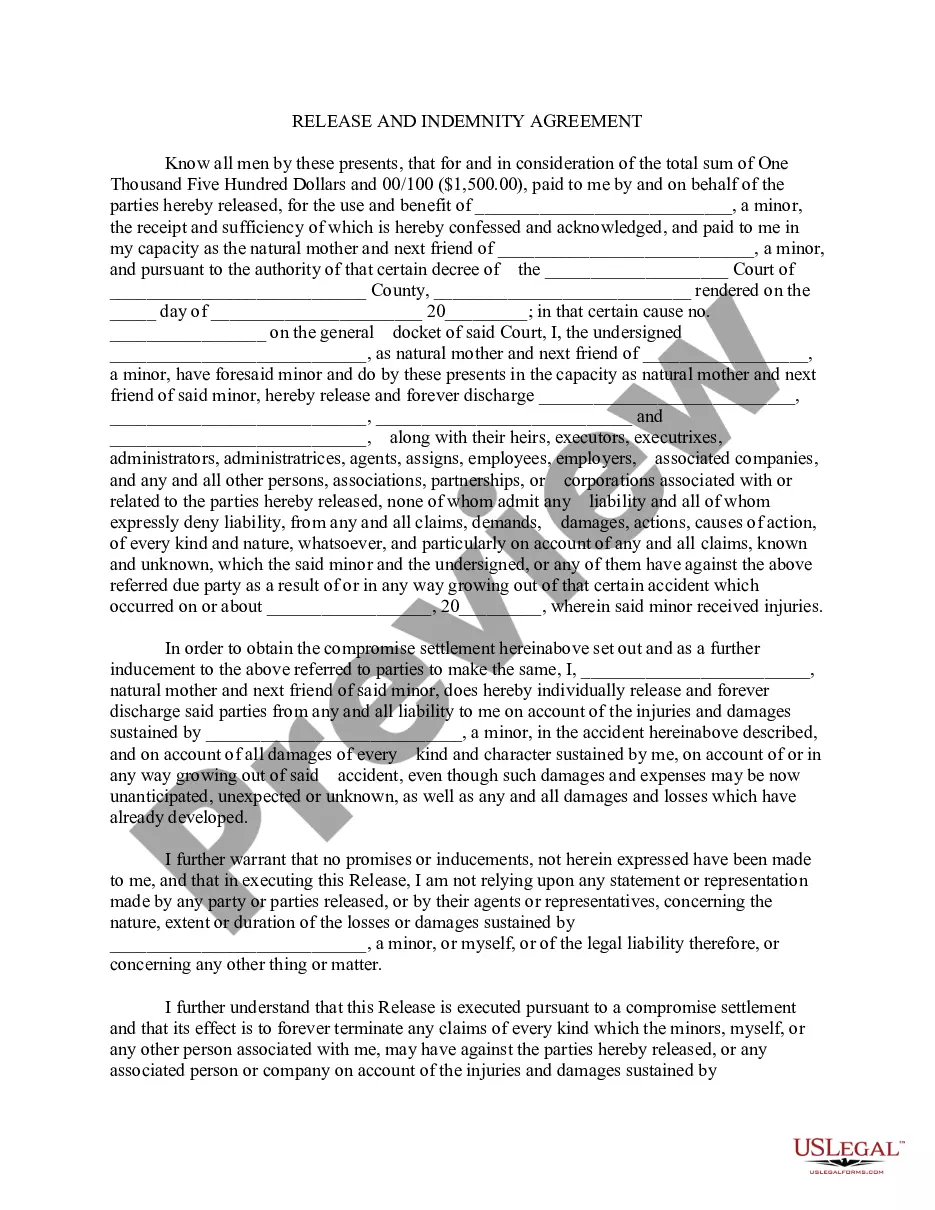
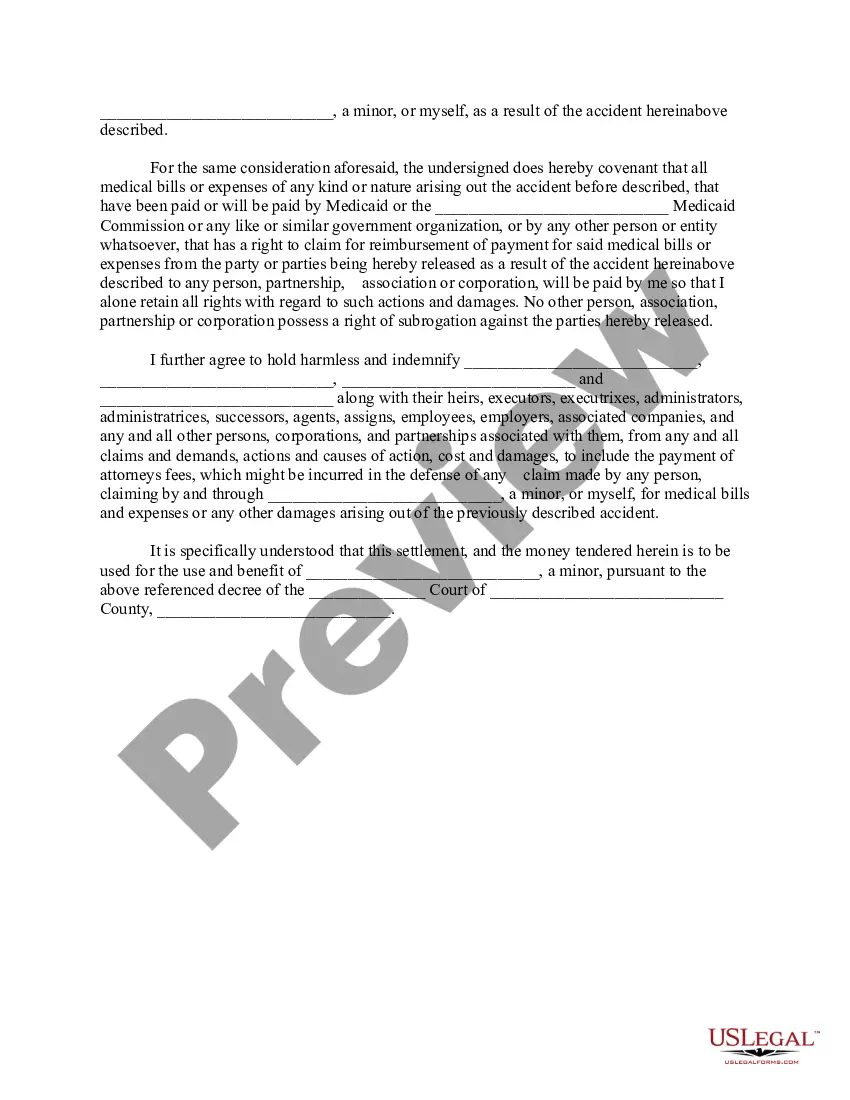
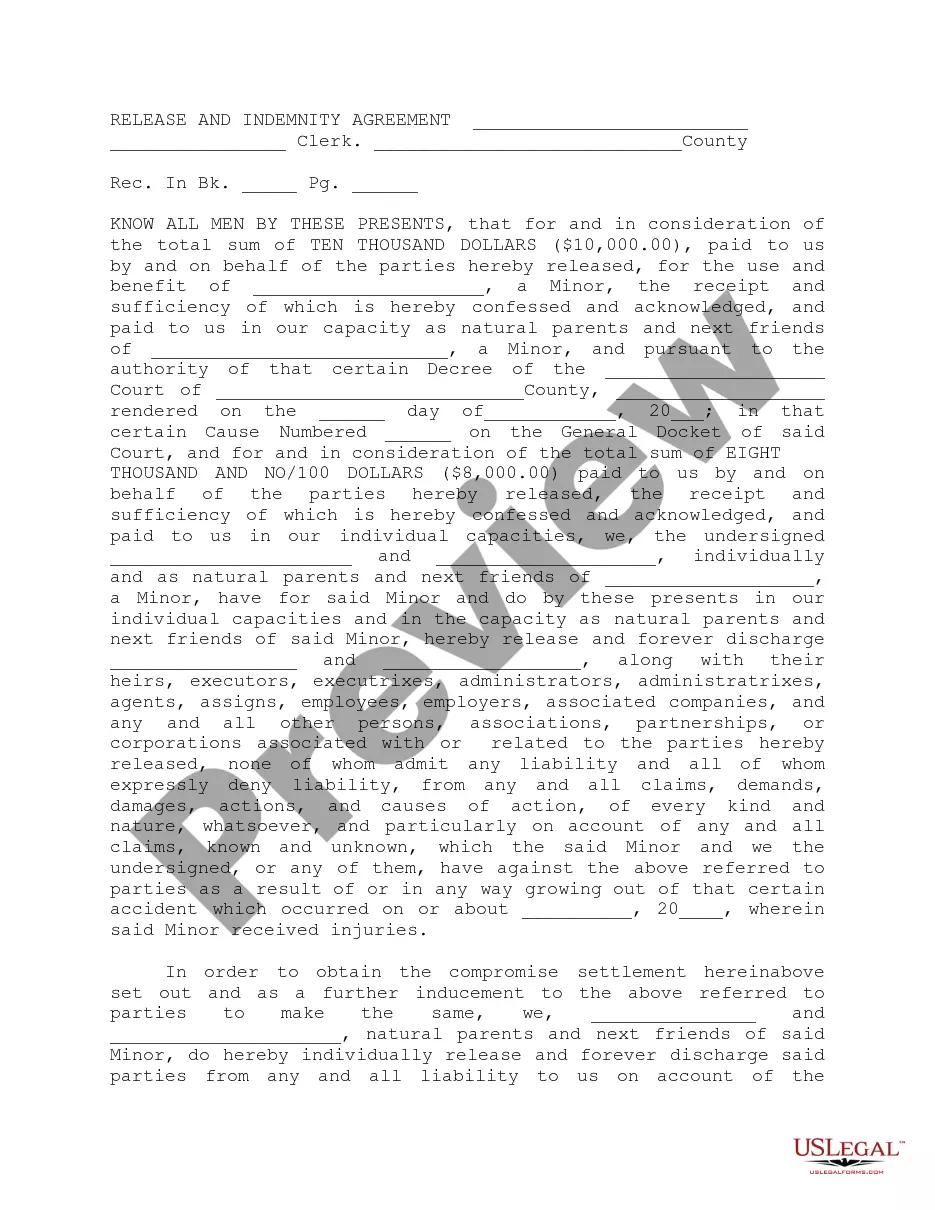
The Release and Indemnity Agreement for Settlement of Small Claims Case is a legal document used when a parent of a minor child agrees to release and indemnify other parties from liability related to an accident in which the minor was injured. This form serves to formally settle any claims, ensuring that the released parties are no longer accountable for any potential future claims associated with the incident, regardless of whether those claims are known or unknown. Unlike typical liability waivers, this form specifically pertains to minors and compensates their caregivers for their child's injuries and related damages.
Main sections of this form
- Details of the accident, including date and specifics.
- Identification of the parties involved, including the minor and their parent or guardian.
- Statement of consideration, acknowledging the settlement amount.
- A clause releasing all parties from further liability for the incident.
- Indemnity clause, requiring the parent to hold harmless those released from liability.
- Signature lines for the parent or guardian and any witnesses.
Common use cases
This form should be used when a minor has been involved in an accident that resulted in injuries, and the parties involved wish to settle any claims regarding those injuries without going to court. It is particularly relevant in situations where there is an agreed-upon settlement amount to resolve the matter, thus protecting both the minor's rights and the liability of the parties being released.
Who can use this document
- Parents or legal guardians of a minor child who has been injured in an accident.
- Individuals seeking to settle claims without the need for lengthy legal proceedings.
- Parties involved in small claims cases where liability is disputed but a settlement is preferred.
- Legal representatives seeking to formalize an agreement after settling a claim involving a minor.
How to prepare this document
- Identify all parties involved, including the minor child and their parent or guardian.
- Provide details of the accident, including the date and nature of the incident.
- Enter the agreed-upon settlement amount in the appropriate section.
- Include any relevant court case information if applicable, along with the court's details.
- Have the parent or guardian sign the form, and include any required witness signatures.
Notarization requirements for this form
This form does not typically require notarization unless specified by local law. It is essential to verify any additional requirements based on jurisdiction to ensure full legal enforceability.
Get your form ready online
Our built-in tools help you complete, sign, share, and store your documents in one place.
Make edits, fill in missing information, and update formatting in US Legal Forms—just like you would in MS Word.
Download a copy, print it, send it by email, or mail it via USPS—whatever works best for your next step.
Sign and collect signatures with our SignNow integration. Send to multiple recipients, set reminders, and more. Go Premium to unlock E-Sign.
If this form requires notarization, complete it online through a secure video call—no need to meet a notary in person or wait for an appointment.
We protect your documents and personal data by following strict security and privacy standards.

Make edits, fill in missing information, and update formatting in US Legal Forms—just like you would in MS Word.

Download a copy, print it, send it by email, or mail it via USPS—whatever works best for your next step.

Sign and collect signatures with our SignNow integration. Send to multiple recipients, set reminders, and more. Go Premium to unlock E-Sign.

If this form requires notarization, complete it online through a secure video call—no need to meet a notary in person or wait for an appointment.

We protect your documents and personal data by following strict security and privacy standards.
Common mistakes
- Failing to accurately identify all parties involved, which may affect the release of liability.
- Not specifying the date of the accident, leading to ambiguity.
- Omitting the signature of the parent or guardian, rendering the agreement invalid.
- Neglecting to double-check the settlement amount for accuracy.
- Ignoring state-specific requirements that may affect the enforceability of the release.
Benefits of using this form online
- Convenient access to accurate legal forms that save time and effort.
- Editability, allowing users to customize the document for their specific needs.
- Reliability, with forms drafted by licensed attorneys ensuring compliance with legal standards.
- Immediate availability, so users can download and complete the form at their convenience.
Looking for another form?




Form popularity
FAQ
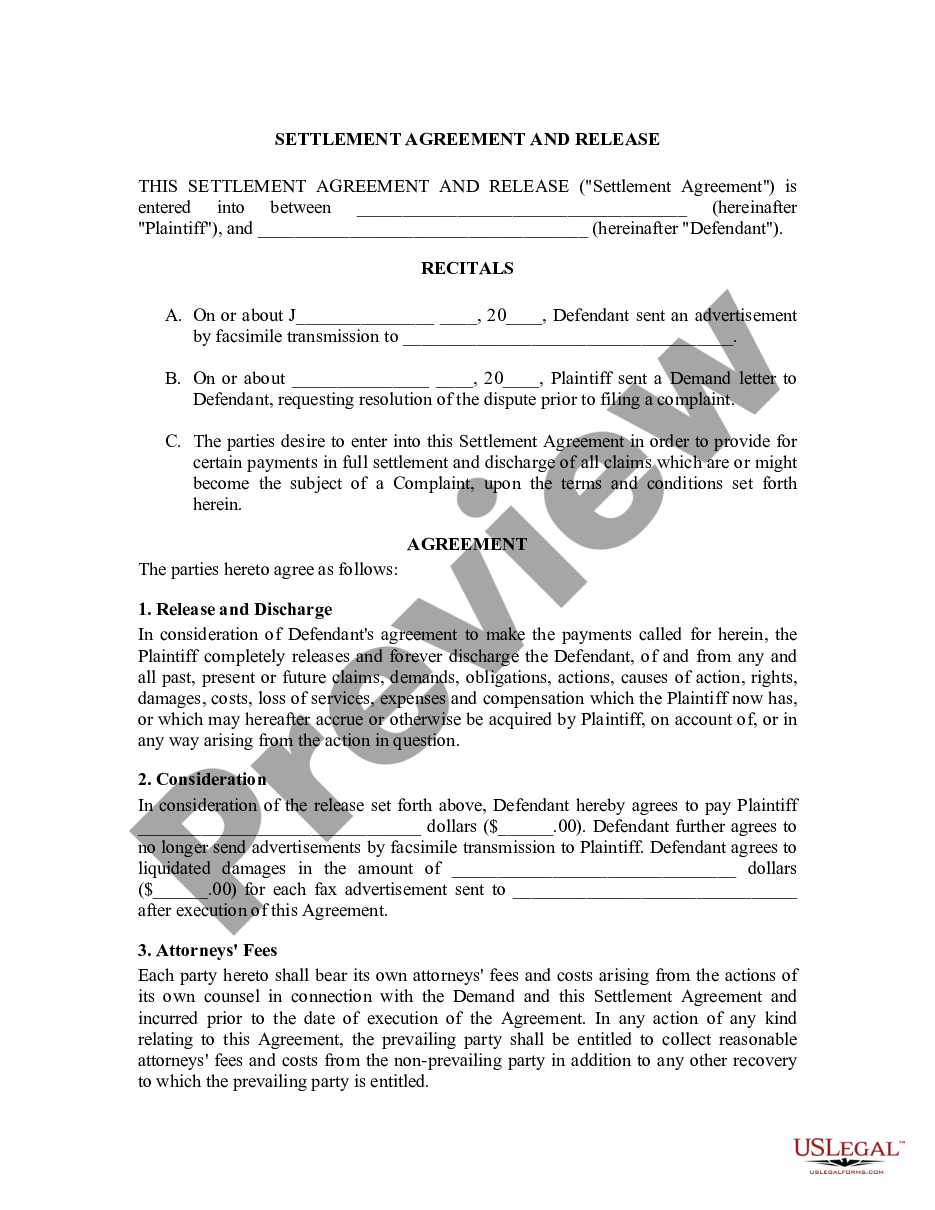
This includes releasing the Released Party from all claims for damages, costs, expenses, and compensation.This release and discharge shall be a fully binding and complete settlement among all Parties to this Agreement and their heirs, assigns, and successors.
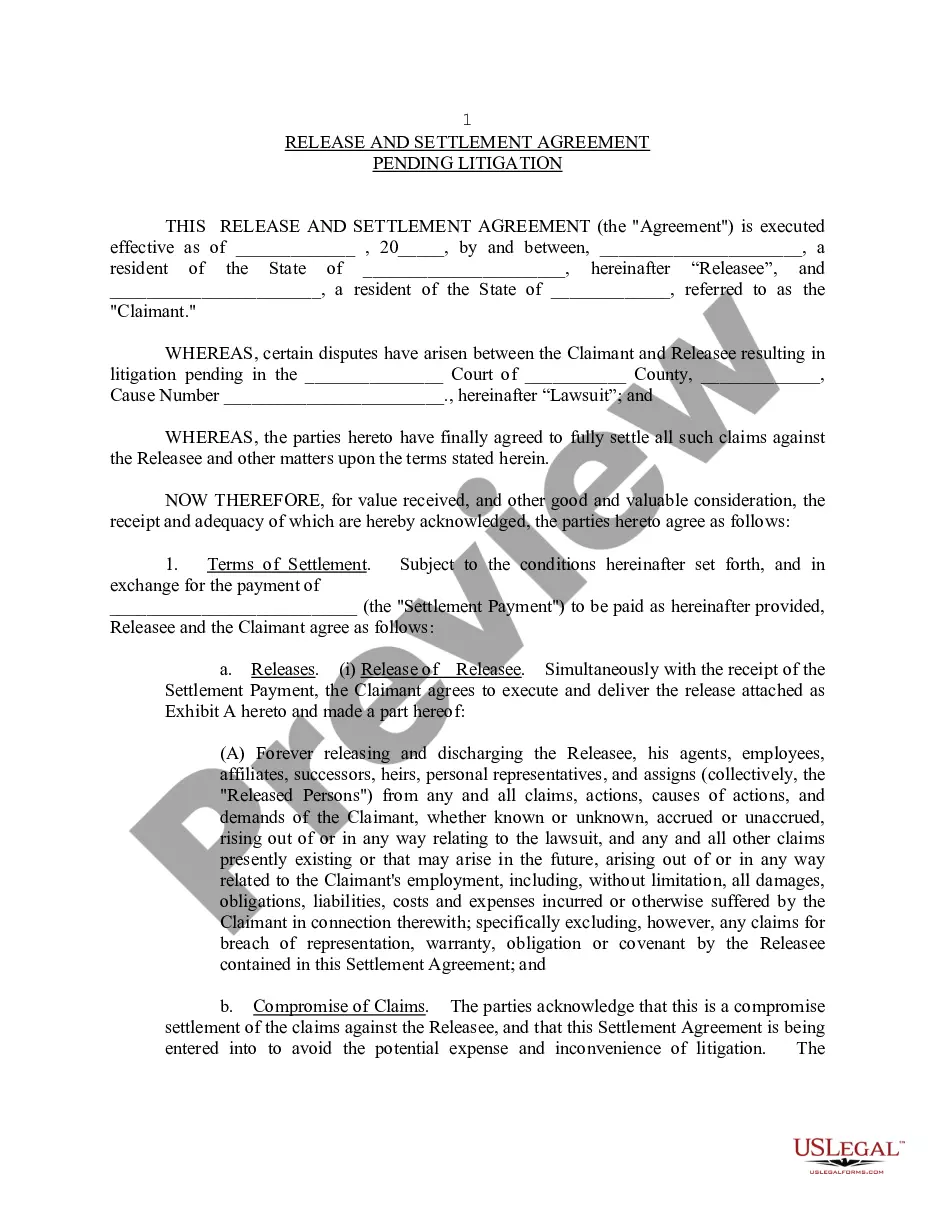
The agreement should list the rights, claims, obligations, or interests that will be released in the settlement as well as any claims or obligations that are not part of the settlement.
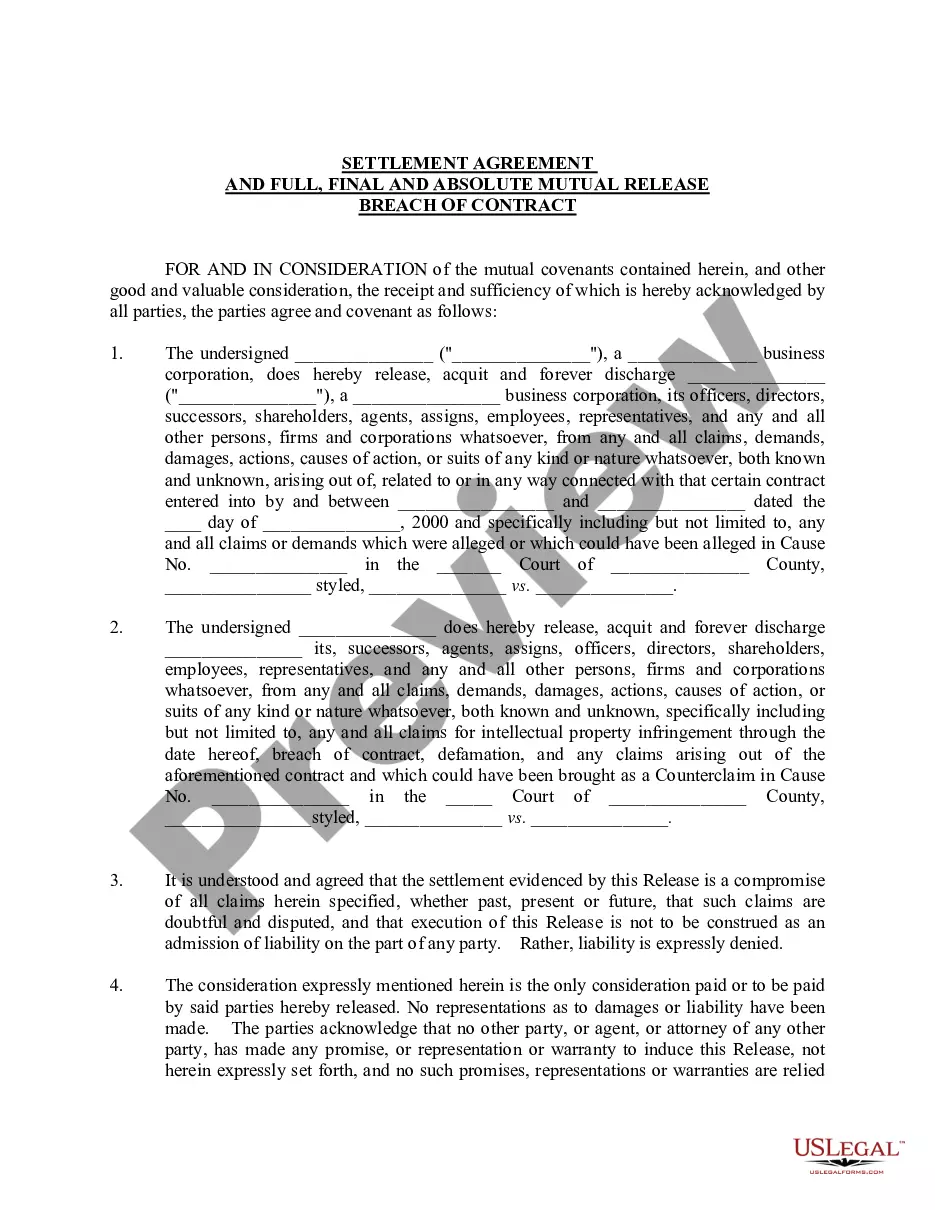
A release of all claims form may be included as part of a settlement agreement, which is a document agreeing to resolve the parties' differences, dismiss their claims, and release the opposing parties from liability. Release of all claims forms are also called liability waiver forms.
A release is an agreement not to sue; it waives your right to sue and company and "releases" your employer from legal liability for claims you may have against it. A release may be as broad or as narrow as the parties agree to make it.
The purpose of a full and final release is simple. It is an explicit acknowledgement by the settling Plaintiff that it has agreed to resolve its claims as against one or more Defendants, and as a result of that settlement, it is releasing those Defendants from the claims at issue.
When the term indemnity is used in the legal sense, it may also refer to an exemption from liability for damages. Indemnity is a contractual agreement between two parties. In this arrangement, one party agrees to pay for potential losses or damages caused by another party.
An offer. This is what one party proposes to do, pay, etc. Acceptance. Valid consideration. Mutual assent. A legal purpose. A settlement agreement must also not be "unconscionable." This means that it cannot be illegal, fraudulent, or criminal.
This form of a Release Agreement, Indemnity Agreement and Hold Harmless Agreement releases a party from certain specified liabilities. Releases are used to transfer risk from one party to another and protect against the released party or reimburse the released party for damage, injury, or loss.
Lawyers call an agreement to settle a dispute a "release," because in exchange for some act (often the payment of money), one person gives up (or releases) his or her claim against another.