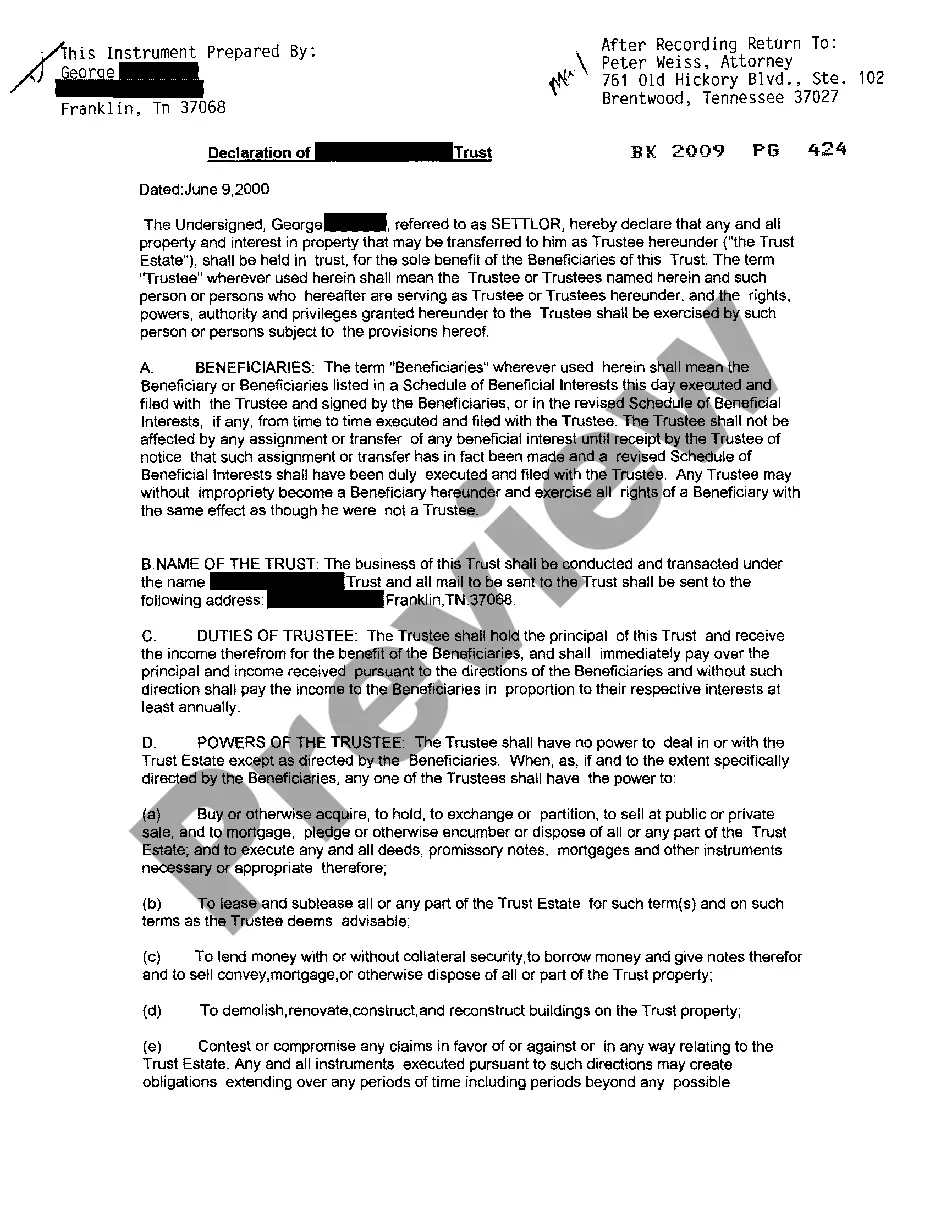
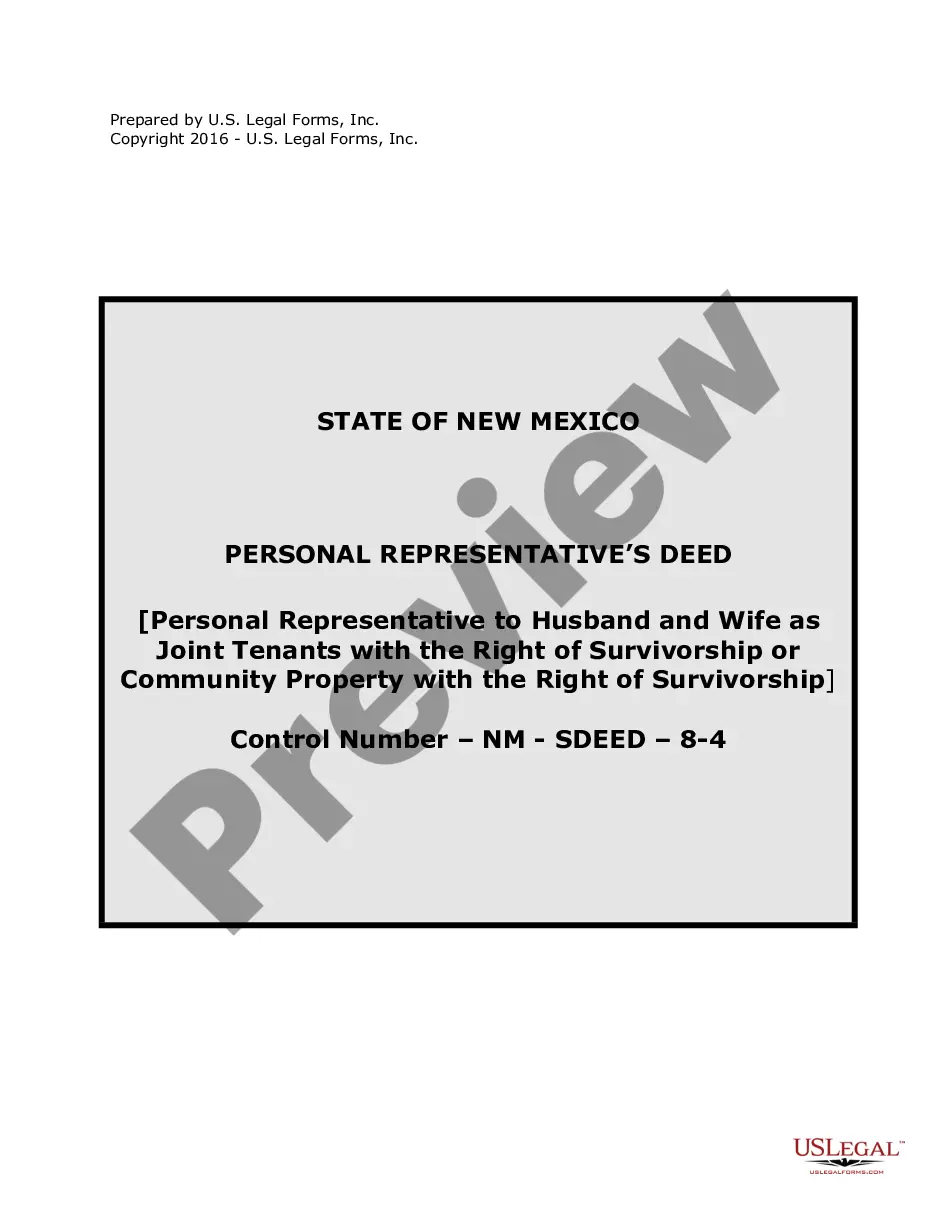
New Mexico Quitclaim Deed for Personal Representative's Deed
Overview of this form
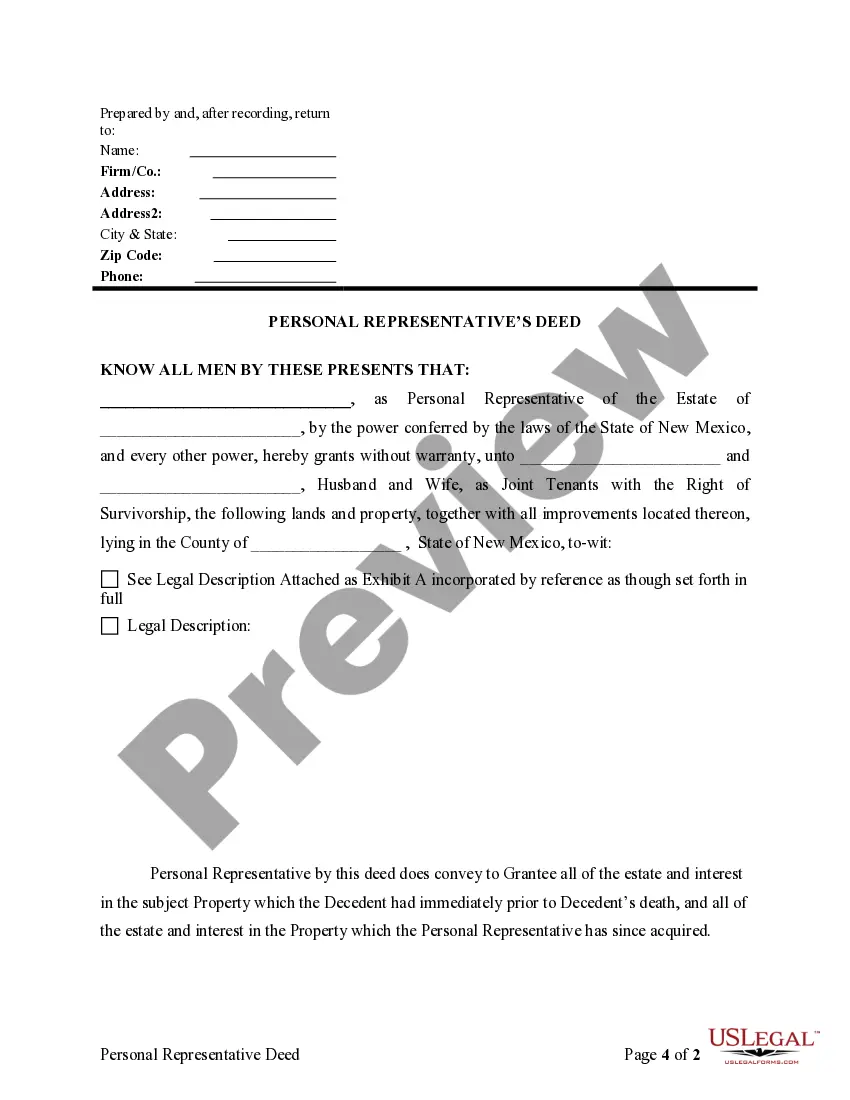
The Quitclaim Deed for Personal Representative's Deed is a legal document that allows a personal representative of an estate to transfer ownership of real property to the grantees without any warranty. Unlike other types of deeds, such as warranty deeds, a quitclaim deed does not guarantee that the title is free of claims or encumbrances. This form is particularly useful in estate management and simplifies the property transfer process during the settlement of an estate.
Key parts of this document
- Identifies the personal representative and estate involved in the property transfer.
- Specifies the names of the grantees receiving the property.
- Includes a description of the property being conveyed.
- Contains a declaration of the transfer without warranties.
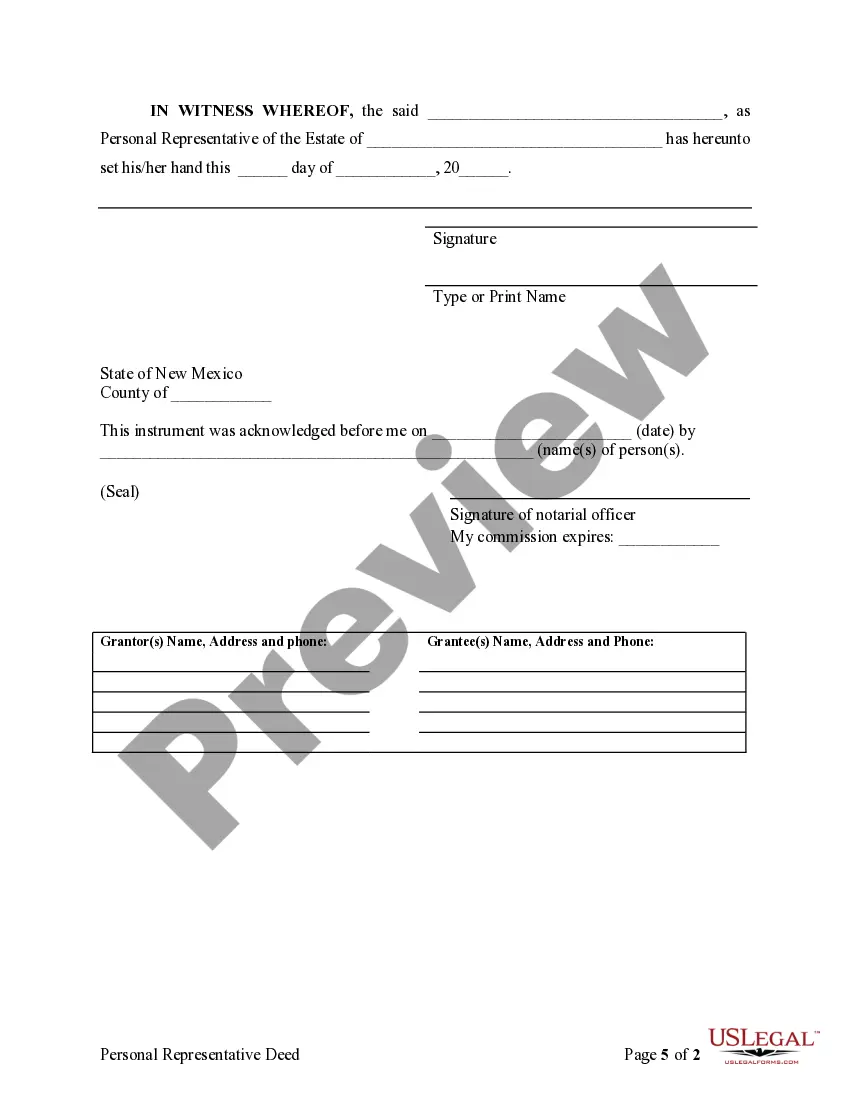
- Requires signatures of the personal representative and potentially a witness, depending on state laws.





When this form is needed
This form should be used when a personal representative of an estate needs to transfer real property to designated individuals as part of the estate settlement process. It is advisable to use this deed when the intent is to convey property simply and without the need for guaranteeing the title, making it suitable for informal transactions between family members or among beneficiaries of the estate.
Who this form is for
This form is intended for:
- Personal representatives acting on behalf of an estate.
- Heirs or beneficiaries involved in the transfer of property from a deceased estate.
- Individuals who wish to facilitate property transfers without warranty obligations.
Instructions for completing this form
- Identify the personal representative's name and the estate they represent.
- Specify the names of the grantees who will receive the property.
- Clearly describe the property being transferred, including any relevant legal description.
- Enter the date of the transfer and ensure all required signatures are obtained.
- Make any necessary edits to the document, then lock the form before completion to avoid losing data.
Is notarization required?
Notarization is required for this form to take effect. Our online notarization service, powered by Notarize, lets you verify and sign documents remotely through an encrypted video session, available 24/7.
Get your form ready online
Our built-in tools help you complete, sign, share, and store your documents in one place.
Make edits, fill in missing information, and update formatting in US Legal Forms—just like you would in MS Word.
Download a copy, print it, send it by email, or mail it via USPS—whatever works best for your next step.
Sign and collect signatures with our SignNow integration. Send to multiple recipients, set reminders, and more. Go Premium to unlock E-Sign.
If this form requires notarization, complete it online through a secure video call—no need to meet a notary in person or wait for an appointment.
We protect your documents and personal data by following strict security and privacy standards.

Make edits, fill in missing information, and update formatting in US Legal Forms—just like you would in MS Word.

Download a copy, print it, send it by email, or mail it via USPS—whatever works best for your next step.

Sign and collect signatures with our SignNow integration. Send to multiple recipients, set reminders, and more. Go Premium to unlock E-Sign.

If this form requires notarization, complete it online through a secure video call—no need to meet a notary in person or wait for an appointment.

We protect your documents and personal data by following strict security and privacy standards.
Mistakes to watch out for
- Failing to provide a complete property description, which could lead to ambiguity.
- Not obtaining the necessary signatures from all parties involved.
- Forgetting to date the document, which is essential for legal validity.
- Neglecting to check and comply with specific state regulations regarding deed transfers.
Benefits of using this form online
- Convenient access and instant download to complete at your own pace.
- Edit and customize as needed before finalizing the document.
- Reliable templates drafted by licensed attorneys to ensure legal compliance.
Key takeaways
- The Quitclaim Deed for Personal Representative's Deed is an efficient way to transfer property within an estate.
- It is crucial to accurately complete the form with all required information to avoid potential issues.
- This deed does not provide warranties, so it is important to understand the implications of such a transfer.
Looking for another form?
Form popularity
FAQ
This form is a quitclaim deed used by a personal representative of an estate in New Mexico to transfer real property to named grantees without any warranty of title. It supports estate settlement by documenting the transfer, identifies the personal representative and estate, names the grantees, provides a property description, and requires signatures (and possibly a witness) per state law.
Not specified in this form, the deed requires the personal representative's signature and, depending on state law, possibly a witness. Notarization is not explicitly listed as a requirement in the provided form components; for recording and enforceability in New Mexico, consult a licensed attorney or the local county recorder.
A power of attorney authorizes an agent to act for a principal in various matters, while a personal representative is appointed by a court to administer an estate. In this form's context, the personal representative executes a quitclaim deed on behalf of the estate, transferring property to named grantees without warranties.
In this form, ownership is conveyed from the estate, represented by the personal representative, to the named grantees. The deed identifies both the personal representative and the estate as the transferor, and the grantees become the new owners upon transfer.
Yes, a quitclaim deed can often be prepared without an attorney, but this New Mexico form is intended to facilitate estate transfers without warranties. Given estate context and recording nuances, it is advisable to consult a licensed attorney to ensure proper execution, accurate property description, and compliance with NM recording requirements.
This form is executed by a personal representative on behalf of an estate and identifies the estate and representative, unlike a standard quitclaim deed between private parties. It conveys property to named grantees without warranties, aligning with estate settlement rather than a private transfer.